
量子计算

Search documents
华翊量子完成数亿元A轮融资,加速量子计算商业化进程
IPO早知道· 2025-07-15 03:26
Core Viewpoint - Huayi Quantum aims to become a world-class quantum computing company, focusing on the development and commercialization of ion trap quantum computers, leveraging its strong research background from Tsinghua University [1][6]. Group 1: Financing and Partnerships - Huayi Quantum recently completed a Series A financing round, raising several hundred million yuan, which will be used to accelerate the R&D and industrial application of core quantum computing technologies [1]. - The financing was led by the Social Security Fund's Zhongguancun Independent Innovation Special Fund, Beijing Information Industry Development Investment Fund, and Junlian Capital [1]. - The company has established collaborations with leading enterprises and research institutions in various sectors, including telecommunications, finance, pharmaceuticals, and energy [4]. Group 2: Technological Advancements - Huayi Quantum has achieved a key breakthrough with its second-generation ion trap quantum computer prototype, HYQ-B100, which has surpassed 100 quantum bits while maintaining international leading levels in fidelity and coherence time [2]. - The team proposed a novel ion trap quantum computing architecture based on high-dimensional ion qubit arrays, significantly increasing the effective number of quantum bits while ensuring high-speed and high-fidelity quantum gate operations [1]. Group 3: Industry Applications - The company is actively exploring the practical applications and commercial value of quantum computing across various industries, including smart routing, portfolio optimization, chemical energy calculations, and logistics optimization [4]. - Huayi Quantum plans to deepen industry applications and enhance the integration of quantum and classical computing, providing one-stop solutions in relevant fields [6]. Group 4: Vision and Future Outlook - The CEO of Huayi Quantum expressed confidence in the company's vision to lead the computing revolution, emphasizing the potential of quantum computing at the intersection of artificial intelligence and quantum technology [6]. - Junlian Capital highlighted the disruptive potential of quantum computing and its value in expanding computational frontiers, supporting Huayi Quantum's long-term technological development and ecosystem building [6][7].


2025 年全球经济:动荡变革中探寻稳健增长路径
Sou Hu Cai Jing· 2025-07-15 03:25
Group 1: Global Economic Overview - The global economy is facing complex challenges, including the aftermath of the pandemic, geopolitical conflicts, energy structure adjustments, and technological revolutions, leading to uncertain market conditions [1] - Inflation remains a significant issue for major economies, with the U.S. core PCE above the 2% target and the Eurozone struggling with energy price volatility and weak manufacturing [3] - The International Bank for Settlements highlights interconnected challenges such as weak potential output growth, increasing fiscal vulnerabilities, and rising credit and liquidity risks in the non-bank financial sector [3] Group 2: China's Economic Performance - In 2024, China's GDP reached 134.9 trillion yuan, growing at a rate of 5%, with primary, secondary, and tertiary industries growing at 3.5%, 5.3%, and 5% respectively [4] - The consumer market is recovering, with significant growth in tourism and sales of upgraded consumer goods like electric vehicles and smart home products, indicating the release of domestic market potential [4] - High-tech manufacturing and equipment manufacturing saw value-added growth of 8.9% and 7.7%, respectively, outpacing overall industrial value-added growth [4] Group 3: Challenges in China's Economy - The real estate market is still adjusting, with some companies facing unresolved debt risks and local government fiscal sustainability under pressure [5] - Despite global demand slowdown affecting foreign trade, exports of "new three items" (electric vehicles, lithium batteries, solar batteries) increased by 28.7%, showcasing the competitiveness of Chinese manufacturing [5] Group 4: Investment Strategies - Investors are advised to diversify asset allocation, with a noticeable structural trend in the stock market where consumer recovery and tech growth sectors alternate in leading performance [6] - The bond market remains stable under expectations of monetary policy easing, with government bonds and high-grade credit bonds still holding certain allocation value [6] - Commodity markets are experiencing volatility due to geopolitical factors and supply chain restructuring, with gold gaining appeal as a safe-haven asset [6] Group 5: Future Economic Outlook - The future of the global economy is uncertain, influenced by the Federal Reserve's interest rate decisions, the effectiveness of China's growth policies, and the resolution of the European energy crisis [7] - China aims to deepen its domestic demand strategy and promote technological innovation, contributing to high-quality development amid a complex international environment [7] - The country advocates for inclusive economic globalization and strengthens cooperation through initiatives like the Belt and Road, aiming to enhance the global economic governance system [7]

量子光芯片,全球首颗
半导体行业观察· 2025-07-15 01:04
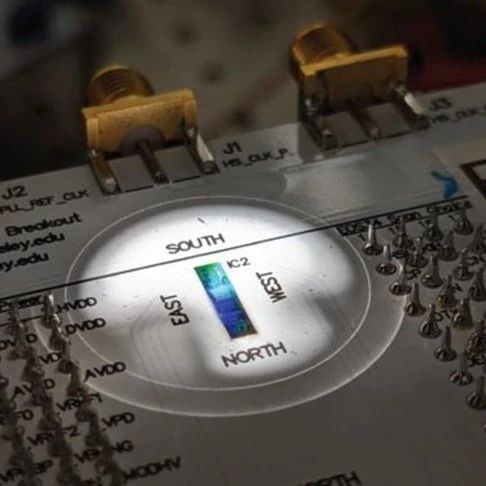
Core Viewpoint - The article discusses the development of the world's first integrated electronic-photonic-quantum chip by researchers from Boston University, UC Berkeley, and Northwestern University, marking a significant step towards practical quantum systems [2][4]. Group 1: Chip Development - The chip utilizes standard 45-nanometer semiconductor technology to integrate quantum light sources with stable electronic devices on a single platform [3][11]. - Each chip contains twelve independent quantum light sources, each less than one square millimeter in size, driven by lasers and utilizing micro-ring resonators to generate photon pairs [7][10]. Group 2: Technical Innovations - The team embedded a real-time control system directly into the chip to address the sensitivity of resonators to temperature changes and manufacturing variations, ensuring stable quantum processes [9][10]. - The integration of photonic devices with classical electronic technology posed significant challenges, requiring a rethinking of how these technologies coexist on the chip [11][12]. Group 3: Collaborative Efforts - The project involved collaboration across various fields, demonstrating that complex quantum photonic systems can be constructed and stabilized entirely within CMOS chips [12]. - Several student researchers from the project have transitioned to the industry, continuing work in silicon photonics and quantum computing at companies like PsiQuantum, Ayar Labs, and Google X [12]. Group 4: Support and Funding - The research received support from the National Science Foundation, Packard Fellowship, and GlobalFoundries, highlighting the importance of funding in advancing quantum technology [13].
「华翊量子」融资数亿元,脱胎于清华,今年营收将增长数倍|硬氪首发
3 6 Ke· 2025-07-15 00:53
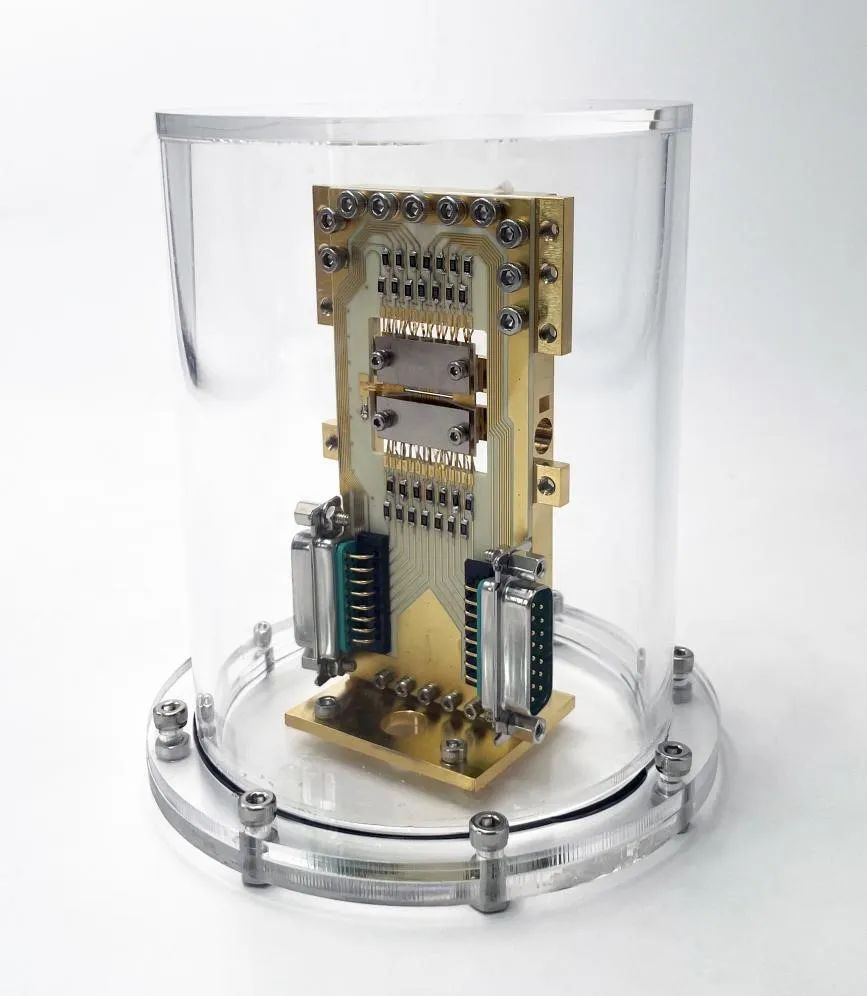
Core Insights - Huayi Quantum has recently completed a multi-hundred million yuan Series A financing round, led by the Social Security Fund and other investors, aimed at accelerating the development and application of core quantum computing technologies [1][2] - The company, founded in January 2022 and originating from Tsinghua University, focuses on ion trap quantum computing technology, providing integrated quantum computing systems and quantum cloud computing services for various industries [1][2] - The second-generation ion trap quantum computer prototype, HYQ-B100, has achieved a significant breakthrough with over 100 quantum bits, maintaining high fidelity and coherence times, positioning it at an international leading level [2][4] Company Overview - Huayi Quantum was established by a team of experts from Tsinghua University and other institutions, led by Professor Duan Luming, an academician of the Chinese Academy of Sciences [1][2] - The company primarily serves the research computing sector, with over 80% of its business in this area, collaborating with traditional research institutions and large state-owned enterprises [2][3] - The company aims to enhance its quantum computing capabilities while controlling costs, with over two-thirds of its total expenditure allocated to R&D and maintaining an annual growth rate of over 25% in R&D investment [4][5] Industry Context - Quantum computing is seen as a nascent field with significant potential, particularly in areas such as financial engineering, biomedicine, and logistics optimization, driven by the demand for advanced computational capabilities [1][2] - The commercial viability of quantum computing is still developing, with current applications focusing on research computing due to hardware limitations and the need for practical problem-solving [2][3] - Investment firms express strong confidence in the disruptive potential of quantum computing, highlighting Huayi Quantum's technological advancements and clear commercialization path as key factors for future growth [6]
量子力学诞生百年 我国正迎来加速突破
Xin Hua She· 2025-07-12 07:19
Core Viewpoint - This year marks the 100th anniversary of quantum mechanics, with UNESCO declaring it the "International Year of Quantum Science and Technology," highlighting significant advancements in quantum computing, communication, and measurement in China [1] Quantum Computing - Quantum computing is likened to the "engine" of quantum technology, with recent breakthroughs including the release of the superconducting quantum computing prototype "Zuchongzhi No. 3," which outperforms the fastest supercomputers by a factor of one trillion [2] - The transition from basic research to large-scale, practical applications in quantum computing is accelerating, with industries such as finance, aerospace, and pharmaceuticals recognizing its potential [2][3] Quantum Communication - China has achieved significant milestones in quantum direct communication, including a record-breaking communication speed over 100 kilometers and the establishment of a 300-kilometer quantum direct communication network [4] - The successful satellite-based transmission of encrypted image data over a distance of over 12,900 kilometers marks a significant leap towards long-distance secure quantum communication [4] - The emphasis on quantum communication is driven by national support and investment, positioning China strategically in the global quantum information technology landscape [4][5] Quantum Measurement - The release of various quantum sensors, including diamond single-spin sensors and quantum magnetometers, indicates rapid advancements in quantum measurement technology [7] - Applications in medical fields, such as early screening for coronary heart disease, and industrial quality control in lithium battery production are being explored [7] - Despite key breakthroughs, experts note that there is still a considerable gap compared to advanced countries, particularly in foundational theory and market acceptance [7] Strategic Outlook - The development of quantum technology is compared to a marathon, emphasizing the need for sustained strategic determination alongside innovation and leadership [8]
美国芯片行业现状
半导体行业观察· 2025-07-12 04:11
Core Viewpoint - The semiconductor industry is crucial for modern technology and is a key driver of innovation, with the U.S. holding a significant share of the global market but facing challenges from international competitors [1][2]. Group 1: Current State of the Semiconductor Industry - By 2025, semiconductors will be foundational to various sectors, including AI, quantum computing, and defense systems, highlighting their importance in global technological leadership [1]. - The U.S. semiconductor industry has seen a decline in manufacturing capacity from 37% in 1990 to just 10% in 2022, raising concerns about future competitiveness [1]. - The U.S. semiconductor industry currently accounts for over 50% of global chip revenue, but its manufacturing capacity is under threat from international competition [1][43]. Group 2: Government Initiatives and Investments - Significant government incentives and research investments have been implemented to reverse the decline in U.S. semiconductor leadership, with over $500 billion in private investments announced across 28 states [2][11]. - These investments are expected to create over 500,000 jobs and double U.S. chip manufacturing capacity by 2032 [2][11]. - The Advanced Manufacturing Investment Credit (AMIC) has been increased from 25% to 35%, further stimulating investment in the semiconductor sector [11]. Group 3: Research and Development - Federal R&D investments are crucial for maintaining and expanding U.S. technological leadership, with 2024 R&D spending projected to reach $62.7 billion, a 5.7% increase from 2023 [18][19]. - The semiconductor industry invests 17.7% of its revenue in R&D, the second highest among U.S. industries, which supports innovation and market leadership [19][18]. - Ongoing federal research initiatives are essential for fostering innovation and enhancing national security [13][14]. Group 4: Workforce Development - The semiconductor industry employs approximately 345,000 people directly, with a projected shortfall of 67,000 skilled workers by 2030 [29][32]. - Collaboration between government and industry is necessary to expand the pipeline of STEM graduates and attract top engineering talent [32]. - A skilled domestic workforce is vital for maintaining U.S. leadership in the semiconductor sector and ensuring economic and national security [32]. Group 5: Global Market Dynamics - The U.S. semiconductor industry generates about 70% of its revenue from international sales, emphasizing the need for a strong global market presence [40]. - The global semiconductor market is projected to grow to $701 billion by 2025, with the U.S. expected to maintain a significant share [54][55]. - The demand for semiconductors is driven by advancements in AI, 5G, and other transformative technologies, with a strong growth outlook for the next decade [56][59]. Group 6: Economic Contributions - The U.S. semiconductor industry remains a top export sector, with exports projected to reach $57 billion in 2024, reflecting a 13% growth [43][44]. - The industry's growth is supported by increasing domestic manufacturing capacity and significant investments, enhancing export potential [44]. - The semiconductor sector's health is critical for the U.S. economy, influencing various downstream industries such as AI, telecommunications, and healthcare [60][61].

日本囤了20年稀土原料,最后还得求中国代加工,这技术壁垒太可怕
Sou Hu Cai Jing· 2025-07-12 02:50
Core Viewpoint - China's dominance in the rare earth industry is underscored by Japan's 20-year stockpiling of rare earth materials, which has not led to independence but rather highlighted China's irreplaceable position in the supply chain [1][3]. Industry Insights - Japan's stockpiling of rare earths has not translated into self-sufficiency due to the lack of advanced processing capabilities, with 95% of global rare earth separation and processing capacity held by China [3][5]. - The technical gap in rare earth separation and purification has been built over decades, with Chinese institutions like the Baotou Rare Earth Research Institute and the Shanghai Institute of Organic Chemistry accumulating significant expertise [5][7]. - The complexity of downstream processing, such as the production of rare earth permanent magnets, presents further challenges for Japan, which struggles to match China's optimized processes and experience [5][7]. Competitive Landscape - Chinese companies like Minmetals Rare Earth and Guangdong Zhujiang Rare Earth have established strong profit margins, with an average gross margin exceeding 45% in 2024, indicating a highly profitable sector [7][9]. - Major global companies, including Tesla and Siemens, rely heavily on Chinese suppliers for rare earth components, demonstrating the critical role of Chinese technology and production capabilities in the global market [5][7]. Future Outlook - China's technological lead in rare earths is expected to widen, driven by advancements in recycling technologies and increasing demand from emerging sectors such as renewable energy and artificial intelligence [9]. - The long-term accumulation of technical advantages and a complete industrial chain in China makes it unlikely for other countries to disrupt this dominance in the near future [9].


下半年经济风口:科技引领,多元突破
Sou Hu Cai Jing· 2025-07-11 09:07
Group 1 - The global market is influenced by complex geopolitical environments, rapid technological advancements, and sector rotations, which will shape the economic outlook for the second half of 2025 [1] - DeepSeek has emerged as a star in the technology sector, showcasing breakthrough achievements in artificial intelligence that have positively impacted its business and the broader tech industry [3] - The innovative drug sector has gained significant attention, driven by increasing health awareness and demand for medical advancements, leading to substantial investments and rising market valuations [3] Group 2 - Foreign investment sentiment towards the Chinese market is optimistic, driven by a large consumer base, improved business environment, and ongoing technological innovation [5] - The Anhui Hotel and Homestay Expo, scheduled for October 24-26, 2025, will highlight new opportunities in the consumption sector, particularly in the tourism and hospitality industry [5] - The expo will feature over 300 exhibitors and showcase comprehensive solutions across various segments of the homestay industry, reflecting the growing demand for tourism-related services [5] Group 3 - Smart facilities showcased at the expo, such as intelligent check-in systems and environmental control systems, enhance customer experience and support the digital transformation of the hospitality industry [7] - The integration of traditional Chinese medicine elements into hotel services, such as specialized wellness facilities, caters to consumer health trends and differentiates offerings in the competitive market [7] Group 4 - The technology sector is expected to remain a key driver of economic growth, with advancements in AI and quantum computing anticipated to achieve commercial breakthroughs [9] - Shifts in consumer behavior towards service, personalized, and experiential consumption will continue to energize the market, alongside the growth of cultural tourism [9] - Long-term special government bonds will support infrastructure and emerging industries, such as high-end equipment and smart manufacturing, contributing to economic expansion [9] Group 5 - Despite uncertainties like geopolitical risks and trade tensions, China's economy shows strong potential for growth, supported by robust internal dynamics and proactive fiscal policies [11] - Identifying and investing in key sectors such as technology, consumption, and industrial upgrades will provide competitive advantages in the evolving market landscape [11] - Industry events like the Anhui Hotel and Homestay Expo will foster innovation and collaboration, aiding in the high-quality development of various sectors [11]

中国科研团队研发出纳米“双光子工厂”
Xin Hua Wang· 2025-07-11 07:12
Core Viewpoint - The research team from Sun Yat-sen University has achieved a significant breakthrough in spontaneous two-photon radiation, developing a new type of micro-nano quantum entangled light source with a fidelity of 99.4%, which is expected to enhance quantum precision measurement technology and the construction of functional optical quantum information processing chips [1][2]. Group 1 - The team proposed a novel cavity-induced spontaneous two-photon radiation scheme, achieving spontaneous two-photon radiation intensity comparable to single-photon radiation for the first time internationally [1][2]. - The efficiency of two-photon radiation was improved from less than 0.1% to approximately 50% through the design of high-quality optical microcavities, enabling the creation of controllable entangled photon pair sources [1]. - The research is based on nano-sized solid-state "artificial atom" structures, indicating a significant advancement in the field of two-photon research [2]. Group 2 - The high fidelity of 99.4% suggests a strong "telepathic" effect of the entangled photons, showcasing the technology's potential in enhancing quantum communication security, quantum computing reliability, and quantum measurement precision [2]. - Reviewers from the journal Nature have recognized this work as a breakthrough in the field of two-photon research, noting the record-breaking fidelity of the entangled photon pairs [2].
中国科研团队研发出新型量子纠缠光源
Huan Qiu Wang Zi Xun· 2025-07-11 07:04
Core Insights - A new spontaneous two-photon radiation scheme has been proposed by a team from Sun Yat-sen University, achieving a fidelity of 99.4% for a demand-triggered quantum entangled light source, published in Nature [1][2] Group 1: Research Breakthrough - The research introduces a novel cavity-induced spontaneous two-photon radiation scheme that matches the intensity of single-photon radiation, challenging the traditional understanding that two-photon radiation is inherently weaker than single-photon processes [2] - The team utilized a solid-state "artificial atom" structure at the nanoscale to enhance the probability of emitting two correlated photons simultaneously, a phenomenon known as spontaneous two-photon radiation [1][2] Group 2: Technological Advancements - Advances in semiconductor material growth and device processing technologies have provided critical support for the experimental realization of spontaneous two-photon radiation [2] - The design of ultra-high-quality optical microcavities has allowed for fine-tuning of the photon generation process, increasing the radiation efficiency of two photons from less than 0.1% to approximately 50% [2] Group 3: Implications for Quantum Technologies - The high fidelity of the entangled photon source indicates significant potential for enhancing the security of quantum communication, reliability of quantum computing, and precision of quantum metrology [2]