
能源转型

Search documents
应对高比例可再生能源挑战 我国加速构建全国统一电力市场体系
Sou Hu Cai Jing· 2025-10-23 12:17
10月23日,2025国际能源变革论坛"电力市场建设与监管分论坛"在苏州举办。本次论坛以"适应能源转 型的电力市场建设与监管"为主题,聚焦能源变革背景下电力市场面临的机遇与挑战。中国国家能源局 监管总监黄学农、英国气候变化事务特使雷切尔·凯特、中国电力企业联合会常务副理事长杨昆出席会 议并致辞。来自国内外有关政府部门、能源监管机构、市场运营机构、电力企业、研究机构和高校的专 家代表齐聚一堂,就共同关心的电力市场与监管议题进行了深入交流。 本次论坛共同探讨世界各地区能源转型与发展、高比例可再生能源背景下电力市场机制建设与监管路 径、能源领域绿色发展等方面关键问题,致力于推动电力市场领域的国际交流与合作。 在主旨报告环节,来自国内外政府能源监管机构、电力交易中心、知名研究院校的权威专家与学者分享 了前沿观点与实践经验。演讲内容广泛覆盖了电力市场建设的关键领域,包括我国统一电力市场的发展 路径与监管实践、促进能源转型的市场机制设计、新型电力系统下的风险防控策略,以及欧洲、英国等 典型电力市场的改革经验与启示。 论坛圆桌对话环节围绕"高比例新能源背景下的市场建设与监管"开展专题讨论,来自能源监管机构、电 网企业、发电 ...
“十四五”山西晋中能源发展全景图:煤更优、电更稳、气更足、耗更少
Zhong Guo Xin Wen Wang· 2025-10-23 10:47
Core Insights - The energy development landscape in Jinzhong, Shanxi during the 14th Five-Year Plan is characterized by improved coal quality, greener electricity, increased gas supply, and reduced energy consumption [1] Group 1: Coal Industry - The coal industry in Jinzhong is being transformed to be smarter, greener, and more efficient, with a stable production of over 100 million tons annually and an average annual growth rate exceeding 10% [2] - The city has established 22 intelligent coal mines, with advanced production capacity accounting for 97%, leading the province [2] - A total of 68.04 million tons of long-term contracts for electric coal are set to be signed from 2022 to 2025, benefiting over 3 million residents [2] Group 2: Electricity Sector - The region is focusing on high-quality development and utilization of renewable energy, with installed capacity of renewable and clean energy increasing over threefold from 2.67 million to 9.43 million kilowatts, now accounting for 60.8% of total capacity [3] - The electricity grid is being strengthened with significant investments, resulting in a 53% increase in transformer capacity and a 15% increase in transmission lines compared to the end of the 13th Five-Year Plan [3] - The city has built 8,973 charging stations, achieving full coverage in key areas, with a charging station to vehicle ratio of 1:6.24 [3] Group 3: Gas Supply - Jinzhong is enhancing gas supply through exploration and comprehensive utilization, with significant increases in coalbed methane production and a national-level demonstration project underway [4] - The city aims to achieve a coal mine gas utilization rate of 52.9% by the end of 2024, surpassing the provincial target [4] Group 4: Energy Consumption - The city has implemented strict measures to reduce coal consumption, achieving negative growth in coal consumption from 2021 to 2024, with over 16 million tons of coal consumption replaced [6] - Approximately 200,000 households have undergone clean heating renovations, reducing coal burning by about 500,000 tons annually, with clean heating coverage reaching over 80% in rural areas [6]
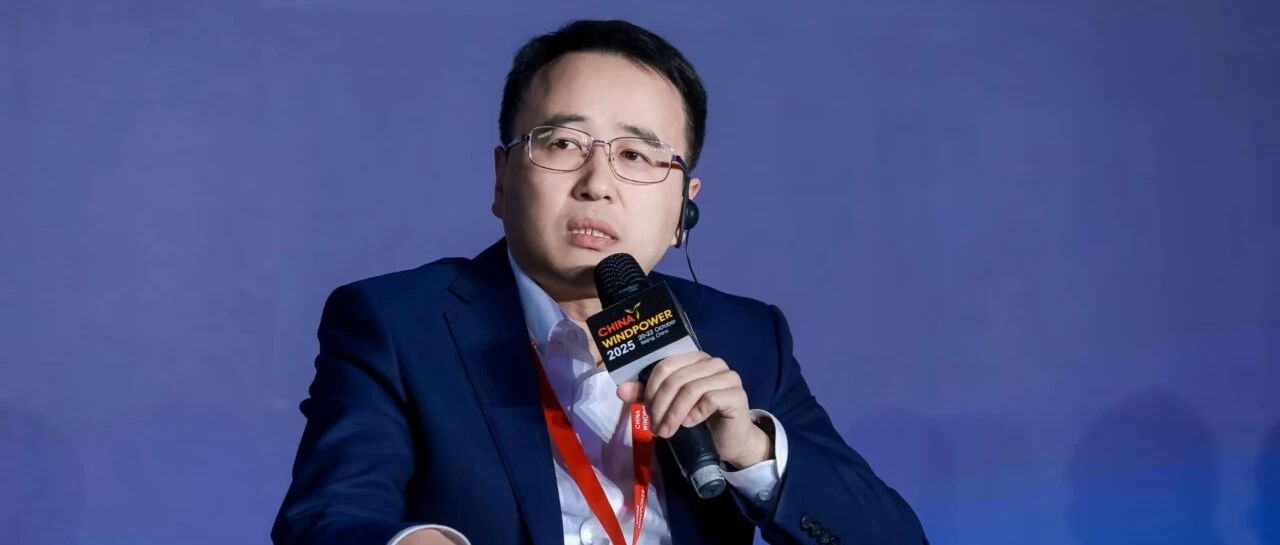
陈棋出席CWP2025圆桌对话:共话全球风电合作新路径
中国能源报· 2025-10-23 10:34
Core Viewpoint - The article emphasizes the importance of accelerating wind power investment globally to promote sustainable development, highlighting China's ambitious renewable energy targets and the need for innovation and collaboration in the wind energy sector [1][2]. Group 1: China's Renewable Energy Goals - China aims to achieve a total installed capacity of 3.6 billion kilowatts for wind and solar power by 2035, with current cumulative installed capacity exceeding 1.7 billion kilowatts as of August 2025, including 580 million kilowatts for wind and 1.12 billion kilowatts for solar [2]. - Clean energy now accounts for over 50% of the total installed capacity, with its generation share surpassing 25%, indicating a significant transition in China's energy structure [2]. - The next decade is critical for achieving these targets, with expectations for wind and solar capacity to double, potentially exceeding 65% of the total installed capacity [2]. Group 2: Challenges and Innovations in Renewable Energy - The renewable energy sector faces regional structural challenges, such as increased curtailment rates in some western regions and near-saturation in southeastern coastal areas [2]. - There is a need for accelerated research and development of grid-connection technologies and innovative business models like "green electricity direct connection" to effectively address consumption bottlenecks [2]. - The industry should explore direct energy supply collaborations with high-energy-consuming enterprises and emerging loads like intelligent computing centers to expand the application scenarios for green electricity [2]. Group 3: Global Collaboration and Innovation - The international wind power market is diversifying, with high electricity prices and long cycles in Europe and the U.S., while projects utilizing Chinese technology, such as those in Saudi Arabia, demonstrate superior Levelized Cost of Energy (LCOE) and efficiency [3]. - To seize global energy transition opportunities, the Chinese wind power industry should focus on three areas for deepening global collaboration: promoting technological integration and innovation, facilitating international standard recognition, and establishing collaborative development mechanisms [3]. - China accounts for 45.8% of the global wind power installed capacity, with leading wind turbine manufacturers dominating the top four positions globally and a domestic core component localization rate exceeding 85% [4]. Group 4: Future Directions - The Chinese wind power sector is transitioning from technology output to standard and model output, providing system solutions to address electricity shortages in regions like Southeast Asia while promoting standard recognition with European and American markets [4]. - The company aims to continue its commitment to integrating wind power with green energy, leveraging leading technologies and open cooperation to drive global energy transition and contribute to climate change mitigation [4].


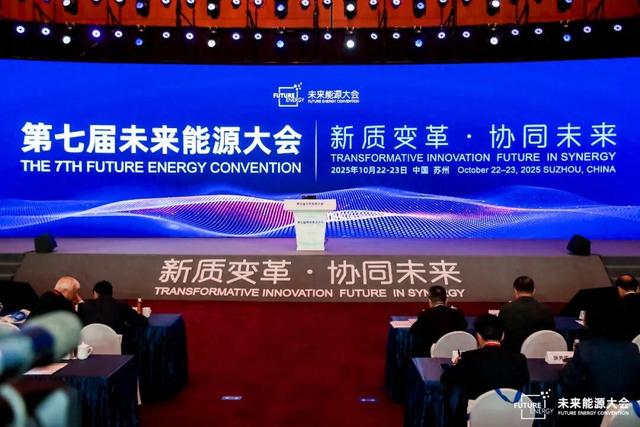
第七届未来能源大会(FEC2025)在苏州召开
Huan Qiu Wang· 2025-10-23 06:10
Core Insights - The seventh Future Energy Conference opened in Suzhou, focusing on the theme "Transforming New Quality, Collaborating for the Future" [1] - The conference gathered leaders, experts, and representatives from the energy sector to discuss future development directions [1] Group 1: Government and Policy - Suzhou's government is implementing the "Four Revolutions, One Cooperation" energy security strategy, aiming to develop a new energy industry system with a total output value exceeding 820 billion yuan by 2024 [4] - The local government encourages domestic and international entrepreneurs to invest and collaborate in Suzhou [4] Group 2: Industry Trends - The chairman of the China Energy Research Society emphasized the systemic transformation of the energy system, driven by new productive forces, and the need for innovation across various levels [6] - The chairman of GCL Group noted that the photovoltaic industry is transitioning from internal competition to a more stable supply-demand relationship, predicting a recovery in profitability by 2026 [11] Group 3: Investment and Market Dynamics - The CEO of the Energy Foundation highlighted that global clean energy investments are expected to exceed $2 trillion in 2024, with renewable energy accounting for 92.5% of new installations [13] - The International Energy Agency's honorary executive director pointed out that China's oil demand will peak in 2025, emphasizing the rapid development of the hydrogen energy industry [23] Group 4: Technological Innovation - The chairman of the Global Energy Interconnection Development Cooperation Organization discussed the importance of a clean energy internet for large-scale development and utilization of clean energy [15] - The report by a Chinese Academy of Sciences academician outlined the future energy system's reliance on non-fossil energy sources, with a focus on green hydrogen as a key component [19] Group 5: Collaborative Efforts - The conference featured discussions on the integration of traditional and new energy sources, international cooperation, and the sharing of experiences among energy enterprises [26] - The event aimed to inject new momentum into energy transformation through practical cooperation and intellectual exchange [28]
AI基建远未到头?PE巨头阿波罗:AI的能源需求“在我们有生之年”都无法满足
Hua Er Jie Jian Wen· 2025-10-23 05:45
Core Insights - Apollo Global Management's executive warns of a significant gap between the energy demand driven by artificial intelligence (AI) and the current global electricity supply, suggesting this gap may never be bridged within our lifetime [1] - The investment community is shifting from an "energy transition" mindset to a more urgent "energy increment" approach, recognizing that renewable energy alone cannot meet the demands of the AI era [2] Group 1: Energy Increment Reality - The current situation is characterized as "energy increment," necessitating a substantial increase in overall energy supply to meet the explosive demand from AI data centers [2] - Apollo has committed or arranged approximately $60 billion in investments related to energy transition, infrastructure, and sustainability since 2022, exceeding half of its $100 billion investment target by 2030 [2] Group 2: Investment Strategy and Standards - Apollo has developed its own classification standards for guiding investments, which provide a competitive advantage through in-depth analysis of industries and technologies [3] - A project is considered a "transition deal" if a significant portion of its revenue is related to transition activities or has designated transition financing [3] Group 3: Political Environment and Investment Opportunities - Despite political changes affecting renewable energy investments in the U.S., the overall investment opportunities remain robust, with trillions of dollars still available [4] - Major financial firms continue to view low-carbon transition as a powerful trend, with significant funds raised for investments in this area [4] Group 4: Balancing Perspectives - The transition to low-carbon energy is underway and unstoppable, but the urgent need for energy to fuel the AI boom means that more energy is required [5] - Key drivers for success will include energy storage, transmission, and distribution capabilities [5]

从“用得上”迈向“用得好” 能源消费全面“逐绿前行”
Zheng Quan Shi Bao Wang· 2025-10-23 01:36
Group 1: Energy Transition Achievements - During the "14th Five-Year Plan" period, China's installed power generation capacity reached one-third of the global total, and one-third of electricity consumed is green electricity [1][2] - The share of renewable energy generation capacity in China's energy structure increased from 40% to approximately 60% [2] - In July, China's monthly electricity consumption exceeded 1 trillion kilowatt-hours for the first time, setting a global record [2] Group 2: Economic Growth and Energy Demand - The rapid increase in electricity consumption over the past five years is a result of economic transformation and industrial upgrading, with high-energy-consuming sectors like semiconductors and new energy vehicles driving demand [2] - The growth in electricity consumption is also fueled by the expansion of digital economy infrastructure, including data centers and 5G base stations [2] Group 3: Company Performance - Tianjin Zhonglv Electric Investment Co., Ltd. reported a more than tenfold increase in its operational installed capacity since 2022, exceeding 32 million kilowatts [3] - The company's revenue for the first half of the year was 2.333 billion yuan, a year-on-year increase of 29.30%, while net profit grew by 33.06% to 618 million yuan [3] - As of the end of August, the company recovered 1.667 billion yuan in electricity price subsidies, achieving 211% of its target for the entire year of 2024 [3] Group 4: Cost Reduction and Efficiency Improvement - The economic viability and reliability of clean electricity have significantly improved, with the cost of wind and solar power generation decreasing by 60% and 80% respectively over the past decade [4] - The cost of onshore wind power has dropped to 0.1-0.15 yuan per kilowatt-hour, while offshore wind power averages 0.33 yuan per kilowatt-hour [4] - The company is exploring cost reduction through technological innovation, scale effects, and smart operations to enhance energy storage capabilities [5] Group 5: Future Energy Landscape - The share of electricity in China's final energy consumption has reached approximately 30%, significantly higher than the global average [7] - The future electricity structure is expected to show characteristics of "stock optimization and incremental differentiation," with high-energy-consuming industries slowing down while new technology-intensive sectors maintain robust demand [7] - China's wind turbine exports are expected to accelerate, with a cumulative export capacity of 20,787.8 MW by the end of 2024, serving a growing global market [8]
苏州市领导会见友城代表团
Su Zhou Ri Bao· 2025-10-23 00:49
Core Viewpoint - The 2025 International Energy Transition Forum is set to be held in Suzhou, focusing on energy transition and sustainable development [1] Group 1: Event Details - The forum will feature representatives from international sister cities including Venice (Italy), Portland (USA), Taupo (New Zealand), Logan (Australia), and Chancay (Peru), as well as Melbourne (Australia) [1] - Discussions will center around practical cooperation in areas such as culture and tourism, trade and economy, technology, and education [1] Group 2: Objectives - The aim is to strengthen collaboration between Suzhou and its sister cities to enhance the well-being of citizens and promote urban development [1]
过剩压力陡增 油价跌势尚难逆转
Qi Huo Ri Bao· 2025-10-22 23:21
Group 1: Oil Price Trends - Since the end of September, both domestic and international crude oil prices have been on a downward trend, with NYMEX WTI crude oil futures dropping below $57 per barrel and ICE Brent crude oil futures falling below $60 per barrel [1] - The decline in oil prices contrasts sharply with the rising prices of gold, which have reached new highs [1] - The current support for oil prices is primarily driven by investment demand resulting from the Federal Reserve's interest rate cuts, which is insufficient to reverse the downward trend in oil prices [1] Group 2: Supply Dynamics - The core issue in the oil market is the concern over supply surplus due to increased production. OPEC, led by Saudi Arabia, is expected to raise its oil supply to 34.69 million barrels per day, the highest level since December 2018 [2] - OPEC has announced further production increases, with an additional 137,000 barrels per day expected in November, maintaining the same increase as in October [2] - U.S. oil production has also reached new highs, with the latest data showing production at 13.636 million barrels per day as of October 10, despite a decrease in the number of drilling rigs [2] Group 3: Global Production Increases - Non-OPEC countries are also increasing production, with Brazil's new floating production storage facility Bacalhau starting operations at 200,000 barrels per day, and Guyana planning to increase exports by 200,000 barrels per day in December [3] - Canada has seen a 5% increase in the number of drilling rigs, contributing to the overall increase in global oil supply [3] Group 4: Geopolitical Factors - Recent geopolitical developments have led to a decrease in risk premiums in the oil market. A potential resolution to the Gaza conflict could eliminate some of the "war premium" in oil prices [4] - The resumption of oil exports from Iraq to Turkey has also contributed to the easing of supply concerns [4] - The ongoing peace process between Russia and Ukraine has seen significant diplomatic efforts, which may further stabilize the oil market [4] Group 5: Demand Weakness - Global oil demand has declined from summer peaks, with a 2.6% year-on-year increase in China's crude oil imports in the first three quarters, significantly lower than the expected 14.6% for 2023 [5] - U.S. refinery utilization rates have decreased, with September rates dropping to 93.2% from 95.5% in August, indicating weaker demand [5] - OECD visible commercial inventories have increased by 340,000 barrels per day since the beginning of the year, accounting for a quarter of the global inventory increase [6] Group 6: Limited Impact of Federal Reserve Actions - The recent interest rate cuts by the Federal Reserve have had limited impact on the oil market, as evidenced by the simultaneous rise in various asset classes driven by risk aversion [7] - The market is currently pricing in expectations of further rate cuts, which may not significantly alter the supply-demand dynamics in the oil market [7] Group 7: Overall Market Outlook - The primary contradiction in the current oil market is the increase in production plans by major oil-producing countries, raising concerns about supply surplus, while demand remains weak due to economic slowdown and energy transition trends [8] - Investors and producers should be cautious of the risks associated with declining oil prices and consider hedging strategies using futures contracts [8]
挖掘资源潜力,寻求国际合作,能源转型助力解决非洲电力困境
Huan Qiu Shi Bao· 2025-10-22 22:52
【环球时报驻南非特派记者 董嘉怡 环球时报特约记者 任重】日前南非政府斥资2.2万亿兰特(约合1267亿美元)推进能源转型的消息,再度将非 洲电力供应难题推向公众视野。"非洲电力短缺,6亿人用不上电。"尼日利亚"赋能非洲"网站报道称,能源供应短缺仍是非洲当前最紧迫的挑战之 一,停电与限电更是多国的日常。为解决这一问题,南非、肯尼亚、尼日利亚等国已相继启动能源转型进程。但问题随之而来:巨额投入如何缓 解"电荒"?非洲能源转型又有哪些挑战? 南非斥资万亿背后 南非作为非洲最大经济体之一,长期以来始终难以摆脱电力危机的困扰。该国电力和能源部部长拉莫豪帕在近期新闻发布会上坦言:"电力一直是 我们国家经济的结构性制约因素。" 据报道,2007年以来,拉闸限电成为南非的常态,直到今年大选前后才有所缓解。究其原因,一是过度依赖平均服役年限超过30年的老旧燃煤电 厂;二是国有电力巨头Eskom持续面临债务危机。据路透社报道,今年7月,Eskom负债高达约232亿美元。 持续"电荒"对南非经济造成冲击。据普华永道相关报告,2020年南非有45万人因限电失业,带来的经济损失高达46亿美元。南非科学和工业研究 理事会(CSIR)的 ...

视频|外媒关注中国绿色能源发展:为世界能源转型提供良方
Sou Hu Cai Jing· 2025-10-22 16:40
实际上,中国的绿色能源一直是外媒关注的焦点之一。在近期多家外媒的报道中,中国绿色能源的飞跃 不仅惊艳全球,更为世界能源转型开出了"对症良方"。 阿联酋《海湾新闻》网站22日的一篇报道关注中国风能领域发展,报道称,中国的风力发电行业发展速 度很快。中国已经是风力发电领域的全球领导者,未来五年中国风电年新增装机量不低于1.2亿千瓦。 报道称,中国的风能产业不只是在"追逐微风",而是在努力为未来提供动力。 ...