
贸易战

Search documents
“野心”是一个创始人最核心的竞争力
创业家· 2025-05-20 09:54
Group 1 - The article emphasizes the importance of determination and ambition for entrepreneurs, suggesting that these qualities are essential for overcoming challenges in the early stages of a startup [1] - It raises questions about the duration of trade wars, the inevitability of global decoupling, and the survival strategies for small and medium enterprises in a changing environment [1] - The article promotes a course titled "2025: Evolve or Perish!" featuring various industry experts who will provide insights on navigating current challenges and seizing new opportunities [1]


祥明智能(301226) - 2025年5月20日投资者关系活动记录表
2025-05-20 08:54
Group 1: Factors Affecting Profitability - Downstream market demand fluctuations due to cyclical adjustments in the real estate market have led to reduced orders and weakened profitability. The company is expanding into emerging fields such as healthcare, automotive electronics, and robotics to mitigate demand fluctuations [1] - Product structure optimization by increasing the proportion of high-value-added products like DC motors and fans, while reducing material costs, has improved profitability [1] - R&D investment and technological innovation saw a 17.81% year-on-year increase in R&D expenses in 2024, accounting for 5.65% of revenue, enhancing product competitiveness [1][2] - Cost and expense control measures resulted in a 27.21% year-on-year decrease in the ratio of period expenses to revenue in Q1 2025, strengthening expense management capabilities [2] - External policies and market environment factors, including low business exposure in the U.S. market (less than 3%), limit tariff impacts but require ongoing monitoring of policy changes [2][4] Group 2: Talent Incentive Mechanisms - The company aims to cultivate top employees by continuously optimizing the work environment through training programs, performance evaluations, and digital lean initiatives to enhance employee quality and efficiency [3] - Talent acquisition strategies focus on attracting market, R&D, and application technology talents in new fields, supplemented by collaboration with Japanese companies to integrate technological resources [3] - A personalized career development path is established to enhance employee sense of belonging, supported by a shareholding platform to retain core talents for long-term development [3] Group 3: Impact of Trade Wars - The company's business in the U.S. market constitutes less than 3% of total operations, resulting in minimal overall performance impact from trade wars [4] - The company will closely monitor U.S. tariff policy changes and maintain real-time communication with clients to adjust cooperation strategies flexibly [4] - Supply chain optimization and product structure upgrades are employed to mitigate potential cost pressures, alongside diversifying market layouts to increase business proportions in emerging markets to spread risks [4]
瑞达期货集运指数(欧线)期货日报-20250520
Rui Da Qi Huo· 2025-05-20 08:50
| | | | 集运指数(欧线)期货日报 | | | 2025/5/20 | | --- | --- | --- | --- | --- | --- | --- | | 项目类别 数据指标 | 环比 | 最新 | | 数据指标 | 最新 | 环比 | | EC主力收盘价 | | 1725.900 | | 22.5↑ EC次主力收盘价 | 2263.1 | -65.10↓ | | 期货盘面 EC2506-EC2508价差 | +78.50↑ EC2506-EC2510价差 | -537.20 | | | 289.90 | -0.20↓ | | EC合约基差 | | -460.60 | +46.30↑ | | | | | 期货持仓头寸(手) EC主力持仓量 | | 25555 | 0↑ | | | | | SCFIS(欧线)(周) | -37.32↓ SCFIS(美西线)(周) | 1265.30 | | | 1,455.31 | 134.62↑ | | SCFI(综合指数)(周) | 134.22↑ 集装箱船运力(万标准箱) | 1479.39 | | | 1,227.97 | 0.93↑ | | 现货价格 C ...
突发!下调25个基点,直线跳水!
券商中国· 2025-05-20 08:33
澳大利亚宣布降息。 降息25个基点 5月20日,澳大利亚央行——澳洲联储宣布,降息25个基点,将现金利率由4.1%下调至3.85%,为2023年5月以来的最低水平, 也是两年来首次降至4%下方,符合市场预期。 今日,澳洲联储宣布,将基准利率下调25个基点至3.85%,为2023年5月以来的最低水平,符合市场预期。受此影响,澳元兑 美元汇率直线跳水,一度大跌0.77%。 澳洲联储在货币政策声明中表示,物价上涨已经放缓,这"是非常好的消息",准备在必要时采取进一步行动,并透露委员会 此前曾讨论过降息50基点的可能性。 在随后举行的新闻发布会上,澳洲联储主席米歇尔·布洛克(Michele Bullock)表示,进一步调整货币政策是"可能的",目前尚 不清楚是否会开启长期连续降息模式。有分析称,如果美国的关税政策继续造成"全球和本地经济增长进一步疲软",澳洲联 储可能会进一步降息。目前交易员加大了对澳洲联储将进一步放松政策的押注。 在宣布降息25个基点后,澳元兑美元汇率直线跳水,下跌跌幅一度扩大至0.77%。 澳洲联储表示,物价上涨已经放缓,这"是非常好的消息",准备在必要时采取进一步行动,并透露委员会此前曾讨论过降 ...

美联储的近忧与远虑
Cai Jing Wang· 2025-05-20 07:01
Group 1 - The Federal Reserve decided to maintain the federal funds rate unchanged, marking the third consecutive time it has refrained from adjusting rates after a series of cuts in the previous year [1][2] - Fed Chairman Powell emphasized the independence of the Federal Reserve and stated that the current policy is appropriately restrictive, indicating that President Trump's calls for rate cuts will not influence their decisions [1][2] - Despite a contraction in the U.S. economy in the first quarter, April's consumer and employment data suggest resilience in economic growth, with non-farm payrolls increasing by 177,000 and an unemployment rate of 4.2% [2][3] Group 2 - Inflation indicators show that the March CPI rose by 2.4% year-on-year, while core CPI increased by 2.8%, both below market expectations [3] - The core Personal Consumption Expenditures (PCE) price index, which excludes food and energy, rose by 2.6% year-on-year, still above the Fed's 2% target [3] - The Fed's statement highlighted an increase in uncertainty regarding economic prospects, with risks of high unemployment and inflation both rising [3][5] Group 3 - Market expectations suggest that short-term inflation may rise due to tariff impacts, but falling energy prices and unstable demand could alleviate inflationary pressures [4][5] - Powell expressed concerns about the uncertainty surrounding Trump's tariff policies and their potential long-term effects on economic growth and inflation [5][6] - The current economic outlook indicates that the Fed may not need to cut rates immediately, but the ongoing uncertainty could lead to a future rate cut [6][7]
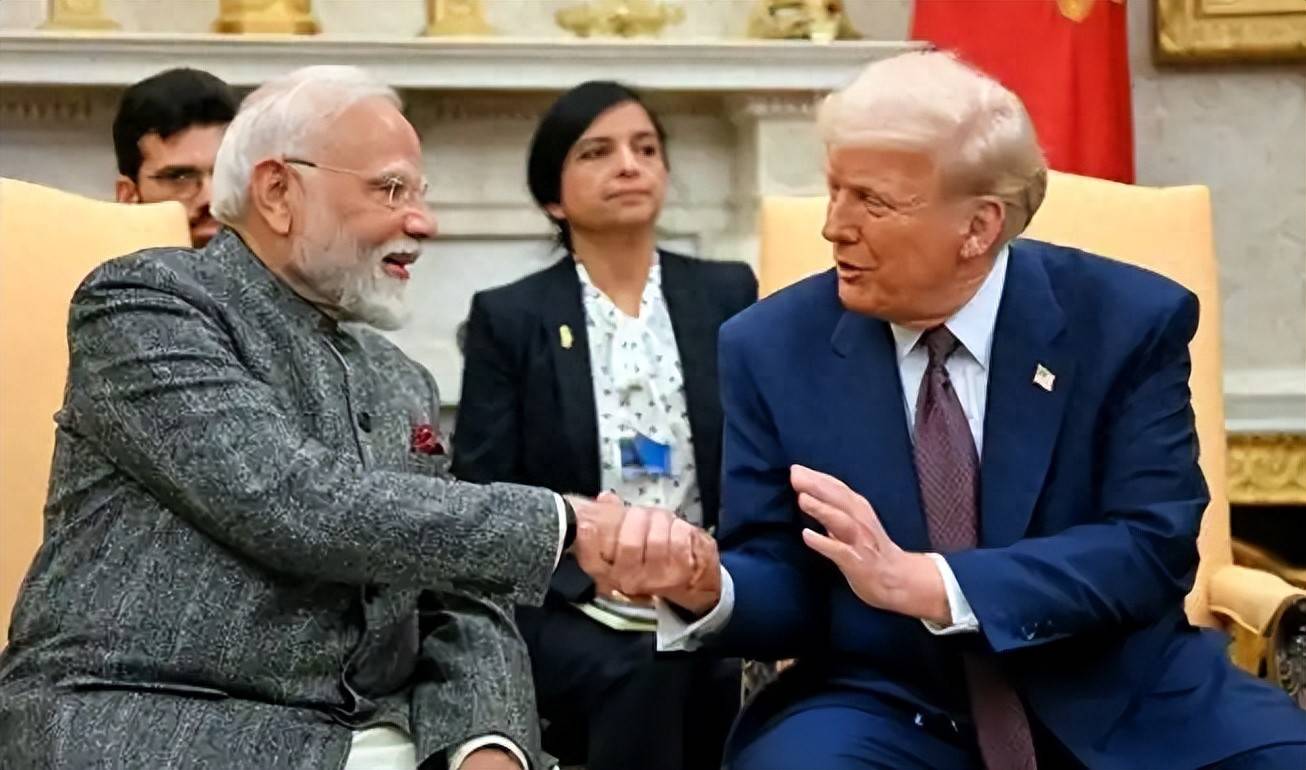
对中国吃的亏,从印度身上补回来?特朗普搞定莫迪,事先毫无风声
Sou Hu Cai Jing· 2025-05-20 06:52
美国在中国手上吃了个大瘪,这让向来奉行"出门没人送礼就是亏"的特朗普,可怎么受得了,果不其然,他把目光投向了欧盟和印度,准备从二者身上吸血 补回来,而莫迪政府已经对美国低头了。 中美刚刚公布瑞士谈判成果,特朗普就第一个喊话欧盟,批评欧盟占了美国的大便宜,他手里有牌让欧盟对美国让步。 看特朗普信誓旦旦的样子,这一回他是不准备放过欧盟了,不啃一大块肉下来恐怕是不会罢休。 不过,欧盟似乎还准备效仿中国硬刚美国,已经撂下一句狠话,若是美国没有给予欧盟大幅低于中英的税率,那就等着被报复吧! 实话说,以欧盟过去的行事作风,屈膝服软是迟早的事情,他们向来是嘴硬身体软,更何况还是面对拿捏欧洲安全七寸的美国。 但是,让外界大跌眼镜的还是,美国竟然在不声不响中已经搞定了印度。 据美媒报道,日前特朗普在卡塔尔对外宣布一条喜报,美印贸易谈判取得重大进展,印度已同意不对美国商品征收任何关税。 | 分享到: | | | | | | | --- | --- | --- | --- | --- | --- | | 2025-05-15 20:44:57 | 字号: | A- | T | A+ | 来源: | 实际上,印度对美国低头完全在预料 ...
澳洲联储降息25个基点,就特朗普贸易战发出严厉警告
Jin Shi Shu Ju· 2025-05-20 05:14
Group 1 - The Reserve Bank of Australia (RBA) has lowered the policy interest rate by 25 basis points to 3.85%, the lowest level in two years, in response to declining domestic inflation concerns [1] - Australia's inflation rate has significantly decreased since peaking in 2022, with the latest overall inflation data projected to reach 2.4% by the first quarter of 2025, the lowest in four years [1] - The RBA anticipates that inflation will drop to around 2% by the end of 2026, below its baseline forecast of 2.6%, while GDP levels are expected to be over 3% lower than baseline scenarios by mid-2027 [1] Group 2 - The RBA acknowledges that the recent trade truce between the US and China has alleviated some downside risks to global growth, but warns of potential escalation into a broader trade war that could significantly impact domestic GDP growth and increase unemployment rates [2] - In a trade war scenario, the RBA predicts that Australia's unemployment rate could rise to nearly 6% if the US reinstates higher tariffs in 2026 and other countries retaliate [2] - The RBA believes that higher tariffs could have a counter-inflationary effect on Australia, although a prolonged trade war may exacerbate inflationary pressures due to increased tariffs affecting a larger share of global trade [2]
澳洲联储:预计通胀在截至2025年6月、2026年6月和2027年6月均为2.6%。到2025年6月,国内生产总值增长率为1.8%;2026年6月和2027年6月的GDP增长率均为2.2%。预计家庭消费增长在2025年6月为1.4%,2026年6月为2.2%,2027年6月为2.4%。经济增长将受到冲击,到2027年年中,国内生产总值预计将下降3%以上。在贸易战情景下,澳大利亚贸易加权指数将贬值6%,这将“对经济活动提供一定支持”。
news flash· 2025-05-20 04:42
澳洲联储:预计通胀在截至2025年6月、2026年6月和2027年6月均为2.6%。到2025年6月,国内生产总 值增长率为1.8%;2026年6月和2027年6月的GDP增长率均为2.2%。预计家庭消费增长在2025年6月为 1.4%,2026年6月为2.2%,2027年6月为2.4%。经济增长将受到冲击,到2027年年中,国内生产总值预 计将下降3%以上。在贸易战情景下,澳大利亚贸易加权指数将贬值6%,这将"对经济活动提供一定支 持"。 ...
澳洲联储:预计失业率截至2025年6月为4.2%,2026年6月和2027年6月均为4.3%。地缘政治不确定性依然突出,在 “贸易战” 情景下,失业率或将攀升至近 6%。
news flash· 2025-05-20 04:42
澳洲联储:预计失业率截至2025年6月为4.2%,2026年6月和2027年6月均为4.3%。地缘政治不确定性依 然突出,在 "贸易战" 情景下,失业率或将攀升至近 6%。 ...
澳洲联储:经济增长将受到冲击,到2027年年中,国内生产总值预计将下降3%以上。在贸易战情景下,澳大利亚贸易加权指数将贬值6%,这将“对经济活动提供一定支持”。
news flash· 2025-05-20 04:40
Group 1 - The Reserve Bank of Australia (RBA) projects that economic growth will be impacted, with GDP expected to decline by over 3% by mid-2027 [1] - In a trade war scenario, Australia's trade-weighted index is anticipated to depreciate by 6%, which will provide some support to economic activity [1]