AI技术

Search documents
平安好医生(01833)前三季度总收入约37.25亿元 同比增长13.6% 将继续扩展AI技术并助力医疗服务效率及品质升级
智通财经网· 2025-10-23 08:57
Core Insights - Ping An Good Doctor (01833) reported a total revenue of RMB 3.725 billion for the first three quarters, representing a year-on-year growth of 13.6% [1] - The net profit reached RMB 184 million, a significant increase of 72.6% compared to the previous year, while the adjusted net profit was RMB 216 million, up 45.7% year-on-year [1] Group 1: Business Performance - The revenue from the F-end and B-end corporate health management business grew by 21.5% year-on-year [1] - The number of corporate clients served exceeded 4,500 by the end of the reporting period, with B-end paying users increasing by 30.6% year-on-year [1] Group 2: Service Expansion and AI Integration - The company is enhancing its service model by integrating online and offline channels, leveraging AI to improve service quality and efficiency [2] - The family doctor service has reached over 40 million users, supported by a certified team and AI capabilities [2] - The home care service user base grew by 41% compared to the end of 2024, focusing on a warm "insurance + home care" service model [2] Group 3: AI Capability Development - The application of AI technology has significantly improved the quality and efficiency of professional medical services, with the accuracy of complex disease MDT treatment plans reaching nearly 90% [2] - The average service cost for family doctors decreased by approximately 52% year-on-year due to AI integration [2] - The company plans to continue expanding AI applications across various complex diseases and business scenarios to enhance medical service efficiency and quality [2]
赤子城科技预期前三季度社交业务总收入43.8亿元至44.4亿元 同比增长约34.5%至36.4%
Zhi Tong Cai Jing· 2025-10-23 08:51
Core Viewpoint - The company, Zhizi City Technology (09911), reported significant growth in its social business and innovative business segments, driven by AI technology and diversified product offerings [1] Social Business Performance - As of September 30, 2025, the cumulative download of the company's social business reached approximately 920 million, an increase of about 5.7% compared to June 30, 2025 [1] - The average monthly active users for the social business in Q3 2025 reached approximately 34.08 million, reflecting a quarter-on-quarter growth of about 0.7% [1] - For the nine months ending September 30, 2025, the total revenue from the social business is expected to be between RMB 4.38 billion and RMB 4.44 billion, representing a year-on-year growth of approximately 34.5% to 36.4% compared to 2024 [1] Innovative Business Performance - For the nine months ending September 30, 2025, the total revenue from the innovative business is anticipated to be between RMB 530 million and RMB 550 million, indicating a year-on-year growth of approximately 69.9% to 76.3% compared to 2024 [1] - The steady growth in innovative business revenue is primarily attributed to effective traffic monetization, robust development in social e-commerce, and revenue contributions from short drama projects and premium games developed by the company [1]
预见未来,《Al Car的初步畅想与探索实践》白皮书发布
Zhong Guo Qi Che Bao Wang· 2025-10-23 08:15
Core Insights - The article discusses the release of the first white paper themed "AI Car" in the automotive industry, which outlines the product definition and key technological foresight for the transition to the AI Car era [3][4]. Group 1: AI Car Definition and Key Technologies - The white paper defines AI Car as a super intelligent entity composed of multiple sub-intelligent agents, including driving, cabin, chassis, and power agents [3][4]. - It emphasizes that AI technology will fundamentally reshape the development paradigm and user experience of smart terminals [3]. - The paper identifies ten key judgments regarding the future of AI Cars, including the transformation of autonomous driving system design logic and capabilities through VLA [3][4]. Group 2: Future Directions and Strategic Implications - AI will enable the formation of a larger end-to-end system combining intelligent driving and chassis, thereby redefining the driving experience [8][9]. - The transition of power batteries towards intelligent battery systems capable of real-time perception and autonomous decision-making is highlighted [9]. - The white paper suggests that the product transformation driven by AI will alter the survival and development logic of enterprises, shifting their strategic goals from "making good cars" to "operating intelligent entities" [10][11]. Group 3: Recommendations for Enterprises - Companies are advised to define the unique personality and value proposition of their intelligent entities to rejuvenate brand identity [10]. - It is recommended that enterprises enhance their data value across the entire process and establish a cross-functional AI development team to ensure systematic research and development of AI Cars [11]. - The white paper proposes that automakers should accelerate the construction of comprehensive ecological resource integration capabilities to strengthen user engagement and create competitive barriers in the AI era [11].


字节跳动助力打造北京数字时代“新非遗”
Bei Ke Cai Jing· 2025-10-23 04:20
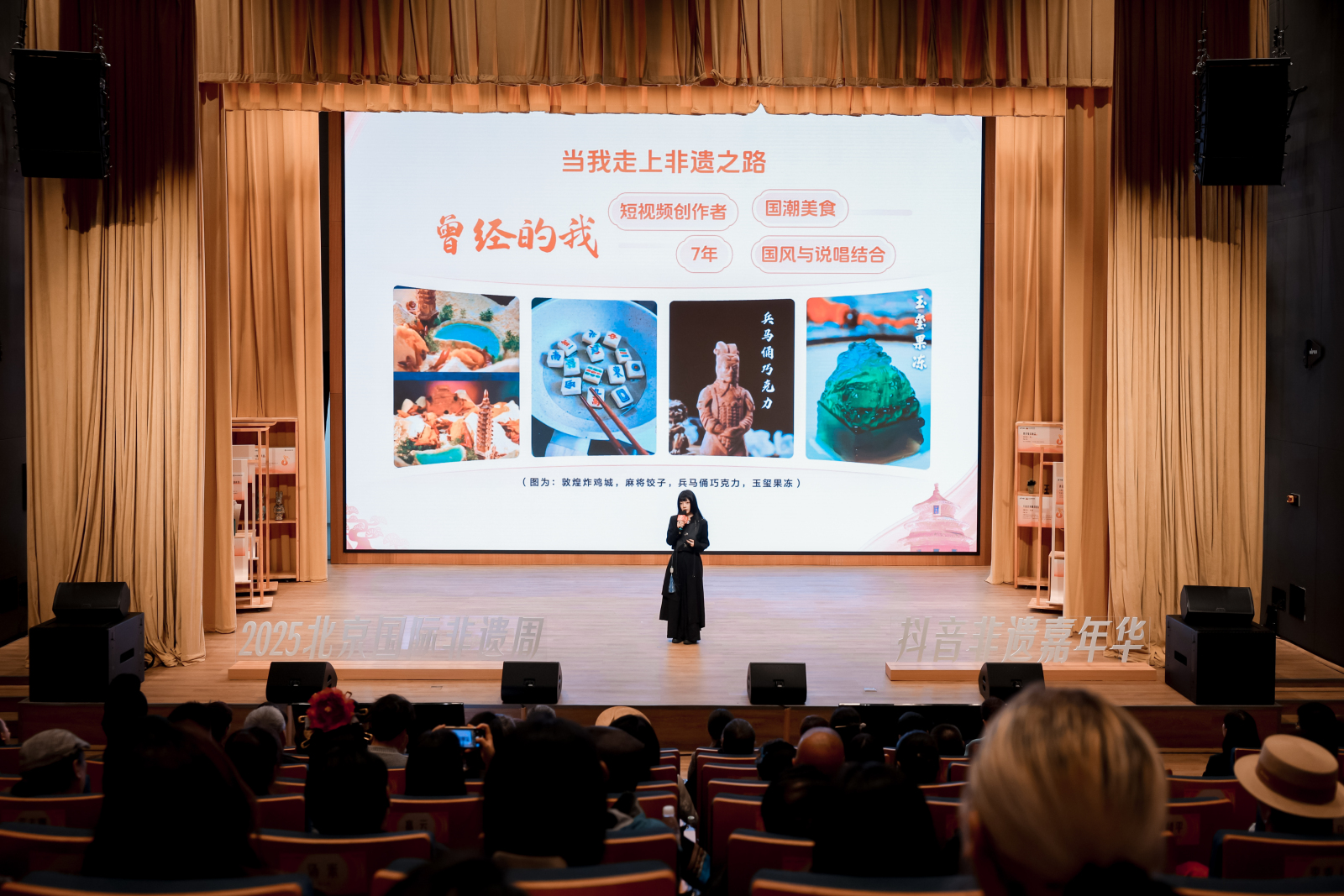
Core Viewpoint - The 2025 Beijing International Intangible Cultural Heritage Week is being held from October 17 to 21, featuring various activities aimed at promoting intangible cultural heritage (ICH) through collaboration with creators on platforms like Douyin [2][4]. Group 1: Event Overview - The event includes the "Douyin ICH Carnival - Beijing Station," which features activities such as the "ICH Development Co-Creation Camp," Douyin ICH exhibition area, and ICH market [2][4]. - The "ICH Development Co-Creation Camp" gathers 45 inheritors and institutional leaders from 31 ICH projects in Beijing, facilitating video collaboration with creators [3][4]. Group 2: Objectives and Goals - The core objective of the co-creation camp is to build a sustainable ecosystem for ICH dissemination rather than just pursuing short-term traffic [4]. - Beijing currently has 144 national-level ICH representative projects and 303 municipal-level projects, with 118 national-level and 348 municipal-level inheritors [4]. Group 3: Douyin's Role and Impact - Douyin has established a mature ecosystem for ICH content, allowing traditional inheritors to reach wider audiences [7]. - According to the "2025 Douyin ICH Data Report," over 200 million ICH-related videos were added in the past year, with a 31% year-on-year increase, and 14 million users shared ICH experiences, resulting in 749.9 billion video views [8]. Group 4: Collaboration and Support - The co-creation camp allows a broad range of creators to collaborate with ICH inheritors, with an emphasis on positive content [9]. - Douyin provides resources and support for high-quality ICH content, including topics like "Douyin ICH Plan" and "ICH Guardians," which have garnered hundreds of billions of views [9]. Group 5: Commercialization and Market Opportunities - The platform aims to address challenges in ICH content commercialization, including high production costs and limited business models [12]. - Douyin's e-commerce platform has seen significant growth in ICH product sales, with over 6.5 billion transactions annually and a 51% increase in sales driven by Douyin searches [13]. Group 6: Future Plans - Douyin plans to continue promoting ICH through technology and platform advantages, aiming for creative transformation and innovative development of ICH [15].
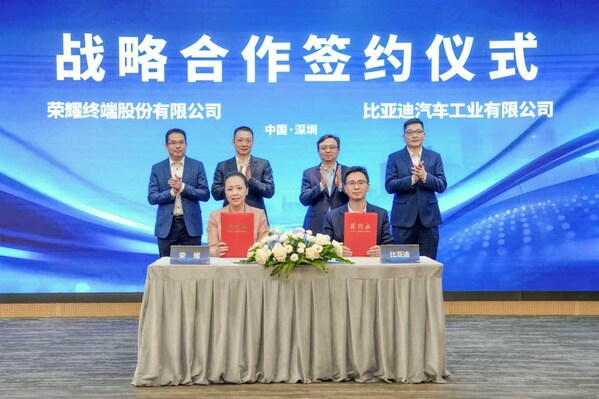
荣耀与比亚迪签署战略合作协议,开启智慧出行深度合作新篇章
Zhong Guo Jin Rong Xin Xi Wang· 2025-10-23 03:09
Core Viewpoint - The strategic partnership between Honor and BYD aims to enhance smart mobility experiences by integrating Honor's vehicle connectivity solutions with BYD's DiLink smart ecosystem, focusing on user-centric intelligent travel scenarios [1][3]. Group 1: Strategic Collaboration - The collaboration emphasizes deep technological and ecological synergy between the two companies, positioning them for future smart mobility developments [3]. - Key areas of focus include core technology integration, channel ecosystem development, and joint marketing efforts to enhance user engagement [3]. Group 2: Technological Advancements - Since 2023, Honor and BYD have made significant progress in the mobile NFC car key technology, allowing BYD vehicle owners to unlock their cars using Honor smartphones [5]. - The partnership will expand to include in-car fast charging solutions by 2024 and further enhance vehicle connectivity by 2025, starting with the Tengshi brand [5]. Group 3: Vision and Future Goals - Honor's CEO emphasized a vision centered on human potential, aiming to create a seamless smart travel experience through collaborative innovation in AI and technology [8]. - The partnership is expected to drive advancements in vehicle safety and convenience, contributing to the evolution of China's smart mobility ecosystem [8]. Group 4: Upcoming Events - The 2025 Honor Global Developer Conference will serve as a platform to showcase the results of this collaboration, highlighting the integration of AI in creating user-centered smart experiences [9].

智慧农业(数字乡村)创新大赛决出名次
Guang Xi Ri Bao· 2025-10-23 02:47
Core Insights - The AI-powered Super League Smart Agriculture (Digital Countryside) Innovation Competition concluded its finals in Nanning, showcasing innovative projects that excelled in creativity and application potential [1][2] - The competition featured 239 entries, with top projects including "Smart Mushroom House and Intelligent Harvesting," "Domestic AI and Harmony Technology's 'Kaihung Smart Greenhouse' System," and "High-Throughput Visual Phenotyping Method for Corn Ear" winning in various categories [1] - The event is organized by the Autonomous Region Department of Agriculture and Rural Affairs and aims to empower agriculture through digital intelligence, with a final award ceremony scheduled for November 5 [1] Industry Summary - The awarded projects not only demonstrate technological leadership but also align with industry development needs, showcasing strong commercialization prospects and promotional value [2] - The successful execution of this competition provides a platform for innovation in the smart agriculture (digital countryside) sector, effectively aggregating resources from government, industry, academia, research, and investment [2] - The event is expected to have a positive and far-reaching impact on promoting high-quality development in smart agriculture and accelerating the construction of digital countryside initiatives in the region [2]

双11进入AI赛点!抖音电商的进取与隐忧
Sou Hu Cai Jing· 2025-10-23 01:13
Core Insights - The "Double 11" shopping festival is evolving, with major e-commerce platforms like Tmall, Kuaishou, Douyin, JD, and Xiaohongshu launching pre-sales to create a competitive atmosphere [2] - The focus for "Double 11" in 2025 will revolve around "extended cycles" and "low prices," with each platform adopting different strategies despite similar trends [2] Group 1: Douyin's Strategy and Performance - Douyin e-commerce launched the "Douyin Mall Double 11 Goodies Festival" on October 9, offering significant discounts and consumer coupons to stimulate sales [3] - Douyin reported impressive growth, with the number of merchants achieving over 10 million in sales increasing by 102% year-on-year, and the number of products exceeding 100 million in sales rising by 240% [3][4] - The platform's strategy combines affordable pricing with experiential shopping, targeting consumers' desire for value [3] Group 2: Competitive Landscape - The competition for "Double 11" has shifted from merely comparing GMV to a comprehensive battle focusing on efficiency, quality, and ecosystem development [6] - Douyin faces challenges in logistics and after-sales service, which could hinder its growth compared to established players like JD and Alibaba [6] - Traditional platforms like Tmall and JD have shown strong sales growth, with Tmall reporting significant brand performance during the pre-sale period [7] Group 3: AI Integration - This year's "Double 11" features a significant emphasis on AI technology across major platforms, moving from marketing gimmicks to practical applications [9] - Douyin is leveraging AI to enhance user experience, with initiatives like AI-assisted shopping recommendations to improve conversion rates [10] - However, Douyin must overcome challenges in integrating AI effectively into its e-commerce ecosystem, particularly in quality control and logistics [11]

星瞰IPO | 量化派第五次递表港交所,标榜“数字消费”难掩助贷阴影
Sou Hu Cai Jing· 2025-10-22 15:36
Core Viewpoint - Quantitative Holdings Limited (量化派) has faced multiple challenges in its attempts to go public on the Hong Kong Stock Exchange, with its fifth IPO application submitted on September 19, 2023, after four previous failed attempts due to various issues [1][3][4]. Group 1: Company Background and IPO Attempts - The company, founded in 2014, has been trying to list since 2017, initially targeting the US market but later shifting to Hong Kong due to regulatory challenges [4][8]. - The company has submitted its IPO application to the Hong Kong Stock Exchange four times since June 2022, facing setbacks such as hearing failures and compliance issues [4][5][6]. - As of March 28, 2025, the China Securities Regulatory Commission issued a notice for the company's overseas listing, allowing it to issue up to 15.1 million shares [4][5]. Group 2: Business Model and Revenue Structure - The company transitioned from a cash loan platform ("信用钱包") to a comprehensive lifestyle service platform ("羊小咩") in response to regulatory changes in the fintech sector [8][12]. - Revenue from financial institutions has significantly decreased, dropping from 76.8% in 2021 to 0% by May 2025, while "羊小咩" contributed 98.1% of the company's revenue in the first five months of 2025, amounting to 406 million RMB [12][18]. - The company reported total revenues of 4.75 billion RMB in 2022, 5.30 billion RMB in 2023, and 9.93 billion RMB in 2024, with a year-on-year growth of 87.48% in 2024 [14]. Group 3: Financial Performance and Profitability - Adjusted profit increased from 1.26 billion RMB in 2022 to 3.63 billion RMB in 2024, with a compound annual growth rate of 69.7% [15]. - The company achieved a remarkable gross margin of 96.9% in 2024, attributed to increased total revenue and reduced sales costs [15][16]. - The net accounts receivable reached 744 million RMB by May 2025, a 188.4% increase from 2022, raising concerns about the company's financial health [21]. Group 4: Market Environment and Future Prospects - The online consumption market in China is projected to grow from 13.9 trillion RMB in 2020 to 25.7 trillion RMB in 2024, with a compound annual growth rate of 16.5% [22]. - The company has invested approximately 167 million RMB in research and development since 2022, focusing on enhancing its e-commerce platform [23]. - Despite the growth potential, the company faces challenges, including a high volume of user complaints related to pricing and inducement issues, which could impact its IPO process [23][26].
北京风能展速递及风电行业展望
2025-10-22 14:56
Summary of Wind Power Industry Conference Call Industry Overview - The wind power industry is transitioning from large-scale projects to high-value solutions, integrating new technologies such as AI and combining with other sectors to enhance power generation efficiency. The industry is shifting from single equipment supply to system solutions, including intelligent operation and maintenance [1][5][9]. Key Points from the Beijing Declaration 2.0 - The Beijing Declaration 2.0 sets ambitious targets for the "14th Five-Year Plan" period, aiming for an average annual new installed capacity of 120 million kilowatts, with at least 15 million kilowatts from offshore wind. By 2030, the total installed capacity is expected to reach 1.3 billion kilowatts, 2 billion kilowatts by 2035, and 5 billion kilowatts by 2060 [1][6]. Challenges and Tasks Ahead - The wind power industry faces several challenges, including the need for technological stability and cost reduction. Local utilization issues must be addressed, and integrated development of source, grid, load, and storage is essential for achieving zero-carbon parks. International cooperation is also crucial for promoting green port projects [1][7]. Market Dynamics and Policy Support - National policies support the wind and solar installation targets, but challenges such as declining electricity prices and the cancellation of VAT refunds pose risks. Long-term market demand remains strong, and there is still room for cost reduction. Current onshore wind power generation costs range from 0.15 to 0.2 RMB per kWh, with potential for further price reductions [1][9]. Technological Innovations - Innovations in blade design, wind resource forecasting, and AI technology are critical for improving efficiency and reliability. The design of high towers and flexible towers must overcome systemic challenges, and the industry is moving towards hybrid tower applications [1][8]. Floating Wind Power Technology - Floating wind power technology is currently expensive, with costs ranging from 30,000 to 50,000 RMB per kilowatt. Future developments will focus on reducing material usage and costs through new designs and materials. The advancement of submarine cable technology is ongoing, but key insulating materials still need to be imported [1][10][11]. Export Markets and International Cooperation - In the next five years, countries along the Belt and Road Initiative, BRICS nations, and members of the Shanghai Cooperation Organization will be key export markets for Chinese wind power manufacturers. The export growth rate is expected to exceed 30-40% [1][15]. Emerging Market Demand - Demand for wind energy in emerging markets is driven by both policy initiatives and electricity shortages. These countries prioritize ensuring adequate power supply and affordability before focusing on green development [1][17]. Domestic Manufacturing and Global Strategy - Major Chinese manufacturers like Mingyang plan to establish overseas factories, leveraging a complete manufacturing system. However, challenges such as supply chain limitations and labor issues in foreign markets remain [1][19]. Conclusion - The wind power industry is poised for significant growth, driven by technological advancements, supportive policies, and expanding international markets. However, addressing challenges related to cost, reliability, and local utilization will be crucial for achieving the ambitious targets set forth in the Beijing Declaration 2.0 [1][6][7].
金信智能中国2025跑输大盘20%:“智能主题”基金却重仓银行,三季度踏空行情
凤凰网财经· 2025-10-22 12:48
Core Viewpoint - The article highlights the phenomenon of style drift in public funds, specifically focusing on the Jin Xin Fund's "Intelligent China 2025" mixed fund, which has deviated from its stated investment goal of focusing on intelligent enterprises by heavily investing in traditional financial stocks, resulting in poor performance compared to the market [3][4][11]. Group 1: Fund Performance - Jin Xin Intelligent China 2025 mixed fund reported a negative return of -1.95% and -2.10% for its A and C shares respectively in Q3, significantly underperforming the benchmark return of 12.19% and the CSI 300 index which rose by 17.90%, leading to a performance gap of nearly 20% [4][5]. - Year-to-date performance as of October 21 shows the fund's A shares with a return of 14.90%, ranking 1417 out of 2303 similar products, indicating a mid-to-low tier performance [6][7]. - The fund's total management scale decreased by 25.7% from 7.59 billion to 5.64 billion yuan in Q3 [6]. Group 2: Investment Strategy and Holdings - The fund's stated investment objective is to focus on enterprises providing intelligent production, design, and services, including sectors like smart machines and smart healthcare [8]. - However, the top ten holdings in Q3 were entirely traditional financial stocks, including major banks like ICBC and Ping An Bank, indicating a significant deviation from its stated investment strategy [9][10]. - The fund's historical trend shows a consistent increase in bank stock holdings since 2017, with at least 8 out of the top 10 holdings being bank stocks since 2018, demonstrating a long-standing style drift [11]. Group 3: Investor Sentiment and Concerns - Investors have expressed concerns regarding the fund's management and investment strategy, questioning the rationale behind the heavy allocation to traditional financial stocks despite the fund's focus on intelligent enterprises [12][15]. - The fund managers acknowledged the market volatility in Q3 but maintained that their strategy focused on the financial services sector's intelligence, which contrasts sharply with their actual stock selections [14][15]. - The article notes that frequent style shifts can lead to confusion among investors regarding the fund's positioning, potentially misleading them about the risk profile of the product [15].