
生成式AI

Search documents
科大讯飞AI商业化路径更加清晰
2025-08-31 16:21
Summary of the Conference Call for Keda Xunfei Company Overview - Keda Xunfei is a leading AI product and solution provider in China, established in 1999, supported by resources from China Mobile and the University of Science and Technology of China [10][21]. Key Financials - For 1H25, Keda Xunfei reported a revenue increase of 17% year-on-year to RMB 10.911 billion, with a net loss of RMB 239 million (net profit margin of -2.2%) [1]. - In 2Q25, revenue grew by 10% year-on-year, with a net loss of RMB 46 million (net profit margin of -0.7%) [1]. - The company’s 2C business segment saw a revenue increase of 38% year-on-year, significantly outpacing the 2B/2G segment [2]. AI Commercialization Strategy - Management outlined three main directions for AI commercialization: 1. Implementation of AI in vertical industries such as education, healthcare, energy, and transportation. 2. Integration of AI in hardware and software innovations, including AI learning machines and translation devices. 3. Expansion into international markets, focusing on regions like Japan, ASEAN, the Middle East, and Latin America, leveraging its "self-controllable" and multilingual advantages [1]. International Revenue Growth - Keda Xunfei's overseas revenue in 1H25 surged by 212% year-on-year to approximately RMB 180 million, accounting for about 2% of total revenue, with expectations for further growth [1]. Medical Sector Development - The company is expanding its medical segment from primary care AI-assisted diagnostics to specialized applications in higher-tier hospitals, with a positive outlook for revenue growth in this area over the next 3-5 years [2]. Capital Raising and Strategic Confidence - Keda Xunfei announced a plan to raise up to RMB 4 billion through a targeted issuance of shares, with RMB 800 million allocated for the development of its Spark Education model and related product upgrades [3]. - The remaining RMB 3.2 billion will be used to supplement working capital, reflecting management's confidence in the long-term AI strategy [3]. Valuation and Investment Rating - The target price for Keda Xunfei is maintained at RMB 60.00, with a "Buy" rating based on a DCF model (WACC: 7.8%), corresponding to a 2025E P/S of 4.5x and PSG of 0.24x [4]. Market Performance - As of August 22, 2025, Keda Xunfei's stock price was RMB 52.22, with a market capitalization of RMB 121 billion (approximately USD 16.8 billion) [5][21]. - The stock has a 52-week price range of RMB 57.45 to RMB 33.32 [5]. Risks and Challenges - Key risks include potential tightening of government budgets, macroeconomic deterioration affecting IT spending, competitive pressures leading to slower sales growth, and the financial burden of ongoing investments in large language models [11]. Analyst Insights - Analysts rated the industry structure and regulatory environment as stable, with no immediate catalysts expected in the next three months [13]. This summary encapsulates the essential points from the conference call, highlighting Keda Xunfei's financial performance, strategic direction, and market outlook.

腾讯研究院AI速递 20250901
腾讯研究院· 2025-08-31 16:02
Group 1: Generative AI Developments - xAI launched Grok Code Fast 1, which is five times faster than GPT-5 and ranks among the top five coding models globally, focusing on real programming tasks and supporting multiple languages [1] - Meta is seeking partnerships with OpenAI or Google to enhance its AI capabilities, as its internal flagship model Llama 5 is progressing slowly, reflecting a sense of urgency in the AI race [2] - OpenAI introduced GPT-realtime, featuring advanced voice generation and improved accuracy, with a new API that lowers costs and enhances application flexibility [3] Group 2: Data Privacy and User Engagement - Claude updated its privacy policy to allow user data collection for model training, which has drawn criticism for contradicting its earlier stance on data security [4] Group 3: Model Performance and Innovations - Meituan open-sourced the LongCat-Flash model with 560 billion parameters, achieving high efficiency and speed, and performing well in various benchmarks [5] - GPT-5 demonstrated superior social reasoning and manipulation skills in a series of games, achieving a 96.7% win rate, highlighting its dominance in social intelligence [6][7] Group 4: Talent Movement and Legal Issues - xAI's founding engineer was accused of stealing core code and moving to OpenAI after cashing out approximately $7 million in stock, leading to a lawsuit over trade secrets [8] Group 5: Robotics and AI Interaction - Tsinghua University's team developed a framework allowing a robot to play table tennis with high accuracy, showcasing advancements in dynamic interaction capabilities [9] Group 6: AI Hardware Insights - a16z's Bryan Kim emphasized the need for hardware to facilitate more natural interactions with AI, identifying key factors for success in AI hardware applications [10]


商汤-W(00020):商汤(00020)2025年半年报点评:营收超预期,亏损大幅收窄,回款改善明显
Western Securities· 2025-08-31 09:00
Investment Rating - The report maintains a "Buy" rating for the company, indicating an expected investment return that will outperform the market benchmark by over 20% in the next 6-12 months [3][6][11]. Core Insights - The company reported a revenue of 2.4 billion (CNY) for H1 2025, representing a year-on-year increase of 36%. The gross profit was 900 million (CNY), with a gross margin of 38.5%. The adjusted net loss was 1.2 billion (CNY), a 50% decrease compared to the previous year, and trade receivables reached 3.2 billion (CNY), up 96% year-on-year, marking a historical high [1][6]. - The generative AI segment has shown continuous growth for three consecutive years, with H1 2025 revenue of 1.8 billion (CNY), a 73% year-on-year increase, accounting for 77% of total revenue. The visual AI business generated 400 million (CNY), down 15% year-on-year, primarily due to a shift in a major client's cooperation model from R&D services to maintenance services [1][2]. - The company has successfully reduced sales and administrative expenses, with sales expenses down 17.3% to 270 million (CNY) and administrative expenses down 18.8% to 600 million (CNY). R&D expenses increased by 12% to 2.12 billion (CNY) [2]. Financial Projections - Revenue projections for the company are estimated at 5.1 billion (CNY) for 2025, 6.4 billion (CNY) for 2026, and 8.0 billion (CNY) for 2027. The net profit attributable to the parent company is projected to be -2.1 billion (CNY) for 2025, -1.1 billion (CNY) for 2026, and -484 million (CNY) for 2027 [3][4][10]. - The report highlights a significant improvement in the company's financial metrics, with a projected gross margin of 39.0% for 2025 and a net profit margin of -42.5% for the same year [4][10]. Business Strategy - The company is building a comprehensive ecosystem with a "large device + large model + AI application" strategy, which is expected to create a long-term competitive advantage. The total computing power has increased to 25,000 PetaFLOPS as of August 2025, and the "Little Raccoon" product has surpassed 3 million users [2][3]. - The synergy between computing power, model development, and AI applications is expected to drive scalable effects, enhancing the overall industry solution and commercializing the integrated platform [2].
机械行业周报:看好人形机器人、可控核聚变和农机
Xin Lang Cai Jing· 2025-08-31 06:46
Market Overview - The SW Machinery Equipment Index increased by 1.01% during the trading days from August 25 to August 29, 2025, ranking 13th among 31 primary industry classifications [1] - Year-to-date, the SW Machinery Equipment Index has risen by 30.41%, ranking 6th among the same classifications, while the CSI 300 Index has increased by 14.28% [1] Core Insights - NVIDIA's latest release, Jetson Thor, is a high-performance computing platform designed for physical AI and robotics, enabling the evolution of "robot brains" [2] - Jetson Thor supports multiple AI models, including large language models (LLM), visual language models (VLM), and visual language action models (VLA), establishing a hardware foundation for multi-modal perception and decision-making in robots [2] - This release represents a significant leap in hardware performance and a systematic upgrade of NVIDIA's robotics ecosystem strategy, creating a complete ecosystem from underlying chips to upper-level applications [2] - Investment opportunities are suggested in the core supply chain of the robotics industry and new technology directions [2] Fusion Energy Sector - CFS, a U.S. nuclear fusion energy startup, announced $863 million in funding, with NVIDIA as an investor, bringing its total funding to approximately $3 billion, accounting for one-third of global fusion energy financing [3] - CFS aims to achieve a key technology milestone by 2027, paving the way for its commercial fusion power plant development in Virginia [3] - Investment focus is recommended on companies related to high-temperature superconducting materials and magnets, as well as opportunities driven by bidding in the nuclear fusion sector [3] Agricultural Machinery - July tractor production data shows improvement, indicating potential recovery in agricultural machinery demand [3] - In July 2025, large and medium tractor production was 0.57 and 1.41 million units, with year-on-year changes of -10.8% and +9.4%, respectively [3] - The monthly production decline for large tractors has been narrowing since May, while the year-on-year growth for medium tractors has been expanding, suggesting the worst period for the industry may be over [3] - Grain prices are expected to rebound, which could drive a recovery in agricultural machinery demand [3] Industry Performance Indicators - General machinery remains under pressure, while engineering machinery is accelerating upward [4] - Shipbuilding is experiencing a slowdown, oil service equipment is stabilizing at the bottom, railway equipment is steadily increasing, and gas turbines are also showing steady growth [4]

医药生物-医药行业行业研究:从数据、算力、模型切入的3类龙头,看全球AI
Sou Hu Cai Jing· 2025-08-31 03:08
Core Insights - The report highlights the transition of AI in drug development from concept to reality, with significant advancements expected in 2024, marked by the Nobel Prize awarded for AlphaFold2, indicating a new era in AI-driven pharmaceuticals [1][4][13] - Multi-omics AI applications are projected to achieve a 1000-fold reduction in costs and efficiency in the pharmaceutical sector, with the first AI-driven blockbuster drug nearing approval [1][4][16] - The industry is witnessing a paradigm shift as major tech companies and pharmaceutical giants invest heavily in AI, with over $50 billion in AI drug development-related transactions in the past five years [1][5][6] Group 1: Industry Dynamics - AI drug development is moving towards practical applications, with significant breakthroughs in model transparency and regulatory frameworks, such as the EU's AI Act promoting explainability [1][4][31] - Key elements driving the industry include computational power, data integration, and advanced modeling techniques, with major cloud providers like Amazon, Google, and Microsoft offering robust resources [1][4][36] - The emergence of federated learning technologies is breaking down data silos, enabling cross-industry collaborations to enhance drug discovery [1][4][36] Group 2: Major Players and Investments - Tech giants like NVIDIA and Google are actively entering the AI pharmaceutical space, with NVIDIA investing in 13 AI drug companies and Google restructuring its AI divisions for clinical trials [1][5][6] - Leading pharmaceutical companies, including Merck and Pfizer, are committing hundreds of millions to AI-related initiatives, reflecting a strategic shift towards AI in drug development [1][5][6] - The report emphasizes the importance of companies with rich pipelines and proven capabilities in AI drug development, suggesting a focus on firms like Insilico Medicine and CrystalGenomics [1][6][19] Group 3: Future Outlook - The report anticipates that AI will revolutionize drug development, diagnostics, and treatment methodologies, with significant economic returns expected from AI-enabled innovations [1][19][20] - By 2030, the entire pharmaceutical industry is projected to experience exponential growth driven by AI, with substantial improvements in efficiency and cost-effectiveness [1][19][20] - The integration of AI in drug development is expected to enhance the speed and accuracy of clinical trials, ultimately leading to faster market entry for new therapies [1][39]


商汤生成式AI收入增73%,亏损收窄
Nan Fang Du Shi Bao· 2025-08-30 16:33
Core Insights - Generative AI is becoming a cornerstone and growth engine for SenseTime, with a significant revenue increase reported in the mid-2025 financial results [1][2]. Financial Performance - The company achieved a revenue of 2.358 billion yuan in the first half of the year, representing a year-on-year growth of 35.6% [1]. - Adjusted net loss narrowed significantly to 1.162 billion yuan, a reduction of 50.0% compared to the previous year [1]. Generative AI Business Growth - Revenue from the generative AI segment reached 1.816 billion yuan, marking a year-on-year increase of 72.7%, and now accounts for 77.0% of total revenue [1][2]. - The growth is attributed to the successful implementation of a three-pronged strategy focusing on computational infrastructure, large model research, and large model applications [2]. Infrastructure and Model Development - As of August, the total computational power of SenseCore has increased to approximately 25,000 PetaFLOPS [2]. - The "Riri New" multimodal large model has been iteratively improved, with the latest version matching international models like Gemini 1.5 Pro and Claude 3 Sonnet in reasoning capabilities [2]. Product and User Engagement - The "Raccoon" product family for enterprise users has surpassed 3 million users, processing around 10 billion data analysis tokens daily [2]. - The "Kapi" series for consumer users has exceeded 10 million users, with daily active users increasing by 400% this year [3]. Strategic Restructuring - The "1+X" strategy has redefined the company's business structure, categorizing core generative AI and visual AI as "1" and innovative incubations like intelligent driving and smart healthcare as "X" [4]. - The visual AI segment, once a key revenue driver, reported a revenue decline of 14.8% to 436 million yuan due to a shift in collaboration with a major client [4]. Challenges in Traditional Business - The X innovation segment generated 107 million yuan in revenue, down from 177 million yuan year-on-year, primarily due to the intelligent driving business [4]. - Despite a significant reduction in overall losses, the company's gross margin fell to 38.5%, down from 44.1% the previous year, attributed to increased costs related to hardware and AIDC operations [5].
AI云赛道领跑,百度智能云如何成为企业智能化转型首选伙伴?
Sou Hu Cai Jing· 2025-08-30 05:48
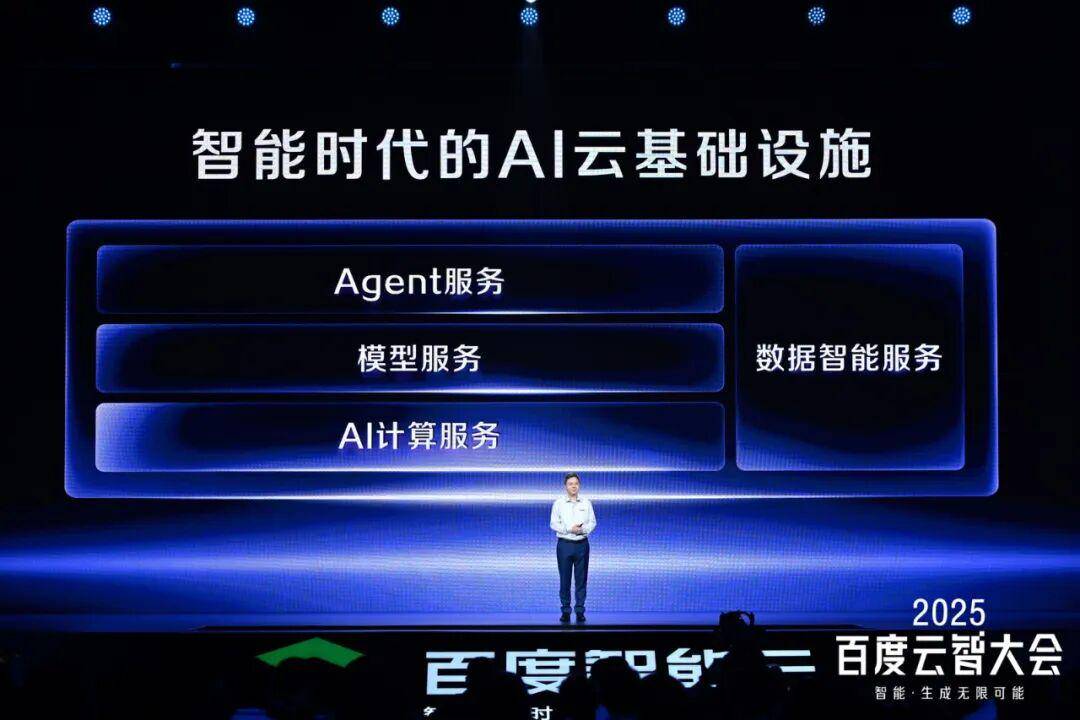
Group 1 - The cloud market is undergoing profound changes driven by the intelligent economy, shifting from resource and scale competition to full-stack technological capabilities, ecosystem openness, and industry penetration depth as new core competitive advantages for cloud vendors [1] - The rise of generative AI has brought unprecedented transformation to the cloud market, with a call for new infrastructure to support an AI-first cloud [1][3] - The demand for AI cloud services is experiencing exponential growth due to high development costs, complex model training and deployment, and increasing computing power requirements [3] Group 2 - Baidu Intelligent Cloud has maintained its leading position in China's AI public cloud market for six consecutive years, leveraging its deep accumulation in full-stack AI technology [3] - The upgraded Baidu Baiche AI computing platform 5.0 has achieved comprehensive capability enhancements across four key areas, effectively breaking through AI computing efficiency bottlenecks [3] - Baidu Intelligent Cloud's 千帆 platform has been upgraded to version 4.0, providing developers with enterprise-level models, orchestration, and data capabilities necessary for building AI Agents [4] Group 3 - The AI cloud market in China has entered a competitive phase where full-stack technological capabilities, ecosystem openness, and industry penetration depth have become new competitive barriers [5] - Baidu Intelligent Cloud is positioned to continue driving high-quality development in the real economy through solid industry empowerment, maintaining its competitive edge in the cloud market [5]

商汤上半年剥离部分汽车业务后亏损减至14.8亿元,CFO称X业务盈利期或需更长时间
Tai Mei Ti A P P· 2025-08-30 04:46
Core Viewpoint - SenseTime Group reported a revenue of 2.358 billion yuan for the first half of 2025, marking a year-on-year increase of 35.6%, while narrowing its net loss to 1.489 billion yuan, a reduction of 39.9% year-on-year [2] Financial Performance - Revenue for the first half of 2025 reached 2.358 billion yuan, up 35.6% year-on-year - Net loss narrowed to 1.489 billion yuan, down 39.9% year-on-year - Adjusted net loss under non-IFRS was 1.162 billion yuan, a decrease of 50% year-on-year [2] - Adjusted EBITDA loss reduced by 72.5% to 521 million yuan [2] Business Segmentation - The company reclassified its business segments into "Generative AI," "Visual AI," and "X Innovation" [5] - Generative AI revenue was 1.815 billion yuan, up 72.7% year-on-year, accounting for 77% of total revenue [5] - Visual AI revenue was 436 million yuan, down 14.8% year-on-year, while X Innovation revenue was 106 million yuan, down 39.5% year-on-year [5] Strategic Initiatives - The company is focusing on the dual engines of Generative AI and Visual AI to maintain its leadership position [3] - The "1+X" strategy aims to enhance organizational efficiency and reflect the business's essence and boundaries [3][4] - The company is optimistic about the growth of the Generative AI segment, expecting it to outpace overall growth [4] Market Position and Future Outlook - The total cash reserves reached 13.2 billion yuan, with plans to use 50% for expanding AI infrastructure and 20% for exploring new technology applications [12] - The company is positioned to leverage the "Artificial Intelligence+" initiative to drive growth and capitalize on market opportunities [14] - The stock price increased by approximately 40% since early July, reflecting positive market sentiment [14]
半年报看板 | 商汤科技亏损大幅收窄 生成式AI收入占比提升至77%
Zhong Guo Jin Rong Xin Xi Wang· 2025-08-30 04:46
Core Insights - SenseTime reported a 36% year-on-year revenue growth for the first half of 2025, reaching RMB 2.4 billion, with generative AI revenue growing by 73% for the third consecutive year [1] - The company's adjusted net loss significantly narrowed, decreasing by 50% year-on-year, while accounts receivable collection reached a record high of RMB 3.2 billion, up 96% [1] - As of mid-2025, SenseTime's total cash reserves amounted to RMB 13.2 billion [1] Group 1: Business Strategy and Performance - SenseTime is focusing on its "1+X" strategy, where "1" represents generative AI and visual AI as core business engines, and "X" includes innovative sectors such as smart driving, smart healthcare, home robotics, and smart retail [1] - Generative AI now accounts for 77% of the company's total revenue, with the "Riri New" model enhancing penetration and customer loyalty through productivity and interactive tools [1] - The "Little Raccoon" product in productivity tools has surpassed 3 million users across financial, educational, and governmental versions [1] Group 2: Visual AI and Market Expansion - The "Riri New V6.5" in the interactive tools sector has achieved a 510% year-on-year increase in multi-modal real-time interaction duration [2] - The visual AI segment has restarted its growth trajectory, leading to improvements in both profit and cash flow [2] - As of June 30, 2025, SenseTime's visual AI division served over 660 clients domestically and internationally, with a 57% repurchase rate and significant growth in overseas opportunities and new orders [2]
商汤-W(00020.HK):利润与现金流改善 生成式AI持续高增
Ge Long Hui· 2025-08-30 03:52
Core Insights - The company reported a revenue of 2.36 billion yuan for the first half of 2025, representing a year-on-year growth of 35.6% [1] - The gross profit was 910 million yuan, with an 18.4% increase year-on-year, while the net loss narrowed to 1.49 billion yuan, a 39.9% improvement compared to the previous year [1] - The net cash flow from operating activities was -640 million yuan, showing an 81.9% reduction in outflow compared to the same period last year [1] Business Analysis - In terms of business segments, revenue from generative AI reached 1.82 billion yuan, marking a 72.7% year-on-year increase [1] - The company optimized its GPU chip combination, achieving a 20% improvement in computing power efficiency compared to the previous year [1] - The visual AI segment generated 440 million yuan in revenue, a decline of 14.8% year-on-year, although overseas opportunities and orders saw significant growth [1] - The narrowing of losses was attributed to several factors, including a 31.4% reduction in employee numbers, leading to a 72.5% increase in per capita gross profit to 261,000 yuan [1] - Trade receivables decreased by 740 million yuan, contributing to a reduction in financial asset impairment losses [1] - The sale of a subsidiary generated 940 million yuan for the company [1] Profit Forecast and Valuation - Revenue projections for 2025 to 2027 are estimated at 5.04 billion, 6.41 billion, and 7.94 billion yuan, with year-on-year growth rates of 33.7%, 27.1%, and 23.8% respectively [2] - Expected net losses for the same period are -3.21 billion, -2.45 billion, and -2.07 billion yuan, with a year-on-year narrowing of losses by 25.0%, 23.6%, and 15.5% respectively [2] - The company maintains a "buy" rating with corresponding price-to-sales ratios of 14.1, 14.7, and 11.6 for the years 2025, 2026, and 2027 [2]