
人口老龄化

Search documents
日本65岁以上老年人口占比创新高
Xin Hua She· 2025-09-14 13:20
Core Insights - Japan's elderly population aged 65 and above has reached 36.19 million, accounting for 29.4% of the total population, marking a historical high [1] - The number of elderly individuals decreased by 50,000 compared to the previous year, but the proportion of elderly in the total population increased by 0.1 percentage points [1] - Japan has the highest percentage of elderly people among 38 countries with populations exceeding 40 million [1] Demographic Breakdown - Among the elderly, there are 15.68 million men and 20.51 million women aged 65 and above [1] - The population aged 70 and above is 29.01 million, those aged 75 and above is 21.24 million, and the population aged 80 and above is 12.89 million, all showing an increase from the previous year [1] Employment Trends - In 2024, the number of employed individuals aged 65 and above is projected to reach 9.3 million, an increase of 160,000 from the previous year, marking a record for 21 consecutive years [1] - Elderly workers represent 13.7% of the total employment population, also a historical high [1] - Factors such as labor shortages and delayed retirement age are expected to contribute to continued growth in elderly employment [1] Future Projections - According to the National Institute of Population and Social Security Research, it is estimated that by 2050, the proportion of elderly individuals aged 65 and above in Japan could reach 37.1% [1]
人口灰犀牛:现状、影响和应对(国金宏观张馨月)
雪涛宏观笔记· 2025-09-13 05:04
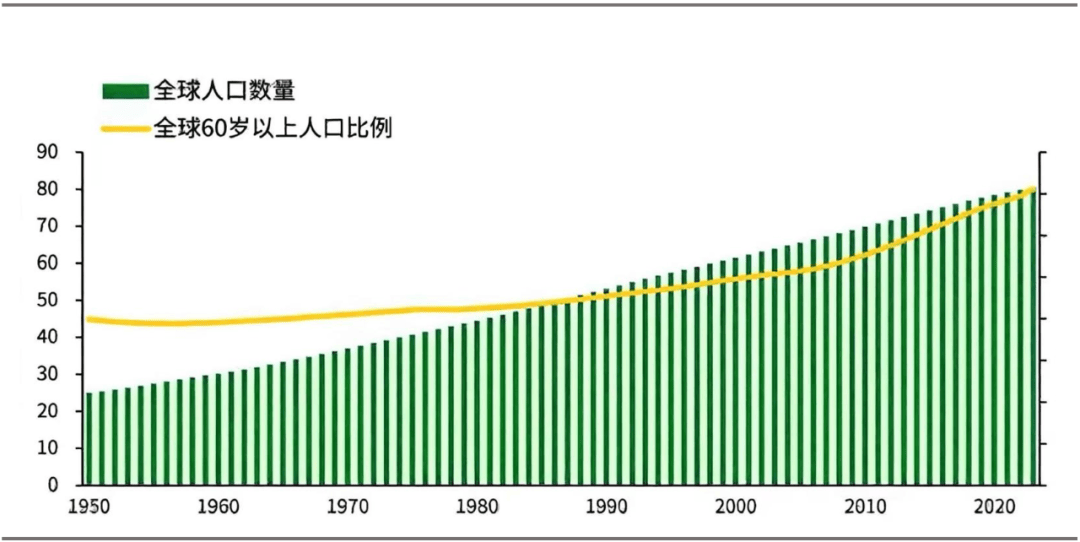
Core Viewpoint - The key to maintaining output growth in the face of accelerating population aging is to improve labor productivity through technological advancement, increasing labor participation rates, and expanding overseas operations [2]. Group 1: Global Population Trends - The global population is transitioning through four stages of demographic transformation, with most countries having completed industrialization or being in its middle stages, leading to a decline in the demographic dividend and an increase in aging and low birth rates [5][10]. - By 2024, the global population aged 65 and older is projected to reach 10.2%, with this figure expected to rise to 13.1% by 2035, indicating a shift towards moderate aging societies [10]. - The total fertility rate globally has decreased from a peak of 5.32 in the 1960s to 2.25 in 2024, nearing the replacement level of 2.1, with developed economies facing significant challenges related to low birth rates [11]. Group 2: China's Population Challenges - China is entering a phase of accelerated aging, with the proportion of the population aged 65 and older expected to reach 15.6% by 2024, transitioning to a moderately aged society [16]. - The total fertility rate in China has fallen below the replacement level since 1991, reaching 1.0 in 2023, necessitating comprehensive policies to support childbearing and reduce the burden of child-rearing [18]. - The phenomenon of "aging before becoming rich" poses challenges for total demand and the social security system, as the elderly population's consumption capacity may be weaker than that of developed economies [20]. Group 3: Macroeconomic Impacts of Population Structure Changes - The aging population is expected to exert downward pressure on potential growth rates due to a shrinking labor force, with China's labor force participation rate declining from a peak of 74.5% in 2010 to 68.3% by 2024 [31][34]. - The aging process can lead to a negative output gap, as seen in Japan, where actual economic growth has consistently lagged behind potential growth due to demographic shifts [36]. - Population aging is associated with a shift in consumption patterns, increasing demand for services such as healthcare and elder care, which may enhance service consumption's share of total consumption [39]. Group 4: Strategies to Address Aging Challenges - Improving labor productivity is crucial to counter the negative impacts of an aging population, with technology playing a key role in enhancing productivity through automation and innovation [46][51]. - Increasing labor participation rates, particularly among women, and extending working hours can help mitigate the labor supply challenges posed by an aging population [57]. - Expanding overseas operations and attracting foreign labor can serve as effective strategies to address domestic labor shortages and enhance productivity [59][60].


日本百岁老人超9.9万 连续55年创新高
Zhong Guo Xin Wen Wang· 2025-09-12 06:26
Core Insights - The number of centenarians in Japan has reached a record high of over 99,763, marking an increase of 4,644 from the previous year [1] - The majority of centenarians are female, accounting for approximately 88% of the total [1] - The oldest living person in Japan is a 114-year-old woman named Shizuko Hasegawa, while the oldest man is 111-year-old Kiyotaka Mizuno [1] Demographic Data - Japan has approximately 80 centenarians per 100,000 people nationwide [1] - Shimane Prefecture has the highest proportion of centenarians, with about 169 per 100,000, while Saitama Prefecture has the lowest at 49 per 100,000 [1] - The average life expectancy in Japan for women is projected to be 87.13 years and for men 81.09 years in 2024 [1] Historical Context - Japan began tracking centenarians in 1963, when there were only 153 individuals aged 100 or older [1] - The number of centenarians has steadily increased due to advancements in healthcare and nursing, surpassing 1,000 in 1981, 10,000 in 1998, and 90,000 in 2022 [1]
双赛道深耕筑牢业绩根基,战略布局拓展全球市场 海昇药业上半年营收增长42.14%
Quan Jing Wang· 2025-09-01 05:29
Core Insights - Haisheng Pharmaceutical reported a revenue of 101 million yuan in the first half of 2025, representing a year-on-year growth of 42.14% and a net profit of 30.33 million yuan, up 29.33% year-on-year [1] - The company is a key supplier in the veterinary and pharmaceutical raw materials sector, capitalizing on the recovery of the aquaculture industry and expanding its revenue sources through new product launches and successful fundraising projects [1][3] Industry Trends - The global aging population is projected to reach nearly 1.6 billion by 2050, with 16% of the population aged 65 and older, driving demand for chronic disease management and elderly care medications [2] - The Chinese elderly population is expected to reach 310 million by the end of 2024, accounting for 22% of the total population, further increasing the demand for pharmaceuticals [2] - The global veterinary drug market is expected to exceed 60 billion USD by 2025, with a compound annual growth rate (CAGR) of 7.5% from 2022 to 2025 [2] Company Performance - In the first half of 2025, Haisheng Pharmaceutical's raw materials and intermediates business generated revenues of 77.94 million yuan and 22.71 million yuan, respectively, with year-on-year growth rates of 58.14% and 5.46% [3] - The gross profit margins for raw materials and intermediates were 43.81% and 42.25%, indicating strong product competitiveness and market expansion effectiveness [3] R&D and Innovation - Haisheng Pharmaceutical maintains a high level of R&D investment, with expenditures of 5.17% of revenue in the first half of 2025, reflecting a year-on-year increase of 28.68% [4] - The company has developed core patented technologies that effectively reduce production costs and ensure product quality consistency, supporting profitability and market competitiveness [4] Market Strategy - The company achieved domestic revenue of 78.44 million yuan and international revenue of 22.41 million yuan in the first half of 2025, with gross margins of 39.70% and 56.34%, respectively [5][6] - Haisheng Pharmaceutical is expanding its global market presence while optimizing internal operations and technical capabilities, which is expected to drive revenue growth [5][6] Client Relationships - The company has established partnerships with notable domestic and international clients, ensuring stable sales growth and continuous operational optimization [7] - Haisheng Pharmaceutical is well-positioned to capture opportunities arising from the recovery of the aquaculture industry and the expansion of its product offerings [7]
什么时候房价能重回升势?
集思录· 2025-08-31 14:33
Core Viewpoint - The article discusses the current state of the real estate market in China, particularly in major cities like Beijing and Shanghai, highlighting a significant decline in property prices and questioning the sustainability of previous growth trends [1][2]. Group 1: Current Market Conditions - Property prices in major cities have not only stagnated but have also seen declines, with some areas experiencing drops of over 20% [1]. - In certain provincial capitals, the highest price drops have reached 50%, indicating a severe market correction [1]. - The article notes that the real estate market is facing a lack of buyers, as evidenced by the absence of offers on listed properties [1]. Group 2: Factors Influencing Price Decline - The peak of residential leverage occurred in 2021, and since then, there has been no growth in household leverage, leading to a stagnation in property prices [3]. - The "three red lines" policy has restricted corporate leverage, resulting in ongoing bankruptcies among small to medium-sized real estate companies [4]. - An oversupply of new homes is pressuring developers to sell quickly, but potential buyers are hesitant to take on more debt [4]. - Demographic challenges, such as an aging population and a decrease in new births, are contributing to a reduced demand for housing [5][6]. - Government initiatives to build affordable housing are expected to further decrease the demand for commercial properties [7]. Group 3: Long-term Perspectives - Some analysts believe that the current price levels in first and second-tier cities are attractive and that a recovery is possible, drawing parallels with past market recoveries in places like Hong Kong [9][10]. - There is a sentiment that inflation could serve as a catalyst for future price increases in the real estate market [10]. - However, skepticism remains regarding the long-term viability of property investments, with concerns about the generational wealth depletion and the aging housing stock [11][12].

每年2000万“新老人”入场,银发经济风口来了?
Sou Hu Cai Jing· 2025-08-29 09:07
Core Insights - By the end of 2024, the population aged 60 and above in China will exceed 300 million, accounting for over 22% of the total population, leading to the rapid formation of a trillion-level "silver economy" market [1][5][7] - The consumption demands of the elderly have shifted from basic survival needs to quality of life, with digitalization, health, socialization, and value realization becoming core features of new consumption patterns [1][4] - There is a significant supply gap in the market, particularly in key areas such as elderly care facilities, services, health, cultural tourism, products, finance, and smart elderly care, which restricts the development of the silver economy [1][4][36] Population Base - The aging population is a global trend and a core feature of China's social structure, providing a substantial user base for the silver economy [4][5] - In 2000, the population aged 60 and above reached 130 million, marking the beginning of China's aging society; by 2023, this number had grown to 297 million, indicating deep aging [5][7] - By 2035, the population aged 60 and above is projected to reach 440 million, accounting for 32.1% of the total population, indicating a transition to a super-aged society [7][9] Demand Upgrade - The new generation of elderly consumers, primarily from the "post-60s" cohort, is driving the silver economy with a strong consumption capability and a desire for a richer lifestyle [16][18] - The elderly are increasingly crossing the digital divide, with 60.7% of them spending over three hours online daily, engaging in activities such as online shopping and social media [18][20] - There is a growing focus on self-investment, health, and social relationships, with many elderly individuals actively seeking to enhance their personal value and quality of life [20][26] Supply Gap - The rapid aging of the population in China has outpaced the development of necessary infrastructure and services, leading to a significant supply gap in the silver economy [36][38] - As of 2024, there is a shortfall of approximately 1 million elderly care beds, highlighting the urgent need for improved elderly care facilities [39][41] - The elderly care service sector faces challenges such as limited coverage in rural areas and a lack of qualified caregivers, with a projected demand for around 20 million caregivers by 2030 [45][46] Payment Capability - The elderly population's payment capability is continuously increasing, supported by high savings rates, stable pension income, and family support [2][62] - The average total assets of households led by individuals aged 46-64 are approximately 3.5 million yuan, indicating a strong financial foundation for consumption [64][66] - The income of retirees is steadily rising, with a significant portion of the elderly population in urban areas receiving pensions that support their consumption needs [68][70] Policy Drive - The introduction of the "Silver Economy Document No. 1" in 2024 marks a systematic push at the national strategic level to transform demographic challenges into new economic growth drivers [3][71] - Over the years, numerous policies have been implemented to support the development of the silver economy, emphasizing the need for a coordinated approach between elderly care services and the market [72][75] - The government is increasingly focusing on developing the silver economy, recognizing its potential to address the needs of an aging population and stimulate economic growth [75][76]
多国央行行长及经济学家警告称劳动力短缺可能引发通货膨胀
Shang Wu Bu Wang Zhan· 2025-08-27 15:39
Core Viewpoint - Central banks from multiple countries warn that without attracting more foreign labor, major global economies will face severe labor shortages in the coming decades due to aging populations [1] Group 1: Japan - The Bank of Japan (BoJ) Governor Ueda Kazuo states that Japan's rapid aging society makes labor shortages one of the country's "most urgent" economic issues [1] - Foreign workers account for only 3% of Japan's total labor force but contribute to half of the recent labor growth [1] Group 2: Eurozone - European Central Bank (ECB) President Christine Lagarde emphasizes that without the influx of foreign workers, the Eurozone's labor force will decrease by 3.4 million by 2040 [1] - Foreign workers have contributed to 50% of the Eurozone's labor growth over the past three years, playing a crucial role in offsetting the negative impacts of demographic changes on economic growth [1] Group 3: United Kingdom - Bank of England (BoE) Governor Andrew Bailey warns that declining productivity and lower labor participation rates are exacerbating economic challenges in the UK [1] - It is predicted that by 2040, 40% of the UK population will be aging, which may worsen labor market shortages [1] Group 4: Economic Implications - Economists indicate that labor shortages could lead to decreased production capacity and may trigger inflationary pressures [1]
2025年中国社区居家养老服务行业发展背景、相关政策、市场规模、重点企业及未来展望:人口老龄化程度进一步加深,社区居家养老服务规模突破万亿元[图]
Chan Ye Xin Xi Wang· 2025-08-27 01:01
Core Insights - Community home-based elderly care services are a crucial supplement to traditional family care models, addressing the needs of the aging population in China and alleviating the burden on family caregivers [1][10] - The market size of China's community home-based elderly care services is projected to grow from 52.42 billion yuan in 2016 to 1,149.12 billion yuan by 2024, with a compound annual growth rate (CAGR) of 47.1% [1][10] - By 2025, the market size is expected to reach 1,310.4 billion yuan, driven by the deepening aging process and the continuous improvement of the elderly care service system [1][10] Industry Overview - Community home-based elderly care services integrate family, community, and social resources to provide specialized support for elderly individuals living at home, including daily care and rehabilitation services [3][5] - The service model includes home visits and daytime care, covering 14 basic service categories such as meal assistance, bathing assistance, and health monitoring [3][5] Market Dynamics - The number of individuals aged 65 and above in China has increased from 144.24 million in 2015 to an estimated 220.23 million by 2024, with an aging rate rising from 10.5% to 15.64% during the same period [8] - The growing elderly population and the resulting demand for daily care services are driving the development of community-based home care models, which are part of the "9073" elderly care system [8] Policy Support - The Chinese government has introduced various policies to support the community home-based elderly care sector, including financial subsidies, tax incentives, and standard regulations, which have stimulated market vitality and diversified service supply [8][10] - Recent policies aim to enhance the basic elderly care service system, promote community-based care, and encourage the integration of community resources for elderly services [8][10] Industry Structure - The community home-based elderly care service industry features a diverse competitive landscape, including government-supported public organizations, market-oriented professional institutions, and community social organizations [11] - Key players in the industry include Beijing Sijiejiatong Information Technology Co., Ltd., Lion City Yian (Shanghai) Property Management Co., Ltd., and Jiangsu Ruizhikang Health Industry Group Co., Ltd., among others [11][12] Future Trends - The integration of smart technology and data analytics is expected to enhance service efficiency in community home-based elderly care, with applications such as health monitoring devices and AI-assisted care [12][13] - There will be a growing emphasis on personalized and customized services tailored to the specific needs of elderly individuals, including health management and psychological support [13] - Increased government support is anticipated, including expanded long-term care insurance trials and improved regulatory frameworks to enhance service quality and protect elderly rights [14][15]

2025年《财富》世界500强峰会即将开幕
财富FORTUNE· 2025-08-26 13:04
Core Viewpoint - The 2025 Fortune Global 500 Summit will focus on corporate strategies in turbulent times, exploring how to leverage new technologies, innovate collaboration models, drive transformation, and enhance resilience to navigate the changing global market [2][6]. Group 1: Event Overview - The summit will take place in Guangzhou on September 25-26, 2025, under the theme "Standing at the Dawn of a New Cycle: Explore, Embrace, and Elevate" [2][6]. - The event aims to provide a platform for leaders and experts from Fortune 500 companies to share insights on trends, transformation, and self-reinvention [2][6]. Group 2: Economic Context - The World Bank projects that global economic growth will reach its slowest pace since 2008, highlighting the challenges posed by a "non-typical cycle" filled with uncertainties [2]. - BlackRock has warned that five "super forces" (the rise of artificial intelligence, energy transition, geopolitical fragmentation, aging population, and financial digitalization) are reshaping the global economy and its long-term trajectory [2]. Group 3: Importance of Dialogue and Cooperation - Major corporations, which have historically benefited from technological advancements and global economic integration, now face challenges such as geopolitical rifts, trade barriers, and technological competition [2]. - The summit emphasizes the necessity of dialogue and cooperation among businesses to pave a more stable and prosperous path forward [2].

国金证券:中国人口老龄化将进入加速阶段,人口“灰犀牛”的影响将愈发不可忽视
Xin Lang Cai Jing· 2025-08-26 00:07
Core Viewpoint - The report from Guojin Securities indicates that China's population aging will accelerate, making the impact of the "gray rhino" increasingly significant [1] Supply Side Analysis - Population aging will lead to a shrinkage of the working-age population, exerting downward pressure on potential growth rates [1] Demand Side Analysis - Population aging will exacerbate insufficient total demand, reflected in a negative output gap, while also increasing the proportion of service consumption [1] Short-term and Long-term Implications - In the short term, deepening aging will suppress inflation, but in the long term, it may drive inflation upward [1]
