基因编辑

Search documents
闫凯境博士:以还原健康开启生命科学新纪元
Xin Lang Cai Jing· 2025-08-26 03:36
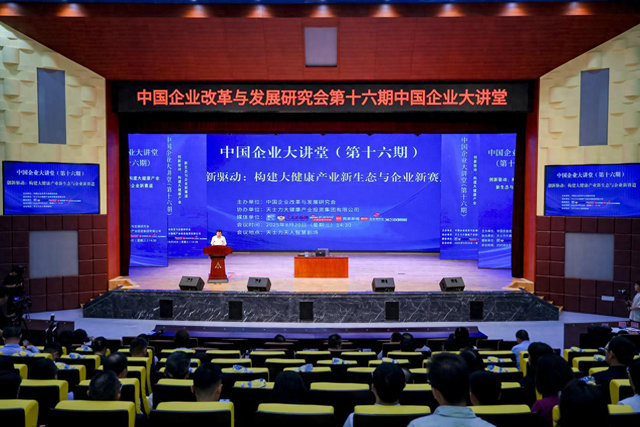
Core Viewpoint - The event focused on "Innovation-Driven: Building a New Ecosystem for the Health Industry and New Business Tracks," emphasizing the intersection of technological revolution and health challenges, with Tianjin Tianshi Group aiming to leverage life science innovations to support the Healthy China strategy and fundamentally transform the health industry [1][2]. Group 1: Event Overview - The 16th China Enterprise Lecture was held in Tianjin, co-hosted by the China Enterprise Reform and Development Research Association and Tianjin Tianshi Health Industry Investment Group, gathering government, industry, academia, and research to discuss topics such as the inheritance and innovation of traditional Chinese medicine and life science advancements [1][2]. - Key attendees included renowned figures such as Zhang Boli, honorary president of Tianjin University of Traditional Chinese Medicine, and Yan Kaijun, chairman of Tianjin Tianshi Group [1]. Group 2: Health Challenges and Strategic Direction - The global life expectancy increased from 66.8 years in 2000 to 73.1 years in 2019, while healthy life expectancy only rose from 58.1 years to 63.5 years, indicating that longer life often comes with health issues and lower quality of life [4]. - The 2025 National Health Conference emphasized a shift from a disease-centered approach to a people-centered health system, highlighting the urgent need for a new health framework [4]. Group 3: Tianshi's Health Restoration Theory - Yan Kaijun introduced Tianshi's "Restoration Health" theory, which focuses on restoring microcirculation networks to activate adult stem cells for functional repair, emphasizing the importance of microcirculation in preventing aging and chronic diseases [4][6]. - The team utilized single-cell RNA sequencing and AI analysis to clarify the role of mesenchymal stem cells (MSCs) in health restoration, establishing a quality control system for MSCs to ensure their stability and effectiveness [6][7]. Group 4: Integration of Technology and Traditional Medicine - Tianshi is integrating cell therapy with traditional Chinese medicine through a large model that provides personalized health services, including precise diagnostics and tailored intervention plans [7][8]. - The collaboration with Huawei Cloud led to the development of a dual-modal model "Smart Herbal Medicine," which enhances both drug development and clinical diagnosis in traditional Chinese medicine [8]. Group 5: Vision for the Future - Tianshi aims to transform the challenges of an aging society into opportunities for health innovation, aspiring to help individuals achieve a healthy lifespan of 120 years and support sustainable societal development [8].


世界首例!基因编辑猪肺,成功移植人体
财联社· 2025-08-26 02:24
Core Viewpoint - The research team from China has successfully performed the world's first gene-edited pig lung transplant into a brain-dead human, marking a significant milestone in the field of xenotransplantation and addressing the shortage of organ donors [1][2]. Group 1: Research Details - The study involved the transplantation of a left lung from a genetically edited Bama pig into a brain-dead individual, simulating a common clinical single-lung transplant procedure [1]. - The donor pig underwent six genetic modifications to reduce the risk of immune rejection after the organ was transplanted into a human [1]. - Post-surgery monitoring indicated that the transplanted lung maintained ventilation and gas exchange functions for nine days without acute rejection, and no active infection was detected during this period [1]. Group 2: Implications and Future Directions - The increasing global demand for organ transplants has led to xenotransplantation being viewed as a potential solution to the donor shortage crisis [1]. - The research team plans to further optimize gene editing strategies and anti-rejection treatment protocols to extend the survival and functionality of transplanted organs [1]. - The team aims to apply their independently developed non-invasive technology in future xenotransplantation trials to minimize mechanical ventilation damage to the donor lung, facilitating the transition of xenotransplantation to clinical applications [1]. Group 3: Ethical Considerations - The research adhered to national laws, regulations, and ethical guidelines, receiving approval from the hospital's ethics committee and other oversight bodies [2]. - The brain-dead subject's family consented to participate in the study to support medical advancement, and the study was concluded at the family's request on the ninth day [2]. Group 4: Expert Opinions - International experts have praised the research, noting that previous xenotransplantation trials were limited to kidneys, hearts, and livers, with lung transplantation presenting unique challenges due to its physiological balance and exposure to external air [2]. - The director of Spain's National Transplant Organization highlighted the achievement as a milestone in the field of xenotransplantation [2].

Nature Medicine:世界首例!我国学者成功将基因编辑猪肺移植到人体内
生物世界· 2025-08-26 00:00
Core Viewpoint - The article discusses significant advancements in xenotransplantation, particularly focusing on the successful transplantation of genetically edited pig organs into human patients, highlighting the potential to alleviate organ shortages in humans [3][4][5]. Summary by Sections Breakthroughs in Xenotransplantation - In October 2021, NYU Langone Medical Center performed the first transplantation of a genetically edited pig kidney into a brain-dead woman [3]. - In January 2022, the University of Maryland conducted the first live transplantation of a genetically edited pig heart, with the patient surviving for approximately two months [3]. Recent Research on Pig Lung Transplantation - In March 2025, a team from Xijing Hospital published a paper in Nature, reporting the first successful transplantation of a genetically edited pig liver into a brain-dead patient, with the organ functioning for 10 days [4]. - In August 2025, a study published in Nature Medicine documented the world's first successful transplantation of a genetically edited pig lung into a brain-dead human, with the lung surviving for 9 days and functioning properly [5][4]. Genetic Modifications and Challenges - The pig lung used in the transplantation was genetically modified by deleting three "dangerous" genes (GTKO, CMAH, B4GALNT2) and adding three protective human genes (hCD46, hCD55, hTBM) to mitigate immune rejection [7][9]. - During a 216-hour monitoring period, the transplanted pig lung maintained vitality and function without signs of hyperacute rejection or infection, although complications such as severe edema and antibody-mediated rejection were observed [9][10]. Future Directions and Considerations - The study indicates that further genetic modifications may be necessary to improve outcomes, particularly in addressing coagulation disorders and enhancing graft survival [11][12]. - The complexity of lung transplantation poses greater challenges compared to other organs, necessitating ongoing preclinical research to overcome these barriers [12]. China's Leadership in Xenotransplantation - Chinese scientists are at the forefront of xenotransplantation research, having completed the world's first human transplant of genetically edited pig liver and lung, as well as a kidney transplant with a patient surviving for nearly six months [12].

华人学者本周发表6篇Cell论文:RNA编辑器、植物细胞图谱、修饰腺苷的解毒机制、植物免疫、通用型CAR-T细胞、生物凝聚体
生物世界· 2025-08-23 08:00
Core Insights - The article highlights nine research papers published in the prestigious journal Cell, with six authored by Chinese scholars, covering various advancements in molecular biology and plant science [3]. Group 1: RNA Editing and Gene Regulation - A study from Yale University transformed IscB and Cas9 into RNA-guided RNA editors, demonstrating potential applications in variable splicing interference and RNA base editing, with performance surpassing Cas13 and enhanced safety [5][7]. - The research on modified adenosines from Tohoku University revealed a detoxification mechanism involving adenosine kinase and ADAL, linking modified RNA metabolism to human diseases [14][17]. Group 2: Plant Science and Immunity - A unified cell atlas of vascular plants was created by researchers from the Chinese Academy of Sciences, identifying foundational genes and facilitating gene discovery, thus providing a new paradigm for plant developmental biology [9][12]. - A study on systemin antagonists in tomatoes uncovered a molecular mechanism regulating the plant immune system, which could inform the design of disease-resistant crops [19][22]. Group 3: CAR-T Cell Therapy - Researchers from Peking University developed a novel allogeneic CAR-T cell therapy by targeting the SPPL3 gene, which enhances the therapy's safety and efficacy, potentially revolutionizing CAR-T treatments [24][27]. Group 4: Neuroscience and Synaptic Plasticity - A study from Southern University of Science and Technology explored the material properties of postsynaptic density condensates, revealing how Shank3 oligomerization affects synaptic plasticity and could relate to autism spectrum disorders [29][32].

2025广州医博会8月22日召开
Guang Zhou Ri Bao· 2025-08-22 02:22
Core Insights - The "2025 Guangzhou Medical and Health Industry Expo" will be held from August 22 to 24 at the China Import and Export Fair Complex, organized by the Guangzhou Municipal Government and relevant health authorities [1] - The expo will cover an exhibition area of 30,000 square meters, featuring 3 pavilions and 18 exhibition areas, showcasing cutting-edge technologies such as gene editing, cell therapy, organoids, organ-on-a-chip, nuclear medicine, 3D printing, biomanufacturing, and synthetic biology [1] - The event aims to encompass the entire industry chain, including R&D, transformation, production, clinical application, third-party services, and financial support [1] Industry Participation - The expo has attracted participation from health administrative departments from various regions including Anhui, Sichuan, Fujian, Chongqing, and Xinjiang [1] - Top research institutions such as Guangzhou laboratories and technology transfer centers from universities, along with over 50 local tertiary hospitals, have been invited to exhibit [1] Corporate Involvement - Notable exhibitors include large pharmaceutical companies like China Resources, Sinopharm, and Guangzhou Pharmaceutical, as well as innovative firms such as BeiGene, CanSino, and Yipin Hong [1] - Telecommunications companies like China Telecom, China Unicom, and China Mobile are also participating in the expo [1]
北大医药: 2025年半年度报告
Zheng Quan Zhi Xing· 2025-08-21 16:46
Core Viewpoint - The report highlights the financial performance and operational strategies of Peking University Health Science Center Co., Ltd. for the first half of 2025, indicating a decline in revenue but an increase in net profit, driven by improved product profitability and cost control measures [1][7]. Company Overview and Financial Indicators - The company reported a revenue of CNY 957.31 million, a decrease of 5.04% compared to the previous year [2][7]. - The net profit attributable to shareholders was CNY 100.29 million, reflecting a growth of 15.51% year-on-year [2][7]. - The basic earnings per share increased to CNY 0.1683, up 15.51% from the previous year [2][7]. - Total assets at the end of the reporting period were CNY 2.32 billion, a 1.32% increase from the end of the previous year [2][7]. - The net assets attributable to shareholders rose by 5.44% to CNY 1.60 billion [2][7]. Industry Context - The pharmaceutical manufacturing industry faced a revenue decline of 1.2% year-on-year, with total profits down 2.8%, indicating pressure on revenue and profitability due to market competition and cost control [6][7]. - The industry is undergoing significant transformation, shifting from scale expansion to quality-driven development, particularly influenced by advancements in technologies such as artificial intelligence and gene editing [6][7]. Business Operations - The company primarily engages in the research, production, and sales of chemical drug formulations, pharmaceutical distribution, and medical services [6][7]. - The main therapeutic areas include anti-infective, analgesic, and psychiatric medications, with a focus on enhancing product reserves and improving product profitability [6][7]. - The company has established a comprehensive marketing network and is exploring innovative cooperation models to expand its market presence [6][8]. Financial Performance Analysis - The company's operating costs decreased by 0.95% to CNY 710.06 million, attributed to changes in product sales structure and pricing strategies [11]. - Research and development expenses increased by 28.26% to CNY 11.83 million, reflecting a commitment to innovation and product development [12]. - The company successfully completed the consistency evaluation for key products, demonstrating its R&D capabilities and commitment to quality improvement [7][8]. Strategic Initiatives - The company aims to deepen its strategic layout by focusing on integrated raw material and formulation development, enhancing brand building, and fostering cultural integration [10][11]. - A strategic partnership with a major retail pharmacy chain in Southwest China was established to explore innovative marketing models and enhance service delivery to retail patients [8][10].

横琴房贷拟“商转公”;首个澳门监制同名同方药上市丨横琴财报⑨
2 1 Shi Ji Jing Ji Bao Dao· 2025-08-21 00:36
Group 1: Investment and Financing - Zhuhai Disi Technology Co., Ltd. recently received strategic investment from Yingfu Taike Science and Technology Fund, following multiple rounds of financing including angel round and Pre-A round [1] - The angel round included participation from several institutions represented by Gree Group and Fangxin Capital, while the Pre-A round raised nearly 100 million yuan from four institutions [1] Group 2: Pharmaceutical Innovations - Baicheng Pharmaceutical's "Baicheng Stabilizing Heart Granules" has been approved for sale in Macau, marking it as the first "Macau supervised" traditional Chinese medicine [2] - The product utilizes a "Macau registration + Hengqin production" model, leveraging the advantages of Macau's drug registration system and Hengqin's advanced industrial capabilities [2] Group 3: AI and Healthcare Advancements - Saint Ao Cloud Intelligence Technology Co., Ltd. has made significant breakthroughs in AI tumor diagnosis, leading a sub-project under a national major science and technology project focused on lung nodule AI identification [3] - The company has developed a multi-omics intelligent diagnostic system aimed at improving the accuracy of lung nodule diagnosis and reducing misdiagnosis rates [3] - The company's core achievement, the "Tumor Liquid Biopsy AI Platform," has been recognized as a national AI excellence case and included in authoritative guidelines [3][4] Group 4: Medical Technology Recognition - Zhuhai Shuotong Medical Technology Co., Ltd. has received laboratory accreditation from the China National Accreditation Service for Conformity Assessment (CNAS), indicating high standards in gene editing technology safety assessment [5] - The company focuses on innovative drug development and provides comprehensive solutions in gene editing and molecular diagnostics [5] Group 5: Housing Finance Policy - Zhuhai's housing fund management center is seeking public opinions on the implementation details for converting commercial housing loans to housing fund loans, applicable within the Hengqin cooperation zone [6] - The policy aims to reduce the financial burden on homebuyers by allowing them to switch to lower-interest housing fund loans [6] Group 6: Talent Development Initiatives - Hengqin is launching a 2025 high-level talent innovation team application process, providing financial support for teams led by outstanding talents [7] - The funding will be distributed over five years, with varying amounts based on the talent level of the team leader [7] Group 7: Education and Training Programs - The 2025 Hengqin Integrated Circuit Engineer Employment Training Program has commenced, with plans for three sessions throughout the year [8] - The program aims to enhance skills in core technologies and job capabilities, facilitated by professors and industry experts [8]
美国正式发布《通过提高出口管制透明度以维持美国优势法案》
Sou Hu Cai Jing· 2025-08-20 12:21
Technology Strategy - The U.S. government has officially enacted the "Maintaining American Advantage Act" which mandates the Department of Commerce's Bureau of Industry and Security (BIS) to report annually to Congress on export control licenses [2] Investment - SoftBank Group has invested $2 billion in Intel, acquiring 2% of its total shares at $23 per share, positioning itself as Intel's fifth-largest shareholder, reflecting confidence in the U.S. semiconductor industry [3] AI and Semiconductor Development - NVIDIA is developing a new AI chip named B30A for the Chinese market, which will outperform the currently approved H20 chip, although regulatory approval remains uncertain [3] Quantum Computing - Oak Ridge National Laboratory (ORNL) has announced the procurement of a 20-qubit superconducting quantum computer from IQM, which will be integrated into its high-performance computing systems [4] Biotechnology - A new peptide design model named PepMLM has been developed by researchers from the University of Pennsylvania and Duke University, allowing for the design of peptide ligands based solely on target protein sequences [5] Emergency Authorization - The U.S. Department of Health and Human Services has authorized the FDA to issue emergency use authorizations for animal drugs to combat the potential threat of New World screw-worms to the food supply [6] Gene Editing - Researchers from Harvard University and Jackson Laboratory have successfully used prime editing technology to correct a pathogenic gene mutation in a mouse model, offering new avenues for gene therapy in neurological diseases [7] Energy Technology - Equatic, a U.S. startup, has developed a technology that simultaneously produces green hydrogen from seawater while capturing and storing carbon dioxide, enhancing the efficiency and safety of the process [8] Robotics and Autonomous Systems - The U.S. Coast Guard has established a Robotics and Autonomous Systems (RAS) Project Execution Office to enhance operational capabilities in border security and emergency response [9] Maritime Technology - The American Bureau of Shipping (ABS) is collaborating with Saronic Technologies to develop standards for autonomous surface vessels, aiming to improve safety and efficiency in maritime operations [10] Enhanced Maritime Awareness - Ocean Power Technologies has upgraded its AI-driven maritime awareness solution, Merrows™, to enhance continuous monitoring capabilities in complex environments [11] Aerospace - Quidditch Company has launched a new modular stealth drone named "Clone Ranger," designed for short takeoff and landing, capable of carrying various payloads [12] Space Communication - Blue Origin has unveiled the Mars Telecommunications Orbiter (MTO) to establish a high-speed communication relay network between Earth and Mars, expected to launch in 2028 [14] Advanced Materials - NASA has developed a new 3D-printable metal alloy named GRX-810, designed to withstand extreme temperatures for aerospace engine components [15] Quantum Materials - A research team from Chalmers University of Technology and Finland has developed a new quantum material that enhances qubit stability against environmental noise, addressing a core challenge in quantum computing [16] Advanced Manufacturing - Divacant Technologies has partnered with Raytheon to optimize and produce U.S. Navy equipment using its adaptive production system, which automates the design and manufacturing process [17] Smart Glasses - Meta is set to launch its first smart glasses with a built-in display named "Hypernova," priced at $800, featuring gesture control and advanced camera capabilities [18]



韩春雨新论文:开发新型PCR技术,实现快速、高精度DNA检测,且无需精密仪器
生物世界· 2025-08-18 08:30
Core Viewpoint - The article discusses the evolution of research by Han Chunyu and his team, highlighting their significant contributions to genome editing and RNA tracking technologies, while also addressing the controversies surrounding their earlier work [3][4][5]. Group 1: Research Developments - In May 2016, Han Chunyu published a groundbreaking paper on DNA-guided genome editing using Argonaute protein from halophilic archaea, which initially gained widespread acclaim but was later retracted due to reproducibility issues [3]. - In January 2022, Han Chunyu published a new study on a Cas6-based RNA tracking platform, demonstrating higher sensitivity and specificity for detecting target RNA in live cells [4][5]. - Recently, Han Chunyu's team introduced a novel isothermal amplification technology, Ago-PCR, which operates at a constant temperature of 65°C, enhancing amplification efficiency and fidelity [7]. Group 2: Technological Innovations - The Ago-PCR technology utilizes a modified Argonaute protein (dmCalAgo) that retains binding ability while losing cutting capability, allowing for stable performance at 65°C [8]. - The technology relies on the synergistic action of three enzymes: a helicase (Tte UvrD) to unwind DNA, the modified protein (dmCalAgo) for precise targeting, and a polymerase (Bst) for replication [9]. - This design replaces traditional temperature cycling in PCR, achieving significant advantages such as a detection limit of 3 copies/reaction, completion of tests within 30 minutes, and compatibility with various DNA templates [11][13]. Group 3: Practical Applications - The new technology can be executed using standard heating devices, eliminating the need for expensive PCR machines, thus enabling high-precision testing in field settings, grassroots healthcare, and home testing [14]. - The team has applied for a patent for this technology, which has the potential to transform pathogen detection, genetic typing, and rapid field testing [15].

华尔街见闻早餐FM-Radio | 2025年8月18日
Hua Er Jie Jian Wen· 2025-08-17 23:01
Market Overview - US economic data suppresses stock market gains, with Trump threatening high tariffs leading to a drop in chip index by over 2% [2] - Intel shares rose nearly 3%, with a 10% increase over two days after reports of potential government investment [2] - UnitedHealth, favored by Buffett and others, saw a 12% rise, marking its largest gain in five years, supporting the Dow near record highs [2] - Bitcoin fell over $2000, dropping below $117,000, while gold experienced its first weekly decline in three weeks, with a drop of over 3% [2][6] - A-shares rose across the board, with over 4600 stocks in the green, while Hong Kong stocks fell, with JD and Alibaba both down over 3% [2] Key Economic Indicators - China's central bank emphasizes the implementation of moderately loose monetary policy [3][11] - July economic data from China shows retail sales, industrial output, fixed asset investment, and real estate sales all underperforming compared to previous values [13][19] - The consumer confidence index in the US unexpectedly declined in August, with inflation expectations rising [15] Semiconductor Sector - Trump announced plans to impose new semiconductor tariffs within two weeks, potentially reaching rates of 200%-300%, causing most chip stocks to decline [15][20] - Intel's stock performance stands out amidst the overall downturn in the semiconductor sector [15] Foreign Investment in US Debt - Foreign investors held a record amount of US debt in June, with significant increases from the UK and Japan, while holdings from India and Ireland decreased [16] - The demand for US debt remains strong despite concerns over a weakening dollar [16] AI and Technology Investments - OpenAI's CEO Altman plans to invest "trillions" in AI infrastructure, acknowledging challenges with the GPT-5 release [16][20] - Hedge funds showed significant interest in technology stocks, with Microsoft being the most favored, while Alibaba faced substantial reductions in holdings [17][21] Real Estate and Consumer Spending - China's real estate market continues to struggle, with new housing sales down 4% year-on-year, and fixed asset investment growth slowing [19] - US retail sales increased by 0.5% in July, marking the tenth consecutive month of growth, indicating resilient consumer spending [15] Corporate Developments - Tencent's stock price target raised significantly following strong earnings, with analysts optimistic about its AI growth potential [23] - China Shenhua plans a major acquisition worth over 250 billion yuan to enhance its resource reserves and profitability [23] - Circle completed a $1.3 billion stock issuance, indicating strong investor interest [27]