红利投资

Search documents
工银红利优享混合A:2025年第二季度利润1.35亿元 净值增长率4.12%
Sou Hu Cai Jing· 2025-07-22 02:09
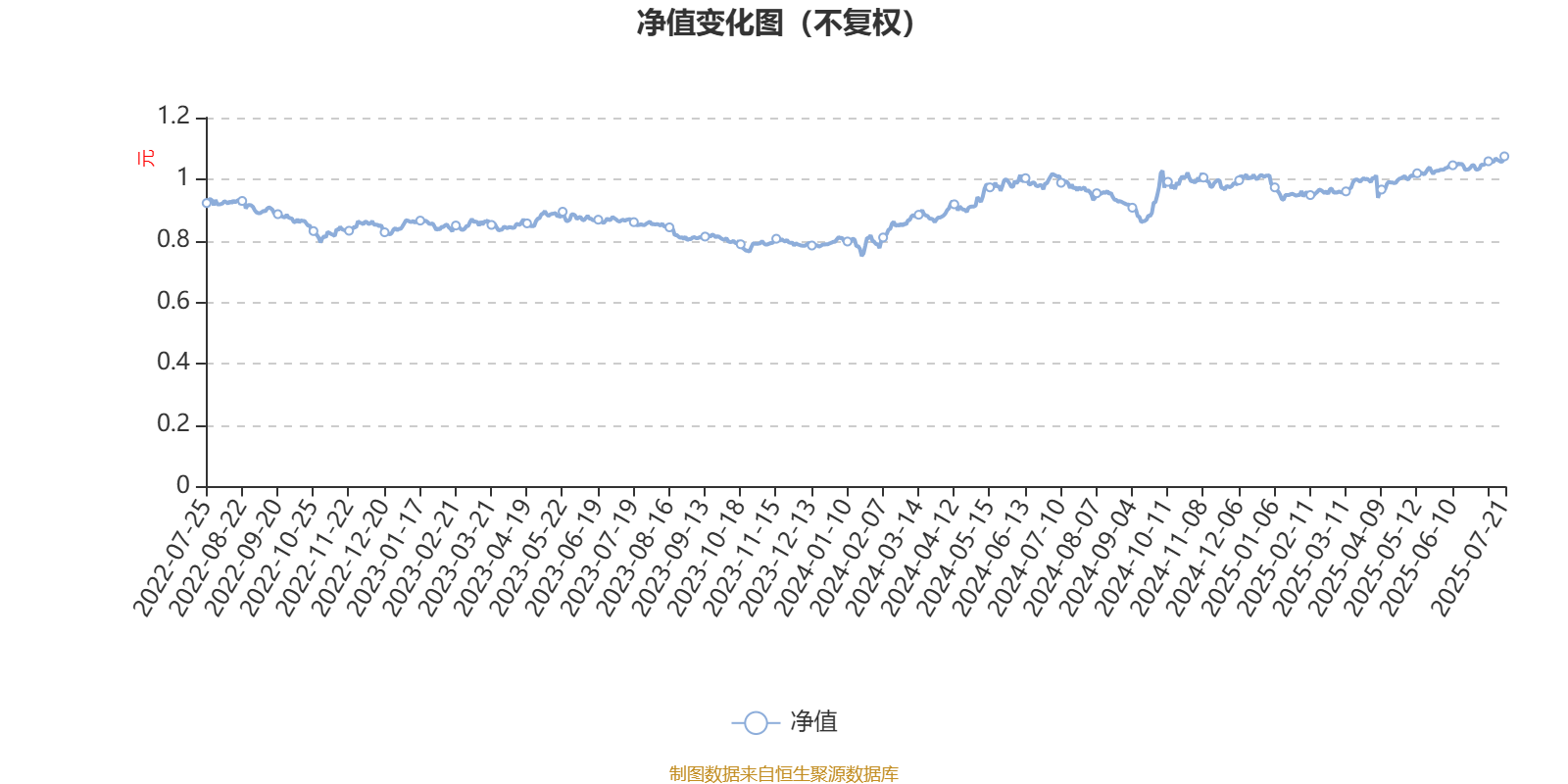
Group 1 - The fund reported a profit of 135 million yuan in Q2 2025, with a weighted average profit per fund share of 0.0419 yuan. The net value growth rate for the fund was 4.12%, and the fund size reached 3.328 billion yuan by the end of Q2 [2][15] - The fund is classified as a flexible allocation fund, primarily investing in cyclical stocks. As of July 21, the unit net value was 1.074 yuan, with the fund manager managing three funds that have all yielded positive returns over the past year [2][3] - The fund's main investment focus is on dividend-paying infrastructure sectors, with a significant portion of investments in Hong Kong stocks due to their lower valuations and better cost-effectiveness [3] Group 2 - As of July 21, the fund's one-year net value growth rate was 10.76%, ranking 43 out of 77 comparable funds. The three-month growth rate was 8.67%, ranking 46 out of 82, and the six-month growth rate was 13.10%, ranking 24 out of 82 [3] - The fund's three-year Sharpe ratio was 0.3857, ranking 16 out of 57 comparable funds, while the maximum drawdown over the past three years was 19.81%, ranking 49 out of 57 [9][11] - The fund's top ten holdings include companies such as China Resources Gas, Longyuan Power, and Funen Co., indicating a focus on energy and environmental sectors [18]

华宝红利精选混合A:2025年第二季度利润431.9万元 净值增长率3.7%
Sou Hu Cai Jing· 2025-07-21 04:07
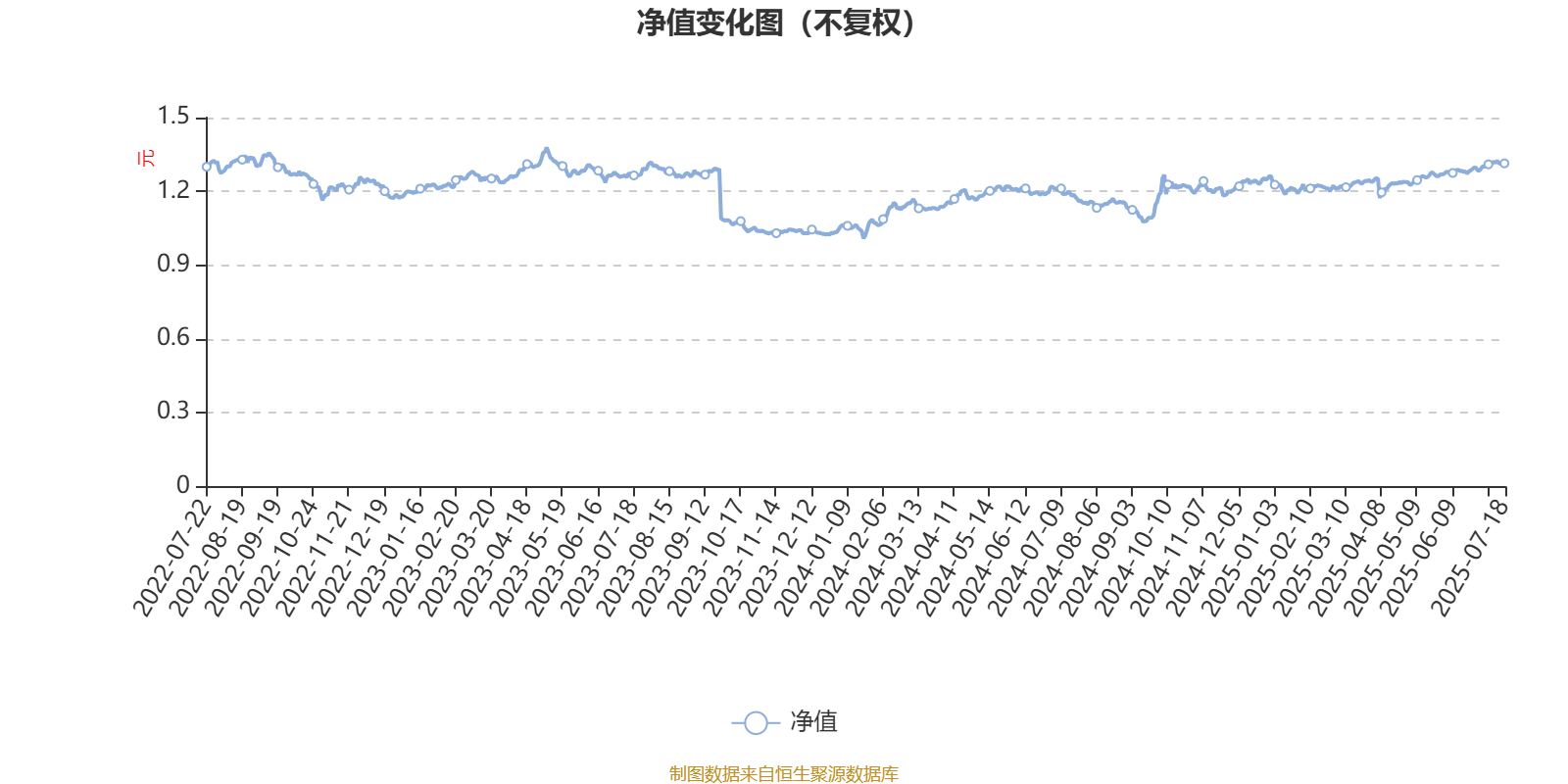
Group 1 - The core viewpoint of the article highlights the performance and strategy of the Hua Bao Dividend Select Mixed Fund A, which reported a profit of 4.319 million yuan in Q2 2025, with a net value growth rate of 3.7% for the period [3][16] - As of July 18, 2025, the fund's unit net value was 1.314 yuan, and it had a total scale of 1.08 billion yuan [3][16] - The fund manager, Tang Xueqian, emphasizes a focus on high dividend yield and sustainable dividend companies, maintaining a coherent investment style [3] Group 2 - The fund's performance metrics show a near-term net value growth rate of 6.62% over the last three months, ranking 484 out of 607 comparable funds [4] - Over the last three years, the fund's Sharpe ratio was 0.4669, ranking 33 out of 468 comparable funds, indicating a relatively strong risk-adjusted return [9] - The fund's maximum drawdown over the last three years was 14.19%, ranking 468 out of 470 comparable funds, with the largest quarterly drawdown recorded at 11.82% in Q3 2024 [11] Group 3 - The fund maintained an average stock position of 92.08% over the last three years, higher than the industry average of 85.36% [14] - The top ten holdings of the fund as of Q2 2025 included major companies such as Shandong Highway, China Shenhua, and Agricultural Bank of China, indicating a stable portfolio [20]
中欧国企红利混合A:2025年第二季度利润160.32万元 净值增长率4.59%
Sou Hu Cai Jing· 2025-07-20 07:32
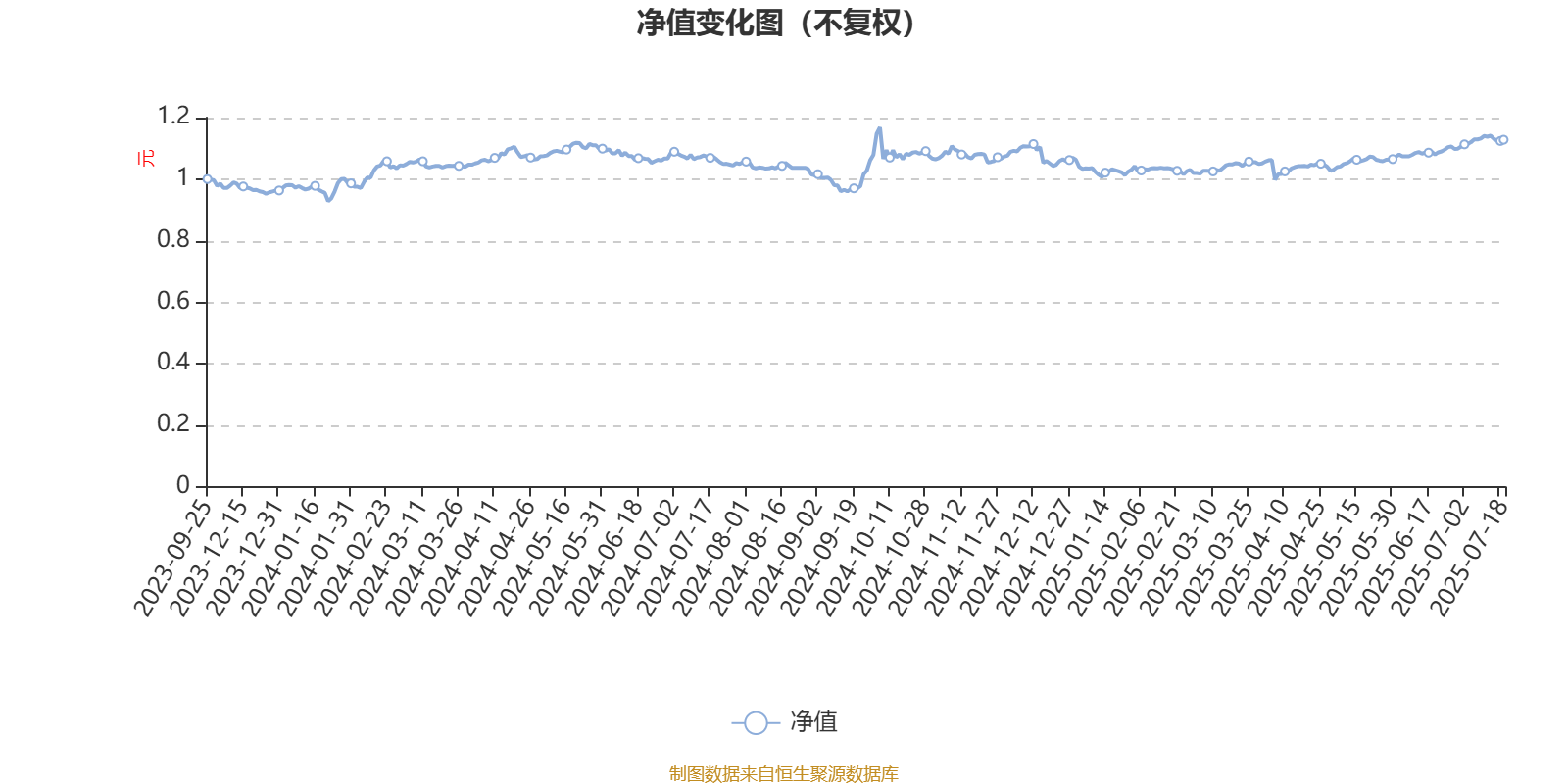
Core Viewpoint - The AI Fund, China Enterprise Dividend Mixed A (019015), reported a profit of 1.6032 million yuan for Q2 2025, with a net value growth rate of 4.59% during the period, and a total fund size of 33.8038 million yuan as of the end of Q2 2025 [3][16]. Fund Performance - As of July 18, the unit net value was 1.128 yuan, with a one-year cumulative net value growth rate of 9.58%, ranking 446 out of 584 comparable funds [3][4]. - The fund's performance over the last three months showed a growth rate of 8.11%, ranking 436 out of 615, and over the last six months, it had a growth rate of 9.65%, ranking 338 out of 615 [4]. Investment Strategy - The fund manager indicated that with the implementation of U.S. President Trump's tariff policies, global trade tensions are rising. They believe that state-owned enterprise stocks with self-controllable and domestic demand attributes will have better defensive characteristics [3]. - The report suggests that the concept of "dividend" investment, particularly high-dividend stocks, is expected to expand to broadly defined dividend stocks with potential high dividend capabilities. These companies typically have high operational barriers, stable ROE, and abundant operating cash flow, indicating a potential for sustained dividends while still being undervalued historically [3]. Fund Holdings - As of June 27, the fund's top ten holdings included Yanzhou Coal Mining Company, Shandong Publishing Group, Zoomlion Heavy Industry Science and Technology Co., New Media Group, Bohai Ferry, Phoenix Media, Nanjing Steel Group, Nanjing High Accurate Drive Equipment Manufacturing Group, China Shenhua Energy Company, and China Construction Bank [19]. Risk Metrics - The fund has a Sharpe ratio of 0.6765 since inception, indicating a reasonable risk-adjusted return [9]. - The maximum drawdown since inception is 14.12%, with the largest quarterly drawdown occurring in Q3 2024 at 11.88% [12]. Fund Positioning - The average stock position since inception has been 91.66%, compared to the peer average of 83.17%. The fund reached a peak stock position of 93.42% at the end of Q1 2024 and a low of 89.12% at the end of 2024 [15].




建信红利精选股票发起A:2025年第二季度利润47.61万元 净值增长率2.68%
Sou Hu Cai Jing· 2025-07-18 04:19
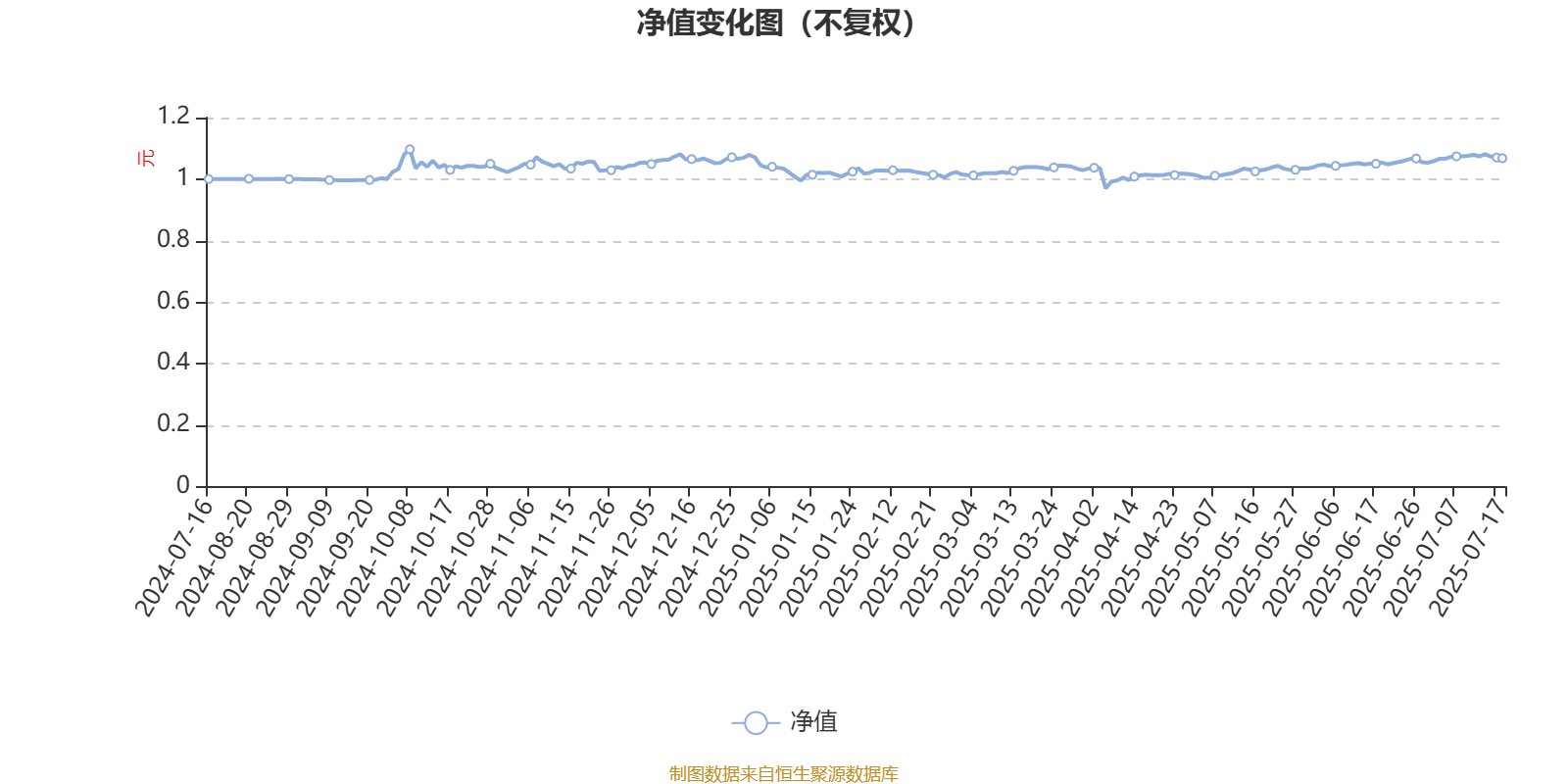
Core Insights - The AI Fund Jianxin Dividend Select Stock A (020759) reported a profit of 47.61 thousand yuan for Q2 2025, with a weighted average profit per fund share of 0.0272 yuan [3] - The fund's net asset value (NAV) growth rate for the reporting period was 2.68%, and as of the end of Q2, the fund size was 18.248 million yuan [3] - The fund is categorized as a standard equity fund, focusing on cyclical stocks, and as of July 17, the unit NAV was 1.068 yuan [3] Performance Metrics - As of July 17, the fund's NAV growth rate over the past three months was 5.82%, ranking 12 out of 18 in its category; over the past six months, it was 5.36%, ranking 15 out of 18; and over the past year, it was 8.15%, ranking 10 out of 14 [4] - The fund's Sharpe ratio since inception is 0.1012 [9] - The maximum drawdown since inception is 11.02%, with the highest quarterly drawdown occurring in Q2 2025 at 6.39% [12] Investment Strategy - The fund's management emphasizes a quantitative analysis-based approach for stock selection, considering macroeconomic trends and market style judgments, rather than solely focusing on static high dividend yields [3] - The average stock position since inception is 86.34%, compared to the category average of 88.79%, with the highest position reaching 93.75% at the end of 2024 and the lowest at 75.59% in Q3 2024 [15] Holdings - As of the end of Q2 2025, the fund's top holdings include China Shenhua, COSCO Shipping Holdings, Jiangsu Bank, Industrial Bank, Gree Electric Appliances, Agricultural Bank of China, Daqin Railway, Industrial and Commercial Bank of China, Sinopec, and China Petroleum & Chemical Corporation [19]
2025下半年煤炭行业投资策略2025下半年投资机会前瞻
2025-07-16 06:13
贵投资者朋友大家下午好我是长江金属煤炭小组的肖勇跟贵投资者朋友就煤炭行业25年年度的一个投资策略做一下分享和反馈 我们主要从几个维度对整个煤炭板块后面的一个投资机会做相应的一个介绍首先是今年以来整个煤炭板块的商品盈利和股票的表现简单做一下覆盘其次的话是对当前大家 比较关注的一些中长期问题做一些分析解读第三个就是在短期上投资维度做一下相应的展望最后是相关的标的领域做一下简要的介绍主要是这四个领域跟各位投资的朋友做一下相应的反馈首先从年初以来的表现上来看的话这个板块今年表现是 最差的整体年出资金的涨跌幅是-13%左右那么从分板块的角度来讲的话东里煤和焦煤分别去看首先东里煤的整个表现在今年以来商品的跌幅呢达到了20%多 引力方面我们也看一下如果跟历史引力做一下比较现在东宁煤可能大致处在2019年的这样一个分位值的水平如果去看一些现金指标来看的话它可能处在2015年的这个水平所以反映的结果就是整体而言现在东宁煤的引力表现在商品下跌的情况之下的话它其实是回落的比较明显 那么股票的表现呢整个多米煤板块的跌幅大概是2个点左右这是年初以来的边界表现然后多米煤的整个表现偏弱最主要的因素呢如果我们去总结来看的话主要是来自于需求的 ...
双份红包齐发,攻守配置显优势
Ge Long Hui· 2025-07-15 10:13
Core Viewpoint - The article discusses the recent dividend distributions of two ETFs managed by China Merchants Fund, highlighting the strong performance of dividend stocks in both A-share and Hong Kong markets, and the evolving strategies in dividend investment [1][2]. Group 1: Dividend Distribution - China Merchants Fund's two ETFs, the CSI Dividend Quality ETF (code: 159209) and the Hong Kong Dividend Low Volatility ETF (code: 520550), have recently implemented dividend distributions, with the former distributing a cash dividend of 0.003 yuan per share (0.3% dividend ratio) and the latter distributing 0.004 yuan per share (0.35% dividend ratio) [1]. - The Hong Kong Dividend Low Volatility ETF's linked funds (Class A 024029/Class C 024030) have opened for subscription and regular investment since July 14 [1]. Group 2: Investment Strategies - The current market has developed two main dividend investment strategies: - Deep Value Strategy, represented by the Hong Kong Dividend Low Volatility ETF, which tracks the Hang Seng High Dividend Low Volatility Index, focusing on "high dividend + low volatility" factors, with a current dividend yield exceeding 8% [1]. - Value Growth Strategy, represented by the CSI Dividend Quality ETF, which emphasizes "high dividend + high profitability quality," selecting high-quality fundamentals in sectors like consumer and pharmaceuticals, with historical data showing long-term returns outperforming mainstream indices [1]. Group 3: Investment Recommendations - Analysts suggest a dynamic balance in dividend investment opportunities, allowing investors to choose based on their risk preferences. Conservative investors may focus on the Hong Kong Dividend Low Volatility ETF, while aggressive investors may consider the CSI Dividend Quality ETF [2]. - For portfolio allocation, a "barbell strategy" is recommended to dynamically adjust the proportion of the two types of products, with periodic rebalancing suggested [2]. - Both ETFs utilize a monthly assessment dividend mechanism, enhancing cash flow experience for investors while effectively controlling holding costs through a low fee structure [2].
摩根资产管理“红利工具箱”中3只ETF到点分红
Zheng Quan Ri Bao Wang· 2025-07-15 05:44
Group 1 - The demand for stable returns among investors is increasing, leading to a greater emphasis on dividend mechanisms [1] - Morgan Asset Management has launched a "Dividend Toolbox" that includes quarterly mandatory dividend mechanisms for its ETFs, such as the Morgan CSI A50 ETF, Morgan CSI A500 ETF, and Morgan CSI 300 Free Cash Flow ETF [1] - As of now, these three products have cumulatively distributed dividends amounting to 230 million yuan since their inception [1] Group 2 - The willingness and ability of A-share listed companies to distribute dividends have significantly improved due to ongoing fundamental enhancements [2] - The Morgan CSI A500 ETF, which tracks the CSI A500 Index, benefits from rising corporate profits in sectors like industrials and information technology, supported by policy and economic recovery [2] - The Morgan CSI 300 Free Cash Flow ETF selects companies with high free cash flow rates, requiring them to have positive operating cash flow for five consecutive years and to rank in the top 80% for earnings quality [2] Group 3 - Morgan Asset Management's "Dividend Toolbox" aims to provide a diversified dividend investment solution for Chinese investors, covering core A-share assets, Hong Kong dividend stocks, and free cash flow strategies [2]
同步分红除权!中证红利质量ETF、港股红利低波ETF“月度评估分红”进行时
Cai Jing Wang· 2025-07-15 01:14
Core Insights - The announcement from China Merchants Fund indicates that two low-fee, monthly dividend-assessing ETFs have simultaneously declared dividends, highlighting the growing interest in dividend stocks in both Hong Kong and A-share markets [1] Group 1: ETF Dividend Announcements - The China Securities Dividend Quality ETF (159209) has declared its first dividend of the year, distributing 0.003 yuan per share with a dividend rate of 0.3% [1] - The Hong Kong Dividend Low Volatility ETF (520550) has declared its third dividend of the year, distributing 0.004 yuan per share with a dividend rate of 0.35% [1] - The Hong Kong Dividend Low Volatility ETF's linked funds (Class A: 024029; Class C: 024030) have opened for subscription, redemption, conversion, and regular investment since July 14 [1] Group 2: Investment Strategies - Dividend stock investment is characterized by a focus on "high dividend yield," representing a typical value investment approach [1] - The market has developed two main strategies for dividend investment: one focusing on sustainable dividends and the other on a combination of high dividend yield and quality [2] - The Hong Kong Dividend Low Volatility Index emphasizes "high dividend yield + low volatility," targeting stable earnings sectors such as finance and utilities, benefiting from a low valuation advantage with a dividend yield exceeding 8% [2] - The China Securities Dividend Quality Index focuses on "high dividend yield + high profitability," selecting companies with solid fundamentals in sectors like consumption and pharmaceuticals, offering long-term growth potential despite a dividend yield of 3%-5% [2] Group 3: Investor Recommendations - Investors are advised to choose single products or construct a portfolio based on their risk tolerance, with suggestions for regular rebalancing and dollar-cost averaging for long-term investments [3] - A "barbell" strategy is recommended for medium to long-term funds, allowing investors to capture growth opportunities while securing stable dividends [3] - The related products feature a low fee rate of 0.2% and an innovative monthly dividend assessment mechanism, enhancing cash flow experience while reducing holding costs over the long term [3]
今日权益登记!港股红利低波ETF派红包,险资长投重点方向
Sou Hu Cai Jing· 2025-07-14 03:08
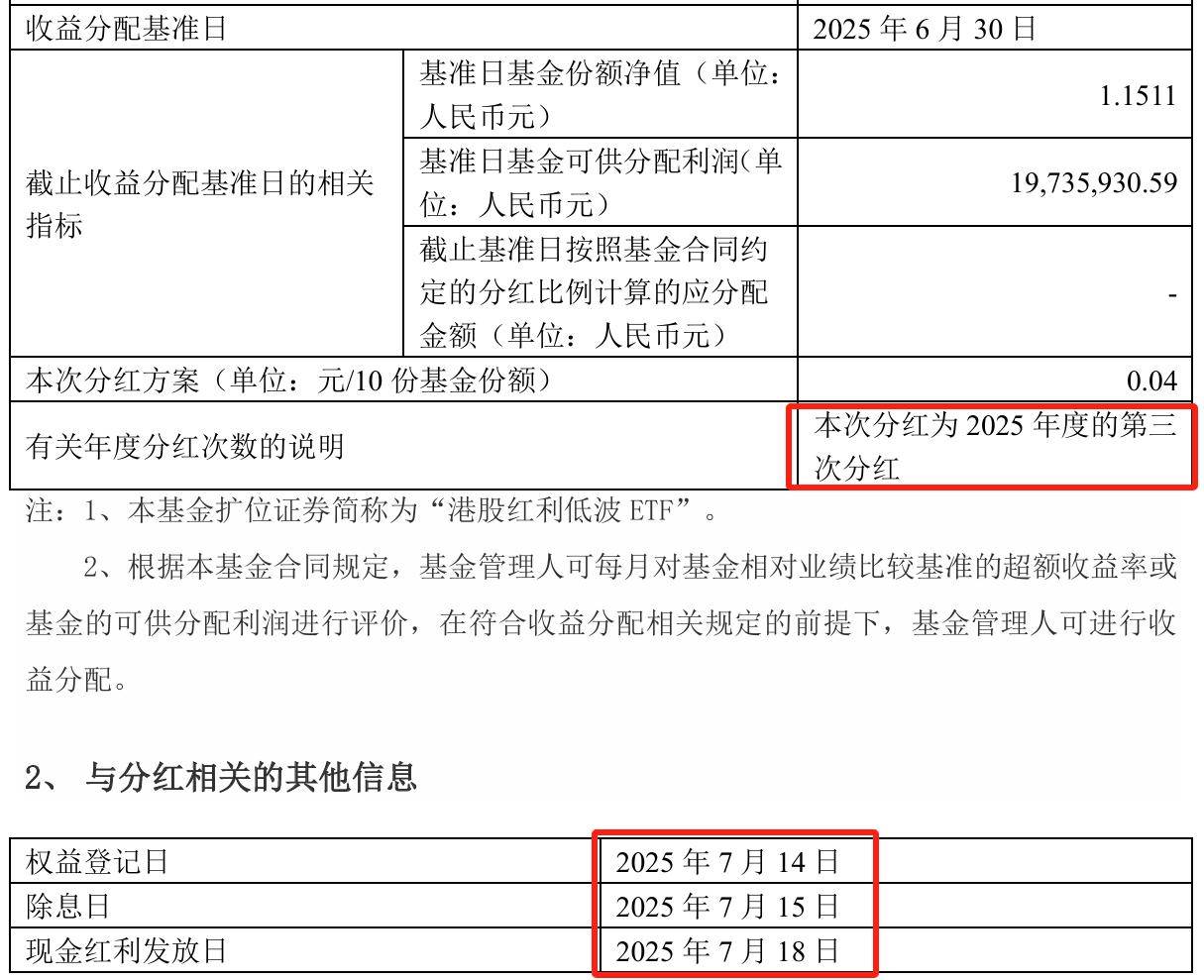
今天(7月14日)是港股红利低波ETF(520550)的权益登记日,早盘ETF一度涨0.84%,并且还在持续拉升。如果收盘之前持有,每10份将获得0.04元现金 分红,分红比例0.35%,现金会在7月18日发放至账户。 据了解,这已经是ETF今年1月份成立以来的第三次分红,每一次都精准兑现了"月度评估分红"机制,真正实现了月月有红包、打造稳定高频现金流。 | 收益分配基准日 | | 2025年6月30日 | | --- | --- | --- | | 截止收益分配基准目的相关 | 基准日基金份额净值(单位: 基准日基金可供分配利润(单 | 19.735 | | 人民币元) | | | | 位:人民币元) 指标 | | | | 截止基准日按照基金合同约 | | | | 定的分红比例计算的应分配 | | | | 金额(单位:人民币元) | | | | 本次分红方案(单位:元/10 份基金份额) | | | | 有关年度分红次数的说明 | | 本次分红为 2025 年度 | | | 次分红 | | | 权益登记日 | 2025年7月14日 | | --- | --- | | 除息日 | 2025年7月15日 | | ...
3500点上,盘面分裂与风景很好
雪球· 2025-07-13 06:41
Core Viewpoint - The article discusses the current state of the stock market, highlighting the contrasting performance of the banking sector and other industries, with a focus on the implications for investment strategies and market dynamics [2][10]. Banking Sector Analysis - The banking sector has seen a significant decline, with the China Securities Banking Index dropping over 2%, which has stabilized the overall market and allowed other sectors to flourish [2][10]. - The long-term value of banking stocks is emphasized, suggesting a structural shift in asset allocation towards banking stocks as real estate declines, leading to a potential valuation recovery for banks [4][5]. - Despite the recent downturn, the banking sector is viewed as having a strong safety margin and potential for returns, with a call for investors to consider this as a pivotal moment for investment [5][9]. Market Dynamics - The article notes that the recent adjustments in banking stocks are beneficial for the overall A-share market, providing room for other industries to rise [10][16]. - The performance of the banking sector has contributed significantly to the Shanghai Composite Index, with a noted contribution of 118.13 points to the index's rise this year [10]. - The article suggests that a continued slight adjustment in banking stocks could free up additional upward space for the index, promoting broader market participation [10][16]. Investment Strategy - The author advises against chasing banking stocks at current levels but also suggests not to reduce holdings, indicating a cautious approach to investment [3]. - The potential for a market consensus shift driven by a rising market is highlighted as a catalyst for breaking investor biases [5]. - The insurance sector's investment behavior is discussed, indicating a preference for long-term stability over short-term fluctuations, which may influence demand for banking stocks [7][8].