
行业周期性

Search documents
雪佛龙股价创历史新高,多重利好因素推动
Xin Lang Cai Jing· 2026-02-20 00:24
Core Viewpoint - Chevron's stock price reached a historical high on February 19, 2026, driven by multiple favorable factors including Berkshire Hathaway's increased stake, rising geopolitical risks pushing oil prices up, and the company's strong financial performance [1]. Stock Price Movement - On February 19, Chevron's stock peaked at $187.90, closing at $184.78, with a daily increase of 0.49% and a year-to-date rise of 22.43%. The broader oil and gas sector also saw a 0.55% increase, while peers like Occidental Petroleum experienced gains of up to 9.38%, indicating overall strength in the energy sector [2]. Future Development - Attention is required on oil price fluctuations, geopolitical changes, and the cyclical nature of the industry that may impact future performance [3].
山东海化:纯碱行业目前处于底部调整期
Zheng Quan Ri Bao Zhi Sheng· 2026-02-04 08:13
Group 1 - The chemical industry exhibits significant cyclical characteristics, with the soda ash sector currently in a bottom adjustment phase due to the downturn in downstream industries like real estate [1] - The company is implementing measures such as optimizing production organization, adjusting product structure, reducing production consumption, enhancing procurement management, innovating marketing models, and strictly controlling expenses to maximize operational performance and risk resistance [1]

山东海化:化工行业具有明显的周期性特点
Zheng Quan Ri Bao Zhi Sheng· 2026-02-02 11:41
Group 1 - The chemical industry exhibits significant cyclical characteristics, with the real estate sector currently entering a downturn [1] - The company's main product, soda ash, is currently in a bottom adjustment phase [1] - There are no expansion plans for the company's bromine production capacity at this time [1]
美光科技:别被 “英伟达时刻”冲昏头脑
美股研究社· 2026-01-22 11:11
Core Viewpoint - Micron Technology (MU) has become a highly sought-after stock in the AI sector, with its recent earnings report being described as a "NVIDIA-style highlight," attracting significant investor interest. However, analysts caution that the impressive performance may not be sustainable, leading to a downgrade of the stock rating to "Sell" [2][30]. Financial Performance - Micron reported a remarkable revenue increase of 57% year-over-year, reaching $13.64 billion, marking the second consecutive quarter of accelerating revenue growth [2][6]. - The company's non-GAAP operating margin surged to 47%, while the GAAP operating margin reached 45%, the highest since 2018 [8][9]. - Free cash flow for the quarter was $3 billion, with $300 million allocated for stock buybacks [10]. Future Outlook - Management provided an aggressive revenue guidance for the year, projecting a maximum revenue of $22.7 billion, representing a year-over-year increase of 180% [10]. - The company plans to invest approximately $20 billion in capital expenditures throughout the year [11]. - Management expects business performance to continue strengthening throughout the year, with demand outpacing supply significantly [12][13]. Market Dynamics - Analysts express concerns that investors may be overestimating the actual returns from the company's performance growth, given the cyclical nature of the semiconductor industry [16]. - Micron's current price-to-earnings ratio is approximately 12, with a forward P/E ratio around 9.4, suggesting a conservative valuation compared to its explosive growth [17][18]. - Despite the impressive growth, analysts highlight that Micron's valuation is significantly above historical levels, particularly from a price-to-sales perspective [20]. Industry Competition - The semiconductor market, particularly high-bandwidth memory (HBM), remains highly competitive, with Micron, SK Hynix, and Samsung as the main players [22]. - Analysts argue that the current profit margins and demand growth are likely short-term phenomena, not driven by structural changes in the market [25]. - There is a concern that as competitors expand capacity to meet demand, product prices may normalize, leading to potential declines in Micron's profitability [27][28]. Conclusion - Given the cyclical nature of the industry and the current market dynamics, analysts have downgraded Micron Technology's rating to "Sell," indicating that the stock may be overvalued based on future earnings expectations [30].



“猪王”牧原急赴港股,千亿负债下的上市突围战
阿尔法工场研究院· 2026-01-20 00:08
Core Viewpoint - The urgency of the company's Hong Kong listing reflects deeper concerns about its financial health and the cyclical nature of the pig farming industry, with significant debt and fluctuating profits raising red flags for investors [4][11]. Financial Performance and Industry Cycles - The company's financial results illustrate the volatility inherent in the pig farming sector, with net profit soaring to 149.33 billion in 2022, turning to a loss of 41.68 billion in 2023, and rebounding to 189.25 billion in 2024 [5]. - A forecast for 2025 indicates a decline in net profit by over 12%, with a projected profit range of 147 to 157 billion, highlighting the cyclical pressures faced by the industry [6][5]. - The average price of live pigs is expected to drop by 17.3% to approximately 13.5 yuan per kilogram, further impacting profitability [6]. Debt and Financial Structure - As of September 2025, the company's total liabilities reached 1,003 billion, with a debt-to-asset ratio of 55.5%, indicating a high level of financial leverage [7]. - The company has over 800 billion in current liabilities and short-term loans nearing 464 billion, while cash reserves are only 202.85 billion, suggesting liquidity challenges [7]. - The aggressive expansion strategy during high pig prices has led to a heavy debt burden, necessitating new funding sources to maintain operations and service debt [7]. Executive Compensation and Shareholder Returns - Despite declining profits and high debt, executive compensation has surged, with the chairman's salary increasing by nearly 60% to 372.19 million in 2024, and total management compensation doubling in the first half of 2025 [8][10]. - A record cash dividend of 50.02 billion was announced, benefiting major shareholders significantly, raising concerns about the alignment of interests between management and shareholders [8][10]. Market Perception and Future Outlook - The company's move to list in Hong Kong is seen as a strategy to secure new funding amidst high debt and fluctuating profits, with the potential to raise substantial capital for debt restructuring and operational support [7][11]. - However, the market's reaction may be cautious due to the company's financial transparency issues and the cyclical nature of its business, which could lead to valuation challenges post-IPO [11][12]. - The need for sustainable governance and improved financial health is critical for the company to gain investor confidence and achieve favorable market conditions [11][12].


卓然股份:公司近两年有产品出口欧盟国家 但出口业务整体占比较低
Xin Lang Cai Jing· 2025-12-17 08:13
Group 1 - The company has exported products to EU countries in the past two years, but the overall proportion of export business remains low due to cyclical fluctuations in the industry and changes in the global economic environment [1]

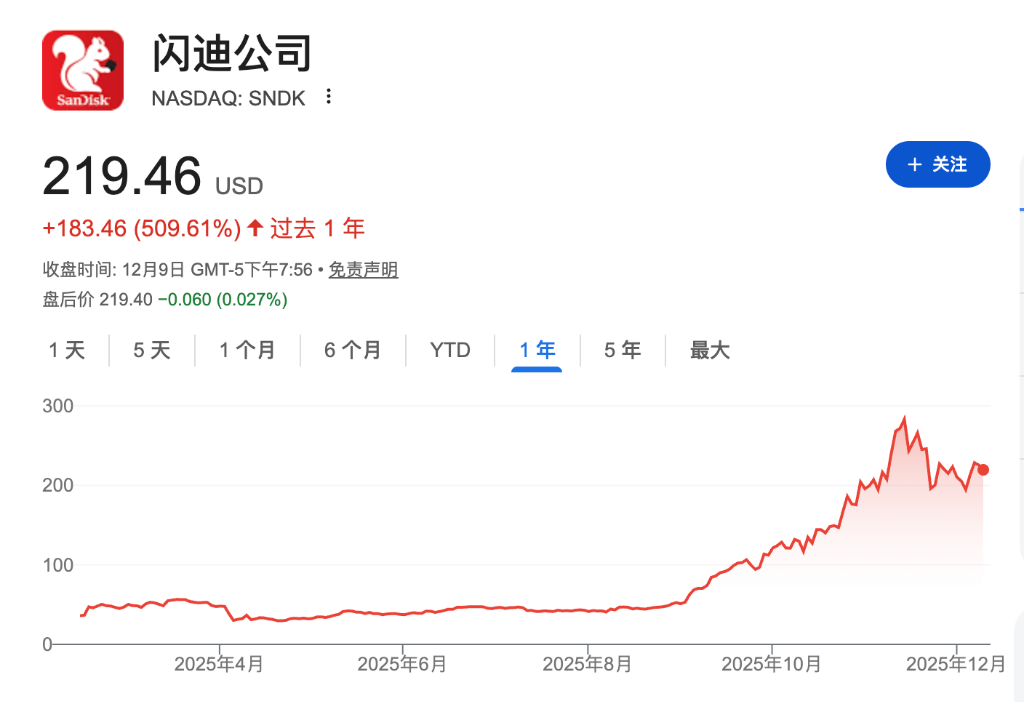
摩根大通评闪迪:“短期超额利润”不代表“长期盈利能力提升”,中期面可能回归历史“繁荣-萧条”模式
Hua Er Jie Jian Wen· 2025-12-10 10:04
Core Viewpoint - Morgan Stanley assigns a "Neutral" rating to SanDisk with a target price of $235, indicating that while the company is experiencing peak profits driven by AI demand and joint venture cost advantages, this reflects cyclical industry conditions rather than structural improvements [1] Group 1: Market Position and Growth - SanDisk holds a relatively weak position in the rapidly growing enterprise SSD market, with a global market share of only 2-3%, significantly lower than its approximately 15% share in the overall NAND flash market [3] - The enterprise SSD market is expected to grow at a compound annual growth rate (CAGR) of 35%, reaching around $45 billion by 2027 [3] - Despite benefiting from engagements with major cloud service providers, SanDisk is still seen as a follower in the high-performance PCIe 5.0 enterprise SSD segment compared to competitors like Samsung and SK Hynix [6] Group 2: Competitive Advantages and Risks - SanDisk's joint venture with Kioxia, Flash Ventures, is considered a core competitive advantage, allowing the company to achieve 50% wafer output at equal costs, thus lowering capital intensity and improving return on investment [10] - However, this joint venture also means that SanDisk is heavily reliant on Kioxia's health and strategic direction, limiting its independent decision-making in capacity expansion and technology development [10] Group 3: Cyclical Nature of the Industry - The NAND industry is characterized by significant cyclical features, with current supply tightness and high prices being an extension of the cycle rather than a structural reversal [11] - It is anticipated that major suppliers will restart large-scale capacity construction plans around 2027, which could lead to an increase in storage capacity growth outpacing market demand growth [12] - The growth rate of traditional end-market demand is slowing, with smartphone storage capacity expected to grow at a CAGR of only 10% from 2025 to 2027, compared to 23% over the past decade [12] Group 4: Financial Projections - SanDisk is projected to achieve revenue growth of 18% and 38% in 2025 and 2026, respectively, surpassing the overall NAND market growth rates of 2% and 27% [16] - This growth is expected to increase SanDisk's market share to approximately 16% by the end of 2026, a rise of about 300 basis points from the current 13% [16] - However, these strong financial performances are primarily reflective of cyclical peaks rather than structural improvements in profitability, suggesting that investors should evaluate the company's value based on complete cycles [16]

主营业务净利润和毛利率波动遭问询 江苏索普回复
2 1 Shi Ji Jing Ji Bao Dao· 2025-11-17 03:28
Core Viewpoint - Jiangsu Sopo (600746.SH) has experienced significant fluctuations in revenue and net profit from 2022 to the first half of 2025, primarily due to market performance of its core products, acetic acid and ethyl acetate, which have seen declining prices impacting overall gross margins [1][2]. Financial Performance Summary - Revenue figures for Jiangsu Sopo from 2022 to the first half of 2025 are as follows: 7.172 billion, 5.390 billion, 6.403 billion, and 3.158 billion [1]. - Net profit for the same period shows a decline to 0.18 billion in 2023, with a recovery to 2.13 billion in 2024, and 1.02 billion in the first half of 2025 [2]. - The gross margin for the main business has decreased over the years, with figures of 15.58%, 7.62%, 8.72%, and 8.40% respectively [1]. Product Performance Analysis - The decline in gross margin is attributed to the market performance of acetic acid and ethyl acetate, with acetic acid's gross margin dropping from 24.69% and ethyl acetate's margin showing a slight recovery in 2025 due to raw material price decreases [1][2]. - In 2024, net profit recovery was supported by stable operations and increased sales volumes of acetic acid and ethyl acetate, which grew by 36.82% and 20.33% respectively [2]. Industry Comparison - Compared to peers, Jiangsu Sopo's gross margin and net profit trends differ due to its concentrated business model focused on acetic acid and derivatives, while competitors like Hualu Hengsheng have a more diverse product range and lower raw material costs [3]. - The overall industry trend shows a decline in gross margins in 2023 followed by a recovery in 2024, aligning with Jiangsu Sopo's performance despite differences in product composition and cost control capabilities [3].

天宜新材(688033.SH):前三季度预亏3.2亿元至4.2亿元
Ge Long Hui A P P· 2025-10-23 10:49
Core Viewpoint - Tianyi New Materials (688033.SH) expects a decline in revenue and net profit for the first three quarters of 2025, primarily due to the cyclical downturn in the photovoltaic new energy sector and other financial pressures [1] Financial Performance - The company anticipates revenue between 500 million to 600 million yuan for the first three quarters of 2025, representing a year-on-year decrease of 6.13% to 21.78% [1] - The projected net profit attributable to shareholders is expected to be between -420 million to -320 million yuan, indicating a year-on-year reduction in losses of 28.47% to 45.50% [1] - The net profit after deducting non-recurring gains and losses is forecasted to be between -390 million to -290 million yuan, reflecting a year-on-year reduction in losses of 37.39% to 53.44% [1] Industry Impact - The photovoltaic new energy business continues to be affected by industry cyclicality, resulting in a persistent decline in revenue compared to the same period last year [1] - Factors such as low product prices, high fixed costs from depreciation and amortization, and elevated financing costs have contributed to reduced gross profit and ongoing net losses [1] - The reduction in net losses compared to the previous year is attributed to the absence of significant inventory impairment provisions in the current reporting period, unlike the previous year [1]

天宜新材:预计前三季度净利润为-4.2亿元到-3.2亿元 同比减亏28.47%到45.50%
Ge Long Hui· 2025-10-23 10:08
Core Viewpoint - The company, Tianyi New Materials, expects a net profit attributable to shareholders to range from -420 million to -320 million yuan for the first three quarters of 2025, indicating a reduction in losses compared to the previous year [1] Financial Performance - The expected reduction in losses is estimated to be between 167 million to 267 million yuan, representing a year-on-year decrease in losses of 28.47% to 45.50% [1] - The company's operating revenue is anticipated to decline further compared to the same period last year due to the ongoing downturn in the photovoltaic new energy sector, which has not shown significant improvement [1] Cost Factors - The company's gross profit has decreased due to several factors, including persistently low product prices, high depreciation and amortization costs, and elevated financing costs [1] - The net profit remains in a loss state, but the reduction in losses compared to the previous year is primarily attributed to the absence of significant inventory impairment provisions in the current reporting period, unlike the previous year [1]