
RCEP

Search documents
中国(广东云浮)—RCEP第三届产业合作大会将举办
Zhong Guo Xin Wen Wang· 2025-10-13 12:51
Group 1 - The China (Guangdong Yunfu) - RCEP Third Industry Cooperation Conference will be held from October 17 to 18 in Yunfu City, Guangdong Province, highlighting the ongoing influence of the Regional Comprehensive Economic Partnership (RCEP) as a key channel for economic integration in the Asia-Pacific region [1][2] - Yunfu City has implemented a strategy of "East Integration with the Bay Area and West Connection with RCEP," successfully hosting the RCEP Industry Cooperation Conference for two consecutive years since 2022, which has significantly enhanced its international resource connections [1][2] - By 2024, the trade volume between Yunfu and RCEP member countries is expected to account for 27.1% of the city's total imports and exports, with RCEP countries being the largest trading partners for three consecutive years [1] Group 2 - The conference is co-hosted by the Yunfu Municipal Government, Guangdong Provincial Department of Commerce, and the RCEP Industry Cooperation Committee, focusing on expanding RCEP industrial cooperation and shaping new advantages for open development [2] - As of October 11, 460 guests have registered for the conference, including 270 business representatives from various sectors such as metal manufacturing, green building materials, precious metals, low-altitude economy, electronics, and food processing, indicating a 70% increase in foreign attendees compared to the previous year [2] - The conference will promote three major trillion-yuan industrial clusters: modern agriculture, green building materials, and metal manufacturing, while also introducing the precious metals industry for the first time [2]
云浮经济寻新路:掘金RCEP,瞄准广交会外溢
2 1 Shi Ji Jing Ji Bao Dao· 2025-10-13 07:24
Core Viewpoint - Guangdong city of Yunfu is leveraging cooperation with RCEP as a breakthrough for accelerated development, highlighted by the upcoming RCEP Industry Cooperation Conference and related exhibitions [1][2]. Group 1: RCEP Cooperation and Economic Impact - The RCEP is the largest and most promising free trade agreement globally, providing significant opportunities for deepening industrial collaboration and expanding foreign trade [2]. - By 2024, trade with RCEP member countries is expected to account for 27.1% of Yunfu's total import and export volume, with RCEP countries being the city's largest trading partners for three consecutive years [2]. - In the first eight months of 2025, Yunfu's cross-border e-commerce trade grew by 197%, leading the province, with a 17% increase in operating entities compared to 2023 [2]. Group 2: Industry Focus and Events - The RCEP Industry Cooperation Conference will promote three major trillion-yuan industrial clusters: modern agriculture, green building materials, and metal intelligence, with the addition of precious metals as a focus area [2][3]. - The conference will feature participation from ASEAN ministers, embassy officials, and representatives from overseas business associations, with a 70% increase in foreign attendees compared to last year [2]. Group 3: Bilateral Cooperation and Trade Parks - Yunfu will establish a bilateral economic and trade cooperation park with Malaysia, including six themed RCEP parks to facilitate international cooperation and cross-border trade [3][4]. - Trade with Malaysia has shown a robust growth of 70% in the first eight months of 2025, indicating significant potential for collaboration [3]. Group 4: Agricultural Development and Exhibitions - The Yunfu International Stone Technology Exhibition, part of the RCEP conference, aims to connect with international markets and promote local stone industry products [5]. - The modern agriculture (food) exhibition will showcase Yunfu's agricultural products and enhance brand recognition while facilitating resource connections with RCEP member countries [6].
河南与东盟的“双向奔赴”
He Nan Ri Bao· 2025-10-12 23:36
Core Viewpoint - The 2025 China (Henan) - ASEAN Agricultural Cooperation Development Conference and the 4th "Belt and Road" (Henan) International Agricultural Cooperation Expo will be held in Zhengzhou from October 12 to 14, 2025, focusing on "Digital Intelligence Empowering Agricultural Cooperation and Innovation Driving Regional Development" to enhance Henan's integration into the national market and the Belt and Road Initiative [1] Group 1: Transportation and Trade - Henan's geographical advantages facilitate significant transportation networks, including high-speed rail and new maritime routes, enhancing trade efficiency [2] - The Zhengzhou-Bangkok cargo charter enables rapid delivery of Thai shrimp to China, covering a 200-kilometer radius in just two hours [2] - The China-Europe Railway Express (Zhengzhou) extends south to Laos, connecting with the ASEAN railway network, promoting ongoing economic cooperation [2] Group 2: Agricultural Cooperation - The collaboration between Henan and ASEAN has led to a rich exchange of agricultural products, with tropical fruits from ASEAN entering Henan markets and Henan's agricultural products gaining access to ASEAN supermarkets [3] - In 2024, Henan's agricultural exports to ASEAN countries reached $640 million, accounting for 30% of the province's total agricultural exports, making ASEAN the largest export market for Henan [3] - The ongoing RCEP benefits and the complementary industrial structures between Henan and ASEAN position Henan as a crucial support for China's engagement with the ASEAN market [3]
广东阳江五金刀剪全产业链规模超550亿元
Zhong Guo Xin Wen Wang· 2025-10-11 07:44
Core Insights - The article highlights the significance of Yangjiang as a major hub for hardware knives and scissors in China, with over 8,500 operating entities and a total industry scale exceeding 55 billion yuan [1] - The 24th International Hardware Knives and Scissors Expo will take place from October 21 to 23, featuring nearly 20,000 square meters of exhibition space and 550 booths [1] - The expo aims to facilitate international trade and collaboration, inviting both domestic and foreign buyers, including major retail and hotel chains [2] Industry Overview - Yangjiang's hardware knife and scissors industry accounts for approximately 70% of the national production and 85% of the national export volume [1] - The industry has developed a complete supply chain and a diverse range of products, establishing itself as a significant industrial cluster [1] Market Expansion - The expo will attract international buyers from regions such as the UAE, Japan, and Europe, while also engaging domestic buyers from major retail and hotel chains [2] - The collaboration with e-commerce associations aims to enhance the industry's digital sales and market diversification [2] E-commerce Growth - Yangjiang's cross-border e-commerce for hardware knives and scissors is rapidly expanding, with domestic e-commerce sales projected to reach 9.93 billion yuan, a year-on-year increase of 12.6% [3] - Cross-border e-commerce transactions are expected to reach 2.93 billion yuan, reflecting a growth of 10.9% [3]
海南要成为中国与东盟经贸合作的战略枢纽
Hai Nan Ri Bao· 2025-10-11 01:46
Core Viewpoint - Hainan aims to become a strategic hub for economic cooperation between China and ASEAN, connecting the Chinese market with the RCEP market and facilitating blue economy cooperation between China and ASEAN [2][3] Group 1: Strategic Importance of Hainan - Hainan is positioned as an important open gateway for China, with the establishment of the Hainan Free Trade Port being a significant national strategy [2] - The official launch of the Hainan Free Trade Port on December 18 marks a breakthrough in implementing high-level open policies across 35,000 square kilometers [2] Group 2: Policy Recommendations - It is suggested to introduce attractive preferential policies to support mainland Chinese enterprises in investing in ASEAN, enabling "instant payment" for direct investments [2] - The implementation of "zero tariffs, low tax rates, and simplified tax systems" is emphasized to facilitate trade, investment, and cross-border capital flow [2] Group 3: Regional Cooperation and Market Access - Hainan is leveraging the combined advantages of its free trade policies and RCEP rules to become a key node for regional industrial collaboration [3] - There is a call to open up service markets in healthcare, education, and cultural entertainment to enhance connections between China and ASEAN [3] - The goal is to increase the coverage of "zero tariffs" from 74% at the time of the port's operation to over 90% [3] Group 4: Blue Economy Development - The blue economy is identified as a significant market for economic growth and trade cooperation between China and ASEAN [3] - Hainan is encouraged to utilize its open policies and resource advantages to foster marine productivity and promote high-quality development in marine economics [3]
钱政宇:把握大势,中韩经贸合作拓展新领域
Huan Qiu Wang· 2025-10-09 23:42
Core Viewpoint - The China-South Korea economic and trade relationship is at a new historical juncture, facing risks and challenges due to the evolving international landscape, regional cooperation dynamics, and structural changes in their economic ties. However, the complementary nature of their industrial structures and the pragmatic diplomatic approach of the South Korean government provide a solid foundation for cooperation and potential growth in new areas [1][2]. Group 1: Economic Cooperation Framework - The formal implementation of the Regional Comprehensive Economic Partnership (RCEP) has injected strong institutional momentum into China-South Korea economic relations, significantly reducing regional transaction costs and enhancing supply chain resilience [1][2]. - Under the RCEP agreement, both countries will implement zero tariffs on 86% of each other's products, including key sectors like automotive parts and chemicals, opening new avenues for high-value industry cooperation [2]. - The RCEP's rules of origin accumulation mechanism is crucial for deepening the integration of the industrial chains between China and South Korea, allowing for easier access to tariff benefits [2]. Group 2: Digital and Green Economy - The digital and green economies are emerging as new growth points for China-South Korea economic cooperation, driven by both countries' internal demands for economic transformation and global sustainability agendas [3]. - In the digital technology sector, cooperation is expanding into areas such as e-commerce, artificial intelligence, cloud computing, and big data, with significant investments planned by both governments [3]. - In the green economy, both countries are actively pursuing carbon neutrality and have made substantial progress in renewable energy, electric vehicles, and hydrogen energy technologies [3]. Group 3: Local Cooperation and Mechanism Innovation - Local-level cooperation between China and South Korea is characterized by innovative practices such as city pairings and logistics integration, which have become vital for practical collaboration [4][5]. - The "Twin Cities and Twin Halls" model between Weihai and Incheon has successfully facilitated over 320 trade exchange activities, generating a trade volume of $1 billion [4]. - Platforms like the Changchun International Cooperation Demonstration Zone are expanding cooperation opportunities, enhancing logistics capabilities in Northeast Asia [5]. Group 4: Future Prospects - The ongoing release of RCEP benefits and the advancement of the third phase of the China-South Korea Free Trade Agreement negotiations are expected to foster continuous innovation in local cooperation, particularly in industrial chain collaboration and cross-border financial cooperation [5]. - The commitment to mutual respect and benefit will be essential for the sustained development of China-South Korea economic relations, contributing to regional economic stability and prosperity [5].
“东莞—胡志明—贡布”班轮新航线正式开通
Zhong Guo Xin Wen Wang· 2025-10-09 09:32
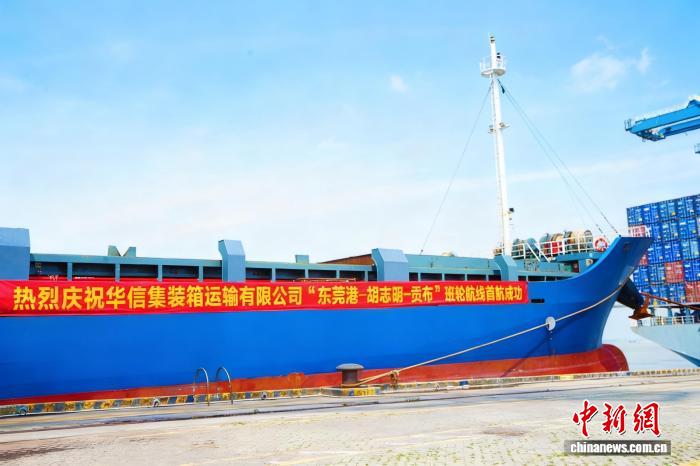
中新网东莞9月30日电 (郭军 蓝童)"联合财富"轮9月29日稳稳靠泊东莞港二期码头,标志着"东莞—胡志 明—贡布"班轮新航线的正式开通,为粤港澳大湾区与越南、柬埔寨的经贸往来搭建起高效便捷的海上 物流新通道。 "针对此次新航线开通,海事执法人员在船舶作业期间,登轮对货物积载、集装箱系固绑扎等关键环节 进行现场检查,排查安全风险,督促纠正不规范行为,并综合运用'CCTV、智慧海事'等科技手段实施 动态监控,引导船舶安全出港。"东莞沙田海事处执法人员李明说。 据了解,此次开通的"东莞—胡志明—贡布"航线由华信集装箱运输有限公司运营,是东莞港连接东南亚 关键港口的又一重要航线。航线采用"周五截关、周日开船"班期模式,仅需4.5天即可抵达越南胡志明 市,5.5天到达柬埔寨贡布。相比传统中转航线,物流时效提升近30%,能有效降低企业物流成本。 "这条航线精准衔接东莞制造产业集群与东盟核心市场,也是目前东莞唯一一条胡志明、柬埔寨直航班 轮。"东莞港二期码头商务部客户经理林钰淇表示。 为确保航线顺利开通及"联合财富"轮首航安全,东莞海事局提前谋划,构建"前置服务+动态监管+应急 备勤"全链条保障体系。 "东莞港-胡志明一 ...

乌海市前8月进出口总值同比增长82.9%
Nei Meng Gu Ri Bao· 2025-10-07 02:20
Group 1 - The total import and export value of Wuhai City reached 1.18 billion yuan from January to August, representing a year-on-year increase of 82.9% [1] - Private enterprises contributed over 95% of the total, completing 1.13 billion yuan with a year-on-year growth of 85.4%, showcasing strong economic openness and resilience in the region [1] - Trade with countries involved in the Belt and Road Initiative reached 540 million yuan, up 57% year-on-year, while trade with RCEP partners totaled 410 million yuan, increasing by 65.4% [1] Group 2 - Traditional export products maintained strong momentum, with organic chemical exports reaching 440 million yuan, doubling in growth, and high-tech product exports at 330 million yuan, with a growth rate of 126.6% [1] - The first export of nearly 10,000 tons of steel billets by Baogang Wanteng marked a breakthrough for Wuhai's steel billet exports [1] - Policies and services have driven growth, including the establishment of an RCEP consultation desk and the issuance of 117 certificates of origin, facilitating over 100 million yuan in goods [2]
2025年三边经济报告
Sou Hu Cai Jing· 2025-10-05 07:44
Core Insights - The 2025 Trilateral Economic Report highlights the resilience and opportunities of the East Asian economic circle amid global uncertainties, emphasizing the importance of trilateral cooperation among China, Japan, and South Korea [1][6]. Economic Scale and Trade - In 2024, the combined GDP of China, Japan, and South Korea reached USD 24.21 trillion, a 2.7% increase from 2023, accounting for over 24% of global GDP [2][40]. - The total population of these three countries is approximately 1.584 billion, representing nearly 20% of the global population, making it one of the most promising consumer markets [2][40]. - The goods trade volume among the three countries is estimated at USD 8.93 trillion in 2024, which is 18.8% of global trade, highlighting their role as stabilizers in global supply chains [2][40]. Demographic Challenges - The aging population is a significant challenge, with Japan having 30% of its population aged 65 and older, South Korea at 18%, and China nearing 14%, all exceeding the global average of 10% [3]. - Fertility rates are critically low, with South Korea at 0.7, Japan at 1.2, and China at 1.0, indicating potential long-term population decline [3]. Economic Outlook - The report predicts that the economic growth rate for the ASEAN+3 region may fall below 4% in 2025 due to global trade shocks, with growth for China, Japan, and South Korea expected to decrease from 4.1% in 2024 to 3.7% [3][40]. - Long-term projections suggest that potential economic growth for ASEAN+3 and the CJK economies could decline to 2.8% and 3.0% by 2050, respectively [3][40]. Regional Economic Integration - The Regional Comprehensive Economic Partnership (RCEP) has shown positive impacts on trade and investment, with the trade volume reaching USD 13 trillion in 2023, accounting for 30% of global exports [4]. - However, challenges remain, such as small and micro enterprises struggling to benefit from RCEP, and the need for improved customs facilitation [4]. Semiconductor Industry Collaboration - The semiconductor industry is highlighted as a critical area for trilateral cooperation, with South Korea leading in memory chips, Japan dominating in manufacturing equipment, and China rapidly advancing [5]. - Recommendations include establishing a trilateral semiconductor supply chain dialogue platform and joint research initiatives to enhance regional supply chain resilience [5]. Future Cooperation Directions - The report emphasizes the need for accelerated negotiations on the China-Japan-Korea Free Trade Agreement (CJKFTA) and collaboration in emerging sectors like electric vehicles and renewable energy [5]. - Strengthening regional cooperation is deemed essential to navigate uncertainties and promote sustainable growth across the region [6].
天丝集团携红牛闪耀 2025 泰中合作博览会,以能量之约续写中泰友谊 50 年新篇
Yang Zi Wan Bao Wang· 2025-09-28 05:03
Core Viewpoint - The 2025 Thailand-China Cooperation Expo, held in Bangkok, serves as a significant platform for showcasing the achievements of bilateral cooperation in trade, technology, and culture, marking the 50th anniversary of diplomatic relations between Thailand and China [1] Group 1: Event Overview - The expo is themed "50 Years of Thailand-China Diplomatic Relations: Hand in Hand Towards Common Prosperity" and features various forums and discussions to highlight cooperation outcomes [1] - The event is co-hosted by the Thailand Trade Center, the Thai-Chinese Chamber of Commerce, and IMPACT Exhibition Management [1] Group 2: Corporate Participation - T.C.P. Group, known for its Red Bull brand, actively participated in the expo, showcasing its brand strength and receiving attention from political and business leaders [2] - The CEO of T.C.P. Group, Xu Xinxiong, was invited to the opening ceremony, emphasizing the company's role as a model for Thai enterprises investing in China [2] Group 3: Product Innovation - T.C.P. Group's exhibition theme was "Crossing Half a Century, Together for Strength and Friendship," highlighting its dual commitment to brand development and Thailand-China friendship [3] - The company presented a range of popular products, including high-end energy drinks and a special "50th Anniversary Edition" Red Bull, which incorporates traditional elements from both countries [3] Group 4: Executive Insights - T.C.P. Group executives expressed a strong commitment to deepening market engagement and collaborative development between Thailand and China [4] - The CEO highlighted the expo as a "witness" to friendship and a "incubator" for future cooperation, leveraging initiatives like the Belt and Road and RCEP for mutual benefits [4] Group 5: Historical Context - T.C.P. Group's relationship with the Chinese market began in 1993 with the establishment of its first factory in Hainan, marking a 30-year journey of economic collaboration [5][6] - The company has invested approximately 4.36 billion yuan in China, expanding from a single production base to a comprehensive industrial layout [6] Group 6: Cultural Engagement - T.C.P. Group actively promotes cultural exchange between Thailand and China, organizing various events to strengthen people-to-people connections [7] - Initiatives include supporting cultural landmarks, hosting music festivals, and facilitating cultural events that resonate with both nations [7]