生成式AI

Search documents
企业如何开启AI营销:人工智能营销服务选型与方法 | 上海叫醒科技
Sou Hu Cai Jing· 2025-08-29 07:34
Core Insights - The rise of Generative AI is transforming how companies approach marketing, making it essential for brands to effectively leverage AI for enhanced visibility and user engagement [1] Group 1: Systematic Construction of AI Marketing - Successful AI marketing begins with clear strategic planning rather than fragmented technology applications [2] - Companies should diagnose their current marketing processes to identify efficiency bottlenecks and growth opportunities, setting measurable goals such as improving content creation efficiency by 50% or increasing lead identification accuracy to 80% [2] - Data is crucial for AI; companies must inventory and integrate their data assets, including customer data, behavioral data, and content data, to provide a comprehensive training foundation for AI models [3][4] Group 2: Key Strategies for Brand Exposure in Generative AI - High-quality, authoritative content is essential as Generative AI tends to reference reliable sources; companies should produce in-depth, original content and utilize structured data to enhance AI's understanding of their offerings [7][8] - Maintaining consistent brand information across various platforms is vital for AI models to verify reliability; positive online reviews and media coverage significantly enhance brand credibility [8][9] - Engaging directly with AI platforms and understanding their citation rules can help companies ensure their information is included in AI responses [11] Group 3: Leveraging AI for Content Distribution and Interaction - Generative AI can assist in content creation, enabling companies to quickly generate drafts and visual materials, thus expanding content reach [12] - Implementing AI chatbots for personalized customer service enhances brand presence and customer engagement [12] Group 4: Embracing the AI Era - Companies must proactively integrate into AI models' recognition systems, focusing on delivering real value and maintaining consistent information [14] - Viewing AI as a powerful tool for enhancing marketing strategies is crucial, with an emphasis on practical, focused, and sustained investment in technology partnerships [14]


商汤科技2025年上半年生成式AI收入猛增73%,高盛上调评级至“买入”
Cai Jing Wang· 2025-08-29 07:26
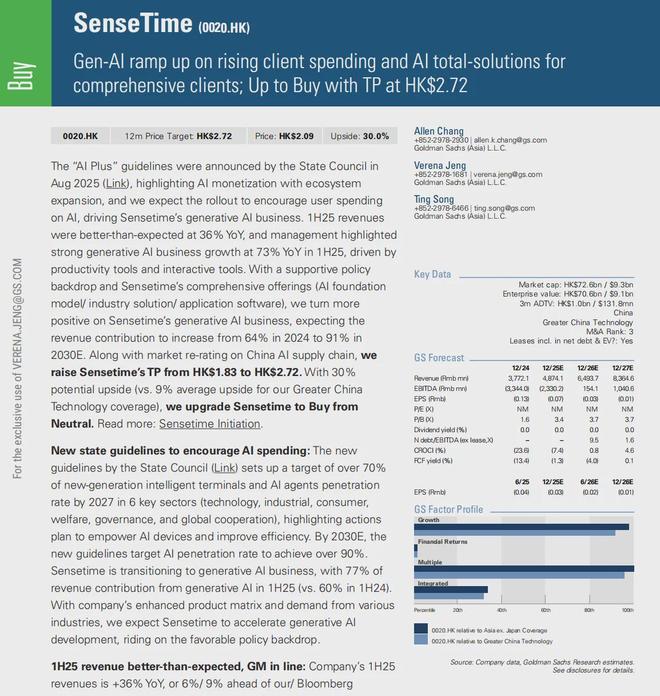
Core Insights - SenseTime (0020.HK) reported a revenue of 2.4 billion RMB for the first half of 2025, representing a year-on-year growth of 36%, exceeding market expectations [1][2] - The generative AI business saw a significant revenue increase of 73%, marking it as the core driver of the company's growth [1][2] Revenue Performance - The revenue growth of 36% surpassed the consensus estimates from Goldman Sachs and Bloomberg by 6% and 9% respectively [2] - The strong performance in the generative AI sector is a key contributor to this revenue increase [2] Market Position and Future Outlook - Goldman Sachs upgraded SenseTime's investment rating from "Neutral" to "Buy" following the positive earnings report [2] - The Chinese government's "Artificial Intelligence+" policy is expected to provide significant benefits to the industry, positioning SenseTime favorably for accelerated commercialization of generative AI [5][6] - SenseTime's revenue contribution from generative AI is projected to rise from 64% in 2024 to an estimated 91% by 2030 [5] Stock Performance - Following the positive earnings report, SenseTime's stock price became active, closing at 2.08 HKD, with a peak of 2.23 HKD, the highest since October of the previous year [6]
人工智能将为你预订假期,但暂时还不会帮你打扫厨房……
3 6 Ke· 2025-08-29 06:59
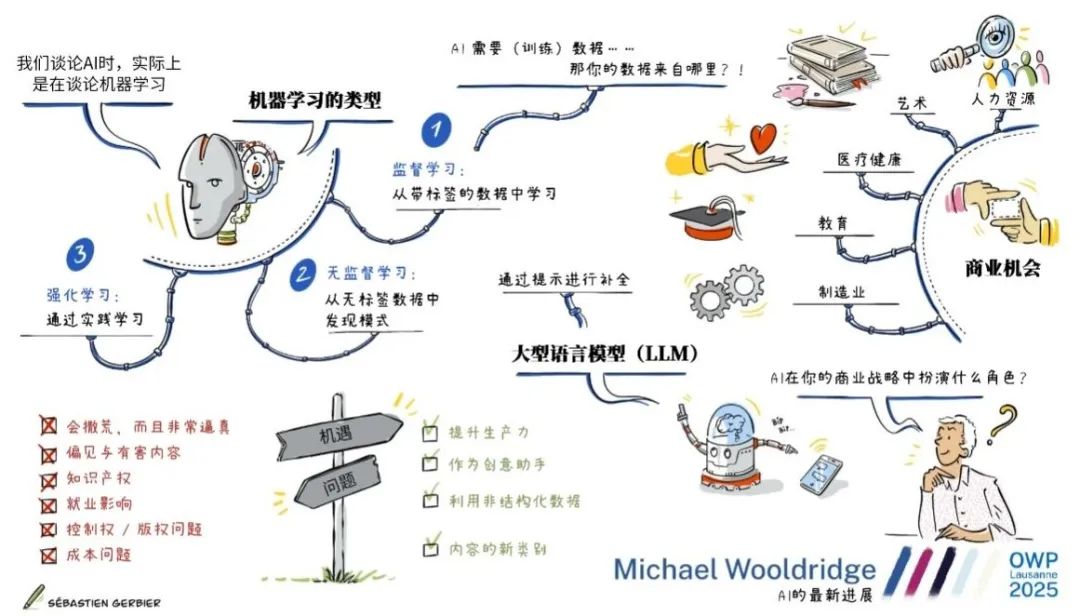
Group 1: Core Insights on AI Development - The advancement of artificial intelligence (AI) has reached a stage where large language models (LLMs) can engage in autonomous dialogue and problem-solving, yet achieving machines with true human-like intelligence remains a distant goal [1][6] - Despite the perception of AI being highly advanced, it still struggles to accurately replicate many fundamental human tasks, highlighting the limitations and risks that need to be addressed [1][6] - The most significant breakthrough in AI is its ability to analyze vast amounts of data to tackle complex problems and provide practical solutions, creating substantial opportunities for businesses and consumers [1][3] Group 2: AI Integration in Business Strategy - Executives should incorporate generative AI (GenAI) into workflows to save time and enhance efficiency, particularly in handling basic tasks like creating presentations [3] - LLMs can unlock hidden potential by extracting value from unstructured data accumulated in various computer systems, transforming emails, documents, and meeting notes into actionable insights [3] - LLMs also show promise in supporting creative work, generating numerous ideas for marketing campaigns, although the quality may vary [3][4] Group 3: Types of AI Assistants - Three categories of AI assistants are identified, each with increasing complexity and economic value: customer service assistants, automation process assistants, and collaborative assistants [4][6] - Customer service assistants can handle banking inquiries and modify account settings based on customer instructions [4] - Automation process assistants can provide personalized vacation plans and complete bookings using LLMs [4] - Collaborative assistants can solve problems through conversation, optimizing processes that require strict adherence to regulations [4] Group 4: Challenges and Risks of AI - AI usage presents significant flaws and risks that executives must be cautious of, including issues related to privacy, misinformation, bias, copyright, employment disruption, content pollution, and uncontrolled future developments [7][8] - The output from LLMs can often be misleading, producing seemingly credible but incorrect information, which poses a risk of misinformation [8] - The concentration of AI power among a few tech giants and government entities raises concerns about its impact on economic and democratic health [8][9]
生成式AI崛起,它会给移动通信带来怎样的改变?
Hu Xiu· 2025-08-29 05:09
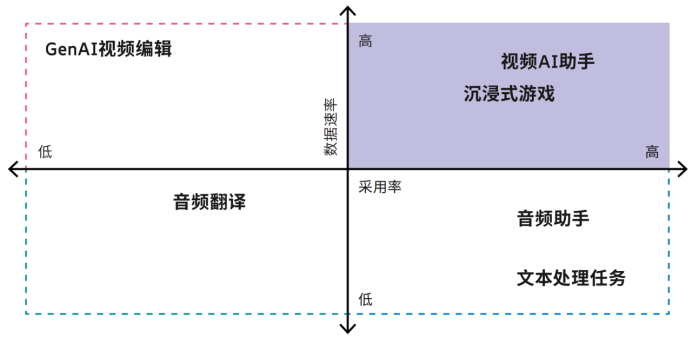
Group 1 - The mobile communication industry is experiencing a transformative wave driven by the rise of Generative AI (GenAI), which is expected to lead to a new era of development [1][2][42] - GenAI applications are becoming increasingly integrated into daily life, providing personalized experiences and practical services, thus potentially initiating a new network revolution [2][5] - The latest Ericsson Mobile Market Report provides comprehensive insights into the impact of GenAI on mobile communication networks, highlighting the need for adaptation and innovation within the industry [3][4] Group 2 - GenAI applications are characterized by their interactive and personalized content delivery, which significantly differs from traditional applications that rely on passive user engagement [14][15][8] - The rise of high-performance AI devices and bandwidth-intensive media formats will lead to a substantial increase in video traffic consumption from GenAI applications [11][12] - The demand for network resources will shift, with a notable increase in upstream bandwidth requirements due to user interactions and content sharing [17][28] Group 3 - The report identifies three key strategies for mobile communication networks to effectively respond to the changes brought by GenAI: refined network planning, expansion of frequency spectrum resources, and the introduction of differentiated connectivity [31][32][39] - Enhanced network management capabilities are essential to accommodate the complex and dynamic traffic patterns generated by GenAI applications [33][34] - Increasing mid-band and centimeter-wave frequency spectrum resources will directly support the high traffic demands of GenAI applications, particularly the growing upstream traffic [35][36] Group 4 - The emergence of AI agents and immersive technologies will further transform user interactions, necessitating continuous upstream connectivity for data transmission and real-time processing [21][25] - The shift towards a more intelligent, flexible, and scalable network architecture is imperative for the future of mobile communication, driven by the demands of GenAI applications [42][41]

巨头沦为人才战看客,亚马逊为何难吸引AI大牛?
Feng Huang Wang· 2025-08-29 04:33
Core Insights - Amazon is struggling to attract top AI talent due to its unique compensation structure, reputation for being behind in AI, and strict return-to-office policies [1][4][7] Compensation Challenges - The internal document highlights that Amazon's fixed salary ranges and egalitarian pay philosophy result in lower compensation compared to competitors, making it less attractive for top tech talent [4][10] - The company has not increased salary ranges for key positions in recent years, which has hindered its ability to recruit top AI talent [4] - Amazon's stock vesting plan, which defers more compensation to later years, is less appealing to new hires, including executives who often do not receive cash bonuses [4] Perception of AI Lag - Amazon is perceived as lagging in the AI field, particularly in generative AI, which has intensified competition for specialized talent [5][6] - Reports indicate that Amazon's engineer retention rate is lower than that of competitors like Meta, OpenAI, and Anthropic [5] - Concerns about Amazon's market share being eroded by competitors were raised during a recent earnings call, leading to a decline in the company's stock price [6] Return-to-Office Policy - Amazon's strict return-to-office policy has created logistical challenges and limited its ability to recruit high-demand talent with generative AI skills [7][9] - The policy requires employees to relocate to designated office centers, which has led to job offer rejections from potential candidates [8][9] - Reports indicate that Oracle has successfully recruited over 600 employees from Amazon in the past two years, largely due to this strict policy [9] Recruitment Strategy Adjustments - In response to these challenges, Amazon plans to optimize its compensation and location strategies and establish specialized recruitment teams for generative AI [6][8] - The company is exploring the possibility of offering more flexible work location positions to attract talent [7][8]

华裔女神CEO携8亿营收杀入AI影视
3 6 Ke· 2025-08-29 04:07
Group 1 - The core viewpoint is that Utopai Studios, formerly known as Cybever, is transforming from a tool provider to a content creator in the entertainment industry, marking a significant shift in the role of AI in filmmaking [1][2] - Utopai Studios has achieved $110 million in pre-sale revenue in its first year and is launching two major projects: "Cortés," a film with an Oscar-nominated writer, and "Project Space," a sci-fi series [1][4] - The company aims to control the entire content creation process, from development to global distribution, leveraging AI technology to enhance efficiency and creativity in filmmaking [5][6] Group 2 - Utopai Studios has partnered with K5 International, known for producing "Dances with Wolves," to promote its projects at major film festivals, indicating a strong distribution strategy [6] - The company is focused on redefining intellectual property (IP) in the entertainment sector, moving beyond cost reduction to owning and creating content, which is seen as a revolutionary approach similar to Pixar's impact on storytelling [7]

昆仑芯超节点上线百度公有云,沈抖:AI云正从成本中心转向利润中心
Tai Mei Ti A P P· 2025-08-29 04:00
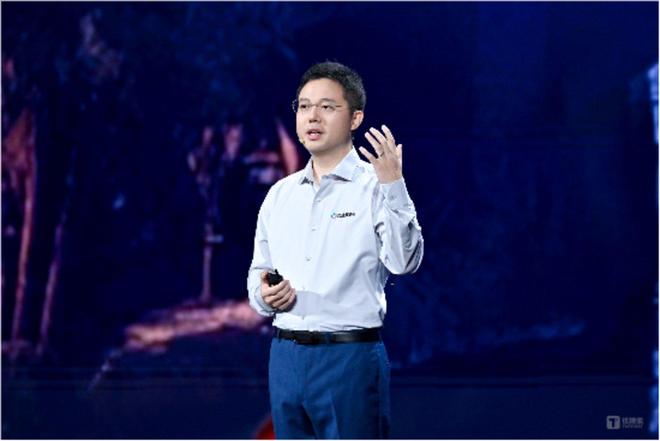
Core Insights - The shift in enterprise infrastructure requirements has moved from "cost reduction and efficiency enhancement" to "direct value creation," with AI cloud becoming a new profit center rather than a cost center [2] - The core elements of AI cloud identified by the company are computing power, models, data, and engineering capabilities, which together form a unified and continuously evolving AI cloud infrastructure [2] AI Computing - The focus of AI computing is shifting from pre-training to post-training, with reinforcement learning becoming a key paradigm for AI computation this year [3] - The upgraded Baidu AI computing platform, Baijie 5.0, enhances model training and inference efficiency through faster communication, lower latency, and improved resource utilization [3] - The largest open-source model parameters have reached 1 trillion, and with the Kunlun super node, it can run trillion-parameter models in just a few minutes [3] AI Development - The core of AI development is now centered around Agents, with the Baidu Qianfan platform upgraded to version 4.0, providing over 150 state-of-the-art models for enterprise and developer use [4] - The newly launched Baidu Steam Engine video generation model has topped the Vbench global video generation leaderboard and is now integrated into the Qianfan 4.0 platform [4] - Qianfan 4.0 has released a series of industry-specific models to address the limitations of general models in terms of effectiveness and cost-effectiveness [4] Model Fine-tuning - The RFT (Reinforcement Feedback Tuning) toolchain introduced in Qianfan 4.0 reduces the data requirement for model fine-tuning from thousands to just hundreds of data points, lowering the technical and data barriers for enterprises [5] User Engagement and Applications - The Qianfan platform has over 460,000 enterprise users and more than 1.3 million Agents developed, aimed at helping clients create better commercial applications [6] - Baidu Intelligent Cloud has developed ready-to-use Agents, including a compliance analysis capability that generates SOP detection tasks from standard operation videos [6] - The collaboration with Yashi Education has led to the development of a digital English coach, utilizing Baidu's end-to-end voice semantic model and digital human capabilities [6] Future Outlook - The restructuring of value creation methods is expected to evolve the industry chain, marking the beginning of a "super cycle" for AI [6]

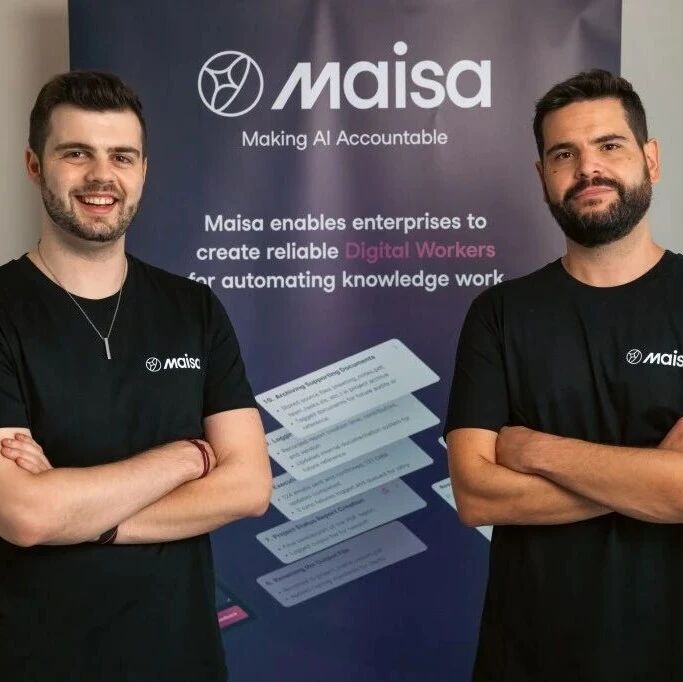
速递|为AI加上“审计轨迹”:Maisa AI种子轮融2500万美元,解决企业级应用95%失败率痛点
Z Potentials· 2025-08-29 03:52
Core Insights - The failure rate of generative AI pilot projects in enterprises is as high as 95%, prompting companies to explore autonomous AI systems that can learn continuously and accept supervision [2] - Maisa AI, a one-year-old startup, focuses on creating accountable agents for enterprise automation rather than opaque black-box solutions [3] Funding and Product Development - Maisa AI has secured $25 million in seed funding led by European venture capital firm Creandum and has launched Maisa Studio, a model-agnostic self-service platform for deploying digital workers trained through natural language [4] - The company differentiates itself by developing a process called "workchain," which emphasizes the execution of tasks to obtain responses rather than merely generating responses [4][5] Technology and Solutions - Maisa AI has developed a system called HALP (Human Augmented Language Model Processing) that allows digital workers to outline execution steps while simultaneously querying user needs [5] - The startup also created a Knowledge Processing Unit (KPU) to limit the generation of hallucinations, enhancing the reliability and accountability of AI applications in critical business areas [9] Market Positioning and Strategy - Maisa aims to position itself as a more advanced robotic process automation (RPA) solution, enhancing productivity without relying on rigid predefined rules or extensive manual programming [9] - The company is targeting enterprise clients, including a major bank and firms in the automotive and energy sectors, and offers both secure cloud and on-premises deployment options [9] Growth Plans - To support its scaling goals, Maisa plans to expand its team from 35 to 65 employees by Q1 2026 and anticipates rapid growth as it begins servicing clients on its waiting list [11] - The startup's dual headquarters in Valencia and San Francisco reflects its commitment to establishing a foothold in the U.S. market, supported by its recent funding rounds [10]
速递|无代码设计工具挑战Figma:Framer获1亿融资估值20亿美元,ARR破5000万美元
Z Potentials· 2025-08-29 03:52
Core Viewpoint - Framer, a Dutch company specializing in web design automation tools, has raised $100 million in a funding round led by existing investors Meritech Capital Partners and Atomico, achieving a valuation of $2 billion [2][3]. Group 1: Company Overview - Framer was founded in 2014 by two designers who previously sold their company Sofa to Facebook. Initially, it provided website design prototyping tools and quickly expanded to include web publishing and no-code development services [3]. - The company positions its services as a simplified alternative to Figma and Squarespace, offering tools for creating web animations, tracking marketing campaigns, and one-stop publishing [3]. Group 2: Financial Performance - Framer's annual recurring revenue has surpassed $50 million, with expectations to double by 2026 [3]. - The company has 500,000 monthly active users, primarily from other software startups, but is aiming to attract larger enterprises [5]. Group 3: Market Context - The tech investment landscape is seeing a surge in interest for startups offering no-code or low-code solutions, particularly those leveraging generative AI models from companies like OpenAI [3]. - Notably, the AI programming assistant Cursor's manufacturer Anysphere achieved a valuation of $9.9 billion with an annualized revenue of $500 million, indicating high valuations in the sector despite varying revenue scales [4]. Group 4: Investment Trends - European tech investors are investing larger amounts in startups compared to their American counterparts, with over 80% of venture capital deals in the first half of the year exceeding €10 million (approximately $11.7 million) [5].

企业培训| 未可知 x 中信泰富:AI应用及其风险管理
未可知人工智能研究院· 2025-08-29 03:01
Core Viewpoint - The article emphasizes the critical role of AI in business survival, stating that companies not utilizing AI have a 65% chance of being eliminated within three years [3]. Group 1: AI Applications and Industry Insights - Dr. Du Yu highlighted the unique growth trajectory of AI investment, identifying it as the only sector with positive growth globally [3]. - The article discusses the rapid success of DeepSeek, which achieved over 20 million daily active users within 20 days and over 100 million users in just 7 days, showcasing a significant industry-level application [3]. - Five major sectors of CITIC Pacific were analyzed for AI application, including materials, real estate, energy, health, and supply chain, with specific AI scenarios proposed for each sector [5][6]. Group 2: Sector-Specific AI Applications - **AI + Materials**: The "Yuanye Steel Model" demonstrates AI's integration across the entire steel production process, generating over 1 billion yuan in annual benefits [6]. - **AI + Real Estate**: AI applications span from design to construction and property management, covering the entire investment and operational lifecycle [7]. - **AI + Energy**: Examples include the State Grid's "Bright Power Model," which can complete power supply plans in 10 minutes, and Southern Power Grid's defect detection improvements [7]. - **AI + Health**: Various domestic and international cases illustrate how AI is transforming nutrition customization, immune research, and patient interaction [7]. - **AI + Supply Chain**: Benchmark practices from companies like Huawei and JD.com are highlighted, focusing on demand forecasting and intelligent warehousing [7]. Group 3: Risk Management and Compliance - Dr. Du introduced the "AI Financial Risk and Compliance Risk Prevention Nine-Grid," addressing key concerns such as cost control, asset impairment, and compliance issues [9]. - The framework includes financial dimensions like setting limits on one-time and additional investments, and compliance dimensions covering 18 potential triggers for algorithmic risks [9][11]. - Governance strategies were also discussed, including a four-stage launch method and a 15-minute manual takeover channel, aimed at enhancing risk management for state-owned enterprises [11].