能源转型

Search documents
欧亚资源集团:关键金属市场或长期供应紧张
2 1 Shi Ji Jing Ji Bao Dao· 2025-10-17 07:44
Group 1 - The core viewpoint of the articles highlights the structural changes in the key metals market driven by global energy transition and industrialization in emerging economies, leading to a long-term supply tightness for metals like copper, aluminum, chromium, and HBI [1][2] - Eurasian Resources Group forecasts a 2.4% year-on-year growth in global copper demand by 2025, driven by energy transition, grid upgrades, and electrification processes [1] - The copper market is expected to remain in a supply-demand imbalance at least until 2027, necessitating copper prices to stay above $10,000 per ton to stimulate new mining projects [1] Group 2 - The aluminum price is supported by production restriction policies and increasing demand, while the chromium market continues to face supply tightness [1] - The global HBI market is projected to grow at a compound annual growth rate of 5%-8% over the next decade, becoming a core component of the green steel supply chain [1] - The CEO of Eurasian Resources Group emphasizes that the demand for copper, aluminum, chromium, and green steel is entering a phase of sustained structural shortage due to accelerated energy transition and industrialization in regions like India and Southeast Asia [2]
欧亚资源集团:金属市场迎来战略性重估 铜、铝与铬长期供不应求
Zheng Quan Ri Bao Wang· 2025-10-17 06:14
Core Insights - Eurasian Resources Group (ERG) highlights a structural change in the key metals market driven by global energy transition and industrialization in emerging economies, leading to a long-term supply tightness [1][2] Group Overview - ERG is a leading diversified natural resources group headquartered in Luxembourg, with operations in mining, processing, energy, logistics, and sales across Africa, Central Asia, and Brazil [1] Market Outlook - The CEO of ERG, Shukhrat Ibragimov, emphasizes that the demand for copper, aluminum, chromium, and green steel is entering a phase of sustained structural shortage due to accelerating energy transition and industrialization in emerging markets [2] - The company plans to enhance its production system, maximize capacity utilization, and optimize costs as part of a new development direction set to launch by the end of 2024 [2] Commodity Price Trends - Copper prices have rebounded, supported by tightening supply, improved US-China trade relations, and production disruptions, with LME three-month copper prices rising 3% to $11,000 per ton, the highest since May 2024 [2][3] - Aluminum prices are driven by production restriction policies and increasing demand, while the chromium market remains tight on the supply side [3] Strategic Focus - HBI (Hot Briquetted Iron) is identified as a strategic focus for the steel industry, becoming a core component of the green steel supply chain over the next decade, facilitating the industry's low-carbon transition [3]
魏桥集团接入国家电网,结束孤岛运行!
中关村储能产业技术联盟· 2025-10-17 06:03
Core Viewpoint - Shandong Weiqiao Group has successfully connected to the State Grid, marking the end of its isolated operation and establishing a new model for integrating self-built power plants with public green electricity consumption, termed the "Weiqiao Model" [1][4][7]. Group 1: Collaboration and Achievements - The meeting between the leadership of State Grid Shandong Electric Power and Weiqiao Group signifies a historic breakthrough in their cooperation, aiming to deepen collaboration and create a win-win development scenario [1][4]. - Weiqiao Group, as the largest private enterprise in Shandong, has achieved significant development milestones, and the State Grid will continue to support its growth through high-quality energy and power development initiatives [4][6]. Group 2: Energy Transition and Green Power - The connection to the public grid allows Weiqiao Group to reduce coal consumption and enhance the absorption of green electricity across Shandong province [4][6]. - The completion of the connection project involved overcoming significant challenges and was achieved ahead of schedule, with three units of 660,000 kW officially connected to the grid by July 9, and a total load of 1,000,000 kW integrated by August 4 [7]. Group 3: Future Directions - Weiqiao Group aims to adapt to changing domestic and international economic conditions by enhancing cooperation with the State Grid, focusing on mutual benefits and complementary advantages [6][7]. - The collaboration is expected to set a replicable and scalable example for promoting green electricity consumption in the province [7].

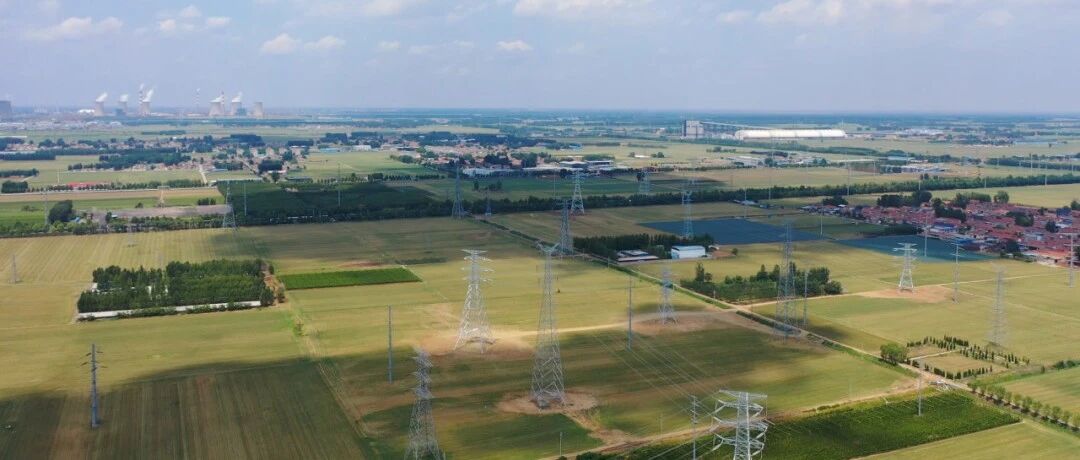
打通能源“动脉” “电”亮美好生活——我国“十四五”能源高质量发展成绩斐然
Yang Shi Wang· 2025-10-17 05:33
Group 1 - The energy sector is crucial for industrial development and national economy, with significant achievements made in China's energy industry during the "14th Five-Year Plan" period, positioning China as a key player in global energy transition [1] - In July and August, China's electricity consumption exceeded 1 trillion kilowatt-hours, marking a record high and doubling from 500 billion kilowatt-hours in July 2015, showcasing the stability and resilience of energy supply [2] - The stability of electricity supply is seen as a critical factor for economic development, allowing manufacturing and emerging industries to operate without concerns over power shortages [2] Group 2 - China has built the world's largest and fastest-growing renewable energy system, generating nearly 1.9 million kilowatt-hours of electricity per minute and saving 570 tons of standard coal [3] - Renewable energy now accounts for one-third of total electricity consumption, with significant contributions to the development of artificial intelligence and other emerging industries [3] - The future energy landscape in China includes the establishment of large-scale "new energy + storage" bases and the expansion of offshore wind power, with a focus on clean energy technology and engineering capabilities to support global energy transition [4]
施耐德电气尹正:AI为能源转型带来巨大机遇 AI不仅是能耗“追踪器”更是节能减碳“操盘手”
Xin Lang Cai Jing· 2025-10-17 04:01
责任编辑:张恒星 2025可持续全球领导者大会于10月16日-18日在上海市黄浦区世博园区召开。施耐德电气执行副总裁、 中国及东亚区总裁尹正出席并发表主题演讲,尹正表示,AI对于可持续发展深层的意义,在于它为能 源转型带来的巨大机遇。从能源需求侧来说,AI不仅是能耗的"追踪器",更是节能减碳的"操盘手"。 对于有"电力怪兽"之称的数据中心行业来说,通过利用先进的算法,AI可以分析实时数据优化制冷系 统,最大限度地减少能源消耗。 专题:2025可持续全球领导者大会&首届绿色产业与可持续消费博览会 ...
ELITE Solar 荣获EUPD Research 2025权威认证
Jin Tou Wang· 2025-10-17 03:29
Core Insights - The article highlights that Boda New Energy's ELITE Solar has been recognized in the EUPD Research 2025 Global Top Brand PV Modules list, showcasing its strong market influence and leadership in quality, innovation, and customer value [1][2]. Group 1: Recognition and Awards - ELITE Solar has achieved international recognition by being listed in the EUPD Research 2025 Global Top Brand PV Modules, reflecting its excellence in the competitive global photovoltaic industry [1]. - The recognition is based on customer satisfaction surveys, distribution channel research, and brand market performance analysis conducted by EUPD Research, a reputable independent energy research institution [2]. Group 2: Customer-Centric Approach - Boda New Energy emphasizes a core market philosophy of "innovation empowers, professional output, and customer success," driving cost optimization through technological innovation and enhancing long-term returns with systematic solutions [3]. - ELITE Solar provides efficient and reliable photovoltaic solutions globally, supporting customers in their energy transition and growth across various regions, including North America, the Middle East, Southeast Asia, and Europe [3]. Group 3: Future Commitment - The EUPD Research 2025 certification serves as both recognition of past achievements and motivation for ongoing innovation and quality enhancement [4]. - ELITE Solar aims to continue creating valuable photovoltaic products and competitive profitability through a professional, transparent, and sustainable global manufacturing network [4].
科技浪潮与能源转型“新命脉”,这个板块怎么看?丨每日研选
Sou Hu Cai Jing· 2025-10-17 00:49
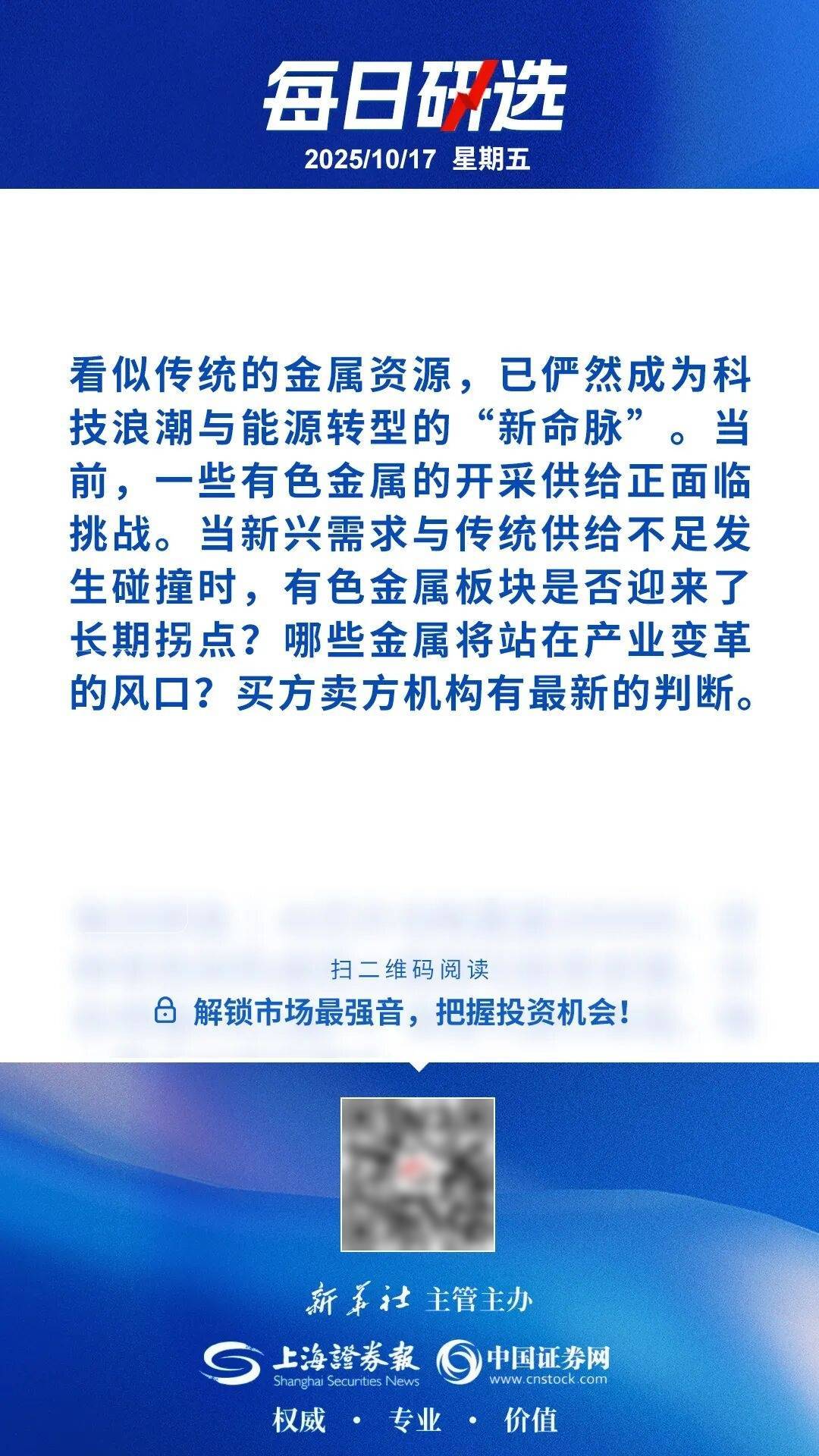
Core Viewpoint - The traditional metal resources are becoming a new lifeline amid the technological wave and energy transition, with challenges in supply for non-ferrous metals and emerging demand potentially marking a long-term turning point for the sector [2]. Group 1: Tin Market Insights - Minmetals Securities is optimistic about tin prices, forecasting an average annual growth rate of 44.5% in tin consumption for AI servers from 2025 to 2030, driven by significantly higher tin usage compared to traditional servers [5]. Group 2: Precious Metals Outlook - Shenwan Hongyuan suggests that the precious metals sector is likely to continue its recovery, with current valuations at the lower end of historical averages. They recommend focusing on companies like Shandong Gold, Zhaojin Mining, and others, while noting that the gold-silver ratio is currently high and may converge in the future [6]. Group 3: Copper Investment Opportunities - Guolian Minsheng highlights long-term supply constraints in copper due to insufficient capital expenditure in mining, which, combined with expectations of Federal Reserve rate cuts, could catalyze a new upward cycle in copper prices. Recommended companies include Zijin Mining and Luoyang Molybdenum [7]. Group 4: Cobalt Market Dynamics - CITIC Construction emphasizes the strategic opportunity in cobalt, noting that new export quotas from the Democratic Republic of Congo will reduce cobalt exports by over 100,000 tons in the next two years, leading to an estimated market shortage of about 30,000 tons in 2024 [8]. Group 5: Overall Non-Ferrous Metals Investment Space - HSBC Jintrust Fund indicates that there remains investment space in the non-ferrous metals sector, primarily due to further expected rate cuts by the Federal Reserve, which could drive prices up. The current valuation of the non-ferrous sector in Hong Kong is seen as advantageous compared to A-shares [9].




10月17日每日研选 | 科技浪潮与能源转型“新命脉”,这个板块怎么看?
Sou Hu Cai Jing· 2025-10-17 00:19
Core Viewpoint - The traditional metal resources are becoming a new lifeline amid the technological wave and energy transition, with challenges in supply for non-ferrous metals and potential long-term turning points in the sector [1] Group 1: Tin Market Insights - AI servers consume significantly more tin than traditional servers, leading to an increase in tin demand, with an expected annual growth rate of 44.5% in global tin consumption from 2025 to 2030 [2] - Limited new supply capacity for tin in the medium to long term, combined with growth in emerging fields like AI and robotics, as well as steady growth in electric vehicles and photovoltaics, supports a bullish long-term outlook for tin prices [2] Group 2: Precious Metals Outlook - The precious metals sector is currently at the lower end of historical valuation, indicating potential for sustained recovery, with recommendations to focus on companies like Shandong Gold, Zhaojin Mining, and others [3] - The gold-silver ratio is currently high and is expected to converge, suggesting a focus on silver investments [3] - Future investments in power grids and growth in AI data centers, along with relatively inelastic copper supply, are likely to elevate copper price levels [3] Group 3: Copper Investment Opportunities - Global copper supply is expected to face long-term constraints due to insufficient capital expenditure in mining, which may limit supply growth [4] - Anticipated interest rate cuts by the Federal Reserve could catalyze a new upward cycle in copper prices, making the copper sector an attractive investment opportunity [4] - Recommended companies include Zijin Mining, Luoyang Molybdenum, and others [4] Group 4: Cobalt Market Dynamics - The implementation of export quotas for cobalt from the Democratic Republic of Congo is expected to reduce exports by over 100,000 tons in the next two years, leading to an estimated market shortage of about 30,000 tons in 2024 [5] - The tightening supply in the cobalt market is likely to maintain high price levels, with potential for further increases [5] Group 5: Overall Non-Ferrous Metals Sector - Despite market reactions, there remains investment space in the non-ferrous metals sector, primarily driven by expectations of further interest rate cuts from the Federal Reserve, which could boost prices [6] - Precious and industrial metals are sensitive to global interest rate environments, indicating potential for price increases [6] - The current valuation of the non-ferrous metals sector in Hong Kong shows an advantage over A-shares [6]

Significant Market Shifts and Top Losers
Financial Modeling Prep· 2025-10-16 22:00
Company Performance - UTime Limited (NASDAQ:WTO) experienced a significant price drop of 87.59% to $0.15, with trading volume increasing to 28,956,057 from an average of 212,537, and its market cap reduced to $735,216 [1][6] - Nabors Energy Transition Corp. II Warrant (NASDAQ:NETDW) saw its price fall by 72.04% to $0.07, resulting in a modest market cap of $9,619,393 [2][6] - OBOOK Holdings Inc. Class A Common Shares (NASDAQ:OWLS) experienced a 57.35% decrease in share price to $29, with a significant drop from its year-high of $90 [3][6] - Republic Power Group Limited Class A Ordinary Shares (NASDAQ:RPGL) saw a 57.32% decline in share price to $1.75, with a market cap of $85,905,000 [4][6] - enGene Holdings Inc. Warrants (NASDAQ:ENGNW) experienced a 49.67% price decrease to $1.82, reducing its market cap to $93,174,858.14 [5][6] Market Trends - The market has shown volatility, particularly in sectors such as biotechnology, energy transition, blockchain technology, and consumer electronics, as evidenced by the significant price changes across multiple companies [5][6]
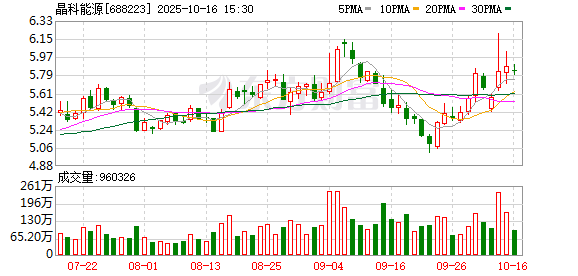
1公里产线上的“加减法” 晶科能源“破卷”突围透出“光伏之光”
Shang Hai Zheng Quan Bao· 2025-10-16 18:54
Core Viewpoint - JinkoSolar is adapting to the new cycle in the photovoltaic industry by pausing the expansion of module production capacity and focusing on technological upgrades, indicating a shift towards high-quality development in China's solar sector [2][4][6]. Group 1: Company Overview - JinkoSolar's "Smart Factory" in Shangrao, Jiangxi, is the world's first integrated production base for high-efficiency N-type TOPCon solar cells, with a total investment of 15 billion yuan [3]. - The factory spans nearly one kilometer and produces over 3.9 million solar cells daily, serving nearly 200 countries and regions globally [3][4]. - The company has been a leader in the solar module market, with one in every seven solar modules globally produced by JinkoSolar [2]. Group 2: Technological Advancements - JinkoSolar has upgraded its production lines with new technologies such as HCP, MAX, and 20BB, increasing the power of mainstream solar module products to over 640W, surpassing the market average by 20W-30W [4][5]. - The company aims to enhance its competitive edge through continuous technological innovation and digital upgrades, focusing on differentiated production strategies [9]. Group 3: Market Position and Financial Performance - In the first half of the year, JinkoSolar reported revenue of 31.83 billion yuan, a year-on-year decline of 32.63%, and a net loss of 2.91 billion yuan [6]. - Despite the losses, the company anticipates a future market shortage for high-efficiency solar products, expecting a price premium of 0.5-1 cent/W for upgraded products [5][6]. - The company maintains a strong overseas market presence, with international sales accounting for over 60% of its revenue, particularly in emerging markets like the Middle East and Southeast Asia [9][10]. Group 4: Industry Outlook - The photovoltaic industry is currently facing competitive pressures, but JinkoSolar's leadership believes that the market will recover by the second half of next year [6][7]. - The company is committed to sustainable development and aims to lead the industry towards high-quality growth through innovation and strategic partnerships, such as the joint venture in Saudi Arabia for a 10GW high-efficiency battery and module project [9][10].