科技浪潮

Search documents
易方达基金蔡荣成:掘金科技浪潮 紧跟产业最新变化
Zhong Guo Zheng Quan Bao· 2026-02-08 20:22
Group 1 - The article discusses the recent trends in the investment banking sector, highlighting a significant increase in M&A activities, with a year-on-year growth of 25% in deal volume [1] - It notes that the technology sector has been a major driver of this growth, accounting for 40% of total M&A transactions in the last quarter [1] - The report emphasizes the importance of regulatory changes that have facilitated cross-border transactions, leading to a 15% increase in international deals [1] Group 2 - The article mentions that the overall revenue for investment banks has risen by 10% compared to the previous year, reaching a total of $50 billion [1] - It highlights the competitive landscape, with top firms gaining market share, while smaller players struggle to keep up [1] - The analysis points out that firms are increasingly investing in technology to enhance their service offerings and improve operational efficiency [1]
【今晚播出】关税热度表面“降温”,2026全球经济与市场能“稳”吗? | 两说
第一财经· 2026-02-04 03:42
Core Insights - The global economy is entering a new phase influenced by geopolitical factors, policy shifts, and technological advancements [1] - The performance of the global economy in 2025 is under scrutiny due to tariff impacts, while expectations for stability in 2026 are being evaluated amidst a cooling of tariff tensions [1] - Key variables in the global market are emerging from ongoing geopolitical conflicts and rapid advancements in AI technology [1] Summary by Sections - **Global Economic Performance**: The article discusses the overall performance of the global economy in 2025, particularly in light of tariff impacts and the potential for a more stable economic outlook in 2026 as tariff tensions appear to ease [1] - **Geopolitical and Technological Influences**: It highlights the underlying geopolitical conflicts and the rapid progress in AI as critical factors that could influence market dynamics moving forward [1]


长江有色:绿色消费政策持续发力及去库支撑 6日铅价或上涨
Xin Lang Cai Jing· 2026-01-06 02:55
Core Viewpoint - The lead market is experiencing a strong upward trend driven by macroeconomic factors, structural demand growth, and supply constraints, with a notable increase in lead prices and trading volumes [1][2]. Group 1: Macroeconomic Factors - Domestic and international market sentiments are generally positive, supported by China's "14th Five-Year Plan" for stable growth and green consumption policies, alongside favorable conditions in the U.S. stock market and expectations of interest rate cuts by the Federal Reserve [1]. - The overall low global inventory levels and supply disruptions in major producing regions such as Chile, Indonesia, and the Democratic Republic of Congo are amplifying price elasticity [1]. Group 2: Supply Side Dynamics - There is a structural contradiction in the supply side characterized by a divergence between primary and secondary lead. Primary lead production is recovering, but tight supply of lead concentrate and low processing fees are squeezing smelting profits [2]. - The recycling sector is facing challenges due to high prices of scrap batteries, leading to a significant drop in operational rates to around 38% [2]. - Continuous net imports are exacerbating domestic supply pressures [2]. Group 3: Demand Side Dynamics - The demand side is currently in a seasonal lull, with downstream purchasing primarily driven by necessity. The overall operating rate in the lead-acid battery industry has declined to approximately 65% due to inventory destocking by vehicle manufacturers and the end of the transition period for new standards in electric bicycles [2]. - Factors such as year-end accounting and high finished goods inventory are suppressing purchasing intentions, resulting in a market characterized by "high prices but low activity" [2]. Group 4: Price Outlook - Short-term lead prices are expected to be influenced by macroeconomic sentiment and supply-demand contradictions within the industry. The release of inventory pressure from smelting plants may exert downward pressure on prices, while low social inventory provides some support [3]. - Prices are anticipated to continue fluctuating with a slight upward bias, with future direction dependent on macro policy developments and substantial changes in industry chain inventory [3].

渣打银行廖薇:中国经济转型迎接“长跑”,重点关注全要素生产率
2 1 Shi Ji Jing Ji Bao Dao· 2025-12-08 11:47
Core Viewpoint - The forum highlighted the potential for China's economy to achieve stable medium- to long-term growth driven by total factor productivity improvements and the rise of new economic sectors [1][2]. Economic Outlook - China's average GDP growth over the past few years has been around 5%, supported by structural changes such as strong export performance despite U.S. tariffs and a transition from old to new economic sectors [2][3]. - The share of consumption in GDP is expected to increase relative to investment from 2022 to 2024, indicating a shift in the economic growth model [2]. - The real estate sector's contribution to GDP has decreased from over 20% at its peak to 15%, with ongoing adjustments expected [2]. Industry Development - Traditional consumer goods and manufacturing markets are saturated, while new consumer categories and services show significant growth potential [3]. - The export structure has shifted from low-end products to mid-range machinery and high-end products, contributing to export resilience [3]. Social Considerations - To ensure equitable economic development, efforts should be made to reduce disparities in social security and per capita consumption between urban and rural areas [3]. Future Growth Projections - The average potential growth rate for China is projected to remain above 4% over the next decade, with a target for per capita GDP to double [3][4]. - Historical data indicates that total factor productivity has experienced rapid growth during key periods of economic reform, characterized by increased marketization, optimized resource allocation, and heightened competition [3].
张瑜:最确定的景气在哪? ——张瑜旬度会议纪要No.127
Xin Lang Cai Jing· 2025-12-04 23:04
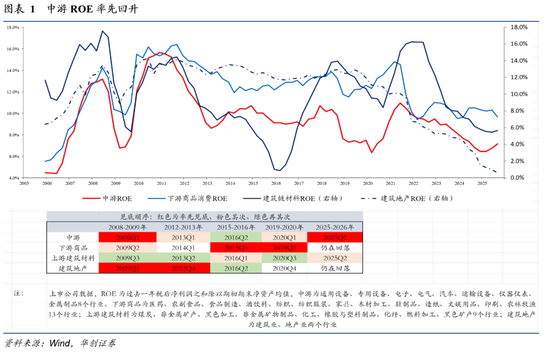
Group 1 - The article discusses the current economic environment characterized by a policy-intensive period and an upcoming data vacuum period, which is expected to lead to increased market activity [1][10] - The policy-intensive phase will begin in December with key meetings, including the Political Bureau meeting and the Central Economic Work Conference, followed by various ministerial meetings [1][10] - The data vacuum period in January and February will lack significant economic data, which historically leads to market volatility and increased activity [1][10] Group 2 - The analysis identifies three macroeconomic divergences: the divergence between export price index and domestic PPI, the contrasting performance of exports and real estate, and the stock market's reliance on valuation rather than earnings growth [2][11] - The core judgment is that the most certain economic growth is likely to be found in the midstream manufacturing sector over the next 3-6 months, supported by four new changes in this sector [3][12] - Midstream manufacturing has seen a reversal in profit dynamics, with overseas gross margins now significantly higher than domestic margins, indicating a shift in profit cycles [3][12] Group 3 - The stability of export demand is a key support for midstream manufacturing, with expectations of a continued rise in global industrial production over the next six months [6][15] - Key categories within high-tech and mechanical exports, such as information technology products, ships, and automobiles, are showing stable demand, further supporting the outlook for midstream manufacturing [6][15] - The current cycle is unique, as midstream manufacturing can rely on overseas markets for profit recovery, with expectations that prices in this sector may rebound sooner than the overall PPI [7][16]
最确定的景气在哪? - 张瑜旬度
2025-12-01 00:49
Summary of Conference Call Records Industry or Company Involved - Focus on the **midstream manufacturing industry** and its economic outlook Core Points and Arguments 1. **Midstream Manufacturing Growth**: The midstream manufacturing sector is expected to be the most certain growth point in the next 3-6 months, driven by a bottoming out of ROE, overseas gross margins surpassing domestic margins for the first time, and increased demand for equipment due to technological advancements [1][3][4][5] 2. **Stable Export Demand**: Export demand remains stable, with high-tech electromechanical products accounting for approximately 50% of exports, showing better elasticity than the global industrial production index. Key categories such as information technology, shipbuilding, and automotive are experiencing good order conditions [1][6] 3. **PMI Data Insights**: The global JPMorgan manufacturing PMI has expanded for three consecutive months, and China's export PMI has rebounded to 47.6, indicating potential recovery in export growth to 5-6% in October and November [1][8] 4. **Infrastructure Recovery Indicators**: Leading indicators for infrastructure recovery are improving, with expectations, orders, and construction employment all showing synchronized improvement in November, suggesting a positive outlook for infrastructure investment in 2026 [1][10] 5. **Industrial Profit Trends**: Industrial enterprises are experiencing unusual revenue declines, leading to increased expense ratios. However, midstream industries are still showing growth, with accounts receivable as a percentage of assets decreasing, indicating improved cash flow [1][11] 6. **Monetary Policy Outlook**: The likelihood of interest rate cuts is low in the short term, as the supply-demand relationship in the real economy has not fully improved. M2 growth is expected to decline to around 7.9% by year-end, with social financing growth around 8.4% [1][12] 7. **U.S. Power Supply Dynamics**: In the short term, U.S. electricity supply growth is expected to exceed demand growth, but by 2030, data center construction may lead to regional supply-demand imbalances, particularly in Texas and the Mid-Atlantic regions [1][15][18] Other Important but Possibly Overlooked Content 1. **Investment Plans**: There are two significant investment plans of 500 billion RMB each for 2025, compared to two plans of 100 billion RMB in 2024, indicating a shift in investment strategy [1][10] 2. **Long-term Energy Consumption Projections**: By 2030, AI-related server energy consumption is projected to increase significantly, potentially leading to substantial energy supply pressures in certain U.S. regions [1][18] 3. **Tax Revenue Impact from Capital Markets**: The capital markets are expected to significantly influence tax revenues, with estimated annual tax contributions from the securities industry projected to grow by approximately 60% in 2025 [1][23]
【狮说新语】略感焦虑?接下来市场的“能见度”好像变高了点?
Xin Lang Cai Jing· 2025-11-12 09:36
Group 1 - The market's "visibility" is improving due to stabilizing domestic and international policy environments and ongoing economic recovery, presenting more structural opportunities [2][4] - The uncertainty surrounding U.S. policies is decreasing, with a shift from chaotic to manageable uncertainty, particularly following the U.S.-China summit and adjustments in tariff policies [3][4] - Domestic fiscal policies are becoming more proactive, with significant growth in fiscal spending, which is expected to support the economy and mitigate the impacts of deleveraging in the real estate sector [5][6] Group 2 - A-shares are currently valued reasonably, with the CSI 300 index's forward P/E ratio at 12.6x, slightly above the historical average, indicating a balanced risk premium [6][8] - A-shares are comparatively undervalued against global indices, with the S&P 500 and other major indices showing higher forward P/E ratios [8] - The recovery in industry earnings, particularly in technology and renewable sectors, is expected to help absorb valuations, reducing concerns about overvaluation [8] Group 3 - The investment focus should shift towards "certainty" in the market, with three key themes identified for future investment: the technology wave, external demand expansion, and anti-involution policies [12][18] - The technology sector, particularly AI, is poised for significant growth, with major tech companies continuing to invest heavily, indicating a sustainable growth trajectory [13][14] - China's manufacturing sector is expected to maintain resilience in exports, supported by favorable trade policies and a shift towards more diversified global supply chains [15][17] Group 4 - Anti-involution policies are likely to lead to price and profit recovery in certain industries, particularly those with high state-owned enterprise presence, such as coal and steel [17][18] - The supply-side policies are expected to balance the increase in quality consumption supply while reducing inefficient production capacity, creating opportunities in sectors like chemicals and new energy [17][18]
10月17日每日研选 | 科技浪潮与能源转型“新命脉”,这个板块怎么看?
Sou Hu Cai Jing· 2025-10-17 00:19
Core Viewpoint - The traditional metal resources are becoming a new lifeline amid the technological wave and energy transition, with challenges in supply for non-ferrous metals and potential long-term turning points in the sector [1] Group 1: Tin Market Insights - AI servers consume significantly more tin than traditional servers, leading to an increase in tin demand, with an expected annual growth rate of 44.5% in global tin consumption from 2025 to 2030 [2] - Limited new supply capacity for tin in the medium to long term, combined with growth in emerging fields like AI and robotics, as well as steady growth in electric vehicles and photovoltaics, supports a bullish long-term outlook for tin prices [2] Group 2: Precious Metals Outlook - The precious metals sector is currently at the lower end of historical valuation, indicating potential for sustained recovery, with recommendations to focus on companies like Shandong Gold, Zhaojin Mining, and others [3] - The gold-silver ratio is currently high and is expected to converge, suggesting a focus on silver investments [3] - Future investments in power grids and growth in AI data centers, along with relatively inelastic copper supply, are likely to elevate copper price levels [3] Group 3: Copper Investment Opportunities - Global copper supply is expected to face long-term constraints due to insufficient capital expenditure in mining, which may limit supply growth [4] - Anticipated interest rate cuts by the Federal Reserve could catalyze a new upward cycle in copper prices, making the copper sector an attractive investment opportunity [4] - Recommended companies include Zijin Mining, Luoyang Molybdenum, and others [4] Group 4: Cobalt Market Dynamics - The implementation of export quotas for cobalt from the Democratic Republic of Congo is expected to reduce exports by over 100,000 tons in the next two years, leading to an estimated market shortage of about 30,000 tons in 2024 [5] - The tightening supply in the cobalt market is likely to maintain high price levels, with potential for further increases [5] Group 5: Overall Non-Ferrous Metals Sector - Despite market reactions, there remains investment space in the non-ferrous metals sector, primarily driven by expectations of further interest rate cuts from the Federal Reserve, which could boost prices [6] - Precious and industrial metals are sensitive to global interest rate environments, indicating potential for price increases [6] - The current valuation of the non-ferrous metals sector in Hong Kong shows an advantage over A-shares [6]



长城基金雷俊:产业周期与政策支持共振 港股科技板块迎来配置机遇
Shang Hai Zheng Quan Bao· 2025-06-08 18:12
Core Viewpoint - The value of Chinese technology assets is increasingly highlighted under the dual drive of the global technology wave and AI industry transformation, presenting new investment opportunities in the Hong Kong technology sector [1] Group 1: Market Performance - As of June 3, the Hang Seng Technology Index has risen by 16.15% this year, outperforming major global indices [1] - The Hang Seng Technology Index is composed of 30 large-cap stocks highly related to technology themes, reflecting the innovation trends in the Hong Kong tech sector [2] Group 2: Investment Potential - The Hong Kong technology sector is expected to have long-term investment potential due to the resonance of industry cycles and policy support, with the index serving as an important tool for investment in this area [1][2] - The index's constituent stocks are characterized by high innovation and growth, with significant short-term volatility but clear high elasticity advantages [2] Group 3: Policy and R&D Investment - Supportive policies are guiding technology companies to increase R&D investment and focus on market capitalization management, gradually improving the fundamentals of Hong Kong tech companies [2] - The ongoing release of policy dividends is injecting new momentum into the technology industry, particularly in fields like chips and software [1] Group 4: Future Outlook - The Hong Kong technology sector is transitioning from valuation repair to performance-driven growth, with significant upward potential remaining [3] - The current valuation of the Hang Seng Technology Index is at 20.43 times, which is notably low compared to historical levels and significantly below indices like the Nasdaq [2]
凯莱英涨停,创新药企ETF(560900)拉升涨近2%,机构:创新药企正处于关键转型期
Xin Lang Cai Jing· 2025-04-24 02:32
Group 1 - The innovative pharmaceutical ETF (560900) has risen by 1.80%, with the underlying index, the China Innovative Drug Industry Index (931152), increasing by 1.60% [1] - Key stocks such as Kailaiying (002821) rose by 10.01%, Maiwei Biotech (688062) by 7.23%, and Rongchang Biotech (688331) by 6.57% [1] - Galaxy Securities indicates that innovative pharmaceutical companies are in a critical transformation period, with Changchun High-tech's R&D investment reaching 2.69 billion yuan in 2024, a year-on-year increase of 11.20%, accounting for nearly 20% of revenue [1] Group 2 - Morgan Asset Management is integrating its "Global Vision Investment Technology" product line to assist investors in capturing investment opportunities in quality tech companies globally [2] - The actively managed Morgan Emerging Power Fund aims to grasp emerging industry trends from a long-term perspective, while the Morgan Smart Connectivity Fund focuses on opportunities in the AI sector [2] - The Morgan Pacific Technology Fund selects quality tech companies in the Pacific region [2] Group 3 - The passive investment options include the Morgan Hang Seng Technology ETF (513890) for exposure to Hong Kong tech assets and the Morgan China Innovative Drug Industry ETF (560900) for Chinese innovative pharmaceutical companies [3] - The Morgan NASDAQ 100 Index Fund provides one-click access to global tech leaders [3]