产业升级

Search documents
强强联手,海联讯换股吸收杭汽轮B,共拓能源装备新蓝海
Quan Jing Wang· 2025-09-10 14:24
Group 1 - The Chinese energy equipment industry is undergoing a new round of integration and upgrading driven by the "dual carbon" goals and accelerated manufacturing transformation [1] - Hangzhou Hailianxun Technology Co., Ltd. plans to absorb and merge Hangzhou Steam Turbine Power Group Co., Ltd. through a share swap, which has attracted significant market attention [1] - The merger is expected to leverage the complementary advantages of both companies, allowing them to seize opportunities in new market segments [1] Group 2 - Major technical equipment such as industrial steam turbines and gas turbines are core power sources for basic industries like petrochemicals, electricity, and chemicals, directly impacting national energy consumption and emission reduction [2] - The demand for efficient, clean, and intelligent power equipment is continuously growing as the "carbon peak and carbon neutrality" strategy is deeply implemented [2] - Hangzhou Steam Turbine Power Group is a leading player in the domestic industrial steam turbine sector, with a strong market share and extensive experience in turbine research and manufacturing [2] Group 3 - The merger between Hailianxun and Hangzhou Steam Turbine Power Group transcends traditional asset restructuring, representing a strategic collaboration focused on industrial upgrading and value reshaping [3] - This partnership aims to enhance the core competitiveness of both companies and provide a new practical path for the intelligent and green development of China's high-end equipment manufacturing industry [3] - A new type of industrial technology enterprise is emerging, characterized by greater innovation, closer alignment with customer needs, and alignment with future industry directions [3]


8月CPI、PPI出炉,释放积极信号
Sou Hu Cai Jing· 2025-09-10 13:12
Core Insights - The Consumer Price Index (CPI) in August decreased by 0.4% year-on-year and remained flat month-on-month, while the Producer Price Index (PPI) fell by 2.9% year-on-year, with the decline narrowing by 0.7 percentage points compared to the previous month [1][6] - The data aligns with market expectations, and attention should be paid to the impact of seasonal consumption, special bond fund implementation, and overseas oil price fluctuations in September and October [1][7] CPI Analysis - The overall consumer market remained stable in August, with the core CPI (excluding food and energy) rising by 0.9% year-on-year, marking the fourth consecutive month of growth [3] - Food prices dropped significantly, with pork, fresh vegetables, and eggs decreasing by 16.1%, 15.2%, and 14.2% year-on-year, respectively, contributing to a downward pressure on the CPI [4] - The core CPI's increase was influenced by rising prices of gold and platinum jewelry, which rose by 36.7% and 29.8% year-on-year, respectively [3] PPI Analysis - The PPI ended an eight-month downward trend, stabilizing month-on-month after a 0.2% decline in the previous month [5][6] - Improvements in supply-demand relationships led to price increases in certain energy and raw material sectors, such as coal processing and black metal smelting [5] - The PPI's year-on-year decline of 2.9% is the first narrowing since March, attributed to a lower comparison base from the previous year and the implementation of proactive macro policies [6] Future Outlook - Analysts suggest that the PPI may enter a recovery phase starting in August due to favorable low base conditions from the previous year [6] - The ongoing optimization of market competition and the rise of new consumption demands are expected to support price improvements in various sectors [6] - The low inflation environment continues to provide room for monetary easing, which may help marginally restore corporate profit expectations [7]

30亿,浙江省产业结构调整基金落地
FOFWEEKLY· 2025-09-10 09:54
Core Viewpoint - The establishment of the Zhejiang Province Industrial Structure Adjustment Fund, with a scale of 3 billion yuan, aims to enhance the modernization of the industrial system in Zhejiang Province and promote the optimization and upgrading of the industrial structure [1][2]. Group 1 - The fund will inject strong momentum into the construction of a modern industrial system in Zhejiang, facilitating the optimization of state-owned capital layout and promoting industrial transformation and upgrading [1][2]. - The investment scope of the fund includes strategic emerging industries such as new generation information technology, artificial intelligence and the Internet of Things, new energy vehicle industry chain, new materials, and life health [1]. - The fund aligns with Zhejiang's key industrial development directions, including the "415X" manufacturing cluster and the "315" innovation system, providing precise capital support for industrial development [1][2]. Group 2 - The fund's launch is significant for the industrial development of Xiaoshan Economic and Technological Development Zone and the entire Zhejiang Province, promoting the upgrade and structural adjustment of industries [2]. - It will facilitate the transformation of traditional industries towards high-end, intelligent, and green development, while nurturing emerging industrial clusters to enhance industrial added value and core competitiveness [2]. - The fund will also assist in optimizing the layout of state-owned capital, guiding it towards strategic emerging industries and key areas, thereby improving the efficiency of capital allocation and operational effectiveness [2].

500亿来了!深圳宝安这场大会藏着哪些“财富”密码?
Nan Fang Du Shi Bao· 2025-09-10 07:17
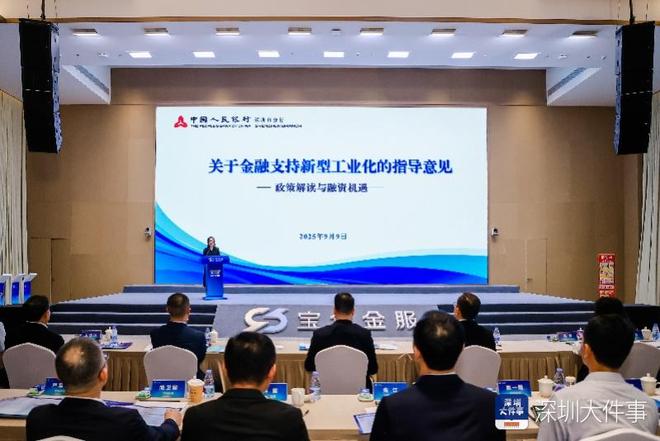
Group 1 - The event in Shenzhen Baoan gathered decision-makers from 132 financial institutions and leaders from 426 local enterprises, resulting in over 50 billion yuan in signed agreements, highlighting the importance of finance as the lifeblood of the real economy [2] - The conference aimed to reshape the supply-demand logic from merely "finding funds" to "resource allocation," addressing the core needs of many tech enterprises for capital partners who understand their industries [3] - The event featured a matrix structure with one main venue and six thematic sub-venues, allowing for precise segmentation of financial supply according to Baoan's advantageous industrial chains, facilitating tailored financial solutions for various companies [3] Group 2 - Agricultural Bank of China’s participation exemplifies the new logic of resource allocation, providing customized financial tools for tech enterprises, including loans for mergers and acquisitions and special loans for "specialized, refined, unique, and innovative" small giants [4] - Other banks, such as Industrial and Commercial Bank of China and China Construction Bank, are also focusing on providing systematic financial services tailored to the full lifecycle of tech enterprises, indicating a collective effort from major financial institutions [6] - The event is a strategic move for Shenzhen as a global innovation capital formation center, with Baoan being a key area for financial innovation and home to nearly 5,600 manufacturing enterprises and a leading number of national high-tech enterprises [6] Group 3 - Companies like Shenzhen Tengjinda Information Technology and Rongxin Medical express gratitude for the support from local banks, emphasizing the importance of tailored financial products that meet their specific needs, such as R&D loans and innovative assessment systems [7][8] - The ecosystem in Baoan is characterized by solid industrial strength, with a focus on financial services empowering the real economy and driving industrial upgrades [8] - Baoan is positioned as a core area where industry and finance resonate, with every technological breakthrough seeking capital support, ultimately enhancing the competitiveness of Shenzhen and the Greater Bay Area [8]
美联储降息几乎板上钉钉 A股能否重演去年“924”行情?
Sou Hu Cai Jing· 2025-09-08 02:35
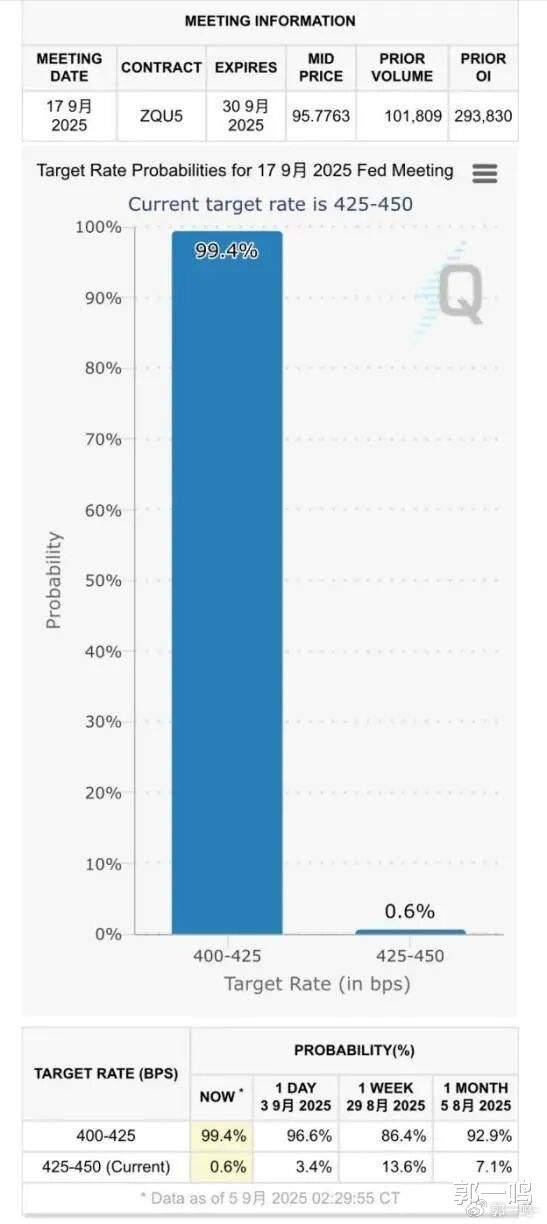
Group 1 - The core viewpoint is that the market is experiencing a shift from a policy-driven rally to a focus on industrial upgrades and global competitiveness, with the A-share market not expected to replicate last year's "924" surge but still showing a clear upward trend [1][8] - The A-share market has entered a "slow bull" phase, with the Shanghai Composite Index breaking through 3800 points, marking a 44.6% increase from last year's low [4] - The current market environment is characterized by structural differentiation in capital flows, with foreign capital showing significant interest in sectors like semiconductors and consumer electronics, while domestic institutions are focusing on healthcare and biopharmaceuticals [6][7] Group 2 - The policy landscape has shifted, with the Federal Reserve's recent 25 basis point rate cut being a routine action, and domestic policies moving from broad easing to targeted measures, such as a 0.5 percentage point reserve requirement ratio cut and structural tools for service consumption and elderly care [4][6] - The market structure has transitioned from a broad rally to a high-growth rotation model, with sectors like healthcare and consumer services experiencing a resurgence alongside technology [7] - Investment strategies should focus on sectors benefiting from liquidity improvements, such as communication equipment and high-end manufacturing, while also considering valuation recovery opportunities in insurance and brokerage firms [7][8]
中国光大银行以并购贷款业务精准赋能产业升级-银行-金融界
Jin Rong Jie· 2025-09-08 02:09
Core Viewpoint - China Everbright Bank is leveraging its merger and acquisition loan products to support industrial upgrades and resource optimization in key sectors such as technology finance, high-end manufacturing, and capital markets [1]. Group 1: Technology Finance - Everbright Bank has positioned technology finance as the strategic core of its merger loan business, focusing on supporting mergers in critical areas like integrated circuits, biomedicine, new energy, and environmental protection [2]. - In April 2025, the bank provided financing support covering 78% of the transaction price for a Suzhou electronic materials company acquiring a Southeast Asian competitor, reinforcing its leading position in the wet electronic chemicals sector [2]. Group 2: High-End Manufacturing - The bank's merger loans are closely aligned with the transformation towards high-end, intelligent, and green manufacturing, actively supporting mergers in high-end equipment, automotive manufacturing, and new materials [3]. - In January 2025, Everbright Bank issued a merger loan of 670 million yuan to a Shandong new materials company to facilitate the acquisition of a polyolefin elastomer (POE) facility, accelerating the domestic substitution of core raw materials for photovoltaic film [3]. Group 3: Capital Markets - Everbright Bank plays a crucial role in facilitating transactions and financing solutions for listed companies and their affiliates, enhancing the attractiveness of the domestic capital market [4]. - In the first half of 2025, the bank provided merger financing services over ten times to listed companies and their affiliates, contributing to the vibrancy of the capital market [4]. Group 4: Innovation and Brand Development - The bank has established a professional and efficient merger finance team, expanding the application scenarios of merger loans and exploring innovative fields such as equity incentives and public REITs [5]. - In the first half of 2025, Everbright Bank provided a total of 16.6 billion yuan in merger loans to domestic and foreign clients, leveraging the full-spectrum financial capabilities of the Everbright Group to offer comprehensive support for merger transactions [5]. - The bank aims to continue serving the real economy, responding to national strategic directions and market demands, while optimizing merger financial service models to support industrial upgrades and economic structure optimization [5].

三座小岛成“沪西第一村”发展新底牌 未来去“百鸟森林”露营观鸟
Jie Fang Ri Bao· 2025-09-08 02:00
Core Insights - The article discusses the transformation of Shagang Village in Shanghai, highlighting its new development opportunities through land consolidation and infrastructure improvements [1][2][3] Group 1: Village Transformation - Shagang Village, located at the junction of Shanghai and Jiangsu, has undergone significant changes due to a city-level land consolidation project, revitalizing previously abandoned areas [1][2] - The village's natural environment and resources were underutilized, leading to a lack of development until recent initiatives began to take shape [2][3] Group 2: Infrastructure and Economic Development - The land consolidation project has resulted in an increase of approximately 365.25 acres of arable land, enhancing agricultural modernization and efficiency [3] - The introduction of social capital has led to the establishment of a boutique homestay project, "Rongju·Shagang," with a total investment of about 15 million yuan, featuring 11 rooms and various amenities [3][4] Group 3: New Island Designations - Three previously neglected islands in the village have been designated for new purposes: East Island as a bird sanctuary, Central Island as a digital health and wellness hub, and West Island as a strategic space for future projects [5][6] - The East Island will focus on creating a habitat for various bird species while providing recreational opportunities for visitors [6]
多领域活力数据折射经济强大韧性与潜力
Yang Shi Wang· 2025-09-08 00:53
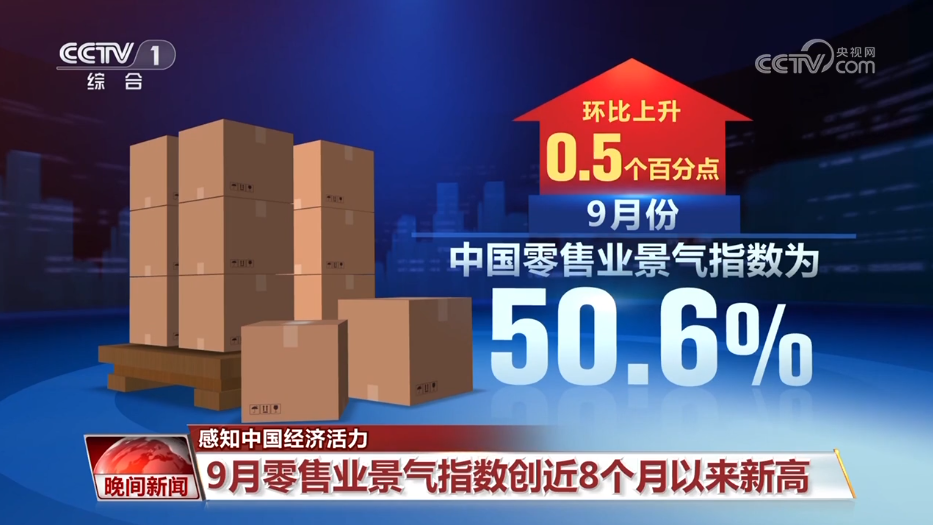
Retail Industry - In September, China's retail industry prosperity index reached 50.6%, an increase of 0.5 percentage points month-on-month, marking the highest level in eight months, indicating a clear improvement in the retail sector's development trend [3] Logistics and Transportation - In August, 15 new international air cargo routes were opened nationwide, with over 30 round-trip flights added weekly. A total of 152 new international air cargo routes were established in the first eight months of the year, with over 300 round-trip flights added weekly [6] - The road logistics freight rate index for August was reported at 105.1 points, reflecting a month-on-month increase of 0.01% and a year-on-year increase of 0.8%, indicating an active road logistics market supported by good growth in production and consumption [8] Light Industry - In the first seven months of the year, China's light industry showed steady performance, with a total revenue exceeding 13 trillion yuan, and the added value of large-scale light industry increased by 6.7% year-on-year [10][12] - The retail sales of 11 categories of light industrial products reached 4.9 trillion yuan from January to July, a year-on-year increase of 11.4%, accounting for 17.4% of total social retail sales [10] - Light industrial exports amounted to 535.75 billion USD in the first seven months, representing 25.1% of the national total, with 11 out of 21 major categories showing growth [12] Foreign Investment - In Guangdong, the number of newly established foreign-funded enterprises increased by 32.7% year-on-year, totaling 17,000 in the first seven months, indicating a sustained attraction for foreign investment [12][15] - Actual foreign investment in Guangdong reached 65.67 billion yuan in the first seven months, an increase of 8.2% year-on-year, with the manufacturing sector accounting for 29.1% of the total [15] Trade and Economic Zones - The comprehensive bonded zones and bonded logistics parks have contributed to one-fifth of the national import and export value, despite occupying less than one-twentieth of the country's land area [18] - Since the beginning of the "14th Five-Year Plan," 19 new customs special supervision areas have been added, bringing the total to 174, achieving nationwide coverage and becoming new high grounds for China's opening-up [18]
从“技术洼地”到“创新高原” 高新技术产品出口再创历史新高
Zhong Guo Chan Ye Jing Ji Xin Xi Wang· 2025-09-08 00:42
Core Insights - The trade of high-tech products has become a significant driving force for economic growth, especially for developing countries, contributing to industrial restructuring and transformation of economic development models [1] - China's high-tech industry has achieved a historic leap from being a "technology gap" to an "innovation plateau," with exports reaching a record high of 3.7 trillion yuan in the first seven months of 2025, a 7.2% increase year-on-year [1][2] Export Growth - China's high-tech product exports have seen exponential growth, from 342.43 billion yuan in 2001 to 6.28 trillion yuan in 2024, representing a 17.3-fold increase and an annual compound growth rate of 13.5% [2] - The resilience of high-tech product exports has been a stabilizing factor for China's high-quality foreign trade amidst complex international conditions [2] Trade Balance Shift - Prior to joining the WTO, China faced a trade deficit in high-tech products, peaking at 176.17 billion yuan in 2003. By 2007, the country reversed this trend, achieving a surplus of 178.96 billion yuan, which grew to 920.11 billion yuan by 2024 [3] Market Diversification - China's high-tech product export markets have expanded significantly, reaching 238 countries and regions by 2024. Exports to traditional markets like Europe and the US have grown but their share has decreased from 72.3% in 2001 to 53.5% in 2024 [4] - Exports to emerging markets, particularly those involved in the Belt and Road Initiative, have surged, with exports to these countries reaching 2.33 trillion yuan in 2024, accounting for 37.1% of total high-tech exports [5] Product Categories - Computer and communication technology products dominate China's high-tech exports, accounting for 54.4% of total exports in 2024, with a value of 3.42 trillion yuan, an 11.8-fold increase since 2001 [6][7] - Integrated circuits have emerged as a new export champion, with exports reaching 1.13 trillion yuan in 2024, marking a significant growth trajectory [7] Regional Performance - Guangdong leads in high-tech product exports, with 1.83 trillion yuan in 2024, a 10.1-fold increase since 2001, while Jiangsu follows closely with 1.21 trillion yuan [9] - The central and western regions of China have also shown remarkable growth, with exports rising from 5.19 billion yuan in 2001 to 1.7 trillion yuan in 2024, a 325.6-fold increase [10]
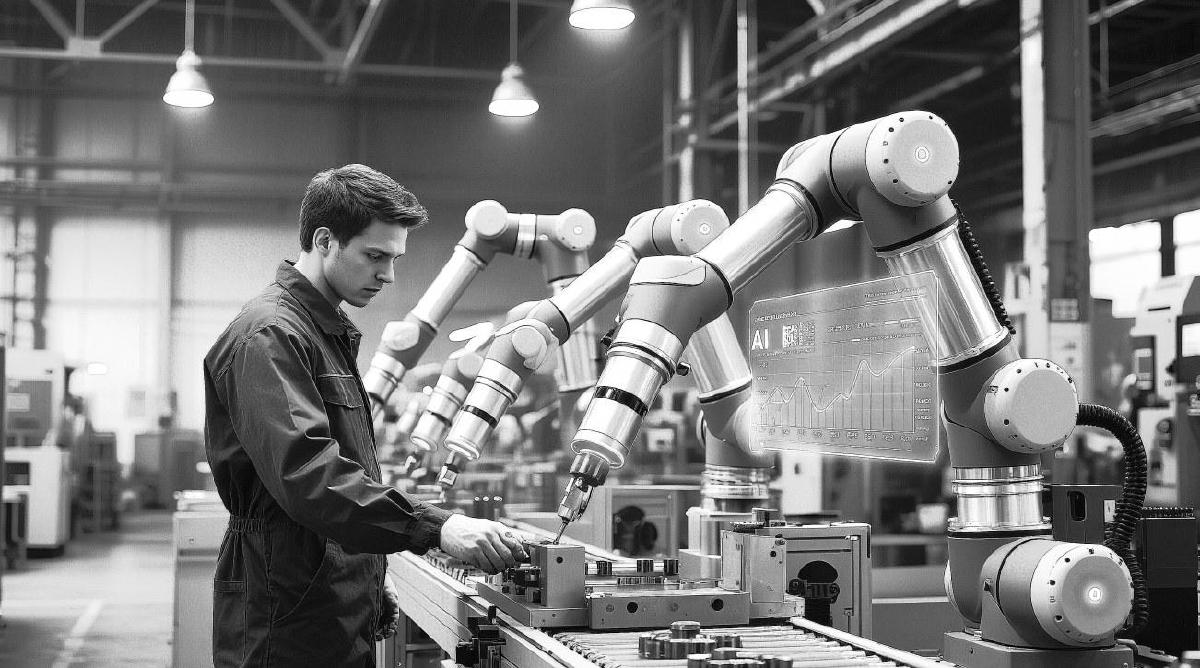
AI驱动,制造业迎来“智变”(附图片)
Xin Lang Cai Jing· 2025-09-08 00:26
Core Insights - The article emphasizes the rapid expansion of artificial intelligence (AI) across global industries, particularly in manufacturing, which is undergoing a transformation from automation to autonomy [2] - AI's evolution is marked by significant milestones, including the transition from philosophical inquiries about machine intelligence to practical applications that permeate daily life [3] - The manufacturing sector is identified as a strategic high ground for AI technology implementation, with a focus on enhancing production methods and business models through deep integration of AI [7] AI Evolution - AI has progressed through various stages, starting from philosophical discussions to practical applications, with notable breakthroughs such as deep learning in image recognition and AlphaGo's victory over a world champion [3][4] - The current phase of AI development involves three stages: initial training with vast data, advanced training through reinforcement learning, and high-level training in real-world scenarios [4] Manufacturing Industry Transformation - The manufacturing industry has evolved from manual production to intelligent manufacturing, with significant shifts occurring post-industrial revolutions, leading to increased automation and precision [5] - The article outlines four major historical shifts in global manufacturing, highlighting the need for industry transformation and the role of AI in driving this change [6] Development Recommendations - The integration of AI in manufacturing is crucial for achieving high-quality development, necessitating technological innovation and overcoming existing technical bottlenecks [7] - Key technologies for AI agents include large language models, machine learning, and various supporting technologies such as computer vision and cloud computing [8] Infrastructure and Data Strategy - A collaborative layout of computing power and data is essential, focusing on optimizing the synergy between models, systems, and hardware to enhance AI applications in manufacturing [9] - The article advocates for the construction of a robust data foundation to support AI model training, emphasizing the transition from traditional data delivery to data-driven business actions [9] Ecosystem Development - A collaborative effort among government, industry, academia, and research is necessary to foster an AI-enabled manufacturing ecosystem, facilitating the rapid conversion of research into practical applications [10] - The establishment of AI future manufacturing demonstration zones aims to integrate national strategic needs with regional advantages, enhancing competitiveness in the global market [10] Implementation of AI in Manufacturing - The focus on creating benchmark cases in key areas such as smart factories and supply chains is highlighted, with examples of using AI for real-time monitoring and optimization of production processes [11] - Future trends indicate that AI will increasingly penetrate core manufacturing processes, leading to a shift from passive responses to proactive optimization in production models [12]