
稳定币

Search documents
智荟中欧·北京论坛 | 全球经贸变局下,中企如何以“差异化出海”破局
Jing Ji Guan Cha Wang· 2025-07-12 08:29
Core Insights - The forum discussed strategies for Chinese companies to adapt to the reshaping of the global economic landscape due to geopolitical challenges, trade barriers, financial volatility, and technological changes [2][3] Group 1: Global Economic Landscape - The pressure of global supply chain restructuring highlights China's strong production, logistics, and human resources, which can still provide competitive advantages [3] - The "dual circulation" strategy emphasizes the importance of enhancing negotiation skills with the world and identifying systematic opportunities for international expansion [3] - The World Bank indicates that since 2004, the share of global goods and services trade in global GDP has steadily increased, showing that globalization has not halted [6] Group 2: Digital Currency and Regulation - The U.S. and global regulatory frameworks are evolving, particularly with the introduction of the U.S. Stablecoin Innovation Act and Hong Kong's Stablecoin Regulations, which may diminish the decentralized nature of stablecoins [4] - The development of stablecoins by the U.S. is seen as a strategy to reinforce the dominance of the dollar in the global economy [4][5] - There is a call for China to accelerate legislation and regulation regarding digital currencies and stablecoins to enhance the internationalization of the renminbi [4][5] Group 3: Localization and Global Strategy - Companies must implement localization strategies to succeed in overseas markets, as evidenced by Ganfeng Lithium's approach to respecting local cultures and sharing benefits [7] - The integration of new technologies like artificial intelligence with China's manufacturing advantages is crucial for addressing challenges in overseas operations [7] - Key experiences for state-owned enterprises in international expansion include global resource allocation, differentiation, compliance, and low-carbon transformation [8] Group 4: Economic Challenges and Policy - Domestic economic challenges in China include a decline in import ratios, fluctuating real estate markets, and a need for more proactive monetary policies to stimulate investment and consumption [6] - The future of China's economy relies not only on macroeconomic policy adjustments but also on the ability of enterprises to find differentiated paths in the new phase of globalization [8]


大象论股|3500点后怎么走?《大象财经•论股》指点迷津
Sou Hu Cai Jing· 2025-07-12 05:54
Group 1 - The Shanghai Composite Index successfully surpassed 3500 points, reaching a new high for the year, with a weekly increase of 1.09% [1] - The financial sector, particularly the banking and brokerage stocks, played a significant role in driving the index higher, with major banks hitting historical price records [1] - The trading volume increased notably, with a peak of 1.71 trillion yuan on July 11, marking the highest level since March 15 [1] Group 2 - Several companies released their mid-year performance forecasts for 2025, leading to a rise in related sectors, particularly in rare earths, where North Rare Earth reported significant year-on-year increases in revenue and net profit [3] - The pharmaceutical sector also saw a collective rise in AH shares, while sectors like photovoltaic, steel, coal, and construction experienced upward momentum due to favorable news [3] - The upcoming implementation of the stablecoin regulations in Hong Kong has kept the blockchain and digital currency concepts active, with Shanghai's government exploring blockchain applications in cross-border trade and supply chain finance [3] Group 3 - The consumer sector showed volatility, with an initial boost from increased restaurant sales due to price wars among delivery platforms, but later saw declines in new consumption stocks [4] - The "new consumption trio" stocks, including Lao Pu Gold, Pop Mart, and Mixue Ice City, experienced significant drops, raising concerns about the sustainability of the new consumption trend [4]
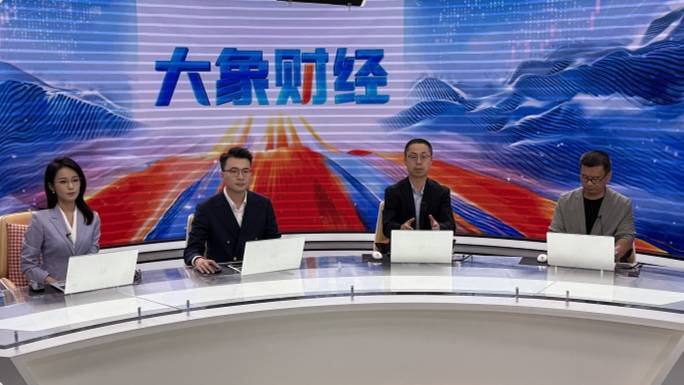
第五届“智荟中欧·北京论坛” 举行,中外政商看全球经贸格局重构
Zhong Guo Xin Wen Wang· 2025-07-12 03:21
Group 1 - The global economic and trade landscape is undergoing significant structural adjustments, with challenges arising from geopolitical factors, trade barriers, financial volatility, and technological changes [1] - The "Global Economic Landscape Reconstruction and Corporate Strategy" forum was held to discuss strategies for navigating these changes, featuring experts in international investment, currency, and trade systems [1] - Companies need to build safer global supply chains, strengthen local operations, enhance digital capabilities, and seize opportunities in regional cooperation and emerging markets to maintain value and influence in uncertain international markets [1] Group 2 - There is a systemic decline in investment returns globally, raising questions about the long-term reliance on growth-promoting policies and their impact on efficiency [2] - The rise of stablecoins presents a new form of currency that requires international institutional involvement for effective management and transparency [2] - China's strong production, logistics, and human resources capabilities position it favorably in the global supply chain, but companies must align more precisely with overseas market demands [2] Group 3 - The acceleration of global regulation on cryptocurrencies, particularly stablecoins, is influenced by the U.S. government's support for these assets, which may undermine their decentralized nature [3] - The forum aims to facilitate dialogue among political, business, and academic leaders to help companies make strategic decisions and innovate in the globalization process [3] - There is a notable difference between China and the EU, highlighting the need for both parties to demonstrate sincerity and respect in their interactions [3]
概念板块全面开花机构调研直击热点
Zheng Quan Shi Bao· 2025-07-11 17:25
Market Overview - The market sentiment has improved, with all three major indices rising. The Shanghai Composite Index increased by 1.09%, stabilizing above 3500 points, while the Shenzhen Component Index rose by 1.78% and the ChiNext Index by 2.36% [1] Industry Performance - Among the 31 primary industries, 27 experienced gains, with real estate, steel, and non-bank financials leading the way. Concept sectors such as rare earths, real estate developers, innovative drugs, photovoltaic glass, brokerages, and stablecoins saw significant surges [1] Institutional Research Activities - A total of 160 listed companies disclosed institutional research minutes, with around 100 stocks achieving positive returns. Notably, Lianhuan Pharmaceutical's stock surged by 38.58% during the week, and several other companies also saw gains exceeding 10% [1] Company Highlights - Lianhuan Pharmaceutical has conducted four institutional research activities in July, with a cumulative increase of 49% in stock price. The company is collaborating on the development of an SGLT2 inhibitor for diabetes treatment, expecting key data in Q1 2024 and plans to submit for market approval in 2026 [1][2] - Wantai Biological Pharmacy recently hosted 19 institutional research sessions and announced the pricing of its domestically produced nine-valent HPV vaccine at 499 yuan per dose. The company aims to enhance market penetration through a differentiated sales strategy [2] - Zhongyi Technology, while not currently involved in stablecoin business, confirmed its participation in IT infrastructure for digital currency systems, ensuring stability and security [2] - Zhenghai Magnetic Materials responded to export control measures by actively pursuing export declarations and maintaining normal production operations. The company anticipates growth in demand for neodymium-iron-boron in emerging sectors like energy-saving and new energy vehicles [3] Financial Sector Insights - Several banks, including Ningbo Bank and Suzhou Bank, received institutional attention. Suzhou Bank reported a narrower net interest margin decline compared to the industry average and plans to enhance margin management throughout the year [3]


深夜大爆发!黄金大涨,现货白银创14年新高!美股全线跳水
21世纪经济报道· 2025-07-11 15:49
现货钯金涨幅超5 %,铂金大涨超3 % 7月11日,美股开盘后全线下跌,黄金、比特币大涨。消息面上,据央视新闻,特朗普再度怒 批鲍威尔,市场中,又有机构预测美联储降息时间推迟。 黄金、铂金、白银集体大涨!现货白银创1 4年新高 贵金属行情爆发,黄金、白银明显上涨,截至23:30发稿,现货黄金涨超1%,站上3364美元/ 盎司,被誉为"黄金平替"的白银和铂金涨幅更大,目前均涨逾3%。 | | W | | --- | --- | | . | | | 名称 | 现价 | 涨跌幅 ▼ | | --- | --- | --- | | NYMEX铝 | 1277.50 | 6.69% | | PA.NYM | | | | 现货把金(美元/ | 1199.69 | 5.62% | | SPTPDUSDOZ.IDC | | | | COMEX白银 | 38.870 | 4.20% | | SI.CMX | | | | COMEX M-B | 38.8630 | 4.19% | | QI.CMX | | | | NYMEX铝 | 1463.5 | 3.61% | | PL.NYM | | | | 伦敦银现 | 38.312 | ...

股价暴涨!大智慧业绩小幅亏损
Zhong Guo Ji Jin Bao· 2025-07-11 15:24
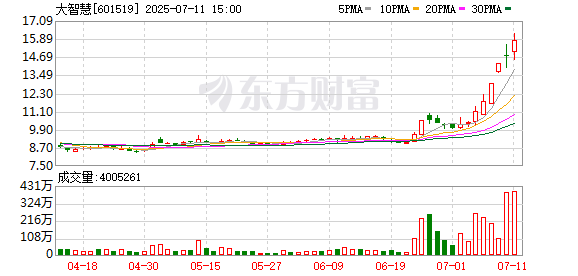
Group 1 - The company DaZhiHui expects a net profit attributable to shareholders of the parent company for the first half of 2025 to be between -4.2 million and -2.8 million yuan, with a non-recurring net profit expected to be between -40 million and -30 million yuan [2] - The increase in non-recurring net loss is attributed to gains from the disposal of a subsidiary's equity, as DaZhiHui confirmed an investment gain of 35.305 million yuan from selling 100% of its subsidiary Shanghai Tianlanlan Investment Management Co., Ltd [2] - Despite a reduction in costs and expenses, the revenue growth was insufficient to cover the costs, leading to the projected losses for the first half of the year [2] Group 2 - DaZhiHui's stock price has surged significantly, with an increase of 75.58% since June 23, and a further rise of 7.25% on July 11, bringing the stock price to 15.82 yuan per share and a total market capitalization of 31.5 billion yuan [2] - The company has responded to recent market trends, stating that it currently has no qualifications or operations related to "stablecoins," "virtual asset trading," or "cross-border payments," and has not identified any other media reports or market rumors that could significantly impact its stock price [4] - DaZhiHui is in discussions with Xiangcai Co. regarding a potential merger through a share exchange, which involves complexities and uncertainties related to regulatory policies and restructuring costs [4]

股价暴涨!大智慧业绩小幅亏损
中国基金报· 2025-07-11 15:18
Core Viewpoint - Dazhihui, a well-known company in the securities IT sector, is expected to report significant losses for the first half of 2025 despite a recent surge in stock price, indicating a potential disconnect between market performance and financial fundamentals [1][4]. Group 1: Financial Performance - Dazhihui anticipates a net profit attributable to shareholders of between -4.2 million yuan and -2.8 million yuan for the first half of 2025, with a non-recurring net profit expected to be between -40 million yuan and -30 million yuan [1][4]. - The company reported a significant increase in stock price, rising by 75.58% since June 23, 2023, and reaching a price of 15.82 yuan per share, with a total market capitalization of 31.5 billion yuan [4]. Group 2: Business Operations - The increase in non-recurring losses is attributed to the disposal of a subsidiary, where Dazhihui recognized an investment gain of 35.305 million yuan from selling its 100% stake in Shanghai Tianlanlan Investment Management Co., Ltd [4]. - Despite some growth in business revenue compared to the previous year, the overall income increase has not been sufficient to cover the costs, leading to losses [4]. Group 3: Market Position and Future Plans - Dazhihui has responded to recent market trends, clarifying that it currently does not have qualifications or engage in businesses related to "stablecoins," "virtual asset trading," or "cross-border payments," which are currently popular topics in the market [4]. - The company is in discussions with Xiangcai Co. regarding a potential merger through a share exchange, which is complex and subject to regulatory policies and costs, leading to uncertainties in the transaction's progress [5].

高位套现超6亿元!京北方股东拟减持不超3%股份
2 1 Shi Ji Jing Ji Bao Dao· 2025-07-11 14:37
Core Viewpoint - Tianjin Heda plans to reduce its stake in Jingbeifang by up to 26 million shares, representing 3.00% of the total share capital, due to personal funding needs, which is a normal reduction behavior and will not significantly impact the company's governance or control structure [2] Group 1: Shareholding and Reduction Details - Tianjin Heda holds 42.03 million shares of Jingbeifang, accounting for 6.78% of the total share capital, making it the second-largest shareholder [3] - The planned reduction represents 61.86% of Tianjin Heda's total holdings in Jingbeifang [3] Group 2: Stock Performance - Jingbeifang's stock price has increased by 145.33% this year, reaching a historical high of 27.7 yuan per share on July 9, with a closing price of 24.6 yuan per share on July 11, indicating a potential cash-out value exceeding 630 million yuan from the planned reduction [3] Group 3: Management Actions and Financial Performance - There have been multiple share reductions by Jingbeifang's executives this year, including a reduction of approximately 2 million shares by the vice chairman, generating 42.4 million yuan [5] - Jingbeifang faces pressure of increasing revenue without profit growth, with a projected revenue of 4.636 billion yuan in 2024, a 9.29% increase, but a decline in net profit by 10.36% to 312 million yuan [5] - In Q1 2025, revenue was 1.157 billion yuan, up 3.74%, while net profit fell by 3.71% to 47 million yuan, attributed to increased investments in R&D and customer acquisition, as well as costs from exiting low-profit businesses [5]

港股三大指数齐涨 半导体股表现亮眼
Zhong Guo Xin Wen Wang· 2025-07-11 14:01
Group 1: Hong Kong Stock Market Performance - The three major indices in the Hong Kong stock market rose on July 11, with the Hang Seng Index increasing by 0.46%, the Hang Seng Tech Index by 0.61%, and the National Enterprises Index by 0.22% [1] - For the week, the overall trend in the Hong Kong stock market was upward, with the Hang Seng Index gaining 0.93% to close at 24,139.57 points, the Hang Seng Tech Index up 0.62% to 5,248.48 points, and the National Enterprises Index rising 0.91% to 8,687.56 points [1] - The total market turnover on July 11 reached 323.95 billion HKD, the highest since April 10 of this year [1] Group 2: Sector Performance - Biotechnology stocks saw significant gains, with notable increases including 15.32% for Nuo Cheng Jian Hua, 10.46% for WuXi AppTec, and 8.30% for Boan Biotech [1] - Semiconductor stocks also performed well, with Huahong Semiconductor rising by 4.12%, and SMIC increasing by 2.22% [1] - Securities and brokerage stocks experienced widespread increases, with Zhongzhou Securities surging by 47.47% and Guotai Junan International rising by 1.26% [1] Group 3: Regulatory Developments - The Hong Kong Special Administrative Region's Stablecoin Regulation will officially take effect on August 1 [2] - Several brokerages, including Guotai Junan International and Tianfeng International Securities, have been granted licenses to expand their business scope to provide virtual asset trading services to professional investors [2] - Longcheng Securities noted that the recent approval of stablecoin-related licenses has attracted significant market attention, potentially enhancing the pricing attractiveness of the securities sector [2]
美债信用的核心内耗与技术自救
Guo Ji Jin Rong Bao· 2025-07-11 13:57
Group 1 - The scale of US national debt has reached $36.22 trillion, with debt-to-GDP ratio rising to 123%, significantly exceeding international warning levels [1] - The "big and beautiful" plan proposed by Trump has raised the debt ceiling by $5 trillion, accelerating the increase in US debt ratio [1] - The expansion of debt implies increased repayment pressure, especially amid declining dollar and US government credit, leading to market skepticism about repayment capabilities [1] Group 2 - The dollar has transitioned from being gold-backed to oil-backed, maintaining its dominant position in international trade and finance for nearly 80 years [2] - The dollar's unique status has led to its role as a global "credit standard," with countries accumulating US Treasury bonds to bolster their own international credit [2] - The expansion of US national debt is a direct result of the expansion of dollar credit [2] Group 3 - The Federal Reserve, through modern monetary theory, creates incremental currency based on the quantity of national debt, ensuring that excessive dollar issuance does not lead to currency devaluation [3] - Geopolitical risks and the global shift towards green energy are diminishing the dollar's stability, while the Fed's balance sheet expansion has significantly increased dollar liquidity [3] - The Fed faces challenges in maintaining dollar credit amid rising geopolitical tensions and increased liquidity [3] Group 4 - Trump's intention to restructure the Federal Reserve aims to lower financing costs and ensure the sustainability of US debt issuance [4] - The potential loss of Fed independence could undermine its ability to control inflation and maintain the dollar's value [4] Group 5 - Trump's tariff policies aim to reverse the US trade deficit and compel capital to return to American manufacturing, but this could undermine the global trade system that supports the dollar's status [5] - The US's unilateral financial sanctions and misuse of the SWIFT system are eroding the dollar's international credibility [5][6] Group 6 - The US government credit is experiencing marginal decline due to political polarization and the erosion of policy continuity, leading to skepticism about the government's commitments [7] - The US has lost its leadership role in international organizations, further diminishing its credibility [8] Group 7 - The growing fiscal deficit has led to a vicious cycle of increased borrowing and rising debt service costs, with interest payments projected to exceed $1.1 trillion in FY2024 [9] - Moody's downgraded the US sovereign credit rating from AAA to Aa, reflecting concerns over the government's creditworthiness [9] Group 8 - In response to declining demand for US Treasuries, the US government is exploring the issuance of stablecoins to support debt issuance [10][11] - The GENIUS Act aims to establish a framework for stablecoins backed by US Treasury bonds, potentially increasing demand for Treasuries [11][12] Group 9 - Stablecoins have become significant buyers of US Treasuries, with projections indicating that stablecoin issuance could lead to an additional $1.6 trillion in Treasury demand by 2028 [12][13] - The GENIUS Act mandates that stablecoins be backed by short-term US Treasuries, ensuring safety and liquidity [13]