能源转型

Search documents
ELITE Solar 荣获EUPD Research 2025权威认证
Jin Tou Wang· 2025-10-17 03:29
Core Insights - The article highlights that Boda New Energy's ELITE Solar has been recognized in the EUPD Research 2025 Global Top Brand PV Modules list, showcasing its strong market influence and leadership in quality, innovation, and customer value [1][2]. Group 1: Recognition and Awards - ELITE Solar has achieved international recognition by being listed in the EUPD Research 2025 Global Top Brand PV Modules, reflecting its excellence in the competitive global photovoltaic industry [1]. - The recognition is based on customer satisfaction surveys, distribution channel research, and brand market performance analysis conducted by EUPD Research, a reputable independent energy research institution [2]. Group 2: Customer-Centric Approach - Boda New Energy emphasizes a core market philosophy of "innovation empowers, professional output, and customer success," driving cost optimization through technological innovation and enhancing long-term returns with systematic solutions [3]. - ELITE Solar provides efficient and reliable photovoltaic solutions globally, supporting customers in their energy transition and growth across various regions, including North America, the Middle East, Southeast Asia, and Europe [3]. Group 3: Future Commitment - The EUPD Research 2025 certification serves as both recognition of past achievements and motivation for ongoing innovation and quality enhancement [4]. - ELITE Solar aims to continue creating valuable photovoltaic products and competitive profitability through a professional, transparent, and sustainable global manufacturing network [4].
科技浪潮与能源转型“新命脉”,这个板块怎么看?丨每日研选
Sou Hu Cai Jing· 2025-10-17 00:49
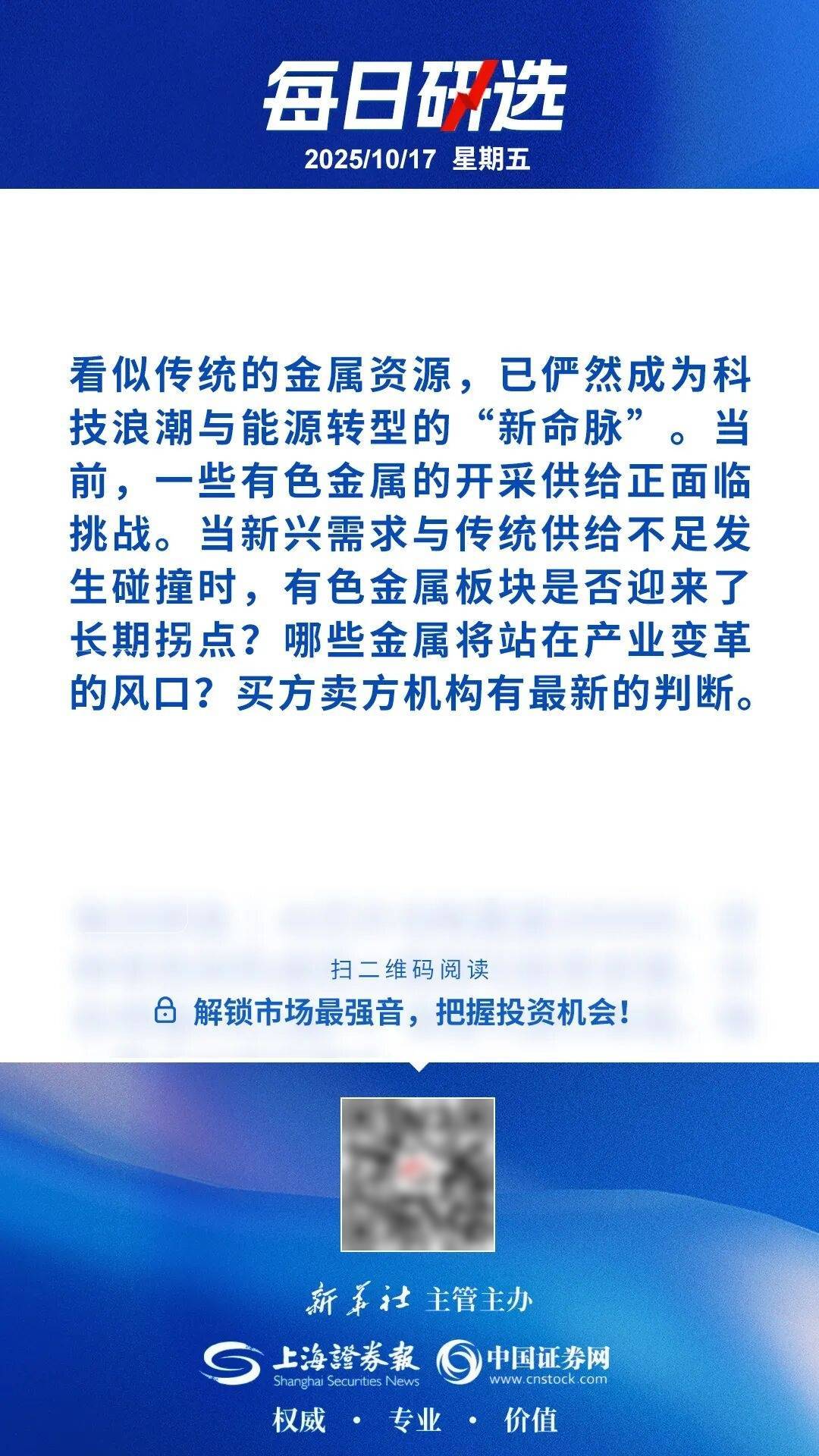
Core Viewpoint - The traditional metal resources are becoming a new lifeline amid the technological wave and energy transition, with challenges in supply for non-ferrous metals and emerging demand potentially marking a long-term turning point for the sector [2]. Group 1: Tin Market Insights - Minmetals Securities is optimistic about tin prices, forecasting an average annual growth rate of 44.5% in tin consumption for AI servers from 2025 to 2030, driven by significantly higher tin usage compared to traditional servers [5]. Group 2: Precious Metals Outlook - Shenwan Hongyuan suggests that the precious metals sector is likely to continue its recovery, with current valuations at the lower end of historical averages. They recommend focusing on companies like Shandong Gold, Zhaojin Mining, and others, while noting that the gold-silver ratio is currently high and may converge in the future [6]. Group 3: Copper Investment Opportunities - Guolian Minsheng highlights long-term supply constraints in copper due to insufficient capital expenditure in mining, which, combined with expectations of Federal Reserve rate cuts, could catalyze a new upward cycle in copper prices. Recommended companies include Zijin Mining and Luoyang Molybdenum [7]. Group 4: Cobalt Market Dynamics - CITIC Construction emphasizes the strategic opportunity in cobalt, noting that new export quotas from the Democratic Republic of Congo will reduce cobalt exports by over 100,000 tons in the next two years, leading to an estimated market shortage of about 30,000 tons in 2024 [8]. Group 5: Overall Non-Ferrous Metals Investment Space - HSBC Jintrust Fund indicates that there remains investment space in the non-ferrous metals sector, primarily due to further expected rate cuts by the Federal Reserve, which could drive prices up. The current valuation of the non-ferrous sector in Hong Kong is seen as advantageous compared to A-shares [9].





10月17日每日研选 | 科技浪潮与能源转型“新命脉”,这个板块怎么看?
Sou Hu Cai Jing· 2025-10-17 00:19
Core Viewpoint - The traditional metal resources are becoming a new lifeline amid the technological wave and energy transition, with challenges in supply for non-ferrous metals and potential long-term turning points in the sector [1] Group 1: Tin Market Insights - AI servers consume significantly more tin than traditional servers, leading to an increase in tin demand, with an expected annual growth rate of 44.5% in global tin consumption from 2025 to 2030 [2] - Limited new supply capacity for tin in the medium to long term, combined with growth in emerging fields like AI and robotics, as well as steady growth in electric vehicles and photovoltaics, supports a bullish long-term outlook for tin prices [2] Group 2: Precious Metals Outlook - The precious metals sector is currently at the lower end of historical valuation, indicating potential for sustained recovery, with recommendations to focus on companies like Shandong Gold, Zhaojin Mining, and others [3] - The gold-silver ratio is currently high and is expected to converge, suggesting a focus on silver investments [3] - Future investments in power grids and growth in AI data centers, along with relatively inelastic copper supply, are likely to elevate copper price levels [3] Group 3: Copper Investment Opportunities - Global copper supply is expected to face long-term constraints due to insufficient capital expenditure in mining, which may limit supply growth [4] - Anticipated interest rate cuts by the Federal Reserve could catalyze a new upward cycle in copper prices, making the copper sector an attractive investment opportunity [4] - Recommended companies include Zijin Mining, Luoyang Molybdenum, and others [4] Group 4: Cobalt Market Dynamics - The implementation of export quotas for cobalt from the Democratic Republic of Congo is expected to reduce exports by over 100,000 tons in the next two years, leading to an estimated market shortage of about 30,000 tons in 2024 [5] - The tightening supply in the cobalt market is likely to maintain high price levels, with potential for further increases [5] Group 5: Overall Non-Ferrous Metals Sector - Despite market reactions, there remains investment space in the non-ferrous metals sector, primarily driven by expectations of further interest rate cuts from the Federal Reserve, which could boost prices [6] - Precious and industrial metals are sensitive to global interest rate environments, indicating potential for price increases [6] - The current valuation of the non-ferrous metals sector in Hong Kong shows an advantage over A-shares [6]

Significant Market Shifts and Top Losers
Financial Modeling Prep· 2025-10-16 22:00
Company Performance - UTime Limited (NASDAQ:WTO) experienced a significant price drop of 87.59% to $0.15, with trading volume increasing to 28,956,057 from an average of 212,537, and its market cap reduced to $735,216 [1][6] - Nabors Energy Transition Corp. II Warrant (NASDAQ:NETDW) saw its price fall by 72.04% to $0.07, resulting in a modest market cap of $9,619,393 [2][6] - OBOOK Holdings Inc. Class A Common Shares (NASDAQ:OWLS) experienced a 57.35% decrease in share price to $29, with a significant drop from its year-high of $90 [3][6] - Republic Power Group Limited Class A Ordinary Shares (NASDAQ:RPGL) saw a 57.32% decline in share price to $1.75, with a market cap of $85,905,000 [4][6] - enGene Holdings Inc. Warrants (NASDAQ:ENGNW) experienced a 49.67% price decrease to $1.82, reducing its market cap to $93,174,858.14 [5][6] Market Trends - The market has shown volatility, particularly in sectors such as biotechnology, energy transition, blockchain technology, and consumer electronics, as evidenced by the significant price changes across multiple companies [5][6]

1公里产线上的“加减法” 晶科能源“破卷”突围透出“光伏之光”
Shang Hai Zheng Quan Bao· 2025-10-16 18:54
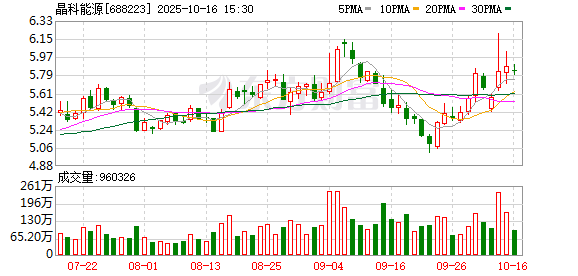
Core Viewpoint - JinkoSolar is adapting to the new cycle in the photovoltaic industry by pausing the expansion of module production capacity and focusing on technological upgrades, indicating a shift towards high-quality development in China's solar sector [2][4][6]. Group 1: Company Overview - JinkoSolar's "Smart Factory" in Shangrao, Jiangxi, is the world's first integrated production base for high-efficiency N-type TOPCon solar cells, with a total investment of 15 billion yuan [3]. - The factory spans nearly one kilometer and produces over 3.9 million solar cells daily, serving nearly 200 countries and regions globally [3][4]. - The company has been a leader in the solar module market, with one in every seven solar modules globally produced by JinkoSolar [2]. Group 2: Technological Advancements - JinkoSolar has upgraded its production lines with new technologies such as HCP, MAX, and 20BB, increasing the power of mainstream solar module products to over 640W, surpassing the market average by 20W-30W [4][5]. - The company aims to enhance its competitive edge through continuous technological innovation and digital upgrades, focusing on differentiated production strategies [9]. Group 3: Market Position and Financial Performance - In the first half of the year, JinkoSolar reported revenue of 31.83 billion yuan, a year-on-year decline of 32.63%, and a net loss of 2.91 billion yuan [6]. - Despite the losses, the company anticipates a future market shortage for high-efficiency solar products, expecting a price premium of 0.5-1 cent/W for upgraded products [5][6]. - The company maintains a strong overseas market presence, with international sales accounting for over 60% of its revenue, particularly in emerging markets like the Middle East and Southeast Asia [9][10]. Group 4: Industry Outlook - The photovoltaic industry is currently facing competitive pressures, but JinkoSolar's leadership believes that the market will recover by the second half of next year [6][7]. - The company is committed to sustainable development and aims to lead the industry towards high-quality growth through innovation and strategic partnerships, such as the joint venture in Saudi Arabia for a 10GW high-efficiency battery and module project [9][10].

万家基金贺方舟:看好有色金属板块中长期走势
Zhong Zheng Wang· 2025-10-16 14:12
Core Viewpoint - The manager of Wanjiay Industrial Nonferrous ETF, He Fangzhou, expresses optimism about the medium to long-term outlook for the nonferrous metals sector, driven by factors such as Federal Reserve interest rate cuts, supply constraints, and increasing demand from energy transition and AI trends [1] Group 1: Opportunities in Nonferrous Metals - The nonferrous metals sector is expected to benefit from continued interest rate cuts by the Federal Reserve, which will favor metals priced in USD [1] - Supply-side constraints are evident, with incidents in South America and Central Africa leading to tight copper supplies, exacerbated by the mining accident at Indonesia's Grasberg copper mine and power shortages in Africa, supporting copper prices [1] - Demand for industrial metals is on the rise, driven by energy transition initiatives and the AI wave, indicating a growing market for these materials [1] Group 2: Investment Risks - The pricing of most nonferrous metals in USD means that fluctuations in the dollar's strength can significantly impact metal prices, necessitating close monitoring of the dollar index and the pace of Federal Reserve rate cuts [1] - Changes in demand from sectors such as real estate and renewable energy could lead to price volatility in nonferrous metals, highlighting the need for investors to stay alert to these market dynamics [1]
Equinor (NYSE:EQNR) 2025 Investor Day Transcript
2025-10-16 13:00
Equinor 2025 Investor Day Summary Industry and Company Overview - **Company**: Equinor (NYSE: EQNR) - **Event**: 2025 Global Supplier Day - **Date**: October 16, 2025 - **Location**: Offshore Technology Days, Stavanger Core Points and Arguments Safety and Collaboration - Equinor emphasizes the importance of safety, introducing an updated "I'm Safety Roadmap" aimed at achieving zero harm and preventing major accidents [6][10][19] - The roadmap consists of four interconnected pillars: proactive leadership and culture, safety in design, learning from incidents, and collaboration with suppliers [7][9][10] - Recent incidents, including a fatality at Mongstad, serve as reminders of the ongoing need for vigilance in safety practices [15][19] Strategic Direction - Equinor's strategy focuses on transitioning from an oil and gas company to a broader energy company, maintaining a commitment to reduce emissions by 50% by 2030 compared to 2015 levels [21][22] - The company plans to maintain production from the Norwegian continental shelf (NCS) at 1.2 million barrels per day until 2035, with annual investments of $6 billion to $7 billion over the next decade [23][24] Project Portfolio and Opportunities - Equinor aims to drill 250 exploration wells, 600 increased recovery production wells, and conduct 3,000 interventions over the next ten years, with 80% of drilling work performed by suppliers [24][25] - The company has initiated several major projects, including Bacalhau, which is expected to contribute to cash flow for decades [22][34] - There are plans for 75 subsea tieback projects over the next ten years, requiring collaboration and innovative approaches to capture opportunities [27][42] Renewables and Energy Transition - Equinor is constructing three major offshore wind projects, which will provide green power to approximately 8 million homes [51] - The company acknowledges that safety performance in renewables needs improvement, as it currently lags behind the oil and gas sector [52][60] - The levelized cost of energy is higher than base electricity prices, necessitating government support for project viability [58] Cost Management and Efficiency - Since 2019, subsea and marine installation costs have increased by 90%, driven by material costs, inflation, and productivity challenges [69][70] - Equinor is focused on reducing costs through simplification, standardization, and collaboration with suppliers to enhance competitiveness [72][74] Supplier Engagement - Equinor encourages suppliers to engage in early project phases, utilizing innovative delivery models and digital tools to optimize project outcomes [90][92] - The company is open to reusing documentation and simplifying processes to reduce complexity and costs [105][107] Other Important Insights - The NCS is becoming more mature, with discoveries becoming smaller and more complex, which poses challenges for future production [66][68] - Equinor's approach to energy storage is technology agnostic, focusing on what makes sense for specific markets [89] - The company emphasizes the need for stable regulatory frameworks and attractive terms to ensure profitable project development [74] This summary encapsulates the key discussions and strategic directions outlined during Equinor's 2025 Investor Day, highlighting the company's commitment to safety, sustainability, and collaboration with suppliers in navigating the energy transition.

不只26GWh!5企储能扩产新进度
行家说储能· 2025-10-16 12:17
Core Insights - The article discusses the rapid development of the energy storage market, highlighting the expansion plans of five companies in the sector, which collectively aim to increase production capacity by 26 GWh for various energy storage products and 15 GW for storage inverters [1]. Group 1: Company Expansion Plans - Kelu Electronics is constructing a 3 GWh energy storage production base in Indonesia, with plans to adjust capacity based on business development [2]. - Jiangsu Badar Energy is progressing on a 10 GWh lithium iron phosphate battery and smart energy storage system project, with a total investment of approximately $620 million [6][7]. - Guosheng Technology is investing in a 10 GWh solid-state battery AI smart manufacturing project, acquiring a 51.11% stake in a subsidiary to facilitate this [8][10]. - Shangneng Electric plans to raise up to 1.649 billion yuan to expand its production capacity, including a 15 GW storage inverter project, which will increase its capacity tenfold [11][13]. - Yuheng Battery is set to produce 3 GWh of lithium iron phosphate storage batteries, with a total investment of 1.1 billion yuan and expected annual output value of 2 billion yuan upon full production [14][15]. Group 2: Market Trends and Opportunities - The energy storage industry is identified as a key support for energy transition, with emerging markets in the Middle East, Latin America, and Africa driving demand for large-scale solar-storage projects [4]. - Kelu Electronics reported that its energy storage business generated 1.282 billion yuan in revenue, accounting for 49.83% of total revenue, with a gross margin of 32.95% [5].

打通能源动脉、点亮万家灯火 央企谱写能源转型"中国方案"
Zhong Guo Zheng Quan Bao· 2025-10-16 11:01
Core Viewpoint - Central enterprises in China are actively participating in the energy transition, contributing to the construction of a green energy network that supports high-quality economic development through strategic foresight and innovative practices [1][2]. Group 1: Energy Infrastructure Development - The "Ningdian into Xiang" project has delivered over 900 million kilowatt-hours of green electricity to Hunan as of September 25, 2023, with an annual capacity of over 36 billion kilowatt-hours, significantly alleviating power shortages in the region [2][3]. - Multiple energy arteries are under construction, including the Huaneng Longdong Energy Base and the China Resources Xinjiang Tianshan North Slope Energy Base, which will enhance power supply capabilities in their respective regions [3][4]. - The State Grid has established a vast UHV transmission network with a capacity exceeding 370 million kilowatts, marking a 30% increase since the end of the 13th Five-Year Plan [4]. Group 2: Technological Innovations - The successful installation of a 26-megawatt offshore wind turbine by Dongfang Electric marks a significant advancement in high-end equipment manufacturing, setting new global records for wind turbine capacity and rotor diameter [5][6]. - Continuous breakthroughs in core technologies, such as the development of laser-etched silicon steel by Baosteel, could lead to an annual electricity saving of 90 billion kilowatt-hours if applied to existing transformers [7][8]. - The integration of digital and intelligent technologies is enhancing operational efficiency in the energy sector, with significant advancements in smart coal mining and energy management systems [7][8]. Group 3: Impact on Society and Economy - The expansion of charging infrastructure by Southern Power Grid has reached 15,700 charging stations, ensuring comprehensive coverage in rural areas and facilitating the use of electric vehicles [10]. - Central enterprises are contributing to sustainable energy solutions in various regions, such as the integration of photovoltaic power with livestock farming in Sichuan, which generates 450 million kilowatt-hours annually [10]. - The cumulative installed capacity of renewable energy from central enterprises accounts for approximately half of the national total, driving the transition to a new energy system [10][11].
溢价492倍!10亿落槌山西煤层气,背后信号不简单
Sou Hu Cai Jing· 2025-10-16 08:25
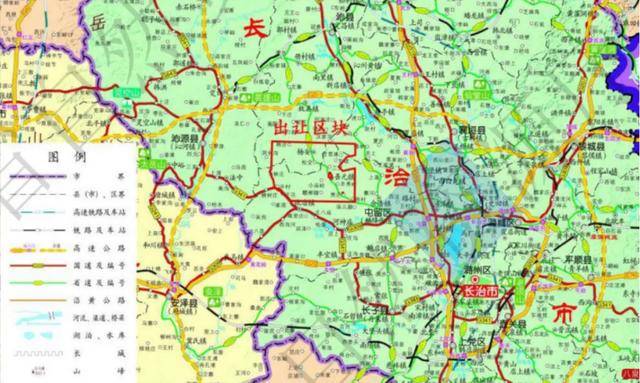
Core Insights - The recent acquisition of the Wuyuan block by Zhonglian Coalbed Methane for 1.005 billion yuan highlights the significant development of China's coalbed methane industry and the energy transition in Shanxi province [1][3]. Company Summary - Zhonglian Coalbed Methane, a wholly-owned subsidiary of China National Offshore Oil Corporation (CNOOC), has established a strong presence in Shanxi, holding mining rights in key areas such as the Gujiao coalbed methane field and the Shouyang North block, with a total annual production capacity exceeding 570 million cubic meters [3]. - The acquisition of the Wuyuan block, covering an area of 291.43 square kilometers, enhances Zhonglian's strategic positioning in the coalbed methane sector and strengthens CNOOC's overall energy transition strategy [3]. Industry Summary - Shanxi province, as the largest coalbed methane producer in China, is projected to achieve a coalbed methane output of 13.43 billion cubic meters in 2024, accounting for 80.6% of the national total [3]. - The high premium of 492 times the starting price for the Wuyuan block reflects the market's recognition of the development potential of coalbed methane resources in Shanxi, contributing to local fiscal vitality and promoting the "coal-gas-electricity" collaborative energy transition [3][4]. - The transaction signals a shift in the industry, moving away from monopolization by a few large enterprises, and introduces a competitive environment that encourages investment and technological advancement in the coalbed methane sector [4].