绿色金融

Search documents
金融作笔 逐“绿”不辍
Jin Rong Shi Bao· 2025-10-28 02:08
Group 1: Green Finance Development - The People's Bank of China (PBOC) in Heyuan has been actively promoting green finance to support the local economy, with green loan balances expected to grow by 21.77% and 21.99% year-on-year by the end of 2023 and 2024 respectively [1] - As of mid-2023, the green loan balance in Heyuan reached 11.581 billion yuan, marking a year-on-year increase of 42.65%, significantly outpacing the overall loan growth rate by 40.99 percentage points [1] - The PBOC has established a comprehensive monitoring mechanism for green credit, implementing monthly monitoring, quarterly reporting, and annual evaluations to ensure banks fulfill their responsibilities in green development [3] Group 2: Renewable Energy Projects - A blueberry farm in Dongyuan County has integrated photovoltaic panels to generate over 100 million kilowatt-hours of clean energy annually, showcasing a successful model of combining agriculture with renewable energy [2] - The project has effectively reduced coal consumption and emissions of pollutants, while also alleviating local electricity shortages, supported by a loan of 138 million yuan from the PBOC [2] Group 3: Support for Traditional Industries - The PBOC is exploring financial solutions tailored to the needs of traditional industries undergoing low-carbon transitions, with several innovative green credit products being introduced [6] - A smart rice farm in Heyuan has benefited from the "Win-Win Plan + Transformation Finance" initiative, receiving a 5 million yuan credit line and a 1 million yuan low-carbon transformation loan to support sustainable agricultural practices [7] Group 4: Geographic Indication and Intellectual Property - The PBOC is focusing on geographic indications as a key area for enhancing financial support, establishing mechanisms for seamless project and funding connections with various government departments [5] - The establishment of "green branches" in local banks aims to support industries related to geographic indications, with loans of 167 million yuan and 4.469 million yuan allocated to specific agricultural products [4]



国泰君安期货商品研究晨报:绿色金融与新能源-20251028
Guo Tai Jun An Qi Huo· 2025-10-28 01:45
2025年10月28日 国泰君安期货商品研究晨报-绿色金融与新能源 | 观点与策略 | | --- | | 镍:冶炼累库与镍矿担忧博弈,镍价窄幅震荡 | 2 | | --- | --- | | 不锈钢:下方想象力有限,向上缺乏驱动 | 2 | | 碳酸锂:基差坚挺,偏强震荡 | 4 | | 工业硅:仓单继续去化,底部较有支撑 | 6 | | 多晶硅:情绪发酵,管住本周政策情况 | 6 | 国 泰 君 安 期 货 研 究 所 请务必阅读正文之后的免责条款部分 1 期货研究 商 品 研 究 2025 年 10 月 28 日 镍:冶炼累库与镍矿担忧博弈,镍价窄幅震荡 不锈钢:下方想象力有限,向上缺乏驱动 张再宇 投资咨询从业资格号:Z0021479 zhangzaiyu@gtht.com 【基本面跟踪】 镍基本面数据 | | | 指标名称 | T | T-1 | T-5 | T-10 | T-22 | T-66 | | --- | --- | --- | --- | --- | --- | --- | --- | --- | | | | 沪镍主力(收盘价) | 122,400 | 250 | 1,690 | 990 ...
拓展全球大市场 共创财富新价值 第二届“中信财富管理大会”举办
Jin Rong Shi Bao· 2025-10-28 00:39
Core Insights - China's asset management market is projected to exceed 170 trillion yuan by June 2025, positioning it as the second-largest wealth management market globally, marking the beginning of a "big wealth management era" focused on integration and development [1] Group 1: Multi-Dimensional Development - The wealth management chain includes wealth management, asset management, and investment banking, with institutions exploring their strengths to enhance the wealth management ecosystem [2] - CITIC Group, as a leading financial holding group, has a comprehensive range of financial licenses and its subsidiaries, such as CITIC Bank and CITIC Securities, are leaders in their respective sectors [2] - CITIC Bank's personal wealth management scale is nearly 5 trillion yuan, while CITIC Securities' asset management scale exceeds 1.56 trillion yuan, indicating significant market presence [2] Group 2: Wealth Coexistence - The rapid economic growth in China has led to an increase in residents' financial assets, with total investable assets surpassing 300 trillion yuan [4] - The asset management industry is shifting from scale-driven to capability-driven, emphasizing client-centric approaches and resource sharing among various financial institutions [4] - A comprehensive product line and integrated customer service are essential for the transformation of wealth management services [4] Group 3: Connecting the Future - Cross-border investment has become essential for wealth management, with significant growth in demand for global asset allocation among Chinese residents [6] - CITIC is leveraging "connectivity" to build a diverse cross-border asset management service system, enhancing its ability to meet investors' cross-border asset allocation needs [6] - Future plans include expanding cross-border product offerings and collaborating on opportunities in areas like the Belt and Road Initiative and green finance [6]
金融“活水”润京华 2025年首都金融高质量发展纪实
Jin Rong Shi Bao· 2025-10-28 00:37
Core Insights - The financial system in Beijing is focused on high-quality development, with strong leadership from the municipal government, aiming to inject robust financial momentum into the capital's economic and social development by 2025 [1] Financial Performance - As of the first three quarters of 2025, the financial industry's added value in Beijing reached 670 billion, representing a year-on-year growth of 9%, surpassing the national average of 4.1%, and accounting for 17.4% of GDP, contributing 1.5 percentage points to the capital's economic growth [2] Risk Management and Public Awareness - The "Bee Plan" has effectively communicated financial knowledge to the public, achieving 15 billion views through various media formats, helping individuals make informed financial decisions [2] - Beijing is enhancing risk monitoring through the "Smoke Index" platform, which allows for real-time detection of potential risks in financial companies [2] Financial Innovation and Support - The financial sector is closely integrated with industry, with significant investments in technology loans (4 trillion), equity investment funds (14), and technology bonds (450 billion), facilitating the growth of innovative companies [3] - The capital market has seen the addition of 11 new listed companies in 2025, bringing the total to 795, with the Beijing Stock Exchange hosting over 270 companies and a market value exceeding 800 billion [3] Green and Inclusive Finance - Green finance initiatives are transforming pollution costs into price signals, encouraging companies to adopt sustainable practices [3] - Inclusive finance efforts have successfully connected banks with small enterprises, exemplified by a strawberry farm that improved its income through financial support [3] Pension and Digital Finance - Personal pension accounts and contributions are leading in national pilot cities, with significant assets in commercial pensions, enhancing the financial security of the elderly [3] - Digital finance is improving accessibility for international visitors and facilitating innovation through regulatory sandboxes, with numerous projects entering regular operation [3] Regional and Global Influence - The financing scale for the Beijing-Tianjin-Hebei coordinated development has surpassed 1 trillion, supporting various infrastructure and urban renewal projects [4] - An increasing number of foreign financial institutions are establishing a presence in Beijing, contributing to the city's global financial dialogue and collaboration [5] Conclusion - By 2025, Beijing's financial sector is poised to play a pivotal role in promoting sustainable development, innovation, and global engagement, reflecting a commitment to a robust and inclusive financial ecosystem [5]
构建生物多样性金融 多维度支撑体系
Jin Rong Shi Bao· 2025-10-28 00:36
Core Insights - The report titled "Natural and Biodiversity Finance: Theory and Practice" was released at the 2025 Bund Annual Conference, outlining China's achievements in financial support for biodiversity, establishing a multi-dimensional support system for global biodiversity governance [1] Group 1: Standard System Improvement - Biodiversity finance has been integrated into the sustainable finance framework, with the 2025 revised "Green Finance Support Project Directory" establishing a separate category for "Ecological Protection, Restoration, and Utilization," which supports activities related to nature and biodiversity [2] - Approximately 20% to 30% of green finance business is directed towards biodiversity-related activities, with the scale continuing to expand [2] - The People's Bank of China is developing specific biodiversity finance standards, resulting in a draft "Biodiversity Finance Directory" that includes 87 items across four categories, adding 24 new items compared to the previous directory [2] Group 2: Financial Product Innovation - Financial institutions in China are launching diverse products to attract social capital for biodiversity protection, integrating biodiversity into the green finance policy framework [3] - Innovative financial products include GEP pledge loans, wetland carbon credit loans, and biodiversity performance-linked loans, with breakthroughs in bond issuance for biodiversity-themed green bonds [3] - The ecological compensation mechanism is being advanced, with projects like the Yuanbao Maple project in Guizhou generating over 2000 yuan per mu in annual income, providing a replicable model for ecological project profitability [3] Group 3: Information Disclosure and Risk Assessment - Financial institutions and local governments are exploring assessment methods for nature-related financial risks, embedding biodiversity sensitivity into the entire credit process [4] - The 2025 "Sustainable Development Report Preparation Guidelines" released by the Shanghai and Shenzhen stock exchanges reference the international TNFD framework, laying the groundwork for nature-related information disclosure [4] - 33 companies, including Mengniu and CATL, have joined the TNFD pilot, gradually aligning with international standards [4] Group 4: International Cooperation - China's role in global biodiversity finance governance is evolving from a "participant" to a "co-builder," having chaired the COP15 and facilitated the "Kunming-Montreal Global Biodiversity Framework" [5] - The establishment of the Kunming Biodiversity Fund has projects covering 15 developing countries across six continents [5] - The People's Bank of China is promoting the inclusion of natural and biodiversity issues in G20 sustainable finance discussions, with bilateral cooperation deepening with countries like the UK, EU, and Singapore [6]
南京银行股份有限公司2025年第三季度报告
Shang Hai Zheng Quan Bao· 2025-10-27 23:36
Core Points - The company guarantees the authenticity, accuracy, and completeness of the quarterly report, with all board members assuming legal responsibility for its content [1][2][3] Financial Data - The company reported total assets of 29,623.08 billion RMB, an increase of 3,709.08 billion RMB or 14.31% from the end of the previous year [10] - Total liabilities reached 27,468.16 billion RMB, up 3,473.73 billion RMB or 14.48% from the previous year [10] - Total deposits amounted to 16,405.55 billion RMB, reflecting a growth of 1,443.83 billion RMB or 9.65% [11] - Total loans increased to 14,114.81 billion RMB, a rise of 1,550.83 billion RMB or 12.34% [11] Profitability - The company achieved operating income of 419.49 billion RMB, an increase of 8.79% year-on-year, with net interest income of 252.07 billion RMB, up 28.52% [12] - Non-interest income was 167.42 billion RMB, down 11.63% year-on-year [12] - The net profit attributable to shareholders was 180.05 billion RMB, reflecting an increase of 8.06% compared to the previous year [12] Risk Management - The company maintained a non-performing loan ratio of 0.83%, unchanged from the beginning of the year, with a provision coverage ratio of 313.22% [13] - The company continues to enhance risk control measures and improve the quality of new credit [13] Business Development - The company focuses on serving the real economy and has made progress in various financial sectors, including green finance and digital finance [9] - Corporate loans reached 10,731.35 billion RMB, an increase of 1,369.31 billion RMB or 14.63% [14] - The company has expanded its retail financial services, with retail assets growing to 9,686.95 billion RMB, an increase of 1,417.52 billion RMB or 17.14% [15] Shareholder Information - As of the end of the reporting period, major shareholders included BNP Paribas, holding 2,119,700,918 shares or 17.14% of total shares [5] - Jiangsu Transportation Holding Co., Ltd. increased its holdings by 608,746,244 shares, representing 4.92% of total shares [6] Important Events - The company redeemed all of its "Nan Yin Convertible Bonds" on July 17, 2025, converting 19,996,127,000 RMB into A-shares [18] - The company opened a new branch in Rugao on September 28, 2025 [18]

兴业银行行长陈信健:可持续金融发展是一场关乎未来的长征
Jiang Nan Shi Bao· 2025-10-27 13:09
Core Viewpoint - The sustainable finance sector should focus on supporting low-carbon transitions, creating a strong collective force across society to address climate challenges [1][2] Group 1: Company Initiatives - Industrial Bank has been exploring sustainable finance for 20 years, developing a path that integrates profit with social responsibility [1] - The bank's green financing balance is nearly 2.5 trillion yuan, with green loan balance exceeding 1 trillion yuan and a non-performing loan rate of only 0.57% [1] - The establishment of a strategic and ESG committee at the board level has strengthened relationships with stakeholders and laid a solid foundation for sustainable development [2] Group 2: Industry Context - Despite some countries withdrawing from the Paris Agreement, global climate actions continue, with China announcing new NDC targets at the UN Climate Change Summit in September [2] - The financial sector is encouraged to innovate and provide diversified financial services, as China leads globally in green loans and bonds but still has room for growth in green investment and asset management [3] - The carbon market should be more open and inclusive to enhance resource allocation efficiency, with financial institutions encouraged to participate in national carbon market trading [3] Group 3: Recommendations for Sustainable Finance - Industries should focus on low-carbon transitions, emphasizing ESG system construction and new technology applications [2] - Financial services should align with the needs of real enterprises, providing both financial and non-financial support for carbon reduction [3] - Regulatory bodies are urged to introduce more incentives for carbon reduction support tools and adjust risk weights for green financing to encourage banks' participation [3]

三季度绿色贷款余额较年初增长17.5%|绿色金融周报
2 1 Shi Ji Jing Ji Bao Dao· 2025-10-27 12:59
Core Insights - The rapid development of the green finance market is leading to an increase in relevant information and data, with a focus on the latest trends and practices in green finance [1] Group 1: Green Loans - As of the end of Q3 2025, the balance of domestic and foreign currency green loans reached 43.51 trillion yuan, marking a 17.5% increase from the beginning of the year, with an increase of 6.47 trillion yuan in the first three quarters [2] - The breakdown of green loans by purpose shows that infrastructure upgrades, energy low-carbon transition, and ecological protection loans amounted to 19.29 trillion yuan, 8.32 trillion yuan, and 5.01 trillion yuan respectively, with significant increases in each category [2] - Key industries receiving green loans include electricity, heat, gas, and water supply, with a balance of 8.74 trillion yuan, and transportation and storage with 7.91 trillion yuan, both showing substantial growth [2] Group 2: Green Bonds - In the first half of 2025, China ranked first globally in green bond issuance, with a total of 48.3 billion USD, contributing to a global total of 6.2 trillion USD in the GSS+ market [3] - The issuance of GSS+ bonds increased by 17% year-on-year, with green bonds making up 61% of the total, indicating a strong market presence [3] - The issuance of sovereign green bonds in China, including a 6 billion yuan bond for projects like electric vehicles and flood control, highlights the growing role of the renminbi in global green finance [3] Group 3: Green External Debt - Xiamen has initiated a pilot program for green external debt, allowing domestic non-financial enterprises to engage in cross-border financing for green projects, with the first day seeing 1.154 million USD registered [4] - This pilot program aims to enhance the convenience of financing for green projects and attract global financial resources to support China's low-carbon development [4] Group 4: Carbon Pricing - The national carbon market saw a peak price of 55.67 yuan per ton last week, with a closing price reflecting a 4.77% increase from the previous week [5] - Cumulative carbon trading volume from January 1 to October 24, 2025, reached 118.76 million tons, with a total transaction value of approximately 7.79 billion yuan [6] Group 5: Innovative Financial Products - The first "carbon label" linked loan for meat products was issued in Hulunbuir, amounting to 150 million yuan, which incorporates carbon performance into the financing pricing system [7] - A 2.6 million yuan transformation financial loan was issued to a cement company in Suzhou, marking a significant step in local financial institutions supporting the green transition in the building materials sector [8] Group 6: ESG Reporting - The first regional ESG development report for listed companies in Foshan was released, providing insights into governance, disclosure levels, and improvement paths for local enterprises [9] - This report aims to enhance ESG management and disclosure among regional companies, promoting collaboration between local governments and market entities [9]
山东:金融“五篇大文章”贷款增速均明显高于全部贷款增速
Xin Hua Cai Jing· 2025-10-27 09:55
Core Insights - The financial growth in Shandong province is significantly driven by the "Five Major Financial Articles," with loan growth rates surpassing the overall loan growth rate [1] Group 1: Loan Growth Rates - As of the end of August, loans in the categories of technology finance, green finance, inclusive finance, pension finance, and digital economy industry grew by 17.3%, 29.4%, 12.0%, 44.3%, and 34.0% year-on-year respectively [1] - The total balance of loans under the "Five Major Financial Articles" reached 6.6 trillion yuan, reflecting a year-on-year growth of 16.9% [1] - In the first eight months of the year, the increase in loans under these categories amounted to 757 billion yuan, accounting for 78.4% of the total loan increment [1] Group 2: Policy Initiatives - Shandong has launched the "Comprehensive Promotion Year for the Five Major Financial Articles" to enhance the effectiveness of these financial initiatives [1] - New structural monetary policy tools such as re-loans for technological innovation and transformation, carbon reduction support tools, and re-loans for consumer services and pensions have been established, with their implementation scale ranking among the top in the country [1]
瞭望 | 北京金融街:提升金融服务高质量发展质效
Xin Hua She· 2025-10-27 09:47
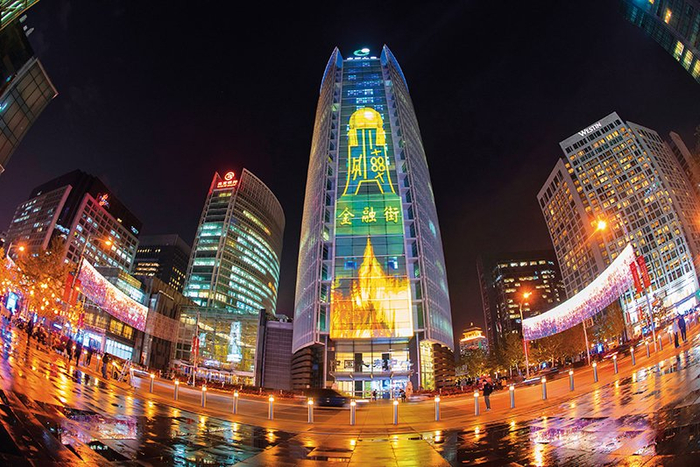
Core Insights - Beijing Financial Street serves as a national financial management center, significantly contributing to the financial sector's growth in China, with its financial institutions holding approximately one-third of the national asset scale and over 70% of Beijing's financial tax revenue [1][2][3]. Group 1: Economic Contribution - The financial institutions in the Financial Street area account for over one-third of the city's financial value added and approximately 70% of its financial tax revenue, highlighting its role as a core area for financial institutions and talent aggregation [3][4]. - The Financial Street occupies only 0.02% of Beijing's land area but generates substantial economic value, showcasing its efficiency and importance in the national financial landscape [2][3]. Group 2: International Influence and Innovation - Financial Street has become a preferred location for foreign institutions, with over 120 foreign financial entities established, including major international investment banks and financial groups [3][4]. - The area has seen numerous innovative practices, such as the establishment of the first foreign-funded securities firm and the first cross-border transfer of non-performing assets, indicating its role as a hub for financial innovation [3][4]. Group 3: Asset Management - By the end of 2024, asset management institutions in the Financial Street area are expected to manage over 20 trillion yuan, accounting for about 50% of Beijing's total and 12.5% of the national total, establishing it as a leading asset management hub [4][5]. Group 4: Service Mechanisms - Financial Street has developed a "four-in-one" service mechanism and a "6R" service system to enhance service capabilities, focusing on regulatory support, institutional operation, and professional research [5][12]. - The establishment of various platforms, such as the Financial Street Research Institute and the Financial Street Forum, aims to strengthen service support and facilitate dialogue among stakeholders [5][12]. Group 5: Sectoral Development - The Financial Street is actively engaged in five key areas: technology finance, green finance, inclusive finance, pension finance, and digital finance, driving high-quality financial services [7][11]. - The technology finance sector has seen significant growth, with a notable increase in loans to technology enterprises and a substantial issuance of technology innovation bonds [8][9]. Group 6: Future Directions - The Financial Street aims to enhance its global financial resource aggregation capabilities and strengthen its international cooperation, focusing on creating a resilient and modern financial system [14]. - The upcoming 2025 Financial Street Forum will serve as a platform for international dialogue, featuring participation from major global financial organizations and institutions [13][14].