人民币国际化

Search documents
“北向互换通”,上新!
证券时报· 2025-09-22 15:28
Core Viewpoint - The expansion of the "Northbound Swap Connect" aims to enhance risk management tools for overseas investors and promote the internationalization of the Renminbi [1][2]. Group 1: Expansion of Northbound Swap Connect - On September 22, the Hong Kong Stock Exchange, in collaboration with the China Foreign Exchange Trade System and the Shanghai Clearing House, introduced interest rate swap contracts based on the one-year Loan Prime Rate (LPR1Y) under the "Northbound Swap Connect" [1]. - On the launch day, 31 domestic and foreign institutions participated, with a total of 53 transactions and a nominal principal amount of 6.46 billion RMB [1]. Group 2: Market Activity and Future Developments - Since its launch on May 15, 2023, the "Swap Connect" has been operating smoothly, with increasing trading activity, becoming a key channel for overseas institutions to manage Renminbi interest rate risks [2]. - As of August 2025, 82 foreign financial institutions from 15 countries and regions have completed over 15,000 Renminbi interest rate swap transactions, totaling approximately 8.15 trillion RMB in nominal principal [2]. - Starting September 22, the maximum term for existing Renminbi non-deliverable interest rate swap (CNY NDIRS) contracts has been extended from 5.5 years to 11 years to better assist overseas investors in managing interest rate risks [2].



点心债等为何成为企业境外融资的“新宠”?
Zheng Quan Shi Bao Wang· 2025-09-22 15:19
Core Insights - The rise of dim sum bonds and zero-coupon convertible bonds as new tools for offshore financing is driven by multiple factors, including the global currency cycle shift, accelerated RMB internationalization, and the AI wave [1][3] - Major companies like Tencent, Baidu, and Alibaba are increasingly issuing offshore RMB bonds and zero-coupon convertible bonds to attract international investors and broaden financing channels [1][3] Group 1: Financial Advantages - Issuing dim sum bonds and zero-coupon convertible bonds offers significant cost advantages, especially with current low RMB interest rates. For instance, the 10-year dim sum bonds issued this year have coupon rates between 2.80% and 3.50%, while many 10-year Chinese dollar bonds exceed 5% [1][2] - These financing methods help companies optimize their debt structure and alleviate debt pressure, allowing savings on interest expenses to be redirected towards core business areas like R&D and expansion [1][2] Group 2: Unique Features of Dim Sum Bonds and Zero-Coupon Convertible Bonds - Dim sum bonds, being offshore RMB bonds, help companies mitigate exchange rate risks and reduce financial losses from currency fluctuations. The expansion of the "southbound bond connect" increases demand for new bonds, providing a broader market and stable funding sources [2] - Zero-coupon convertible bonds feature a unique design of "zero coupon + equity option," which balances issuance costs, equity structure, and market confidence. For example, Alibaba's $3.2 billion zero-coupon convertible bond uses a capped call option to raise the conversion price, meeting low-cost financing needs while avoiding excessive short-term equity dilution [2] Group 3: Market Dynamics and Regulatory Environment - The increasing popularity of dim sum bonds and zero-coupon convertible bonds reflects a combination of macroeconomic conditions, bond characteristics, and corporate strategies. Companies are leveraging these new financing tools to optimize capital structures and reduce financing costs, thus driving their development [3] - Regulatory bodies are continuously improving related policies and market mechanisms to promote the healthy development of the bond market, providing companies with a more stable and efficient financing environment [3]
“十四五”时期金融业成绩单揭晓 国际竞争力和影响力显著提升
Xin Hua Cai Jing· 2025-09-22 15:16
Group 1 - The core viewpoint of the articles highlights the significant achievements of China's financial sector during the "14th Five-Year Plan" period, emphasizing the deepening of financial reforms and the enhancement of financial services to the real economy [1][3][5] - As of June 2023, China's banking sector total assets reached nearly 470 trillion yuan, ranking first in the world, with stock and bond market sizes also ranking second globally [1] - The People's Bank of China (PBOC) has adopted a supportive monetary policy stance, focusing on maintaining internal and external balance while promoting economic recovery and financial market stability [7][8] Group 2 - Financial system reforms have been further deepened, with the establishment of new regulatory bodies such as the Central Financial Committee, enhancing governance efficiency [3] - The quality of financial services to the real economy has significantly improved, with annual growth rates exceeding 20% for loans to technology-based SMEs, inclusive micro-enterprises, and green loans during the "14th Five-Year Plan" [3][5] - The number of high-risk small and medium-sized banks has been significantly reduced, with a decrease of over 60% in financing platform numbers and over 50% in financial debt scale as of June 2023 [5][4] Group 3 - The internationalization of the Renminbi has progressed, with the currency becoming the largest settlement currency for China's external payments and ranking third in the IMF's Special Drawing Rights basket [6] - Financial market openness has been steadily deepened, with foreign institutions holding over 10 trillion yuan in domestic stocks and bonds by the end of July 2023 [6] - The PBOC is committed to maintaining a stable macroeconomic environment and will utilize various monetary policy tools to ensure ample liquidity and support effective investment [8]
金融格局大洗牌,中国减持美债囤积黄金,美元霸权还能支撑多久?
Sou Hu Cai Jing· 2025-09-22 14:21
Core Insights - China has significantly reduced its holdings of US Treasury bonds, now standing at over $730 billion, down from a peak of $1.3 trillion, indicating a strategic shift in response to global financial dynamics [3] - The reduction in US debt holdings is part of a cautious, phased approach, with China simultaneously increasing its gold reserves, reflecting a broader trend among central banks globally [3][6] - The rising US national debt, currently at $37 trillion, and the associated fiscal pressures have led to diminishing confidence in the dollar, prompting a diversification of assets among international investors [5] Group 1: China's Strategy - China is strategically reducing its reliance on US Treasury bonds while increasing gold reserves, which enhances its financial security and reduces vulnerability to potential financial risks [8][10] - The shift towards gold is not isolated to China; global central banks have collectively purchased over 1,000 tons of gold since 2022, indicating a significant trend away from dollar dependency [6] - This adjustment in asset allocation is aimed at maintaining stability in the face of increasing financial volatility and is part of a broader push for the internationalization of the renminbi [10] Group 2: Global Financial Dynamics - The contrasting strategies of Japan and the UK, which continue to increase their US Treasury holdings, highlight the unique position of China in the current financial landscape [8] - The ongoing diversification of global capital flows and the increasing appeal of gold challenge the traditional dominance of the dollar, suggesting a potential shift in the international monetary system [10] - China's actions serve as a model for other nations, encouraging a reevaluation of their own financial strategies in light of the evolving global economic environment [10]

“北向互换通”下新增LPR标的利率互换
Xin Hua Cai Jing· 2025-09-22 14:14
Core Insights - The introduction of interest rate swap contracts referencing the one-year Loan Prime Rate (LPR1Y) under the "Northbound Swap Connect" aims to enhance risk management tools for overseas investors and promote the internationalization of the Renminbi [1][2] Group 1: Market Development - On the launch day, 31 domestic and foreign institutions participated, with a total of 53 transactions and a nominal principal amount of 6.46 billion RMB [1] - Since its launch on May 15, 2023, the "Swap Connect" has facilitated over 15,000 Renminbi interest rate swap transactions, totaling approximately 8.15 trillion RMB in nominal principal from 82 foreign financial institutions across 15 countries and regions by the end of August 2025 [1] Group 2: Investor Benefits - The addition of LPR as a reference rate allows international investors to seamlessly connect with the domestic interest rate derivatives market, enhancing their ability to manage interest rate risks associated with domestic investments [2] - The optimization measures of the "Swap Connect" are expected to attract more international investors to the domestic capital market, thereby accelerating the internationalization of the Renminbi [2] Group 3: Product Expansion - Starting from September 22, the maximum term for existing Renminbi non-deliverable interest rate swap (CNY NDIRS) contracts has been extended from 5.5 years to 11 years, providing better risk management options for overseas investors [3]
“十四五”金融业答卷亮眼:170万亿精准滴灌实体经济
Di Yi Cai Jing· 2025-09-22 14:06
Core Viewpoint - The press conference highlighted the achievements of the financial sector during the "14th Five-Year Plan" period, emphasizing the simultaneous enhancement of the "strength" and "precision" of financial support for the real economy [1][5]. Financial Support for the Real Economy - Over the past five years, the banking and insurance sectors have injected a total of 170 trillion yuan into the real economy through various financing methods, with significant growth in loans for scientific research, manufacturing, and infrastructure [6][7]. - The balance of inclusive finance loans for small and micro enterprises reached 36 trillion yuan, 2.3 times that of the end of the "13th Five-Year Plan," with interest rates decreasing by 2 percentage points [6]. - The insurance sector has paid out 9 trillion yuan in claims, a 61.7% increase compared to the "13th Five-Year Plan" period [6]. Risk Management and Regulatory Reforms - The financial regulatory system has undergone significant reforms, with a high-pressure stance on illegal activities leading to 2,214 administrative penalties in the capital market, totaling 41.4 billion yuan [6][7]. - The number of financing platforms has decreased by over 60% since the beginning of 2023, and the scale of financial debt has dropped by over 50% [7]. Financial Sector Openness - The financial sector has made substantial progress in opening up, with significant reforms in capital markets, foreign exchange management, and international financial governance [9][10]. - As of now, 43 of the world's top 50 banks have established operations in China, and half of the 40 largest insurance companies have entered the Chinese market [10]. Capital Market Developments - The capital market has experienced profound changes, including the implementation of new securities laws and the establishment of a more robust legal framework [12][13]. - The total market capitalization of A-shares has surpassed 100 trillion yuan, with a significant increase in the proportion of technology sector market capitalization [14]. Future Monetary Policy Outlook - The monetary policy is expected to become more flexible and precise, focusing on maintaining liquidity and supporting consumption and effective investment [15][16]. - The People's Bank of China aims to enhance macro-prudential and financial stability functions to prevent systemic financial risks [16].
互联互通再扩容!港交所最新发布!
中国基金报· 2025-09-22 14:04
Core Viewpoint - The Hong Kong Stock Exchange (HKEX) has introduced a new interest rate swap contract based on the one-year Loan Prime Rate (LPR1Y) under the "Northbound Swap Connect" to meet the diverse needs of overseas investors [2][4]. Group 1: New Financial Instruments - The HKEX, in collaboration with the China Foreign Exchange Trade System and the Shanghai Clearing House, has launched the LPR1Y interest rate swap contract to enhance risk management tools for foreign investors [4]. - On the launch day, 31 domestic and foreign institutions participated, with a total of 53 transactions amounting to RMB 6.46 billion [4]. Group 2: Enhancing Risk Management - The introduction of LPR interest rate swaps will enrich the risk management tools available to overseas investors, addressing their diverse interest rate risk management needs and aiding in the internationalization of the RMB [5]. - The existing non-deliverable interest rate swap (CNY NDIRS) contract's maximum term has been extended from 5.5 years to 11 years to better assist foreign investors in managing interest rate risks [7]. Group 3: Operational Performance - Since its launch on May 15, 2023, the "Swap Connect" has been operating smoothly, becoming an important channel for foreign institutional investors to manage RMB interest rate risks [7]. - As of August 2025, 82 foreign financial institutions from 15 countries and regions have conducted over 15,000 RMB interest rate swap transactions, totaling approximately RMB 8.15 trillion in nominal principal [7].

互联互通再扩容!港交所最新发布!
Zhong Guo Ji Jin Bao· 2025-09-22 14:03
Core Viewpoint - Hong Kong Exchanges and Clearing Limited (HKEX) has introduced a new interest rate swap contract based on the one-year Loan Prime Rate (LPR1Y) under the "Northbound Swap Connect" to meet the diverse needs of overseas investors [1][2][3] Group 1: New Financial Instruments - The introduction of LPR1Y-based interest rate swaps aims to enhance the risk management tools available to overseas investors, addressing previous concerns about the lack of liquidity and risk management options in Chinese government bonds [2][3] - On the launch day, 31 domestic and foreign institutions participated, executing 53 trades with a total nominal principal amount of RMB 6.46 billion [2] Group 2: Operational Stability - Since its launch on May 15, 2023, the "Swap Connect" has been operating smoothly, becoming an important channel for overseas institutions to manage RMB interest rate risks [4] - As of August 2025, 82 overseas financial institutions from 15 countries and regions have conducted over 15,000 RMB interest rate swap transactions, totaling approximately RMB 8.15 trillion in nominal principal [4] Group 3: Future Developments - HKEX plans to continue collaborating with regulatory bodies and market participants to enrich the "Swap Connect" product offerings and improve the risk management framework [4] - The maximum term for the existing CNY Non-Deliverable Interest Rate Swap (CNY NDIRS) contracts has been extended from 5.5 years to 11 years to better assist overseas investors in managing interest rate risks [4]
上海银行行长施红敏:丰富多元化策略布局 把握人民币国际化加速推进的战略机遇
Zhong Zheng Wang· 2025-09-22 13:49
Core Viewpoint - Shanghai Bank is focusing on strategies to navigate bond market volatility and achieve stable revenue growth through a diversified income approach [1][2]. Group 1: Revenue Strategies - The bank emphasizes the importance of the "three major income" streams to adapt to market cycles and ensure sustainable growth [1]. - In terms of net interest income, the bank has maintained stability despite a slight narrowing of net interest margins, supported by the growth of interest-earning assets [2]. - The bank is enhancing its wealth management and trade settlement services to offset the decline in fee income, with expectations of a gradual narrowing of the revenue drop [2]. Group 2: Bond Investment Strategy - The bank's bond investment strategy includes four key directions: 1. Serving the real economy by optimizing asset allocation and enhancing comprehensive services for corporate clients [3]. 2. Diversifying strategies to leverage the acceleration of RMB internationalization and expanding offshore asset investments [3]. 3. Maintaining core trading value contributions by improving market analysis and capturing trading signals effectively [3]. 4. Balancing risk and return by controlling portfolio duration to mitigate market interest rate volatility risks [3].

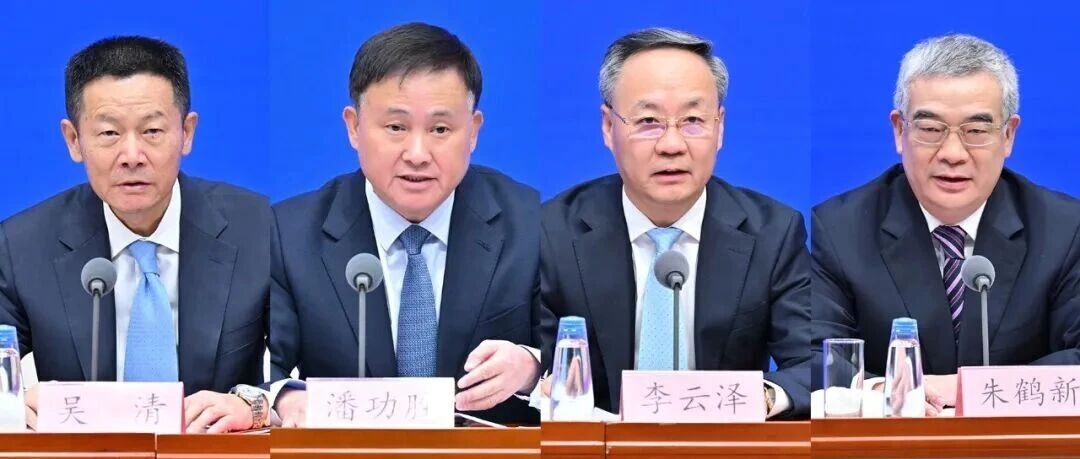
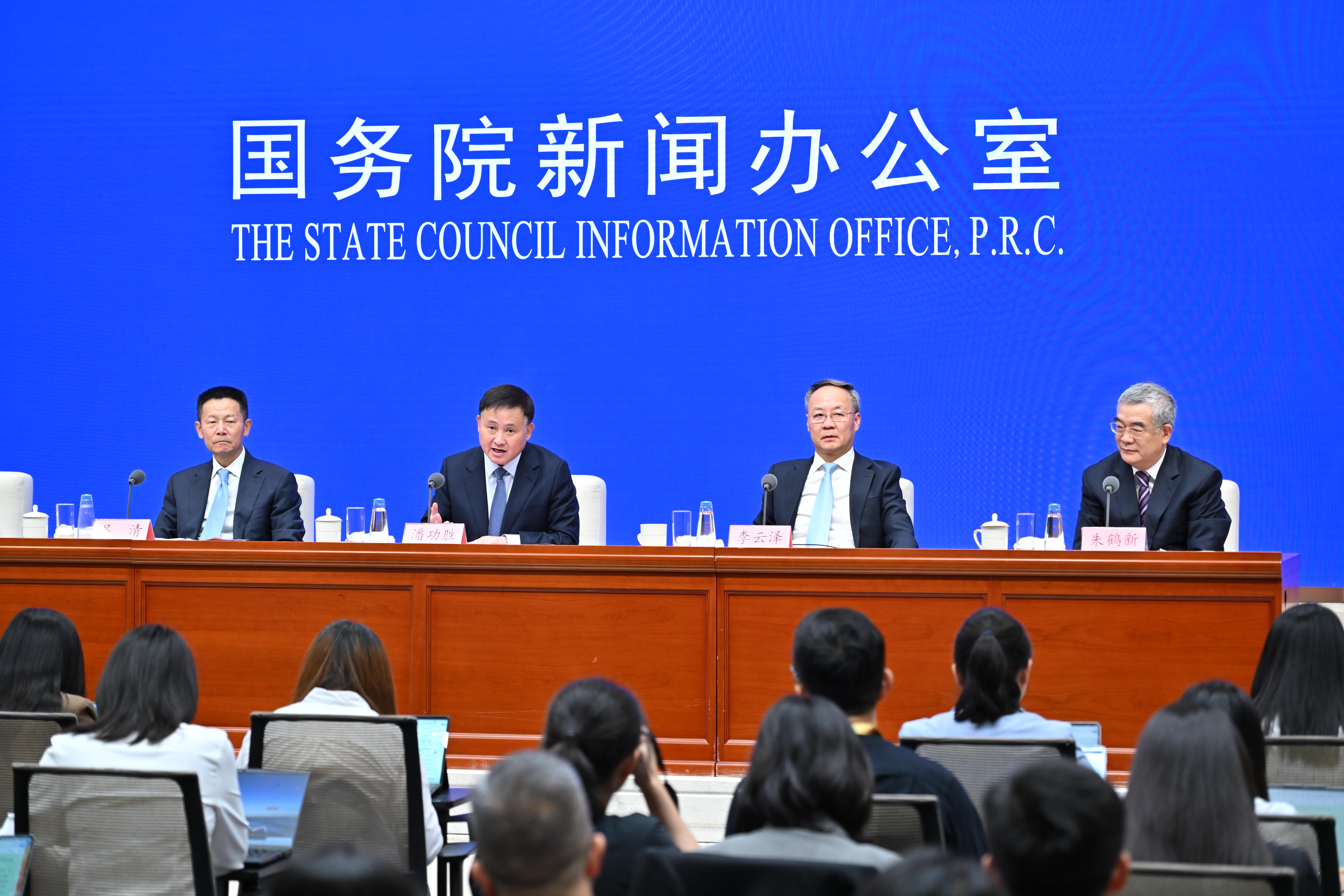
潘功胜、李云泽、吴清、朱鹤新同日发声
第一财经· 2025-09-22 13:16
Core Viewpoint - The article discusses the achievements of China's financial industry over the past five years, emphasizing the focus on long-term stability and development rather than short-term policy adjustments. The upcoming "Fifteen Five" plan is also hinted at, with expectations for continued financial reforms and support for economic growth [3][4][13]. Financial Development Achievements - The financial market has undergone significant changes, with the total assets of the banking and insurance sectors surpassing 500 trillion yuan, averaging a growth of 9% annually over the past five years [6][7]. - Financial support for the real economy has increased, with new funds injected into the economy reaching 170 trillion yuan, and specific sectors like technology and infrastructure receiving targeted loans [7][8]. - The insurance industry has paid out 9 trillion yuan in claims, a 61.7% increase compared to the previous five-year period [7]. Financial Risk Management - The financial regulatory framework has been reformed, with a focus on maintaining a high-pressure stance against illegal activities, resulting in significant penalties for financial misconduct [8]. - The number of high-risk small and medium-sized banks has decreased, and the cleanup of "zombie" private equity firms has been effective [8]. Financial Opening and International Cooperation - The financial sector has made strides in opening up, with significant reforms in capital markets and foreign exchange management, enhancing China's global financial integration [9][10]. - The removal of foreign ownership limits in the banking sector and the establishment of various cross-border investment mechanisms have expanded foreign participation in China's financial markets [11][12]. Future Financial Policy Outlook - The article outlines expectations for the upcoming "Fifteen Five" plan, with a focus on flexible and precise monetary policy to support economic recovery and stability [13][14]. - The emphasis will be on maintaining a balance between financial openness and risk prevention, with ongoing efforts to create a favorable environment for foreign exchange and investment [15].