
零息可转债

Search documents
又一家!零息可转债受热捧,多家港股公司入局
Zheng Quan Shi Bao· 2026-01-12 12:43
Core Viewpoint - The issuance of zero-coupon convertible bonds is becoming a significant tool for listed companies in Hong Kong to optimize their capital structure and drive strategic transformation, particularly in the context of a recovering stock market [1] Group 1: Company Announcements - Game company Tanwan announced the successful issuance of HKD 468 million zero-coupon convertible bonds maturing in 2027, with an initial conversion price of HKD 23.5 per share, potentially converting into approximately 1.99 million new shares, representing about 3.79% of existing shares [2] - The proceeds from Tanwan's bond issuance will be allocated to AI-related business investments, with 50% for developing AI infrastructure and technology, and the other 50% for acquiring shares in AI-related listed companies [2] - Guangfa Securities plans to issue zero-coupon convertible bonds totaling HKD 21.5 billion, with a net fundraising target of approximately HKD 39.59 billion, aimed at enhancing the capital strength of its overseas subsidiaries [2] - Jingtai Holdings intends to issue HKD 28.66 billion in zero-coupon convertible bonds to enhance its R&D capabilities and expand its business development and marketing teams [3] Group 2: Market Trends - The zero-coupon convertible bond market is experiencing a new wave of issuance, with several companies, including Alibaba and Baidu, having issued over HKD 930 billion in such bonds in recent years [3] - The zero-coupon structure allows companies to achieve long-term financing without interest payments, significantly reducing financing costs [4] - The trend of issuing zero-coupon convertible bonds reflects a growing preference among companies for flexible financing options that do not immediately dilute existing shareholders' equity [5] Group 3: Investor Implications - The issuance of zero-coupon convertible bonds is expected to attract long-term investors, enhancing market stability and international competitiveness [6] - This financing method provides a hybrid investment tool that meets the varying risk preferences of investors, indicating recognition of the fundamentals and development potential of quality Chinese enterprises [7]


研报掘金|华泰证券:维持广发证券“买入”评级 再融资助资本扩张与国际化
Ge Long Hui· 2026-01-09 04:41
Core Viewpoint - Guotai Junan Securities has reported that GF Securities plans to raise over 6 billion HKD through H-share placement and issuance of zero-coupon convertible bonds, which will be fully used to increase capital for its overseas subsidiaries [1] Group 1: Fundraising and Capital Strengthening - The fundraising, if successful, will effectively strengthen the company's capital position [1] - The capital raised will support the company's international business expansion [1] - The company is expected to see improvements in operational performance and industry ranking as a result [1] Group 2: Asset Management and Ratings - The company's asset management business advantages remain solid [1] - The refinancing will enhance both capital and international business capabilities [1] - The firm maintains a "buy" rating for GF Securities' A-shares and H-shares [1]


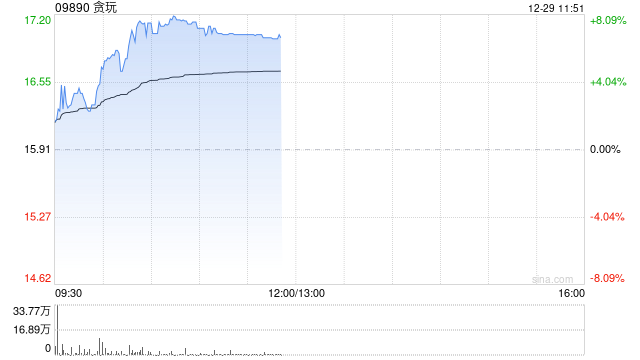
贪玩午前涨逾7% 公司发行4.68亿港元零息可转债
Xin Lang Cai Jing· 2025-12-29 03:56
Group 1 - The company, 贪玩 (09890), experienced a stock price increase of over 8% in early trading, with a current price of 16.98 HKD and a trading volume of 33.3585 million HKD [1][4] - The company announced the issuance of 468 million HKD in zero-coupon convertible bonds, with an initial conversion price of 23.50 HKD per share, representing a premium of approximately 38.24% over the last trading price of 17.00 HKD [1][4] - The net proceeds from the bond issuance are expected to be around 458.6 million HKD, which will be used for investments in AI-related businesses and equity investments in the AI industry, aiming to accelerate the company's strategic layout in the "AI + gaming" sector [1][4] Group 2 - The convertible bonds are fully subscribed by LMR Partners, a well-known international investment management fund headquartered in London, with offices in New York, Hong Kong, Zurich, Dubai, Dublin, and Glasgow [1][4] - The collaboration with LMR Partners is expected to introduce a long-term, stable, high-quality international fund to the company, helping to optimize its capital structure and enhance its recognition and influence in the global capital markets [1][4]
港股午评 恒生指数早盘涨0.65% 生物医药板块反弹
Jin Rong Jie· 2025-12-19 04:57
Group 1 - The Hang Seng Index rose by 0.65%, gaining 165 points to close at 25,663 points, while the Hang Seng Tech Index increased by 1.14% [1] - New listings in the Hong Kong stock market included Zhihui Mining (02546), which surged over 110% on its debut, and Xidi Zhijia (03881), which fell over 8% [1] - The U.S. Senate passed a revised version of the Biosecurity Act as part of the National Defense Authorization Act for fiscal year 2026, leading to a significant rebound in pharmaceutical stocks, with WuXi Biologics (02269) rising over 6% and 3SBio (01530) increasing by 3.7% [1] Group 2 - HAP Pharmaceuticals-B (02142) saw a nearly 7% increase after signing a business development deal worth over $1 billion with Bristol-Myers Squibb [2] - China Duty Free Group (01880) rebounded nearly 7% after winning bids for two major airport duty-free projects in Shanghai, with market attention on the results of the capital airport bidding [3] - Youjia Innovation (02431) rose over 12% as the large-scale rollout of L3 technology approaches, with the company having preemptively positioned itself for L2 and L4 technologies [4] Group 3 - Nine Dragons Paper (02689) increased by over 3% as the industry leader announced a series of shutdown plans to support price and inventory levels before the Spring Festival [5] - Southern Manganese (01091) rose over 9% due to multiple factors driving the continuous increase in electrolytic manganese prices [6] - Yangtze Optical Fibre and Cable (06869) surged over 10%, with a cumulative increase of over 30% in the past three days, driven by sustained demand for optical fibres and cables from AI [7] Group 4 - Ganwan (09890) increased by over 5% after issuing zero-coupon convertible bonds at a premium, raising HKD 450 million to enhance its "AI + gaming" initiatives [8] - Liqin Resources (02245) rose over 9% as Indonesia plans to significantly reduce its nickel ore production targets by 2026 [9] - Shenzhou International (02313) fell over 3% as its major client Nike reported a 32% year-on-year decline in net profit for the second fiscal quarter [10]
恒生指数早盘涨0.65% 生物医药板块反弹
Zhi Tong Cai Jing· 2025-12-19 04:10
Group 1 - The Hang Seng Index rose by 0.65%, gaining 165 points to close at 25,663 points, while the Hang Seng Tech Index increased by 1.14%. The morning trading volume reached 97.5 billion HKD [1] - New listings in the Hong Kong stock market included Zhihui Mining (02546), which surged over 110% upon debut, and Xidi Zhijia (03881), which fell over 8% after its listing [1] - The U.S. Senate passed a revised version of the Biodefense Act as part of the National Defense Authorization Act for fiscal year 2026, leading to a significant rebound in pharmaceutical stocks, with WuXi Biologics (02269) rising over 6% and 3SBio (01530) increasing by 3.7% [1] Group 2 - HAP Pharmaceuticals-B (02142) saw a nearly 7% increase after signing a business development deal worth over 1 billion USD with Bristol-Myers Squibb [2] - China Duty Free Group (601888) (01880) rebounded nearly 7% after winning bids for two major duty-free projects at Shanghai airports, with market attention on the results of the Capital Airport tender [2] - Youjia Innovation (02431) surged over 12% as L3 large-scale deployment approaches, with the company having made forward-looking arrangements for L2+ and L4 [2] - Nine Dragons Paper (02689) rose over 3% as the industry leader announced a series of shutdown plans to support price and inventory levels before the Spring Festival [2] Group 3 - South Manganese (01091) increased by over 9% due to multiple factors driving the continuous rise in electrolytic manganese prices [3] Group 4 - Yangtze Optical Fibre (601869) (06869) rose over 10%, with a cumulative increase of over 30% in the past three days, driven by sustained demand for optical fibers and cables from AI [4] Group 5 - Ganwan (09890) increased by over 5% after issuing zero-coupon convertible bonds at a premium, raising 450 million HKD to enhance its "AI + gaming" strategy [5] Group 6 - Liqin Resources (02245) rose over 9% as Indonesia plans to significantly reduce its nickel ore production targets by 2026 [6] Group 7 - Shenzhou International (02313) fell over 3% as its major client Nike reported a 32% year-on-year decline in net profit for the second fiscal quarter [7]

未雨绸缪还是生存刚需?解码险企年度“战略蓄水”
Sou Hu Cai Jing· 2025-12-08 23:36
Core Viewpoint - The insurance industry is actively increasing capital through various means, including equity financing and bond issuance, to enhance their financial strength and meet regulatory requirements [2][3][10]. Group 1: Capital Increase Activities - Multiple insurance companies have received approval for capital increases or announced plans, with total amounts reaching hundreds of billions [3][10]. - Life insurance companies are leading in capital increases compared to property insurance and reinsurance companies [1][3]. - Ping An Life announced a capital increase of approximately 20 billion yuan, aimed at accelerating business development and enhancing solvency [3][10]. - Other notable capital increases include China Postal Life's increase from 28.663 billion yuan to 32.643 billion yuan and CITIC Prudential Life's increase from 4.86 billion yuan to 7.36 billion yuan [3]. Group 2: Bond Issuance - Issuing perpetual bonds has become a mainstream option for insurance companies to enhance their core solvency ratio [4]. - Companies such as Xinhua Insurance, Taikang Life, and Ping An Life have announced bond issuance plans to support their capital needs [4]. - In June, Ping An announced a plan to issue zero-coupon convertible bonds worth 11.765 billion HKD, aimed at supporting its future business development [4]. Group 3: Regulatory Environment and Strategic Responses - The "Solvency II Phase II" rules have heightened the demand for capital supplementation among insurance companies, necessitating proactive measures to maintain solvency [10][11]. - The regulatory framework requires insurance companies to meet specific solvency ratios, with a comprehensive solvency ratio of at least 150% for personal pension business [10]. - The transition period for the new solvency rules has been extended to the end of 2025, prompting companies to strengthen their capital management [10]. Group 4: Focus on Pension Insurance - Taikang Life has positioned itself as a leader in the pension insurance sector, with a pension fund management scale of 670 billion yuan as of November 2025 [6][7]. - The company aims to leverage its experience in managing pension funds to enhance its offerings in the second and third pillars of pension insurance [8]. - Taikang Life's solvency ratios remain robust, with a comprehensive solvency ratio of 222.42% and a core solvency ratio of 131.41% [7].
未雨绸缪还是生存刚需 解码险企年度“战略蓄水”
Zhong Guo Zheng Quan Bao· 2025-12-08 20:53
Core Viewpoint - Insurance companies are actively increasing their capital through various means, including equity financing and bond issuance, to strengthen their financial stability and meet regulatory requirements in a challenging economic environment [1][2][3]. Group 1: Capital Increase Activities - Multiple insurance companies have completed or announced capital increases this year, totaling hundreds of billions, with life insurance companies leading the way [2][3]. - Ping An Life announced a capital increase of approximately 20 billion yuan, aimed at accelerating business development and enhancing solvency [2]. - Other notable capital increases include China Postal Life's increase from 28.663 billion yuan to 32.643 billion yuan and CITIC Prudential Life's increase from 4.86 billion yuan to 7.36 billion yuan [2]. Group 2: Bond Issuance - Issuing perpetual bonds has become a mainstream method for insurance companies to enhance their core solvency ratios [3]. - Companies such as New China Life, Taikang Life, and Ping An Life have announced bond issuance plans to support their capital needs [3]. - China Ping An also issued zero-coupon convertible bonds worth 11.765 billion Hong Kong dollars to fund its future business development [3]. Group 3: Strategic Focus on Pension Finance - Taikang Life's capital increase and bond issuance reflect its commitment to the pension finance sector, aligning with national policies promoting the development of commercial insurance annuities [4][5]. - The company has managed pension assets totaling 670 billion yuan, with a strong market presence in enterprise annuities and personal pensions [5]. - Taikang Life maintains a robust solvency position, with a comprehensive solvency ratio of 222.42% and a core solvency ratio of 131.41% as of the end of the third quarter [5]. Group 4: Regulatory Environment - The "Solvency II Phase II" rules have heightened the demand for capital replenishment among insurance companies, necessitating proactive measures to ensure compliance by the 2025 deadline [7][8]. - Regulatory requirements stipulate that companies must maintain a comprehensive solvency ratio of at least 150% and a core solvency ratio of at least 75% to engage in personal pension business [7]. - The transition period for these regulations has been extended to the end of 2025 to allow companies to adjust to the new requirements [8].

太保海外进阶玩法:“左手分红,右手发债”
阿尔法工场研究院· 2025-10-14 00:07
Core Viewpoint - China Pacific Insurance (CPIC) is taking significant steps to enhance its international presence and address capital structure pressures through the issuance of zero-coupon convertible bonds in Hong Kong, following a similar move by Ping An [5][10][15]. Financing Strategy - CPIC announced the issuance of HKD 15.6 billion in zero-coupon convertible bonds, maturing in 2030, which can be converted into H-shares [5]. - The funds raised will primarily support the insurance core business and the implementation of three strategic initiatives: "Great Health," "AI+," and internationalization [6]. - The issuance of convertible bonds is seen as a strategic move to supplement capital and accelerate internationalization, especially as CPIC's net assets have decreased by 3.3% since the beginning of the year [6][12]. Industry Context - The issuance of convertible bonds has become a common practice among large insurance companies, balancing the need for continuous dividends with increasing solvency pressures [7]. - CPIC is the second mainland insurance company to utilize this financing method in Hong Kong, following Ping An's USD 3.5 billion issuance last year, indicating a potential trend in the industry [8][17]. Internationalization Efforts - CPIC has lagged behind peers like Ping An and China Life in international expansion, with a total QDII quota of USD 2.627 billion, slightly above Xinhua's USD 2.4 billion, despite having a larger asset base [12]. - Recent initiatives include the approval of a tokenized USD money market fund and the launch of electric vehicle insurance in Thailand, marking a significant acceleration in overseas business development [14]. Regulatory Environment - The issuance of USD convertible bonds allows CPIC to maintain a lower dilution pressure on equity and create a funding pool for overseas operations without the complexities of capital repatriation [15]. - The current regulatory framework provides flexibility for funds raised through convertible bonds to remain offshore, reducing friction costs associated with cross-border capital flows [16]. Future Implications - The trend of using convertible bonds for financing may lead to more insurance companies following suit, prompting regulatory scrutiny regarding capital management and fund usage [17]. - The potential for increased participation from other insurers could transform this financing method from an isolated innovation into a collective industry trend [17].


TCL科技:投资者建议港股发零息可转债,公司称将优化资金结构
Xin Lang Cai Jing· 2025-09-26 01:01
Core Viewpoint - The company is considering leveraging competitive financial instruments, such as zero-interest convertible bonds, to optimize its capital structure and reduce financial costs, similar to practices observed in the industry [1]. Group 1: Financial Strategy - Several insurance companies have recently issued zero-interest convertible bonds in the Hong Kong stock market to optimize their financing structure [1]. - The company reported financial expenses of 2.141 billion yuan for the first half of 2025 and has a high debt-to-asset ratio of 67.7% [1]. - The company has prior experience in issuing convertible bonds, having successfully done so in 2020 [1]. Group 2: Future Considerations - The company is open to adopting similar financing strategies as its peers to further reduce financial expenses and optimize its debt structure [1]. - The inquiry suggests that the issuance of a five-year zero-interest convertible bond could align with the company's current funding needs and development plans [1].

点心债等为何成为企业境外融资的“新宠”?
Zheng Quan Shi Bao Wang· 2025-09-22 15:19
Core Insights - The rise of dim sum bonds and zero-coupon convertible bonds as new tools for offshore financing is driven by multiple factors, including the global currency cycle shift, accelerated RMB internationalization, and the AI wave [1][3] - Major companies like Tencent, Baidu, and Alibaba are increasingly issuing offshore RMB bonds and zero-coupon convertible bonds to attract international investors and broaden financing channels [1][3] Group 1: Financial Advantages - Issuing dim sum bonds and zero-coupon convertible bonds offers significant cost advantages, especially with current low RMB interest rates. For instance, the 10-year dim sum bonds issued this year have coupon rates between 2.80% and 3.50%, while many 10-year Chinese dollar bonds exceed 5% [1][2] - These financing methods help companies optimize their debt structure and alleviate debt pressure, allowing savings on interest expenses to be redirected towards core business areas like R&D and expansion [1][2] Group 2: Unique Features of Dim Sum Bonds and Zero-Coupon Convertible Bonds - Dim sum bonds, being offshore RMB bonds, help companies mitigate exchange rate risks and reduce financial losses from currency fluctuations. The expansion of the "southbound bond connect" increases demand for new bonds, providing a broader market and stable funding sources [2] - Zero-coupon convertible bonds feature a unique design of "zero coupon + equity option," which balances issuance costs, equity structure, and market confidence. For example, Alibaba's $3.2 billion zero-coupon convertible bond uses a capped call option to raise the conversion price, meeting low-cost financing needs while avoiding excessive short-term equity dilution [2] Group 3: Market Dynamics and Regulatory Environment - The increasing popularity of dim sum bonds and zero-coupon convertible bonds reflects a combination of macroeconomic conditions, bond characteristics, and corporate strategies. Companies are leveraging these new financing tools to optimize capital structures and reduce financing costs, thus driving their development [3] - Regulatory bodies are continuously improving related policies and market mechanisms to promote the healthy development of the bond market, providing companies with a more stable and efficient financing environment [3]