
区块链

Search documents
神州信息涨2.00%,成交额2.30亿元,主力资金净流出1529.43万元
Xin Lang Cai Jing· 2025-09-05 06:21
Core Viewpoint - The stock of Shenzhou Information has shown a mixed performance in recent trading sessions, with a year-to-date increase of 22.68% but a recent decline of 9.90% over the last five trading days [1][2]. Group 1: Stock Performance - As of September 5, Shenzhou Information's stock price was 13.74 CNY per share, with a market capitalization of 13.407 billion CNY [1]. - The stock has experienced a trading volume of 2.30 billion CNY and a turnover rate of 1.74% [1]. - Year-to-date, the stock has risen by 22.68%, while it has decreased by 9.90% in the last five trading days [1]. Group 2: Financial Performance - For the first half of 2025, Shenzhou Information reported a revenue of 4.423 billion CNY, reflecting a year-on-year growth of 7.98% [2]. - The company recorded a net profit attributable to shareholders of -963.796 million CNY, a decrease of 25.93% compared to the previous year [2]. Group 3: Shareholder Information - As of June 30, 2025, the number of shareholders for Shenzhou Information was 88,300, an increase of 8.15% from the previous period [2]. - The average number of circulating shares per shareholder was 11,008, which decreased by 7.56% [2]. - The top ten circulating shareholders include Hong Kong Central Clearing Limited and Southern CSI 1000 ETF, with notable changes in their holdings [3].

2025年稳定币⽀付:全球浪潮与新⾦融基石报告-Artemis
Sou Hu Cai Jing· 2025-09-05 04:45
Core Insights - The report titled "Stablecoin Payments: Global Waves and New Financial Cornerstones" reveals a significant shift of stablecoins from niche tools to mainstream payment infrastructure, with a total settlement amount exceeding $94.2 billion from January 2023 to February 2025 [1][2][18] - The annualized run rate for stablecoin payments reached $72.3 billion by February 2025, with B2B payments being the most active segment at $36 billion [1][2][18] - USDT dominates the stablecoin market with approximately 90% market share, followed by USDC, while Tron is the most popular blockchain for stablecoin transactions [1][2][18] Summary by Category Overall Trends - Stablecoin payments are becoming a crucial part of global payment systems, with a notable increase in B2B and card payment sectors [2][19] - The total stablecoin supply has grown to approximately $239 billion, up from less than $10 billion five years ago, indicating a rapid adoption [19] Payment Types - B2B payments account for the largest share at an annualized rate of $36 billion, followed by P2P payments at $18 billion, card payments at $13.2 billion, B2C payments at $3.3 billion, and pre-funding at $2.5 billion [1][2][18][28] Blockchain Preferences - Tron is the leading blockchain for stablecoin transactions, followed by Ethereum, Binance Smart Chain (BSC), and Polygon, with varying average transaction values depending on the blockchain used [1][2][18][31] Regional Insights - In Latin America, Tron is the dominant blockchain, particularly in Colombia, Ecuador, and Brazil, while Ethereum leads in Argentina and Peru [2][49] - In Africa, Tron and Ethereum are the primary blockchains, with USDT being the most widely used stablecoin, although USDC shows significant adoption in countries like Nigeria and Uganda [2][61][68] - North America and the Caribbean also follow global trends, with Tron and Ethereum leading, and USDT consistently dominating transaction volumes across markets [2][71][74] Use Cases and Applications - Companies like Binance Pay and BVNK are integrating stablecoin payments into their platforms, facilitating cross-border transactions and improving payment efficiency [2][46][47] - Yellow Card is addressing forex shortages in Africa by enabling stablecoin transactions, having facilitated over 5 billion transactions [2][70]


深科技涨2.01%,成交额3.14亿元,主力资金净流入2269.26万元
Xin Lang Cai Jing· 2025-09-05 03:28
Core Viewpoint - The stock of Shenzhen Longcheng Development Technology Co., Ltd. (深科技) has shown fluctuations in price and trading volume, with a recent increase of 2.01% on September 5, 2023, and a total market capitalization of 31.016 billion yuan [1]. Financial Performance - For the first half of 2025, the company achieved operating revenue of 7.740 billion yuan, representing a year-on-year growth of 9.71%, and a net profit attributable to shareholders of 452 million yuan, up 25.39% year-on-year [2]. - Cumulatively, the company has distributed a total of 3.958 billion yuan in dividends since its A-share listing, with 702 million yuan distributed over the past three years [3]. Shareholder Information - As of August 20, 2023, the number of shareholders for 深科技 was 173,000, a decrease of 0.60% from the previous period, while the average circulating shares per person increased by 0.60% to 9,057 shares [2]. - The top ten circulating shareholders include Southern CSI 500 ETF, which holds 16.1685 million shares, an increase of 4.121 million shares from the previous period, and Hong Kong Central Clearing Limited, holding 12.9876 million shares, an increase of 3.209 million shares [3]. Business Overview - 深科技, established on July 4, 1985, and listed on February 2, 1994, is primarily engaged in the research and production of hard disk heads, advanced manufacturing of electronic products, metering systems, payment terminal products, digital home products, and LED technology [1]. - The company's revenue composition includes high-end manufacturing (50.52%), storage semiconductor business (27.13%), metering intelligent terminals (21.70%), and other supplementary services (0.66%) [1].

西安经开区:从“制造”迈向“智造”, 数字经济如何重塑制造业版图
2 1 Shi Ji Jing Ji Bao Dao· 2025-09-05 03:22
Core Viewpoint - The digital economy is emerging as a new engine driving China's economic growth, with significant integration between digital and traditional industries, particularly in Xi'an Economic Development Zone [1][9] Group 1: Digital Economy Development - The Xi'an Economic Development Zone is positioned as a key area for industrial development, leveraging its manufacturing base to foster new growth driven by the digital economy [1][2] - In the first half of the year, the Xi'an Economic Development Zone reported an industrial added value of 16.98 billion yuan, a year-on-year increase of 17%, and an industrial output value of 141.62 billion yuan, up 28% [2] - The zone has successfully attracted over 100 high-quality industrial projects this year, indicating a robust business environment [4] Group 2: Key Projects and Investments - Qi Anxin Group established a wholly-owned subsidiary in the zone, planning to invest approximately 200 million yuan in a "Belt and Road" data center project [3] - Nanjing Weituo Technology Co., Ltd. signed a cooperation agreement to invest 10 million yuan in establishing a Northwest operation and R&D center in the zone [5][6] - The projects include major players like Inspur Cloud and Qi Anxin, which are set to enhance the digital economy landscape in the region [7] Group 3: Infrastructure and Policy Support - The Xi'an Economic Development Zone has optimized its business environment by establishing a comprehensive policy support system covering industrial development, technological innovation, talent introduction, and financial services [3] - The zone aims to create a governance service brand recognized by enterprises through initiatives like "one project, one policy" and streamlined approval processes [3][4] Group 4: Future Outlook and Strategic Positioning - The integration of digital economy projects reflects a strategic approach to enhance the synergy between digital and industrial sectors, aiming for a comprehensive ecosystem [7][9] - The zone's transformation from a manufacturing hub to an "intelligent manufacturing" center is expected to provide valuable experience for digital economy development in the western region of China [9]

3D打印与区块链的结合:制造业未来的代币化
Sou Hu Cai Jing· 2025-09-05 00:34
Industry Overview - 3D printing has evolved from a niche hobby to a global industry with significant potential across various sectors including healthcare, aerospace, defense, construction, consumer goods, and food [1][3] - The 3D printing market is projected to reach a value of $22 billion to $25 billion by 2025, with expectations to exceed $100 billion by 2032, driven by industrial applications, cheaper hardware, and a wider range of materials [3] Market Dynamics - The evolution of hardware includes a wide range of printers, from desktop resin printers under $500 to industrial metal printers worth millions, with major players like Stratasys, 3D Systems, HP, Formlabs, and EOS leading the market [3] - There is a surge in material availability, including metals, ceramics, biopolymers, composites, and even living cells, which could open new opportunities in various industries [3] - The integration of software and artificial intelligence with CAD tools allows engineers to optimize parts for strength, weight, and cost [3] Sector-Specific Insights - In healthcare, the market for 3D printing could reach $15 billion by 2030, focusing on custom prosthetics, orthodontics, surgical implants, and experimental bioprinted organs [3] - The aerospace and defense sectors are investing heavily in lightweight, complex metal parts to reduce fuel consumption and speed up prototyping [3] - In construction, entire homes and office buildings can now be printed on-site using large robotic printers, potentially redefining affordable housing and disaster relief efforts [3] - Consumer goods brands are exploring customization and on-demand manufacturing, with companies like Adidas and Nike leading the way [3] - Food printing is still experimental but is gaining attention with developments in 3D-printed meat alternatives, chocolates, and pizzas [3] Challenges Facing the Industry - Cost reduction remains a critical issue, as industrial metal printing is still expensive despite the decrease in printer prices over the past decade [4] - Regulatory and standardization challenges are significant, especially in healthcare and aerospace, where certification is crucial [5] - The transformation of supply chains towards decentralized production is a key consideration, as 3D printing could shift manufacturing closer to consumers [5] - Sustainability concerns arise, as 3D printing reduces waste compared to traditional manufacturing but has high energy consumption, particularly in metal printing [5] Future Outlook - 3D printing will not completely replace traditional manufacturing but will complement it, particularly for customized, complex, or low-volume parts [6] - The industry is at the intersection of technology, medicine, sustainability, and supply chain resilience, with its influence expected to grow as technology matures [6] - By 2025, 3D printing will be a tangible reality, and the winners will be those who understand its advantages and limitations while keeping pace with the fastest-growing applications [6] Integration with Blockchain - The combination of 3D printing and blockchain technology is poised to revolutionize the manufacturing landscape by introducing trust, ownership, and traceability to the digital manufacturing process [7] - Blockchain can prevent unauthorized modifications of CAD files, ensuring the integrity of digital designs [8] - Designers can tokenize their CAD files as NFTs, allowing them to earn royalties each time their designs are printed, thus protecting intellectual property [9] - The partial ownership of expensive industrial printers can be tokenized, enabling global investors to hold shares and earn revenue from their usage [10] - Supply chain verification can be enhanced through blockchain, ensuring the authenticity and compliance of 3D printed parts in critical industries [11] - A community-driven ecosystem can be established through a 3D printing token, allowing manufacturers and customers to earn rewards and discounts [12] - Smart contracts based on blockchain can automate production orders at certified 3D printing centers, reducing costs and carbon footprints [13] Vision for the Future - The integration of 3D printing and blockchain could lead to a decentralized manufacturing economy, democratizing production similar to how the internet democratized information [17] - The industry must address challenges such as regulatory issues, scalability, and security to fully realize the potential of this integration [16]

马云也买币?以太坊迎来“新大哥”
3 6 Ke· 2025-09-04 10:42
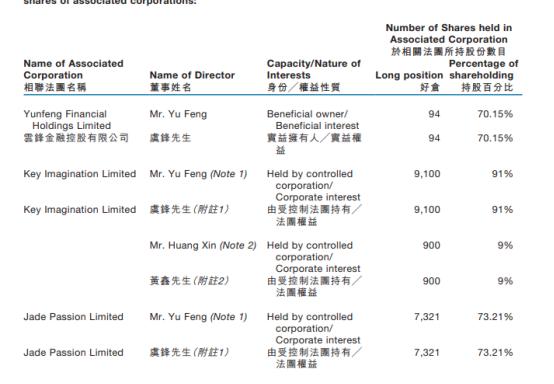
Core Viewpoint - Cloud Financial, a Hong Kong-listed company, has announced the purchase of 10,000 Ethereum as a strategic reserve asset, marking a significant move into the Web3 space, especially given the involvement of notable shareholder Jack Ma [1][9][13]. Company Overview - Cloud Financial Group is an innovative fintech group listed on the Hong Kong main board, with licenses for securities brokerage, asset management, insurance, and fintech services [2]. - The company was previously known as Rui Dong Group and was acquired by Jade Passion Ltd, controlled by Cloud Fund, in 2015 [2]. Shareholder Structure - Cloud Fund, founded in 2010, is backed by prominent figures including Jack Ma and Yu Feng, indicating strong financial resources and connections [3]. - Yu Feng is the largest shareholder of Cloud Financial, controlling 47.25% of the shares, while Jack Ma indirectly holds approximately 11.15% of Cloud Financial through Cloud Fund [4][5]. Market Reaction - The announcement of the Ethereum purchase led to a significant market reaction, with Cloud Financial's stock rising over 10% the day after the announcement [9]. - This move is seen as part of a broader strategy to integrate digital assets into the company's operations and explore blockchain technology applications in core business areas [7][12]. Strategic Initiatives - Cloud Financial has been actively pursuing a strategy in Web3, including plans to acquire other cryptocurrencies like BTC and SOL, and to explore tokenization of real-world assets (RWA) [7][10]. - The company has also partnered with Ant Group to invest in the Layer1 blockchain Pharos, which focuses on RWA [12]. Industry Context - The involvement of Jack Ma and Cloud Financial in the cryptocurrency space is viewed as a significant indicator of institutional interest in Ethereum and Web3 technologies [13][15]. - Despite the positive market sentiment, there are concerns about the sustainability of RWA projects, as many lack real-world applications and may be speculative in nature [16].
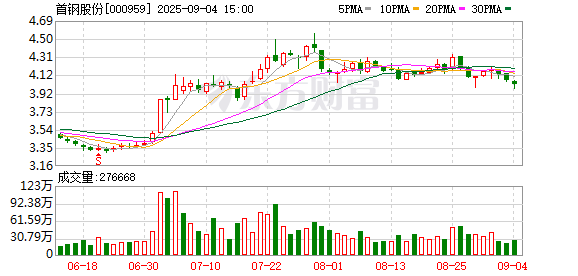
首钢股份:公司已与供应商尝试进行了区块链技术支撑下的铁矿石跨境人民币支付和结算业务
Zheng Quan Ri Bao· 2025-09-04 08:41
Group 1 - The company is focusing on the digital economy and is advancing the application of new technologies such as big data, cloud computing, and blockchain [2] - The company has initiated cross-border RMB payment and settlement business for iron ore supported by blockchain technology, promoting the internationalization of the RMB [2]

加密货币钱包安全迎以太坊升级挑战 XBIT Wallet提供全面保障
Sou Hu Cai Jing· 2025-09-04 08:13
Core Insights - Ethereum's upcoming "Canelia" upgrade is expected to significantly impact the cryptocurrency market, with Ethereum's price rising by 8.3% to $3,780 in anticipation of the upgrade [1] - The upgrade aims to reduce Layer 2 network transaction costs by up to 85% and improve network performance, while also requiring cryptocurrency wallets to adapt to new technical standards [1][3] - XBIT Wallet has completed all necessary technical preparations to ensure asset security during the upgrade period [1][3] Market Reactions - Layer 2 tokens such as ARB, OP, and MATIC have seen price increases of 15.2%, 18.7%, and 12.3% respectively in the past week, indicating strong market expectations for these projects benefiting from the upgrade [3] - There has been a 52% increase in self-custody wallet downloads compared to the previous month, reflecting heightened investor concern for wallet security [3] User Behavior Changes - 65% of Ethereum users plan to increase their Layer 2 asset allocation, with 42% having already moved funds from the mainnet to Layer 2 to reduce costs and improve efficiency [5] - The demand for multi-chain wallet support has surged, with the proportion of single-chain wallet users dropping from 58% to 32% over the past year [5] Institutional Interest - Institutional wallet addresses have seen a 6.5% increase in Ethereum holdings over the past month, indicating a positive outlook from professional investors regarding the upgrade [5] - Morgan Stanley's report suggests that the "Canelia" upgrade will enhance Ethereum's competitiveness and attract more enterprise-level applications [5] Future Outlook - Analysts predict that the total locked value in Layer 2 networks could exceed $50 billion by the end of the year, with user numbers potentially doubling [6] - The evolution of cryptocurrency wallets is shifting towards comprehensive digital asset management platforms, emphasizing multi-chain support and cross-chain interoperability [6] - XBIT Wallet aims to remain at the forefront of technology and security innovations to provide users with a secure and efficient digital asset management experience [6]

中国联通跌1.82%,成交额30.16亿元,近3日主力净流入-5.67亿
Xin Lang Cai Jing· 2025-09-04 07:08
Core Viewpoint - China Unicom is focusing on enhancing its cloud services and digital infrastructure, with significant revenue growth in various segments, while also exploring partnerships in blockchain and IoT to improve operational efficiency and security [2][3]. Financial Performance - In 2024, China Unicom achieved a revenue of RMB 200.2 billion, representing a year-on-year growth of 1.45%, with a net profit of RMB 6.349 billion, up 5.12% [9]. - The company reported a substantial increase in cloud revenue, reaching RMB 26.87 billion, a 142% increase year-on-year, and IDC revenue of RMB 18.61 billion, up 12.9% [2][3]. Business Strategy - China Unicom is strategically positioned as a key player in digital infrastructure, focusing on areas such as digital government and digital finance, while also enhancing its product offerings in data governance and security [2][3]. - The company is set to launch a 5G roaming service in collaboration with other major telecom operators, aimed at expanding network coverage and improving customer service without additional costs [4]. Market Position - As of June 30, 2025, China Unicom had 556,900 shareholders, with a decrease of 6.02% from the previous period, and an average of 55,248 shares per shareholder, which increased by 6.41% [9]. - The company operates within the telecommunications sector, focusing on services such as broadband and mobile data, which account for 38.49% of its revenue [8]. Shareholder Information - China Unicom has distributed a total of RMB 35.536 billion in dividends since its A-share listing, with RMB 12.427 billion in the last three years [10]. - Major shareholders include Hong Kong Central Clearing Limited and various ETFs, indicating a stable institutional interest in the company [10].

加州公务员退休基金持有 41.06 万股 Strategy,价值 1.659 亿美元
Xin Lang Cai Jing· 2025-09-04 06:51
来源:市场资讯 (来源:吴说) 在周三的董事会候选人论坛上,六名竞选加州公务员退休系统(CalPERS)管理委员会席位的候选人对 是否应将比特币纳入总额 5,060 亿美元 的基金投资组合意见分裂。有候选人认为应考虑区块链作为"有 前景的技术",但拒绝直接投资比特币。CalPERS 二季度 13F 文件显示,该基金持有 41.06 万股 Strategy (原 MicroStrategy),价值 1.659 亿美元。(Decrypt) ...
