低空经济

Search documents
航发动力涨2.07%,成交额11.84亿元,主力资金净流出1774.03万元
Xin Lang Cai Jing· 2026-01-06 05:49
航发动力所属申万行业为:国防军工-航空装备Ⅱ-航空装备Ⅲ。所属概念板块包括:航母产业、央企改 革、通用航空、大飞机、低空经济等。 截至10月31日,航发动力股东户数13.08万,较上期增加0.00%;人均流通股20376股,较上期增加 0.00%。2025年1月-9月,航发动力实现营业收入229.12亿元,同比减少11.73%;归母净利润1.08亿元, 同比减少85.13%。 1月6日,航发动力盘中上涨2.07%,截至13:23,报40.99元/股,成交11.84亿元,换手率1.10%,总市值 1092.63亿元。 资金流向方面,主力资金净流出1774.03万元,特大单买入1.55亿元,占比13.09%,卖出1.73亿元,占比 14.64%;大单买入3.13亿元,占比26.43%,卖出3.12亿元,占比26.38%。 航发动力今年以来股价涨2.40%,近5个交易日涨1.84%,近20日涨10.81%,近60日跌2.64%。 资料显示,中国航发动力股份有限公司位于陕西省西安市未央区徐家湾,成立日期1993年12月23日,上 市日期1996年4月8日,公司主营业务涉及航空发动机制造及衍生产品的生产、民用航空发动机 ...

深耕保障提质效 通辽机场通航业务增长52%
Zhong Guo Min Hang Wang· 2026-01-06 05:23
中国民航网 通讯员蔡朋飞 报道:2025年,通辽机场通用航空保障业务实现跨越式突破,全年共保障各 类通用航空飞行1589架次,较2024年同比增幅达52.9%。 此次通航保障量大幅增长,既是机场自身发展的重要突破,也精准契合国家发展通用航空和低空经济的 战略导向。通辽机场将持续夯实保障能力、拓展合作领域,深度融入低空经济发展布局,为区域经济社 会高质量发展贡献更多航空力量。(编辑:张薇,校对:李季威,审核:韩磊) 业务结构持续优化成为增长核心驱动力。数据显示,转场训练已跃升为通航业务核心增长引擎,2025年 保障转场训练飞行1172架次,占总保障量的73.7%;本场作业飞行270架次、短途运输40架次、其他类 调机飞行107架次,多元业态协同发展格局愈发清晰。随着业务结构优化,运行保障效率同步提升,单 日最高保障转场训练飞行18架次,单月最高保障量达192架次。 在民生保障与生态服务领域,通辽机场深化人工增雨、航空护林等业务合作,为地方生态保护和农业生 产提供高效航空支撑,推动通航资源转化为民生保障效能。经济效益同步显现,全年保障通航业务实现 非航空性收入35万元、航空性收入8.5万元,绘就"运输+通用"融合 ...
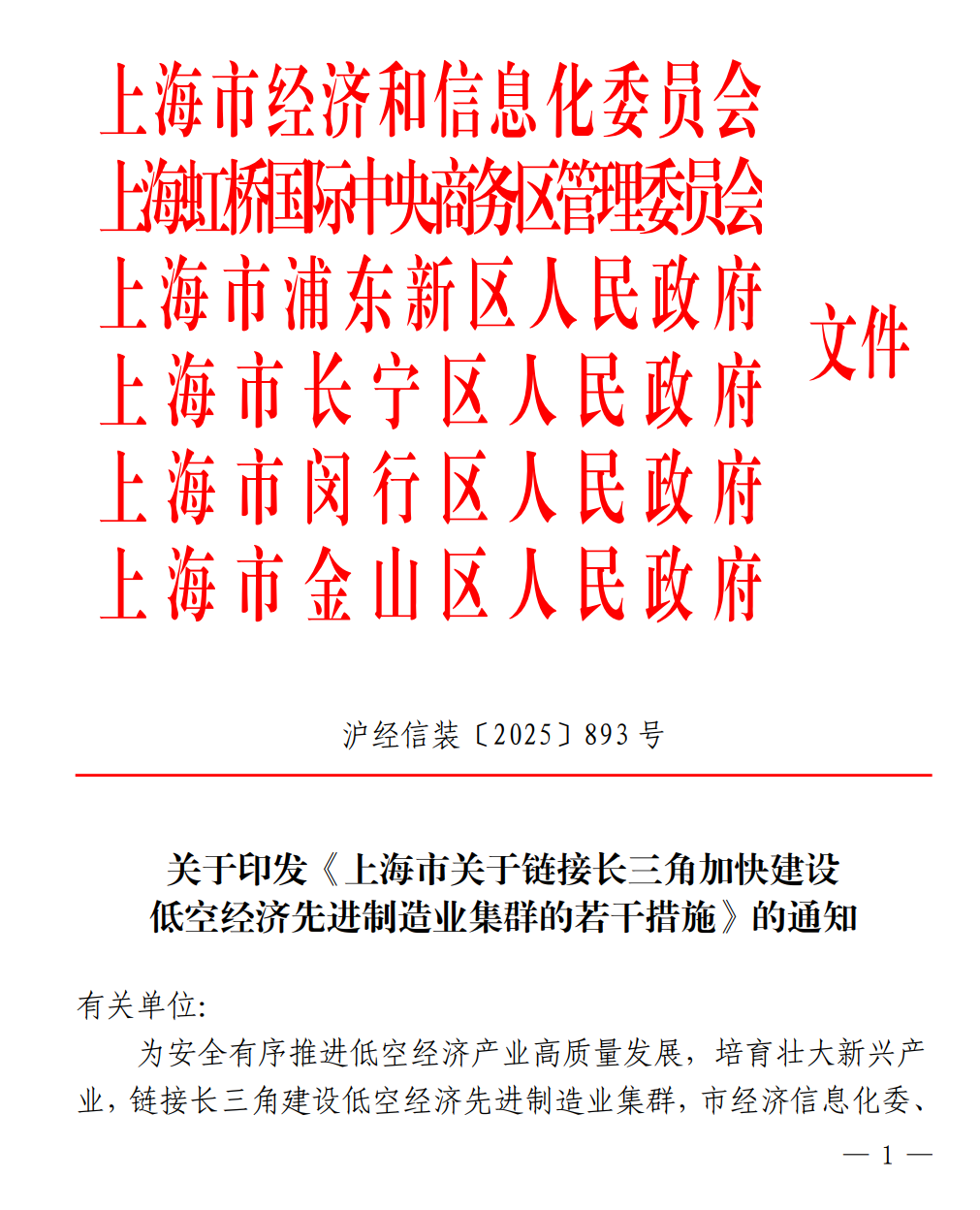
最高支持1亿元 上海真金白银竞逐“世界eVTOL之都”
Zhong Guo Jing Ying Bao· 2026-01-06 05:22
Core Viewpoint - Shanghai aims to accelerate the development of a "world eVTOL capital" by 2028, targeting a core industry scale of approximately 80 billion yuan in the low-altitude economy [3][4]. Group 1: Industry Development Measures - The Shanghai Municipal Economic and Information Commission, along with other local authorities, has released measures to enhance the low-altitude economy and advanced manufacturing cluster in the Yangtze River Delta [3]. - By 2028, the goal is to establish a complete industrial chain for new low-altitude aircraft, including eVTOLs and industrial-grade drones, with a manufacturing capacity of over 500 new aircraft [4]. - The measures include attracting and nurturing 10 leading enterprises in the eVTOL and related sectors, which is expected to drive an additional investment of over 20 billion yuan in the industry [4]. Group 2: Collaborative and Innovative Framework - The initiative emphasizes regional collaboration and innovation, aiming to create a national-level testing and verification platform for new low-altitude aircraft [4]. - The focus will be on applications in low-altitude smart logistics, public governance, and production operations, enhancing the core competitiveness of the low-altitude economy [4]. - Shanghai will leverage its "low-altitude economy reception hall" to integrate into the global low-altitude economic market and promote the international application of low-altitude equipment [4]. Group 3: Financial Support and Incentives - The Shanghai government plans to provide substantial financial support for the development of the low-altitude economy, including subsidies for manufacturing capabilities, key technology breakthroughs, and infrastructure construction [5]. - For high-innovation projects in eVTOL and industrial-grade drones, the city will offer support of up to 100 million yuan for qualifying manufacturing projects [5].

津渝校企携手 共拓低空经济新蓝海
Xin Lang Cai Jing· 2026-01-06 05:03
Core Insights - Tianjin Xinlong Intelligent Equipment Group, Jilin University Chongqing Research Institute, and Chongqing Mingjiang Ming Technology Co., Ltd. have signed a strategic cooperation agreement to collaborate on intelligent equipment research and development, technology transfer, and industrial application [1] Group 1: Strategic Collaboration - The partnership aims to create an integrated innovation platform that combines production, education, research, and application [1] - This collaboration exemplifies the breaking of regional boundaries between Tianjin and Chongqing, fostering the cultivation of new productive forces [1] Group 2: Economic and Industrial Context - Both Tianjin and Chongqing have established clear policies supporting the low-altitude economy and possess strong industrial foundations, facilitating cross-regional cooperation [1] - The Tianjin Port Free Trade Zone is accelerating the formation of a low-altitude economic ecosystem, providing comprehensive support from research and development to application delivery [1] Group 3: Future Development - The focus will be on leveraging the airspace and policy advantages of the Tianjin Port Free Trade Zone to expand diverse "low-altitude +" application scenarios, including logistics, urban commuting, and emergency support [1] - The region aims to achieve high-quality development of the low-altitude economy by promoting a collaborative industrial pattern encompassing research, manufacturing, and application [1]
峰飞凯瑞鸥飞越琼州海峡完成首次吨级eVTOL跨海峡飞行
Xin Lang Cai Jing· 2026-01-06 05:03
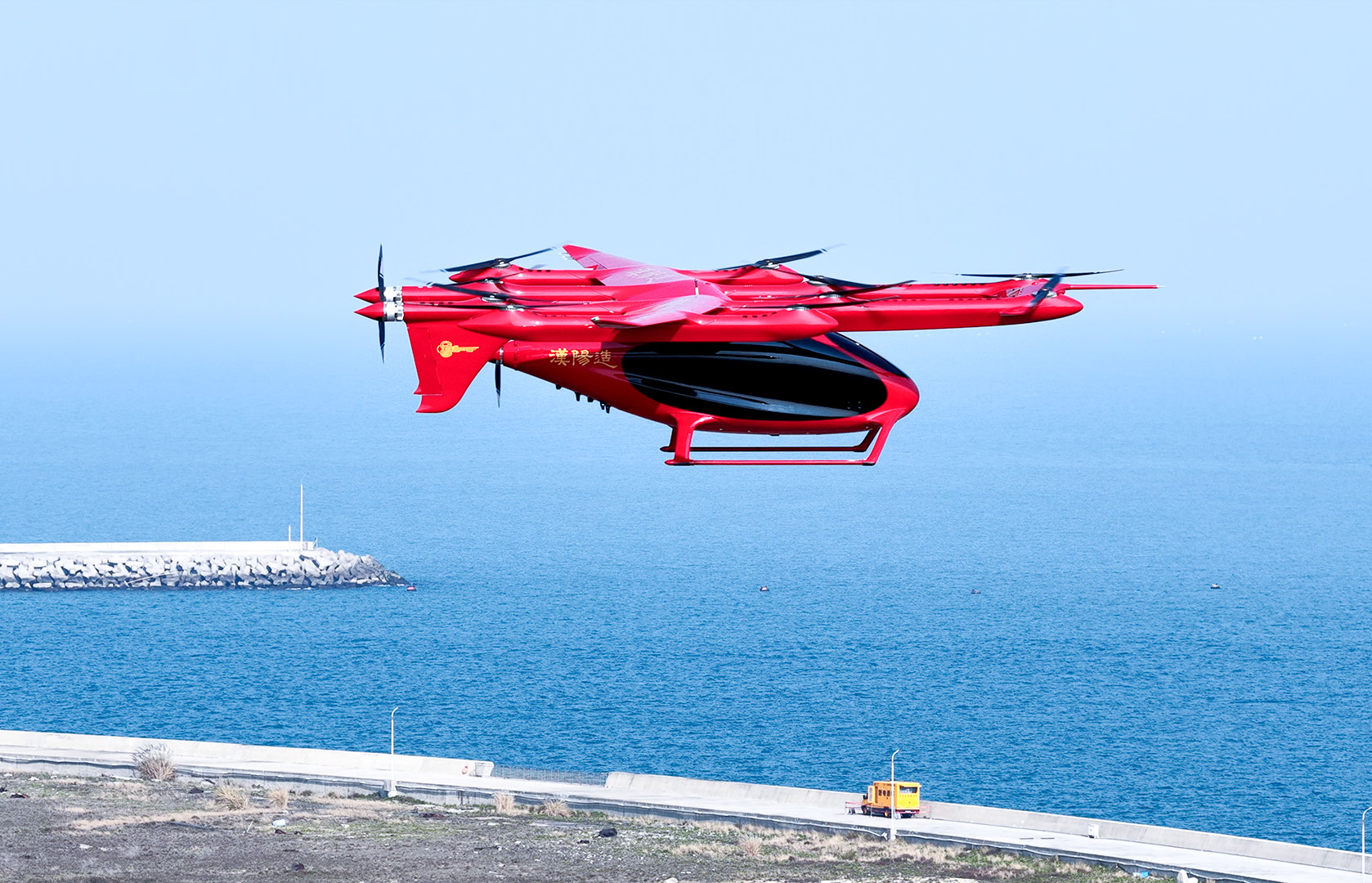
Group 1 - The "Kairui O" eVTOL aircraft successfully completed a 23-kilometer flight across the Qiongzhou Strait, marking China's first ton-level unmanned eVTOL transport scenario verification [2] - The flight was a collaborative effort involving Hainan Holdings, Hainan Airport Group, Hainan Yihang General Aviation, Pengcheng Low Altitude, and Fengfei Aviation, representing a significant low-altitude industry activity in Hainan Free Trade Port [2] - The Kairui O, developed by Fengfei Aviation, features a composite wing design allowing for vertical takeoff like a helicopter and efficient cruising like a fixed-wing aircraft, with a maximum takeoff weight of 2 tons and a payload capacity of 400 kilograms [2] Group 2 - Hainan is leveraging its advantages in low-altitude airspace reform to promote three high-value scenarios: "low-altitude + logistics," "low-altitude + cultural tourism," and "low-altitude + emergency response" [3] - The use of unmanned eVTOL aircraft for cross-strait logistics is expected to reduce transportation time from hours to minutes, alleviating pressure on traditional ferry and land transport across the Qiongzhou Strait [3] - The integration of high-efficiency logistics with the free trade zone policy is projected to provide a "Hainan solution" for China's trillion-level low-altitude economy [3]
航天彩虹涨2.10%,成交额6.60亿元,主力资金净流出1235.09万元
Xin Lang Cai Jing· 2026-01-06 03:36
Core Viewpoint - Aerospace Rainbow's stock has shown a positive trend with a 3.59% increase year-to-date and significant gains over various trading periods, indicating strong market interest and performance in the defense and aerospace sector [1][2]. Group 1: Stock Performance - As of January 6, Aerospace Rainbow's stock price reached 24.84 CNY per share, with a trading volume of 6.60 billion CNY and a market capitalization of 244.65 billion CNY [1]. - The stock has increased by 4.63% over the last five trading days, 11.54% over the last 20 days, and 10.30% over the last 60 days [1]. Group 2: Financial Performance - For the period from January to September 2025, Aerospace Rainbow reported a revenue of 15.23 billion CNY, reflecting an 18.02% year-on-year growth, while the net profit attributable to shareholders was 606.20 million CNY, a decrease of 1.67% compared to the previous year [2]. Group 3: Shareholder Information - As of November 28, 2025, the number of shareholders for Aerospace Rainbow increased to 123,000, with an average of 8,004 circulating shares per person, a decrease of 1.19% [2]. - The company has distributed a total of 4.64 billion CNY in dividends since its A-share listing, with 1.78 billion CNY distributed in the last three years [3]. - The top ten circulating shareholders include notable entities such as Guotai Zhenzheng Military Industry ETF and Hong Kong Central Clearing Limited, with some shareholders reducing their holdings [3].

政策利好不断,通用航空ETF基金(159230)冲击3连涨
Sou Hu Cai Jing· 2026-01-06 03:31
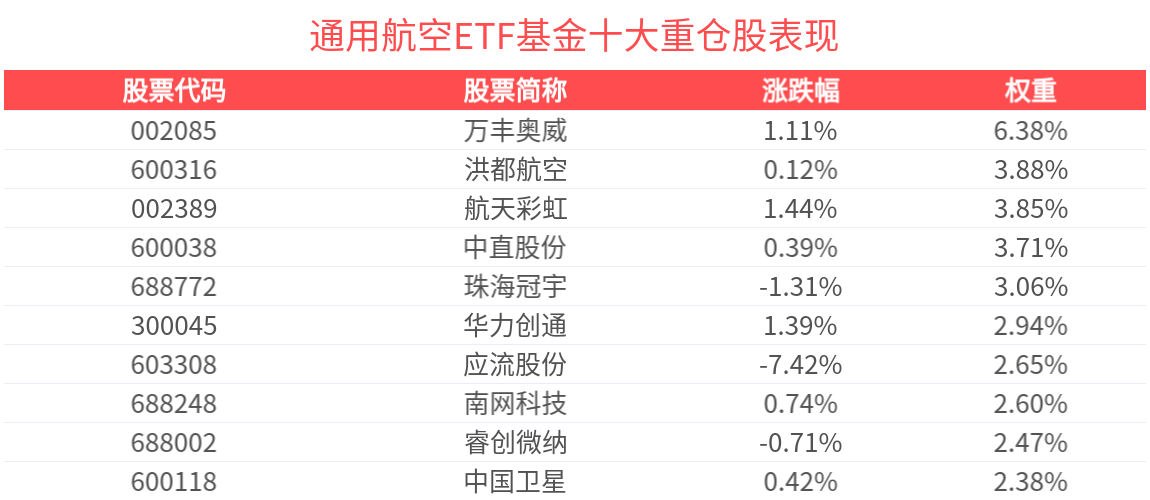
Core Insights - The General Aviation Industry Index increased by 0.92% as of January 6, 2026, with notable stocks like Beidou Star and Haige Communication hitting the daily limit, and Aerospace Hanyu rising by 9.95% [1] - The General Aviation ETF (159230) also rose by 0.92%, marking a three-day consecutive increase, and has accumulated an 11.88% rise over the past two weeks [1] - The ETF has seen a net inflow of 16.2 million yuan over the past five days, indicating strong investor interest [1] Industry Developments - The National Industrial and Information Technology Work Conference emphasized the cultivation of emerging industries, including new materials, aerospace, and low-altitude economy, as future pillars of the economy [1] - The conference also highlighted the need for orderly development of satellite IoT and the strengthening of 6G technology research [1] - The new guidelines for frequency allocation in low-altitude economic development were introduced, supporting the growth of this sector [1] Market Composition - As of December 31, 2025, the top ten weighted stocks in the General Aviation Industry Index accounted for 33.92% of the index, with notable companies including Wanfeng Aowei, Aerospace Rainbow, and China Satellite [2] - The detailed performance of key stocks includes Wanfeng Aowei at 1.11% increase and Aerospace Rainbow at 1.44% increase, while some stocks like Zhuhai Guanyu and Yingliu Co. experienced declines [4]


广东:推动保险公司在粤设立私募证券投资基金,开展保险资金长期投资改革试点
Zheng Quan Shi Bao Wang· 2026-01-06 03:27
人民财讯1月6日电,广东金融监管局发布《关于支持我省保险业高质量发展助力广东在中国式现代化建 设中走在前列的指导意见》,其中提出,培育耐心资本,推动资金、资本、资产良性循环。推动保险公 司在粤设立私募证券投资基金,开展保险资金长期投资改革试点。发挥保险资金周期长、稳定性高优 势,加大对广东集成电路、人工智能、低空经济、生物医药等领域投资力度,推动技术创新和产业结构 优化。支持保险公司在粤设立再保险公司或再保险运营中心,加快提升广东再保险服务能力。 ...
广东:优化新能源汽车保险服务 探索开发智能驾驶责任保险产品
Bei Jing Shang Bao· 2026-01-06 03:23
(文章来源:北京商报) 1月6日,广东金融监管局发布《关于支持我省保险业高质量发展助力广东在中国式现代化建设中走在前 列的指导意见》(以下简称《指导意见》)。《指导意见》提出,强化保险服务制造强省。围绕广东建 设具有国际竞争力的现代化产业体系目标,聚焦制造业重点产业链,强化对重点产业、重点产品、重点 集群、重点企业保险保障服务。在做好广东传统产业保险保障服务升级的基础上,加大对新能源、新材 料、商业航天等战略性新兴产业集群和新能源车船、集成电路、新型储能、医药和医疗器械、无人机和 无人船等新兴产业的保险支持力度。加大保险服务低空经济力度,围绕低空飞行基础设施和智能网联系 统建设、低空飞行器重点制造产业、低空飞行运用场景等重点,开发全产业链、全链条、全场景保险产 品和服务。优化新能源汽车保险服务,探索开发智能驾驶责任保险产品,支持广东新能源汽车产业发 展。 ...
无人机集群“画出”千亿基建赛道!低空视觉经济如何重构传媒与城市空间
Hua Xia Shi Bao· 2026-01-06 03:16
Core Viewpoint - The development of China's low-altitude economy is accelerating from policy framework establishment to industrial implementation, driven by national guidelines and local policies, with a focus on unmanned transportation and low-altitude security [1][11]. Group 1: Policy and Market Dynamics - The National Development and Reform Commission has outlined core principles for low-altitude economic development, emphasizing a phased approach starting with cargo transport before moving to passenger transport and expanding from suburban to urban areas [1]. - Cities like Chongqing and Shenzhen are actively implementing industrial policies and capital is increasingly directed towards low-altitude security and unmanned transportation sectors [1][10]. - The first China Low-altitude Media Conference highlighted the transition of low-altitude technology from performance tools to integral components of urban digital infrastructure [1][4]. Group 2: Technological Advancements - Shenzhen Damo Dazhi Control Technology Co., Ltd. has evolved its drone technology from manual performances in 2016 to a semi-automated drone in 2022, with plans for a fully automated system by 2025 [2]. - The V4 system is designed to automate the entire process from transportation to charging, achieving a reliability rate close to 99.999% [5][8]. - The industry is moving towards a collaborative development model characterized by safety, automation, intelligence, and networking [2][4]. Group 3: Business Model Exploration - The future revenue model for low-altitude visual economy is expected to be a composite of hardware, software, content, and operations, with a focus on sustainable operational and revenue-sharing models [9]. - Successful case studies in Shenzhen and Chongqing demonstrate the potential for creating a commercial ecosystem that integrates aesthetic appeal with significant advertising value [9][10]. - The shift from project-based income to a sustainable urban media network is seen as crucial for the long-term viability of low-altitude media [9][10]. Group 4: Industry Challenges and Future Outlook - The transition from temporary flight management to regular usage poses challenges, particularly in terms of safety and the need for multi-departmental collaboration [4][11]. - The industry must address structural barriers related to airspace management, safety standards, and the validation of business models to fully realize the potential of low-altitude technology [11]. - The next three years may see breakthroughs in establishing city-level, regular low-altitude digital media systems, which could redefine advertising and urban information dissemination [10][11].