能源转型

Search documents
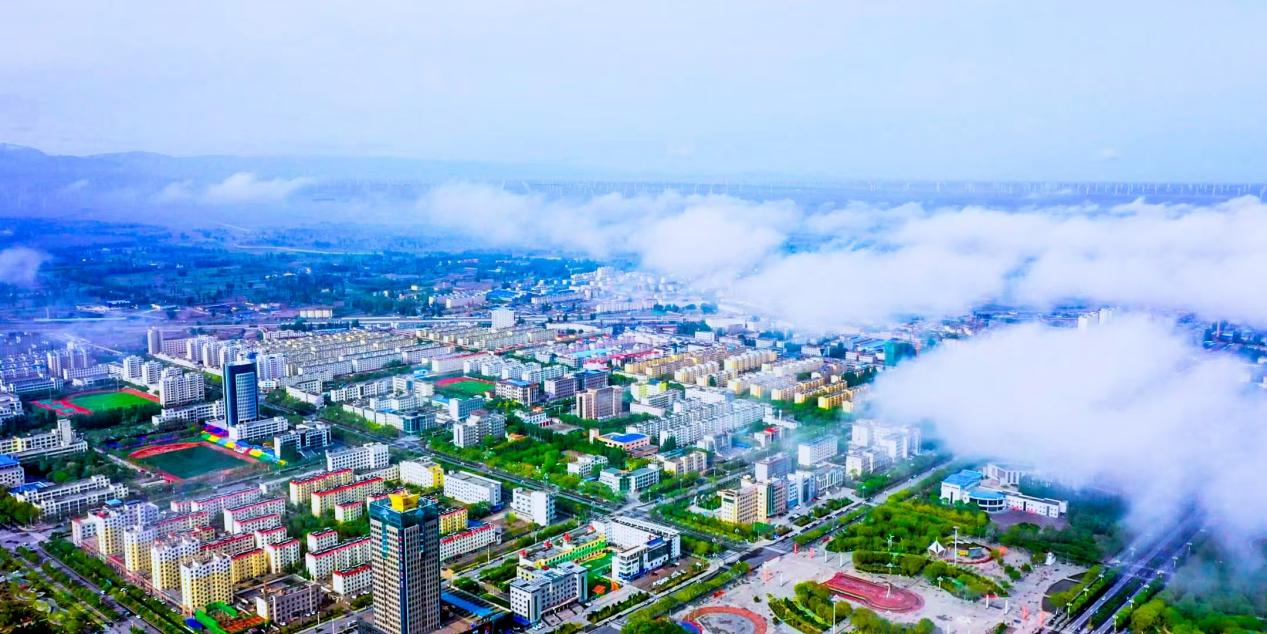
从一滴油到千度电,玉门能源转型的“铁人答卷”
Zhong Guo Fa Zhan Wang· 2025-10-11 07:17
Core Viewpoint - The article highlights the transformation of Yumen from a resource-dependent economy to a diversified energy hub, showcasing resilience and innovation in the face of challenges [1][4][9]. Group 1: Historical Context and Challenges - Yumen's economy was historically reliant on oil, leading to vulnerability when oil production declined, illustrating the risks of a single-resource economy [4]. - The city faced a critical turning point in the 1990s, prompting key decisions to relocate and diversify its economic base before resources were depleted [4][5]. Group 2: Transition and Development - Yumen has leveraged its natural wind and solar resources to become a leading site for renewable energy, establishing itself as a significant player in China's energy transition [5][7]. - By the end of 2024, Yumen's total installed power capacity is projected to reach 7.19 million kilowatts, with cumulative renewable energy generation exceeding 76 billion kilowatt-hours [5][7]. Group 3: Industry and Infrastructure - The city is developing a comprehensive energy infrastructure, including a 750 kV substation and a robust transmission network to facilitate energy distribution [7]. - Yumen has attracted nine renewable energy equipment manufacturing companies, creating a core industrial chain that supports wind, solar, and energy storage technologies [7][8]. Group 4: Broader Economic Impact - The transformation has led to a diversified industrial structure, with investments in modern chemical projects and the growth of the tertiary sector, enhancing economic resilience [8]. - Yumen has received multiple accolades, including recognition as a national garden city and an advanced ecological civilization city, reflecting its commitment to sustainable development [8].

美联储降息后,最利好的资产出现了?
大胡子说房· 2025-10-11 05:38
Core Viewpoint - The article highlights that silver has outperformed other asset classes, including gold, following the Federal Reserve's interest rate cuts, with a year-to-date increase of 48% as of mid-September, reaching a peak price of $42.96 per ounce, the highest in 14 years [1][2]. Group 1: Silver's Performance and Market Dynamics - Silver's significant price increase is attributed to its unique market characteristics, including a less developed derivatives market compared to gold, leading to higher volatility and susceptibility to market squeezes [1][2]. - The industrial demand for silver, particularly in solar panels and electric vehicles, is driving its price up, with projections indicating a substantial increase in demand due to the energy transition [2]. - The silver market has experienced a supply shortage for five consecutive years, a rare occurrence that has contributed to its price surge [2]. Group 2: Economic Context and Future Outlook - The article discusses the broader economic concerns regarding the U.S. debt-driven economy, suggesting that the real threat is not debt default but currency devaluation, drawing parallels with countries like Argentina and Turkey [3][4]. - It posits that as the global dollar-based debt system faces challenges, gold and silver may serve as alternative hard currencies, reflecting the declining real value of the dollar [4][5]. - The expectation is that if the Federal Reserve continues to lower interest rates, both gold and silver will likely see further price increases, with silver potentially rising to over $60 per ounce [2][5].

美国马里兰州打造垃圾填埋场太阳能项目,年发电量满足 1150 户家庭全年需求
Huan Qiu Wang· 2025-10-11 04:12
巴尔的摩县地处巴尔的摩市以北,是马里兰州人口密度较高的行政区之一。此次新建的太阳能发电场占 地 213 英亩,总装机容量约 7 兆瓦,由四组大型地面光伏阵列构成,共铺设约 1.5 万块光伏面板。据官 方测算,该电站预计每年可稳定发电约 820 万千瓦时,这些电量能够满足巴尔的摩县 1150 户家庭一整 年的用电需求,在保障居民用电稳定的同时,大幅减少传统能源发电带来的碳排放,为当地生态环境改 善注入动力。 从项目运营模式来看,该太阳能发电场由法国能源企业道达尔能源(TotalEnergies)投资建设并负责日 常运营,巴尔的摩县政府则通过签订长期购电协议(PPA)保障电力供应。这份协议期限为 25 年,且 预留延长至 33 年的空间,既能确保当地长期以相对稳定的低电价获取清洁能源,有效抵御未来电力市 场价格波动带来的风险,也为项目长期稳定运营提供了政策与市场双重保障。(纯钧) 来源:环球网 【环球网科技综合报道】10月11日消息,据WBOC报道,美国马里兰州巴尔的摩县近日正式启用当地首 个大型地面式太阳能发电场。该项目巧妙利用闲置的 Parkton 垃圾填埋场用地,将曾经的 "环境负担" 转 化为清洁发电的 ...


跨国赋能!中国—东盟零碳园区首训启动
中国能源报· 2025-10-11 04:06
「READING」 近日,《2025年亚太地区能源可持续发展区域趋势报告》在联合国亚太经社会"亚太能源周"上发 布。报告围绕可持续发展目标7(SDG7)落实情况,从电力可及性、用于烹饪的清洁燃料和技术、 可再生能源占比、能源利用效率等维度,系统分析了地区能源转型进展、挑战及路径,提出针对性 转型建议。 报告指出亚太地区作是全球能源消耗最大的区域,化石能源(包括石油、天然气和煤炭)占比仍高 达85%,该区域也是全球碳排放的主要来源(占到了60%),碳排放强度(carbon intensity)高于 其他区域,也正深刻影响着全球气候治理进程。 报告原文 ESCAP 2025 Transforming energy systems low carbon future AP 在10月即将举办的首届中国-东盟绿色能源转型与零碳园区能力建设培训中,这些议题都将通过讲 师授课、互动交流和实地参访等形式逐一展开。通过五天的共同学习,链接与东盟各国的长期合 作。 扫码报名 议程海报 图 图 前景展 TENI Capacity-building Training on China-ASEAN Green Energy Trans ...

“先手大棋”布局“绿能”完整生态
Jie Fang Ri Bao· 2025-10-11 01:08
Core Viewpoint - Shanghai is actively developing a green methanol supply chain, establishing a complete "production-transportation-refueling" loop, positioning itself as a key player in the global green shipping value chain [1][5]. Group 1: Green Methanol Development - The International Maritime Organization is set to review a legally binding net-zero emissions framework for the shipping industry, aiming for net-zero emissions by 2050, which will significantly increase the demand for clean energy like green methanol [1]. - Shanghai's first local green methanol project is expected to be operational by the end of this year, addressing livestock waste and wet waste management while enhancing green fuel refueling services at Shanghai Port [1][5]. - The project aims to produce 100,000 tons of green methanol annually, contributing significantly to Shanghai's international shipping center development [5]. Group 2: Waste-to-Energy Innovations - The project utilizes livestock waste to produce biogas through anaerobic fermentation, which is then purified into pipeline-quality biogas, reducing carbon dioxide emissions by over 1,000 tons [2][3]. - The biogas production process also supports microalgae cultivation, which can yield several tons annually for use in animal feed and health products [2][3]. Group 3: Strategic Positioning in Global Market - Green methanol is becoming a mainstream alternative energy source in the shipping industry, with the International Maritime Organization requiring a 20% reduction in carbon emissions by 2030 compared to 2008 levels [4]. - Shanghai Port is one of the few ports capable of refueling with green methanol, positioning itself advantageously in the competitive international shipping market [4][5]. - The integration of local production and external projects, such as the one in Jilin Province, will enhance Shanghai's capacity to meet future green methanol demands [5][6]. Group 4: Technological Advancements and Future Goals - Shanghai aims to achieve a "dual hundred" goal by 2030, with liquefied natural gas refueling capacity reaching 1 million cubic meters and green methanol refueling capacity reaching 1 million tons [6]. - The city is exploring multiple technological routes for green fuel development, including electric synthetic fuels and carbon capture utilization [7]. - By 2050, China is projected to account for 40% of global investment in biogas, with a production potential of 135 billion cubic meters, enhancing national energy security [7]. Group 5: Sustainable Urban Development - Shanghai is constructing a complete ecosystem of "waste resources-biological energy-green fuel-low-carbon shipping," providing a model for sustainable urban development [8].
宁德时代与马士基签署全球战略合作备忘录
Zheng Quan Ri Bao Zhi Sheng· 2025-10-10 16:09
Core Viewpoint - CATL and A.P. Moller-Maersk have signed a global strategic cooperation memorandum to enhance low-carbon transformation in global supply chains and improve CATL's supply chain management efficiency [1] Group 1: Strategic Cooperation - The partnership aims to explore resilient and scalable supply chain management models, with Maersk customizing logistics solutions for CATL to enhance overall supply chain efficiency [1] - Both companies will work together to electrify key supply chain segments, including Maersk's container fleet, port ecosystems, inland transportation, and warehousing [1] Group 2: Industry Impact - The collaboration signifies a new phase in the decarbonization process of global shipping and logistics, as highlighted by industry experts [1] - CATL's recent initiatives in the shipping sector include partnerships with major port groups and the launch of China's first pure electric passenger ship, demonstrating the feasibility of electric technology in coastal navigation [1] Group 3: Market Trends - As the demand for green transformation in shipping logistics grows, leading lithium battery companies like CATL are expected to play a more significant role in this transition [2]

卢拉现身比亚迪工厂仪式,“感谢中企带来全球汽车产业中最重要的技术”
Guan Cha Zhe Wang· 2025-10-10 13:23
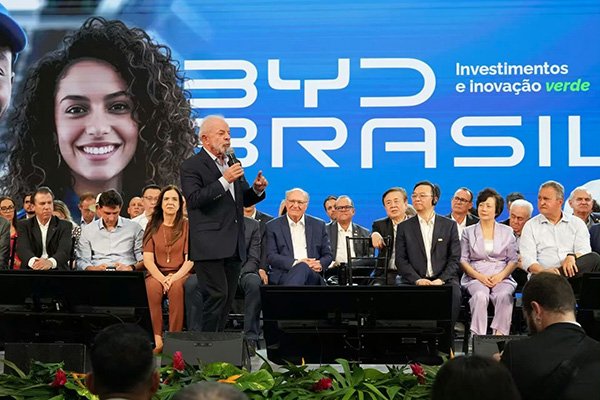
Core Insights - BYD has inaugurated its largest electric vehicle factory outside Asia in Brazil, marking a significant step in its global expansion strategy [1][3] - Brazilian President Lula emphasized the importance of strengthening ties with China and highlighted the factory's role in showcasing Brazil's development blueprint [1][3] - The factory, located in Camaçari, Bahia, represents a total investment of 5.5 billion Brazilian Reais (approximately 7.283 billion RMB) and aims to produce 150,000 vehicles annually in its initial phase [3][4] Company Developments - The factory's opening coincided with the production of BYD's 14 millionth new energy vehicle, with Lula becoming the owner of the first vehicle produced [3] - The initial production capacity is set at 150,000 vehicles per year, with plans to double this to 300,000 in the second phase [3] - The factory is expected to create over 20,000 direct and indirect jobs, contributing to local economic development [3][4] Product Innovations - BYD introduced a limited edition Song Pro COP30 model, featuring the world's first plug-in hybrid flexible fuel engine, specifically designed for Brazil's sugarcane ethanol market [4] - The company plans to continue investing in Brazil, aiming to establish a strong local brand presence and contribute to sustainable transportation solutions [4][6] Market Position - Since entering the Brazilian passenger car market in 2022, BYD has sold over 170,000 electric and hybrid vehicles, achieving a market share of 74.4% in the electric vehicle segment [6] - BYD's sales have propelled it to the seventh position in the overall Brazilian automotive market, surpassing traditional brands like Honda [6] - The company aims to localize 70% of its parts procurement by 2028 and establish R&D and testing centers in Brazil, aligning with the Brazilian government's industrial and environmental goals [6][8] Industry Context - Brazil has become the largest importer of Chinese-manufactured vehicles and is positioned to develop as a regional production hub for automotive manufacturing [7] - Other Chinese brands, such as Great Wall Motors and Chery, are also rapidly expanding in the Brazilian market, indicating a growing trend of Chinese automotive innovation reshaping consumer perceptions [7]

电力约束叠加供需失衡,铝会是下一个铜吗?
Hua Er Jie Jian Wen· 2025-10-10 12:44
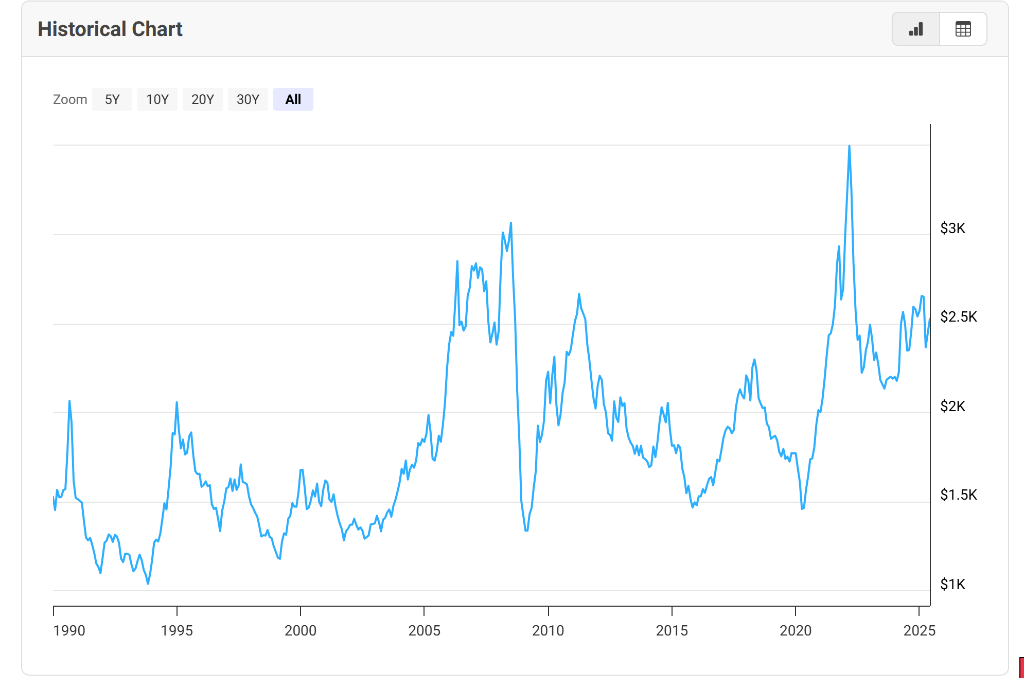
但这一格局即将改变。花旗分析师预计,全球原铝供应过剩将在2026年快速收窄,2027年起出现约140万吨缺口。Wood Mackenzie预期供应短缺将 从2028年开始,持续约五年。而中国作为全球最大的铝生产和消费国,正接近年产能上限4500万吨。 电力约束成为供应瓶颈 长期被铜等工业金属光芒掩盖的铝,正因一场潜在的供需结构性转变而站上舞台中央。 据花旗分析师预测,全球原铝供应过剩局面将在2026年迅速缩窄,并从2027年开始出现约140万吨的供应缺口,占原铝消费总量的2%。 与此同时,电动汽车、太阳能发电和数据中心等快速增长的行业正推动铝需求激增。据Wood Mackenzie数据,电动汽车是能源转型中铝需求的最 大来源,每辆电动车平均比燃油车多使用约150磅铝材。而铝冶炼的高耗电特性使新建产能面临挑战。 供需格局迎来历史性拐点 市场估值显示铝仍被低估。WisdomTree的铝ETF管理资产不足4000万美元,而其铜产品管理资产超过10亿美元。Alcoa等铝业公司股价仅为未来12 个月预期收益的13倍以下,远低于Glencore等铜业公司近30倍的估值水平。 铝市场正经历根本性转变。过去二十年来,铝价累计 ...
崧盛股份:公司将积极把握行业机遇,提升储能业务销售占比
Zheng Quan Ri Bao Zhi Sheng· 2025-10-10 12:07
Core Viewpoint - The company is focused on providing core components for energy storage, such as inverters and converters, and aims to enhance its sales proportion in the energy storage business to support global energy transition and sustainable development [1] Company Strategy - The company is committed to delivering efficient and intelligent energy storage solutions to global customers [1] - The company plans to actively seize industry opportunities to increase the sales share of its energy storage business [1]
IMARC 2025全球矿业盛会本月将于悉尼盛大启幕 五大洲部长级阵容齐聚 聚焦能源转型与投资新机遇 悉尼公寓周租金中位数创新高
Sou Hu Cai Jing· 2025-10-10 11:42
Core Viewpoint - The IMARC 2025 conference, set to take place in Sydney from October 21 to 23, 2025, will redefine global mining dynamics and cooperation trends, focusing on energy transition and investment opportunities in the context of a reshaped supply chain [1][27]. Group 1: Conference Overview - IMARC 2025 is expected to attract over 10,000 participants from more than 120 countries, marking a record scale and international influence for the event [3]. - The conference will feature high-profile speakers, including New South Wales Premier Chris Minns and Australian Federal Ministers, who will discuss Australia's strategic position in critical minerals and clean energy [5][6]. Group 2: Global Participation - Ministers from five continents, including representatives from Saudi Arabia, New Zealand, and Peru, will engage in discussions on supply chain security and energy transition [12][13]. - The conference will also showcase national pavilions from various countries, highlighting key mineral projects and investment opportunities [13]. Group 3: Innovation and Technology - IMARC 2025 will emphasize the application of digitalization, AI, automation, and low-carbon technologies in mining, with a new "Innovation & Investment Alley" to showcase breakthrough solutions [17]. - Notable projects expected to be presented include lunar exploration initiatives and next-generation electric mining vehicles [17]. Group 4: Investment Opportunities - The Investor Program will facilitate discussions on capital restructuring in critical mineral supply chains and the impact of electric vehicles and energy storage on mining investments [24]. - A new "Investor Concierge Service" will provide tailored matchmaking to enhance capital and project connections [24]. Group 5: Australia-China Cooperation - The conference is seen as a pivotal platform for deepening Australia-China cooperation in resource development and green technology, with both countries having complementary strengths in critical minerals and renewable energy [26]. - Australia's "Future Made in Australia" initiative aims to establish a localized critical mineral processing and green manufacturing system, enhancing energy security and regional development [26].