
多边主义

Search documents
(国际观察)第三届联合国海洋大会直面艰巨挑战
Zhong Guo Xin Wen Wang· 2025-06-10 08:23
Core Points - The third United Nations Ocean Conference commenced on June 9 in Nice, France, focusing on promoting ocean protection and the implementation of Sustainable Development Goal 14 [1][3] - A key objective of the conference is to push for the ratification of the agreement on the conservation and sustainable use of marine biodiversity in areas beyond national jurisdiction, which requires approval from 60 countries to become binding international law [3][5] - The conference highlights the urgent need for funding to support Sustainable Development Goal 14, which is currently one of the least funded goals [5][7] Group 1 - The conference agenda includes discussions on the challenges facing ocean protection, emphasizing the relationship between climate action, ocean health, and biodiversity loss [3][4] - French President Macron and other leaders stressed the importance of basing discussions on scientific evidence rather than subjective opinions, expressing strong support for marine research [3][4] - The U.S. National Oceanic and Atmospheric Administration has faced significant cuts under the previous administration, raising concerns about the impact on marine research and multilateral cooperation [4] Group 2 - The conference includes a Blue Economy and Finance Forum aimed at addressing financing for ocean protection, with discussions on raising funds through financial institutions, private investments, and blue bonds [7][8] - The final declaration, known as the "Nice Ocean Action Plan," will address key issues such as funding, fishing practices, and deep-sea exploration [8] - The international community is urged to unite in addressing these challenges to restore the vibrant and diverse oceans of the past, as highlighted by UN Secretary-General Guterres [8]

习近平同韩国总统李在明通电话
21世纪经济报道· 2025-06-10 04:12
Core Viewpoint - The conversation between Chinese President Xi Jinping and South Korean President Lee Jae-myung emphasizes the importance of a stable and cooperative China-South Korea relationship, which is beneficial for both nations and contributes to regional and global stability [1][2]. Group 1: Bilateral Relations - Xi Jinping congratulated Lee Jae-myung on his presidential election and highlighted the long-standing relationship between China and South Korea, which has thrived despite ideological and social differences over the past 33 years [1]. - Both leaders agreed on the necessity of maintaining a friendly and mutually beneficial relationship, aiming to elevate the strategic partnership to a higher level for the welfare of their peoples [1][2]. Group 2: Cooperation and Development - The leaders discussed enhancing exchanges at various levels and fields to build strategic trust and deepen bilateral cooperation [1]. - They emphasized the importance of multilateral coordination to uphold multilateralism and free trade, ensuring the stability of global and regional supply chains [1]. Group 3: Cultural and Human Exchange - There is a call for deepening cultural exchanges to foster mutual understanding and solidify public support for the friendship between the two nations [1]. - Respect for each other's core interests and major concerns was highlighted as essential for maintaining the correct trajectory of bilateral relations [1].

习近平同韩国总统李在明通电话
财联社· 2025-06-10 03:48
6月10日上午,国家主席习近平同韩国总统李在明通电话。 习近平再次祝贺李在明当选总统。习近平指出,中韩是搬不走的近邻。建交33年来,两国超越意识 形态和社会制度差异,积极推进各领域交流合作,实现相互成就和共同发展。一个健康稳定、持续 深化的中韩关系,顺应时代发展潮流,符合两国人民根本利益,也有利于地区乃至世界和平稳定和 发展繁荣。 习近平强调,中韩应坚守建交初心,坚定睦邻友好方向,坚持互利共赢目标,推动中韩战略合作伙 伴关系向更高水平迈进,为两国人民带来更多福祉,为变乱交织的地区和国际形势注入更多确定 性。要加强各层级各领域交流,增进战略互信;要密切双边合作和多边协调,共同维护多边主义和 自由贸易,确保全球和地区产业链供应链稳定畅通;要深化人文交流,加深相互理解,夯实民意基 础,让中韩友好在两国人民心中扎根;要尊重彼此核心利益和重大关切,把牢双边关系大方向,确 保中韩关系始终沿着正确轨道向前发展。 李在明对此表示赞同,表示韩中地理相近,交往历史悠久,经贸、文化联系密切。在习近平主席卓 越领导下,中国取得伟大发展成就,令人钦佩。我高度重视韩中关系,愿同中方一道,推动双边睦 邻友好关系深入发展,改善和增进两国人民 ...

外交部副部长马朝旭会见亚太经合组织秘书处执行主任佩德罗萨
news flash· 2025-06-09 14:57
Core Viewpoint - The meeting between China's Vice Foreign Minister Ma Zhaoxu and APEC Executive Director Pedrosa emphasizes the importance of multilateralism and open economies in the face of rising unilateralism and protectionism, with a focus on advancing APEC's role in regional cooperation and economic growth [1] Group 1 - Ma Zhaoxu congratulated Pedrosa on his new role and highlighted APEC's significance as the most influential economic cooperation mechanism in the Asia-Pacific region [1] - The discussion included the promotion of the Asia-Pacific Free Trade Area and collaboration in emerging fields such as digital economy and artificial intelligence to boost economic growth [1] - China expressed its commitment to APEC and its support for the APEC Secretariat, aiming to leverage its role as the host of the 2026 APEC meeting to enhance regional cooperation [1] Group 2 - Pedrosa acknowledged China's contributions to APEC cooperation and expressed the Secretariat's support for China's successful hosting of the 2026 APEC meeting [1] - The meeting aimed to foster more achievements in regional cooperation and promote prosperity in the Asia-Pacific region [1]
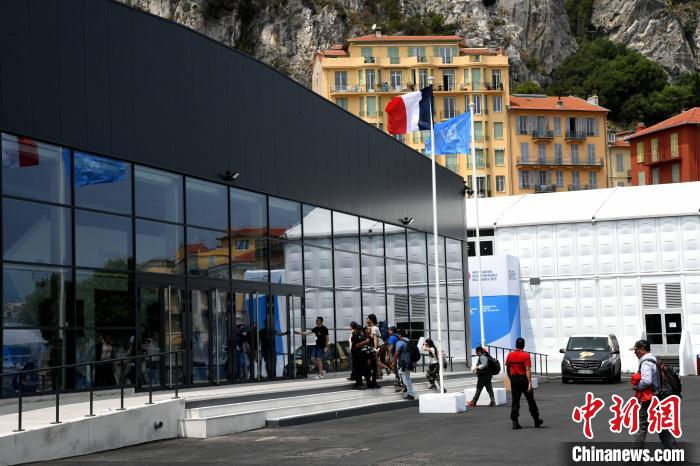
第三届联合国海洋大会在法国尼斯开幕
Xin Hua She· 2025-06-09 13:09
Core Points - The third United Nations Ocean Conference, co-hosted by France and Costa Rica, opened on June 9 in Nice, France, focusing on global ocean governance [1][2] - The conference aims to accelerate actions and mobilize all stakeholders to protect and sustainably use the oceans, guided by the United Nations Sustainable Development Goal 14 (SDG14) [1] - Key priorities of the conference include enhancing multilateral processes related to oceans, funding for SDG14, and strengthening ocean science knowledge for better policy-making [1] Event Details - The conference will last for five days and feature 10 plenary meetings and 10 thematic forums on ocean action [2] - A concise, action-oriented declaration known as the "Nice Ocean Action Plan" will be adopted through consensus [2] - The first UN Ocean Conference was held in 2017 in New York, co-hosted by Fiji and Sweden, while the second took place in 2022 in Lisbon, co-hosted by Portugal and Kenya [2]
渣打高恕年:中国-东盟自贸区3.0版发出倡导贸易开放“最强音”
Xin Hua Cai Jing· 2025-06-09 08:29
Core Viewpoint - The completion of the China-ASEAN Free Trade Area 3.0 negotiations is timely and sends a strong message advocating for multilateralism and trade openness, which will accelerate the development of the China-ASEAN trade corridor and create a multiplier effect for global growth [1][2]. Group 1: Trade Relations and Economic Cooperation - China and ASEAN have become each other's largest trading partners, with trade volumes continuing to grow. The completion of the Free Trade Area 3.0 negotiations signals a commitment to multilateralism and open trade amidst global protectionism [2][3]. - The 3.0 version of the Free Trade Area includes key areas such as digital economy, green economy, and supply chain resilience, making it more modern and forward-looking. Its implementation will enhance cooperation in various sectors, including digital economy, artificial intelligence, e-commerce, and smart manufacturing [2][3]. Group 2: Investment Trends and Strategies - Chinese enterprises are expected to continue investing in ASEAN, particularly those focusing on local market development rather than solely on exports to the U.S. The investment trend remains strong despite uncertainties in U.S. tariff policies [4][6]. - The "China +1" strategy has evolved into a "2.0 version," where Chinese companies are increasingly establishing complete supply chains overseas, indicating a deeper understanding of local markets and partnerships [4][6]. Group 3: Market Potential and Future Outlook - The ASEAN market presents significant long-term investment opportunities due to its political stability, a rapidly growing young population, and a large consumer market. The rise of the middle class in Southeast Asia will create more consumption and investment opportunities for various enterprises, including Chinese firms [6][7]. - Investment from China to ASEAN is projected to grow, with a reported increase of 12.6% year-on-year, primarily directed towards countries like Singapore, Indonesia, and Thailand, and focusing on sectors such as leasing, business services, and manufacturing [7].
为构建更加公正、合理、包容的全球治理体系贡献力量(国际论坛·弘扬“上海精神”:上合组织在行动)
Ren Min Ri Bao· 2025-06-09 02:06
在中国担任轮值主席国期间,上海合作组织将继续践行"上海精神",在复杂多变的国际环境中维护地区 安全稳定,为构建更加公正、合理、包容的全球治理体系贡献力量 当前,全球地缘政治形势深刻变革,各类挑战层出不穷,世界和平与发展需要各国通力合作,形成增强 稳定性和确定性的力量。作为亚欧地区重要的多边合作平台,上海合作组织成员国覆盖全球近一半的人 口,经济总量约占全球1/4。中国作为上海合作组织的创始成员国之一,提出了全球发展倡议、全球安 全倡议和全球文明倡议,这与互信、互利、平等、协商、尊重多样文明、谋求共同发展的"上海精神"高 度契合。 中国为上海合作组织国家加强经济合作提供了重要机遇,不断为这一多边平台注入新的活力。中国坚持 互信互利、尊重多样性等理念,通过推动共建"一带一路",推动成员国对接发展规划,推动基础设施项 目建设,为加强区域互联互通提供了助力。中巴经济走廊经过10多年发展,取得重要成果。走廊将巴基 斯坦同中国的长期友好关系,进一步拓展为两国在硬件设施、贸易往来和民众交往等各领域的密切合 作。不久前,中吉乌铁路项目正式启动,该项目将帮助中亚"陆锁国"发展成为亚欧国际贸易枢纽。自 2018年中国宣布支持建设 ...
日本计划牺牲中国利益,换换取美国关税让步
Sou Hu Cai Jing· 2025-06-08 03:03
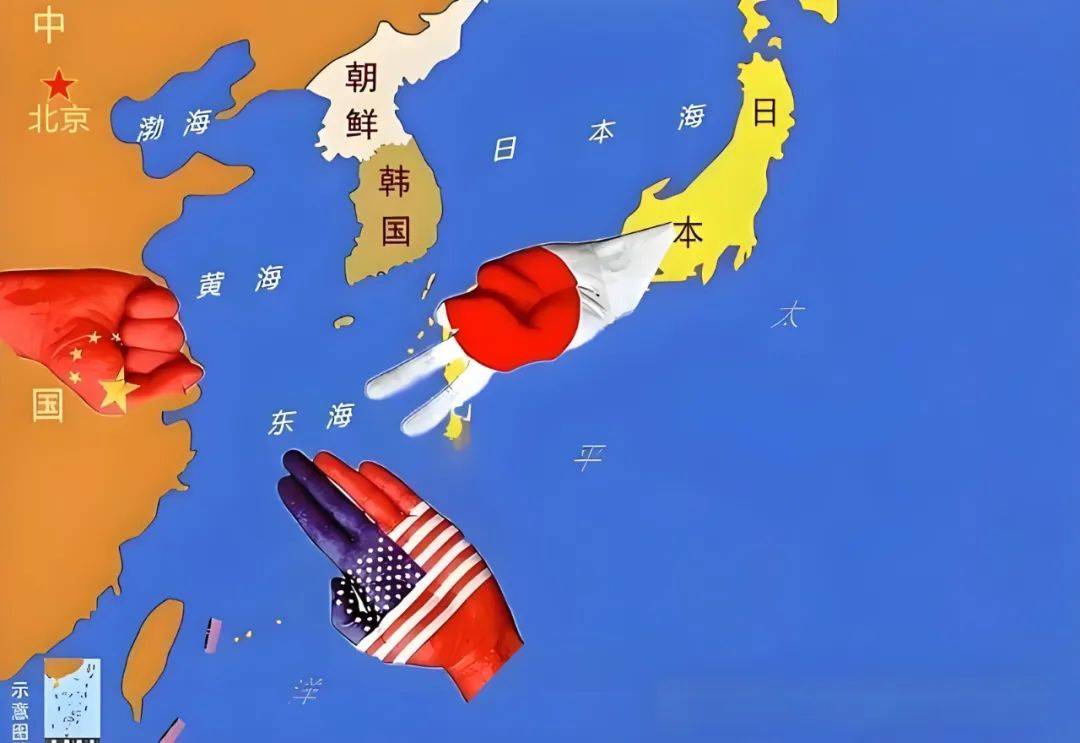
Group 1 - Japan's chief trade negotiator, Akizawa Ryo, is in the U.S. for the fifth round of U.S.-Japan tariff negotiations, proposing a targeted cooperation plan focused on rare earths and liquefied natural gas supply chains disrupted by the U.S.-China trade war [1][2] - Japan aims to leverage its advantages in rare earth processing and recycling technologies to support the U.S. in mitigating the impact of China's countermeasures in critical minerals [2][4] - The proposed cooperation includes expanding imports of U.S. semiconductor products and liquefied natural gas, as well as potential collaboration in shipbuilding and semiconductor material production [2][4] Group 2 - Japan's strategy is driven by a significant trade deficit with the U.S. and a desire to counterbalance China's rise, seeking U.S. concessions on tariffs through cooperation against China [4][5] - The U.S. has conflicting demands, urging Japan to decouple from China in key sectors while being reluctant to offer concessions, reflecting deeper strategic contradictions in U.S.-China relations [4][5] - Japan's reliance on China for 40% of its automotive and electronics supply chains poses risks, as forced decoupling could increase costs and exacerbate resource security issues [7][5] Group 3 - Japan's approach of sacrificing relations with China for U.S. benefits may backfire, as the U.S. has a history of double standards regarding its allies' economic interests [7][5] - China's firm stance against any deals that compromise its interests, along with its significant trade relationship with Japan, provides it with leverage in this negotiation [5][7] - The broader geopolitical landscape suggests that countries maintaining multilateralism and global supply chain stability will emerge as winners, while Japan risks becoming strategically isolated [7][5]
王毅同法国外长巴罗通电话
news flash· 2025-06-06 14:38
王毅说,中法都具有独立自主传统,应增强战略互信,尊重彼此核心利益。台湾问题是中国内政,事关 中国国家主权和领土完整,同乌克兰问题存在本质区别。中方重视法方奉行一个中国政策的承诺,相信 法方会将这一承诺落到实处。希望法方坚持正确立场,反对北约插手亚太事务。 王毅还强调,中法应共同坚持多边主义,维护自由贸易,反对单边霸凌行径。 王毅同法国外长巴罗通电话 2025年6月6日,中共中央政治局委员、外交部长王毅应约同法国外长巴罗通电话。 王毅表示,习近平主席同马克龙总统最近举行通话,就中法加强战略协作达成重要共识。双方应筹备好 下阶段各层级交往,欢迎法方派高级别代表出席上海2025世界人工智能大会。双方已通过对话协商达成 解决经贸问题共识,还应加强人文教育交流,推动中法全面战略伙伴关系和中欧关系健康发展。 巴罗欢迎韩正副主席赴法出席联合国海洋大会,表示当今世界不确定性增多,法中关系重要性更加凸 显。法方始终视中方为朋友伙伴,坚定奉行一个中国政策,期待同中方保持高层交往,密切战略沟通。 双方加强人文交流,将发出强有力的开放信号,在当前具有重要意义。法方反对打贸易战、关税战,愿 继续通过磋商妥善解决经贸摩擦问题。 双方还就 ...
商务部:中方愿不断扩大南亚国家朋友圈
news flash· 2025-06-06 02:49
就接下来在扩大中国与南亚国家经贸合作方面有哪些考虑,商务部副部长鄢东在国新办新闻发布会上表 示,要发挥企业主体作用。在中国—南亚国家经贸合作蓬勃发展中,工商界是重要的参与者、推动者、 实践者。中方愿加强与南亚各国重要商协会、贸易投资促进机构的广泛联系,开展贸易投资促进活动, 不断扩大南亚国家朋友圈,为企业家朋友搭建交流信息、创新合作的平台,继续鼓励和支持中国企业赴 南亚国家考察对接,挖掘双方经贸合作潜力,共同将合作愿景转换为具体行动。要共同坚持多边主义。 要践行真正的多边主义,共同反对单边主义、保护主义,维护以世贸组织为核心的多边贸易体制。共同 倡导平等有序的世界多极化和普惠包容的经济全球化,为世界发展注入更多的稳定性和确定性。(人民 财讯) ...