
两山理念

Search documents
蜀山秀水间的生态价值转化之道
Si Chuan Ri Bao· 2025-08-24 22:15
Core Viewpoint - The article emphasizes the successful implementation of the "Two Mountains" concept in Sichuan, showcasing a model that balances ecological protection with economic development, contributing to the construction of a beautiful China through local and global significance [1][8]. Group 1: Ecological Protection and Development - Sichuan has made significant strides in ecological reconstruction and protection, establishing itself as a key ecological barrier for the Yangtze and Yellow Rivers, with 14.80 million square kilometers designated as ecological protection red lines [2]. - The province has maintained water quality at Class II or above for eight consecutive years, demonstrating its commitment to ecological safety [2]. Group 2: Clean Energy Development - Sichuan is recognized as a national clean energy demonstration province, with a clean energy installed capacity of 130 million kilowatts, accounting for 88% of its total capacity, leading the nation in power generation [3]. - The establishment of the Yalong River basin as a comprehensive renewable energy demonstration base is set to create the world's largest green clean energy hub [3]. Group 3: Urban Development and Green Spaces - Chengdu, as the first park city demonstration area, has integrated the "Two Mountains" concept into urban planning, creating over 1,500 parks and achieving a forest coverage rate of 40.5% [4]. - The city has implemented innovative urban development strategies, enhancing ecological, cultural, and economic values through a park system [4]. Group 4: Green Prosperity in Ethnic Regions - Sichuan's ethnic regions are exploring sustainable development paths that integrate ecological protection with economic benefits, exemplified by projects like the "Photovoltaic + Assistance" model [5][6]. - The region has successfully created brands that enhance the value of local agricultural products, contributing to community wealth [5]. Group 5: Market Mechanisms for Ecological Value - The province has established a market mechanism for ecological product value realization, transitioning ecological resources from "priceless" to "valuable" through market-oriented reforms [6]. - Initiatives include the establishment of a 30 billion yuan green low-carbon industry fund and the first carbon-neutral green medium-term notes at the county level [6]. Group 6: Technological Innovation in Ecological Governance - Sichuan has developed a comprehensive technology-driven system for ecological governance, utilizing digital tools for resource management and monitoring [7]. - The implementation of advanced monitoring systems in the Giant Panda National Park exemplifies the integration of technology in ecological protection [7]. Group 7: Promotion of New Productive Forces - The province is fostering a modern industrial system focused on green low-carbon development, with initiatives in traditional industry transformation and the promotion of emerging sectors [8]. - Sichuan's efforts in green finance and talent development are aimed at enhancing the province's capacity for sustainable growth [8].
引领全球绿色变革的强大力量
Si Chuan Ri Bao· 2025-08-24 22:15
Core Viewpoint - The "Two Mountains" concept, proposed by Xi Jinping, emphasizes the harmonious relationship between economic development and ecological protection, serving as a guiding principle for sustainable development in China and offering insights for global ecological governance [1][2][3]. Theoretical Value - The "Two Mountains" concept creatively integrates Marxist principles with China's specific realities and traditional culture, establishing a path for modern development that harmonizes humanity and nature [3][4]. - It challenges traditional views by recognizing ecological resources as productive forces, highlighting the economic and social value of ecological protection [4][5]. Practical Achievements - Over the past two decades, the "Two Mountains" concept has significantly influenced China's governance, leading to historic changes in ecological civilization and environmental protection [7]. - Major improvements in air and water quality have been recorded, with PM2.5 levels in key cities dropping by 56% and the proportion of good water quality sections increasing from 64.1% to 90.4% [7]. - The concept has driven a green transformation in the economy, with energy consumption intensity decreasing by over 26% since 2012 and renewable energy capacity projected to reach 56% of total power generation by 2024 [8]. Global Significance - The "Two Mountains" concept transcends national boundaries, providing innovative ideas for global sustainable development and environmental governance [10][11]. - It offers a model for developing countries facing the dilemma of growth versus protection, sharing experiences through initiatives like the Belt and Road [10]. - The concept emphasizes the need for global cooperation in addressing climate change and biodiversity loss, advocating for a community of shared future for mankind [11][12].
践行“两山”理念 促进城乡共富
Zhong Guo Qing Nian Bao· 2025-08-23 23:11
Core Viewpoint - The "Two Mountains" concept, which emphasizes the balance between ecological preservation and economic development, has evolved over the past 20 years, leading to significant changes in ecological civilization construction in China [1][2]. Understanding the Essence of the "Two Mountains" Concept - The "Two Mountains" concept is a theoretical system that critiques traditional economic growth views and narrow environmental protection perspectives, advocating for a balance between ecological and economic systems [2]. - It promotes an ecological priority approach, emphasizing that ecological systems are fundamental to human survival and development, and must not exceed ecological thresholds [2]. - The concept also supports green development, advocating for a transition to a low-carbon economy and the realization of ecological product value [2]. Practical Approaches to Implementing the "Two Mountains" Concept - The practical approach includes prioritizing ecological protection and promoting green development, emphasizing that economic systems are subsystems of ecological systems [3]. - It encourages a comprehensive governance framework for ecological protection, integrating various ecosystems and promoting a green, low-carbon economic transformation [4]. - The concept of ecological economic transformation involves converting ecological advantages into economic benefits, supported by fiscal policies like ecological compensation [5]. Youth Participation in Practicing the "Two Mountains" Concept - The youth are seen as key players in achieving the goals of a beautiful China by 2035, with their involvement crucial in ecological protection and green economic development [6]. - Young individuals are encouraged to engage in ecological governance and participate in decision-making processes related to ecological civilization [7]. - They are also urged to contribute to the development of green economy through innovation and entrepreneurship, leveraging market forces for sustainable growth [8].
绿水青山谱写大地长歌
Ren Min Ri Bao· 2025-08-23 22:42
Core Viewpoint - The article emphasizes the significance of the "Two Mountains" concept proposed by Xi Jinping, highlighting its role in promoting green development in Zhejiang over the past 20 years [1][2]. Group 1: Concept and Cultural Significance - The "Two Mountains" concept integrates ecological preservation with economic development, reflecting a harmonious relationship between humans and nature, which is a fundamental aspect of Chinese cultural philosophy [2][3]. - The exhibition "Great Earth Song" showcases the practical implementation of the "Two Mountains" concept through various artistic expressions, illustrating its cultural and ecological implications [2][4]. Group 2: Exhibition Highlights - The exhibition is divided into four main sections: "Song of Green," "Beautiful Window," "Praise of Mountains and Rivers," and "Green and Rich Road," each presenting different dimensions of the "Two Mountains" concept [2]. - "Song of Green" connects significant events in Zhejiang's development over the past two decades through various art forms, while "Beautiful Window" depicts the transformation of Huzhou from a pioneer to a model city [2][3]. Group 3: Artistic Interpretation - Artists have deepened their understanding of the "Two Mountains" concept, focusing not only on ecological landscapes but also on the cultural narratives behind them, as seen in the large-scale installation "Mountains High, People at Peak" [3][4]. - The exhibition reflects the ancient wisdom of "benevolent people love mountains, wise people love water," illustrating how the natural landscape mirrors human character and cultural values [3][4].


陈刚:坚决克服“走一步看一步”等错误认识,持续抓好涉重金属环境安全隐患排查整治
Guang Xi Ri Bao· 2025-08-23 02:07
Group 1 - The meeting emphasized the importance of addressing heavy metal environmental safety hazards and the need for comprehensive measures to ensure high-quality development in the non-ferrous metal industry, particularly in critical metals [1][2][3] - The meeting acknowledged the progress made in the region's heavy metal environmental safety inspections and remediation efforts, highlighting the significance of ecological advantages in Guangxi's development [2] - The meeting called for strict adherence to the national action plan for heavy metal environmental safety inspections from 2025 to 2030, advocating for a systematic approach to identify and rectify risks [3] Group 2 - The meeting outlined the necessity for financial support for the non-ferrous metal industry and emphasized the importance of enhancing cooperation with ASEAN in mining [3] - The meeting discussed the need for a comprehensive plan for the high-quality development of critical metals in Nandan and a five-year plan for the non-ferrous metal industry in Guangxi [3] - The meeting highlighted the importance of addressing the challenges posed by heavy metal pollution and the need for a coordinated approach across the region [2][3]
以水为媒 让绿生金——各地“两山”理念水利实践观察
Xin Hua Wang· 2025-08-23 00:01
Core Viewpoint - The article discusses the implementation of the "Two Mountains" concept, emphasizing the integration of ecological protection and economic development through water resource management and innovative practices in various regions of China [1]. Group 1: Water Quality Improvement Initiatives - The Biaomen River in Guangzhou has improved from Class IV to Class III water quality in 2023 due to comprehensive governance measures, including source management and sewage separation [2]. - The Ministry of Water Resources has selected 122 rivers and lakes nationwide for "Happy River and Lake" construction projects to promote high-quality economic and social development [2]. Group 2: Institutional Framework and Cooperation - The establishment of a river and lake chief system in the Xin'an River basin has fostered cooperation between Zhejiang and Anhui provinces, leading to a comprehensive ecological governance system [3]. - A total investment of 650 million yuan is planned for ecological projects in the Xin'an River area, focusing on watershed management and soil erosion control [3]. Group 3: Financial Innovations and Economic Development - The "Green Electricity Loan" financial product in Zhejiang has enabled small hydropower stations to secure 1 billion yuan in bank credit by quantifying ecological values [4]. - In Jiangxi, a collaborative governance mechanism has led to the establishment of a 1,700-acre facility vegetable base, creating over 300 jobs while maintaining Class II water quality [4]. Group 4: Ecological Product Value Realization - The transaction of ecological product value in Chongqing's Yangliutang watershed amounted to 85.58 million yuan, with part of the proceeds reinvested into ecological conservation efforts [5]. - The government report for 2025 emphasizes the need to enhance mechanisms for ecological protection compensation and the realization of ecological product values [6]. Group 5: Future Directions - The Ministry of Water Resources advocates for a government-led, market-oriented approach to establish a water ecological product value accounting system and improve the distribution of ecological product revenues [7].
浙江万千乡村铺展“共富共美”画卷(活力中国调研行)
Ren Min Wang· 2025-08-22 22:14
Core Viewpoint - The article emphasizes the successful implementation of the "Two Mountains" theory in Zhejiang Province, which promotes ecological conservation and economic development, leading to a model of "common prosperity and beauty" in rural areas [2][8]. Group 1: Ecological Improvement and Economic Development - The transformation of rural areas, such as Luli Keng Village, showcases how ecological restoration and tourism can create job opportunities and increase collective income, with Luli Keng generating over 6 million yuan in collective revenue [3][4]. - In Wuyi County, the implementation of environmental restoration projects has significantly improved the local ecosystem, attracting over 200,000 tourists annually and generating substantial revenue from eco-tourism [4]. - The development of green industries, such as tea cultivation in Jing Shan Village, has led to high-value products, with premium tea selling for up to 8,000 yuan per kilogram, contributing to a collective income of 887 million yuan in 2024 [5][6]. Group 2: Community Collaboration and Shared Prosperity - The establishment of "common prosperity workshops" in Qingtian County has unified local resources, leading to increased production and sales of local products, generating around 10 million yuan in output and improving individual incomes by 12,000 yuan [8]. - Collaborative efforts among villages, such as the alliance formed by Meilin Village and surrounding areas, have enhanced resource sharing and competitiveness in the cultural tourism sector, attracting more visitors to the region [9]. - The ongoing initiative to create 10,000 "common prosperity workshops" aims to cover all mountainous counties and towns, with 107 workshops already established, providing employment for nearly 8,000 people [8].
通讯丨与山地生灵和谐共生的绿色风电——中企项目践行“两山”理念助力波黑发展
Xin Hua She· 2025-08-21 09:25
Group 1 - The core viewpoint of the articles highlights the successful implementation of the Ivovik Wind Power Project in Bosnia and Herzegovina, showcasing China's commitment to green energy and sustainable development [1][2][4] - The Ivovik Wind Power Project, with a capacity of 84 megawatts, is set to be the largest renewable energy project in Bosnia, generating 259 million kilowatt-hours annually and reducing carbon emissions by approximately 240,000 tons each year [1][2] - The project is recognized as the first energy project in Bosnia constructed through a concession model by Chinese enterprises, reflecting China's strategic investment in the region [2][4] Group 2 - The project faced significant construction challenges due to Bosnia's rugged terrain, including a prolonged snow season and difficult transportation logistics, yet it was completed in just over two years [2][3] - Advanced Chinese technology was utilized in the project, including new generation power control systems and smart operation and maintenance systems, contributing to efficient energy production and grid stability [2][3] - The project has been positively received by local authorities, contributing to job creation and local fiscal revenue, with 2.5% of annual electricity revenue directed to local finances [5][4] Group 3 - The Ivovik Wind Power Project emphasizes ecological preservation, implementing measures to protect local wildlife, including the habitat of wild horses, and minimizing environmental disruption during construction [3][4] - Community engagement initiatives have been established, including educational programs and environmental activities, fostering a connection between the project and local residents [3][5] - The project aligns with Bosnia's goals for energy transition and carbon emission reduction, providing a model for sustainable development in the Balkans based on China's "Two Mountains" philosophy [5][4]
乌海能源:践行“两山”理念 之矿区“绿”变
Zhong Guo Neng Yuan Wang· 2025-08-21 09:05
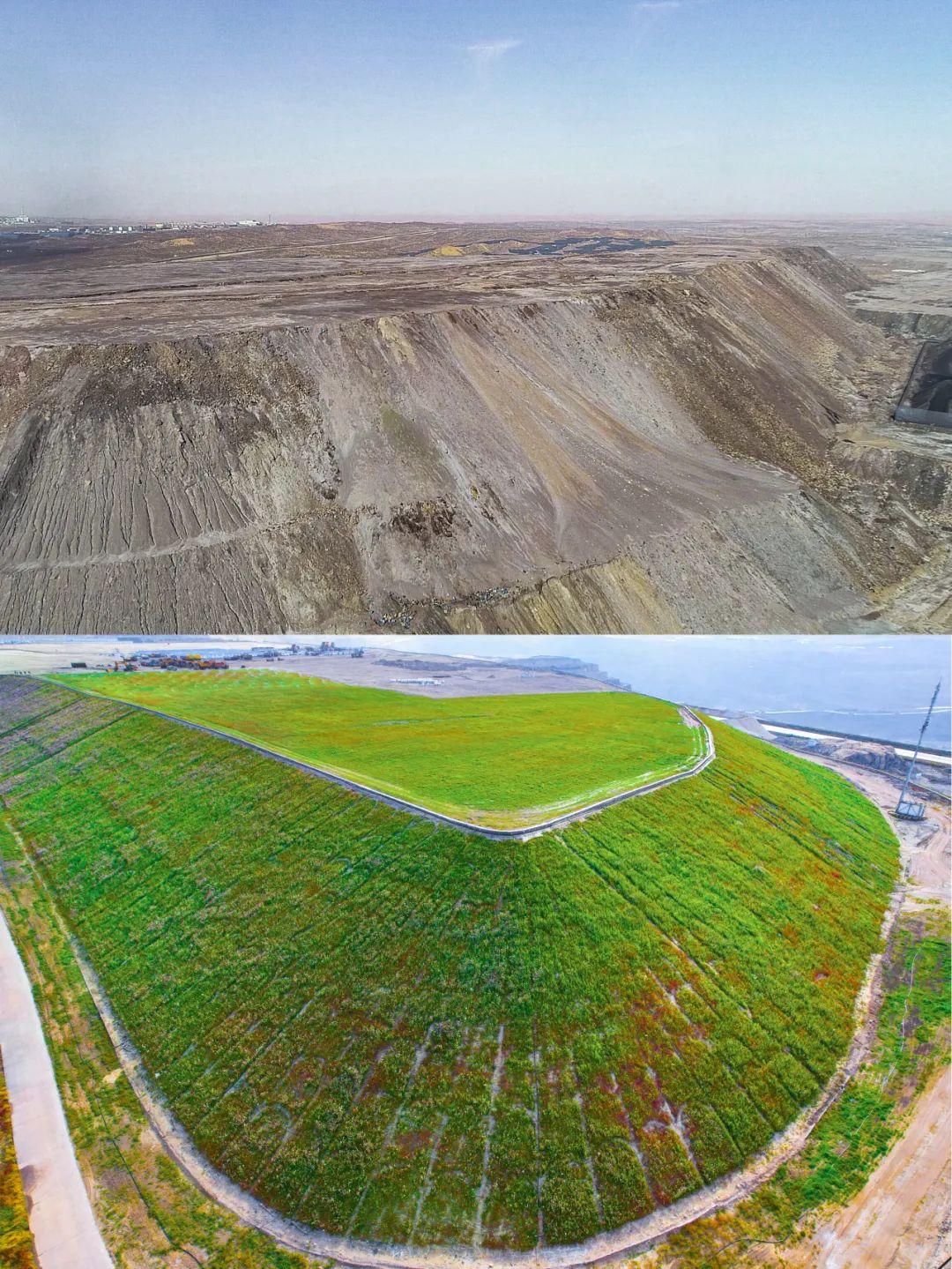
从践行"两山"理念看矿区蝶变,昔日黑黢黢的矿山,如今已披上绿衣裳。乌海能源以 "绿水青山就是金山银山" 理念为指引,在矸石 山上播撒草籽、种下 "太阳",让割煤机轰鸣的地方生长出蓬勃希望。镜头之中,昔日采空区、排土场已蝶变成生态公园,每一抹新绿都 是对绿色发展理念最生动的注解,这绝非简单的 "颜色替换",而是一场向绿而生的产业革命。从 "挖煤" 到 "种太阳",乌海能源正以绿 色动能,重新定义属于新时代的 "金山银山"。 平沟煤矿矸石扎堆治理前裸露荒坡,经草木改良土壤、施肥喷淋,25万平方米披绿化,生态蜕变,焕然一新。 苏海图煤矿排土场,治理前是裸露荒坡,如今340亩绿坡覆满沙打旺、碱蓬、冰草等植物,实现生态蜕变 。 海南煤炭加工公司老石旦洗煤厂严格按照"平场地、覆黄土、撒草籽、盖草帘、铺滴灌"五步法在厂区绿化带种草植绿。共计9100平 方米的草坪发芽率达到80%,抑尘增绿,厂区面貌日新月异。 路天矿业公司充分利用采煤沉陷区和排土场等闲置土地,开展光伏发电项目建设,实现"光伏发电+生态恢复+土地立体利用"的良性 循环,有效解决矿区水土流失、植被恢复和生态治理等问题。 黄白茨矿业公司治理矸石山3处、渣堆34处、 ...
“两山”转化还需要持续科技创新
Ke Ji Ri Bao· 2025-08-21 07:30
Core Insights - The concept of "Green Mountains and Clear Water are as Valuable as Mountains of Gold and Silver" has gained significant traction over the past 20 years, especially since the 18th National Congress of the Communist Party of China, leading to historic changes in ecological civilization construction [1][2] - Technological innovation has played a crucial role as a catalyst in the transformation process of the "Two Mountains" concept, shifting from extensive growth to innovation-driven development [1] - The application of various green technologies in agriculture and industry not only addresses environmental issues but also generates economic benefits through cost reduction and product upgrades [1] Industry Developments - The ecological value has become measurable, tradable, and monetizable, turning into marketable commodities, exemplified by carbon emission trading [2] - The national carbon market has seen a cumulative transaction volume exceeding 47 billion yuan over four years, indicating a growing market for ecological products [2] - The integration of technology in ecological product production, assessment, and trading is promoting a deep fusion of economic activities and ecological protection [2] Challenges and Opportunities - The current phase of development in China is characterized by an accelerated shift towards green and low-carbon practices, while ecological civilization construction faces significant pressures [2] - There are urgent tasks related to energy structure transformation and industrial upgrading, with existing bottlenecks in green technology innovation [2] - There is a need to leverage the rich experiences accumulated from the "Two Mountains" concept to enhance technological applications and foster new green technology business models [2]