城乡融合发展

Search documents
乡村优质生活空间,啥模样?(这些新提法,写入“十五五”规划建议⑦)
Ren Min Ri Bao Hai Wai Ban· 2025-12-09 22:32
Core Viewpoint - The article emphasizes the importance of improving rural living conditions and infrastructure in China, highlighting the government's initiatives to create a "high-quality living space" in rural areas, which is expected to enhance the quality of life for farmers and promote urban-rural integration [1][4]. Group 1: Rural Infrastructure and Living Conditions - The article discusses the ongoing transformation of rural areas in China, focusing on enhancing living conditions and infrastructure, including sanitation, waste management, and transportation networks [3][4]. - Key statistics indicate that the average coverage of sanitary toilets in rural areas has reached 76%, with over 90% of administrative villages managing household waste, and more than 45% of rural wastewater being treated [3][4]. - The "14th Five-Year Plan" has led to significant improvements in public services, including healthcare and elderly care facilities, with over 14,000 mutual aid elderly care facilities and more than 16,000 elderly care homes established [4][6]. Group 2: Agricultural and Economic Development - The article highlights the critical role of industrial revitalization in rural development, asserting that increasing farmers' income is essential for improving living conditions and accessing quality public services [7][8]. - Data shows that during the "14th Five-Year Plan," 210 characteristic industrial clusters, 250 modern agricultural parks, and 1,098 strong agricultural towns have been established, with projected revenues for agricultural processing enterprises reaching approximately 18 trillion yuan by 2024 [7][8]. - The "15th Five-Year Plan" aims to develop multiple functions of agriculture, integrating production, processing, and tourism to enhance food security and promote ecological sustainability [8][9].

巴西推进大规模贫民窟改造计划
Ren Min Ri Bao· 2025-12-08 22:10
巴西政府此前启动一项总额达46.7亿雷亚尔(约合8.4亿美元)的贫民窟改造计划。该计划覆盖全国12个 州的49个贫民窟社区,重点致力于改善当地基础设施条件,预计将使数百万低收入居民从中获益。这是 巴西政府近年来推出的规模最大的贫民窟改造行动,也是推动社会公平、缩小发展差距的重要举措,受 到广泛关注。 贫民窟问题是巴西城市化进程中由来已久的难题。据巴西地理统计局最新统计数据,全国有超过1600万 人居住在贫民窟,约占总人口的8%。这些区域多分布于大城市边缘或山坡地带,普遍存在下水道设施 不足、道路状况恶劣、电力供应不稳等基础设施方面的问题。部分区域还面临治安状况不佳、教育资源 匮乏等社会问题,居民的生活质量与安全保障受到严重影响。 (本报巴西利亚电) 《 人民日报 》( 2025年12月09日 14 版) (责编:赵欣悦、袁勃) 圣保罗州作为巴西人口最多、贫民窟集中程度最高的地区,将获得约20亿雷亚尔的投资,用于13个重点 区域的综合改造。事实上,巴西政府此前曾多次尝试推进贫民窟改造工作,但因资金保障不足、管理机 制不完善等因素,成效较为有限。2023年卢拉就职时承诺"不让任何一个巴西人掉队",并将贫民窟治理 ...
践行新发展理念 中国经济行稳致远丨乡村全面振兴扎实推进 农业农村现代化迈出坚实步伐
Yang Shi Xin Wen Ke Hu Duan· 2025-12-08 13:27
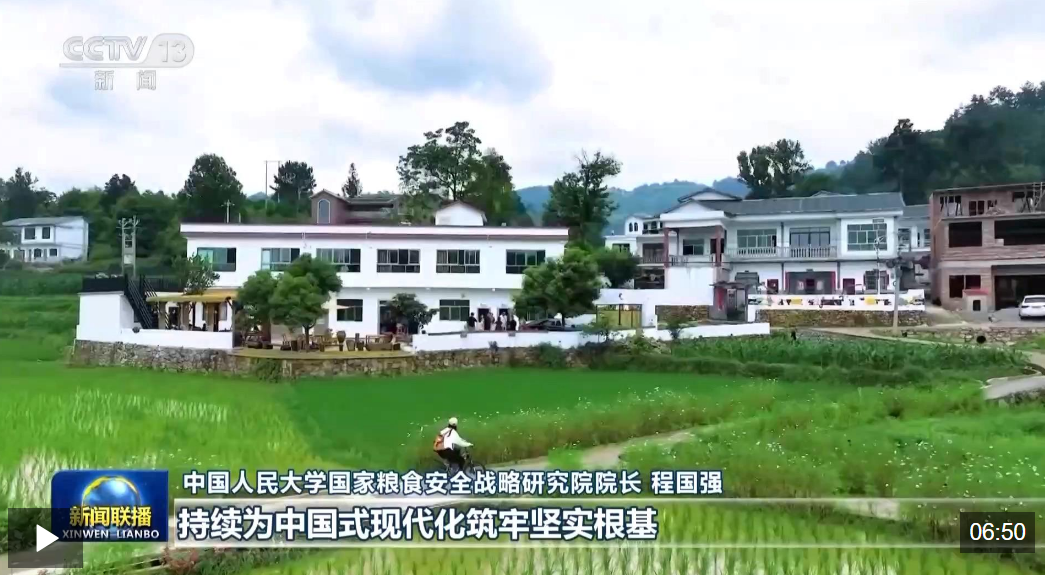
习近平总书记指出:"加快农业农村现代化步伐,推动农业基础更加稳固、农村地区更加繁荣、农民生活更加红火。" 2025年是"十四五"规划收官之年,也是巩固拓展脱贫攻坚成果同乡村振兴有效衔接5年过渡期的最后一年,我国锚定农业农村优先发展目标,全方位夯实粮 食安全根基、牢牢守住不发生规模性返贫致贫底线,深入实施乡村建设行动,推动农业农村现代化迈出坚实步伐。 今年以来,习近平总书记深入各地考察,为农业农村现代化发展指明方向、擘画蓝图。围绕如何做强农业,习近平总书记强调"要加强耕地保护和建设,扛 牢粮食安全责任";他指出,"要加强科技应用,推动农文旅融合,不断延伸产业链、增加附加值,带动更多农民群众增收致富";围绕让农民就地过上现代 文明生活,习近平总书记要求,"坚持城乡融合发展,推进以县城为重要载体的新型城镇化建设,优化县乡村公共资源配置和产业链布局,扎实推进乡村全 面振兴。" 中国人民大学国家粮食安全战略研究院院长 程国强:习近平总书记就推进农业农村现代化作出了一系列的重要指示。为我国加快农业农村现代化,扎实推 进乡村全面振兴,明确了具体的实施路径。今年以来,农业农村呈现出许多趋势性的新变化。科技对农业生产的支撑作用 ...
沈建光:“十五五”规划的十大发展思路
Di Yi Cai Jing· 2025-12-08 12:32
Group 1 - The "15th Five-Year Plan" emphasizes a pragmatic development approach, focusing on quality growth and domestic circulation while addressing current economic challenges [1][2] - The plan sets a growth target of around 5% for the period, aiming for per capita GDP to reach the level of moderately developed countries by 2035 [2][3] - It highlights the importance of balancing development and security, asserting that development is foundational for safety [2] Group 2 - The macroeconomic policy is shifting towards a more proactive stance, with an emphasis on counter-cyclical measures to stabilize growth, employment, and expectations [3] - The plan prioritizes the integration of technology and industry, aiming to build a modern industrial system with a focus on intelligent, green, and integrated development [4][5] - It identifies four key areas for promoting integration: artificial intelligence, industrial internet, new growth engines, and future industries [4] Group 3 - The plan stresses the need to boost domestic demand, particularly in service consumption, as a strategic foundation for economic growth [6][7] - It outlines systematic measures to enhance consumer capacity and expand service consumption through policy support and market reforms [7][8] - The focus on service consumption is crucial, as it currently lags behind goods consumption in GDP contribution [8] Group 4 - The "15th Five-Year Plan" aims to promote comprehensive human development and improve social welfare, establishing a virtuous cycle between economic growth and social equity [9][10] - It includes specific targets for employment, income growth, and social security, emphasizing the importance of investing in human capital [9] - Policies will address key life cycle points, ensuring support for various demographics, including flexible workers and the elderly [10] Group 5 - The plan addresses urban-rural integration, focusing on reforms in the household registration system and land use to facilitate urbanization [11][12] - It aims to enhance public services for migrant populations and streamline land policies to support rural development [12] Group 6 - The establishment of a unified national market is seen as essential for enhancing domestic circulation, with measures to eliminate local protectionism and promote fair competition [13][14] - The plan outlines four policy focus areas: regulating government behavior, improving market order, streamlining logistics, and optimizing supporting systems [13] Group 7 - The "15th Five-Year Plan" adjusts the foreign trade strategy to emphasize autonomy, balance, and diversification in response to uncertainties in international relations [15][16] - It aims to shift from a focus on trade surpluses to promoting balanced trade, with an emphasis on expanding imports [15] Group 8 - The plan sets ambitious goals for green transformation, including a dual control system for carbon emissions to achieve peak carbon emissions by 2030 [17][18] - It emphasizes the need for a comprehensive approach to carbon management and green development, integrating market mechanisms to minimize economic disruption [18] Group 9 - Fiscal policy is framed to balance proactivity with sustainability, focusing on optimizing expenditure and reforming the revenue system [19] - The plan aims to enhance fiscal sustainability while addressing local government debt issues through structural reforms [19] Group 10 - The financial development strategy aims to build a financial powerhouse, focusing on optimizing financial structures, enhancing regulation, and expanding openness [20][21] - Key tasks include promoting various types of finance, improving direct financing, and strengthening risk management systems [20]
政策周观察第58期:等待两大会召开
Huachuang Securities· 2025-12-08 11:23
宏观研究 宏观快评 2025 年 12 月 08 日 华创证券研究所 证 券 研 究 报 告 【宏观快评】 等待"两大会"召开——政策周观察第 58 期 近一周,政策出台不多,主要有以下内容。短期内,关注中央政治局会议和中 央经济工作会议"两大会"召开。 1、12 月 1 日,《求是》杂志发表习近平总书记重要文章《推进党的自我革命 要做到"五个进一步到位"》。文章中,习近平总书记指出"对党的自我革命认 识要进一步到位……我们党进行自我革命,刀刃向内、激浊扬清、刮骨疗毒, 非但不会影响党的形象和威信,反而能够提高党的形象和威信;非但不会挫伤 党员干部的积极性,反而能够更广泛更充分地调动党员干部的积极性;非但不 会影响经济社会发展,反而能够为高质量发展提供坚强政治保证","党员干部 增强党性要进一步到位","权力规范运行要进一步到位","从严监督执纪要进 一步到位","落实管党治党责任要进一步到位"。 2、资本市场:1)12 月 5 日,国家金融监管总局调整保险公司相关业务风险 因子,"针对保险公司投资的沪深 300 指数成分股、中证红利低波动 100 指数 成分股以及科创板股票的风险因子,根据持仓时间进行了差异 ...
【践行新发展理念 中国经济行稳致远】乡村全面振兴扎实推进 农业农村现代化迈出坚实步伐
Yang Shi Wang· 2025-12-07 11:56
Core Viewpoint - The Chinese government is accelerating the modernization of agriculture and rural areas, aiming for a more stable agricultural foundation, prosperous rural regions, and improved farmer livelihoods by 2025 [1][2]. Group 1: Agricultural Modernization - The year 2025 marks the final year of the five-year transition period for consolidating poverty alleviation achievements and effectively connecting them with rural revitalization [1]. - The government is focusing on food security and has implemented various policies to enhance agricultural productivity, including the construction of high-standard farmland and subsidies for agricultural machinery [2][3]. - The use of big data models is increasingly replacing traditional farming practices, leading to more scientific decision-making in agricultural production [3]. Group 2: Rural Development and New Opportunities - New consumption scenarios in rural areas, such as low-altitude sightseeing and cultural events, are attracting more visitors and enhancing the appeal of rural life [1][2]. - The emergence of new business models and activities, such as local sports events and specialty coffee tourism, is revitalizing rural economies and providing new income sources for farmers [3][4]. - The number of "new-type professional farmers" has surpassed 20 million, indicating a growing trend of farmers adopting new technologies and business practices [1]. Group 3: Infrastructure and Resource Allocation - Significant improvements in rural infrastructure, including transportation, water supply, and communication, are narrowing the urban-rural development gap [4]. - By the end of the year, the rural water supply coverage is expected to reach 96%, and over 90% of administrative villages will have 5G connectivity [4]. - Quality resources in education, healthcare, and elder care are increasingly being made available in rural areas, enhancing the quality of life for rural residents [5].
【广发宏观团队】促消费有哪些政策空间
郭磊宏观茶座· 2025-12-07 09:21
Group 1 - The article emphasizes the importance of boosting consumer spending as a key macroeconomic policy direction for 2026 and beyond, with specific policy spaces identified for short, medium, and long-term strategies [1][4][5] - Short-term policy measures include extending and expanding direct subsidies, consumer loan interest subsidies, and implementing paid staggered vacations to enhance consumer experience and demand [1][2][3] - Medium-term strategies focus on accelerating consumption tax reform, upgrading consumption infrastructure, leveraging new technologies for product and scene development, and promoting employment-friendly development [4][5] - Long-term perspectives involve improving income distribution systems, enhancing social security, and optimizing consumption through population growth and international demand activation [5][6] Group 2 - The article discusses the impact of the anticipated U.S. interest rate cuts on global markets, leading to a risk-on sentiment and a recovery in stock prices, particularly in technology and materials sectors [6][7][8] - Despite a mixed U.S. economic data landscape, market sentiment remains optimistic, with expectations of a 25 basis point rate cut by the Federal Reserve in December [7][15] - The article highlights the performance of various asset classes, noting a significant rise in copper prices and a stable demand for gold, while U.S. Treasury yields have shown volatility [9][10][12] Group 3 - The article outlines recent policy changes in housing provident fund regulations aimed at supporting housing consumption, including increased withdrawal limits and expanded usage scenarios [27][28][29] - It notes that various regions are implementing measures to optimize housing fund policies, aligning them with population policies and enhancing support for high-quality housing [27][28][29] - The article also mentions the broader context of economic recovery efforts, including the promotion of durable goods consumption and the integration of artificial intelligence in consumer sectors [35][36]

破除壁垒让城乡双向奔赴
Jing Ji Ri Bao· 2025-12-05 22:23
Core Viewpoint - The article discusses the ongoing efforts in China to promote urban-rural integration, highlighting various initiatives and projects aimed at enhancing the economic and social development of rural areas through urban influences [1][2]. Group 1: Urban-Rural Integration Initiatives - Multiple regions in China are implementing innovative strategies to drive urban-rural integration, entering a critical phase of overall layout and accelerated advancement [1] - Examples include Chongqing's dual efforts to develop urban and rural areas and Jinan's initiation of 100 urban renewal projects and 51 urban village renovation projects [1] - The integration has led to the release of rural industrial vitality, with agriculture evolving from a single production focus to a multi-faceted approach including ecological conservation and cultural heritage [1] Group 2: Challenges in Urban-Rural Integration - Despite progress, challenges remain, such as barriers to the free flow of production factors between urban and rural areas, including labor, capital, and land [2] - The role of county towns as hubs for connecting cities and serving rural areas is underutilized, limiting their ability to drive rural development [2] - There is an imbalance in the distribution of basic public services, which hinders the urban-rural integration process [2] Group 3: Strategies for Improvement - Future strategies should focus on promoting the free flow of urban-rural factors, optimizing resource allocation, and reforming the household registration system to facilitate labor mobility [2] - Enhancing county towns' infrastructure and public services is essential to improve their capacity to support rural areas [3] - Establishing equal access to public services, such as education and healthcare, and improving rural infrastructure are critical for balanced development [3]
畅通城乡要素双向流动通道
Jing Ji Ri Bao· 2025-12-05 22:23
Group 1 - The core viewpoint of the articles emphasizes the importance of promoting the two-way flow of urban and rural factors to facilitate integrated development between urban and rural areas, as highlighted in the 20th Central Committee's Fourth Plenary Session [1] - Since the 14th Five-Year Plan, significant reforms have been made in the household registration system, resulting in a 3.1 percentage point increase in urbanization rate and the migration of over 41 million people from rural to urban areas, achieving the target two years ahead of schedule [1] - The establishment of a comprehensive agricultural technology innovation system has led to an agricultural technology progress contribution rate exceeding 63%, with a mechanization rate of 74% for crop farming and a coverage rate of over 96% for quality seeds [1] Group 2 - The articles propose enhancing the system for the urbanization of agricultural transfer populations by deepening household registration reforms and expanding public service coverage for these populations [2] - A unified construction land market is to be established, promoting comprehensive land remediation and encouraging cross-regional allocation of construction land indicators [2] - The financial system supporting agriculture is to be improved, with increased investment in high-standard farmland, agricultural technology, and rural industry revitalization to stimulate internal vitality in rural development [3] Group 3 - The articles highlight the need for a robust financial credit system to support agriculture, promoting inclusive financial services and developing agricultural insurance [3] - The establishment of a "Technology Going to the Countryside" support system is emphasized, focusing on building a skilled agricultural workforce and enhancing agricultural technology service systems [3]
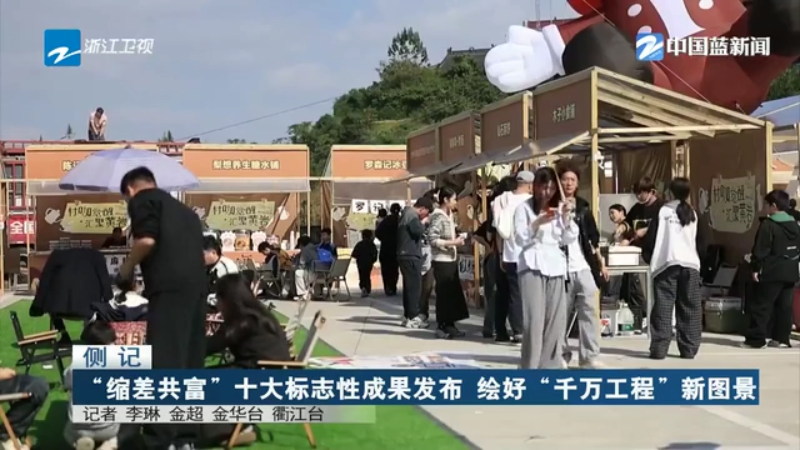
“缩差共富”十大标志性成果发布 绘好“千万工程”新图景
Xin Lang Cai Jing· 2025-12-05 12:51
Core Insights - The provincial meeting focused on the "Ten Million Project" aimed at promoting urban-rural integration and reducing the "three major gaps" [1][18] - The "Common Prosperity" ten landmark achievements were announced, selected from over 90 projects based on innovation and replicability [3][20] Group 1: Achievements and Innovations - The development axis from "county—central town—key village" and rural area group development were highlighted as key innovative projects [3][20] - A total of 87 provincial development axes have been constructed in two batches, aiming to benefit more farmers [5][22] - The province has cultivated 100,000 agricultural entrepreneurs and 584,000 modern "new farmers," with 136 full industrial chains for local specialties, generating a total output value of 342 billion yuan [6][24] Group 2: Local Initiatives and Economic Impact - In Jinhua, local initiatives have integrated cultural and creative industries, attracting youth back to rural areas, with 216 returnees establishing hundreds of family live-streaming studios [6][24] - The price of local specialty products has reached between 80 to 120 yuan per kilogram, with sales expanding nationwide [27] - The establishment of the "Full Industrial Chain" three-year action plan aims to support the agricultural sector through land, funding, and talent allocation [10][29] Group 3: Collaborative Efforts and Future Directions - Representatives from various regions discussed integrated public services and group development, with significant income growth reported in rural collective operations [12][31] - Future plans include exploring group development models and accelerating the construction of "development enclaves" to enhance rural revitalization [16][36] - The focus will be on problem-oriented and goal-oriented strategies, particularly in mountainous and island areas, to promote high-quality development and comprehensive rural revitalization [18][36]