科创板改革

Search documents
申万宏源策略2025年陆家嘴论坛点评:A股市场长期叙事的积极变化正在不断增加
Shenwan Hongyuan Securities· 2025-06-18 12:42
Group 1 - The construction of Shanghai as an international financial center is advancing to a higher level, with financial external circulation supporting China's "system going global" [4] - The recent Lujiazui Forum highlighted the acceleration of Shanghai's international financial center construction, with policies being introduced to enhance its status as a global center for RMB asset allocation and risk management [4][5] - The focus on international stablecoin development has increased, with Hong Kong leading in regulatory practices while mainland China remains cautious [4] Group 2 - The deepening of the Sci-Tech Innovation Board (STAR Market) reform is expected to enhance the investment and financing functions of the A-share market, laying a solid foundation for a bull market [4] - The introduction of the "1+6" policy measures aims to accelerate the listing of high-quality technology innovation companies, with more unprofitable tech firms expected to go public [4][5] - The regulatory framework will balance support for enterprises with risk prevention, tightening certain financial standards while allowing more unprofitable companies to list [5] Group 3 - The policies discussed at the Lujiazui Forum emphasize long-term strategic positioning, with China's international competitiveness and influence being enhanced through financial external circulation [5] - The A-share market's investment function is being optimized, with significant improvements in shareholder returns and a focus on encouraging mergers and acquisitions [5] - Concerns about short-term market performance due to external demand fluctuations and traditional consumption pessimism are noted, with expectations for growth stabilization policies in July and August [5]

科创板迎新一轮改革,“1+6”细则出炉
第一财经· 2025-06-18 12:16
Core Viewpoint - The establishment of the Sci-Tech Innovation Board's "Growth Layer" aims to enhance the inclusivity and adaptability of the system for unprofitable technology companies with significant technological breakthroughs and strong commercial prospects, thereby providing a more precise financing platform for these firms [1][3]. Summary by Sections Introduction of the Growth Layer - The new "Growth Layer" will include all unprofitable technology companies, allowing them to access capital markets despite their current lack of profitability [3][4]. - This initiative is expected to attract social capital towards technology innovation, facilitating the transformation of scientific achievements and optimizing industrial structure [1][3]. Reform Measures - Six reform measures have been introduced alongside the Growth Layer, including the introduction of seasoned professional institutional investors for companies under the fifth listing standard [2][8]. - The scope of the fifth listing standard will be expanded to include more frontier technology sectors such as artificial intelligence and commercial aerospace [10][11]. Conditions for Exiting the Growth Layer - New unprofitable technology companies can exit the Growth Layer if they meet specific profitability criteria, such as achieving positive net profits over the last two years or having a positive net profit with revenue exceeding 100 million yuan in the last year [4][11]. Investor Protection and Risk Disclosure - The reforms include measures for risk disclosure and investor protection, such as adding a "U" (Unprofitable) designation to the stock names of companies in the Growth Layer and requiring enhanced risk assessments by securities firms [4][5]. Future Development Paths - Future development of the Growth Layer should focus on improving institutional frameworks, enhancing collaboration with other capital market segments, and fostering deep integration with the technology innovation ecosystem [5].


科创板开闸!连续受理4单IPO,都是半导体!
Sou Hu Cai Jing· 2025-06-18 10:37
Core Insights - Since the release of the "Eight Measures for Deepening the Reform of the Sci-Tech Innovation Board," four unprofitable companies have been accepted for IPO applications on the Sci-Tech Innovation Board, all from the semiconductor industry [3][5][6]. Group 1: IPO Applications - Four unprofitable companies have been accepted for IPO applications on the Sci-Tech Innovation Board, all from the semiconductor sector [3][5]. - The companies include Zhaoxin Integrated Circuit Co., Ltd., Shanghai Super Silicon Semiconductor Co., Ltd., and others, with Zhaoxin seeking to raise 4.169 billion yuan [8][28]. Group 2: Financial Performance - Zhaoxin reported revenues of 340 million yuan, 555 million yuan, and 889 million yuan for the years 2022, 2023, and 2024, respectively, with net losses of 726.61 million yuan, 675.58 million yuan, and 951.39 million yuan during the same period [11]. - Shanghai Super Silicon achieved revenues of 921.09 million yuan, 927.80 million yuan, and 1.327 billion yuan for the years 2022, 2023, and 2024, with net losses of 860.12 million yuan, 1.041 billion yuan, and 1.299 billion yuan [31]. Group 3: Funding and Investment Plans - Zhaoxin plans to use the proceeds from its IPO for projects including the development of next-generation server processors and desktop processors, with a total investment of approximately 458.20 million yuan [12]. - Shanghai Super Silicon aims to raise 4.965 billion yuan for expanding production capacity and R&D projects related to semiconductor silicon wafers [35]. Group 4: Regulatory Environment - The "Eight Measures" aim to support high-quality unprofitable tech companies with key core technologies and significant market potential to list on the Sci-Tech Innovation Board, enhancing the inclusiveness of the system [5][6]. - The China Securities Regulatory Commission (CSRC) plans to introduce further reforms, including a new growth tier on the Sci-Tech Innovation Board and the reintroduction of listing standards for unprofitable companies [6].

未盈利企业IPO利好来了!科创板拟设科创成长层 十次提及“未盈利”
Jing Ji Guan Cha Wang· 2025-06-18 09:49
6月18日,中国证监会(下称"证监会")发布实施《关于在科创板设置科创成长层 增强制度包容性适应性的意见》(下称《科创板意见》)。 证监会表示,《科创板意见》重启未盈利企业适用科创板第五套标准上市,推出一揽子更具包容性、适应性的制度改革,着力打通支持优质科技型企业发展 的堵点难点,同时进一步加强投资者合法权益保护。 同时,证监会新闻发言人就《关于在科创板设置科创成长层 增强制度包容性适应性的意见》答记者问。在答记者问内容中,"未盈利"三个字一共出现了十 次。 关于《科创板意见》出台的背景,证监会提及,在去年陆家嘴论坛期间,中国证监会发布了深化科创板改革的八条措施。实施一年来,在各方共同努力 下,"科创板八条"各项改革举措已基本完成。新股发行适用3%高价剔除比例、重组股份对价分期支付机制等配套制度有序推出,收购未盈利科技型资 产、"A并H""轻资产、高研发投入"认定等典型案例相继落地,支持优质科技型企业通过科创板发行上市、并购重组做优做强的政策效应日益显现,科创板 服务科技创新和新质生产力发展的功能进一步发挥。 关于本次改革的总体思路和主要原则,证监会表示,本次改革的总体思路是,全面贯彻党中央、国务院关于资本市 ...

科创板迎新一轮改革,“1+6”细则出炉
Di Yi Cai Jing· 2025-06-18 09:46
未盈利科技型企业全部纳入创新成长层。 证监会主席吴清话音刚落,6月18日下午,科创板"1+6"改革细则出炉。 清华大学国家金融研究院院长、五道口金融学院副院长田轩认为,设置科创成长层这一举措具有非常重 要的意义。成长层突破了过去对拟融资企业规模、盈利等方面的要求与限制,不仅能够根据科创企业轻 资产、高研发投入、未来收益不确定性大等特点,为科技创新型企业提供更为精准的融资平台;还能够 吸引社会资本聚焦科技创新领域,引导资金从传统产业流向具有高附加值和发展潜力的科创产业,加速 科技成果转化,促进产业结构优化升级。 此外,科创板推出6项改革举措,包括对于适用科创板第五套上市标准的企业,试点引入资深专业机构 投资者制度;扩大第五套标准适用范围;支持上市公司吸收合并上市不满3年的科创板上市公司等。 未盈利科技型企业全部纳入创新成长层 证监会新闻发言人表示,本次改革在科创板设置创新成长层,重点服务技术有较大突破、商业前景广 阔、持续研发投入大,但目前仍处于未盈利阶段的科技型企业。 "从全球实践看,科技型企业往往经营业绩不确定性大、转盈利周期长,资本市场服务能不能覆盖优质 未盈利科技型企业,是市场各方判断制度包容性、适应性 ...
中国证监会主席:加快构建更有利于支持全面创新的资本市场生态
Sou Hu Cai Jing· 2025-06-18 08:55
Group 1 - The core viewpoint emphasizes the importance of a financial service system that is more adaptable to technological innovation and industrial transformation, highlighting the significant role of capital markets in supporting both large tech giants and small innovative companies [1][3] - The China Securities Regulatory Commission (CSRC) is focusing on enhancing the inclusiveness and adaptability of its systems, with reforms in the Sci-Tech Innovation Board and the Growth Enterprise Market as key strategies to create a more attractive and competitive market ecosystem [3][4] - The CSRC plans to implement a series of key measures to enhance capital market openness by optimizing the Qualified Foreign Institutional Investor (QFII) system and expanding the range of products available for foreign investment [4] Group 2 - The CSRC will introduce a new "growth layer" on the Sci-Tech Innovation Board and restart the listing of unprofitable companies under the fifth set of standards, aiming to better serve high-quality tech firms with significant breakthroughs and strong commercial prospects [3] - Six innovative reform measures will be launched on the Sci-Tech Innovation Board, including the introduction of a professional institutional investor system and a pre-review mechanism for IPOs targeting quality tech companies [3] - The CSRC aims to facilitate smoother participation of global investors in China's capital market by enhancing the convenience of various foreign investment products, including the introduction of RMB foreign exchange futures [4]
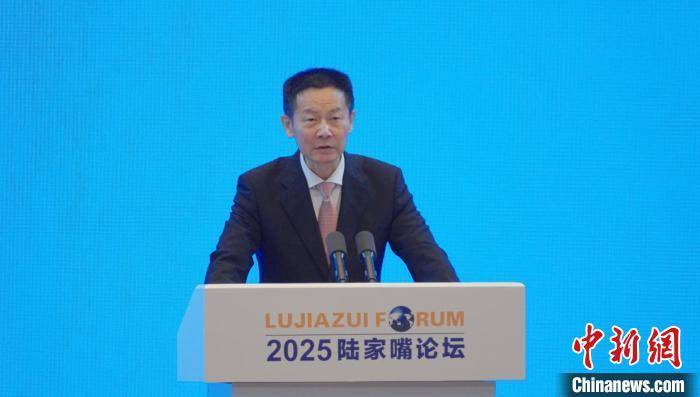
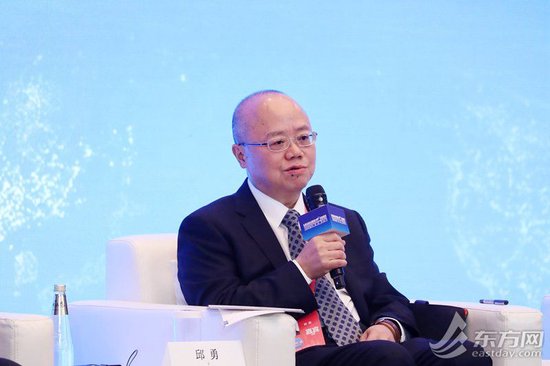
上交所理事长邱勇:沪市上市公司近3年股息平均增长15% 股息率居全球前列
Xin Lang Zheng Quan· 2025-06-18 08:54
Group 1 - The core viewpoint emphasizes the continuous and coordinated efforts in China's capital market to stimulate market vitality through both investment and financing [3] Group 2 - Significant achievements in the Sci-Tech Innovation Board (STAR Market) include a total R&D investment of 168.1 billion yuan in 2024, a year-on-year increase of 6.4%, and a compound annual growth rate of 10.7% over the past three years [3] - The median R&D intensity stands at 12.6%, leading all A-share sectors, with over 120,000 invention patents accumulated over six years [3] - The scale of Sci-Tech bonds has increased to 1.1 trillion yuan, with the proportion of corporate bonds rising from 5.2% to 9.2% [3] Group 3 - Mergers and acquisitions are facilitating the transition from old to new growth drivers, with over 700 asset restructuring plans disclosed in the Shanghai market in 2024, a 50% year-on-year increase [3] - 70% of the major asset restructuring targets focus on emerging industries such as semiconductors and new energy [3] - In 2024, 341 asset restructuring plans have been disclosed year-to-date, a 25% increase, with 49 major asset restructurings, a 206% year-on-year increase [3] Group 4 - The quality of listed companies continues to improve, with revenue and net profit from Shanghai-listed companies accounting for 70% and 80% of the entire market, respectively [3] - In 2024, net profit for the main board increased by 2%, and nearly 70% of companies on the STAR Market reported revenue growth [3] - Dividends from Shanghai-listed companies exceeded 1.9 trillion yuan, with over 300 billion yuan distributed before the Spring Festival, setting a historical high [3] Group 5 - The investment landscape is strengthening, with the market value of ETFs surpassing 3 trillion yuan, doubling since the beginning of 2024 [4] - Long-term funds, represented by social security and insurance, have increased their holdings in A-shares by 33% [4]
证监会重磅发声!科创板改革“1+6”政策到来,释放何信号
Nan Fang Du Shi Bao· 2025-06-18 08:30
Core Viewpoint - The 2025 Lujiazui Forum emphasizes the importance of financial openness and cooperation for high-quality development in the context of global economic changes, with a focus on the implementation of the "1+6" policy measures by the China Securities Regulatory Commission (CSRC) to enhance support for technology enterprises [1][2]. Group 1: Deepening the Reform of the Sci-Tech Innovation Board - The CSRC aims to enhance the inclusiveness and adaptability of the system by deepening reforms of the Sci-Tech Innovation Board and the Growth Enterprise Market, leveraging the Sci-Tech Innovation Board as a "testing ground" [2]. - The "1" in the "1+6" policy refers to the establishment of a Sci-Tech Growth Tier and the resumption of the fifth set of standards for unprofitable companies to list on the Sci-Tech Innovation Board, targeting high-quality tech enterprises with significant breakthroughs and substantial R&D investments [2]. - The "6" includes six specific reform measures, such as introducing a professional institutional investor system for applicable companies, expanding the fifth set of standards to cover more frontier technology sectors, and improving the refinancing system for Sci-Tech Innovation Board companies [2]. Group 2: Guiding Long-term Capital to Invest in Technology Enterprises - The CSRC will support the development of more technology innovation indices and public funds focused on Sci-Tech themes to attract long-term capital into technology investments [4]. - The introduction of long-term capital is seen as a key measure for deepening capital market reforms, aiming to reshape the market structure and promote long-term value investment [4]. - The focus will be on enhancing the regulatory framework for listed companies and fostering a more stable investment environment through the participation of social security funds, insurance funds, and industrial capital in private equity investments [4]. Group 3: Other Initiatives and Innovations - The CSRC plans to strengthen the linkage between equity and debt to support technological innovation, including the development of Sci-Tech bonds and related financial products [6]. - The commission will also promote the regularization of fund share transfer business and optimize mechanisms for physical stock distribution and reverse-linked products [6]. - New measures will be implemented to simplify the review process for mergers and acquisitions, enhancing the flexibility and convenience of equity incentive programs for listed companies [7].
证监会:提高科创板新注册未盈利科技型企业摘除特殊标识“U”的标准 投资者投资科创板成长层的资金门槛保持不变
news flash· 2025-06-18 08:02
Core Viewpoint - The China Securities Regulatory Commission (CSRC) is enhancing the standards for removing the special identifier "U" for newly registered unprofitable technology companies on the Sci-Tech Innovation Board, while maintaining the investment threshold for investors in the growth tier of the board [1] Group 1: Investor Protection Measures - The CSRC emphasizes risk disclosure and investor protection through several targeted institutional arrangements, including the uniform setting of the special identifier "U" for companies in the growth tier [1] - New standards for removing the "U" identifier for newly registered unprofitable technology companies will be raised [1] - Companies are required to regularly disclose reasons for unprofitability and its impacts, as well as to highlight risks [1] - Securities firms must enhance multi-dimensional risk assessments for investors and fully inform them of risks [1] - Individual investors are required to sign a specialized risk disclosure document for investments in growth tier companies [1] Group 2: Institutional Stability - Basic systems such as issuance and listing will remain unchanged [1] - Conditions for existing unprofitable companies to remove the "U" identifier will also remain unchanged [1] - The investment threshold for investors in the growth tier of the Sci-Tech Innovation Board will be maintained [1] Group 3: Future Directions - The CSRC will continue to strictly control the entry standards for issuance and listing, ensuring the quality of listed companies aligns with the "hard technology" positioning of the Sci-Tech Innovation Board [1]
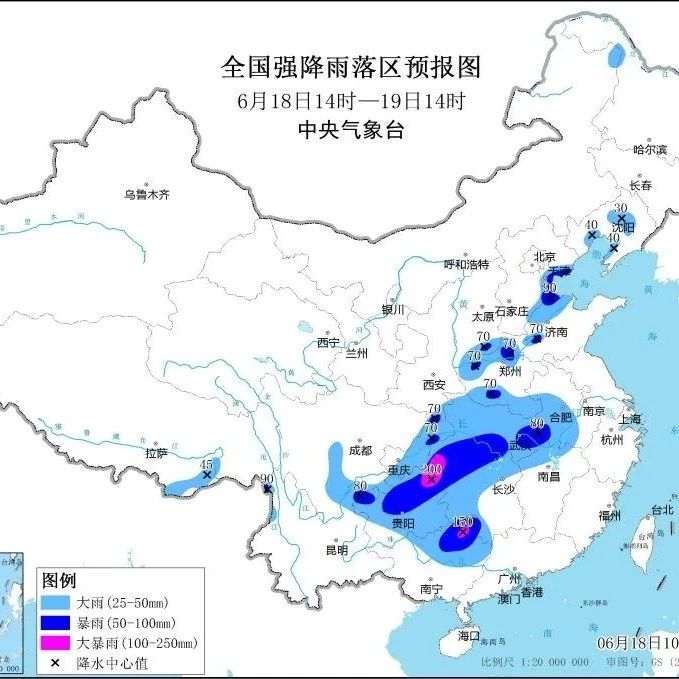
暴雨黄色预警!
证券时报· 2025-06-18 07:59
中央气象台6月18日10时继续发布暴雨黄色预警。 证券时报各平台所有原创内容,未经书面授权,任何单位及个人不得转载。我社保留追 究相关 行 为主体法律责任的权 利。 2、交通管理部门应当根据路况在强降雨路段采取交通管制措施,在积水路段实行交通引导; 3、切断低洼地带有危险的室外电源,暂停在空旷地方的户外作业,转移危险地带人员和危房居民到安全场所避雨; 4、检查城市、农田、鱼塘排水系统,采取必要的排涝措施。 来源:中央气象台网站 责编:万健祎 校对: 彭其华 版权声明 预计,6月18日14时至19日14时,西南地区东部、广西北部、湖北、湖南西部和北部、江西北部、安徽西南部以及辽宁中西 部、天津、山东西北部、河南南部和西部等地部分地区有大到暴雨,其中,湖北西南部、湖南西北部、重庆东南部、贵州东 北部、广西东北部等地部分地区有大暴雨(100~200毫米)。上述部分地区伴有短时强降水(最大小时降雨量20~50毫 米,局地可超过80毫米),局地有雷暴大风等强对流天气。 防御指南: 1、政府及相关部门按照职责做好防暴雨工作; 转载与合作可联系证券时报小助理,微信ID:SecuritiesTimes END 潜望系列深度报 ...