轻资产模式

Search documents
2亿美元融资之后,极星汽车驶向何方?
3 6 Ke· 2025-06-17 12:39
Core Viewpoint - The global electric vehicle market is entering a highly competitive phase, with Polestar receiving a significant $200 million investment from PSD Investment, which will support its product development, technological innovation, and market expansion [1][3]. Investment Details - Polestar has sold approximately 190.5 million new Class A American Depositary Shares (ADS) at $1.05 per share to PSD Investment, which is controlled by Li Shufu and already a shareholder of Polestar [1][3]. - After the transaction, Li Shufu will hold 66% of Polestar through PSD Investment and Geely's Swedish subsidiary, while Volvo's stake will decrease from 18% to 16% [3]. Market Positioning - Polestar aims to establish itself as a high-end electric vehicle brand focused on performance and design, differentiating itself from competitors that emphasize technology or cost-effectiveness [3][5]. - The brand faces intense competition from Tesla, traditional luxury brands like BMW and Mercedes, and domestic Chinese electric vehicle manufacturers [5][6]. Competitive Challenges - Tesla's Model 3 and Model Y dominate the market with strong brand loyalty and cost advantages, while traditional luxury brands are accelerating their electric transitions [5][6]. - Polestar's close relationship with Volvo may blur its brand identity, making it crucial to communicate its unique value proposition effectively [6][9]. Financial Health - Polestar's financial situation is concerning, with a projected global retail sales decline from 54,600 units in 2023 to 44,458 units in 2024, representing an 18% decrease [8]. - Revenue for the first three quarters of 2024 is expected to be $1.457 billion, down 21% from $1.846 billion in the same period of 2023, with a net loss of $863 million [8][9]. Strategic Importance of Funding - The $200 million funding is critical for Polestar to enhance brand awareness, strengthen marketing communication, and support the launch of new models like Polestar 3 and Polestar 4 [6][9]. - This financing is seen as a lifeline rather than a long-term solution, as Polestar must quickly improve its cash flow and gross margins to avoid a cycle of continuous fundraising [9][10]. Product Strategy - Polestar's product strategy includes a comprehensive lineup from the now-discontinued Polestar 1 to the upcoming Polestar 3 and Polestar 4, but it currently lacks a competitive edge in core electric vehicle technologies [12][13]. - The brand's reliance on the Polestar 2 model has made it vulnerable, especially in the Chinese market where it struggles to gain traction [12][13]. Market Environment - The global electric vehicle market is experiencing a slowdown in growth, with a shift from policy-driven to product-driven demand, leading to increased competition and price wars [13][15]. - Polestar is sensitive to global trade dynamics, including EU investigations into Chinese electric vehicles and US-China trade tensions, which could impact its global strategy [15][16]. Conclusion - The $200 million investment is a crucial step for Polestar, providing necessary resources to navigate a challenging market landscape, but it is not a guarantee of success [16].


IF椰子水母公司通过上市聆讯,原料、产品单一、代工等问题待解
Di Yi Cai Jing· 2025-06-17 03:40
Group 1 - The coconut water market in China is facing risks from rising costs and intensified competition, with IFBH Pte. Ltd. recently surprising the market by passing the Hong Kong Stock Exchange listing hearing in just two months [1] - IFBH's revenue is projected to reach approximately $160 million in 2024, representing an 80.3% year-on-year growth, with 92.4% of its revenue coming from the mainland China market [1] - Despite claiming to be the leading coconut water brand in China with a market share of about 34% in 2024, IFBH operates on a fully outsourced production model, raising concerns about its control over manufacturing and processing [1][2] Group 2 - IFBH's coconut water supply is solely sourced from Thailand through General Beverage, a company owned by its controlling shareholder, which poses risks related to supply chain independence [2] - The company plans to reduce its reliance on General Beverage for raw materials, aiming to decrease its supply share to below 70% by the end of 2025 and further to 50% by 2027 [2] - The beverage market in China is highly competitive, with many brands entering the coconut water segment, leading to increased raw material costs and price wars [3][4] Group 3 - In 2024, IFBH's revenue from coconut water and related products is expected to be $150 million, accounting for 97.5% of total revenue, indicating a heavy reliance on this single product category [3] - To diversify its product offerings, IFBH plans to launch 12 new beverage products in 2024, but these have shown lackluster performance, contributing only 2.2% to total revenue by year-end [3] - The popularity of coconut water has surged due to increased health awareness post-pandemic, but the market is shifting towards new trends like sugar-free tea and traditional health drinks [3]
德康农牧20250616
2025-06-16 15:20
Summary of the Conference Call for Dekang Agriculture Industry Overview - The current period is considered a favorable time to invest in the pig farming sector as the downward price cycle has been resolved, with policy guidance and restored market confidence expected to drive stock prices higher [2][5] - The pig farming industry has completed initial scaling, with future competition focusing on leading enterprises, emphasizing management, breeding costs, and cash flow value creation capabilities [2][6] Company Profile: Dekang Agriculture - Dekang Agriculture is the sixth largest pig farming company and the third largest yellow chicken farming company in China, with a compound annual growth rate (CAGR) of approximately 35% in pig output over the past three years, and an expected CAGR of nearly 25% over the next three years [2][7] - The company is projected to reach a pig output of approximately 11 million heads by 2025 and 15 million heads by 2026 [7] Business Model Innovation - Dekang has innovated a light asset model by outsourcing breeding to partner farmers, avoiding capital expenditures on sow farms while leveraging the same funds for greater operational leverage [2][10] - This model has resulted in a higher long-term return on assets, with an average return on equity (ROE) of nearly 12% from 2018 to 2024, compared to the industry leader at 19% [10][12] Financial Performance - In 2024, Dekang's net profit per pig was approximately 360 yuan, significantly above the industry average, with overall costs continuing to decline in 2025 [3][12] - The company’s sales net profit margin averaged around 10% from 2018 to 2024, with asset turnover rates being higher due to lower capital investment in sow farms [12] - The expected net profit before fair value adjustments for biological assets in 2025 is close to 3.5 billion yuan, reflecting a year-on-year growth of approximately 16% [14] Market Position and Valuation - Dekang's stock has shown significant growth in the Hong Kong agricultural sector, with a price-to-earnings (P/E) ratio of about 8 times for 2025, still below the industry average of 15 times [15][18] - The company is viewed as a cyclical growth stock with substantial valuation recovery potential, driven by rapid output growth and favorable pricing dynamics [16][18] Future Outlook - Dekang is expected to maintain rapid growth based on its innovative light asset farming model, supported by a favorable talent environment and strategic foresight [13] - The company’s poultry farming business is projected to maintain an output of around 90 million birds in 2025, with a conservative sales price expectation of 14.3 yuan per kilogram [13] Key Recommendations - Dekang Agriculture is recommended as a focus for investment due to its robust growth in poultry farming, reasonable sales price expectations, and significant growth in net profit before fair value adjustments [17][18] - The overall market confidence in the pig farming sector has improved, suggesting a potential catalyst for further growth in the coming months [16]
疯狂!港交所IPO,两个月过聆讯!
梧桐树下V· 2025-06-16 14:22
Core Viewpoint - IFBH Limited ("if椰子水") is preparing for its IPO on the Hong Kong Stock Exchange after passing the hearing, following its initial application two months prior [1]. Group 1: Company Overview - IF椰子水, founded in 2013, is a Thailand-based ready-to-drink beverage and ready-to-eat food company, primarily operating under the if and Innococo brands [2]. - The company has maintained the top position in the coconut water beverage market in mainland China for five consecutive years, with a market share of approximately 34% in 2024, significantly surpassing its closest competitor by over seven times [2]. Group 2: Financial Performance - The company's revenue is projected to increase from $87.4 million in 2023 to $157.6 million in 2024, representing an 80.3% growth [3]. - Net profit is expected to rise from $16.8 million in 2023 to $33.3 million in 2024, marking a 98.9% increase [3]. - Coconut water sales are estimated to account for 95.6% of total revenue in 2024, with revenues from mainland China contributing 92.4% of total revenue [4][6]. Group 3: Business Model - The company operates a light asset model, relying on third-party manufacturers for production, logistics providers for transportation, and distributors for sales and delivery [8]. - The top five customers accounted for 97.9% of total sales in 2023 and 97.6% in 2024, indicating a highly concentrated customer base [8]. Group 4: Supply Chain - The main suppliers are contract manufacturers, with the top five suppliers representing 92.3% of total purchases in 2023 and 96.9% in 2024 [8]. - The company has established long-term relationships with its suppliers to ensure stability in supply [8]. Group 5: Investment and Valuation - The company has undergone multiple rounds of financing, with a pre-investment valuation of $140 million prior to the B2 round [11][14]. - In March 2024, the company completed a share exchange agreement, acquiring all shares of IFB Singapore, which became a wholly-owned subsidiary [12][13].

曹操出行通过港交所聆讯 招股书:增长轨迹呈现两大亮点
Sou Hu Cai Jing· 2025-06-12 15:20
陈礼腾表示,曹操出行的财务表现同大部分网约车平台,呈现"收入增长与亏损并存"的特点。2022年至2024年,其营收分别为76.31亿元、106.68亿元、 146.57亿元,复合增长率达37.4%;同期净亏损分别为20.07亿元、19.81亿元、12.46亿元,尽管盈利能力尚未实现根本性突破,但其毛利逐年提升、亏损不 断收窄。 对此,网经社电子商务研究中心数字生活分析陈礼腾表示,曹操出行通过港交所聆讯,标志着其在资本化道路上迈出关键一步。从其招股书看,其增长轨迹 呈现两大亮点: 1、市场渗透率提升。根据弗若斯特沙利文数据,2024年中国网约车市场CR5(前五名市占率)达90.6%,曹操出行以5.4%的市占率位列第二。数据显示, 2024年营收达147亿元,同比增幅37.4%,毛利率从5.8%提升至8.1%,核心财务指标持续优化。此外,其城市覆盖数从2023年的51城扩张至2025年3月的146 城,一季度GTV同比增速达54.9%,订单量增长51.8%,规模效应逐步释放。 【观点一:曹操出行增长轨迹呈现两大亮点】 2、差异化竞争策略见效。区别于滴滴的C2C轻资产模式,曹操出行依托吉利控股的制造基因,构建"定制 ...
晚入局的泰国 IF 椰子水,为何能成为中国市场第一?| 声动早咖啡
声动活泼· 2025-06-11 10:42
Core Viewpoint - IFBH, the parent company of "if" coconut water, has rapidly captured the Chinese market, achieving a revenue of over 1.1 billion RMB in 2024, with a year-on-year growth of approximately 80% [1]. Market Position and Strategy - As of now, "if" holds a 34% market share in China's coconut water market, significantly outperforming its closest competitor, Vita Coco, by more than seven times [1]. - The brand initially entered high-end supermarkets in first-tier cities to establish its image as an "imported health drink," but shifted to more accessible channels like convenience stores from 2019 onwards, offering smaller, more affordable packaging [2][4]. Competitive Landscape - The coconut water market in China has over 50 competing brands, including traditional beverage companies and new tea brands, leading to intensified price competition [8]. - Despite "if" achieving a peak market share of around 55% in Q1 2024, it has faced fluctuations, dropping to approximately 30% by Q4 2024, indicating increasing competitive pressure [8]. Supply Chain and Cost Structure - "if" benefits from a light asset operation model, outsourcing production and logistics, which allows the company to focus on brand building and marketing [4]. - The sourcing of all coconut raw materials from Thailand provides a cost advantage of about 18% compared to competitors, due to favorable growing conditions [4]. Marketing and Brand Development - The brand's marketing expenses surged from $1.8 million in 2022 to $7.35 million in 2023, with significant sales boosts from collaborations with influencers and celebrities [5]. - Collaborations with popular IPs like Pop Mart's Crybaby have enhanced the brand's appeal among younger consumers [5]. Financial and Operational Challenges - The company's reliance on coconut water for over 90% of its revenue poses risks related to changing consumer preferences and market saturation [9]. - The concentration of supply chain operations in Thailand raises concerns about vulnerability to agricultural disruptions, such as climate change or political instability [9]. Investment and Future Outlook - IFBH's recent investment from Aquaviva, which involved a $17.5 million stake for 11.11%, has made the company's IPO a critical objective to avoid financial strain and potential negative market perceptions [10].

“退市是以退为进”,私有化后的复星旅文瞄准三大度假方向
Xin Lang Cai Jing· 2025-06-10 03:39
Core Viewpoint - The purpose of the delisting of Fosun Tourism is to "retreat for advancement," allowing for more strategic choices and better resource allocation, avoiding short-term market fluctuations [1] Group 1: Privatization and Strategic Shift - Fosun Tourism announced a privatization plan that received over 99% approval, marking the beginning of its delisting countdown [1] - The company aims to accelerate its transition to a light asset model post-privatization, focusing on product innovation and core competitiveness [6][8] - The CEO emphasized the importance of long-term thinking and product-driven strategies in the company's governance and product line development [1][8] Group 2: Vacation Business Focus - Fosun Tourism will develop three vacation directions: urban vacations, destination vacations, and super integrated vacation complexes [1][4] - The company has established 70 Mediterranean resorts across 26 countries, indicating a strong commitment to the vacation sector [2] - The ice and snow economy is a key focus, with 24 ski-themed resorts projected to generate 5 billion yuan in revenue in 2024 [3] Group 3: Project Developments - The Taicang Alps International Resort's first phase has welcomed over 1 million visitors since its opening in October 2023, with the second phase set to begin construction with an investment of approximately 5 billion yuan [3] - The second phase will include an indoor ski resort and various entertainment projects, aiming to set new benchmarks in China's snow vacation market [3] Group 4: Market Challenges and Long-term Outlook - The competitive landscape in the leisure vacation sector is intensifying, with many companies focusing on vacation offerings, posing challenges for Fosun Tourism [6][7] - The shift to a light asset model means profitability will rely on brand licensing fees and management fees, which are influenced by market conditions [7] - Despite short-term pressures, the CEO believes that long-term value can be achieved if the company scales effectively [8][9]
发发奇平台怎么样?轻资产模式重塑奢侈品电商格局
Sou Hu Cai Jing· 2025-06-10 00:16
从轻资产模式的创新典范,到2023年濒临破产的危机时刻,再到2024年奇迹般地实现3000万美元 EBITDA盈利,发发奇(Farfetch)的商业历程堪称一部奢侈品电商的蜕变史诗。回望发发奇的崛起之 路,其创新的轻资产模式确实重塑了奢侈品电商的格局。不同于传统电商的重资产运营,发发奇巧妙地 扮演着"时尚连接者"的角色,不持有库存、不干预定价,而是专注于为全球精品店和奢侈品牌搭建数字 化桥梁。这京东、腾讯和阿里巴巴等巨头的接连投资,更是对平台模式的有力背书。 发发奇平台怎么样?不少奢侈品消费者在关注到这一平台时,或许都会产生类似的疑问。发发奇 (Farfetch)让消费者能够足不出户轻松选购全球正品奢侈品,安心无忧。更惊喜的是,许多本地难觅 的海外小众宝藏品牌,也能在此一键拥有。发发奇更是汇聚前沿潮流单品,不仅提供海量多样选择,更 能让时尚爱好者时刻掌握最新风尚动态,成为潮流见证者。 在行业内部人士看来,在发发奇平台崛起的背后,其实折射了整个奢侈品行业正在经历的深刻变革。发 发奇这个创立于2007年的全球时尚购物平台,用其独特的发展模式给出了一个令人惊艳的答案——它不 仅重新定义了奢侈品电商的运营方式,更为行 ...


发发奇平台怎么样?奢侈品电商行业转型样本
Sou Hu Cai Jing· 2025-06-09 17:29
Core Insights - Farfetch has experienced a dramatic transformation over the past two years, from a peak market value of $21 billion to near bankruptcy by the end of 2023, and then achieving $30 million in EBITDA profit in 2024, serving as a case study for innovation in the luxury e-commerce sector [1][6]. Group 1: Business Model and Market Position - Farfetch's innovative "technology platform + franchise" model has reshaped the luxury e-commerce landscape, connecting over 550 boutiques across more than 40 countries, with 98% being exclusive partnerships [3]. - The platform has attracted traditional luxury brands, including Prada, which opened access to over 70 warehouses, indicating industry recognition of its model [3]. - Farfetch has built a "triangular ecosystem" of digital platforms, brand operations, and physical retail through acquisitions like Off-White's parent company New Guards Group and the streetwear trading platform Stadium Goods [3]. Group 2: Financial Challenges and Recovery - In 2023, Farfetch faced a critical financial situation, requiring a $500 million investment from South Korean e-commerce giant Coupang to avoid bankruptcy [5]. - The investment led to a remarkable turnaround, with Farfetch achieving $30 million in EBITDA profit in 2024, a milestone not reached during its independent operation [6]. - Coupang's restructuring efforts included selecting efficient logistics partners, closing unprofitable business units, and selling core assets like Off-White and Palm Angels, resulting in significant cost savings [6]. Group 3: Industry Insights - The case of Farfetch highlights that while a light-asset model can facilitate rapid expansion, it also requires refined operations to sustain profitability [6]. - The luxury e-commerce sector's evolution shows that excessive expansion can become a burden, emphasizing the importance of operational efficiency over mere scale [6].

中国最大海洋主题公园易主,海昌的“白衣骑士”祥源有何资本图谋
Xin Lang Cai Jing· 2025-06-06 23:57
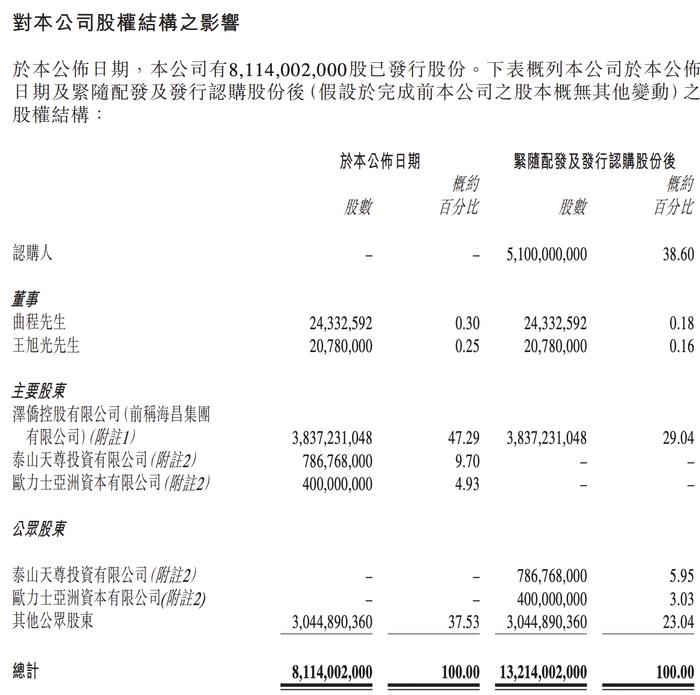
Core Viewpoint - The acquisition of Ocean Park by Xiangyuan Holdings for HKD 22.95 billion marks a significant shift in the tourism industry, as it changes the ownership of China's largest marine theme park [1][2]. Financial Summary - Xiangyuan Holdings will acquire 5.1 billion new shares of Ocean Park at HKD 0.45 per share, representing a discount of approximately 46.43% compared to the closing price of HKD 0.84 on June 2 [1]. - Post-transaction, Xiangyuan Holdings will hold 38.6% of Ocean Park, becoming the controlling shareholder, while the current major shareholder, Zeqiao Holdings, will see its stake drop from 47.29% to 29.04% [1][3]. - The funding for this acquisition includes approximately RMB 12 billion and RMB 2 billion from two shareholders, with the remaining HKD 8 billion sourced from financial institutions [1]. Company Performance - Ocean Park has faced continuous operational losses, totaling nearly RMB 3 billion from 2020 to 2024, with a debt ratio peaking at 81.73% in 2020 [4][6]. - The company has attempted various self-rescue measures, including selling theme park projects to reduce debt, but liquidity pressures remain significant [4][6]. - In 2024, Ocean Park's total liabilities were reported at RMB 8.524 billion, with a debt ratio of 82.44% [4]. Strategic Implications - The investment from Xiangyuan Holdings is seen as a potential solution to Ocean Park's debt issues, but the company's heavy asset model and future project developments remain uncertain [2][7]. - Industry experts suggest that external capital intervention could provide a fresh start for Ocean Park, addressing deeper management and cultural issues [7][8]. - Xiangyuan Holdings aims to integrate its tourism assets with Ocean Park, creating a "land-sea-air" tourism experience, although skepticism exists regarding the feasibility of such synergies [8][9]. Market Reaction - Following the announcement of the acquisition, Ocean Park's stock price fell by 13% within two days, indicating market skepticism about the transaction's benefits [2][7]. - The company's operational model, heavily reliant on ticket sales and in-park consumption, has shown limited revenue growth despite an increase in visitor numbers [18][19]. Future Outlook - The transition to a lighter asset model is being explored by Ocean Park, with new projects being developed under this framework, although results have yet to be significant [21][22]. - The effectiveness of Xiangyuan Holdings in managing and revitalizing Ocean Park's operations will be closely monitored by the market, as the company seeks to enhance its operational efficiency and financial performance [22][23].