
绿色低碳转型

Search documents
增值税发票数据显示 一季度高技术产业销售收入增长13.4%
Ren Min Ri Bao· 2025-04-09 22:09
Group 1: High-tech Industry Performance - In the first quarter, China's high-tech industry sales revenue increased by 13.4% year-on-year, continuing a rapid growth trend [1] - Sales revenue in the digital product manufacturing and digital technology application sectors grew by 12% and 11.6% respectively, indicating a deepening integration of digital and physical realms [1] Group 2: Green and Low-carbon Transition - The green low-carbon transition is progressing, with sales revenue from energy-saving and environmental protection services increasing by 28.7% and 17.8% year-on-year [1] - The clean energy sector is performing well, with solar power generation sales revenue rising by 42.3% year-on-year [1] - Driven by the demand for green transportation, the sales revenue of the new energy vehicle manufacturing industry grew by 18.6% [1] Group 3: Growth of the Real Economy - The real economy is expanding, with manufacturing sales revenue increasing by 4.8% year-on-year, accounting for 29.1% of national sales, up 0.8 percentage points from the same period last year [1] - The equipment manufacturing sector saw a sales revenue increase of 9.7%, maintaining a rapid growth rate [1] Group 4: Service Consumption Trends - Service consumption showed a positive trend, with a year-on-year growth of 5.3% in the first quarter [1] - Revenue from scenic area management and travel agency services increased by 40.5% and 15.5% respectively [1] - Revenue from film screenings and artistic performances grew by 39.6% and 15.2% respectively [1] Group 5: Equipment and Consumer Goods Update - Large-scale equipment updates are being effectively promoted, with national enterprise machinery equipment procurement amount increasing by 11% year-on-year [2] - The "old for new" policy for consumer goods continues to show effects, with retail sales of home audio-visual equipment like televisions and daily appliances like refrigerators increasing by 29.3% and 38.4% respectively [2] - Retail sales of communication devices such as mobile phones grew by 27.3% year-on-year [2]
超2.3亿!10大用户侧储能项目来了
行家说储能· 2025-04-09 07:17
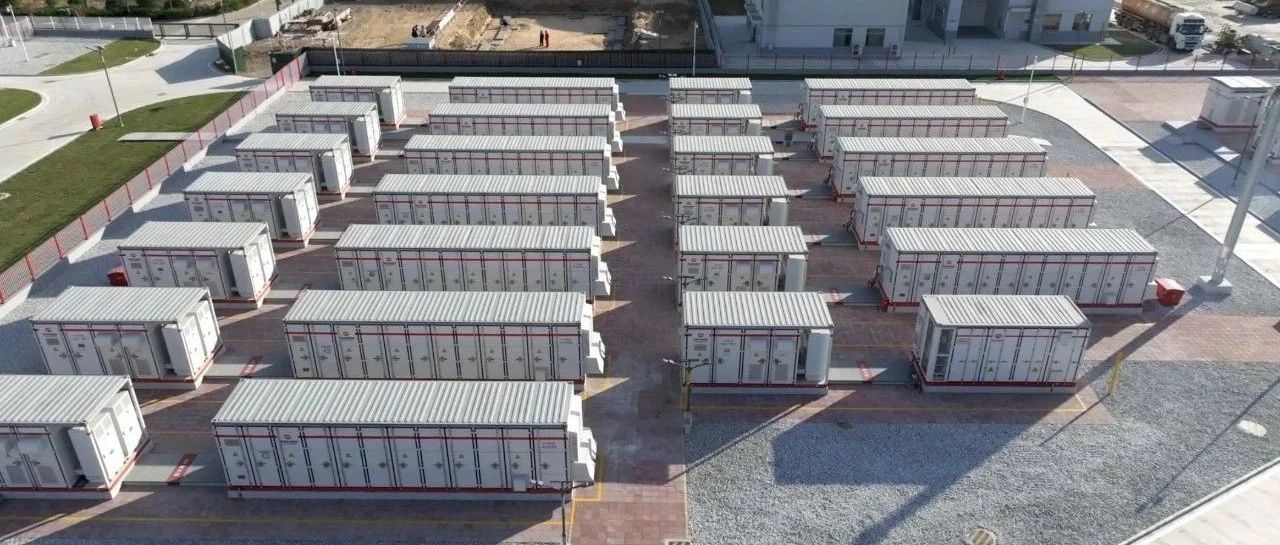
Core Insights - Recent developments in user-side energy storage projects have seen the launch of 10 major projects across various scenarios including factories, industrial parks, and hotels, with notable achievements in solar-storage microgrid projects [1] Group 1: LiXingNeng - The Poyang Low-Carbon Smart Microgrid Project, built by LiXingNeng, has officially commenced operations, covering an area of approximately 160,000 square meters with a total investment of 230 million yuan [2] - The first phase of the project will deploy a 2.8MWp rooftop solar array and a 5.4MWh modular energy storage system, aiming to save approximately 900-1,500 tons of standard coal annually and reduce carbon emissions by about 2,400-3,400 tons per year [4] Group 2: XuDa New Energy - The Changzhou Wujin National High-tech Industrial Development Zone Innovation Industrial Park Microgrid Project, the largest industrial park-level microgrid project in Jiangsu Province, has been launched [5] - This project achieves an 85% green electricity self-sufficiency rate and an annual carbon reduction of 7,585 tons, providing a replicable technical model for low-carbon transformation in industrial parks [7] Group 3: ShengHong Co., Ltd. - The world's first low-altitude economic logistics station utilizing grid-structured energy storage has been unveiled in Shenzhen, featuring a "lithium+sodium" grid-type energy storage system [8] - This energy storage system enhances energy density and supports the stability of voltage and frequency in the grid, promoting coordinated interaction between source, load, and storage [10] Group 4: YongTai Energy - YongTai Energy has successfully delivered the "China Resources Power Smart Energy R&D Center Photovoltaic Storage Direct Current Microgrid Project" [11] - The project employs advanced "full direct current microgrid" technology, featuring 163.524 kWp of solar modules and a 250 kW/500 kWh energy storage system, significantly improving energy utilization efficiency [13] Group 5: Yunnan Power - Yunnan Power has launched the province's first "solar-storage direct flexible + full direct current charging pile integrated system" [14] - The project has a total distribution capacity of 700 kW and aims to reduce energy conversion losses by over 15% compared to traditional AC systems [14] Group 6: Haier Energy - Haier Energy has successfully completed the grid connection of a user-side energy storage station at the Tingbo Hotel in Zhuzhou [15] - The project utilizes three 100 kW/215 kWh energy storage units and a self-developed "Smart Storage Star Disk" energy management system, optimizing discharge strategies to achieve an estimated economic benefit of approximately 2.75 million yuan over 15 years [17] Group 7: RuiDe Energy - RuiDe Energy has facilitated the establishment of a 3.8MW/7.689MWh commercial energy storage project at the Haolaike High-tech Industrial Park [18] - The project features a storage inverter that ensures stable connection and operation with the grid, optimizing energy dispatch through real-time data analysis [20] Group 8: ChangHe Technology - ChangHe Technology has launched a 6MWh energy storage project in Guangdong, designed to meet high-load electricity demands for 4-5 hours [21] - The project includes an intelligent energy management system that optimizes charging and discharging strategies based on electricity pricing and demand [23] Group 9: TengSheng Energy - TengSheng Energy has successfully connected a 2.15MWh energy storage project to the grid in Nanjing [26] - The project aims to enhance energy quality and stability through real-time monitoring and intelligent control [29]

2024年云南省国民经济和社会发展统计公报
Zhong Shang Chan Ye Yan Jiu Yuan· 2025-04-09 00:05
Investment Rating - The report does not explicitly provide an investment rating for the industry Core Insights - The economy of Yunnan Province is projected to achieve a GDP of 31,534.10 billion yuan in 2024, with a growth rate of 3.3% compared to the previous year [9] - The contribution rates of the three industries to economic growth are 10.6% for the primary industry, 25.8% for the secondary industry, and 63.6% for the tertiary industry [9] - The private economy in Yunnan has shown vitality, with an added value of 16,791.90 billion yuan, growing by 3.9% year-on-year, accounting for 53.3% of the provincial GDP [22] - High-tech manufacturing and equipment manufacturing have seen significant growth, with added values increasing by 17.7% and 19.0% respectively [22] - Clean energy generation reached 3,763.25 billion kWh, a 14.0% increase, making up 86.3% of the industrial power generation [23] Summary by Sections Economic Overview - Yunnan's GDP reached 31,534.10 billion yuan in 2024, with a growth of 3.3% [9] - The per capita GDP was 67,612 yuan, growing by 3.8% [9] - The labor productivity increased by 3.1% to 110,900 yuan per person [9] Agriculture - The total output value of agriculture, forestry, animal husbandry, and fishery was 6,846.86 billion yuan, growing by 2.6% [25] - The grain production reached 19.93 million tons, with a growth of 1.0% [28] Industry - The total industrial added value was 7,453.92 billion yuan, with a growth of 3.2% [30] - The manufacturing sector grew by 3.0%, while the electricity, heat, gas, and water production and supply sector grew by 7.1% [30] Services - The revenue of the service industry reached 3,675.96 billion yuan, growing by 6.2% [37] - The information transmission, software, and information technology services grew by 15.3% [37] Investment and Real Estate - Total fixed asset investment decreased by 7.4% year-on-year [38] - Real estate development investment fell by 28.5% [43] Trade and Foreign Economy - The total retail sales of consumer goods reached 12,490.84 billion yuan, growing by 2.9% [44] - The total foreign trade import and export volume was 2,487.50 billion yuan, a decrease of 3.9% [48] Transportation and Telecommunications - The total cargo transport volume was 1.491 billion tons, growing by 3.2% [52] - The number of mobile phone users reached 53.32 million, with a growth of 10.8% [56] Finance - The financial sector's added value was 1,532.25 billion yuan, growing by 2.0% [64] - The total public budget revenue was 2,193.23 billion yuan, increasing by 2.0% [61] Education and Technology - The number of higher education institutions was 92, with a total enrollment of 468,000 students [66] - The number of high-tech enterprises reached 3,840 [69] Environment - The average PM2.5 concentration was 20.5 micrograms per cubic meter, with a good air quality day ratio of 99.1% [24]
人民币绿色主权债券在伦敦成功发行,驻英大使郑泽光致辞
Sou Hu Cai Jing· 2025-04-04 18:42
Core Points - The issuance of RMB green sovereign bonds in London is a significant step for China in promoting green transformation and sustainable development, aligning with the characteristics of Chinese modernization [3] - The event highlights China's commitment to opening up and sharing development opportunities with the world, emphasizing the importance of international cooperation [3] - There is substantial potential for cooperation between China and the UK in clean energy development, green transformation, and climate change response [4] Group 1 - The RMB green sovereign bond issuance is a key initiative reflecting the outcomes of the 11th China-UK Economic and Financial Dialogue [3] - China aims to enhance practical cooperation with the UK across various sectors, inviting participation in high-quality development [3] - The Chinese government opposes the US's imposition of high tariffs on Chinese products, viewing it as a violation of WTO rules and detrimental to the multilateral trade system [4] Group 2 - The Chinese ambassador emphasized the need for mutual respect and non-interference in internal affairs as foundational principles for China-UK cooperation [4] - The call for strengthened international collaboration against unilateralism and protectionism is crucial for maintaining global trade stability [4]
事关物价 两办发文强化价格治理
Bei Jing Shang Bao· 2025-04-02 16:00
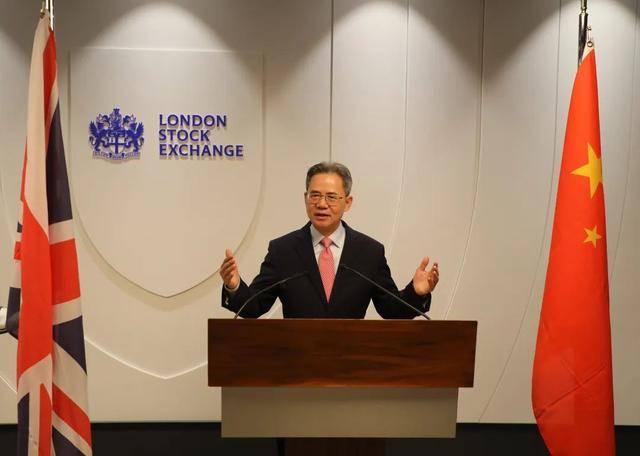
价格治理是宏观经济治理的重要内容。4月2日,中共中央办公厅、国务院办公厅发布《关于完善价格治 理机制的意见》(以下简称《意见》),为进一步深化价格改革,完善价格治理机制提供指引。《意 见》提出,要加强价格政策与财政、货币、产业、就业等宏观政策协同发力,提升价格总水平调控效 能。同时,《意见》强调,坚持社会主义市场经济改革方向,能由市场形成价格的都交给市场,促进先 进优质生产要素高效顺畅流动,有效服务全国统一大市场建设。 让更多价格由市场形成 为进一步健全促进资源高效配置的市场价格形成机制,《意见》明确,深化价格市场化改革。分品种、 有节奏推进各类电源上网电价市场化改革,稳妥有序推动电能量价格、容量价格和辅助服务价格由市场 形成,探索建立促进改革平稳推进的配套制度。健全跨省跨区送电市场化价格形成机制。加快完善电网 代理购电制度,推动更多工商业用户直接参与市场交易。进一步完善成品油定价机制,深化天然气价格 市场化改革。加快完善煤炭市场价格形成机制。鼓励供需双方按照市场化原则协商确定水利工程供水价 格,积极推进新建水利工程提前明确量价条件。放开具备竞争条件的民航国内航线旅客运输价格。 《意见》提出,加快重点领域市场 ...
中办、国办重磅发文:建立健全储能价格机制,推动更多工商业用户直接参与市场交易
中关村储能产业技术联盟· 2025-04-02 11:05
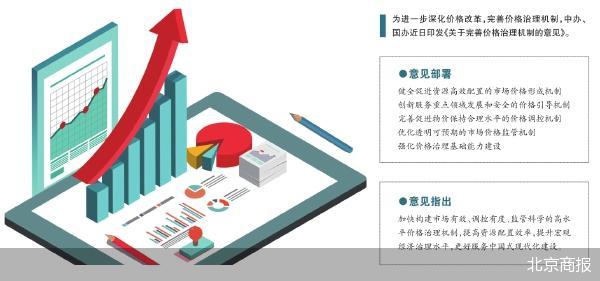
Core Viewpoint - The article discusses the recent release of the "Opinions on Improving the Price Governance Mechanism" by the Central Committee of the Communist Party of China and the State Council, emphasizing the need for deepening price marketization reforms and enhancing the price governance mechanism to better serve China's modernization efforts [4][5]. Summary by Sections Overall Requirements - The document emphasizes the importance of adhering to Xi Jinping's thoughts and the spirit of the 20th National Congress, focusing on market efficiency, government roles, and the need for a high-level price governance mechanism to improve resource allocation and macroeconomic governance [5]. Market Price Formation Mechanism - The article outlines the need for a gradual and systematic approach to marketize electricity prices, including energy, capacity, and ancillary service prices, while also improving the pricing mechanisms for oil, natural gas, and coal [7]. - It calls for the establishment of a market-based pricing mechanism for cross-province electricity transmission and encourages more commercial users to participate in market transactions [7]. - The document highlights the importance of developing futures and spot markets for key commodities and enhancing the multi-layered electricity market system [7]. Price Guidance Mechanism - The article discusses the establishment of price policies to support green and low-carbon transitions, including mechanisms for natural gas power generation and energy storage [9]. - It emphasizes the need for a unified carbon pricing mechanism and the development of a national green electricity certificate trading system [9]. Price Regulation Mechanism - The document stresses the importance of maintaining reasonable price levels through macroeconomic regulation, ensuring a balance between supply and demand, and stabilizing prices for essential goods [12]. - It highlights the need for emergency price regulation measures to address significant price fluctuations in key commodities [12]. Market Price Supervision Mechanism - The article calls for the regulation of market price behaviors, enhancing supervision of pricing practices, and preventing monopolistic behaviors [13]. - It emphasizes the need for a collaborative governance model involving industry self-regulation, social oversight, and government regulation [13]. Capacity Building for Price Governance - The document outlines the need for a robust price monitoring and early warning system, as well as the importance of cost auditing and investigation to ensure effective price governance [14]. - It calls for the revision of price-related laws and regulations to adapt to the needs of price governance [14]. Implementation Strengthening - The article emphasizes the necessity of strong organizational leadership in implementing the price governance mechanism and addressing emerging issues in the process [15].

中办、国办发布!防止政府对价格形成不当干预
证券时报· 2025-04-02 08:51
Overall Requirements - The document emphasizes the importance of price governance as a key aspect of macroeconomic management, aiming to deepen price reform and improve the price governance mechanism in China [2]. Group 1: Market Price Formation Mechanism - The document advocates for the market-oriented reform of electricity pricing, including the establishment of a market-based pricing mechanism for electricity, natural gas, and coal [3][4]. - It highlights the need to create a competitive market environment by abolishing policies that hinder fair competition and ensuring fair access to essential services like electricity and gas [4]. - The document calls for the development of trading markets for key commodities, including oil, gas, and coal, to enhance price formation [3]. Group 2: Price Guidance Mechanism - The document proposes improving agricultural price policies to ensure stable and safe supply of essential food products, including minimum purchase prices for rice and wheat [5]. - It emphasizes the need for energy price policies that support green and low-carbon transitions, including the establishment of pricing mechanisms for natural gas and renewable energy [5]. - The document suggests creating a pricing policy for public data to facilitate the development of the digital economy [7]. Group 3: Price Regulation Mechanism - The document stresses the importance of regulating overall price levels by considering supply and demand dynamics, economic growth, and external influences [8]. - It outlines the need for a long-term mechanism to stabilize prices of essential goods, focusing on production capacity and market balance [8]. - The document highlights the importance of emergency measures to manage price fluctuations for critical commodities [9]. Group 4: Market Price Supervision Mechanism - The document calls for the establishment of a comprehensive market price behavior regulation system to maintain order and prevent unfair competition [10]. - It emphasizes the need for enhanced price supervision and inspection, particularly in sectors with high public interest [10]. - The document advocates for a collaborative governance model involving industry self-regulation, social oversight, and government regulation [10]. Group 5: Capacity Building for Price Governance - The document highlights the need to improve price monitoring and early warning systems to enhance responsiveness to market changes [11]. - It calls for strengthening cost auditing and investigation to ensure effective cost control and transparency [11]. - The document emphasizes the importance of updating legal frameworks related to price governance to adapt to new challenges [11]. Group 6: Implementation and Leadership - The document stresses the necessity of strong leadership from the Communist Party in implementing price governance measures [12]. - It calls for local governments and departments to prioritize price governance and adapt policies to local conditions [12].

直击中国石油业绩会:夯实油气第一曲线,新能源蓝图剑指“绿色再造”
2 1 Shi Ji Jing Ji Bao Dao· 2025-04-01 05:08
Core Viewpoint - China National Petroleum Corporation (CNPC) aims to achieve high-quality development by 2027, establishing itself as a world-class enterprise while focusing on shareholder returns through dividend distributions [1][2]. Financial Performance - In 2024, CNPC expects to generate revenue of CNY 2.94 trillion, a decrease of approximately 2.5% year-on-year, while achieving a net profit of CNY 164.68 billion, marking a 2% increase and a historical high [2][3]. - The proposed dividend for 2024 is CNY 0.25 per share for the final dividend, totaling approximately CNY 86.02 billion, with a payout ratio of 52.2% [1][2]. Oil and Gas Production - CNPC's average crude oil price for 2024 is projected at USD 74.70 per barrel, a 2.5% decline from USD 76.60 per barrel in the previous year [3]. - The company anticipates a 2.2% increase in oil and gas equivalent production to 1,797.4 million barrels in 2024, with a target of 1,826.6 million barrels by 2025 [6]. Exploration and Reserves - CNPC achieved a reserves replacement ratio of 1.0, the best in five years, and emphasizes the importance of exploration for increasing reserves before production [5][6]. - Significant breakthroughs in exploration were reported in various basins, including Tarim, Sichuan, and Ordos [4][5]. New Energy Development - CNPC is focusing on developing new energy businesses, with plans to generate 4.72 billion kWh from wind and solar power in 2024, and aims for new energy capacity to reach 7% of oil and gas equivalent by 2025 [7][8]. - The company is also expanding its electric vehicle infrastructure, planning to build 2,880 new charging stations and acquire a fully licensed power company to enhance its new energy portfolio [8].

直击业绩会|油价逆势下中国石油再创业绩新高 今年5月将在地下万米试油试气
Mei Ri Jing Ji Xin Wen· 2025-03-31 15:24
Core Viewpoint - China National Petroleum Corporation (CNPC) achieved record high performance for the third consecutive year despite a challenging market environment characterized by declining oil prices and reduced demand for refined oil products [2][4]. Financial Performance - In 2024, CNPC reported total revenue of 2.94 trillion yuan, with a net profit attributable to shareholders of 164.68 billion yuan, representing a 2% year-on-year increase [2][4][8]. - The average price of crude oil realized by CNPC in 2024 was $74.70 per barrel, a decrease of 2.5% compared to the previous year [2]. Operational Highlights - CNPC's net profit growth was driven by enhanced efficiency and cost control measures, as well as a transformation towards higher value-added chemical products [5]. - The company achieved a record natural gas sales volume, contributing to an operating profit of 54.01 billion yuan, a 25.5% increase year-on-year [5]. Cash Flow and Dividends - By the end of 2024, CNPC's net cash flow from operating activities reached 406.53 billion yuan, exceeding 400 billion yuan for two consecutive years, with free cash flow of 104.35 billion yuan [5]. - The company announced a cash dividend of 86 billion yuan for 2024, marking the second consecutive year of dividends exceeding 80 billion yuan [5]. Production and Exploration - In 2024, CNPC achieved an oil and gas equivalent production of 1,797.4 million barrels, a 2.2% increase from the previous year [9]. - The company reported a reserve replacement ratio of 1.0, indicating the best balance between reserves and production in the past five years [10]. Future Outlook - For 2025, CNPC aims to achieve an oil and gas equivalent production of 1,826.6 million barrels, a 1.6% increase, and plans to reduce capital expenditures by 4.9% to 262.2 billion yuan [10]. - The company is accelerating its development of renewable energy, with plans for renewable energy capacity to reach 7% of oil and gas equivalent by 2024, aiming for a balanced contribution from oil, gas, and renewable energy by 2050 [11].

中国石油2024年度业绩说明会:深化炼化转型升级 推动“第二曲线”加速上扬
Zheng Quan Ri Bao· 2025-03-31 14:09
Core Viewpoint - China National Petroleum Corporation (CNPC) reported a revenue of 2.9 trillion yuan and a net profit of 164.68 billion yuan for 2024, marking a 2.0% year-on-year increase despite a decline in international oil prices [1] Group 1: Financial Performance - In 2024, CNPC achieved record highs in pre-tax profit, net profit, return on equity, and capital return rate, indicating a significant improvement in operational performance [1] - The company has seen a continuous increase in its stock price over the past four years, reflecting enhanced development quality and providing good returns to investors [3] Group 2: Strategic Initiatives - CNPC has outlined five strategic initiatives: innovation, resources, market, internationalization, and green low-carbon development, with a focus on digital oil as a key component [1] - The company aims to achieve a balanced distribution of oil, gas, and new energy by 2035, with a long-term goal of creating a "green CNPC" by 2050 [2] Group 3: Industry Transformation - CNPC is actively pursuing a transformation towards high-value-added products in the refining sector, with a 49.3% year-on-year increase in chemical new materials production, reaching 2.045 million tons in 2024 [2] - The company is enhancing its integrated industrial advantages in refining and chemical production, supported by technological innovation and strategic initiatives [3]