
银发经济

Search documents
(活力中国调研行)中国加速成为世界级旅游目的地 文旅业展现高质量发展新活力
Zhong Guo Xin Wen Wang· 2025-09-11 02:49
Group 1 - Ctrip's Vice President highlighted the growth of inbound tourism and the optimization of travel experiences, indicating China's acceleration towards becoming a world-class travel destination [1] - Ctrip's performance has significantly improved due to the dual-driven growth from domestic and international markets, with a strong recovery in international flight and hotel bookings [1] - The company reported over 60% year-on-year growth in international orders, particularly in the Asia-Pacific region, showcasing the competitive strength of "Chinese services" on a global scale [1] Group 2 - The inbound tourism market is seen as a potential "blue ocean," with China's contribution to GDP from inbound tourism currently below the world average of 1% to 2% [2] - Ctrip has established the first inbound tourism consultation center at Beijing Capital International Airport, providing multilingual one-on-one consultations and customized travel plans for international visitors [2] - The "free Beijing half-day tour" initiative has served nearly 5,000 transit travelers from over 80 countries since its launch in December 2024, with plans to replicate this model at more entry points [2] Group 3 - The cultural and tourism industry is experiencing a shift towards multi-dimensional, high-quality development, with significant potential in the "silver economy" targeting elderly consumers [3] - The "tourism + entertainment" integration model is gaining popularity among younger consumers, driving comprehensive consumption growth [3] - Sustainable development and green low-carbon travel are becoming industry trends, while rural revitalization strategies are promoting regional coordinated development through tourism projects [3]

浙江:做好“宠物经济+”系列文章 着力培育消费新热点
Ge Long Hui· 2025-09-11 02:15
Core Viewpoint - Zhejiang Province is soliciting public opinions on the draft "Opinions on Promoting the Development of the Pet Economy," aiming to foster the integration of the pet economy with various emerging industries [1] Group 1: Industry Integration - The initiative emphasizes the cross-industry integration of the pet economy with sectors such as the silver economy, cultural tourism, self-care economy, and exhibition economy to cultivate new consumption hotspots [1] - The plan includes the development of pet-friendly tourism pilot projects to meet the reasonable demand for "human-pet travel" [1] Group 2: Cross-Industry Innovation - The proposal encourages the pet economy to connect with traditional manufacturing and service industries, guiding willing companies in logistics, fast-moving consumer goods, home appliances, and textiles to engage in cross-industry innovation [1] - New fields are identified for expansion, including pet transportation, fashionable pet clothing, pet health food, and smart pet products [1]
交通银行:六赴服贸之约 展示金融创新实践成果
Ren Min Wang· 2025-09-11 00:57
Group 1 - The China International Fair for Trade in Services (CIFTIS) financial services exhibition opened in Beijing, showcasing the Bank of Communications' innovative practices in financial services for the real economy and regional economic development [1] - The Bank of Communications presented various financial products, including "Jiao Yin Torch Loan," which utilizes a big data approval model to address financing challenges for technology-oriented small and micro enterprises [1] - The "Jiao Yin Venture Capital Loan" employs a "loan + external direct investment" model to broaden financing channels for technology companies through partnerships with quality investment institutions in Beijing [1] Group 2 - The bank's "Jiao Yin Park Loan" effectively meets the full-cycle financing needs of park enterprises by integrating various financial services, supporting the growth of technology-oriented companies [1] - The cross-border financial zone "Jiao Lian World, Hui Tong Global" offers comprehensive financial support for enterprises looking to expand internationally and attract foreign investment [1] - The bank focuses on enhancing financial services in key areas such as domestic demand, digital governance, and the silver economy, aligning its capabilities with national needs and public interests [2] Group 3 - The retail business showcased the "cross-province handling" of government services in the Beijing-Tianjin-Hebei region, allowing users to manage over 130 government matters and access various services remotely [2] - The bank has developed a housing rental deposit management and rent supervision system to protect the housing dreams of new citizens through a four-dimensional closed-loop management approach [2] - The silver economy segment integrates various services for the elderly, providing a one-stop resource connection for pension accounts, retirement financial products, and insurance [2] Group 4 - To enhance audience engagement and awareness of digital currency, the bank organized interactive activities featuring hardware wallets and cultural-themed designs [3] - The bank continued popular activities from previous years, such as blind box promotions related to digital currency, offering attendees the chance to win themed merchandise [3] - The exhibition will also host various promotional and educational events, including lectures on fund management and anti-fraud measures [3]

活力中国调研行|携程:入境游预订量翻倍,多举措助力中国加速打造世界级旅游目的地
Sou Hu Cai Jing· 2025-09-10 16:57
Core Insights - The article highlights the robust growth of China's tourism industry, particularly through the lens of Ctrip, which serves as a key indicator of consumer vitality and the effectiveness of China's openness [2][4]. Group 1: Ctrip's Performance - Ctrip's performance is driven by dual engines of domestic and international markets, with domestic tourism consumption continuously upgrading and a strong recovery in inbound tourism [2]. - In the latest quarter, Ctrip's inbound travel bookings increased by over 100% year-on-year, with South Korea and Southeast Asia being the largest source markets [2]. - Major cities like Shanghai, Shenzhen, Guangzhou, Beijing, and Chengdu have emerged as top destinations for international tourists, with museum ticket bookings rising nearly 20% year-on-year [2]. Group 2: International Expansion - Ctrip is recognized as a successful example of a Chinese internet company expanding internationally, leveraging its "one-stop app" service model and global travel SOS emergency assistance mechanism [4]. - International orders for Ctrip have grown by over 60% year-on-year, particularly in the Asia-Pacific region, showcasing the international competitiveness of "Chinese services" [4]. Group 3: Inbound Tourism Market Potential - The inbound tourism market is projected to see a 30% year-on-year increase in visitor numbers by the first half of 2025, with 71% of visitors coming from visa-exempt regions [4]. - Ctrip has simplified the inbound travel experience by allowing international tourists to purchase domestic attraction tickets via the app and enter attractions by scanning their passports [4]. - Ctrip has established the first inbound tourism consultation center at Beijing Capital International Airport, offering multilingual support and customized travel plans [4]. Group 4: New Growth Points in the Cultural and Tourism Industry - The cultural and tourism market is experiencing diverse drivers and a trend towards high-quality development, including the potential of the "silver economy" and the demand for high-quality travel products among the elderly [6]. - The integration of "culture and tourism" is deepening, with innovative forms like "tourism + entertainment" appealing to younger consumers [6]. - Sustainable travel is becoming a new trend, with a focus on low-carbon travel and the promotion of rural tourism projects contributing to rural revitalization and regional coordinated development [6].


深耕养老金融 中原银行平顶山分行助力银发经济发展
Huan Qiu Wang· 2025-09-10 09:10
来源:环球网 老有所养是民之关切所在。今年以来,中原银行平顶山分行积极响应中国人民银行平顶山市分行"助力 银发经济 共建安心养老"号召,以平顶山分行营业部为试点,打造全市首家养老金融示范网点,通 过"金融+服务+公益"深度融合,构建覆盖养老资金规划、健康管理、社交生活的综合服务体系,为老 年群体提供有温度、有品质的养老金融解决方案。 为让网点服务更有温度,中原银行平顶山分行营业部立足老年群体需求,对网点进行全方位适老化改 造,辐射周边5个大型居民区,形成"金融服务+生活关怀"双核心模式。 该行打造了200平方米老年活动中心,配备血压仪、助行器、便民医药箱等设备,设置无障碍通道、防 滑地板及紧急呼叫系统,全方位保障老年人安全,并通过配置坐式金融自助机、语音导航系统,提供大 字版操作界面,搭配一对一人工指导,精准破解老年人"数字鸿沟"难题。同时,联合三甲医院定期开展 免费体检、健康讲座,为老年人建立专属健康档案,实现金融需求与健康需求的精准对接。 围绕"老有所养、老有所依"目标,该营业部推出"一站式"养老金融产品体系,覆盖资金规划、保险保 障、投资增值。针对银发客群,该行推出了稳定且灵活的存款产品,充分考虑老年人 ...
(神州写真)中国“时尚奶奶”传递银发潮流融入社交媒体
Zhong Guo Xin Wen Wang· 2025-09-10 07:49
(神州写真)中国"时尚奶奶"传递银发潮流融入社交媒体 在曹萍带动下,小区很多老人开始穿旗袍、化妆、学习走秀。"优雅气质和时尚穿搭,可以打破人们对 老年人的刻板印象,我们也可以时尚、迷人。"曹萍说。 在中国,越来越多和曹萍一样的"老年网红"开始出现在社交媒体,被称为"时尚奶奶"。她们穿着、造型 时尚,拍摄的走秀视频配上潮流音乐可吸引几百万"粉丝",且大多是年轻人。 会员超2000人的"时尚奶奶团"账号有300多万粉丝,这些平均年龄超65岁的老人,有的穿旗袍、戴墨 镜、踩高跟鞋,有的去健身房撸铁、穿皮衣开机车,以优雅仪态与时尚态度持续颠覆社会对银发群体的 认知。 有些银发超模甚至穿旗袍赴海外走秀,收获一批国外粉丝。该账号创始人之一何大令介绍,今年,400 位"时尚奶奶团"成员参加了全球首届荷兰花海时装周,刷新了中国银发群体在时尚领域的影响力。 中新社长沙9月10日电 题:中国"时尚奶奶"传递银发潮流融入社交媒体 中新社记者 唐小晴 在长沙,今年67岁的曹萍退休后因精致穿搭走红。每天出门前,她都会整理发型,搭配好衣服鞋子、耳 饰,再画个淡妆。 气质优雅的曹萍每周三会去上老年模特课,学习站姿、礼仪。曾获得2023年环 ...

从“养老”到“享老” 多元化服务新模式为老年人打造幸福“夕阳红”
Yang Shi Wang· 2025-09-10 07:00
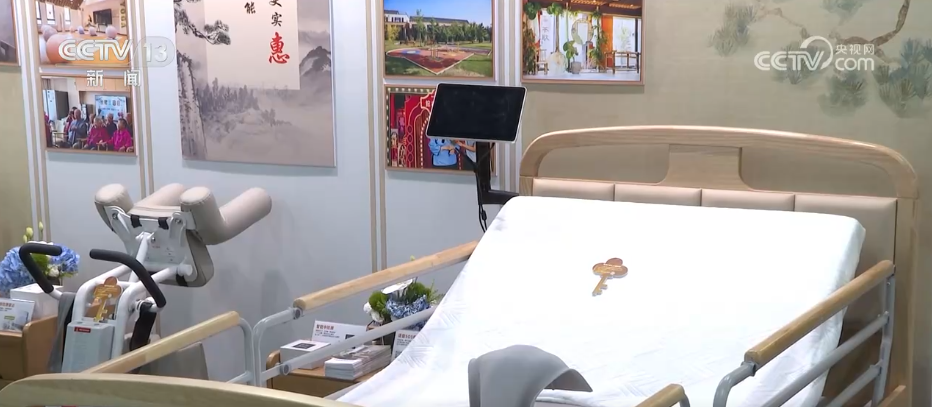
央视网消息:记者从9月9日举办的2025北京养老服务行业发展四季青论坛上获悉,截至2024年底,北京市常住老年人共有514万,首次突 破500万,占常住人口的23.5%。随着老龄化程度加深,社会养老需求也呈现多元化趋势。北京正创新养老服务模式,推动银发经济多元发 展。 针对老年人实际需求,北京已构建机构、居家、旅居衔接补充的养老服务体系与供给格局。 针对活力老年人,北京推出"冬南夏北"旅居养老服务,目前已吸纳全国11个省市的155家优质康养企业,入驻"冬南夏北"旅居养老机构服 务平台。老年人通过该平台能查询全国旅居养老机构的位置、床位、收费标准,还可直接咨询、预订。比如冬季去海南、云南慢游康养,夏季 到内蒙古、黑龙江避暑,轻松实现"候鸟式"养老。 目前,北京养老服务保障持续加强,多层次服务供给不断优化,共备案养老机构608家、床位10.9万张,布局105家区域养老中心、300多 家养老照料中心和1500多家社区养老服务驿站,累计建成运营养老助餐点2666家,覆盖超九成城乡社区,服务453.4万老年人。 就近普惠 打造"家门口"的养老综合体 近日,北京亦庄一家养老照料中心升级为区域养老服务中心,除了基本生活照料 ...
北京常住老年人口首破500万,“银发经济”加速转向品质生活
Xin Jing Bao· 2025-09-09 13:16
Core Insights - The number of elderly residents in Beijing has surpassed 5.14 million, accounting for 23.5% of the total population, indicating a significant aging trend [2][3] - The elderly population is expected to peak by the middle of this century, with a notable increase in the elderly dependency ratio, which has risen to 36.5% [3] Demographic Trends - By the end of 2024, the elderly population in Beijing is projected to reach 514 million, an increase of 192,000 from 2023, representing a growth rate of 3.9% [2] - The districts with the highest populations of residents aged 60 and above are Chaoyang, Haidian, and Fengtai, while the highest proportions of elderly residents are found in Xicheng, Mentougou, and Dongcheng [2] Elderly Care Services - Beijing has established a comprehensive elderly care service system, including 608 registered care institutions with 109,000 beds, all providing integrated medical and nursing services [4] - The city has developed 105 regional elderly care centers and over 1,500 community service stations, promoting diverse elderly care options [4] Consumer Demand in Silver Economy - The demand for elderly food, education, and health services is prominent, with a strong emphasis on health, spirit, and quality in silver consumption [6][7] - Elderly residents in Beijing spend an average of 1,033 yuan monthly on food, which is 16.8% higher than the national average [7] Technological Advancements in Elderly Care - The elderly industry in Beijing benefits from strong policy support, a solid development foundation, and significant technological innovation potential [9][10] - The consumption scale of the elderly population has grown from 55.8 billion yuan in 2010 to 291.4 billion yuan in 2023, with an annual growth rate of 14.76% [9] Future Outlook - The elderly care sector is expected to continue evolving, with a focus on enhancing institutional care capabilities and expanding home-based care services [5] - The upcoming Beijing Elderly Expo aims to promote the adoption of smart home and assistive technologies among elderly residents [10]
探索养老金融高质量发展新路径
Jin Rong Shi Bao· 2025-09-08 02:01
Core Insights - The Chinese government has issued comprehensive guidelines for the development of elderly care services, emphasizing a sustainable and inclusive system that focuses on the care of disabled elderly individuals [1] - Significant achievements in China's pension finance include the establishment of a robust policy framework and the development of a multi-tiered pension insurance system [2][3] - Financial institutions are increasingly supporting the silver economy, with various pension financial products being introduced to meet the diverse needs of the elderly population [4] Policy Framework and Achievements - The implementation of policies in the pension finance sector has been proactive, with multiple regulations introduced to enhance the quality of pension services [2] - The multi-tiered pension insurance system has stabilized, with the first pillar covering nearly 1.1 billion people, while the second and third pillars are gradually expanding [3] - As of May 2025, the personal pension product market has reached nearly 50 billion yuan, with over 1,000 different products available [3] Financial Support and Market Dynamics - Financial institutions are actively developing products tailored to the elderly, with notable growth in pension fund management and innovative financial services [4] - The elderly population is increasingly seeking diverse and personalized financial products, moving away from traditional savings methods [5] Challenges in Pension Finance - The imbalance in the three pillars of pension insurance indicates that the third pillar's role needs enhancement, as many individuals rely solely on the basic pension [6][7] - The phenomenon of "high account openings but low contributions" in the third pillar highlights the need for improved engagement and incentives for personal pension savings [8] - Regional disparities in pension resources and funding allocations between eastern and western China reveal significant imbalances in support for elderly care [9] Product Development and Innovation - The current pension products are often homogeneous, lacking innovation and tailored solutions for different demographics [10] - There is a widening gap in pension savings between high-income and low-income groups, necessitating targeted financial products for diverse income levels [11] Recommendations for Improvement - The industry should focus on creating a more inclusive and diversified range of pension products that cater to various needs and preferences [14][15] - Enhancing direct financing support for the silver economy can facilitate the growth of businesses catering to elderly care [17] - Emphasizing the role of insurance in providing comprehensive elderly care solutions can improve the overall effectiveness of the pension finance system [18]
广发银行样本调研: 养老金融“舌尖到心间”赋能银龄生活
Zheng Quan Ri Bao· 2025-09-07 23:06
Core Insights - The article discusses how commercial banks, particularly Guangfa Bank, are integrating financial services with elderly care to address challenges faced by the aging population in China, creating a "happy elderly chain" that enhances the quality of life for seniors [1][4]. Group 1: Financial Integration in Elderly Care - Guangfa Bank has developed a model that combines financial services with community elderly care, focusing on essential needs such as dining and rehabilitation [3][4]. - The "Long-term Elderly Dining Hall" initiative in Guangzhou offers affordable meals for seniors, supported by government subsidies and bank discounts, making dining accessible and economical [2][3]. - The bank's collaboration with local governments aims to expand elderly dining services across the city, enhancing the overall dining experience for seniors [3]. Group 2: Technological Advancements in Elderly Care - The demand for rehabilitation services among the elderly is increasing, prompting the development of innovative products and services in the silver economy [4][5]. - Companies like Lizi Intelligent Technology are focusing on smart rehabilitation solutions, such as brain-machine interface robots, to assist elderly individuals in their recovery [4][5]. - Guangfa Bank is facilitating the commercialization of these technologies by providing financial support and streamlining credit approval processes for companies in the elderly care sector [5][6]. Group 3: Digital Transformation in Elderly Care Facilities - The Shenzhen Elderly Care Center is undergoing a digital transformation to improve management efficiency and service quality, supported by Guangfa Bank's digital solutions [7][8]. - The digital platform developed by Guangfa Bank enables comprehensive management of elderly care facilities, ensuring transparency and efficiency in operations [8]. - The bank aims to expand its services to include community-based elderly care, offering various support services to enhance the living conditions of seniors [8].