
数字经济

Search documents
产需两端均有所改善 11月制造业PMI小幅回升 下阶段走势如何?
Xin Lang Cai Jing· 2025-11-30 23:52
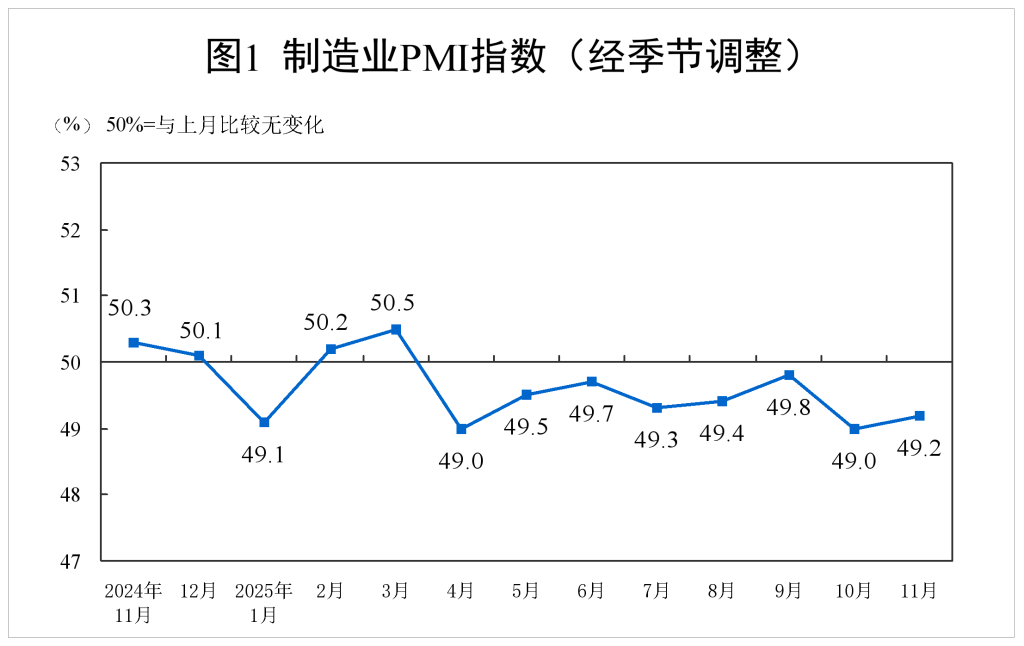
Group 1: Manufacturing Sector - The manufacturing Purchasing Managers' Index (PMI) for November is reported at 49.2%, showing a slight increase of 0.2 percentage points from the previous month, indicating a modest improvement in economic conditions [7][8] - The production index stands at 50.0%, up by 0.3 percentage points, while the new orders index is at 49.2%, increasing by 0.4 percentage points, suggesting a recovery in production and demand [8] - The new export orders index rose by 1.7 percentage points to 47.6%, driven by improved expectations from US-China trade negotiations and seasonal demand from overseas shopping [8] Group 2: Non-Manufacturing Sector - The non-manufacturing business activity index decreased to 49.5%, down by 0.6 percentage points, marking the first entry into contraction territory this year [11] - The service sector's business activity index fell to 49.5%, influenced by the end of holiday effects, while the construction sector's index improved to 49.6%, reflecting better conditions in construction activities [11] - The construction new orders index increased by 0.2 percentage points to 46.1%, indicating a gradual recovery in demand [11] Group 3: Economic Outlook - Analysts predict that the manufacturing PMI may decline to around 49.1% in December, based on historical trends, but there is potential for new growth measures to be introduced before year-end [13] - The service sector is expected to see a slight recovery in December due to upcoming holidays and the impact of consumption policies, although improvements in real estate and employment may be gradual [13] - Infrastructure investment is anticipated to rebound, providing support for the construction PMI, with increased funding from policy financial tools and local government bonds expected to enhance economic activity [13]

长株潭组团跨省链接顶尖科创资源
Chang Sha Wan Bao· 2025-11-30 23:52
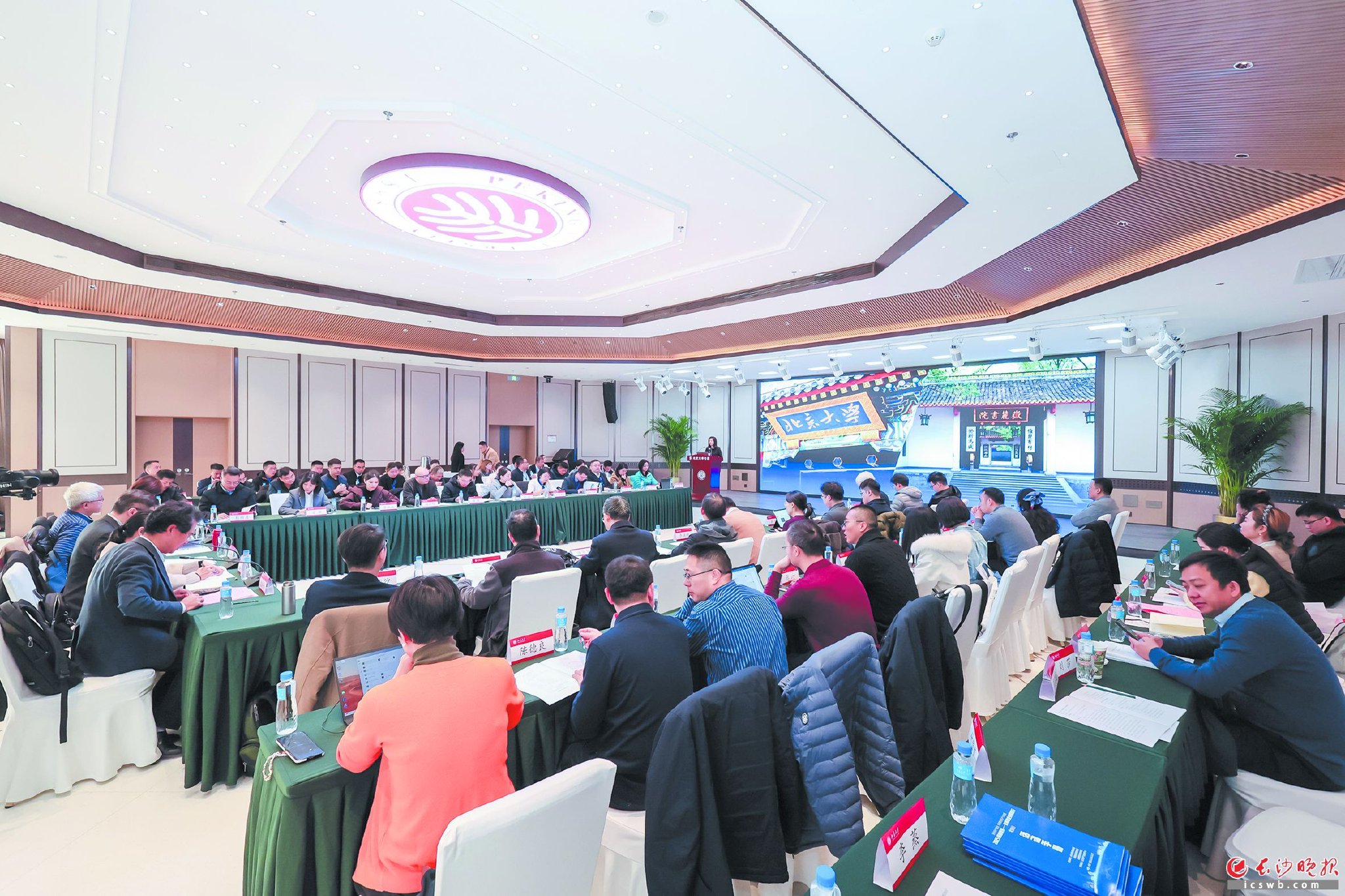
长株潭组团跨省链接顶尖科创资源 2025年"麓山智荟——长株潭企业院校行"北京专场活动举行,推动三地科创协作持续深化 长沙晚报全媒体记者 徐运源 通讯员 付惟楚 为加速推进长株潭一体化科创协同,近日,由长沙市科学技术局牵头,联合株洲市科学技术局、湘潭市科学技术局共同组织的2025年"麓山智荟——长株潭 企业院校行"北京专场活动圆满落幕。一支由近50人组成的长株潭代表团,带着精心梳理的百余项技术需求,开展了为期两天的高密度、精准化跨区域的"产 学研对接"。 初冬的北京,寒意渐浓。北京大学、清华大学、北京理工大学和中国科学院自动化研究所,却因这批来自湖南的访客,而显得热闹和热烈。 访客队伍中,既有中国电科第四十八所、中车系企业、中国铁建重工等"国家队"成员,也有蓝思科技、迪诺制药等民营企业代表,还有三市科技部门负责 人、重点产业园区代表,以及湖南投资集团、长沙国控资本等投融资机构负责人。活动紧扣人工智能、数字经济、电子信息、生物医药等重点产业领域,旨 在推动北京创新资源与长株潭产业需求精准衔接、高效转化,为区域经济高质量发展注入新动能。 两天四站"节奏拉满",精准对接不走过场 现代创新已不再是单向的线性传递,而是 ...
数字经济带来新机遇,“轻创业”如何走得更远?
Xin Hua Wang· 2025-11-30 23:29
Core Insights - The rise of the digital economy has enabled young entrepreneurs to transform their skills and creativity into tangible products and services with lower costs and greater flexibility [1][4][7] - The concept of "light entrepreneurship" is gaining traction, allowing individuals to start businesses with minimal initial investment, primarily leveraging digital tools and platforms [4][7] Group 1: Entrepreneurial Stories - Cold Ruipeng, a software developer, transitioned from employment to entrepreneurship by creating a sports data application, achieving significant revenue shortly after launch [2] - Ma Xiaoxue began her entrepreneurial journey by sharing study notes online, which evolved into a successful business offering consulting and courses [2] - A group of students from Beijing Film Academy utilized AI tools to enter the generative imaging market, achieving annual revenue of 2 million yuan with a small team [3] Group 2: Digital Economy and Technology - The advancement of AI has significantly changed the workflow in software development, allowing for increased efficiency and reduced team size while maintaining productivity [4] - The digital economy provides a fertile ground for "light entrepreneurship," enabling individuals to start businesses with lower costs and faster execution [4][7] Group 3: Policy Support and Infrastructure - The Chinese government has implemented various policies to support the digital economy, including the establishment of entrepreneurial parks and financial assistance programs [5][6] - Data indicates that over 2 million people participate in entrepreneurial training annually, with nearly 10,000 incubation bases established nationwide [6] Group 4: Challenges and Recommendations - Entrepreneurs face challenges such as legal pitfalls and market saturation, necessitating continuous learning and skill enhancement to ensure long-term success [7] - It is recommended that entrepreneurs leverage policy benefits, develop core skills in data analysis and content creation, and maintain compliance with legal and ethical standards [7]

“存取款超5万元不再登记”是精准监管的进步
Sou Hu Cai Jing· 2025-11-30 23:16
Core Viewpoint - The new regulation by Chinese financial authorities aims to shift from a rigid "one-size-fits-all" approach to a more risk-based management model, enhancing service efficiency while maintaining effective monitoring of high-risk transactions [1][2]. Group 1: Policy Changes - The new rule eliminates the mandatory requirement for individuals to register the source of funds when withdrawing or depositing cash exceeding 50,000 yuan, reflecting a significant shift in financial regulation [1]. - This change is expected to reduce operational costs for financial institutions and alleviate inconveniences for the public, aligning with global trends in anti-money laundering regulations [1][2]. Group 2: Implementation and Impact - Financial institutions will adopt a risk-based principle for due diligence, allowing normal financial activities to proceed without excessive inquiries, while focusing on monitoring suspicious transactions more effectively [2]. - The regulation is set to take effect on January 1, providing financial institutions with adequate time to prepare for the transition, ensuring a smooth implementation of the new policy [3].
西班牙媒体:“中国的进步绝非简单技术飞跃”
Huan Qiu Wang Zi Xun· 2025-11-30 23:01
Core Insights - China has launched the world's first 10G network, representing a significant leap in digital infrastructure standards, potentially allowing for rapid downloads, such as a 4K movie in seconds [1] - The transition from 5G to 10G is not merely a technological upgrade but signifies a structural transformation that may outpace the readiness of other countries to adapt [1] Group 1: Technological Advancements - The 10G network is a tenfold improvement over the mature version of 5G, which was commercially deployed in China in 2019 [1] - By 2020, China became the largest 5G market globally, driven by a high number of active connections [1] - Speedtest data indicates that in 2024, average fixed network speeds in various countries range from 30 to 70 Mbps, with leading countries like Chile achieving actual speeds of 200 to 400 Mbps despite offering gigabit packages [1] Group 2: Strategic Implications - While many Latin American countries struggle with basic connectivity, China is advancing projects that require long-term planning, indicating a strategic focus on infrastructure development [2] - The disparity in progress is attributed not to technology but to strategic vision, with China establishing a self-reliant technological development strategy [2] - The milestone of the 10G network underscores the importance of infrastructure as a core strength, suggesting that future success will depend on a country's ability to understand and prioritize infrastructure development [2]
中共陕西省委十四届九次全会在西安举行
Shan Xi Ri Bao· 2025-11-30 22:50
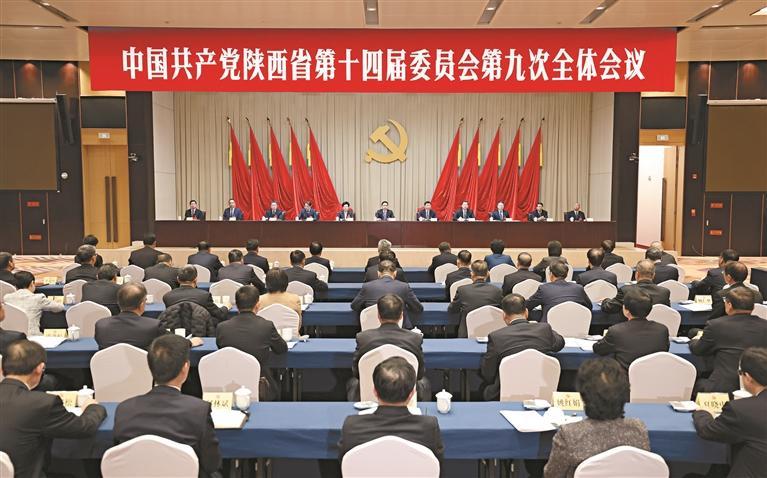
Core Points - The meeting of the 14th Committee of the Communist Party of Shaanxi Province emphasized the importance of the 20th Central Committee's Fourth Plenary Session and the guidance of Xi Jinping's thoughts for the development of the province [1][2] - The meeting approved the proposal for the 15th Five-Year Plan, aiming to provide strategic direction for the next five years and to promote modernization in a Chinese context [2][4] Group 1: Economic and Social Development - The 15th Five-Year Plan is positioned as a critical period for Shaanxi to advance in modernization and aims to achieve significant breakthroughs in various sectors [4][6] - The meeting highlighted the need for a modern industrial system with a focus on real economy, including the development of trillion-level industrial clusters in energy, manufacturing, and digital economy [7][8] - Emphasis was placed on enhancing innovation capabilities and fostering a favorable environment for market participation and investment [8][9] Group 2: Policy and Governance - The meeting underscored the importance of adhering to the principles of Marxism and Xi Jinping's thoughts, ensuring comprehensive leadership and reform [5][6] - It called for a focus on improving the business environment and integrating into the national market, with a strategy to enhance regional economic collaboration [8][9] - The necessity of addressing social welfare and ecological sustainability was highlighted, aiming to improve living standards and environmental quality [10][12] Group 3: Implementation and Future Outlook - The meeting stressed the importance of translating the development blueprint into reality through major policies and projects [12] - It called for a commitment to strict party governance and enhancing the political function of party organizations to support economic and social development [12][13] - The focus on stabilizing employment, businesses, and market expectations was emphasized as a priority for achieving the goals set for the current and upcoming periods [12]
互联网法院案件管辖新规顺应数字经济发展变化——强化网络空间依法治理
Jing Ji Ri Bao· 2025-11-30 22:39
Core Viewpoint - The Supreme Court's new regulations expand the jurisdiction of internet courts to include four new categories of online cases, enhancing the judicial efficiency and governance of the digital space [1][3]. Group 1: New Jurisdiction Categories - The new regulations introduce four categories of cases under the jurisdiction of internet courts: "network data ownership, infringement, and contract disputes," "network personal information protection and privacy disputes," "network virtual property ownership, infringement, and contract disputes," and "network unfair competition disputes" [1][3]. - Traditional online infringement disputes, such as financial loan contract disputes and copyright ownership disputes, will no longer fall under the jurisdiction of internet courts but will be handled by local grassroots courts [1][3]. Group 2: Judicial Adaptation and Innovation - The establishment of internet courts represents a significant institutional innovation to adapt the judiciary to the trends of internet development, with the first internet court established in Hangzhou in August 2017, followed by others in Beijing and Guangzhou [1][2]. - The core function of internet courts has evolved from "innovating trial mechanisms" to "outputting rules for internet governance," indicating a shift towards more comprehensive legal frameworks for new types of online disputes [2]. Group 3: Impact on Litigation Experience - The adjustment in jurisdiction is expected to enhance the litigation experience for parties involved, improving the quality and efficiency of case handling through optimized trial mechanisms [4]. - The three cities hosting internet courts—Beijing, Hangzhou, and Guangzhou—are key hubs for digital economic innovation, making them focal points for complex online disputes [4][5]. Group 4: Challenges and Professional Requirements - There are existing challenges in judicial practice regarding the clarity of adjudication standards and legal applications for new types of cases, particularly those related to data rights and unfair competition [2]. - Cases involving artificial intelligence present high technical barriers and complexities, necessitating a high level of judicial expertise to ensure accurate fact-finding and legal interpretation [4][5].
经济景气水平总体平稳(锐财经)
Ren Min Ri Bao Hai Wai Ban· 2025-11-30 22:20
Group 1: Manufacturing Sector - The manufacturing PMI for November is reported at 49.2%, a slight increase of 0.2 percentage points from the previous month, indicating an improvement in economic conditions [1] - The production index and new orders index are at 50.0% and 49.2%, respectively, both showing increases of 0.3 and 0.4 percentage points, suggesting a recovery in production and demand [1] - High-tech manufacturing PMI remains above the critical point at 50.1%, indicating continued growth in this sector [2] Group 2: Small and Medium Enterprises - The PMI for small enterprises has significantly increased to 49.1%, up by 2.0 percentage points, marking the highest level in six months [2] - Medium-sized enterprises show a slight improvement with a PMI of 48.9%, an increase of 0.2 percentage points from last month [2] - Large enterprises, however, experienced a decline in PMI to 49.3%, down by 0.6 percentage points, indicating a drop in economic activity [2] Group 3: Non-Manufacturing Sector - The non-manufacturing business activity index is at 49.5%, a decrease of 0.6 percentage points from the previous month, reflecting a decline in the sector's economic performance [1][4] - The service sector's business activity index has also dropped to 49.5%, down by 0.7 percentage points, influenced by factors such as the end of holiday effects [3][4] - The construction sector shows signs of recovery with a business activity index of 49.6%, an increase of 0.5 percentage points, and a business activity expectation index of 57.9%, indicating improved confidence among construction firms [4] Group 4: Market Expectations - The production and business activity expectation index for manufacturing is at 53.1%, up by 0.3 percentage points, indicating increased confidence among manufacturers regarding market developments [2] - The business activity expectation index for the service sector is at 55.9%, despite a slight decrease of 0.2 percentage points, suggesting that service sector firms remain optimistic about future market conditions [4] Group 5: Policy Impact - The implementation of new policy financial tools has resulted in the allocation of 500 billion yuan, supporting over 2,300 projects with a total investment of approximately 7 trillion yuan, focusing on key sectors such as digital economy and infrastructure [5] - The additional 500 billion yuan in special bonds allocated to local governments is expected to further stimulate investment in manufacturing and infrastructure, contributing to an overall improvement in manufacturing sentiment [5]
年底5元以下低价股捡漏,7只潜力股推荐,跨年黑马等你选
Sou Hu Cai Jing· 2025-11-30 18:37
Group 1: Consumer Sector - The government has implemented substantial measures to boost consumption, focusing on smart products, green energy, and products for the elderly [1] - The fourth round of "trade-in" subsidies is accelerating, targeting home appliances, digital products, and home decoration, with a deadline for consumers to act by December 31 [1] Group 2: Alcohol and Pharmaceutical E-commerce - A company specializing in both liquor and pharmaceutical e-commerce has seen revenue growth of nearly 30%, with high gross margins due to increased demand during year-end banquets [1] - The pharmaceutical e-commerce segment benefits from stricter regulations, providing a competitive edge, while innovative drugs are in phase three clinical trials, indicating strong cash flow and a low price-to-earnings ratio compared to peers [1] Group 3: Prepared Dishes and New Retail - A company focused on prepared dishes and new retail is experiencing rapid market growth, with the market size exceeding 600 billion, although its actual revenue contribution is only over 10% [3] - The main business remains traditional retail with lower gross margins, and new production facilities for prepared dishes will not be operational until 2026, posing risks for large investments [3] Group 4: Healthcare Sector - Companies specializing in cold medicine are expected to see revenue spikes during the flu season, with over 40% of their revenue coming from this period, but they have low R&D investment, limiting long-term growth potential [3] Group 5: Elderly Care and AI Medical Services - A company focusing on elderly care and AI medical services has seen over 50% revenue growth in community care and rehabilitation, with AI diagnostic systems implemented in numerous grassroots hospitals [5] - The company has high R&D investment compared to industry averages, but its diverse business lines contribute limited short-term profits, making it suitable for long-term investment [5] Group 6: Private Hospitals and Smart Medical Services - A company operating in private hospitals, smart medical services, and coal has seen over 30% revenue growth in private hospitals, with stable cash flow from coal operations [6] - The company has a diversified risk profile but lacks a core growth engine, making it suitable for conservative investors [6] Group 7: High-end Manufacturing - The high-end manufacturing sector is receiving strong policy support, with a focus on industrial mother machines, which are expected to modernize by 2027 [6] - A company producing CNC machines has reported over 60% profit growth in the first three quarters, with a nearly 40% year-on-year increase in industrial mother machine revenue [6] Group 8: New Energy and Digital Economy - The new energy and digital economy sectors are experiencing explosive growth, with data trading becoming a national focus and data center capacity reaching 500 PB [8] - The company involved in data business has seen revenue double, with stable cash flow from cement operations and lower valuations compared to peers, indicating potential for increased profitability if the data business model is successful [8]

手机流量劫持,不能让用户忍气吞声
Bei Jing Shang Bao· 2025-11-30 16:13
Core Viewpoint - The article highlights the issue of mobile software hijacking user traffic through deceptive practices, prompting regulatory intervention from the market supervision authority to address these behaviors [1][2][3]. Group 1: Regulatory Actions - The market supervision authority has identified three main issues with mobile software: traffic interception, forced redirection, and malicious incompatibility settings, urging companies to adhere to regulations [1]. - New amendments to the Anti-Unfair Competition Law have further clarified the standards for identifying irrational and unfair competition behaviors, specifically listing forms of traffic hijacking and malicious interference [3]. Group 2: Industry Practices - Certain mobile manufacturers are reportedly treating non-native apps unfairly, leading to delayed reviews and limited exposure, which can degrade the performance of competing apps through system updates [2]. - The article describes these practices as a form of hidden digital kidnapping, where user attention is covertly stolen, diverting traffic from an open internet to a closed ecosystem [3]. Group 3: Market Implications - The article argues that short-term profit motives driving these deceptive practices could ultimately harm the market by reducing competition and user choice, potentially leading to a smaller market for all players involved [3]. - It emphasizes that a lack of open ecosystems and free competition will hinder product longevity and market growth, suggesting that companies should focus on compliance, respect for competitors, and consumer interests to expand their market [4].