企业数字化转型

Search documents
港股异动 浪潮数字企业(00596)再涨超5% 年内股价已涨超1.7倍 预计上半年净利润逾1.8亿元
Jin Rong Jie· 2025-07-30 03:25
Group 1 - The core viewpoint of the article highlights that Inspur Digital Enterprise (00596) has seen its stock price increase by over 170% year-to-date, with a recent rise of 5.45% to HKD 10.06, and a trading volume of HKD 54.23 million [1] - The company anticipates a net profit attributable to the parent company of approximately RMB 180 million to 190 million in the first half of 2025, driven by significant growth and profitability in its cloud services business [1] - As a comprehensive ERP provider in China, Inspur Digital Enterprise benefits from its affiliation with Inspur Group, focusing on smart ERP, PaaS platforms, and MOM products, which have supported enterprises in their digital transformation efforts [1] Group 2 - The company is actively promoting its cloud transformation, resulting in rapid revenue growth from its cloud services, which enhances its already stable operational quality [1] - The traditional ERP-based management software business serves as a solid foundation for the company's ongoing cloud transition [1]
港股异动 | 浪潮数字企业(00596)再涨超5% 年内股价已涨超1.7倍 预计上半年净利润逾1.8亿元
智通财经网· 2025-07-30 02:16
Group 1 - The core viewpoint of the article highlights that Inspur Digital Enterprise (00596) has seen its stock price increase by over 170% year-to-date, with a current rise of 5.45% to HKD 10.06 [1] - The company anticipates a net profit attributable to the parent company of approximately RMB 180 million to 190 million in the first half of 2025, driven by significant growth and profitability in its cloud services business [1] - According to Zhongtai Securities, Inspur Digital Enterprise, as a comprehensive large-scale ERP vendor in China, benefits from its affiliation with Inspur Group and has a strong foundation in digital transformation for enterprises through its smart ERP, PaaS platform, and MOM products [1] Group 2 - The company is actively promoting its cloud transformation, resulting in rapid revenue growth from its cloud services, which continues to enhance its already robust operational quality [1]
浪潮数字企业再涨超5% 年内股价已涨超1.7倍 预计上半年净利润逾1.8亿元
Zhi Tong Cai Jing· 2025-07-30 02:15
Core Viewpoint - Inspur Digital Enterprise (00596) has seen its stock price increase by over 170% year-to-date, with a recent rise of 5.45% to HKD 10.06, reflecting strong market performance and investor confidence [1] Group 1: Financial Performance - The company expects to achieve a net profit attributable to the parent company of approximately RMB 180 million to 190 million in the first half of 2025, driven by the significant growth and profitability of its cloud services business [1] - The stock's trading volume reached HKD 54.23 million, indicating robust investor interest and activity [1] Group 2: Business Strategy - Inspur Digital Enterprise is actively transforming its business model towards cloud services, which has led to substantial revenue growth in this segment [1] - The company, backed by Inspur Group, specializes in smart ERP, PaaS platforms, and MOM products, contributing to its deep industry experience and capability in facilitating digital transformation for enterprises [1]
企业数字化转型战略实践与启示(51页 PPT)
Sou Hu Cai Jing· 2025-07-29 03:23
Group 1 - The report focuses on the digital transformation of enterprises, providing comprehensive strategic practices and insights for this process [1] - The development of digital technology has become a dominant force in the technological revolution, transitioning through various stages such as mainframe, client/server, and the internet, now moving towards data intelligence [1][13] - In 2016, China's digital economy accounted for 30.3% of GDP, highlighting the importance of digital transformation supported by national policies like "new infrastructure" and "data elements" [1][15] Group 2 - The National Development and Reform Commission defines digital transformation as the integration of digital technology into traditional enterprises to promote transformation across all business segments [1][29] - Key drivers of digital transformation include digital technology, with the aim of enhancing enterprise development and competitiveness [1][29] - Leading enterprises have entered a virtuous cycle of transformation, while gaps between leading and lagging companies continue to widen [37] Group 3 - Companies need to leverage digital technology for intelligent and ecological transformation, focusing on data governance, platform construction, and data assetization [2] - The report emphasizes the importance of data governance, which includes strategy, organization, and policy, and the establishment of a data management framework [2] - A case study of Haier is provided to illustrate practical insights for enterprises undergoing digital transformation [2]


新格局 新增长-2025中国企业数字化转型指数报告
Sou Hu Cai Jing· 2025-07-26 01:32
Group 1 - The core message of the report emphasizes that innovation and resilience are the key capabilities for Chinese enterprises to achieve counter-cyclical growth in the context of a restructured global business landscape [6][8][10] - The 2025 Accenture China Enterprise Digital Transformation Index score has risen to 49, marking a steady increase over three consecutive years, indicating that enterprises are entering a critical phase of transformation [10][44][47] - The report identifies three major trends in enterprise transformation: a commitment to innovation and globalization, the strategic integration of AI, and the upgrading of resilience to combat vulnerabilities [10][14][48] Group 2 - To achieve new growth in the new landscape, enterprises must focus on four key tasks: leveraging innovation for breakthroughs, integrating AI into global strategies, building an AI-driven digital core, and reshaping talent and organizations [2][16][20] - The report showcases case studies from companies like Leading Intelligent, Nestlé China, and Midea, highlighting their experiences in digital transformation, innovation, AI application, and organizational change [2][62] - The report notes that 2025 is a pivotal year for the Chinese economy and enterprises, with significant shifts in global trade and economic order, as well as advancements in AI technology redefining competitive dynamics [10][30][31]

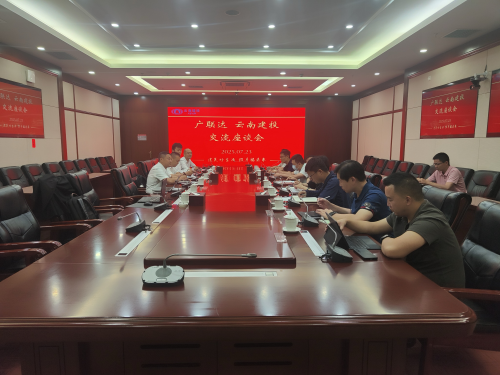
云南建投与广联达深化合作 共推PaaS平台落地及AI技术应用
Zhong Guo Chan Ye Jing Ji Xin Xi Wang· 2025-07-25 05:33
Core Insights - Yunnan Construction Investment Holding Group Co., Ltd. (Yunnan JianTuo) and Glodon Company Limited (Glodon) held a meeting to discuss the achievements of the PaaS platform and the application of AI technology in digital transformation [1][3] Group 1: PaaS Platform Development - The first phase of the PaaS platform construction has been successfully completed, with six business systems developed and operational since the project started in March 2024 [3] - The platform has achieved data integration and interoperability with core systems such as the group's master data platform, financial NCC, and I8 system, establishing a "self-controllable" information system [3] - Both parties are committed to addressing issues that arose during the construction process, with Glodon providing immediate responses and solutions to feedback from Yunnan JianTuo's information center and business departments [3] Group 2: AI Technology Application - Glodon shared insights on the practical applications of AI technology in digital transformation, focusing on scenarios such as AI intelligent recognition, market decision support, and contract risk review [6] - The collaboration between Yunnan JianTuo and Glodon is seen as being in a growth phase, with expectations for broader cooperation to accelerate Yunnan JianTuo's digital transformation [6] - Yunnan JianTuo's Chief Economist emphasized the importance of a "suitability first" principle in AI technology application, advocating for a steady approach that aligns with current trends while avoiding hasty decisions [6] Group 3: Future Collaboration - Following the meeting, both parties visited Yunnan JianTuo's "Dream Building Exhibition Hall" to deepen their understanding of the company's development history, business layout, and achievements in information technology [8]

瑞信证券更名为北京证券;锦龙股份拟购买深圳本贸29.32%股权 | 券商基金早参
Mei Ri Jing Ji Xin Wen· 2025-07-24 00:57
Group 1 - Credit Suisse Securities has been renamed Beijing Securities, marking an acceleration in the localization process of foreign-backed brokerages in China [1] - Beijing State-owned Assets Company acquired a 36.01% stake in Credit Suisse Securities from UBS for $91.35 million (approximately 650 million RMB) and a 49% stake from Founder Securities for $124 million (approximately 885 million RMB) [1] - The acquisition increases the number of brokerages with state-owned capital to five, potentially leading to adjustments in the industry landscape and intensified competition [1] Group 2 - Jinlong Co. plans to acquire a 29.32% stake in Shenzhen Benmao Technology Co., indicating a deeper commitment to the computing power sector [2] - This acquisition is part of Jinlong's strategy to transform its business amid financial pressures and policy support, further enhancing its computing power capabilities [2] - The move may influence stock price fluctuations and reflect market assessments of Jinlong's transformation strategy [2] Group 3 - Public funds have significantly increased their allocation to the Sci-Tech Innovation Board, with the proportion of stocks in active equity funds reaching a record high of 15.36% by the end of Q2 [3] - The over-allocation ratio for the Sci-Tech Innovation Board has risen from 7.5% to 7.72%, indicating growing confidence in the hard technology sector [3] - The expansion of themed funds focused on the Sci-Tech Innovation Board, now exceeding 300 billion RMB, is expected to inject new momentum into hard technology investments [3] Group 4 - Pension plans are increasingly participating in the ETF market, with a notable trend of "group purchases" of ETFs, particularly the upcoming Fortune CSI Hong Kong Stock Connect Technology ETF [4] - The scale of pension investors holding listed funds has grown over 300% compared to the end of 2022, reaching approximately 6 billion RMB [4] - Despite this growth, there remains significant room for pension plans to increase their allocation to public funds, given their overall scale in the trillions [4]

济南|济南政企研联动助推数字人才赋能产业转型
Da Zhong Ri Bao· 2025-07-24 00:45
Group 1 - The core initiative is the launch of the "Digital Talent Empowerment for Industrial Transformation" service activity aimed at addressing the shortage of digital talent in enterprises and accelerating regional industrial digital transformation [1] - The event gathered representatives from over 60 enterprises in Lixia District, along with officials and experts, to explore new paths for digital empowerment in industrial upgrading [1] - The "Digital Talent Empowerment for Industrial Transformation Expert Service" plan focuses on high-demand areas such as artificial intelligence, industrial internet, and big data, forming a high-level service team composed of scholars, experts, and technical directors [1] Group 2 - The first specialized training on digital transformation featured a lecture by a senior big data analyst, emphasizing the path to enterprise digital transformation from the perspective of data elements [1] - The Jinan Human Resources and Social Security Department plans to deepen the service model of "government platform, expert contribution, enterprise benefit," aiming to cultivate benchmark enterprises for digital transformation [2] - A closed-loop mechanism of "demand-matching-service-feedback" will be established to ensure experts regularly engage with enterprises, enhancing the momentum for digital talent empowerment in industrial transformation [2]

报告:中企数字化转型有三大变化,仅9%应用生成式AI成效显著
Di Yi Cai Jing· 2025-07-23 14:38
Core Insights - Chinese companies are maintaining high R&D investments and actively expanding into global markets despite facing performance pressures and profit contractions due to geopolitical conflicts and economic downturns [1][2] - The 2025 Digital Transformation Index report by Accenture indicates a steady increase in the digital transformation index of Chinese enterprises over three consecutive years, highlighting a critical phase in their restructuring process [1][2] Group 1: Key Changes in Digital Transformation - Chinese enterprises are committed to innovation and globalization, with a 12 percentage point increase in companies aiming to set new industry benchmarks compared to 2024 [2] - AI is transitioning from a tool to a strategic asset, with 46% of surveyed companies scaling the application of generative AI across various business processes, although only 21% can implement it rapidly and just 9% have realized significant value from it [2] - Companies are recognizing the need to upgrade operations to enhance resilience, with talent and operations identified as key dimensions affecting resilience levels [2] Group 2: Recommendations for Action - Companies should integrate AI capabilities into their business models and decision-making processes to enhance efficiency in predicting future scenarios and responding to changes [4] - Developing an AI-driven digital core can upgrade traditional IT systems to be more dynamic and intelligent, allowing for differentiated deployment of core business modules and data resources [4][5] - Modern data governance and advanced AI deployment can help set forward-looking cost and efficiency targets, improving operational responsiveness and predictive capabilities [5]
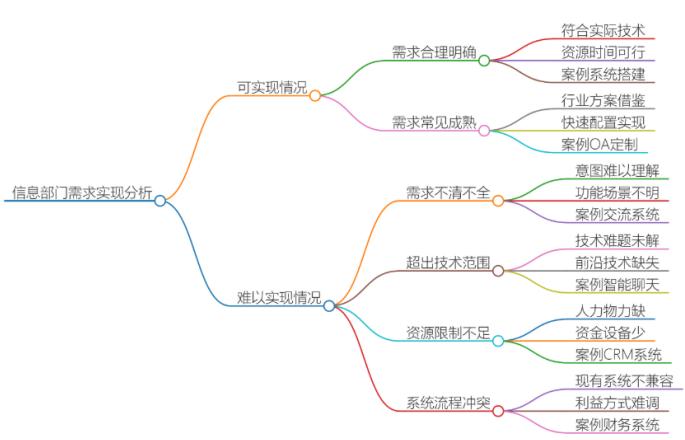
信息部门说:只要说清楚需求,技术就能实现,说的太简单了
3 6 Ke· 2025-07-23 01:28
Core Viewpoint - The article emphasizes that digital transformation in enterprises is often hindered by unclear business requirements and the misconception that technology can solve all management issues, highlighting the need for realistic expectations and effective communication between IT and business departments [1][2][5]. Group 1: Challenges in Digital Transformation - Many enterprises face challenges in digital transformation due to vague business requirements, leading to difficulties in IT departments accurately addressing these needs [1][4]. - There is a tendency for IT departments to overpromise on capabilities due to a lack of understanding of the complexities involved in implementing technology solutions [2][5]. - Business leaders often underestimate the technical challenges, believing that solutions are simpler than they actually are, which can lead to project delays or failures [2][5]. Group 2: Misconceptions about Technology - The belief that technology is a universal solution can lead to unrealistic expectations from business departments, resulting in IT departments making commitments beyond their capabilities [2][5]. - There is a risk of projects becoming overly complex due to continuous changes in business requirements, which can inflate costs and extend timelines unnecessarily [5][7]. - IT departments must recognize the limitations of technology and avoid the trap of overcommitting to unrealistic demands from business units [2][5][7]. Group 3: Importance of Communication and Realistic Planning - Effective communication between IT and business departments is crucial to ensure that requirements are feasible and aligned with technical capabilities [2][7]. - Establishing a clear understanding of the relationship between technology, business needs, and cost is essential for successful project execution [7]. - Continuous collaboration and feedback mechanisms should be implemented to prevent scope creep and ensure that projects remain within realistic boundaries [7].