
债务危机

Search documents
身家一年缩水820亿,王健林又双叒叕“割肉”甩卖
3 6 Ke· 2025-07-25 10:01
Core Viewpoint - Wang Jianlin, once a prominent figure in China's real estate sector, is now engaged in a challenging asset divestment journey, highlighted by the sale of a 30% stake in Kuaiqian Financial for 240 million yuan, reflecting the company's financial struggles and the need to alleviate funding pressures [1][6]. Group 1: Company Overview - Kuaiqian Financial, established in 2004 and a key player in the payment sector, was acquired by Wanda in 2014 for $315 million, holding a 68.7% stake at that time [2][3]. - The company was once ranked fourth in the industry, with a transaction scale only behind UnionPay, Alipay, and WeChat Pay, showcasing its significant market position [2]. Group 2: Financial Challenges - The current valuation of Kuaiqian Financial is approximately 800 million yuan, indicating a substantial loss compared to the original investment, which is perceived as a "fire sale" by Wang Jianlin [3]. - Wang Jianlin's wealth has drastically decreased from 1,408.4 billion yuan to 588.1 billion yuan within a year, marking a 58% drop and a significant decline in his ranking among China's wealthiest individuals [9]. Group 3: Regulatory Issues - Kuaiqian Financial has faced multiple penalties for regulatory violations, including a fine of 10.04 million yuan in January 2022 for issues related to account management and anti-money laundering [3][5]. - Additional fines were imposed in 2023 for violations concerning fund settlements and management regulations, indicating ongoing compliance challenges [4][5]. Group 4: Strategic Moves - The divestment of Kuaiqian Financial is part of a broader strategy by Wang Jianlin to sell off various assets, including significant stakes in Wanda's core businesses, to manage financial pressures and debt obligations [1][6][7]. - Previous attempts to divest financial assets date back to 2018, indicating a long-standing strategy to streamline operations amid financial difficulties [5].
楼市大局已定,未来国内超过45%的家庭,将会面临三大难题!
Sou Hu Cai Jing· 2025-07-24 09:50
Core Viewpoint - The real estate industry, once considered a "golden bowl," is now facing significant challenges, leading to a sense of despair among industry insiders and investors [1] Group 1: Current Market Conditions - The latest research from the Ministry of Housing and Urban-Rural Development and the Ministry of Finance indicates that the multi-property ownership rate among urban households has reached 43.7%, potentially exceeding 45% when including unreported properties [3] - Major cities like Beijing and Shenzhen have seen property prices drop significantly, with declines of 28.3% and 42.1% respectively, reverting to levels seen in 2015 [4] - The emergence of negative equity is concerning, with some homeowners facing substantial losses; for instance, a property bought for 3.5 million is now valued at only 2.3 million, resulting in a loss of 500,000 [4] Group 2: Market Liquidity Issues - The second-hand housing market in cities like Nanyang is experiencing a liquidity crisis, with a staggering 87,000 properties listed for sale but only 1,200 transactions in the first quarter of 2025, a 63% drop from six years ago [5] - In cities with lower income levels, such as those with an average annual income of 30,000, banks are hesitant to lend against older properties, further complicating sales [5] Group 3: Financial Struggles of Households - Many households are facing increasing debt burdens, with cases like a single mother in Wuhan carrying 370,000 in debt, leading to severe financial stress [6] - The number of mortgage defaults in third and fourth-tier cities is projected to rise by 20% by 2025, exacerbating the financial strain on homeowners [6] Group 4: Strategies for Survival - Recommendations for homeowners include selling underperforming properties while retaining essential real estate in major cities and areas with scarce resources [7] - Homeowners are advised to stay informed about policy changes that could provide financial relief, such as increased loan limits for families with multiple children [7] - Debt restructuring is suggested as a means to alleviate financial burdens, emphasizing the importance of maintaining basic living expenses during legal proceedings [7]


债务风暴中的坠落:ST中装预计上半年巨亏3亿-4亿 评级遭机构密集调降
Xin Lang Zheng Quan· 2025-07-24 08:32
Core Viewpoint - The company ST Zhongzhuang is facing a severe financial crisis, with projected net losses of 300 to 400 million yuan in the first half of 2025, following a disastrous loss of 1.787 billion yuan in 2024, indicating a failure to recover from its financial troubles [1] Group 1: Financial Performance and Risks - The company has experienced a significant decline in revenue, with a 59.88% drop in Q1 2025 and a gross margin of only 0.65% [1] - The company is in a "death spiral" due to high leverage, with a debt ratio of 83.68%, leading to a complete breakdown of its business model when financing channels were cut off [1] - The company has been downgraded to a C credit rating by China Chengxin, with a warning from United Ratings about the high uncertainty of debt restructuring, primarily due to 8.3 billion yuan in interest-bearing debt [2] Group 2: Legal and Operational Challenges - The company is facing numerous legal disputes related to construction contracts and has seen a significant increase in legal risks, with several cases reaching the courts [2] - Efforts to restructure debt have been unsuccessful, as potential investors demand the company to write off 70% of its existing debt, but asset disposal is hindered by frozen pledged shares [3] Group 3: Business Model Flaws - The company's reliance on a "capital advance for orders" expansion model has proven to be unsustainable, with a negative operating cash flow of 520 million yuan in 2024, indicating that profits are merely accounting figures rather than real cash [4] Group 4: Industry Implications - The situation of ST Zhongzhuang serves as a cautionary tale for the construction industry, highlighting the dangers of high debt, low margins, and long payment terms [5] - The company's downfall illustrates the critical importance of monitoring financial metrics, as a debt ratio exceeding 80% and persistent negative cash flow can lead to severe consequences, regardless of a company's previous status as an industry leader [5]
坐拥两万多吨黄金却甘愿受穷,印度经济如何被黄金拖垮?
Sou Hu Cai Jing· 2025-07-21 04:51
Core Viewpoint - India's relationship with gold, traditionally a symbol of wealth, has become a burden, leading to economic challenges despite being the largest consumer and importer of gold globally [1][5][17] Group 1: Economic Context - India is not a wealthy country, with one-third of its population living below the international poverty line and two-thirds surviving on less than $2 a day [5] - In 2021, India imported 1,050 tons of gold, accounting for one-third of its annual trade deficit [5] - By the end of 2019, India's government debt exceeded 74% of GDP, making it the highest among emerging market countries [14] Group 2: Cultural Significance of Gold - Gold in India is not merely a commodity but a sacred offering in religious practices, particularly in Hinduism, where 80% of the population are followers [6][10] - The discovery of over 500 billion Indian Rupees worth of gold and gems in a temple highlighted the cultural significance of gold as a religious offering rather than a financial asset [6][7] Group 3: Consumption Patterns - Over 95% of gold consumption in India is for jewelry, especially during weddings and religious ceremonies, making it a crucial part of family wealth, particularly for women [10] - The traditional wedding gold expenditure is at least 116 grams, approximately $10,000, which can be a significant financial burden for many families [10] Group 4: Policy Challenges - India's gold monetization policy, initiated in 2015 to convert gold reserves into economic capital, has been largely unsuccessful, attracting only 20 tons of gold over three years [14][15] - The lack of public trust in the government has hindered the success of this policy, contrasting with Japan's successful gold monetization efforts [15] Group 5: Future Outlook - Despite current challenges, reports indicate that India's economy shows strong potential, with an increase in its weight in the MSCI AC Asia-Pacific Index from 6% to 10% in 2021 [17] - The ability to overcome trust issues and effectively circulate gold wealth will be crucial for India's economic advancement [17][18]
雨润把租金收到了三年后,50亿债务压顶
阿尔法工场研究院· 2025-07-18 11:23
Core Viewpoint - The company Rainrun Foods, under the leadership of Zhu Yuan since 2019, continues to struggle with losses and increasing debt, raising concerns about its financial stability and future profitability [2][4]. Financial Performance - In 2024, Rainrun Foods reported a revenue of 992 million HKD, a decline of 29.64% year-on-year, marking five consecutive years of negative growth [2]. - The loss attributable to equity holders narrowed to 39 million HKD, with a cumulative loss of 202 million HKD over the past three years [2]. - The company's liquidity pressure is escalating, with the debt-to-asset ratio rising from 168.12% in 2023 to 209.71% in 2024 [2]. Debt and Liabilities - As of the end of 2024, the company had overdue bank loans of 344 million HKD and accrued interest of 251 million HKD, while cash and cash equivalents stood at only 41 million HKD [2]. - The company has been in a prolonged debt crisis since 2016, following the first debt default and subsequent legal issues involving its founder [2][3]. Market Operations and Strategies - The recent demand for merchants at the Mengyang wholesale market to pay three years' rent upfront may be a strategy to meet performance targets set in a debt restructuring agreement [4]. - The company faces significant challenges in achieving the profit targets outlined in its debt restructuring agreement, particularly the requirement to generate no less than 5 billion HKD in net profit by 2026 [4]. Asset Management - Financial data from Rainrun's two listed platforms indicate a total asset reduction of 2.3 billion HKD over the past five years, with a high debt ratio and poor short-term debt coverage [3]. - There are ongoing asset disposals involving banks, with a total of 6 banks involved in the liquidation of equity assets amounting to 6.085 billion HKD [4].

“黑天鹅之父”再度警告:债务危机、去美元化、关税乱局,每样都糟透了!
Jin Shi Shu Ju· 2025-07-17 07:36
Group 1: Market Risks and Debt Concerns - Nassim Taleb warns of significant market risks, particularly highlighting the U.S. federal debt, which has more than doubled over the past 25 years to approximately $37 trillion, with an expected increase of at least $3 trillion over the next decade due to Trump's policies [2][3] - The U.S. government is projected to pay $881 billion in interest on its debt in the fiscal year 2024, surpassing expenditures on Medicare and defense [2] - Concerns over U.S. debt and policies, including tariffs, have contributed to a roughly 10% decline in the dollar against a basket of global currencies this year [2] Group 2: Critique of Tariff Policies - Taleb criticizes Trump's tariff policies, stating that they are aggravating trade partners and lack coherence, despite not being fundamentally opposed to tariffs [3] - He emphasizes that the deterioration of trust in the dollar and the U.S. is problematic, especially as rising interest costs make debt a source of vulnerability [3] Group 3: Views on Cryptocurrency - Taleb has been a vocal critic of Bitcoin, labeling it as a "cult" and "a tumor," and reiterates that it is akin to "electronic tulips," referencing the historical tulip bubble [4] - He argues that Bitcoin cannot function as a currency due to its volatility and the unrealistic expectations of its supporters for continuous price increases [4] - Taleb questions the potential for widespread adoption of cryptocurrencies, given that many governments are reluctant to support them for fear of undermining their own currencies [4]
美联储这次彻底玩脱了?7月16日,美国经济危机传来最新消息
Sou Hu Cai Jing· 2025-07-16 13:36
Group 1 - The article discusses the escalating trade tensions initiated by Trump's imposition of a 30% punitive tariff on the EU, particularly affecting German car manufacturers like BMW, which could see costs rise by €2,000 per vehicle, erasing half a year's profit per sale [1][3] - The EU has prepared a countermeasure list worth €93 billion targeting iconic American products, indicating a shift in their response strategy to U.S. trade policies [3][10] - Market expectations are collapsing as traders exit positions based on the assumption that the U.S. would back down before August 1, with the IMF lowering global growth forecasts to 2.8% due to the trade war's potential impact [3][4] Group 2 - The Federal Reserve is facing a significant institutional crisis, with Trump demanding a drastic interest rate cut to 1% despite economic indicators not supporting such a move [4][6] - There are concerns about the independence of the Federal Reserve as Trump's administration seeks to create justifications for potentially replacing Chairman Powell, which could lead to severe market volatility [6][12] - The U.S. debt crisis is highlighted, with total debt reaching $37 trillion and interest payments projected to exceed $1 trillion by 2025, raising alarms about fiscal sustainability [7][9] Group 3 - Global central banks are increasingly selling U.S. Treasury bonds, with Canada reducing its holdings by $57.8 billion, reflecting a trend towards de-dollarization driven by U.S. tariff policies [9][10] - The article notes a potential "death spiral" where tariffs increase import costs, leading to inflation, which in turn pressures the Fed to maintain high interest rates, exacerbating the debt situation [9][10] - The erosion of trust in the U.S. dollar is evident as countries like Brazil and the EU explore alternatives to dollar transactions, signaling a shift in global trade dynamics [10][12] Group 4 - The article concludes that the combination of tariffs, debt, and the Fed's compromised independence represents a crisis for the U.S. economic order, with predictions of a potential 30% devaluation of the dollar [13]
美国诺克斯堡仓库里的“压箱底宝贝”,为什么不敢用?
Sou Hu Cai Jing· 2025-07-15 02:11
Core Viewpoint - The article discusses the implications of the U.S. not utilizing its gold reserves at Fort Knox, suggesting that a revaluation of gold could potentially alleviate the $26 trillion debt crisis, while raising concerns about the actual availability of gold reserves [1][4][6]. Group 1: Historical Context - The U.S. dollar decoupled from gold in 1971, leading to a system where the dollar became the global reserve currency, resulting in persistent trade deficits and reliance on foreign investments [3]. - Countries like China, Saudi Arabia, and Japan have started selling U.S. Treasury bonds, indicating a shift in foreign investment behavior [3][4]. Group 2: Current Financial Dynamics - The U.S. is increasingly relying on domestic institutions, such as the Federal Reserve and commercial banks, to purchase its debt, leading to a "fiscal internal circulation" [4]. - The cost of borrowing is rising as the U.S. government struggles to find buyers for its debt, forcing the Federal Reserve to print more money [4][6]. Group 3: Gold Valuation and Implications - The U.S. holds the largest gold reserves globally, officially recorded at 8,133.5 tons, valued at only $42.22 per ounce, while the current market price exceeds $3,000 per ounce [4][6]. - A revaluation of gold at market prices could create an additional $26 trillion in assets, significantly improving the debt-to-GDP ratio [4][6]. Group 4: Risks of Gold Revaluation - There are concerns that the gold reserves may not be as substantial as reported, leading to fears of a potential loss of confidence in the U.S. dollar if the truth were revealed [6][12]. - The article suggests that the U.S. is avoiding gold revaluation due to the risk of exposing potential discrepancies in its gold holdings [6][12]. Group 5: Shift to Cryptocurrencies - With the gold route deemed risky, the U.S. is increasingly turning to cryptocurrencies like Bitcoin and stablecoins as alternative financial instruments [8][12]. - The rise of stablecoins poses a risk to monetary sovereignty, as they are not directly controlled by the Federal Reserve, potentially leading to a loss of regulatory power over the broader monetary system [8][12]. Group 6: Global Implications - The article highlights the strategic importance of gold for non-U.S. countries, positioning it as a counterbalance to the dollar-centric financial system [12]. - The ongoing competition between gold and cryptocurrencies represents a significant shift in the global financial landscape, with potential long-term consequences for the U.S. dollar's dominance [12].

达利欧:国家“破产”方式是货币贬值,现在最需要担心的是滞胀环境,黄金是唯一持续保值资产
华尔街见闻· 2025-07-13 12:13
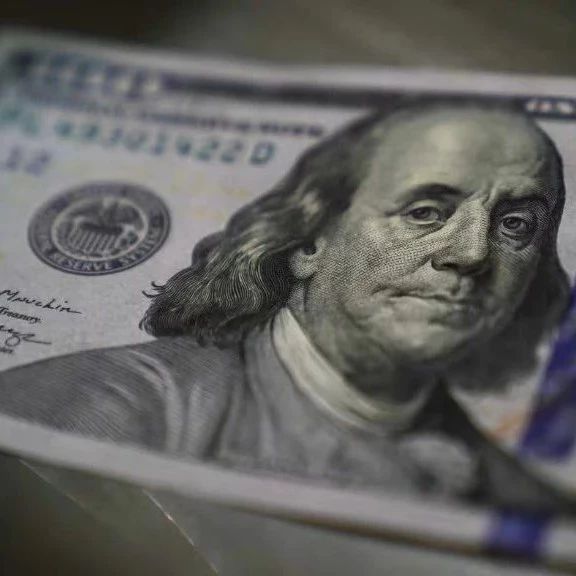
Core Viewpoint - Ray Dalio discusses the concept of national bankruptcy in his new book, emphasizing that unlike individuals and corporations, nations can print money and tax, leading to currency devaluation rather than default as a means of "bankruptcy" [1][3][14]. Group 1: National Debt Dynamics - Dalio highlights that the U.S. national debt is approximately $36-38 trillion, with an annual deficit of about $2 trillion (spending $7 trillion, revenue $5 trillion) [3][48][58]. - He notes that 60% of government spending is allocated to social welfare programs, which consume 85% of revenue, while interest payments account for 20% of revenue [3][60]. - The U.S. faces a significant debt issuance requirement of $12 trillion annually, which includes $1 trillion in interest, $9 trillion in principal repayment, and $2 trillion in new deficit [3][18]. Group 2: Proposed Solutions - Dalio proposes a solution to reduce the budget deficit to 3% of GDP through a combination of 4% spending cuts, 4% increase in tax revenue, and a 1% reduction in interest rates, although he believes the likelihood of this plan being implemented is only 5% due to the polarized political environment [2][4][28][38]. - He emphasizes that achieving a balanced budget requires addressing spending, tax revenue, and interest rates [30][32]. Group 3: Economic Environment and Risks - Dalio warns that if the U.S. adopts a strategy similar to Japan's, involving money printing and currency devaluation, it could lead to severe social, political, and economic challenges, especially during a recession [2][67][78]. - He draws parallels between the current economic situation and the 1970s, highlighting concerns about stagflation and the potential for a similar economic environment [6][111]. Group 4: Investment Strategies - For investors concerned about inflation and currency devaluation, Dalio recommends allocating 10-15% of their portfolio to gold as a diversification tool, alongside investing in inflation-indexed bonds for safety [8][79][90]. - He advises against real estate investments due to their sensitivity to interest rates and tax implications, suggesting that gold serves as a better hedge against economic instability [124][127].
达利欧:国家“破产”的方式是货币贬值,现在最需要担心的就是滞胀环境,黄金是唯一持续保值的资产
Hua Er Jie Jian Wen· 2025-07-12 13:00
Group 1 - The core argument of the article is that countries, unlike individuals and corporations, do not go bankrupt in the traditional sense but rather devalue their currency to manage debt, with the U.S. likely to adopt a model similar to Japan's [1][3][12] - Ray Dalio emphasizes that the U.S. is facing a staggering fiscal situation, with total debt around $36-38 trillion and an annual deficit of approximately $2 trillion, leading to a need for $12 trillion in debt issuance [2][39][50] - Dalio proposes a solution to reduce the budget deficit to 3% of GDP through a combination of spending cuts, increased tax revenue, and lower interest rates, although he believes the likelihood of this plan being implemented is only 5% due to the polarized political environment [3][28][33] Group 2 - The article discusses the unique characteristics of national debt, highlighting that governments can print money and tax, which differentiates them from individuals and corporations [2][12][13] - Dalio compares the debt situation to a circulatory system, where excessive debt relative to income creates pressure on other economic activities, leading to a potential crisis if not managed properly [14][15][16] - The article notes that 60% of U.S. government spending is allocated to social welfare programs, which consume 85% of revenue, making it difficult to reduce expenditures [52][53][56] Group 3 - Dalio warns that if the U.S. continues on its current path without addressing the debt issue, it risks entering a period of stagflation, similar to the 1970s [6][109][110] - He highlights the importance of gold as a hedge against currency devaluation, suggesting that investors should allocate 10-15% of their portfolios to gold and consider inflation-indexed bonds as safe investments [4][87][93] - The article concludes with a discussion on the potential for a future where the U.S. government resorts to printing money and devaluing currency to manage its debt, impacting future generations [66][75][76]