
公募基金费率改革

Search documents
调降销售环节费率!公募基金费率改革顺利收官
Sou Hu Cai Jing· 2025-09-05 12:28
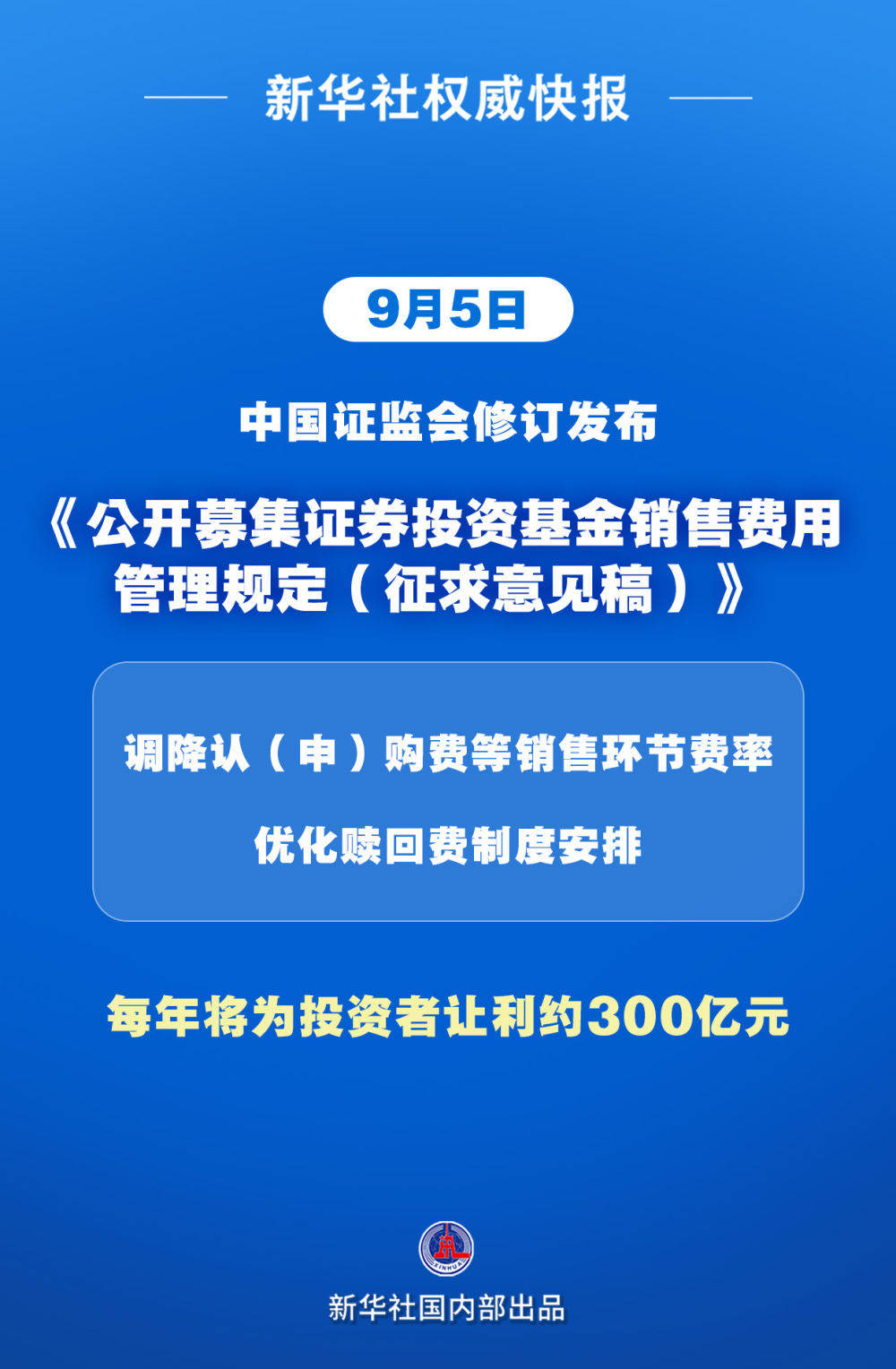
新华社权威快报 9 Fi5F 中国证监会修订发布 《公开募集证券投资基金销售费用 管理规定(征求意见稿 )》 每年将为投资者让利约300亿元 调降认(申)购费等销售环节费率 优化赎回费制度安排 9月5日,中国证监会修订发布《公开募集证券投资基金销售费用管理规定(征求意见稿)》。这意味着,公募基金行业第三阶段费率改革落 地,费率改革顺利收官。 根据管理规定,将合理调降公募基金认购费、申购费、销售服务费等销售环节费率水平,优化赎回费制度安排。以近三年平均数据测算,第三 阶段费率改革将每年为投资者让利约300亿元。 中国证监会自2023年7月启动公募基金行业费率改革。第一阶段和第二阶段费率改革已分别对公募基金管理费率、托管费率,以及公募基金证 券交易佣金费率进行合理调降。 此次第三阶段改革是分阶段推进公募基金费率改革的"最后关键一步"。据测算,三个阶段累计每年将为投资者让利超500亿元。 记者:刘羽佳、刘慧 海报制作:贾稀荃 (来源:新华社) ...

时隔十二年再迎修订,公募基金销售费率改革呈现四大亮点
Di Yi Cai Jing· 2025-09-05 12:26
Core Viewpoint - The recent revision of the public fund sales fee management regulations aims to significantly reduce costs for investors and enhance the quality of service in the public fund industry, with an estimated total benefit exceeding 50 billion yuan over three phases of reform [1][5][6]. Group 1: Key Highlights of the Fee Reform - The fee reduction is substantial, with maximum subscription and purchase fees for equity funds reduced from 1.2% and 1.5% to 0.8%, and for mixed funds from 1.2% and 1.5% to 0.5%. Bond funds see a reduction from 0.6% and 0.8% to 0.3% [2]. - The sales service fee for equity and mixed funds is lowered from 0.6% per year to 0.4%, while for index and bond funds, it is reduced from 0.4% to 0.2% per year, and for money market funds from 0.25% to 0.15% per year [2]. - The overall fee reduction in the third phase is estimated to save investors approximately 30 billion yuan annually, representing a 34% decrease [2][7]. Group 2: Optimization of Redemption Fee System - The redemption fee structure is optimized to ensure that all fees collected go to the fund's assets, encouraging fund sales institutions to focus on providing ongoing services rather than short-term gains [3]. - A unified redemption fee standard is established for various fund types, promoting long-term holding by investors [3]. - Funds held for over a year will no longer incur sales service fees, further incentivizing long-term investment [3]. Group 3: Focus on Personal Client Services and Equity Fund Development - The reform encourages fund sales institutions to maintain a customer service fee cap of 50% of management fees for individual investors, promoting better service [4]. - For institutional investors, the cap for equity funds remains at 30%, while for bond and money market funds, it is reduced from 30% to 15%, promoting the development of equity funds [4]. Group 4: Establishment of Direct Sales Service Platform - A direct sales service platform for institutional investors is being established to address high operational costs and inefficiencies in the industry [4]. - The platform aims to provide standardized, automated, and centralized data exchange services for various institutional investors [4]. Group 5: Summary of the Three Phases of Fee Reform - The fee reform has been implemented in three phases over two years, cumulatively benefiting investors by over 50 billion yuan [6]. - The first phase focused on reducing management and custody fees for actively managed equity funds, saving approximately 14 billion yuan annually [6]. - The second phase targeted reductions in trading commission fees, yielding an annual benefit of about 6.8 billion yuan [6].
公募基金销售费用管理新规!大幅降低投资者成本
Zhong Guo Zheng Quan Bao· 2025-09-05 12:26
本次销售费率改革"亮点多多""诚意满满",突出体现在降费力度大,实实在在让利投资者等方面。以近 三年平均数据测算,第三阶段基金销售费用改革将整体降费约300亿元,降幅约为34%。 降低投资者成本 《开放式证券投资基金销售费用管理规定》于2009年12月发布实施,2013年6月进行了第一次修订。此 次时隔12年再次修订,并更名为《公开募集证券投资基金销售费用管理规定》,是贯彻新"国九条"精 神、落实《公募基金行业费率改革工作方案》和《推动公募基金高质量发展行动方案》的重要举措,是 分阶段推进费率改革的"最后关键一步"。公募基金行业费率改革的平稳落地,标志着我国公募基金行业 迈向高质量发展新阶段,意义重大。 《规定》共六章28条,主要包括以下六方面内容。 一是合理调降公募基金认购费、申购费、销售服务费率水平,降低投资者成本。 公募基金行业费率改革顺利进入收官阶段,基金行业向高质量发展又迈出"坚实一步"。 9月5日,证监会网站消息,证监会对《开放式证券投资基金销售费用管理规定》进行了修订,并更名为 《公开募集证券投资基金销售费用管理规定》,现向社会公开征求意见。主要内容包括合理调降公募基 金认购费、申购费、销售服务 ...
证监会:公募基金费率改革顺利收官
Hua Er Jie Jian Wen· 2025-09-05 12:14
市场有风险,投资需谨慎。本文不构成个人投资建议,也未考虑到个别用户特殊的投资目标、财务状况或需要。用户应考虑本文中的任何 意见、观点或结论是否符合其特定状况。据此投资,责任自负。 9月5日,中国证监会修订发布《公开募集证券投资基金销售费用管理规定(征求意见稿)》,是分阶段 推进费率改革的"最后关键一步",意味着公募基金行业费率改革进入收官阶段。业内人士表示,公募基 金销售费率改革方案的出台,标志着基金费率改革第三阶段工作全面落地,将为行业高质量发展注入强 劲动力。(中国基金报) 风险提示及免责条款 ...
公募基金集体降费,上半年单只基金平均管理费同比再降27万元
2 1 Shi Ji Jing Ji Bao Dao· 2025-09-04 07:37
Core Viewpoint - The public fund industry in China is undergoing significant fee reforms, with management fees decreasing across various fund types, indicating a shift towards more investor-friendly practices [1][6][12]. Group 1: Fee Reform Progress - Since the implementation of the fee reform plan by the China Securities Regulatory Commission (CSRC) in July 2023, the public fund industry has seen a continuous reduction in management fees [1]. - In the first half of 2025, the total management fees collected by 196 public fund institutions amounted to 62.313 billion yuan, a slight increase from 61.469 billion yuan in the same period of 2024, but the average management fee per fund decreased from 5.226 million yuan to 4.957 million yuan [1]. - Over the past two years, the overall scale of public fund management fees has decreased by 12.6%, with the average management fee per fund dropping by 1.7 million yuan [1]. Group 2: Management Fee Distribution - The top 10 public fund managers accounted for nearly 40% of the total management fees in the market, with a total of 24.142 billion yuan collected, showing a slight decrease of 0.15% compared to the previous year [3][4]. - Four public funds reported a decline in management fees exceeding 100 million yuan, with the largest decreases seen in E Fund, CCB Principal Asset Management, and Huatai-PB Asset Management [3][4]. Group 3: Fund Type Analysis - Active equity funds collected 19.583 billion yuan in management fees in the first half of 2025, down 6.79% from the previous year, with equity mixed funds contributing 12.186 billion yuan [6]. - The introduction of floating fee rate funds marks a significant step in the fee reform, with 31 such funds launched, totaling over 34 billion yuan in scale [7][8]. Group 4: Trading Commission Changes - Public funds have also seen a reduction in trading commissions, with a 33.98% decrease in total commissions paid to brokers in the first half of 2025, amounting to 4.472 billion yuan [10]. - The top three public funds by commission payments were E Fund, GF Fund, and Fortune Fund, all of which experienced significant reductions in their commission expenses compared to the previous year [10][11]. Group 5: Future Directions - The next phase of fee reform will continue to focus on management fees, trading fees, and sales fees, aiming to reshape the industry's profit distribution and enhance investor satisfaction [12].
公募基金集体降费,上半年单只基金平均管理费同比再降27万元
21世纪经济报道· 2025-09-04 03:36
Core Viewpoint - The public fund industry in China has been undergoing significant fee reforms since July 2023, with a focus on reducing management fees across various fund types, including active equity funds, ETFs, and QDII funds, leading to a notable decrease in overall management fees and a shift towards performance-based fee structures [1][6][7]. Group 1: Fee Reduction Progress - As of the first half of 2025, the total management fees collected by 196 public fund institutions amounted to 62.313 billion yuan, a slight increase from 61.469 billion yuan in the same period of 2024, but the average management fee per fund decreased from 5.226 million yuan to 4.957 million yuan, reflecting a reduction of 26.9 thousand yuan [1]. - The overall management fee scale has decreased by 12.6% over the past two years, with the average management fee per fund dropping by 1.7 million yuan [1]. Group 2: Top Fund Managers - The top 10 public fund managers accounted for nearly 40% of the total management fees in the market, with a total of 24.142 billion yuan in management fees, showing a slight decrease of 0.15% compared to the previous year [3]. - Four public fund managers reported a decline in management fees exceeding 100 million yuan, with E Fund, CCB Principal Asset Management, and Huatai-PB Asset Management leading the reductions [3][4]. Group 3: Fund Type Performance - Active equity funds collected 19.583 billion yuan in management fees in the first half of 2025, down 6.79% from the previous year, with mixed funds contributing 12.186 billion yuan, representing 62.23% of the total [6]. - The introduction of floating fee rate funds has been a key development in the fee reform, with 31 such funds launched, totaling over 34 billion yuan in scale [7]. Group 4: Trading Commission Changes - Public funds have seen a significant reduction in trading commissions, with a total of 4.472 billion yuan paid to brokers in the first half of 2025, down 33.98% from 6.774 billion yuan in the same period of 2024 [9]. - The top three public fund managers by commission payments were E Fund, GF Fund, and Fortune Fund, all experiencing substantial declines in commission costs compared to the previous year [9][10]. Group 5: Future Outlook - The ongoing fee reform in the public fund industry is expected to continue along the lines of "management fees - trading fees - sales fees," aiming to reshape the industry's profit distribution and enhance investor satisfaction [10].

招商均衡优选半日募超73亿元,权益“爆款”基金重现!这次和五年前会有不同吗?
Xin Lang Cai Jing· 2025-09-04 03:23
Group 1 - The core viewpoint of the article highlights the resurgence of "explosive" equity funds in the A-share market, particularly with the successful launch of the招商均衡优选 fund, which raised over 73 billion yuan in just half a day, exceeding its 50 billion yuan cap [2][4] - The fund is managed by 吴潇, who has a track record of managing multiple funds with a total scale of 92.32 billion yuan [2] - The article notes that since 2023, only one other active equity fund, 华安景气领航, has surpassed the 50 billion yuan mark at its launch, indicating a rarity of such successful fund launches in the current market [2][4] Group 2 - Factors contributing to the success of the招商均衡优选 fund include the fund manager's decent performance and a balanced investment style that appeals to institutional investors [4] - The strong sales channels, particularly through招商银行, which ranks second in active equity fund holdings with 410.5 billion yuan, also played a significant role in the fund's rapid fundraising [4][9] - The article defines "explosive" funds as those that sell out quickly and exceed fundraising expectations, with the peak period for such funds occurring between 2020 and 2021 [4][6] Group 3 - The article discusses the decline in performance of many previously successful "explosive" funds, with only 10 out of 30 funds launched in 2020 maintaining positive returns as of September 2 [7] - The highest return among these funds is 63.01% for 富国成长策略A, while the lowest is -31.49% for 嘉实核心成长A, highlighting the volatility and challenges faced by large-scale funds [7][8] - The article attributes the poor performance of many "explosive" funds to their launch during market peaks, which often leads to larger fund sizes that can hinder management effectiveness [7] Group 4 - The public fund industry is undergoing a transformation towards high-quality development, with total net assets reaching 35.08 trillion yuan as of July, marking a record high [9] - Recent reforms in fund fee structures aim to reduce investor costs and shift the focus from scale to returns, indicating a significant change in industry dynamics [9][10] - The trend of multiple fund managers co-managing funds is becoming more common, with over 25% of funds now employing a co-management model [12]

公募费率改革两年:单只基金平均让利170万元
2 1 Shi Ji Jing Ji Bao Dao· 2025-09-04 01:59
Core Viewpoint - The public fund industry in China has seen significant fee reforms since July 2023, with a notable reduction in management fees and the introduction of floating fee structures, indicating a shift towards aligning the interests of fund managers and investors [1][5]. Summary by Sections Fee Reduction Progress - Since the implementation of the fee reform plan, the average management fee per fund has decreased from 5.226 million yuan to 4.957 million yuan, a reduction of 26.9 thousand yuan [1]. - The total management fees collected by public funds in the first half of 2025 amounted to 62.313 billion yuan, a slight increase from 61.469 billion yuan in the same period of 2024, but a significant drop from 71.305 billion yuan in the first half of 2023, reflecting an overall decrease of 12.6% in management fees over two years [1]. Major Fund Companies - The top 10 public fund companies accounted for nearly 40% of the total management fees in the market, with a total of 24.142 billion yuan in management fees, showing a slight decrease of 0.15% compared to 2024 [2]. - Four public fund companies reported a decline in management fees exceeding 100 million yuan, with E Fund, CCB Principal Asset Management, and Huatai-PB Asset Management being the most affected [2]. Fund Types and Performance - Active equity funds collected 19.583 billion yuan in management fees in the first half of 2025, down 6.79% from the previous year, with mixed performance across different fund types [4]. - The introduction of floating fee structures has led to the issuance of 31 new floating fee funds, with a total scale exceeding 34 billion yuan, indicating a shift towards performance-based fee models [5]. Trading Commission Trends - Public funds have seen a significant reduction in trading commissions, with a total of 4.472 billion yuan paid to brokers in the first half of 2025, down 33.98% from 6.774 billion yuan in the same period of 2024 [6]. - The top three public funds in terms of trading commissions were E Fund, GF Fund, and Fortune Fund, all experiencing a decline in commission payments compared to the previous year [6][7]. Future Outlook - The ongoing fee reform is expected to continue along the lines of "management fees - trading fees - sales fees," aiming to reshape the industry's profit distribution and enhance investor satisfaction [7].
“国家队”增持、基金公司大手笔降费,基金半年报信息量大
Zheng Quan Shi Bao· 2025-09-02 08:34
Group 1 - The core viewpoint of the articles highlights the significant reduction in management fees and trading commissions in the public fund industry, indicating a successful fee reform that benefits investors [1][2][3][5] - The management fee income for equity mixed funds decreased by 1.7 billion yuan, while trading commissions dropped by 2.334 billion yuan compared to the same period last year [2][3] - The introduction of floating management fee funds has become a regular practice, continuously benefiting investors [4] Group 2 - Institutional investors have significantly increased their holdings in stock funds, with their share rising from 34.44% to 40.49% year-on-year, amounting to an increase of 445.8 billion yuan [6][7] - Central Huijin and other institutional investors have played a crucial role in stabilizing the market by increasing their investments in stock ETFs [7] - Both institutional and individual investors have reduced their holdings in mixed funds, making it the only fund type to experience simultaneous reductions from both groups [8] Group 3 - Fund managers express optimism about the stock market, believing that the era of value creation has arrived, particularly in manufacturing and consumer service sectors [9][10] - The overall investment opportunities are abundant, especially in high-end manufacturing, technology innovation, and consumer goods sectors [11]
上半年券商合计揽入分仓佣金44.72亿元
Zheng Quan Ri Bao· 2025-09-01 23:19
Core Viewpoint - The brokerage industry is undergoing significant transformation due to ongoing public fund fee reforms and changes in commission distribution mechanisms, with a notable decline in split commission revenues observed in the first half of the year [1][2]. Group 1: Split Commission Data - In the first half of the year, brokerages achieved a total split commission of 4.472 billion yuan, a year-on-year decrease of 33.98% [1]. - Leading brokerages dominate the market, with CITIC Securities leading at 347 million yuan in split commissions, followed by Guotai Junan at 283 million yuan, and others like GF Securities, Changjiang Securities, and Huatai Securities each exceeding 200 million yuan [1][2]. - The top 20 brokerages accounted for 75% of the total split commissions, amounting to 3.358 billion yuan, with each of these firms surpassing the 100 million yuan mark in commission income [2]. Group 2: Growth and Performance - Despite an overall contraction in split commission revenues, some firms managed to achieve growth or limit declines, with Zhejiang Securities, Shenwan Hongyuan, and CICC seeing declines of less than 10%, significantly better than the industry average [3]. - Smaller brokerages like Huafu Securities and Huayuan Securities experienced explosive growth, with Huafu's split commission surging by 312.34% to 86.83 million yuan, and Huayuan's increasing by 2163.26% to 48.20 million yuan [3]. Group 3: Research Business Evolution - The brokerage research business is undergoing a comprehensive transformation in its ecosystem, profitability models, and team structures, with a focus on returning to the core value of research [4][5]. - Major brokerages are expanding their global reach while consolidating domestic research advantages, with CITIC Securities increasing its client coverage and Huatai Securities significantly boosting its overseas research output [4]. - Firms like CICC and Shenwan Hongyuan are exploring multiple pathways for value return in research, emphasizing collaboration across different financial services [5]. Group 4: Future Directions - Brokerages have outlined their future research strategies, with CITIC Securities aiming to enhance research capabilities and expand its service coverage globally [6]. - Guolian Minsheng plans to improve market share through differentiated and forward-looking research, focusing on building a high-value product matrix and enhancing research ecosystems [6].
