半导体产业

Search documents
四年IPO长征之后,屹唐股份还有更大的考验
3 6 Ke· 2025-05-27 01:29
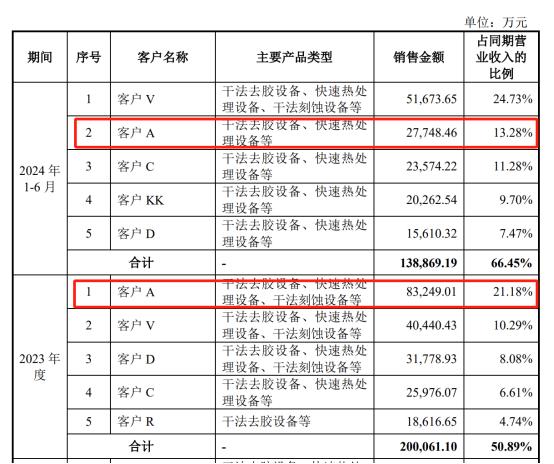
Core Viewpoint - Beijing Yitang Semiconductor Technology Co., Ltd. (Yitang) is nearing the completion of its IPO process after receiving approval from the China Securities Regulatory Commission (CSRC) in March this year, marking a significant milestone after nearly four years of challenges and delays [1][2]. Group 1: IPO Journey - Yitang's IPO process has been lengthy and complex, facing multiple hurdles including the need to change its accounting firm due to an investigation involving PwC and the impact of the 827 policy [1]. - The company has finally received the "pass" to enter the capital market, which is expected to benefit its major shareholders, including Yizhuang Guotou and several well-known investment firms [1]. Group 2: Business Operations and Client Relationships - Yitang's significant acquisition of MTI (Mattson Technology, Inc.) in 2016 for approximately $300 million has established MTI as a crucial part of Yitang's business, contributing significantly to its revenue [3][6]. - As of the end of 2020, less than 30% of Yitang's employees were based in China, with around 40% of its revenue coming from the mainland, indicating a strong international presence [3][4]. - The company's largest client, referred to as "Client A," is identified as Samsung Electronics, which has historically contributed significantly to Yitang's revenue [6][7]. Group 3: Market Dynamics and Challenges - There has been a noticeable decline in Samsung's procurement from Yitang, particularly in 2024, despite Samsung's overall capital expenditure reaching record levels [7][8]. - The decline in orders from Samsung raises concerns about Yitang's ability to capitalize on its relationship with its largest client, especially in light of competitive pressures from companies like Applied Materials [9][10]. Group 4: Regulatory and Operational Risks - Yitang faces increased risks due to its inclusion on the U.S. Department of Commerce's Entity List, which may limit its ability to procure materials from U.S. suppliers [10][11]. - The company has highlighted the potential impact of regulatory environments across various countries on its operations, emphasizing the need for effective management of its overseas subsidiaries [13][14]. - The absence of key Chinese executives in MTI's management team raises concerns about the integration and operational efficiency of the company in the face of regulatory scrutiny [12][13]. Group 5: Future Outlook - Despite a reduction in the planned fundraising scale compared to 2021, Yitang's valuation remains high, necessitating proactive measures to alleviate investor concerns regarding operational and market risks [14]. - The company is expected to contribute significantly to China's semiconductor industry as it navigates through these challenges [14].

沙漠上崛起的芯片新贵
半导体行业观察· 2025-05-25 02:52
近日,美国与阿联酋签署的AI芯片进口协议震惊业界:美国允许阿联酋每年进口50万颗英伟达最 先进AI芯片,总量超100万颗,达拜登时代限额的4倍。这份协议至少会持续到2027年,甚至有可 能延续到2030年。 如果您希望可以时常见面,欢迎标星收藏哦~ 近年来,全球半导体产业在逆全球化浪潮中加速重构,各国纷纷通过政策扶持、资本投入和技术封 锁强化本土产业链韧性。 从美国《芯片与科学法案》的520亿美元补贴,到欧盟《芯片法案》430亿欧元的产业布局,再到 日韩在先进制程和存储领域的激烈竞争,以及中国台湾、大陆在制造和设计环节的持续突破,全球 半导体版图正经历深度调整。与此同时,印度、马来西亚、越南等新兴市场凭借低成本优势和政策 红利,成为产业链转移的新热点。 在这一背景下,阿联酋作为中东地区的科技转型先锋,正以其独特的资源禀赋和战略眼光,悄然崛 起为全球半导体与人工智能领域的重要参与者。 百万颗英伟达先进AI芯片,涌向阿联酋 不过需要注意的是,在这些芯片的分配上也有明确规划——20%芯片将流向阿联酋本土AI巨头 G42,用于阿拉伯语大模型研发及本土数据中心;剩余80%则由微软、甲骨文等美企支配,用于其 在阿联酋建设 ...




小米芯片,全球第四,雷军杀出来了
盐财经· 2025-05-20 10:22
Core Viewpoint - Xiaomi is set to release its self-developed SoC chip,玄戒O1, marking a significant milestone in its chip development journey and positioning it as the fourth global company to produce a 3nm mobile processor after Apple, Qualcomm, and MediaTek [4][8][24]. Group 1: Chip Development and Strategy - The release of the玄戒O1 chip is a culmination of over ten years of investment in chip development, with Xiaomi investing a total of 135 billion yuan in research and development as of April 2023, and plans to invest over 60 billion yuan this year alone [18][24]. - 雷军 emphasized the importance of having autonomy in core technologies, stating that mastering advanced chip technology is essential for Xiaomi's long-term success in the smartphone industry [12][14]. - The company has transitioned from producing smaller chips to developing SoC chips, with the玄戒O1 being a significant leap forward, indicating that Xiaomi has not abandoned its ambition to create high-end SoC chips despite previous setbacks [23][24]. Group 2: Market Position and Challenges - The玄戒O1 chip has begun mass production, with speculation that TSMC will be the foundry due to its capabilities in 3nm process technology [30]. - Xiaomi's chip design is a notable achievement for mainland China, but the company still faces challenges in the manufacturing process, which remains a critical hurdle in the semiconductor industry [26][34]. - The geopolitical landscape and export controls from the U.S. pose additional challenges for Chinese companies like Xiaomi in the semiconductor space, highlighting the ongoing struggle for technological independence [35][36].


半导体精品公众号推荐!
国芯网· 2025-05-17 14:50
Core Viewpoint - The article emphasizes the importance of focusing on high-quality information sources in the fragmented era of the semiconductor industry, suggesting that professionals should follow specific WeChat public accounts to stay informed and connected [1]. Group 1: Recommended WeChat Public Accounts - "半导体技术天地" focuses on semiconductor industry technology, technical materials, and expert explanations [3]. - "国芯网" is highlighted as a key platform for semiconductor industry insights [5]. - "全球电子市场" claims to be the leading WeChat public platform in the semiconductor sector, with 500,000 industry professionals already following it [7]. - "半导体行业圈" is described as a community for semiconductor professionals [9]. - "半导体产业联盟" represents a full industry chain alliance in the semiconductor field [11]. Group 2: Community Engagement - The article mentions a WeChat group with 80,000 members, which is open for free access to all interested in the semiconductor industry [11]. - Instructions for joining the WeChat group include scanning a QR code and replying "加群" in the public account for further steps [12][14].
HBM爆火:SK海力士,再超三星
半导体行业观察· 2025-05-17 01:54
Core Viewpoint - SK Siltron's sales to SK Hynix surpassed those to Samsung Electronics for the first time in Q1 2023, attributed to SK Hynix's success in high bandwidth memory (HBM) and server DRAM, while Samsung faced challenges [1][2]. Group 1: Sales Performance - In Q1 2023, SK Siltron sold wafers worth 124.4 billion KRW to Samsung (Company A) and 128.8 billion KRW to SK Hynix (Company B), marking a 27% decline in sales to Samsung and a 32% increase to SK Hynix compared to the previous year [1]. - This shift is significant as it marks the first time since SK Hynix's acquisition by SK Group in 2017 that sales to SK Hynix exceeded those to Samsung [1]. Group 2: Market Dynamics - The decline in Samsung's sales is attributed to weakened product competitiveness and a reduction in foundry capacity due to poor customer orders, leading to a 50% decrease in capital investment compared to the previous year [2]. - Conversely, SK Hynix has been maximizing production capacity for its 10nm fifth-generation process and has seen strong sales for products like HBM3E, while also investing in new factories [2]. Group 3: SiC Business Challenges - SK Siltron's SiC wafer subsidiary reported Q1 sales of 6.147 billion KRW with an operating loss of 63.4 billion KRW, a significant decline from the previous year's sales of 21.3 billion KRW and an increase in losses from 26.3 billion KRW [3]. - The SiC business, seen as a next-generation power semiconductor opportunity, is facing challenges in technology competitiveness and market conditions, leading to speculation that it may become a liability for SK Group [3].

研究半导体设备、材料,为什么应该去一次日本?
芯世相· 2025-05-16 03:53
Core Viewpoint - The article emphasizes the importance of the Japanese semiconductor industry, highlighting its strengths in upstream semiconductor materials and equipment despite its relatively low profile in the global market [4]. Industry Overview - Since Trump's administration, high-intensity tariff policies have significantly impacted the global semiconductor supply chain, leading to increased attention on Asian semiconductor industries, particularly in China, Japan, and South Korea [3]. - Japan's semiconductor industry, while understated, maintains a dominant position in several key categories of semiconductor materials, with Japanese companies leading in three out of five categories in a new survey for 2024 [4]. Market Position - In the field of photoresists, Tokyo Ohka Kogyo holds a 22.8% market share, with leading Japanese companies collectively accounting for 75.9% of the market. In silicon wafers, Shin-Etsu Chemical leads with a 24.7% share, and three Japanese companies dominate the photomask substrate market [4]. Technical Expertise - The semiconductor materials and equipment market is characterized by smaller market sizes and lower profit margins, but it requires high technical expertise. Japan's "artisan spirit" and extreme emphasis on fundamental research have allowed it to create a unique monopolistic barrier in this field [4]. Event Participation - SEMICON Japan is highlighted as a crucial opportunity for deeper insights into the Japanese semiconductor industry. The event is organized by SEMI and is recognized as one of the most influential semiconductor industrial exhibitions globally [5]. - The upcoming SEMICON Japan 2025 will feature participation from over 1,100 companies and organizations from 35 countries, with a significant number of local Japanese enterprises [5]. Business Exploration - The company plans to organize a six-day business exploration trip to Japan, focusing on SEMICON Japan 2025, which includes visits to local semiconductor companies and universities to gain a comprehensive understanding of the industry atmosphere [5][8]. - The exploration aims to facilitate efficient connections between local semiconductor enterprises and participants, enhancing collaboration opportunities [7]. Experience and Optimization - The company has extensive experience in organizing overseas business explorations, having led over a hundred executives to various countries for industry insights and networking since early 2018. Each trip has been optimized based on feedback and industry needs [9][12].

台积电:今年建九个厂
半导体芯闻· 2025-05-15 10:07
Core Insights - TSMC is expanding its production capacity significantly, with plans to build 9 new facilities this year, including 8 wafer fabs and 1 advanced packaging plant, driven by the increasing demand for AI chips [1][2] - The 3nm process technology is entering its third year of mass production, with a projected capacity increase of over 60% by 2025, while the 2nm technology is expected to begin mass production in the second half of 2025 [1][2] - TSMC's advanced packaging capabilities are also expanding, with significant growth in CoWoS capacity and plans for overseas packaging bases to support AI and high-performance computing applications [2] Group 1: Production Capacity and Technology - TSMC's 3nm production capacity is expected to grow by 60% this year, with various technology versions like N3E, N3P, and N3X being developed to meet diverse customer needs [1] - The initial yield of TSMC's 2nm technology has exceeded expectations, with dedicated production lines being established in Hsinchu and Kaohsiung [2] - TSMC's global expansion includes new facilities in Arizona, Japan, and Germany, aimed at enhancing supply chain resilience and meeting specific process requirements [2] Group 2: Market Trends and Future Projections - The semiconductor industry is projected to grow by over 10% in 2025, with AI expected to be a major growth driver, contributing significantly to the industry's value [3][4] - By 2030, the semiconductor industry's value is anticipated to reach $1 trillion, with AI accounting for 45% of the market share, while mobile devices, automotive, and IoT will also play significant roles [4] - TSMC's A14 process technology is expected to be mass-produced by 2028, offering improved speed and reduced power consumption compared to the 2nm process [4]
印巴冲突暴露了印度“芯片梦”的最大问题
是说芯语· 2025-05-11 01:43
以下文章来源于EEPW ,作者ZongYu EEPW . 关注EEPW电子产品世界网,获取电子行业资讯和技术解决方案。 申请入围"中国IC独角兽" 半导体高质量发展创新成果征集 本周买入了军工特别是成飞股票的朋友估计现在嘴角压都压不住了,就在上月末(4月2 2 日),印度发生大规模恐怖袭击,一瞬间点燃了南亚印巴火药桶,在印度一系列激进措 施之后。5月7日,印度对巴基斯坦发动空袭,巴基斯坦凭借歼1 0 -CE和PL- 1 5E直接给印 度来了一次"印巴猎火鸡","中械装备"一战成名,引得以中航成飞为首的一系列军工板 块大涨。 我们自然不是军事频道,关注点肯定不是武器装备,这篇文章我们想要探讨一下,在战 火的阴云下,对世界半导体产业链有什么影响?以及印度半导体强国梦,到底进行的怎 么样了? 印度,对于全球半导体的影响 印度,在世界半导体产业链中,一直"默默无闻",提到印度人们想到"干净又卫生"的概率,一定比半导体芯片 更大,印巴的战火对于全球半导体产业链的影响,也许还真有限。但是有几点还是要注意,印度拥有全球约 20%的半导体设计工程师,约12.5万人,每年设计超过3000个独立集成电路(IC)。全球前25大半导 ...
韩国半导体工厂,不如美国划算?
半导体芯闻· 2025-05-09 11:08
如果您希望可以时常见面,欢迎标星收藏哦~ 美国方面:为了"就业期待",说服居民并承诺州政府补贴 来源:内容 编译自 joongang ,谢谢 。 本月6日(当地时间),美国印第安纳州西拉法叶市议会通过了一项决议,同意将49万平方米的住 宅用地变更为SK海力士用于建设高带宽内存(HBM)工厂的用地。这一地块比最初规划的更大, 也更靠近住宅区,是SK海力士更为偏好的位置。市议会经过7小时的通宵会议后进行了投票,9名 市议员中有6人投下赞成票。他们对SK海力士的提案进行了详细审查。 而在上月30日,韩国京畿道安城市议会一致通过了"敦促废除与龙仁半导体集群的共生协议"的决 议案。原因在于SK海力士龙仁产业园内规划建设的液化天然气(LNG)热电联产发电站距离安城 市较近,且输电线路将穿过安城市,可能给当地带来损害。安城市市长金宝罗此前表示将组建居民 对策委员会反对该项目,并称将拨付市预算支持该行动。这项支持依据是2023年12月制定的一项 条例,允许市长为解决与其他地方政府利益冲突的市民团体提供财政支持。 一个企业分别在两个城市建设工厂——这正是为了应对蜂拥而至的订单,SK海力士计划在美国印 第安纳州和韩国龙仁市建设的 ...