
并购

Search documents
MannKind Corporation (MNKD) Mergers and Acquisition Call Transcript
Seeking Alpha· 2025-08-25 17:36
Core Viewpoint - MannKind Corporation is discussing its acquisition of scPharmaceuticals, highlighting the expected benefits and future performance implications of this strategic move [2][3]. Group 1: Acquisition Details - The conference call is focused on MannKind's acquisition of scPharmaceuticals, with management providing insights into the expected timing and benefits of the acquisition [2][3]. - The call includes participation from various research analysts, indicating interest from the investment community regarding this acquisition [1]. Group 2: Forward-Looking Statements - Management may make forward-looking statements about future events and performance related to the acquisition and product candidates, reflecting the company's current perspective on trends and information [3]. - These forward-looking statements are subject to risks and uncertainties, and actual results may differ from projections [4].



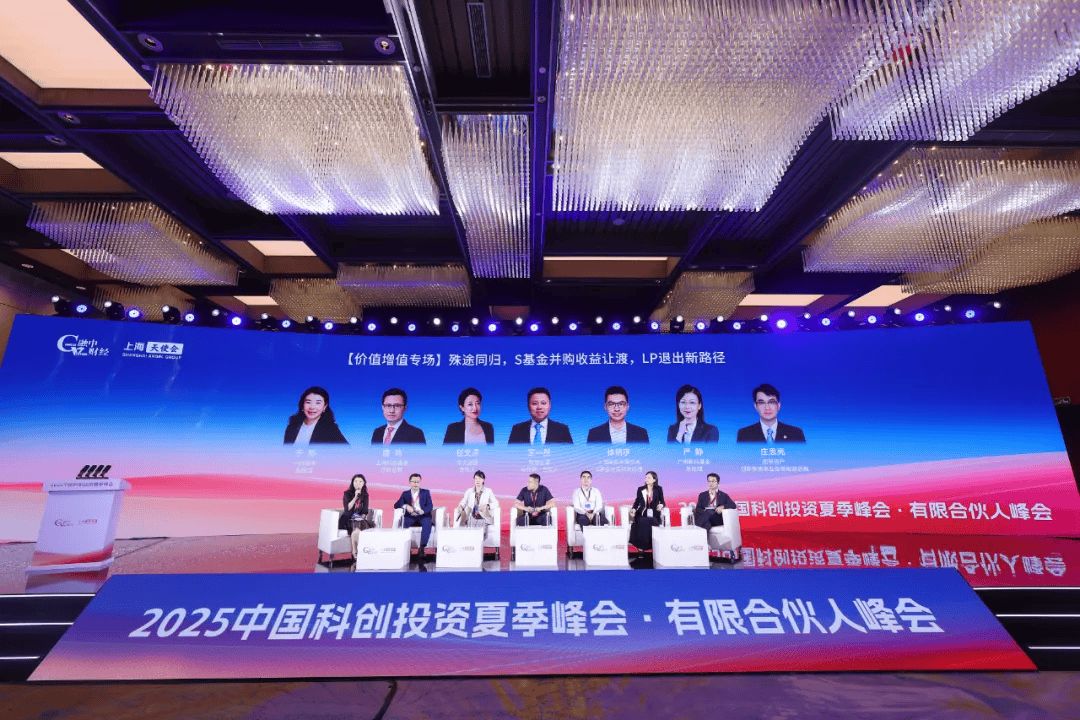
殊途同归,S基金并购收益让渡,LP退出新路径
Sou Hu Cai Jing· 2025-08-25 06:17
Core Insights - The article discusses the growing trend of "patient capital" and "bold capital" in the context of new productive forces investment, highlighting the role of state-owned investment funds as key players in supporting emerging industries and optimizing resource allocation [2] - The "2025 China Sci-Tech Summer Investment Summit" served as a platform for industry leaders to discuss trends and strategies related to limited partner (LP) investment layouts [2] Group 1: Investment Trends and Strategies - State-owned capital and various financial institutions are increasingly focusing on the development of emerging industries and optimizing resource allocation through diversified investment strategies [2] - The Shanghai government has introduced a series of policies to support the development of an international financial center and innovation center, creating numerous opportunities for industry practitioners [4][12] - The discussion highlighted the importance of adapting strategies to align with national policies, particularly in the context of mergers and acquisitions (M&A) and S-fund regulations [4][12] Group 2: Challenges and Opportunities - Participants noted challenges such as high transaction costs, regulatory restrictions, and difficulties in exiting investments, which impact the effectiveness of S-funds [6][8] - There is a growing recognition among local governments of the value of S-funds, with an increasing focus on value appreciation as a key consideration for investments [7][20] - The article emphasizes the need for innovative approaches to address liquidity issues and enhance collaboration between government funds and social capital in the S-fund space [20][28] Group 3: Fund Management and Interaction - The interaction between S-funds and mother funds is characterized as a mutually beneficial relationship, where each can leverage the strengths of the other to achieve liquidity and asset quality [20] - The article discusses the importance of establishing a systematic approach to S-fund management, focusing on ecological, product-oriented, professional, and regulatory aspects [16][18] - The need for effective valuation and pricing strategies in S-fund investments is highlighted, with an emphasis on understanding the underlying value of assets [26]
L'Air Liquide (AIQU.F) M&A Announcement Transcript
2025-08-22 13:02
Summary of the Conference Call on Air Liquide's Acquisition of DIG IAS Company and Industry - **Company**: Air Liquide - **Acquisition Target**: DIG IAS, a leading industrial gas company in South Korea - **Industry**: Industrial gases, with a focus on manufacturing sectors such as electronics, chemicals, and healthcare Core Points and Arguments 1. **Strategic Growth Acquisition**: Air Liquide announced the acquisition of DIG IAS to strengthen its position in growth markets, particularly in South Korea, which is the fourth largest industrial gas market globally and expected to double by 2035 [2][4][11] 2. **Complementarity**: The acquisition will double Air Liquide's size in Korea, enhancing its local density by adding 60 plants and over 220 kilometers of pipeline, which will service key customers across 10 major industry basins [5][12] 3. **Earnings Accretion**: The acquisition is expected to be earnings accretive within one year, with a return on capital employed (ROCE) remaining above 10% [5][25] 4. **Investment Backlog**: DIG has secured €240 million in investments through long-term contracts, with 19 projects in its diversified backlog, projected to generate over €50 million in additional EBITDA by 2030 [6][21] 5. **Market Position**: South Korea's manufacturing sector contributes over 25% to its GDP, with significant presence in industries such as refining, chemicals, and steel, making it an attractive market for industrial gases [8][10] 6. **Electronics Sector**: DIG holds a strong position in the electronics market, which accounts for 60% of the Korean industrial gas market, particularly in carrier gases for semiconductors and flat panel displays [13][9] 7. **Healthcare Supply**: DIG supplies medical gases to hospitals across Korea, complementing Air Liquide's existing healthcare operations [14][16] 8. **Regulatory Considerations**: The acquisition is subject to Korean regulatory clearance, but the companies do not anticipate significant competition issues due to the complementarity of their operations [42][46] Additional Important Content 1. **Historical Context**: Air Liquide previously exited the South Korean market in 2014 due to limited impact as a minority partner in a joint venture. The current acquisition is seen as a strategic return to a transformed and more promising market [78][86] 2. **Financial Structure**: The acquisition will be financed through a structured bridge loan, with plans for refinancing through bond issues to maintain an A category credit rating [24][25] 3. **Long-term Vision**: The acquisition aligns with Air Liquide's growth-oriented strategy, focusing on both organic growth and strategic acquisitions to enhance its market position [43][60] 4. **Risk Management**: Concerns regarding trade wars and their impact on the Korean market were addressed, with confidence in the quality of DIG's customer base mitigating potential risks [55][58] 5. **Project Diversity**: The 19 projects in DIG's backlog are diverse, not solely focused on electronics, indicating a balanced approach to growth across various sectors [73][74] This summary encapsulates the key points discussed during the conference call regarding Air Liquide's strategic acquisition of DIG IAS, highlighting the rationale, expected benefits, and market context.
硅谷和华尔街最成功、最有钱、最聪明的人,为什么都听这两个人的?
3 6 Ke· 2025-08-22 02:26
Core Insights - The podcast "Acquired" has gained significant attention from influential figures in the tech and investment sectors, including Huang Renxun, Charlie Munger, and Mark Zuckerberg, indicating its high-quality content and relevance to industry leaders [1][2][4][5] - "Acquired" focuses on in-depth analyses of successful acquisitions and the stories behind major companies, appealing to listeners who value both entertainment and educational content [11][16][40] Podcast Development - The podcast was founded in 2015 by David Rosenthal and Ben Gilbert, who aimed to explore successful acquisitions and the insights behind major business decisions [8][13][19] - Initially, the podcast struggled with low download numbers, averaging only a few hundred listens per episode in the first couple of years [24][26] - A significant shift occurred in 2018 when the hosts began to focus on the development stories of successful companies, leading to increased engagement and growth in listenership [27][30] Audience and Sponsorship - By 2023, "Acquired" had become one of the most popular tech podcasts, with episodes regularly exceeding 100,000 downloads, and sponsorship revenue surpassing $3 million [30][33] - The podcast offers various sponsorship packages, including options for seasonal sponsorships and interviews, reflecting its commercial viability and appeal to advertisers [30][32] Content Appeal - The podcast's success can be attributed to its unique storytelling approach, combining engaging narratives with deep business analysis, which resonates with a high-caliber audience [36][40][44] - The hosts respect their audience's intelligence, allowing for longer episodes that delve into complex topics, contrasting with the typical short-form content prevalent in the media landscape [34][42][49] Influential Guests - High-profile guests, including industry titans, are drawn to "Acquired" not only for its large audience but also for the opportunity to share their insights in a meaningful way [45][51] - The podcast's format and the hosts' expertise create an environment conducive to deep discussions, making it an attractive platform for influential figures to convey their philosophies and experiences [49][53]

资本热话 | 2元以下低价股仅剩33只,如何挖掘优质标的?
Sou Hu Cai Jing· 2025-08-21 08:27
Group 1 - The core viewpoint of the article highlights the significant reduction in the number of low-priced stocks in the A-share market, particularly in the real estate, construction, and chemical industries, amidst a rising market trend [2][9][15] - As of August 20, the number of stocks priced below 3 yuan and 5 yuan has decreased by 62 and 210 respectively since the beginning of the year, indicating a decline of over 20% [3] - The low-priced stocks are primarily concentrated in the main board, with over 90% of stocks priced below 3 yuan coming from this segment [2][9] Group 2 - Some low-priced stocks have experienced significant price increases, with *ST Yushun's stock price rising nearly 700% year-to-date, attributed to mergers and acquisitions [2][5] - The low-priced stock index has shown a cumulative increase of 16.49% since the beginning of the year, with a recent monthly increase of 6.2% [3] - Stocks like *ST Suwu have faced severe declines, with a drop of over 90% year-to-date, primarily due to regulatory issues and administrative penalties [11] Group 3 - The article notes that low-priced stocks are often characterized by their low valuations and can attract speculative investments during bullish market phases [12][13] - The current market sentiment towards low-priced stocks is described as relatively calm, with investors advised to focus on the fundamental aspects of companies rather than solely on price [14] - The concentration of low-priced stocks in specific industries, such as real estate and construction, reflects the ongoing market adjustments and pressures faced by these sectors [12][14]



2元以下个股仅剩33只 部分低价股年内翻番
Sou Hu Cai Jing· 2025-08-20 16:38
Core Viewpoint - The A-share market has seen a significant reduction in the number of low-priced stocks, with many companies previously classified as low-priced experiencing substantial price increases due to mergers and acquisitions or changes in ownership [1][2][3]. Group 1: Market Trends - As of August 20, the number of stocks priced below 3 yuan and 5 yuan has decreased by over 20% since the beginning of the year, with 153 stocks below 3 yuan and 544 stocks below 5 yuan [2][3]. - The low-priced stock index has shown a cumulative increase of 16.49% year-to-date, with a 6.2% increase in August alone [2]. - The recent market rally has allowed several stocks to rise significantly, with *ST Yushun's price increasing from 3.56 yuan at the beginning of the year to 28.33 yuan, marking a 695% increase [1][3]. Group 2: Industry Analysis - Low-priced stocks are predominantly found in the real estate, construction, and chemical industries, with over 90% of stocks priced below 3 yuan coming from the main board [7][8]. - The real estate sector has several stocks priced below 2 yuan, including *ST Jinke and Rongsheng Development [9]. Group 3: Company-Specific Developments - *ST Yushun announced plans to acquire 100% of three companies, which led to a significant price surge, with the stock experiencing 14 consecutive trading days of gains [4]. - Filinger's stock price increased after the announcement of a change in control, with the stock rising from a low of 4.9 yuan to a high of 23.35 yuan following the news [5][6]. Group 4: Investor Sentiment - Despite the potential for low-priced stocks to attract investment due to their low valuations, current market sentiment towards these stocks is relatively calm, with a focus on fundamental analysis rather than speculative trading [11].
孩子王(301078):净利润同增79%,多引擎驱动增长新范式
Shenwan Hongyuan Securities· 2025-08-19 13:08
Investment Rating - The report maintains an "Outperform" rating for the company, indicating a positive outlook compared to the market [6]. Core Insights - The company reported a significant increase in net profit by 79.4% year-on-year for the first half of 2025, driven by effective operational strategies and a diversified revenue model [6][8]. - The revenue for the first half of 2025 reached 4.911 billion yuan, reflecting an 8.6% increase compared to the previous year [6][8]. - The company is focusing on a "three expansion" strategy, emphasizing repurchase, franchise, and digitalization to enhance growth [6]. Financial Data and Profit Forecast - Total revenue projections for 2025 are estimated at 11.608 billion yuan, with a year-on-year growth rate of 24.3% [5]. - The forecasted net profit for 2025 is 402 million yuan, representing a 121.8% increase compared to the previous year [5]. - The gross margin for the first half of 2025 was reported at 27.7%, while the net margin improved to 2.9% [6][12]. Business Performance - The company's core business in maternal and infant products generated 4.327 billion yuan in revenue, with a year-on-year growth of 9.31% [6]. - The online sales of maternal and infant products accounted for 13% of total revenue, while offline sales dominated at 87% [6]. - The company has successfully implemented AI and acquisition strategies to enhance its growth potential, including the launch of AI-driven marketing tools and the acquisition of a leading hair care brand [6].
家得宝:二季度财报将至,营收或增5%达424亿美元
Sou Hu Cai Jing· 2025-08-19 11:13
Group 1 - Home Depot is set to release its Q2 earnings report before the market opens on Tuesday, with investors focusing on same-store sales growth and the state of the U.S. housing market [1] - Wall Street anticipates a 1.4% increase in same-store sales for Home Depot in the last quarter, following a 0.3% decline in Q1, marking a potential turnaround after eight consecutive quarters of decline globally [1] - The U.S. same-store sales are expected to rise by 1.6%, indicating three consecutive quarters of positive growth in the domestic market [1] Group 2 - The anticipated growth may be attributed to a lower year-over-year comparison base and a rebound in demand for large non-essential projects, with home improvement demand expected to improve as consumers adapt to high interest rates [1] - Revenue is projected to increase by 5% year-over-year to $42.4 billion, with adjusted earnings per share expected to be $4.72, surpassing the previous year's figures [1] - Home Depot reaffirmed its annual forecast in Q1, expecting a 2.8% increase in net sales and a 1% rise in same-store sales for the fiscal year [1] Group 3 - Although no guidance was provided for Q2, the Executive Vice President indicated that it is a peak season, with sufficient inventory and no stockpiling due to tariffs [1] - Home Depot plans to collaborate with suppliers and diversify procurement without raising prices, aiming for a maximum of 10% of procurement from any single country outside the U.S. within 12 months [1] - Following market expectations of a Federal Reserve rate cut in September, Home Depot's stock price has risen approximately 10% over the past month, while competitor Lowe's has seen a 15% increase [1] Group 4 - Analysts from Bank of America noted that despite macroeconomic fluctuations, Home Depot is expected to enhance its professional customer business through organic growth and acquisitions, continuing to gain market share [1]

Icahn Hedge Fund's Q2 Moves: Centuri Stake Soars, JetBlue Held, 2 Positions Exited
Benzinga· 2025-08-15 19:07
Group 1 - Carl Icahn's equity book is valued at $7.89 billion, with top 10 holdings comprising 98.76% of assets as of June 30, 2025 [1] - Centuri Holdings Inc (CTRI) saw a significant increase in Icahn's stake by 157.55% to 6.4 million shares, valued at approximately $144 million, representing 1.82% of the portfolio [2] - Icahn has completely exited his position in Dana Inc (DAN) and sold off his stake in Illumina Inc (ILMN), indicating a strategic shift in his investment approach [2][3] Group 2 - The second-quarter changes reflect a focus on steady infrastructure and utility-linked earnings while maintaining positions in consumer and healthcare sectors [3] - International Flavors & Fragrances Inc (IFF) remains unchanged with 3.75 million shares valued at $276 million, indicating confidence in its turnaround potential [5] - Bausch Health Companies Inc (BHC) holds 34.7 million shares worth $231 million, representing a long-term bet on healthcare recovery [5]

Banzai International(BNZI) - 2025 Q2 - Earnings Call Transcript
2025-08-14 21:30
Financial Data and Key Metrics Changes - Total revenue for Q2 2025 was $3.3 million, a significant increase from $1.1 million in Q2 2024, representing a 200% year-over-year growth [17] - Gross profit for Q2 2025 was $2.7 million, up from $0.7 million in Q2 2024, marking a 267% increase [7][17] - Gross margin improved to 83% in Q2 2025, an increase of 1,390 basis points compared to 69.1% in Q2 2024 [18] - Annual recurring revenue (ARR) reached $12.6 million in Q2 2025, a 182% increase from $4.5 million in Q2 2024 [7][17] - Net loss for Q2 2025 was $7.8 million, compared to a net loss of $4 million in Q2 2024 [18] Business Line Data and Key Metrics Changes - The company reported substantial growth driven by its subsidiaries, Vidello and OpenReal, contributing to the overall revenue increase [6] - The operational momentum was highlighted by the strong performance of the product suite, particularly in the AI-powered marketing solutions [6] Market Data and Key Metrics Changes - The global Martech market is expanding rapidly due to digital transformation and demand for personalized experiences, which the company aims to capitalize on [5] - The customer base expanded to over 140,000, including major clients like RBC Capital Markets, Cisco, and Adobe, indicating strong market penetration [12] Company Strategy and Development Direction - The company is focused on a dual strategy of organic growth and acquisitions, targeting key areas such as lead attraction, engagement, tracking, and intelligence [6][9] - The leadership team has been strengthened with the appointment of experienced executives to drive growth and operational efficiency [8][11] - The company aims to increase product capabilities through strategic acquisitions while also focusing on organic growth to reach $50 million in ARR within three years [32][14] Management's Comments on Operating Environment and Future Outlook - Management expressed confidence in the operational position and cash flow improvements, emphasizing the importance of reducing capital costs over merely cutting operating expenses [22][29] - The leadership is optimistic about the potential for sequential revenue growth driven by the new team and improved sales processes [26][27] Other Important Information - The company secured an $11 million debt facility to support acquisitions and ongoing operations, enhancing its financial flexibility [7] - The focus remains on targeting mid-market and enterprise segments while also supporting small business customers [12] Q&A Session Summary Question: What is your sales cycle for mid-market and enterprise customers? - The sales cycle varies, with mid-market sales typically between 30 to 60 days, while larger deals may take over a year to close [24][25] Question: Will you be able to continue reducing operating expenses sequentially over the next few quarters? - Management indicated a focus on reducing capital costs rather than operating expenses, with opportunities for efficiency improvements identified [28][30] Question: What is ARR growth normalized for each acquisition? - The target for ARR growth is in the 20% to 30% range over the next year, with potential for outperformance depending on acquisitions [31] Question: Can there be development and profitability with the urgent time? - Management believes slight improvements in adjusted EBITDA could lead to positive cash flow, with ongoing efforts to explore options for profitability [34] Question: How do you drive revenue up significantly? - The company is focused on customer expansion through cross-sales and upgrades, with a strategy to increase revenue from existing customers over time [41][48]
