
数字孪生技术

Search documents
赛道虽已很拥挤,“卡位”拼出新空间
Qi Lu Wan Bao· 2025-05-29 03:28
Core Insights - The domestic artificial intelligence (AI) sector is rapidly evolving, with numerous cities in China, including Jinan, actively developing AI industry plans and innovations [2][10] - Jinan's AI industry is projected to reach a core scale of 48.2 billion yuan in 2024, reflecting a year-on-year growth of 25.2%, and covering the entire chain from hardware to software and applications [3][6] Industry Developments - Jinan's AI industry showcases significant advancements in industrial manufacturing, particularly through the use of digital twin technology and AI-driven automation in automotive production [2][3] - The city has seen successful applications of AI in various sectors, including healthcare, where AI is integrated into the entire diagnostic process, improving service efficiency by over 30% [5][6] Technological Innovations - Jinan is home to notable companies like Inspur Group, which leads in AI server market share globally, and Shensi Electronics, which has established a comprehensive intelligent service system across multiple sectors [3][5] - The development of humanoid robots in Jinan, such as the "Xingzhe Taishan," is positioned to revolutionize the industry, with mass production expected to begin in 2025 [5][6] Application Scenarios - AI technologies are being implemented in various fields in Jinan, including autonomous driving, where L4-level self-driving buses are currently being tested [8][9] - The city is also enhancing its governance through AI, with the introduction of "smart employees" to streamline administrative processes across multiple sectors [8][9] Future Outlook - Jinan aims to deepen the integration of AI with the real economy, targeting a core industry scale exceeding 60 billion yuan by 2026, with the number of related enterprises reaching 500 [6][10] - The city benefits from a robust policy framework and support from national initiatives, positioning it favorably in the competitive landscape of AI development in China [10]

北京环球影城的能源供应,蕴藏着哪些“智慧魔法”?
Zhong Guo Xin Wen Wang· 2025-05-23 07:20
Core Insights - Beijing Universal Studios utilizes a smart energy system that integrates multiple energy sources for efficient operation [1][2] - The CCHP energy center project employs a tri-generation system that provides cooling, heating, and electricity, enhancing energy efficiency and reducing operational costs [1][2] Energy Supply System - The CCHP energy center uses natural gas as the primary fuel, generating electricity while also providing heating and cooling through waste heat recovery [1] - Ice storage technology is implemented to store cooling energy during off-peak hours and release it during peak demand, improving resource utilization [1][2] Environmental Impact - The energy center achieves an energy efficiency ratio (EER) of 5.49 and a clean energy rate of 100%, with an expected annual reduction of 21,200 tons of CO2 emissions, translating to a 42% carbon reduction rate [2] - The tri-generation system contributes to energy conservation, environmental improvement, and increased electricity supply, aiding in urban air quality management [1][2] Smart Technology Integration - A digital twin technology-based energy management platform enables unmanned energy supply across the park, optimizing energy control and operational strategies through big data analysis [2] - The energy supply for attractions, such as the water temperature control system and gas heating system, showcases the application of smart technology to enhance visitor experience [2] Industry Trends - The gas industry is increasingly focusing on smart technology, with projections indicating that the smart gas market share in China will exceed 30% by 2025 [2]
水泥业拓展绿色化智能化空间
Jing Ji Ri Bao· 2025-05-22 21:58
Core Viewpoint - The cement industry in China is undergoing a transformation, facing challenges such as insufficient demand, overcapacity, and intensified competition, prompting companies to explore overseas markets and accelerate green development efforts [1] Group 1: Green Transformation and Energy Efficiency - The China National Building Material Group has implemented a "dual carbon" management platform that tracks carbon emissions and identifies high-carbon segments in the supply chain, promoting carbon reduction across the industry [2] - The fourth-generation clinker cooler developed by the China National Building Material Group achieves over 75% heat recovery efficiency, enhancing energy efficiency in cement production [3] - China National Materials International Engineering Co., Ltd. has introduced core technologies that significantly reduce energy consumption and costs while improving carbon reduction efficiency in the cement industry [3] Group 2: Intelligent Applications and AI Integration - Nearly 70 cement companies have been recognized as exemplary smart factories since 2021, achieving improvements in quality, cost reduction, and efficiency [4] - The collaboration between Conch Group and Huawei has led to the development of an AI model that predicts key quality characteristics in cement production with over 85% accuracy [4] - China National Materials is developing AI assistants to enhance data analysis and decision-making in critical areas of cement production, aiming to provide accessible smart control systems for small and medium-sized enterprises [4][5] Group 3: International Expansion and Market Opportunities - Chinese cement companies are increasingly focusing on international markets, with investments in 21 countries resulting in a total clinker production capacity of 67.08 million tons and cement capacity of 96.70 million tons by the end of 2024 [7] - The number of international participants at the recent cement technology conference increased by 66%, indicating a growing global network for the Chinese cement industry [7] - China's cement production accounts for approximately 50% of the global total, with significant potential for international cooperation, especially in regions with lower per capita cement consumption [7]

蓝晓科技(300487) - 2025年5月20日投资者关系活动记录表
2025-05-20 10:54
Group 1: Financial Performance - In 2024, the revenue from the system device business increased by 85%, but installation and debugging costs accounted for over 25% of the revenue [4] - The revenue from the life sciences sector reached 5.68 billion yuan, with a growth rate of 28% [14] - The revenue from the water treatment and ultrapure water business grew by 20%, with a total revenue of 6.88 billion yuan [7] Group 2: Operational Efficiency - The inventory turnover days extended to 180 days due to increased stock of system devices [4] - The company aims to reduce work-in-progress inventory by 25% through digital twin technology optimization [4] - The company achieved a 5-fold increase in inspection efficiency by replacing manual visual inspection with AI visual detection [3] Group 3: Market Expansion and Strategy - In 2024, overseas revenue accounted for 38% of total revenue, amounting to 6.55 billion yuan [10] - The company plans to enhance market development efficiency through the release of industry solution white papers covering six major fields [5] - The life sciences sector's revenue share increased to 29%, with a focus on new product development in peptide synthesis [5] Group 4: Research and Development - The R&D investment intensity reached 9.8%, but the patent implementation rate was below 45% [9] - The company holds 66 domestic and 13 foreign authorized patents, with 74 domestic and 103 foreign patents in the application stage [9] - The company is focusing on developing new types of polyethylene glycol carriers to increase drug loading capacity by 20% [5] Group 5: Supply Chain and Risk Management - The company reported no supply chain security challenges, with most raw materials already localized [12] - The accounts receivable turnover days extended to 125 days, with 65% of accounts receivable from system device projects [10] - The company is exploring credit insurance to cover 80% of accounts receivable to improve cash flow [10]

螺丝钉的数字化之旅:长虹AI守护“零缺陷”制造
Zhong Guo Xin Wen Wang· 2025-05-20 04:00
Core Viewpoint - The integration of digital twin technology and blockchain in Changhong's supply chain management has transformed traditional manufacturing processes into a transparent and efficient digital ecosystem, enhancing product quality and market competitiveness [1][4][5]. Group 1: Digital Transformation - Changhong's ISRM system enables comprehensive lifecycle management of suppliers and components, facilitating seamless processes from registration to quality control [1][3]. - The application of digital twin technology allows for real-time monitoring and analysis of production parameters, ensuring high product quality and supporting the goal of "zero defects" manufacturing [1][3][5]. Group 2: Quality Management - The ISRM system enhances quality management by providing traceable records of material sources and production processes, ensuring accountability and facilitating rapid response to quality issues [3][4]. - The integration of blockchain technology ensures that quality management records are immutable, thereby enhancing the reliability of the supply chain [3][5]. Group 3: Supply Chain Efficiency - The transition from a "black box" supply chain to a "transparent" one reduces inventory waste and improves supply chain efficiency through precise management [5][6]. - Changhong's digital platform supports small and medium enterprises in establishing their own risk monitoring systems, enabling proactive risk management [5][6]. Group 4: Industry Impact - The digital transformation leads to significant improvements in quality control, with defect rates decreasing dramatically and production response times accelerating from minutes to milliseconds [6]. - The emergence of cross-industry value networks fosters tighter and more efficient collaboration among different sectors, creating new paradigms for industrial cooperation [6].

罗兰贝格:停滞转型期,中国零部件企业利润率全球最高
Jing Ji Guan Cha Wang· 2025-05-16 11:38
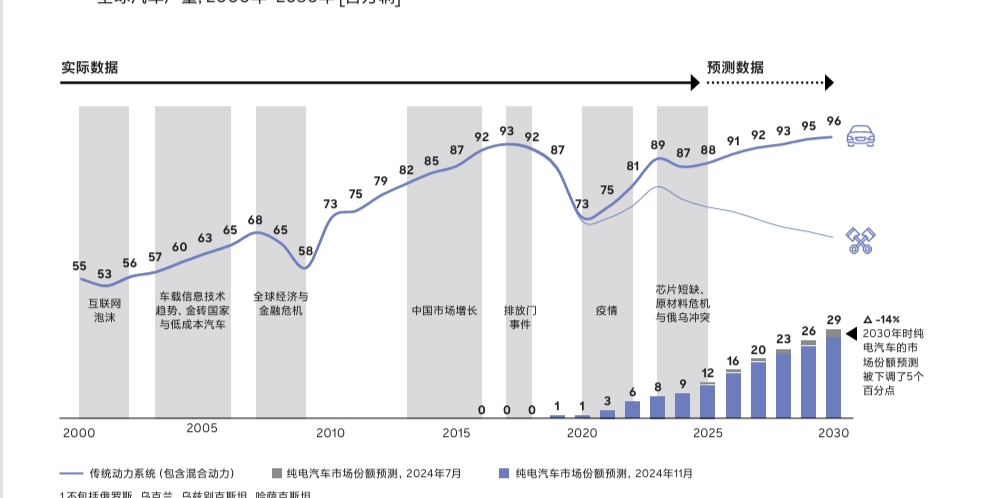
Core Insights - The global automotive parts industry is in a "stagnation transformation period," with traditional growth engines fading and a new order still in chaos [2] - Chinese automotive parts suppliers show a notable EBIT margin of 5.7%, significantly higher than Europe at 3.6% and South Korea at 3.4% [2] - The rapid growth of software-defined vehicles (SDVs) contrasts with the declining market penetration rate of pure electric vehicles, which dropped from 60% to 25% [3] Industry Dynamics - The Chinese market benefits from three driving forces: policy-driven growth in the new energy vehicle sector, demand expansion from consumption upgrades, and export opportunities from global supply chain restructuring [2] - In contrast, the European market struggles with the sunk costs of traditional fuel vehicle systems and mismatched transition rhythms to new energy [2] - The acceleration of SDVs and the slowdown in pure electric growth necessitate a balance between traditional and new business models for parts suppliers [3] Technological and Strategic Shifts - The report highlights the need for parts suppliers to develop "technology modularization" capabilities to adapt to different regional standards due to geopolitical shifts and technological divergence [4] - Companies are urged to enhance product development speed, create new R&D ecosystems, and improve operational efficiency to better integrate into regional industrial ecosystems [4] - Leading companies are adopting a dual-track evolution in product portfolios, balancing cash flow businesses with strategic growth areas [4] Operational Innovations - Industry leaders are leveraging digital twin technology to reduce R&D cycles by 30% and using AI quality inspection to lower defect rates to 0.2% [5] - The digital transformation is evolving from efficiency tools to core competitive advantages for companies [5]
答好这道“数”学题
Liao Ning Ri Bao· 2025-05-15 00:53
Group 1 - The digital transformation of traditional industries is essential for overcoming challenges and seizing new opportunities in Liaoning [4][5] - Liaoning has a strong foundation for digital transformation, with significant advancements in 5G infrastructure and industrial internet platforms [5][6] - The province aims to integrate industrialization and informatization, leveraging technologies like AI, big data, and cloud computing to empower traditional manufacturing [5][6] Group 2 - The钣金 manufacturing industry faces challenges due to low industry concentration and intense price competition, prompting companies to seek digital transformation [2][3] - Successful examples of digital transformation, such as the case of Dalian's shared manufacturing platform, demonstrate the potential for increased efficiency and problem-solving in traditional sectors [2][3] - Despite the benefits, many small and medium-sized enterprises encounter barriers to digital transformation, highlighting the need for supportive initiatives and pilot programs [3][5] Group 3 - Liaoning's digital economy development strategy includes the establishment of over 500 digital workshops and smart factories, showcasing the province's commitment to modernization [5][6] - The province has achieved a higher than national average rate of CNC process automation and digital design tool adoption, indicating progress in industrial digitization [5][6] - The recent enterprise conference serves as a platform for knowledge exchange and consensus building among industry experts, fostering collaboration for digital initiatives [6][7]
邀请函:2025第五届起点两轮车换电大会及轻型动力电池技术高峰论坛定档7月11日,无锡举办!
起点锂电· 2025-05-14 12:08
2025第五届起点两轮车换电大会 活动规模: 500+ 及轻型动力电池技术高峰论坛 聚焦新技术 拓展新市场 时间: 7月11日 地点: 江苏无锡锡山区 一、活动背景及亮点 二、活动组织架构 活动名称: 2025第五届起点两轮车换电大会及轻型动力电池技术高峰论坛 起点研究院(SPIR)权威发布《2025中国两轮车换电及电池TOP排行榜及行业白皮书》, 覆盖智能电动两轮车出货量TOP10、两轮车换电运营商TOP10、两轮车电池BMS出货量 TOP5,两轮车换电柜出货量TOP5、中国电动两轮车用锂电池出货量TOP10、中国电动两轮 车用钠电池出货量TOP5等细分权威榜单,为行业树立标杆,为投资及采购决策者提供参 考; 政策支持、即时配送需求及技术升级等主要驱动力影响下,全球两轮车换电市场高速增长, 基于产业链整合优势,中国企业将迎来新一轮布局风口,电池安全、下沉市场覆盖及成本优 化等挑战急需解决; 上下游企业加速研发高安全、高倍率、高能量密度、长循环寿命、低成本、高低温等细分性 能优势电池产品; 海内外轻型动力及中小储能市场高速增长,低空飞行、移动电动工具、人形/智能机器人、 智能家居、智慧储能等热门应用场景进入高 ...

大学虚拟现实课堂将亮相世界数字教育大会 戴上“眼镜”就能进入未来工厂
Chang Jiang Ri Bao· 2025-05-14 00:34
Core Insights - The 2025 World Digital Education Conference has opened in Wuhan, showcasing the advancements in digital education and the integration of online and offline learning experiences [1] Group 1: Digital Education Innovations - Wuhan University of Technology utilizes virtual reality technology to create immersive teaching environments, allowing students to engage with advanced technologies such as "unmanned factories" and "unmanned ports" [1] - The university's "digital twin" system enables students to simulate battery manufacturing processes, significantly increasing efficiency by allowing multiple experiments to be conducted simultaneously [2] - The digital twin technology allows for 24 students to conduct experiments at once, compared to the traditional lab setup where only one experiment can be performed at a time [2] Group 2: Virtual Learning Experiences - Students can participate in virtual automotive assembly lines, using mixed reality technology to learn about vehicle assembly processes and perform virtual tasks [3] - The automotive virtual platform allows students to design battery packaging and conduct virtual assembly based on specific vehicle requirements, enhancing their practical skills earlier in their education [3] - The digital port equipment simulation platform provides students with hands-on experience in port operations, allowing them to control equipment and understand logistics without being physically present at a port [4] Group 3: Systemic Transformation in Education - The president of Wuhan University of Technology emphasizes that the digital transformation in education is a comprehensive change involving all elements, processes, and fields of education, with artificial intelligence playing a crucial role in knowledge delivery [5]
“海上福建”数字化总平台一期面世
Zhong Guo Zi Ran Zi Yuan Bao· 2025-05-12 08:28
该系统引接海洋预报历史数据,结合实时更新的卫星遥感、船载北斗定位终端、船舶自动识别系统 等数据,运用智能推演算法,实时生成动态变化的救援场景及漂流轨迹图。救援指挥中心可通过三维可 视化界面,实时掌控海上现场情况,精准调度救援船只、直升机、潜水设备等资源,使演练更贴近实 战。 福建省海洋与渔业厅相关负责人介绍,福建省地处中国东南沿海,海域面积13.6万平方千米,受恶 劣天气影响较为频繁,海上船舶作业活动繁忙,险情事故易发多发。该系统的上线运行将为福建省海洋 渔业高质量发展保驾护航。 此外,福建省海洋与渔业局还重点展示了数字孪生技术赋能的海上应急救援智能模拟演练系统阶段 性成果。该系统是"海上福建"总平台的子系统,旨在通过数字孪生技术,在虚拟空间中1∶1复刻真实海 洋环境,模拟不同天气条件下的救援场景,标志着福建海洋应急能力向"数智化"转型迈出关键一步。 近日,在第八届数字中国建设峰会上,由福建省海洋与渔业局牵头谋划并推动建设的一体化大融 合"海上福建"总平台(一期)亮相,展示了福建省在海洋数智化转型升级方面开展的前瞻性布局和取得 的阶段性成果。 该平台以"协同一体化、应用大融合"为核心思路,综合运用"人工智能+ ...