数字技术

Search documents
The Weir Group PLC (WEGRY) Analyst/Investor Day Transcript
Seeking Alpha· 2025-12-05 02:28
Core Insights - The company is on a clear trajectory to deliver long-term sustainable growth in shareholder returns, emphasizing its commitment to fulfilling growth potential and enhancing the organic business [3]. Group 1: Growth Strategy - The focus is on the next phase of the company's journey, which includes unlocking the potential of digital technology to drive productivity and sustainability [3]. - The company aims to compound the benefits of its strong organic business as part of its growth strategy [3]. Group 2: Engagement and Communication - The event includes opportunities for in-person attendees to engage with the executive team and ask questions informally during breaks [2]. - Virtual attendees are encouraged to reach out to the Investor Relations team for any queries not addressed during the event [2]. Group 3: Leadership and Vision - The CEO and Director, Jon Stanton, highlighted the importance of the event and welcomed both in-person and virtual participants, indicating a commitment to transparency and communication [1][2].



崇义县聚光贸易有限公司成立 注册资本10万人民币
Sou Hu Cai Jing· 2025-12-05 00:44
天眼查App显示,近日,崇义县聚光贸易有限公司成立,法定代表人为张洪江,注册资本10万人民币, 经营范围为许可项目:电气安装服务(依法须经批准的项目,经相关部门批准后在许可有效期内方可开 展经营活动,具体经营项目和许可期限以相关部门批准文件或许可证件为准)一般项目:灯具销售,照 明器具销售,电线、电缆经营,建筑用金属配件销售,电力设施器材销售,建筑材料销售,建筑装饰材 料销售,塑料制品销售,软件销售,电子元器件零售,照明器具生产专用设备销售,机械电气设备销 售,住宅水电安装维护服务,专业设计服务,技术服务、技术开发、技术咨询、技术交流、技术转让、 技术推广,工程技术服务(规划管理、勘察、设计、监理除外),数字技术服务,信息技术咨询服务, 会议及展览服务,劳务服务(不含劳务派遣),园林绿化工程施工,工程管理服务,市政设施管理,软 件外包服务,数字文化创意软件开发,人工智能基础软件开发,网络与信息安全软件开发,酒店管理 (除依法须经批准的项目外,凭营业执照依法自主开展经营活动)。 ...
“迎击变局,智赢未来”系列文章:助力商业银行董事应对挑战洞察先机
Xin Lang Cai Jing· 2025-12-04 11:27
Group 1: Core Insights - The external environment for commercial banks is increasingly complex, with geopolitical tensions, technological revolutions, and deepening regulations posing new challenges to strategic resilience and governance capabilities [2][35] - The board of directors is crucial in leading banks to proactively transform and adapt to changes, shifting from passive defense to active positioning and from compliance to value creation [2][35] Group 2: Organizational Structure - Digital technologies such as AI, big data, and blockchain are reshaping the financial landscape, pushing banks towards intelligent, inclusive, and globalized operations [3][36] - The article discusses the need for banks to reassess their organizational structures to adapt to the competitive environment of the digital age, focusing on how to break down departmental silos and enhance strategic collaboration [3][37] Group 3: Business Development - The banking industry is experiencing a significant shift from a "scale-oriented" approach to "value reconstruction," driven by narrowing net interest margins and intense competition [8][42] - The article outlines how banks can leverage dual forces of financial digital ecosystems and industry terminal scenarios to drive transformation, providing actionable business layout and innovation directions [8][42] Group 4: Risk Management - Commercial banks are facing a new normal where external risks outweigh internal risks, necessitating a shift from traditional passive risk management to a more proactive and systematic risk governance model [15][49] - The article emphasizes the importance of integrating strategic execution with risk appetite to ensure banks maintain the correct direction in dynamic environments [15][49] Group 5: Compliance Management - Compliance management has evolved from merely meeting regulatory requirements to becoming a core competitive advantage that supports long-term value growth [21][55] - The article provides a framework for compliance transformation, emphasizing the need for boards to lead the redefinition of compliance functions to adapt to changing environments [21][56] Group 6: Internal Audit - Traditional internal audit models are challenged by rapid technological advancements and regulatory changes, necessitating a shift towards agile auditing that provides real-time insights and strategic support [28][62] - The article outlines how agile auditing can transform internal audit functions from compliance overseers to strategic partners that enhance risk management and value creation [28][62]


从服务到赋能:中信百信银行的普惠金融进阶之路
2 1 Shi Ji Jing Ji Bao Dao· 2025-12-03 09:27
Core Insights - The article highlights the evolution of inclusive finance from merely existing to providing quality services, while addressing ongoing challenges such as uneven coverage, low service efficiency, and mismatched supply and demand [1][2] Group 1: Industry Challenges - The inclusive finance sector faces structural imbalances, with traditional financial institutions struggling to reach small and micro enterprises and new citizens due to operational costs and risk management constraints [2] - Long-tail inclusive customer groups often encounter difficulties in financing and service access due to a lack of collateral, credit history, and data [2] Group 2: Company Initiatives - Citic Baixin Bank, as a state-controlled digital bank, aims to fill the gaps in the inclusive finance service system by focusing on unmet financial needs [2] - The bank's brand campaign emphasizes three representative groups: young people seeking homes, small business owners needing capital, and middle-class families planning wealth [2] - By June 2025, Citic Baixin Bank had served over 100 million users, with new citizens making up more than half of this number, and its inclusive small and micro loans reached 12.703 billion yuan, a 39.58% increase from the beginning of the year [2] Group 3: Technological Innovations - The bank has fundamentally transformed the logic of inclusive finance through digital technology, shifting from "people seeking money" to "money adapting to people" [3] - Citic Baixin Bank leverages technologies such as AI, big data, and cloud computing to create a digital banking model that is agile, intelligent, and secure [4] - The "Bai Lian System" enhances financing efficiency by using digital credit to reshape assessment systems, achieving a 65% increase in approval efficiency and enabling minute-level loan disbursement in certain scenarios [4] Group 4: Risk Management and Customer Experience - The bank employs the "Bai Xin Fen" and "ModelOps System" for risk management, improving the efficiency of risk model iteration by 160% and expanding the risk management radius [4] - The "Lingxi" intelligent assistant covers 80% of customer service scenarios, allowing users to complete transactions through simple commands, thus enhancing service experience [5] Group 5: Systemic Approach to Inclusive Finance - The successful implementation of high-quality inclusive finance services relies on a systemic capability that combines scene cultivation, technological iteration, and ecological collaboration, rather than solely on policy guidance or product stacking [6]
各地能源保供能力提升 让温暖直达千家万户
Ren Min Wang· 2025-12-03 05:49
Core Viewpoint - The article emphasizes the importance of ensuring stable energy supply during winter, as increased energy demand due to lower temperatures affects both household heating and economic stability [1]. Group 1: Energy Supply and Demand - The demand for energy has surged due to colder temperatures, necessitating enhanced energy supply measures to ensure warmth for households and support economic growth [1]. - The National Energy Administration has called for improved communication between various departments and energy companies to monitor weather conditions and optimize resource allocation for energy supply [1]. Group 2: Coal and Natural Gas Supply - Coal and natural gas are identified as foundational elements for ensuring energy supply during the winter peak demand period [1]. - Automation and smart technologies are being utilized in coal production and transportation to enhance efficiency, such as remote control systems in coal mines and optimized logistics at ports [2]. Group 3: Renewable Energy Contribution - The share of renewable energy sources like wind, solar, and hydropower in China's energy mix is increasing, providing additional support for winter energy supply [2]. - As of the end of October, the total installed power generation capacity in China reached 3.75 billion kilowatts, a year-on-year increase of 17.3%, with solar power capacity growing by 43.8% and wind power capacity by 21.4% [2]. Group 4: Challenges and Solutions - The variability of renewable energy sources poses challenges for maintaining a balanced power supply, especially during extreme weather conditions [3]. - Various regions are implementing advanced monitoring and maintenance strategies for power infrastructure to ensure reliable electricity supply during winter [3]. Group 5: Digital Technology Integration - The integration of digital technologies such as AI, big data, and IoT is playing a crucial role in supporting winter energy supply efforts [4]. - Recommendations include using AI for demand forecasting and risk assessment, creating intelligent dispatch platforms, and employing digital tools for load management and emergency response [4].
首届杭州国际会展大赛赋能“赛会之城”
Zhong Guo Jing Ji Wang· 2025-12-02 08:59
据了解,大赛精准对接会展业人才需求,设立院校组和企业组两大组别,吸引在杭高校、长三角地 区高校及企业团队踊跃参赛,覆盖会展创意、会展设计、会展传播等关键领域。在人才培养与留用环 节,大赛建立起完善的人才储备机制,所有获奖选手自动进入杭州市会展人才储备库,形成"选拔-培 养-留用"的全链条人才生态闭环。这种 "以赛代训"的模式,打破了人才培养与产业需求脱节的壁垒,让 参赛选手在实战中提升专业能力,同时为杭州会展企业精准输送优质人才,助力城市打造国际会展人才 高地。 除人才培育外,大赛同步推动会展项目落地与产业升级。设置的三大赛道涵盖杭州数字经济、智能 制造等主导产业及低空经济等未来产业,获奖作品直接对接城市产业升级需求,实现会展项目与实体经 济深度融合。企业组获奖项目可进入项目扶持库,获得场馆资源协调、扶持资金申请辅导等全流程支 持,加速创意转化落地。 大赛还通过多元举措提升城市品牌影响力与行业创新力。会展传播赛道以"最忆杭州 赛会全球"为 主题,优秀作品以国际化叙事展现杭州魅力;头部企业参与支持与跨区域协作网络的构建,让杭州接轨 全球会展创新资源。同时,大赛鼓励融合AI交互、区块链等数字技术,阿里云提供专属算 ...
首届杭州国际会展大赛赋能 “赛会之城”
Zhong Guo Jing Ji Wang· 2025-12-02 08:40
Group 1 - The first Hangzhou International Convention and Exhibition Planning and Creative Competition aims to accelerate the construction of "City of Events" by discovering innovative talents and building a talent ecosystem through a "competition as training" model [1][2] - The competition attracted 119 teams from over 30 enterprises and universities, resulting in the selection of 16 gold, 31 silver, 33 bronze, and 11 excellence awards, showcasing innovative thinking and practical abilities in exhibition creativity, design, and communication [1][2] - The competition established a talent reserve mechanism, automatically placing all award-winning participants into the Hangzhou Convention and Exhibition Talent Reserve, creating a closed-loop talent ecosystem that addresses the gap between talent training and industry needs [2] Group 2 - The competition promotes the landing of exhibition projects and industrial upgrades by aligning with key industries such as digital economy and intelligent manufacturing, ensuring that award-winning projects meet the city's industrial upgrade demands [2] - Various initiatives enhance the city's brand influence and industry innovation, with a focus on international narratives showcasing Hangzhou's charm and the integration of digital technologies like AI and blockchain to drive the digital transformation of the exhibition industry [3] - The competition empowers the construction of "City of Events" through talent aggregation, project incubation, brand building, and ecological innovation, with plans for continued international cooperation and talent cultivation to enhance the city's competitiveness [3]
筑牢风险控制防线 服务债市高质量发展(附英文版)
Xin Lang Cai Jing· 2025-12-01 23:02
登录新浪财经APP 搜索【信披】查看更多考评等级 ◇ 作者:钟言 ◇ 本文原载《债券》2025年11月刊 防范化解风险是金融工作永恒的主题。近日发布的《中共中央关于制定国民经济和社会发展第十五个五 年规划的建议》对防范化解金融风险作出重要部署。债券市场风险防控可从制度、技术、市场三方面着 手,筑牢体系防线,服务金融高质量发展。 一是夯实风控制度基础。健全的制度规则让风险防控有章可循、有规可依。巩固债市运行的基础制度, 以穿透监管为原则,完善市场风险监测机制。优化信息披露相关机制,压实发行人与中介机构的信息披 露责任,制定绿色、科技等重点领域信息披露标准,降低投资者与发行方之间信息不对称。强化金融机 构债券业务内控和监督,落实中介机构主体责任。适度强化违约处置和违规查处机制,畅通债务重组等 退出渠道,提高违约处置效率,对虚假披露、操纵市场、逃废债等违规行为严格执法,以制度威慑筑牢 风险防线。 二是加强数字技术赋能。大数据、人工智能等数字技术日益发展,使债市风险防控更加智能有效。深化 债市信息披露数字化转型,探索应用可扩展商业语言等数字技术,促进债市信息披露更加结构化,便利 信息披露数据在市场机构间共享利用。加强 ...
让敬民便民意识成为政策生态底色
Di Yi Cai Jing Zi Xun· 2025-12-01 11:00
Core Viewpoint - The newly released "Measures for the Management of Customer Due Diligence and Customer Identity Information and Transaction Record Keeping by Financial Institutions" aims to reduce the compliance burden and costs for individuals, effective from January 1, 2026 [2][3]. Group 1: Policy Changes - The new regulation allows banks to forgo understanding and recording the source or purpose of cash deposits or withdrawals exceeding 50,000 RMB or 10,000 USD, focusing instead on basic customer identity verification [2]. - This adjustment addresses public dissatisfaction with previous requirements that forced individuals to justify their financial activities, which complicated banking processes and hindered effective financial support for the real economy [2][3]. Group 2: Economic Implications - The revised measures are expected to stimulate private sector vitality and lower operational costs within the economy, reinforcing respect for private property rights and enhancing public confidence [3][4]. - The policy emphasizes that public cooperation with anti-money laundering efforts should not compromise the integrity of property rights and should follow principles of minimizing economic and social costs [3][5]. Group 3: Governance and Compliance - A robust governance framework is necessary to ensure that the principles of serving the public and reducing costs are embedded in legislative and enforcement practices [4][5]. - The decision-making process should involve a cost-sharing mechanism where those who legislate and enforce also bear the associated costs and responsibilities, promoting accountability and effective governance [5].

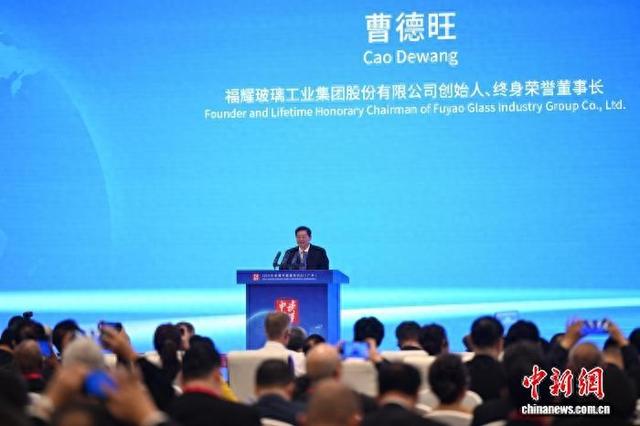
曹德旺:中国企业家不会忘记“先天下之忧而忧,后天下之乐而乐”
Zhong Guo Xin Wen Wang· 2025-12-01 08:45
Group 1 - The core message emphasizes that understanding China involves observing the development of enterprises and industries, reflecting the nation's progress and characteristics [1][3] - Fuyao Glass Industry Group has become the world's largest automotive glass supplier, holding approximately 35% of the global market share, showcasing the success of Chinese manufacturing [3] - In the face of global economic turbulence, Fuyao Group achieved over 30% year-on-year growth in after-tax profits in the first three quarters, indicating strong production and sales performance [3] Group 2 - The company leverages digital technologies to enhance production efficiency and innovate products, such as lightweight low-carbon glass and smart dimming glass, to meet the core demands of new energy and smart vehicles [3] - Fuyao Group's founder, Cao Dewang, emphasizes the importance of social responsibility for sustainable development, highlighting the establishment of Fuyao University with a donation of 10 billion yuan to cultivate high-quality talent for China's industrial development [4] - The spirit of Chinese entrepreneurs is characterized by a commitment to societal concerns and contributions, reflecting a progressive symbol of the times [4]