新型能源体系

Search documents
北京两会献策:完善北京市碳交易试点,保障新型能源体系建设
2 1 Shi Ji Jing Ji Bao Dao· 2026-01-26 09:45
Core Viewpoint - Beijing aims to enhance its energy structure and achieve carbon neutrality by 2060, focusing on the development of a new energy system and the integration of renewable energy sources [1][2]. Group 1: Government Initiatives - The Beijing government has set a target for the average annual concentration of fine particulate matter to be around 29 micrograms per cubic meter by 2026, alongside other energy and carbon emission goals [1]. - The government emphasizes the construction of a new power system dominated by renewable energy, which includes various types of energy storage facilities as essential infrastructure for energy security and achieving carbon neutrality [1]. Group 2: Carbon Market Development - The carbon trading market is identified as a core policy tool for achieving carbon peak and neutrality goals, with a focus on the scientific and reasonable inclusion of enterprises in the carbon market [2]. - Recommendations include standardizing the classification criteria for energy companies in the carbon market to ensure a clear distinction between high-emission and green energy entities, which is crucial for the development of a new energy system [2][3]. Group 3: Regulatory Suggestions - There is a proposal to conduct special verifications of the energy consumption and carbon reduction attributes of pumped storage and other regulatory energy sources, recognizing their value in green energy regulation [3]. - The suggestion includes revising policies to clarify the carbon market positioning of pumped storage and new energy storage, potentially excluding them from the list of key emission units [3][4]. Group 4: Policy Evaluation and Adjustment - A dynamic evaluation mechanism for carbon market policies is recommended to assess the impact of these policies on the development of the new energy industry in Beijing [4]. - The proposal emphasizes the need for timely adjustments to ensure that carbon market policies align with the goals of promoting green energy development and optimizing the energy structure [4].
署名文章丨国家能源局局长王宏志:深入学习贯彻党的二十届四中全会精神 为能源强国建设提供坚强监管保障
国家能源局· 2026-01-26 07:55
Core Viewpoint - The article emphasizes the importance of energy regulation in achieving the goals set forth in the 14th and 15th Five-Year Plans, particularly in building a strong energy nation and ensuring high-quality development in the energy sector [2][10]. Group 1: Progress in Energy Regulation - The National Energy Administration (NEA) has made significant progress in energy regulation, focusing on energy security and implementing various regulatory tasks in line with the central government's directives [3]. - The NEA has strengthened the political attributes of energy regulation, enhancing party building and implementing strict oversight mechanisms to ensure compliance with regulations [3][4]. Group 2: Energy Supply and Market Development - The NEA has successfully monitored energy supply during peak seasons and has implemented measures to ensure the smooth execution of major energy projects [4]. - A unified national electricity market has been established, with over 60% of electricity transactions being market-based for four consecutive years, indicating a robust market structure [5]. Group 3: Regulatory Enforcement and Safety - The NEA has intensified regulatory enforcement, addressing over 700 administrative violations in the energy sector and ensuring fair access to energy infrastructure [6][13]. - Safety measures have been upgraded, with significant actions taken to address safety risks and improve emergency response capabilities in the electricity sector [7][14]. Group 4: Enhancing Public Energy Services - New policies have been implemented to improve access to electricity, benefiting approximately 1.5 million households and saving around 20 billion yuan in investment costs [8]. - The NEA has focused on resolving public energy issues, enhancing complaint handling processes, and improving service quality for consumers [8][15]. Group 5: Innovation in Energy Regulation - The NEA is innovating regulatory mechanisms, promoting digital oversight, and enhancing the regulatory framework to adapt to new energy market dynamics [9][16]. - Collaborative efforts with international regulatory bodies are being pursued to share best practices and improve the overall regulatory environment [9]. Group 6: Future Directions in Energy Regulation - The NEA aims to achieve a clean, low-carbon, safe, and efficient energy system by 2026, aligning with national goals for energy transition and sustainability [10][11]. - Continuous reforms and innovative strategies will be implemented to enhance the regulatory framework and ensure effective energy governance [12][16].

三份报告聚焦安徽民生
Xin Lang Cai Jing· 2026-01-25 17:15
Group 1 - The conference in Hefei reported three research outcomes focusing on the development of people's livelihoods in Anhui Province, including the role of state-owned enterprises in rural revitalization, the empowerment of the energy sector through new productivity, and the satisfaction levels in the service industry for 2025 [1][2] - The "State-Owned Enterprises Supporting Rural Revitalization" report highlighted the practices and achievements of state-owned enterprises, particularly the Anhui Tobacco Company, while identifying common challenges such as unclear objectives, inadequate collaborative mechanisms, and insufficient long-term guarantees [1] - The "New Productivity Empowering High-Quality Development in Anhui's Energy Sector" report outlined the current state of the energy industry, noting that over 80% of the coal industry has achieved intelligent coverage, with renewable energy accounting for 52.2% of total installed capacity, while also addressing challenges like suboptimal energy structure and high transformation costs [2] Group 2 - The "2025 Anhui Service Industry Resident Satisfaction Survey Report" assessed satisfaction across five dimensions: service quality, attitude, environment, innovation, and conduct, providing a comprehensive view of the satisfaction levels in twelve major service industries and identifying key areas for improvement [2]
绿潮涌动处 奋进正当时
Bei Jing Ri Bao Ke Hu Duan· 2026-01-24 21:19
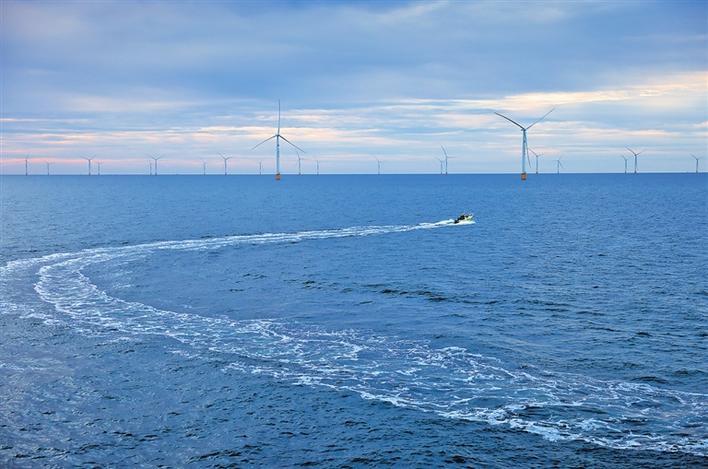
Core Viewpoint - The article emphasizes the importance of building a clean, low-carbon, safe, and efficient new energy system as a core mission for the Jingneng Group, aligning with national goals and local responsibilities [1][3]. Group 1: Strategic Development - By 2025, Jingneng Group aims to integrate green development into its overall industrial strategy, focusing on creating a robust, intelligent, environmentally friendly, and user-friendly heating network [2]. - The electricity sector will implement a strategy for green electricity to enter Beijing, enhancing energy supply systems and promoting significant breakthroughs in green electricity projects [2][3]. - The company is committed to transforming its coal power units to improve clean and efficient operation, while also developing green mining practices in its coal sector [2]. Group 2: Green Energy Expansion - Jingneng Group has over 31 million kilowatts of renewable energy installed capacity, accounting for 54% of its total power generation capacity, achieving a new clean energy installation every 18 hours [4]. - Significant projects include the largest centralized photovoltaic project in Beijing and various wind power initiatives, contributing to a multi-source, complementary energy supply network [4][5]. - The company has achieved a green electricity trading volume of 11.475 billion kilowatt-hours, providing stable clean energy options for residents and businesses in Beijing [5]. Group 3: Technological Innovation - The company is advancing its digital and intelligent capabilities, with a focus on smart heating networks and AI applications to enhance operational efficiency and safety [9][10]. - The establishment of a virtual power plant with a capacity of 4.12 GW aims to improve the stability of the energy grid and facilitate the integration of renewable energy sources [5][9]. - Collaborations with top research institutions are fostering innovation in low-carbon technologies and smart energy systems [10][11]. Group 4: Social Responsibility - Jingneng Group prioritizes public welfare by ensuring stable energy supply for over 200 million residents and implementing energy-saving measures for numerous enterprises [18]. - The company is actively involved in community projects, enhancing energy efficiency and reducing carbon emissions across various sectors [18][20]. - The development of a large-scale green hydrogen production project is expected to provide significant clean energy and reduce carbon emissions substantially [14][20]. Group 5: Future Outlook - The company plans to accelerate its green transformation and energy supply projects, focusing on renewable energy integration and enhancing the efficiency of urban heating systems [20][21]. - Jingneng Group aims to expand its low-carbon service capabilities and enhance its role in building an international green economy benchmark city [21].
山东:加快建设新型能源体系,促进绿色低碳高质量发展
Xin Lang Cai Jing· 2026-01-24 20:40
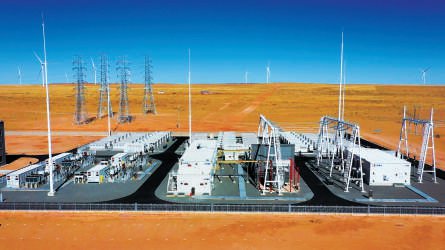
Core Viewpoint - The Shandong energy sector has made significant progress in clean energy development and reform during the "14th Five-Year Plan" period, achieving key milestones and setting a solid foundation for the "15th Five-Year Plan" [4][6]. Group 1: Achievements in Energy Development - Shandong's total installed power capacity reached 250 million kilowatts, ranking second in the country, with non-fossil energy capacity exceeding 139 million kilowatts, which is 2.9 times that of 2020 and accounts for 54.2% of the total installed capacity [4]. - The province has successfully launched the world's first fourth-generation nuclear power plant and developed significant technologies in carbon capture, utilization, and storage (CCUS) and large-scale advanced compressed air energy storage [4][6]. - By the end of 2025, Shandong aims to add 21 million kilowatts of non-fossil energy generation capacity and achieve over 220 billion kilowatt-hours of electricity generation, with a total investment of around 210 billion yuan in key energy projects [4][6]. Group 2: Future Goals and Strategies - In 2026, Shandong will focus on becoming a model for green and low-carbon energy transformation, aiming to lead in economic growth and investment [5]. - The Shandong Energy Bureau has outlined ten major development actions, including optimizing wind and solar energy development, enhancing energy storage capabilities, and promoting nuclear energy utilization [6][7]. - The province plans to establish a new energy system, focusing on the development of clean energy bases and fostering key industries such as nuclear, wind, solar, and hydrogen energy [8]. Group 3: Policy and Governance - The Shandong Provincial Committee emphasizes the importance of achieving carbon peak and building a new energy system as part of the strategic direction for energy work in the new era [7]. - The energy sector will prioritize the integration of energy supply and demand, ensuring safety and stability in energy supply chains while enhancing the overall governance of energy production [9].
中国经济一月纪事丨戈壁上“种太阳”
Yang Guang Wang· 2026-01-24 04:48
Core Insights - The world's largest single-unit solar thermal power plant is being constructed in the Gobi Desert of Golmud, Qinghai, which is expected to play a crucial role in supporting the stable operation of a high-proportion renewable energy grid [1] Group 1: Project Overview - The solar thermal power plant features a 200-meter high heat-collecting tower, with the base already completed and undergoing anti-corrosion treatment [1] - The project will consist of three heat-collecting towers and three mirror fields, with a total mirror field area of 3.3 million square meters [1] Group 2: Technology and Innovation - The plant utilizes a self-developed tracking system that allows thousands of heliostats to adjust their angles to accurately reflect sunlight onto the heat collector, with approximately 90,000 heliostats and over 500,000 control points managed by an automated control system [2] - The integration of a large-scale, low-cost energy storage system enables the solar thermal power plant to overcome the limitations of relying solely on weather conditions for energy generation [2] Group 3: Industry Implications - Solar thermal power is expected to support the construction of a new energy system and power grid, with ongoing technological advancements and cost reductions leading to accelerated large-scale development [2] - The future energy landscape in China may see solar thermal power, photovoltaic, and wind energy forming the three pillars of the new power system, providing robust support for energy transition [2]
2026年山西电网固定资产投资将超180亿元
Xin Hua Cai Jing· 2026-01-23 08:12
Core Viewpoint - The State Grid Shanxi Electric Power Company plans to significantly increase its investment in 2026, with fixed asset investment expected to exceed 18 billion yuan, aiming to enhance power supply reliability and support high-quality development in Shanxi province [1]. Investment Plans - In 2026, the company will focus on strengthening the grid structure and accelerating the construction of a new power system, which includes key projects such as the 1000 kV Changzhi-Nanyang second back-to-back ultra-high voltage project and three new energy collection station projects [1]. - The company aims to enhance the power supply capacity through the construction of several key projects, including the 1000 kV Datong ultra-high voltage substation and various transmission and transformation projects [1]. Strategic Goals - The investment strategy aligns with the "14th Five-Year Plan" and aims to support Shanxi's transition to a new energy system, promoting ultra-high voltage, power delivery, and new energy collection [1]. - The company is committed to optimizing the allocation of power resources to better facilitate Shanxi's green and low-carbon transformation and high-quality economic development [1].
迈向“十五五”的美丽图景·一线见闻丨青海:绿电绿算“点绿成金”
Yang Guang Wang· 2026-01-23 01:49
Core Insights - The central economic work conference emphasizes accelerating the construction of a new energy system and expanding green electricity applications [1] - Qinghai Province, with its abundant clean energy resources, is innovating a "green electricity + green computing" collaborative model, extending green electricity delivery to 22 provinces and accelerating the establishment of a national green computing hub [1] Group 1: Clean Energy Projects - The world's largest solar thermal power project, the 350 MW tower solar thermal power project in Golmud, Qinghai, is under construction with a total investment of approximately 5.435 billion yuan, aiming for full capacity grid connection by September 2027 [1] - The Taratan photovoltaic park, the largest solar power park globally, employs a model of "power generation on panels, grass growing between panels, and grazing below panels," achieving ecological restoration and increased income for herders [1] Group 2: Environmental and Economic Impact - The Taratan photovoltaic park has reduced wind speed by 50%, decreased soil moisture evaporation by 30%, and increased vegetation coverage to 80% within three years [2] - The development of clean energy in Qinghai has created a win-win model for ecology and economy, sharing green electricity nationwide through ultra-high voltage channels [2] Group 3: Future Projections - By June 2025, Qinghai's total installed power capacity is expected to reach 75.9 million kilowatts, with clean energy accounting for 71.81 million kilowatts, representing 94.6% of the total, ranking second in the country [2] - Qinghai is exploring new paths for "green electricity + green computing" collaborative development, aiming to provide green, efficient, and secure computing power support for national digital economic development [2]
统筹顶层设计和问计于民,四川人大开展“十五五”规划纲要和计划报告初审
Mei Ri Jing Ji Xin Wen· 2026-01-22 09:33
Core Viewpoint - The Sichuan Province's "14th Five-Year" planning outline has been preliminarily reviewed, focusing on enhancing economic development, addressing demographic challenges, and promoting technological innovation and infrastructure modernization [1][2]. Group 1: Economic and Social Development - The planning outline includes sections on collaborative enhancement of the Chengdu-Chongqing economic circle, industrial development, technological innovation, and the construction of a modern infrastructure system [1]. - The outline emphasizes strengthening social welfare, particularly in response to demographic changes, highlighting the urgency of addressing aging and declining birth rates [1]. Group 2: Population and Social Services - Recommendations include improving public service systems to cover all demographics and increasing investment in pension projects to enhance the basic pension levels for urban and rural residents [1]. - There is a call for higher targets in disposable income growth, aiming for it to exceed economic growth rates, and for the establishment of a family-friendly society through enhanced childcare services [2]. Group 3: Industry and Innovation - The need to elevate the capabilities of industries such as electronic information, artificial intelligence, and new energy is emphasized, along with the role of universities as innovation hubs [2]. - The construction of a new energy system is highlighted, with a focus on improving infrastructure for demand-side needs, particularly in the context of electric vehicle charging facilities [2]. - The integration of legal frameworks with technological and industrial innovation is seen as crucial for fostering new industries, with a focus on pilot programs to facilitate commercialization [2].
【海报】一组数据勾勒中国经济“向新向优”曲线
Zhong Guo Jing Ji Wang· 2026-01-22 06:55
Group 1 - The core viewpoint highlights that by 2025, China has made significant progress in innovation-driven development, industrial upgrading, digital empowerment, and green transformation, leading to a more quality-driven and sustainable economic growth [1] Group 2 - The added value of high-tech manufacturing and equipment manufacturing industries accounted for 36.8% and 17.1% of the total industrial added value, respectively [6] - The production of civilian drones and industrial robots increased by 37.3% and 28% year-on-year [6] - The integration of industrial internet applications has fully covered 41 major industrial categories [6] Group 3 - The added value of the digital product manufacturing industry grew by 9.3% year-on-year [9] - The information transmission, software, and information technology service industries saw an increase of 11.1% [9] - New consumption models and scenarios have accelerated expansion, driving online retail sales up by 8.6% [9] Group 4 - The construction of new infrastructure, including 5G, gigabit optical networks, and the Internet of Things, is progressing in an orderly manner [10] - The clean energy generation from hydropower, nuclear power, wind power, and solar energy increased by 8.8% year-on-year [13]