
能源革命

Search documents
阿里,投出一个天使轮
投资界· 2025-08-18 07:57
Core Viewpoint - Nova Fusion has completed a 500 million yuan angel round financing, attracting notable investors including social security funds and venture capital firms, indicating strong interest in the nuclear fusion sector [3][4]. Company Overview - Nova Fusion was founded in April this year in Shanghai by Guo Houyang, a prominent scientist in the nuclear fusion field, who has extensive experience and achievements in this area [4][6]. - The company aims to develop small modular nuclear fusion reactors, providing safe, zero-carbon, and cost-effective distributed energy solutions, leveraging the Field-Reversed Configuration (FRC) technology [9]. Technology and Goals - Nova Fusion's short-term goal is to achieve ion temperatures of 100 million degrees Celsius and validate key technologies, while the mid-term goal is to achieve a fusion energy gain (Q) greater than 1 [9]. - The long-term objective is to successfully output 50 megawatts (MW) of fusion power, facilitating the commercialization of small modular fusion power plants by 2035 [9]. Market Context - The global nuclear fusion industry has seen explosive growth, with total investments rising from 1.9 billion USD in 2021 to 9.7 billion USD, and the number of fusion companies increasing from 23 to 53 [12]. - The International Energy Agency (IEA) projects that global data center electricity demand will more than double by 2030, highlighting the strategic importance of nuclear fusion as a potential energy solution [13]. Future Prospects - The 2025 Global Fusion Industry Report predicts that over 35 companies will establish commercial fusion demonstration power plants capable of producing net energy between 2030 and 2035 [14]. - Significant advancements in nuclear fusion technology are being made in both the US and China, with various projects aiming to achieve practical fusion energy solutions in the near future [15].



电源市场空间测算及技术迭代方向 - 能源革命
2025-08-18 01:00
Summary of Key Points from Conference Call Records Industry Overview - The focus is on the power supply market, particularly in data centers, with a significant emphasis on high voltage direct current (HVDC) technology and its advantages over traditional systems [1][3][5]. Core Insights and Arguments - **Importance of Power Supply in Data Centers**: Power supply reliability and performance are critical in data centers, with ongoing technological advancements aimed at optimizing efficiency and reducing losses [3][5]. - **Market Growth Projections**: The domestic HVDC market penetration is currently around 20%, expected to double from 2023 to 2028, with a projected global market size exceeding $10 billion by 2026 [1][6]. - **Key Players**: Major global players in the HVDC market include Vidi and Delta, holding over 50% market share, while domestic companies like Zhonghong Electric are also significant contributors [7]. - **Trends in Server Power Supply**: The trend is towards higher power density and efficiency, with third-generation semiconductors like silicon carbide and gallium nitride replacing traditional silicon components [9]. - **Market Size for Wireless Power Supply**: By 2026, the domestic wireless power supply market is expected to reach between 5 billion to 6 billion RMB, while the overseas market could exceed 40 billion RMB [10]. Additional Important Content - **Technological Innovations**: Future developments include 800V HVDC products and solid-state transformers (SST), which are anticipated to enhance performance in data centers [1][3]. - **BBU and Supercapacitor Applications**: Battery Backup Units (BBUs) and supercapacitors are crucial for addressing high energy demands in data centers, with BBU demand projected to reach 700-800 million units by 2025 [11]. - **Domestic Supplier Outlook**: Domestic suppliers are expected to expand their international presence, particularly in the smart automotive sector, leveraging technological advancements in HVDC and server power supplies [8]. - **Performance of Leading Domestic Companies**: Key domestic players like Macomit and Oulutong are experiencing rapid growth, with Oulutong achieving nearly 800 million RMB in revenue last year, reflecting over 500% year-on-year growth [12].

能源绿 中国策——写在第三个全国生态日到来之际
Zhong Guo Dian Li Bao· 2025-08-15 01:17
Group 1: Energy Transition and Green Development - The article emphasizes the transformation of China's energy landscape towards green and low-carbon development, highlighting the integration of ecological priorities in economic growth [1][10][17] - Significant advancements in renewable energy, such as wind and solar power, have been made, with non-fossil energy generation capacity surpassing 60% for the first time [12][14] - The shift from coal as a primary energy source to its use as a chemical feedstock is noted, with coal consumption projected to decrease to 53.2% by 2024, down over 15 percentage points since 2012 [2][4] Group 2: Technological Innovations and Projects - The article discusses various innovative projects, including the conversion of abandoned oil fields into renewable energy sites, showcasing the synergy between traditional and renewable energy sources [5][7] - The implementation of Carbon Capture, Utilization, and Storage (CCUS) technology in oil extraction is highlighted, which can enhance oil recovery by over 12% while reducing carbon emissions [7][8] - The development of integrated energy systems, such as combining wind, solar, and hydroelectric power, is presented as a strategy for enhancing energy security and sustainability [9][10] Group 3: Ecological Restoration and Community Engagement - The ecological restoration efforts in coal mining areas, achieving over 90% vegetation coverage and significant soil nutrient improvement, illustrate the commitment to environmental sustainability [4][17] - Community-level initiatives, such as zero-carbon communities and rooftop solar installations, are emerging, demonstrating the grassroots adoption of renewable energy solutions [16][17] - The article emphasizes the importance of ecological assessments in renewable energy projects to ensure minimal environmental impact, reflecting a commitment to harmonious coexistence with nature [17]
上半年德阳地区生产总值同比增长7.5% 这条上扬曲线含新量足
Si Chuan Ri Bao· 2025-08-12 06:49
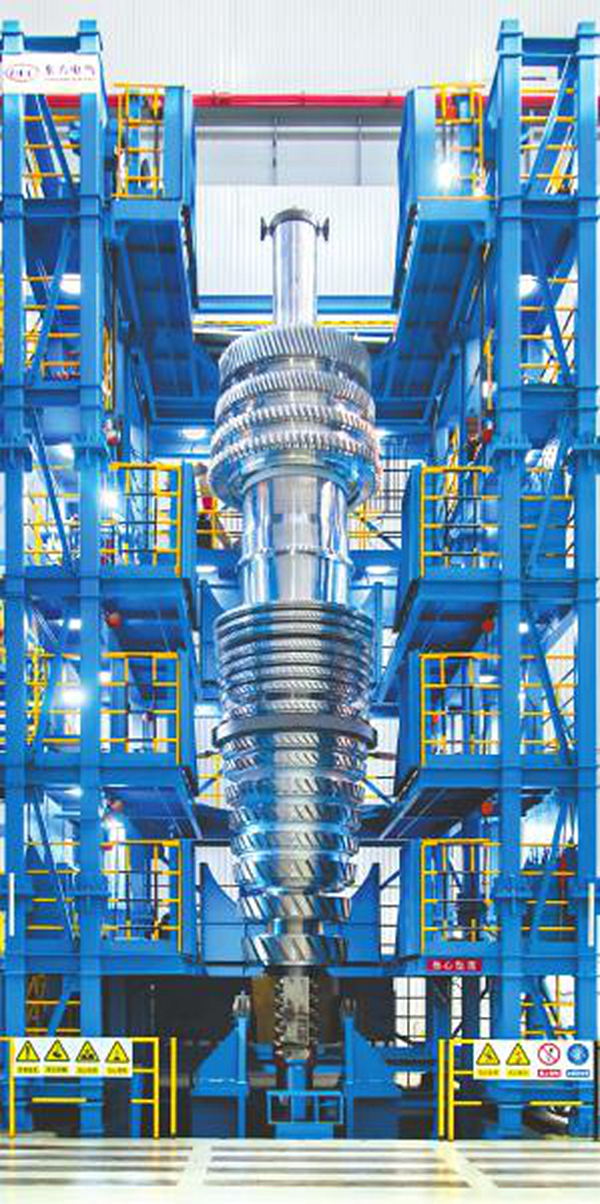
Economic Growth - Deyang and Meishan have the highest GDP growth rate in the province at 7.5%, exceeding the provincial average by 1.9 percentage points [3] - Deyang's industrial added value above designated size increased by 12.8% year-on-year, with a product sales rate of 94.4% [3] Industrial Innovation - Deyang is focusing on innovation in leading industries while promoting the acceleration of emerging industries, resulting in a continuous upward trend in industrial performance [4] - The digital transformation at Oriental Electric has reduced the overall design cycle by 40% and increased production efficiency, with the output of stator punchings rising from over 9,000 tons to 15,000 tons [5][6] - The establishment of the first domestic gas turbine smart manufacturing base has significantly enhanced the core manufacturing capabilities of Oriental Turbine [6] Digital Transformation - Deyang's mechanical equipment industry saw an industrial added value growth of 14.9% from January to June, with major manufacturers like China National Heavy Duty Truck, Oriental Electric, and Oriental Turbine exceeding 20% growth [7] - The collaboration between Deyang Jian'an Machinery Manufacturing Co. and Oriental Electric has led to the creation of a digital workshop that operates 24/7, improving efficiency by over 30% [7] Market Expansion - Deyang XWANDA New Energy Co., a leading global lithium battery manufacturer, reported over 200% growth in both shipment volume and output value in the first half of the year [8][9] - The demand for high-end copper foil is surging, with Hengtong Precision Copper Foil Technology (Deyang) Co. experiencing over 100% growth in order volume compared to the previous year [9] Investment and Project Development - Deyang is actively promoting effective investment and project development, with plans to complete an annual investment of 40 billion yuan, achieving a double-digit growth in industrial and manufacturing investments [10] - The city aims to exceed an industrial total output value of 520 billion yuan by the end of the year, focusing on six national and provincial clusters and five new industrial tracks [10]
电力“狂飙”里感受发展热度
Zhong Guo Neng Yuan Wang· 2025-08-11 06:36
Core Insights - The record-breaking electricity load in July, reaching 1.508 billion kilowatts, reflects both the high demand due to extreme heat and the robust development of China's economy [1] - The increase in electricity load is driven not only by natural factors but also by economic vitality, with significant growth in manufacturing and domestic demand [1][3] - The rise in electricity consumption is indicative of industrial upgrades and the transition towards an innovation-driven economy [1][3] Regional Disparities - The regional differences in electricity load highlight the imbalance in development, with economically active provinces facing tight supply-demand conditions while energy-rich regions have surplus capacity [2] - The implementation of cross-province electricity transmission projects, such as "West-to-East Power Transmission," optimizes resource allocation across regions [2] - In July, Xinjiang's electricity exports reached 12.9 billion kilowatt-hours, marking a 9% year-on-year increase, showcasing the effectiveness of national energy coordination [2] Supply Resilience - China's power supply system demonstrates strong resilience, with coal inventories stable between 180 million and 220 million tons and a contract fulfillment rate exceeding 90% [3] - The average utilization hours for thermal power plants have increased by 20-25 hours year-on-year, indicating a proactive response to load fluctuations [3] - The integration of smart grid upgrades and demand-side response mechanisms enhances energy security and supply stability [3] Energy Transition - The growth in electricity consumption is not a burden but a driving force for the transition towards a cleaner, smarter, and more collaborative energy system [4] - Wind and solar power generation increased by 27.4% in the first half of the year, accounting for 23.7% of total electricity consumption [4] - The construction of high-voltage direct current transmission projects supports the integration of renewable energy across regions, contributing to a low-carbon transition [4] Economic and Social Development - The continuous rise in electricity load serves as a barometer for China's economic and social development, reflecting improvements in living standards and accelerated industrial transformation [4] - The electricity load elasticity coefficient has reached 1.2, indicating a shift towards high-value, electricity-intensive industries such as digital economy and new energy [3][4] - Sustained efforts in supply security, energy reform, and the cultivation of new productive forces are essential for balancing high-quality development with energy security [4]
电车变 "充电宝":车主零成本用车背后的能源革命
3 6 Ke· 2025-08-05 05:41
Core Viewpoint - The article discusses the emergence of vehicle-to-grid (V2G) technology as a solution to the increasing electricity demand during the summer heat, allowing electric vehicles (EVs) to not only consume electricity but also supply it back to the grid, creating a new economic model for EV owners and enhancing grid stability [1][2][3]. Group 1: Electricity Demand and Supply Challenges - The electricity load in Wuhan reached 17.048 million kilowatts, a year-on-year increase of 26.48%, marking the first peak load of the year, occurring 20 days earlier than last year [1]. - Nationally, the total electricity load hit a historical high of 1.465 billion kilowatts, with several provinces experiencing overloads [1][2]. - Traditional methods to manage electricity supply are insufficient, prompting the need for innovative solutions like V2G technology [2]. Group 2: Vehicle-to-Grid (V2G) Technology - V2G technology allows EVs to discharge electricity back to the grid during peak demand, thus participating in load balancing and improving energy efficiency [3][4]. - EV owners can charge their vehicles during off-peak hours and sell electricity back to the grid during peak hours, creating a profit margin [3][4]. - In specific cases, EVs have provided emergency power to areas experiencing outages, with compensation through carbon credit systems [4]. Group 3: Economic Incentives and Policy Support - Policies such as the V2G subsidy in Hangzhou provide financial incentives for EV owners to participate in V2G programs, with subsidies reaching up to 2 yuan per kilowatt-hour [5]. - Concerns about battery lifespan due to frequent charging and discharging are addressed, indicating that current battery technologies can support this usage without significant degradation [5][6]. - The introduction of advanced battery technologies, such as sodium-ion batteries, promises even longer lifespans and better performance under extreme conditions [6]. Group 4: Broader Implications for Society - The V2G model not only benefits individual EV owners but also contributes to the overall stability and efficiency of the electricity grid, facilitating the integration of renewable energy sources [7][8]. - As V2G technology becomes more widespread, it is expected to enhance the resilience of the power grid and support the transition to a low-carbon economy [8][9]. - The concept of EVs as "mobile power banks" is gaining traction, with potential for significant economic benefits for users while supporting grid management [9].

西安咸阳机场通过“双碳机场”四星级评价现场审核
Zhong Guo Min Hang Wang· 2025-08-03 03:45
Core Viewpoint - Xi'an Xianyang International Airport has successfully passed the four-star "dual carbon airport" evaluation, marking a significant recognition of its green development achievements and serving as a practical example of the national "dual carbon" strategy in the civil aviation sector [1][3] Group 1: National Strategy and Industry Context - The national "dual carbon" goals signify a new phase of green transformation in China's economic and social development, requiring industries to optimize energy structures and innovate industrial models [2] - The civil aviation industry, as a major energy consumer and carbon emitter, is crucial for achieving the national environmental protection strategy and the "dual carbon" objectives [2][4] Group 2: Implementation of "Dual Carbon Airport" - The "dual carbon airport" concept is a specific implementation of the national strategy at airports, focusing on energy structure transformation, operational optimization, and technological innovation [2][3] - Xi'an Xianyang Airport's achievements in energy optimization include the establishment of a multi-energy complementary heating and efficient cooling system, promoting distributed photovoltaic systems, and smart energy management [3][4] - The airport's approach to collaborative emission reduction involves linking various stakeholders in the aviation and ground service sectors to create a comprehensive reduction network [3] Group 3: Broader Implications and Future Directions - The four-star certification serves as a "report card" for the effectiveness of the national environmental strategy and a new starting point for green transformation [4] - The airport's green transition is expected to influence regional ecological collaboration, supporting national strategies for ecological protection and high-quality development [4] - The civil aviation sector's carbon emissions account for approximately 15% of the national transportation sector's emissions, making the airport's reduction efforts critical for achieving national "dual carbon" commitments [4][5]
山西联通"AI+网络安全"为煤炭产业插上科技翅膀
Zhong Guo Chan Ye Jing Ji Xin Xi Wang· 2025-08-01 00:36
Group 1 - The core viewpoint of the news is the launch of the Shanxi Coal Industry Internet Platform, which integrates AI, energy, and security to drive innovation and transformation in the coal industry [1] - The platform is the first dedicated energy computing center for the coal industry in China, leveraging China Unicom's network security advantages and AI capabilities to provide comprehensive AI training and development services nationwide [1][2] - The platform aims to shift the focus from traditional coal mining to data mining, enhancing innovation and efficiency in the coal sector through AI empowerment and data integration [1] Group 2 - The Shanxi Coal Industry Internet Platform offers 64P of professional computing service capabilities, significantly lowering the barriers and costs for AI technology development, attracting over 600 ecosystem partners and listing nearly 1,500 application products [2] - The platform supports various modules for platform maintenance, product operation, and business management, ensuring stable operation and resource scheduling [2] - AI algorithms implemented in the platform enhance production efficiency, reduce costs, and strengthen the competitiveness of coal enterprises, facilitating the digital transformation of the coal industry [2] Group 3 - The platform addresses long-standing issues in the mining industry, such as harsh working conditions and high safety risks, by promoting a collaborative mechanism between central and edge computing [3] - It utilizes a coal industry-level AI model and proprietary products to enable real-time monitoring and intelligent management of coal production processes, fostering data sharing and collaborative development within the industry [3] - The initiative aims to create a cooperative, innovative, and open industrial ecosystem, enhancing safety and operational efficiency in the coal sector [3]

特锐德董事长于德翔: 先开辟产品再开辟市场 以科技创新引领能源革命
Zhong Guo Zheng Quan Bao· 2025-07-31 21:26
Core Viewpoint - The entrepreneurial journey of Yu Dexiang, chairman of Teruid (300001), emphasizes innovation and leadership in the energy sector, aiming to establish the company as a leader in both China and globally [1][2]. Group 1: Company Background and Achievements - In 2004, Yu Dexiang founded Teruid after leaving a 13-year career at the State Grid Corporation, focusing on the box-type substation market [2]. - Teruid gained recognition by successfully completing the Qinghai-Tibet Railway project, delivering 105 box-type substations in under three months, showcasing its innovative capabilities [2][3]. - The company became the first listed company on the Growth Enterprise Market in 2009, with stock code 300001, capitalizing on its early market entry [3]. - Teruid has developed several industry-first products, including the first 10kV high-speed rail remote control box transformer and the first 220kV prefabricated offshore booster substation, contributing to the advancement of China's power equipment sector [3][4]. Group 2: Financial Performance - In 2024, Teruid's "smart manufacturing + integrated services" business achieved a revenue of 10.485 billion yuan, a year-on-year increase of 22.47%, with a net profit of 709 million yuan, up 91.42% [4]. Group 3: Expansion into Electric Vehicle Charging - In 2014, Teruid launched a second venture, Terlai Electric, focusing on building a charging network for electric vehicles, which took ten years to develop [6]. - Terlai Electric aims to create a comprehensive charging network to support the growing demand for electric vehicles, emphasizing the importance of a structured charging system over merely installing charging stations [6][7]. - By 2024, Terlai Electric reported a net profit of 290 million yuan, with a nationwide charging service network that includes over 709,000 public charging terminals [8]. Group 4: International Expansion - Teruid has successfully expanded its operations to 56 countries, achieving an overseas business contract value of 800 million yuan in 2024, a 131.87% increase year-on-year [9]. - The company completed a significant project in Saudi Arabia, delivering 15 sets of 132kV mobile substations in under six months, demonstrating its operational efficiency and technical prowess [10][11].

先开辟产品再开辟市场 以科技创新引领能源革命
Zhong Guo Zheng Quan Bao· 2025-07-31 21:02
Core Insights - The article highlights the entrepreneurial journey of Yu Dexiang, the chairman of Teruid, who has led the company to become a leader in the power equipment industry through innovation and a focus on creating market needs rather than merely responding to them [1][3] Company Development - In 2004, Yu Dexiang founded Teruid after leaving a 13-year career at the State Grid Corporation, focusing on the box-type substation sector [1][2] - Teruid gained recognition by successfully completing the Qinghai-Tibet Railway project, producing 105 high-reliability box-type substations in under three months, which established the company as a key player in the railway construction boom [2][3] - The company went public in 2009, becoming the first listed company on the Growth Enterprise Market with stock code 300001 [2] Innovation and Product Development - Teruid has developed several industry-first products, including the first 10kV high-speed railway remote control box transformer and the first 220kV prefabricated offshore booster substation, filling gaps in the domestic market and advancing the power equipment industry [3][4] - The company achieved a revenue of 10.485 billion yuan in 2024, a year-on-year increase of 22.47%, with a net profit of 709 million yuan, up 91.42% [4] Expansion into Electric Vehicle Charging - In 2014, Teruid launched a second venture, Teruide, focusing on building a charging network for electric vehicles, which Yu Dexiang believes is essential for the future of electric mobility [4][5] - Teruide has developed a comprehensive charging network technology system, integrating charging networks, microgrids, and energy storage to support large-scale electric vehicle development [4][6] - By 2024, Teruide achieved profitability with a net profit of 290 million yuan, and it operates over 709,000 public charging terminals, capturing a 24% market share [7] International Expansion - Teruid has successfully expanded its operations to 56 countries, with a significant increase in overseas contracts, achieving 800 million yuan in overseas business in 2024, a 131.87% year-on-year growth [8] - The company completed a major project in Saudi Arabia, delivering 15 sets of 132kV mobile substations in under six months, showcasing its competitive edge in international markets [8]