资本市场

Search documents
短期大盘震荡消化不改中期震荡攀升格局
Hua Lian Qi Huo· 2025-11-09 10:30
Report Industry Investment Rating No relevant content provided. Core Viewpoints of the Report - The short - term market is in a phase of shock digestion, but the medium - term shock - climbing pattern remains unchanged. The market has entered an event vacuum period after short - term positive events, but the positive logic still exists. With the increase in incremental funds and the stabilization of listed company performance, the medium - term view of being bullish on the stock index remains unchanged. It is recommended to hold the remaining long positions in the medium - term and add positions opportunistically, and buy call options on the options [8][9]. Summary by Related Catalogs 1. Fundamental Viewpoints Market Performance - Last week, the broader market rebounded after hitting a low, with most of the four major indices rising slightly, and the large - cap stock indices performed well. In terms of style indices, the cycle and stable style indices had the largest increases, followed by the financial style index, while the consumer index declined slightly. Among Shenwan industries, most industries rose, with cyclical sectors such as electrical equipment, coal, steel, and chemical leading the gains, and industries such as computer, pharmaceutical biology, automobile, and food and beverage leading the losses [4][13][15]. Economic Data - In October 2025, the manufacturing PMI was 49%, down 0.8 percentage points from the previous month; the non - manufacturing PMI was 50.1%, up 0.1 percentage points from the previous month. The National Day holiday may have had an impact. Both supply and demand in the manufacturing PMI contracted in October, with production falling by 2.2% and new orders by 0.9%, and both ex - factory prices and raw material purchase prices continued to decline by 0.7%. The medium - and long - term credit growth rate has continued to decline to 6.30% as of September 2025, after rising from the low point in August 2022 and reaching the high point in May 2023 [4][26]. Policy - The Politburo set the tone for the real estate market to stop falling and stabilize, boosting the capital market. The central bank created two new monetary policy tools, cut the reserve requirement ratio, and lowered interest rates, and reduced the interest rates of existing mortgages. The CSRC proposed measures such as mergers and acquisitions and market value management to increase market activity. The implementation plan for promoting the entry of medium - and long - term funds into the market was officially released, which is expected to add 800 billion yuan of long - term funds to the A - share market each year [4]. Performance - A - share performance showed signs of stabilization in the first quarter, declined in the second quarter, and continued to stabilize and rebound in the third quarter. In the third quarter of 2025, the performance of the four major indices rebounded again [4][51][54]. Valuation - The Shanghai Composite Index has a relatively high valuation, with a PE of 16.6467, an upper - limit value of 15.60, and at the 89.06 percentile since 2010. The ChiNext valuation is relatively low [5][63][64]. 2. Capital Flow - In terms of margin trading, there was a net inflow of 274.8 billion yuan in 2024, and as of November 6, 2025, the net inflow in 2025 was 681.5 billion yuan, with a net outflow of 600 million yuan in the first five trading days. The total scale of private funds increased by 835.7 billion yuan this year, and the newly registered scale was 343 billion yuan. In the second quarter of 2025, the market value of A - share stocks and funds held by insurance funds increased by 251.3 billion yuan, and in the first half of 2025, it increased by 641.9 billion yuan. From April 7 to November 5, 2025, the ETF scale increased by 106.8 billion yuan, with an increase of 8.9 billion yuan last week. As of November 5, the net inflow of ETF funds this year was 9.8 billion yuan. As of September 30, 2025, the newly established share of stock - type funds was 323.3 billion yuan, and that of hybrid funds was 103.6 billion yuan [6][68][70]. 3. Index and Industry Trend Review - In terms of index trends, last week, most of the four major indices rose slightly, with the large - cap stock indices performing well. Among style indices, the cycle and stable style indices had the largest increases, followed by the financial style index, while the consumer index declined slightly. Among Shenwan industries, most industries rose, with cyclical sectors leading the gains and some consumer and technology - related industries leading the losses [4][13][15]. 4. Policy and Economy - In October 2025, the manufacturing PMI declined, and the non - manufacturing PMI rose slightly. The PPI has shown fluctuations in its decline rate, and in September, industrial enterprise revenue and inventory both increased for the first time. In September 2025, China's social financing scale decreased year - on - year, and the growth rate of medium - and long - term loans continued to decline. A series of policies have been introduced, including promoting the entry of medium - and long - term funds into the market, creating new monetary policy tools, and implementing interest rate cuts and reserve requirement ratio cuts [26][31][34]. 5. Earnings of Each Index - A - share performance showed signs of stabilization in the first quarter, declined in the second quarter, and continued to stabilize and rebound in the third quarter. In the third quarter of 2025, the performance of the four major indices rebounded again [51][54]. 6. Valuation - The Shanghai Composite Index has a relatively high valuation, while the ChiNext valuation is relatively low [63][64]. 7. Capital Flow Details - Margin trading, private funds, insurance funds, and ETF funds have all shown different trends in capital inflows and outflows. In the secondary market, major shareholders had a large - scale net reduction of holdings last week, and the scale of restricted - share unlockings was small in November [6][68][99]. 8. Technical Analysis - The four major indices are in a state of shock, and their trends are presented through relevant charts [102][107][111].
华夏时评:加快建设金融强国 “十五五”金融新图景
Hua Xia Shi Bao· 2025-11-07 11:56
"十五五"一篇大谋划,方方面面细做文章,而金融是国民经济血脉,关系中国式现代化建设全局,"十 五五"金融新图景如何,自然牵动着市场关注。 党的二十届四中全会审议通过的"十五五"规划建议,就加快建设金融强国作出部署。中央金融办分管日 常工作的副主任王江,近日以访谈形式做出阐释,揭示了金融强国的深刻内涵与实践路径。而近段时间 以来资本市场的蓬勃生机,进一步对金融高质量发展做出积极响应,自去年"924"行情以来科技股的亮 眼表现,以及上证指数重回4000点,站上十年新高,正是金融强国建设进程中最为生动的注脚。 在政策持续发力、市场信心不断修复的背景下,A股重新站上4000点关口,这一结果,不仅体现了资本 市场韧性的增强,也反映了投资者对中国经济高质量发展前景的看好。资本市场作为金融体系的重要组 成,稳健运行和活力迸发,正是金融强国建设成效的重要体现。 因此,如何以一个强大资本市场支撑未来金融强国的建设,就是一个需要全盘思考的问题。 "十五五"的金融新图景,必然是迈向金融强国。我们应该如何看待这一必然性的发展路径呢? 首先,必须深刻把握金融强国的时代内涵。 加快建设金融强国,是全面建成社会主义现代化强国的必然要求。纵 ...


宁夏:借力发达地区金融资源 服务特色优势产业发展
Zheng Quan Ri Bao Wang· 2025-11-06 12:12
Core Viewpoint - The training program aims to enhance the understanding and capabilities of companies in Ningxia regarding capital market engagement, aligning with national policies for economic modernization and capital market reform [1][2]. Group 1: Training Program Overview - The training program, titled "Empowering Capital through Innovation," was held from October 28 to November 1, focusing on Ningxia's unique industries and potential listing companies [1]. - Nearly 50 participants, including local government officials and representatives from prospective listed companies, attended the training organized by the Ningxia Capital Market Training Foundation [1]. Group 2: Training Content and Structure - The program featured a dual-classroom model that seamlessly integrated theoretical learning with practical market insights, covering topics such as selecting listing boards and utilizing diverse capital market tools [1]. - Experts from various sectors, including financial professionals and company secretaries, provided specialized guidance to help participants understand current capital market policies, listing rules, and development trends [1]. Group 3: Participant Feedback and Outcomes - Participants found the training to be insightful and practical, addressing key challenges in connecting with capital markets and providing a clear knowledge framework [2]. - The combination of theoretical learning and field visits to successful listed companies allowed participants to gain valuable insights into innovative development and sound management practices [2]. - Several participating companies have begun deepening their connections with financial institutions, working on their roadmaps to engage with multi-tiered capital markets [2]. Group 4: Future Initiatives - The Ningxia Capital Market Training Foundation plans to establish a regular training system to facilitate ongoing connections between companies, exchanges, and investment institutions [2]. - The initiative aims to support Ningxia's characteristic industries in leveraging capital for growth, contributing to the region's high-quality economic development [2].
信号出现!所有人做好财富洗牌的准备
大胡子说房· 2025-11-05 10:46
Core Viewpoint - The article highlights a significant shift in the government's approach towards real estate and capital markets, indicating a transition from real estate as the primary asset pool to capital markets as the new focus for investment and economic support [1][5]. Group 1: Government's Stance - The government's attitude towards real estate is to "stabilize," while the approach to capital markets is to "revitalize," suggesting a more proactive stance on capital markets compared to real estate [1]. - The planned funding for real estate development in 2024 is projected to be 78,898 billion, a 20% decrease year-on-year, indicating a decline in new construction and ongoing projects in the real estate sector [1]. Group 2: Historical Context - Over the past 30 years, real estate has been the main recipient of monetary easing, while capital markets were primarily seen as a financing platform, leading to a lack of significant growth in stock markets compared to real estate [2]. - The article draws parallels with historical economic developments in countries like the UK and the US, where asset prices typically rose in real estate before shifting to stock markets as economies matured [4]. Group 3: Future Implications - The transition to capital markets as the new asset pool is deemed inevitable, especially in light of the need for economic transformation and the support of technological development [3][5]. - The article suggests that the capital market will become a crucial engine for economic recovery and wealth generation, with the potential for significant growth beyond the current levels [5][6]. Group 4: Investment Opportunities - The article emphasizes the importance of aligning investment strategies with the emerging trend of capital markets becoming the primary asset pool, encouraging investors to capitalize on this shift [6]. - A live course is offered to help investors identify specific sectors and stocks that present opportunities in the current market environment, aiming to enhance understanding of capital market dynamics [7][9].

专访滕泰|两百万亿市场蓝图下,资本市场五大功能赋能“十五五”
2 1 Shi Ji Jing Ji Bao Dao· 2025-11-05 07:52
Core Viewpoint - The Chinese economy is transitioning to a new phase that relies more on technological innovation and capital markets, with the "15th Five-Year Plan" being crucial for solidifying foundations and driving comprehensive efforts towards achieving modernization by 2035 [1][3]. Group 1: Capital Market Goals - The total market value of China's capital market is expected to exceed 200 trillion yuan by the end of the "15th Five-Year Plan," relying on endogenous market growth rather than new stock issuance [1][3][4]. - To align with the economic goals, the capital market's market value should increase to match GDP growth, aiming for a market-to-GDP ratio of 120% to 140% by 2030 [3][4]. Group 2: Strategic Functions of Capital Market - The capital market must enhance five strategic functions: supporting technological advancements, deepening financial reforms, promoting market-oriented reforms, boosting domestic demand, and improving social welfare [5][6][7]. - The capital market is essential for supporting the construction of a modern industrial system and narrowing the technology gap with the U.S. in areas like AI [5][6]. Group 3: Enhancing Consumer Spending - A rising stock market can amplify consumer spending through wealth effects, with projections indicating that an increase in market value could lead to additional consumer spending of several trillion yuan annually [8][9]. - Improving social security levels, particularly for rural elderly residents, is crucial for unlocking consumption potential, with proposals to transfer a higher percentage of state-owned equity to social security funds [9]. Group 4: Liquidity and Long-term Market Health - The capital market's health is supported by improved liquidity, with expectations for M1 growth to exceed 8%, which typically indicates a rising stock market [10][11]. - A significant reduction in interest rates is necessary to alleviate financial burdens on households and businesses, encouraging more funds to flow into consumption and investment [11][12]. Group 5: Market Ecosystem for Long-term Investment - A diverse investment ecosystem is needed to attract long-term capital, encouraging participation from various institutional investors while also accommodating speculative and quantitative investment strategies [12].
我看“十五五”|张晓晶:支持科技创新,资本市场是“主战场”
Bei Ke Cai Jing· 2025-11-05 01:42
Core Viewpoint - The "15th Five-Year Plan" emphasizes the acceleration of building a financial powerhouse and outlines a series of deployments, particularly focusing on establishing a well-functioning capital market [2][4]. Group 1: Role of Capital Market - The capital market is seen as a crucial component in supporting the construction of a financial powerhouse, with a significant emphasis on its role in financing technology innovation [4][8]. - The capital market is identified as the "main battlefield" for supporting technological innovation, which is a positive signal for the A-share market [8]. - The capital market's ability to support technology innovation is highlighted as superior to that of the banking system, which is essential for achieving self-reliance in technology [8][10]. Group 2: Financial Support for Technology - Effective financial support for technological advancement is deemed essential; without it, the concept of a financial powerhouse is considered hollow [5][6]. - The focus should be on accurately and efficiently allocating financial resources to the field of technological innovation, emphasizing the importance of risk pricing and management [6][7]. - The current financial system has shortcomings in recognizing and assessing the value of intangible assets, which are crucial for innovation [6]. Group 3: Capital Market Functionality - A well-functioning capital market should balance both financing and investment development, moving beyond merely supporting state-owned enterprises [10][11]. - Investor protection and the ability to achieve reasonable returns through capital market investments are critical for a healthy capital market [10]. - The capital market must play a unique role in supporting technological innovation, leveraging its advantages in risk allocation compared to the banking system [10][11]. Group 4: Economic Growth Model - The transformation of China's economic growth model requires not only technological innovation but also consumer-driven growth and domestic circulation [8]. - The capital market can significantly contribute to the development of consumer products and industries, enhancing household consumption through increased property income [8].

证监会副主席李明:今年以来上市公司总市值突破119万亿元,其中科技板块占比超1/4
Sou Hu Cai Jing· 2025-11-04 03:24
格隆汇11月4日|证监会副主席李明在2025年国际金融领袖投资峰会上表示,十四五时期,中国经济实 现5.5%左右的平均增速。对全球经济增长的贡献率稳定在30%左右。展望十五五,中国经济长期向好的 支撑条件和基本趋势没有改变。从资本市场自身看。A股总体保持回稳向好的态势。今年以来,主要指 数平稳上行,上市公司总市值突破119万亿元,其中科技板块市值占比超过1/4,沪深两市日均成交额约 2万亿元。投资者信心明显回暖。 ...
元瞻经纬总量月报(2025年10月):“十五五”承前启后,接续奋进谱新篇-20251104
Guoyuan Securities· 2025-11-04 02:34
Group 1 - The "15th Five-Year Plan" emphasizes high-quality development as the core theme and primary goal, reflecting a significant historical moment and the need to align with economic development trends [3][22][23] - The plan prioritizes the construction of a modern industrial system, placing it at the forefront of strategic tasks, indicating a shift in focus compared to the previous five-year plan [27][28] - The report highlights the importance of domestic demand in driving economic growth, suggesting that enhancing domestic consumption is crucial for sustainable development [23][24] Group 2 - The industrial sector is identified as a key area for development, with a focus on upgrading traditional industries and fostering new and future industries, such as renewable energy and advanced manufacturing [31][32] - The report indicates that consumer confidence is gradually recovering, with policies aimed at stimulating consumption and improving living standards being prioritized [35][36] - The financial sector is experiencing a decline in social financing and credit, indicating a need for recovery in the financing demands of the real economy [4][25]
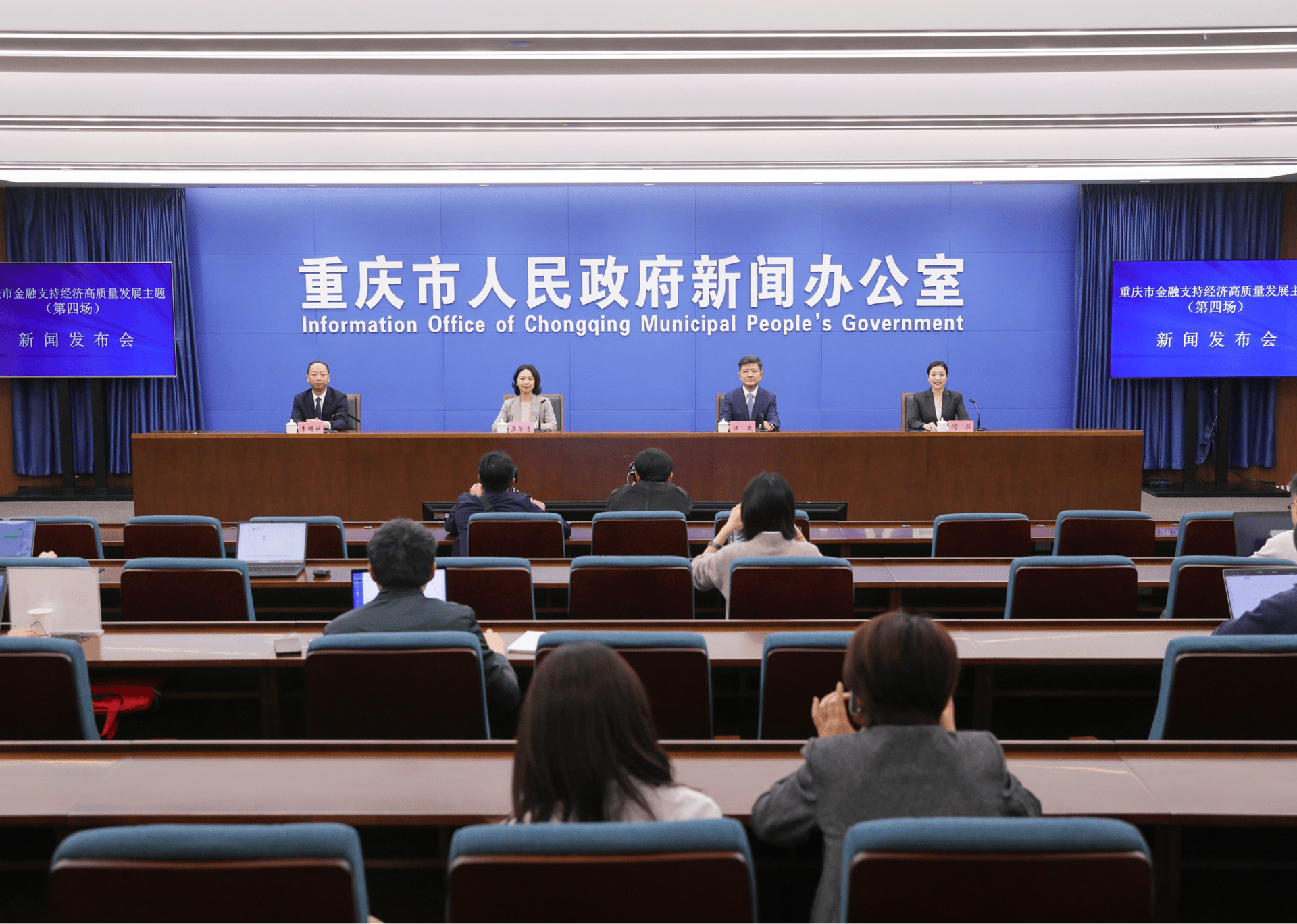
重庆:金融资产规模达9.5万亿元
Sou Hu Cai Jing· 2025-11-01 01:16
Core Insights - As of the end of September, Chongqing's financial asset scale reached 9.5 trillion yuan, with a year-on-year growth of 8.3%, and both deposit and loan balances grew faster than the national average [1][3][5] Financial Asset Growth - The financial asset scale in Chongqing has reached 9.5 trillion yuan, reflecting an 8.3% year-on-year increase [1][3] - The average capital of local financial organizations in the city is 384 million yuan [3] Banking Sector Performance - Chongqing Bank's assets have surpassed 1 trillion yuan, while Chongqing Rural Commercial Bank maintains its leading position among rural commercial banks nationwide [1][5] - The balance of consumer finance company loans exceeds 400 billion yuan, accounting for approximately 25% of the national total [3] Strategic Financial Initiatives - The city has facilitated a total credit of 5.47 trillion yuan from central-local strategic cooperation, with various financial institutions establishing regional headquarters [5] - Chongqing has implemented policies to support industrial transformation, private economy, technological innovation, and small and micro enterprises, resulting in a doubling of medium to long-term loans for manufacturing and inclusive small loans since the end of 2020 [5][6] Capital Market Activity - In 2023, the number of refinancing activities for listed companies in Chongqing increased by 126% year-on-year, with market capitalization rising nearly 50% [5] - The amount of mergers and acquisitions among listed companies surged by 637% year-on-year, demonstrating the effective leverage of capital markets [5] Private Equity and Investment - Chongqing is actively developing a hub for private equity investment in the West, with a structured framework of 120 billion yuan for state-controlled private equity funds, attracting over 380 billion yuan in social capital [6] - More than 860 technology-oriented projects have received investments exceeding 40 billion yuan, maintaining a growth rate of over 50% in the past two years [6] Financial Regulation and Stability - The city is enhancing regulatory collaboration between central and local authorities, focusing on financial debt risks and illegal financial activities [6] - As of September, the non-performing loan ratio in Chongqing's banks stands at 1.09%, which is better than the national average, and new cases of illegal fundraising have decreased by 14.3% year-on-year [6]