零碳园区

Search documents
中央财办:新能源汽车市场渗透率11月接近60%
Cai Jing Wang· 2025-12-14 02:35
Core Viewpoint - The "trade-in" policy for consumer goods has significantly boosted sales, with the penetration rate of the new energy vehicle market nearing 60% as of November [1] Group 1: Consumer Market - The implementation of the "trade-in" policy has led to rapid growth in sales of related consumer goods [1] - There is a plan to further implement special actions to boost consumption and eliminate unreasonable restrictions in the consumer sector [1] Group 2: Energy Sector - There is an emphasis on accelerating the construction of a new energy system and improving the clean and efficient use of fossil energy [1] - The development of new growth points such as hydrogen energy and green fuels is highlighted [1] - Plans include the establishment of zero-carbon parks and zero-carbon factories [1]
韩文秀:明年要建设一批零碳园区、零碳工厂
Bei Jing Shang Bao· 2025-12-13 04:55
Core Viewpoint - Green development is emphasized as the foundation for high-quality development, with a focus on establishing a strong energy nation and accelerating the construction of a new energy system [1] Group 1: Energy Policy and Development - The government plans to formulate a comprehensive energy strong nation construction plan and accelerate the establishment of a new energy system [1] - There will be an emphasis on the clean and efficient utilization of fossil energy and the expansion of green electricity applications [1] Group 2: Carbon Emission Control - The year 2024 marks the transition from dual control of energy consumption to dual control of carbon emissions, with a proactive approach to achieving carbon peak [1] - Key industries will undergo energy-saving and carbon reduction transformations, and the construction of a national carbon emissions trading market will be strengthened [1] Group 3: New Growth Areas - The government aims to cultivate new growth points such as hydrogen energy and green fuels, alongside the establishment of zero-carbon parks and factories [1]
中国经济年会:明年要建设一批零碳园区、零碳工厂
Bei Jing Shang Bao· 2025-12-13 04:37
Core Viewpoint - Green development is emphasized as the foundation for high-quality development, with a focus on establishing a strong energy nation and accelerating the construction of a new energy system [1] Group 1: Energy Policy and Development - The government plans to formulate a comprehensive energy construction planning outline to enhance the clean and efficient use of fossil energy and expand the application of green electricity [1] - The year 2024 marks the transition from dual control of energy consumption to dual control of carbon emissions, indicating a significant policy shift [1] Group 2: Carbon Emission Control - There is a commitment to actively and steadily promote carbon peak emissions and to advance energy-saving and carbon-reduction transformations in key industries [1] - The construction of a national carbon emissions trading market will be strengthened to facilitate better management and reduction of carbon emissions [1] Group 3: New Growth Areas - The government aims to cultivate new growth points such as hydrogen energy and green fuels, alongside the establishment of zero-carbon parks and factories [1]
加快产业绿色低碳转型!广东将建设25个左右的零碳园区
Nan Fang Du Shi Bao· 2025-12-12 14:46
Core Viewpoint - Guangdong Province has released the "Guangdong Zero Carbon Park Construction Plan" to promote green transformation and achieve carbon peak and carbon neutrality goals by establishing zero carbon parks [1] Group 1: Policy Objectives - The plan aims to accelerate the green and low-carbon transformation of industries in Guangdong, focusing on near-zero and net-zero carbon goals [1] - It emphasizes source reduction, process reduction, and end carbon fixation, adhering to principles of hierarchical management, classified construction, phased promotion, and step-by-step implementation [1] Group 2: Implementation Goals - By 2027, Guangdong plans to establish around 25 zero carbon parks, gradually developing relevant policies and achieving initial results in innovation related to zero carbon pathways, mechanisms, and models [1] - By 2030, a number of zero carbon parks are expected to be completed, with improvements in technology, business models, policy standards, and service systems, contributing positively to the carbon peak goal and supporting comprehensive green transformation of economic and social development [1]
中央为明年能源发展划重点,再提整治“内卷式”竞争
Di Yi Cai Jing· 2025-12-12 05:41
Group 1 - The 2025 Central Economic Work Conference emphasizes "comprehensive green transformation" under the "dual carbon" framework, focusing on energy and green electricity sectors [1][2] - Key initiatives include accelerating the construction of a new energy system, expanding the application of green electricity, and enhancing the national carbon emissions trading market [1][2] - The development of non-fossil energy sources and the efficient use of fossil energy are prioritized, with specific projects in wind, solar, hydro, and nuclear energy [2][3] Group 2 - The concept of "green electricity direct connection" is defined, allowing renewable energy sources to supply electricity directly to users without going through the public grid [3][4] - The scale of China's green low-carbon industry is approximately 11 trillion yuan, with potential for significant growth, particularly in the construction of zero-carbon parks [3][4] - In the first three quarters of the year, China's renewable energy installed capacity increased by 31 million kilowatts, a year-on-year growth of 47.7%, accounting for 84.4% of new installations [5] Group 3 - The 2025 conference reiterates the need to address "involution" competition, signaling a deeper commitment to regulating competitive practices in the energy sector [6] - The solar energy industry is actively working to eliminate "involution" through market-driven efforts to phase out outdated capacities [6] - Concerns about irrational low-price competition in the energy storage sector highlight the need for collaboration across the industry to maintain global competitiveness [6]
环保公用2026年策略:绿电新蓝海 - 就近消纳与非电利用
2025-12-12 02:19
摘要 绿电直连通过物理溯源,构建全链条低碳认证体系,助力高能耗出口企 业应对国际绿色壁垒,尤其是在欧盟碳边境税和美国清洁能源法案的背 景下,提供制度性保障。 国家将可再生能源非电消费比重纳入考核,推动钢铁、建材、石化等行 业脱碳,为绿热提供环境价值实现渠道,并促进熔盐储能等技术在长时 储能和联供系统中的应用。 新型虚拟电厂具备源荷成套特征,通过智能调度优化负荷和储能设备, 提高经济性,提升系统稳定性和效率,尤其在工商业领域,储能需求增 加推动其发展。 可再生能源非电脱碳方案包括供热/制冷、制氢及生物燃料等,其中绿色 甲醇、生物航煤被认为是运输业脱碳的终极方案,受欧盟航空业强制添 加 SAF 等政策驱动,增量空间巨大。 国家发改委 1,192 号文创新性地提出单一容量制电费收取方式,降低绿 电直连项目输配电费,促使项目通过自主储能、虚拟电厂等方式降低公 共电网接入容量,提高经济性。 Q&A 未来新能源领域的主要发展方向是什么? 未来新能源领域的主要发展方向包括就近消纳和废电利用。就近消纳方面,绿 电直连是一个重要手段。绿电直连指的是风能、光伏、生物质发电等不接入公 共电网,通过单一线路直接向用户供给绿电,实现物 ...
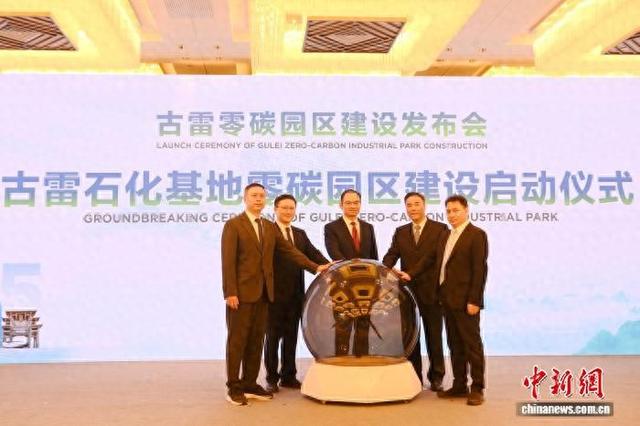
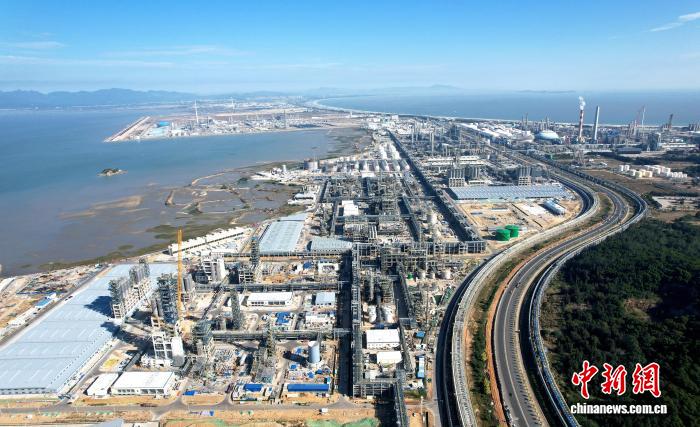
(经济观察)福建古雷为何建设“零碳园区”?
Zhong Guo Xin Wen Wang· 2025-12-10 10:49
Core Viewpoint - The Gule Petrochemical Base is constructing a "zero-carbon park" to enhance its green transformation and become a significant "green value hub" that injects clean and low-carbon competitiveness into the regional and broader industrial chain [1]. Group 1: Zero-Carbon Park Construction - The zero-carbon park aims to achieve a national standard of 0.3 tons of carbon emissions per ton of standard coal by 2035, positioning itself as the first large-scale zero-carbon petrochemical park in China [1]. - A construction blueprint has been established, emphasizing a two-step approach to realize the zero-carbon goals [1]. Group 2: Industry Collaboration and Technological Integration - The recent conference included representatives from nearly 100 multinational companies and experts, facilitating the practical application of zero-carbon technologies and compliance management [2]. - The Gule Petrochemical Base is integrating advanced technologies such as carbon capture and utilization to enhance its green competitiveness and avoid potential international green trade barriers [4]. Group 3: Regional Economic Impact - Gule aims to become a pivotal hub for regional industrial ecology, supplying low-carbon raw materials to key industries in Fujian Province, including textiles, footwear, and automotive sectors [5]. - Strategic cooperation with Tianjin University focuses on driving technological innovation and talent development to support the transition from a high-carbon to a zero-carbon demonstration park [5].

古雷开发区全面启动零碳园区建设
Xin Hua Wang· 2025-12-10 04:17
Core Viewpoint - The launch of the zero-carbon park construction in the Gulei Petrochemical Base marks a significant step towards low-carbon development in China's petrochemical industry, aiming to establish a national-level zero-carbon demonstration park by 2035 [1][2]. Group 1: Zero-Carbon Park Construction - The Gulei Petrochemical Base has initiated a "two-step" strategy for the construction of a zero-carbon park, with the first phase aiming to establish a fine chemical zero-carbon park by 2029, targeting a carbon emission reduction to 0.25 tons per ton of standard coal [1]. - The second phase, set to be completed by 2035, will expand successful models across the entire base, introducing advanced technologies to achieve a carbon emission target of 0.3 tons per ton of standard coal [1]. Group 2: Investment and Project Support - A total of 34 supporting projects have been planned for the Gulei Development Zone, with an investment exceeding 30 billion yuan, focusing on five key tasks including high-proportion green clean electricity replacement and energy-saving carbon reduction in the petrochemical sector [1]. - Several green technology cooperation projects were signed during the event, involving cutting-edge fields such as CO₂ hydrogenation for green aromatics and sustainable aviation fuel (SAF) technology development [1]. Group 3: Industry Significance - The Gulei Petrochemical Base is recognized as one of the seven major petrochemical bases in China, and the zero-carbon park initiative is seen as a critical practice for both domestic and foreign enterprises to explore low-carbon development [2]. - The initiative aims to integrate key elements such as green electricity, low-carbon processes, circular economy, and digital governance into the industrial system, positioning Gulei as a leading zero-carbon petrochemical demonstration park in the country [2].
中德工业领域脱碳新实践 “万江×宝马”地热能供热项目投入运营
Zhong Guo Qi Che Bao Wang· 2025-12-10 02:55
Core Insights - The geothermal heating project at the BMW Brilliance Powertrain Plant is the first large-scale application of geothermal energy in the industrial sector in China, officially commencing operations [2][3]. Group 1: Project Overview - The project utilizes a self-developed medium-deep geothermal heat exchange system by Wanjing New Energy, extracting geothermal energy from a depth of 2900 meters, ensuring efficient resource extraction without water withdrawal or pollution [2]. - The geothermal system covers an area of 580,000 square meters, providing comprehensive heating to the production and office areas, maintaining a constant temperature necessary for precision manufacturing [2]. Group 2: Environmental Impact - The project is expected to reduce carbon emissions by 18,000 tons annually, equivalent to the carbon emissions produced by a car circling the Earth's equator 3,000 times [2]. - The initiative aligns with the broader trend of green development and low-carbon transformation in the automotive industry, showcasing a commitment to ecological protection and resource conservation [3][4]. Group 3: Collaboration and Future Plans - The project exemplifies successful collaboration between BMW, China Huaneng Group, and Wanjing New Energy, setting a benchmark for zero-carbon park and factory construction in Shenyang [3][4]. - Wanjing New Energy plans to extend its geothermal technology applications to various sectors, including industry, agriculture, hospitals, schools, transportation hubs, and residential areas, positioning geothermal resources as a "green engine" for regional development [3].

福建古雷零碳园区建设启动
Zhong Guo Xin Wen Wang· 2025-12-09 08:24
Core Viewpoint - The launch of the Gule Zero Carbon Park in Zhangzhou, Fujian, marks a significant step towards low-carbon development in China's petrochemical industry, aiming to integrate green power, low-carbon processes, and circular economy into its industrial system [3][5]. Group 1: Event Overview - The Gule Zero Carbon Park construction launch event gathered nearly a hundred representatives from multinational companies, government agencies, and experts to discuss future industry development [1][3]. - The event featured the release of the "Gule Petrochemical Base Zero Carbon Park Construction Plan," outlining a two-phase strategy for low-carbon transformation [5]. Group 2: Strategic Goals - The first phase (by 2029) aims to establish a fine chemical zero carbon park, targeting a reduction in carbon emissions to 0.25 tons per ton of standard coal [5]. - The second phase (by 2035) will expand successful models across the entire base, introducing advanced technologies to achieve a national standard zero carbon park goal of 0.3 tons per ton of standard coal [5]. Group 3: Investment and Projects - Gule Development Zone plans to invest over 30 billion yuan in 34 supporting projects, focusing on five key tasks to reduce the carbon footprint across the entire industry chain [5]. - Key tasks include increasing the proportion of green clean electricity, implementing clean heat replacements, enhancing energy efficiency in the petrochemical sector, developing zero carbon transportation facilities, and improving carbon management capabilities [5]. Group 4: Collaborative Initiatives - A green development initiative was launched, calling for collaboration among various sectors to transform the green vision into actionable steps [6]. - The Gule Development Zone signed agreements with multiple companies for cutting-edge projects, including CO2 hydrogenation for green aromatics and sustainable aviation fuel (SAF) technology development [6].