
ESG投资

Search documents
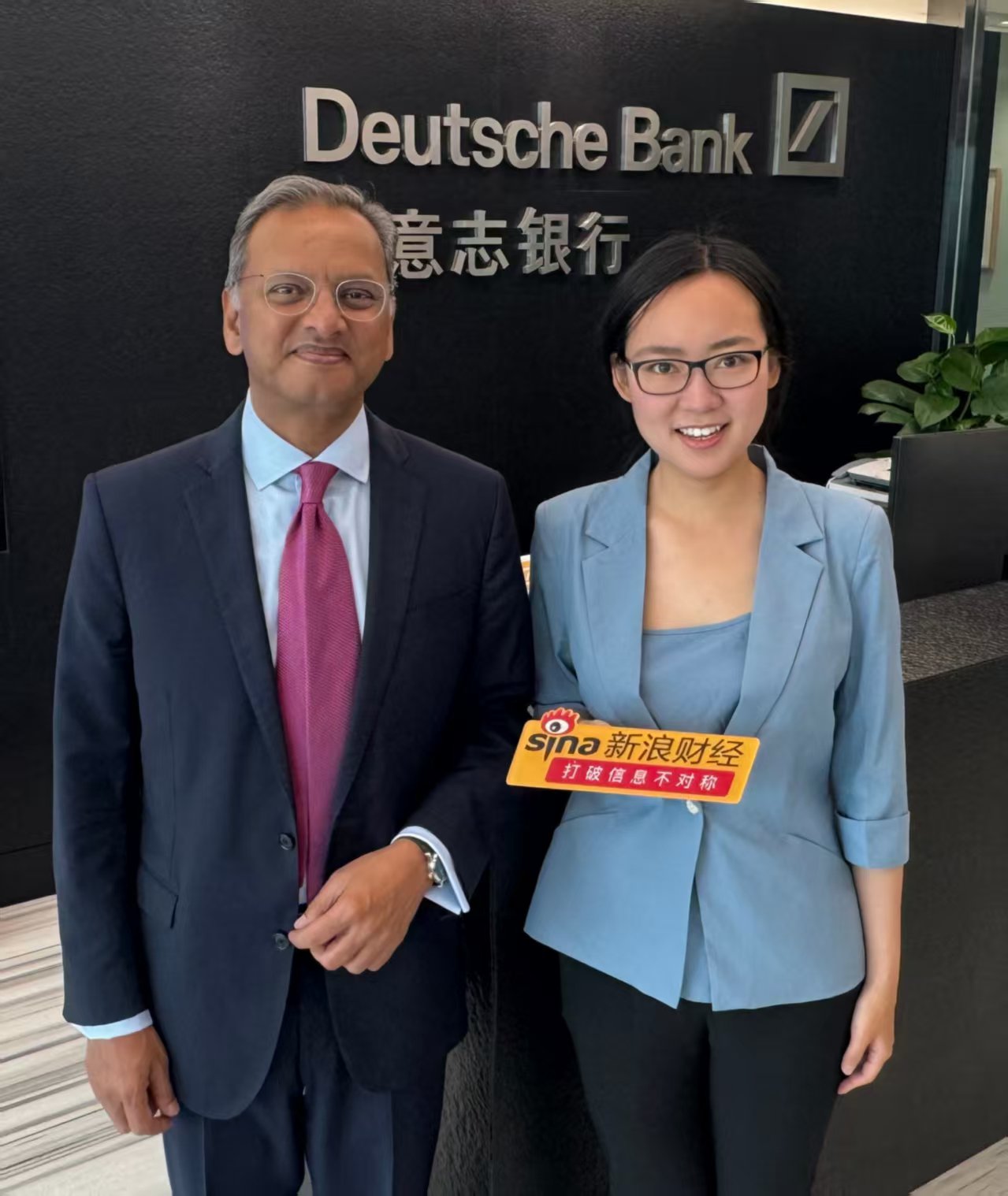
德意志银行亚太、中东和非洲地区可持续金融主管:价值驱动型可持续金融的兴起
Xin Lang Cai Jing· 2025-08-18 03:18
Core Insights - The article discusses the increasing importance of sustainable finance in the banking industry, driven by climate change and social responsibility concerns [1][2] - Deutsche Bank views sustainability as a core mission, integrating it into their business strategy to meet regulatory requirements and client expectations [2][4] Group 1: Current Trends in Sustainable Finance - There is a growing demand for sustainable finance solutions as companies recognize the need to incorporate sustainability into their core strategies [3][4] - Regulatory bodies, particularly in Europe, are emphasizing the integration of sustainability principles into daily operations of financial institutions [5][12] - The rise of technology, such as AI and blockchain, is crucial for enhancing data transparency and accountability in sustainable finance [3][14][15] Group 2: Key Drivers of Deutsche Bank's Sustainable Finance Strategy - Deutsche Bank aims to create shareholder value while maintaining sustainability, balancing profit pursuit with responsible practices [4][5] - The bank recognizes that clients are increasingly seeking sustainable solutions and guidance, indicating a shift in market demand [5][6] - Employee expectations also play a role, as staff desire to work for a company with a strong mission and commitment to sustainability [5][18] Group 3: Future Outlook and Opportunities - The demand for sustainable finance and green finance is expected to continue growing, driven by changing consumer preferences and regulatory requirements [3][8] - Companies that integrate sustainability into their business strategies are likely to enhance their profitability and market position [8][17] - The younger generation is increasingly aware of sustainability issues, influencing corporate strategies and consumer behavior [13][16] Group 4: Challenges and Market Dynamics - While the market for sustainable finance is evolving, some companies view sustainability initiatives as a cost burden rather than an opportunity [6][8] - The article highlights the importance of government policies in making sustainable solutions more cost-effective compared to unsustainable options [16] - Despite economic pressures, companies are still focused on sustainability, often integrating it into their business strategies without overtly labeling it as such [17]


ESG公募基金周榜93期 | 上榜基金继续全部收涨,泛ESG主题主动型平均收益率达11.25%
Mei Ri Jing Ji Xin Wen· 2025-08-16 06:17
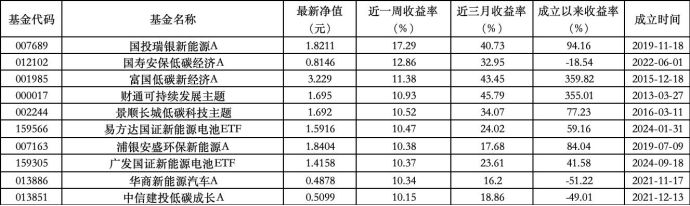
Core Insights - The article discusses the performance of ESG public funds, highlighting the strong performance of ESG-themed products, particularly active funds, which achieved an average return of 11.25% during the observation period from August 11 to August 15, 2022 [1] ESG Fund Performance Summary Overall ESG Fund Performance - Active ESG funds outperformed index funds, with average returns of 5.82% for active funds compared to 2.22% for index funds [1] Top 10 ESG Funds - The top-performing ESG funds include: - Guotou Ruijin New Energy A with a weekly return of 17.29% and a cumulative return of 94.16% since inception [3] - Guoshou Anbao Low Carbon Economy A with a weekly return of 12.86% and a cumulative return of -18.54% since inception [3] - Fuguo Low Carbon New Economy A with a weekly return of 11.38% and a cumulative return of 359.82% since inception [3] Active ESG Themed Funds - The top active ESG-themed funds include: - Caitong Sustainable Development Theme with a weekly return of 10.93% and a cumulative return of 355.01% since inception [5] - Huaxia ESG Sustainable Investment One-Year Holding A with a weekly return of 7.2% and a cumulative return of -3.91% since inception [5] Index ESG Themed Funds - The top index ESG-themed funds include: - Zhongjin Zhongzheng 500 ESG Enhanced Index A with a weekly return of 3.79% and a cumulative return of 15.13% since inception [8] - Guotai MSCI China A Shares ESG General ETF with a weekly return of 2.4% and a cumulative return of 8.22% since inception [8] Broader ESG Themed Fund Performance - The broader ESG-themed funds also showed strong performance, with the top funds in this category including: - E Fund National Standard New Energy Battery ETF with a weekly return of 10.47% and a cumulative return of 59.16% since inception [10] - GF National Standard New Energy Battery ETF with a weekly return of 10.37% and a cumulative return of 41.58% since inception [10]
构筑经济与生态的双重“金山”
Zheng Quan Shi Bao· 2025-08-14 18:13
Group 1 - The core idea emphasizes that listed companies are leveraging innovative practices to build both economic and ecological "gold mountains," injecting strong momentum into sustainable development through green technology innovation, circular economy practices, and green financial tools [1] - Nearly 2,700 listed companies mentioned energy conservation and emission reduction in their 2024 annual reports, showcasing a trend towards green and efficient industrial practices [1] - Companies like Jun Ding Da, Yanjing Beer, Longlide, and Pulit have reported significant reductions in waste emissions and resource consumption through technological upgrades, highlighting a shift towards greener production methods [1] Group 2 - The new energy industry is identified as a core driver of green development, with companies like CATL and BYD reporting substantial profit growth, indicating a robust market for electric vehicles [2] - Green finance is becoming a key engine for driving economic green transformation, with financial institutions incorporating environmental risks into their credit processes, thus facilitating lower financing costs for companies pursuing green development [2] - The rapid growth of ESG investments is projected to exceed $50 trillion by 2025, positioning green transformation as a fundamental pillar for attracting long-term capital [2]



二十载资本润泽 绿水青山流淌金山银山
Zheng Quan Shi Bao· 2025-08-14 18:07
Core Viewpoint - The concept of "lucid waters and lush mountains are invaluable assets" has deeply influenced the development of China's capital market, leading to the transformation of ecological value into economic value through various financial instruments and practices [1] Green Finance - Since the introduction of the "green finance system" in 2015, China has implemented numerous policies to promote green finance, effectively directing funds towards energy conservation, environmental protection, and clean energy sectors [2] - Green credit, as the most mature financing model in China's green finance system, has seen a market size expansion of 28.37 trillion yuan over six years, with a compound annual growth rate of 28.24%, maintaining the largest balance globally [2] - By the end of 2024, the balance of green loans in China is expected to reach 36.6 trillion yuan, a year-on-year increase of 21.7%, with over 60% of funds directed towards carbon reduction projects [2] Green Bond Market - The green bond market has experienced significant growth, with an average annual issuance scale of 1.11 trillion yuan from 2021 to 2024, which is 3.94 times that of the "13th Five-Year Plan" period [3] - The issuance of green bonds has expanded from financial institutions to real enterprises, with notable examples including Ninghu Expressway and Baosteel, which issued green bonds at lower interest rates compared to ordinary bonds [3] - Since 2005, 68 ecological protection and environmental governance companies have been listed on A-shares, raising over 120 billion yuan through various financing methods, with an average annual financing of 56.84 billion yuan from 2021 to 2024, a 32.78% increase from 2016 to 2020 [3] ESG Investment - The concept of sustainable development has led to the rapid growth of ESG investments, with 133 institutions joining the UN PRI by mid-August, up from 19 in 2018, and the number of ESG funds reaching 911 with a total scale exceeding one trillion yuan [4] - Over 70% of fund companies have launched ESG fund products, with leading firms like Huatai-PB, GF Fund, and others actively engaging in ESG investment practices [4][5] ESG Disclosure - A series of policies have been introduced to enhance ESG disclosure among listed companies, with 2,502 A-share companies disclosing ESG reports by August 14, 2024, marking a 15.14% year-on-year increase and a disclosure rate of 46.68% [7] - The average score of A-share companies in the environmental dimension has continuously improved, with a 75.18% increase expected by 2025 compared to 2020 [8] - Companies in high carbon-emission industries have shown a higher commitment to greenhouse gas reduction, indicating positive progress in quantifying ecological outcomes [7][8]

南京:栽梧桐树引凤凰
Xin Hua Wang· 2025-08-13 10:08
Group 1 - Recent large projects from companies like Dassault and BMW are establishing a strong presence in Nanjing, driven by the city's rich talent pool, solid industrial foundation, and favorable business environment [1][2] - Dassault Systèmes has launched an industrial software company in Nanjing, contributing to the city's goal of building a trillion-yuan software and information services industry cluster [1] - BMW has set up its first IT research center in Nanjing, focusing on AI, digital twins, and smart manufacturing, indicating the city's strategic importance for the company [1][3] Group 2 - Nanjing is actively cultivating innovative industrial clusters and integrating modern services with advanced manufacturing, with the software industry expected to exceed 860 billion yuan by 2024 [2] - The establishment of the East China headquarters for MicroPort Software in Nanjing highlights the city's blend of traditional manufacturing and future technologies [2] - The favorable business environment in Nanjing has led to rapid project initiation, exemplified by the quick setup of the Chasing Technology headquarters, which aims for significant production capacity [2] Group 3 - Nanjing is focusing on high-growth industries, with the recent planning of the Pukou low-altitude economy industrial park and the signing of key projects in advanced air traffic equipment [3] - The Tianren Dao and Aerospace Green Energy new materials production base in Pukou is expected to generate an annual output value of around 1 billion yuan [3] - Nanjing aims to attract green enterprises and promote ESG investment, with initiatives like the establishment of a new energy headquarters by Singapore's Golden Eagle Group [3]
陆控MSCI ESG评级提升至AA级
Quan Jing Wang· 2025-08-13 05:51
Core Viewpoint - MSCI upgraded Lufax Holding's ESG rating from A to AA, indicating significant improvement in consumer rights protection and superior performance in privacy, data security, and human capital development compared to industry averages [1] Group 1: ESG Rating Improvement - Lufax Holding's ESG rating was raised by MSCI, reflecting enhanced performance in consumer rights protection [1] - The company outperformed industry averages in critical areas such as privacy and data security, as well as human capital development [1] Group 2: Market Implications - Increased global capital interest in Chinese assets is noted, alongside the growing popularity of ESG investment principles [1] - Investment managers believe that the willingness of global investment institutions to invest in high-rated ESG Chinese stocks will continue to rise [1]
ESG投资周报:ESG指数有所回暖,绿色债券稳步发行-20250813
GUOTAI HAITONG SECURITIES· 2025-08-13 05:27
Market Performance - The A-share market showed overall recovery from August 4 to August 8, 2025, with the CSI 300 index rising by 1.23%, the ESG 300 index increasing by 1.06%, and the STAR Market ESG index up by 1.31%[5] - The average daily trading volume across the A-share market was approximately 1.70 trillion RMB, indicating a contraction in liquidity compared to previous periods[5] ESG Fund Issuance - No new ESG fund products were issued in August 2025; however, a total of 241 ESG public funds were launched in the past year, with a total issuance of 171.41 billion units[7] - As of August 10, 2025, there are 910 existing ESG fund products, with the largest share being ESG strategy funds at 50.33% of the total net asset value of 1,022.06 billion RMB[9] Fund Performance - The top-performing fund for the week of August 4 to August 10, 2025, was the Zhonghai Charm Yangtze River fund, achieving a weekly return of 6.14% and a year-to-date return of 29.00%[10] - Other notable funds included the Robeco Resource Selection and Yongying New Energy Selection, which also performed well during the same period[10] Green Bond Issuance - A total of 23 new green bonds were issued in the interbank and exchange markets from August 4 to August 8, 2025, with a planned issuance scale of approximately 18.64 billion RMB[13] - In August 2025, 33 ESG bonds were issued, amounting to 15.3 billion RMB, with a total of 1,034 ESG bonds issued in the past year, totaling 1,227.7 billion RMB[13] Green Bond Trading - The total trading volume of ESG green bonds for the week was 562.58 billion RMB, with the interbank market accounting for 77.45% of the total trading volume[17] - Repo transactions dominated the trading methods, comprising 94.96% of the total trading volume, while cash transactions accounted for only 0.07%[20] Bank Wealth Management Products - In August 2025, 30 ESG bank wealth management products were issued, with a total of 1,049 existing products in the market as of August 10, 2025[18] - The largest share of existing products is pure ESG-themed products, which account for 54.53% of the total[18] Risk Factors - Potential risks include insufficient policy support for ESG initiatives, lack of standardized data reporting, and lower-than-expected product issuance scales[19]
招行发布2021年可持续发展报告 绿色金融进入经营核心议题
Xin Hua Wang· 2025-08-12 06:29
Core Viewpoint - The article emphasizes the urgent need for the banking industry to transition towards green finance in response to China's carbon neutrality goals by 2060 and peak carbon emissions by 2030, highlighting the significant investment opportunities and the strategic initiatives taken by China Merchants Bank (CMB) in this area [1][2][3]. Group 1: Green Finance Strategy - CMB has prioritized green finance as a core business area, elevating its importance in the 2021 sustainability report, reflecting a shift from 11th place in 2020 to the top position in 2021 [1]. - The bank aims for its green project loan growth to exceed the overall growth of corporate loans within the year and to enter the top tier of banks in the People's Bank of China's green finance evaluation within five years [2]. - The report indicates that achieving China's carbon peak and neutrality goals will require investments in the range of trillions of yuan, creating substantial market opportunities for financial institutions [2]. Group 2: Green Financing Policies - CMB plans to implement differentiated credit policies to allocate resources towards low-energy, low-pollution industries while controlling loans to high-pollution sectors [3]. - The bank has issued carbon reduction loans amounting to 6.974 billion yuan in 2021, resulting in a reduction of 1.2152 million tons of CO2 equivalent [4]. - CMB's green loan balance reached 263.842 billion yuan by the end of 2021, with a year-on-year increase of 55.254 billion yuan, representing a growth rate of 26.49% [4]. Group 3: Green Investment and ESG Integration - CMB has actively engaged in green investments, with a focus on retail markets, having sold approximately 17.8 billion yuan in funds related to renewable energy and photovoltaic industries over the past year [6]. - The bank has integrated ESG principles into its investment processes, achieving an MSCI ESG rating upgrade from BBB to A, positioning it among industry leaders [7]. - CMB's subsidiaries are involved in various green financing initiatives, including issuing green bonds and providing innovative financing solutions for renewable energy projects [5][6]. Group 4: Economic Impact of Green Finance - The article highlights that green finance is not merely a response to policy but is viewed as a long-term investment opportunity that can drive economic growth and job creation [8]. - The International Energy Agency predicts that investments in clean energy and infrastructure will triple by 2030, contributing significantly to global GDP growth [8]. - CMB is committed to leveraging financial tools to address climate challenges and support economic transformation towards sustainability [8].

年内绿色债券发行规模达3615.6亿元 “绿色”成市场投资焦点
Xin Hua Wang· 2025-08-12 06:26
Core Insights - Green bonds have become a significant financing tool for corporate green transformation, with issuance reaching 361.56 billion yuan in 2023, a year-on-year increase of 73.72% [1] - The Shanghai and Shenzhen Stock Exchanges are actively promoting the development and innovation of green bond products, including the issuance of low-carbon transition bonds [1][2] - The green bond market in China has rapidly developed, becoming the second-largest source of green bonds globally by 2018, with issuance reaching 611 billion yuan in 2021 [1] Group 1 - The green bond market is increasingly recognized for its advantages in resource allocation, risk management, and market pricing, enhancing support for green development [2] - The introduction of low-carbon transition bonds links the bond terms to the issuer's performance in achieving low-carbon transition goals, broadening the financing options for various entities [2] - Current funding from green bonds is primarily directed towards green services, energy conservation, and public projects, with a broader interpretation of "green" encompassing urban development and resource protection [2] Group 2 - Green bonds are seen as a crucial component of green finance, aimed at providing funding for green low-carbon industries, thus promoting green economic development and supporting carbon neutrality goals [2] - Companies issuing green bonds tend to improve their environmental performance and enhance their social image, which can lead to better market competitiveness and financial performance [3] - Green bonds offer lower financing costs and longer financing periods compared to traditional bonds, with some green bonds having a maturity of up to 7 years [3][4]
20家公募已加入PRI 国内ESG投资继续深入
Xin Hua Wang· 2025-08-12 06:25
Core Viewpoint - The increasing adoption of the Principles for Responsible Investment (PRI) by mainland institutions reflects a growing commitment to ESG (Environmental, Social, and Governance) investment, with 101 institutions having signed the PRI as of the report date, including 20 public fund managers [1][2]. Group 1: Adoption of PRI - The PRI, established in 2006 by UNEP FI and the UN Global Compact, has gained significant influence in China as the concepts of carbon peak and carbon neutrality become more prevalent [2]. - As of June 10, 2022, 101 mainland institutions have signed the PRI, with 74 being investment management institutions, including 20 public fund managers [2]. - Among the 18 social security fund managers in China, 13 have joined the PRI, and 15 out of 21 basic pension investment management institutions have also signed [2]. Group 2: Motivations for Joining PRI - Public fund managers are motivated to join the PRI to meet existing or potential demands from overseas clients, enhance brand and competitive advantage, prepare for future market and regulatory changes, and engage in responsible investment development through the PRI platform [2][3]. - The six principles of PRI guide institutions in integrating ESG issues into investment analysis and decision-making, becoming active owners, and promoting the acceptance and implementation of PRI principles within the investment industry [3]. Group 3: ESG Investment Strategies - Institutions like Southern Fund and GF Fund emphasize the importance of ESG performance in investment portfolios, stating that poor ESG performance can lead to significant risk exposure [4]. - Southern Fund has integrated ESG factors into its investment process since joining PRI in 2018, aiming to align ESG practices with Chinese investment logic [4][6]. - GF Fund has established an ESG investment leadership group and developed a foundational evaluation system and screening criteria for ESG investments, with a total ESG fund scale reaching 29.3 billion yuan by the end of Q1 2022 [7]. Group 4: Product Innovation and Development - The adoption of PRI has led to frequent actions by institutions to enhance their ESG investment systems and processes, resulting in innovative product offerings [6]. - Southern Fund has developed a comprehensive ESG investment system that integrates ESG factors across various asset classes, achieving a total scale of green investments of 232.13 billion yuan by the end of 2021, a 129% increase from the beginning of the year [6]. - GF Fund is actively promoting the integration of ESG investment with various investment strategies, including index-based and active quantitative approaches [7].