人工智能(AI)

Search documents
融合东西方智慧 打造系统化投资特色平台
Zhong Guo Zheng Quan Bao· 2025-09-07 20:52
Core Viewpoint - BlackRock views the Chinese market as a crucial growth engine within its global strategy, managing $12.5 trillion in assets and recognizing the significant scale and potential of the Chinese market [1][2]. Group 1: Business Development and Achievements - Since its establishment as a public fund management company in June 2021, BlackRock Fund has managed 16 public products with a total scale of approximately 15 billion yuan [2]. - The company has built stable relationships with channels, institutional clients, and partners, while also enhancing brand recognition in the Chinese public fund industry [2]. - BlackRock Fund has faced challenges such as longer decision-making processes compared to local institutions, but has improved governance structures and decision-making efficiency over the years [2][3]. Group 2: Localization Strategy - BlackRock's localization strategy focuses on talent, decision-making, and product development, achieving significant progress in these areas [3][4]. - The company has shifted from an "international" to a "localized" talent strategy, prioritizing professionals familiar with the Chinese market [3]. - Decision-making processes have been streamlined to enhance responsiveness to market changes, allowing for quicker product launches and strategy adjustments [3][4]. Group 3: Product Innovation and Focus - BlackRock Fund emphasizes diverse product offerings tailored to Chinese investors' needs, balancing absolute and relative returns [4][6]. - The company is launching innovative products such as the BlackRock China Bond Investment Preferred Green Bond Index Fund, addressing domestic green finance requirements [4]. - Future product development will focus on systematic investment, multi-asset management, and global asset allocation, including the reintroduction of QDLP products and preparations for QDII qualifications [7][8]. Group 4: Management Team Adjustments - Recent personnel changes, including the appointment of Yu Peihua as General Manager, are aimed at optimizing the organization and implementing strategic initiatives [5][6]. - The new management team is expected to enhance customer engagement and market expansion, leveraging local expertise to strengthen the fixed income platform [5][6]. Group 5: Systematic Investment Approach - BlackRock Fund is prioritizing systematic investment strategies, combining quantitative and fundamental stock selection to improve decision-making efficiency [8][9]. - The company is leveraging its Systematic Active Equity (SAE) platform, which has over 40 years of investment experience and utilizes AI technology for enhanced investment opportunities [8][9]. - This platform approach aims to provide stable long-term returns, aligning with the evolving preferences of Chinese investors for consistent performance [9][10]. Group 6: Global and Local Integration - BlackRock aims to integrate global expertise with local market needs, focusing on systematic investment and global asset allocation as key differentiators [10]. - The company emphasizes long-term investment strategies and responsible investing, reflecting its commitment to sustainable investment practices in the Chinese market [10].

从AI上下半场切换看后续产业投资机会
2025-09-07 16:19
Summary of Key Points from the Conference Call Industry Overview - The AI industry is transitioning from deep learning to large language models, focusing on intelligent emergence, which includes understanding, generation, memory, and logic capabilities, reshaping user experience and production efficiency [1][3][4] Core Insights and Arguments - The development of the AI industry relies on three key elements: computing power, algorithms, and data, creating a flywheel effect that drives continuous improvement [5] - The AI technology development is divided into two phases: the first phase focuses on exploring the limits of model intelligence with computing power as the priority, while the second phase emphasizes system capability enhancement and application [6] - The widespread application of the Transformer framework has led to a qualitative change in AI capabilities, paving the way towards AGI (Artificial General Intelligence) and generating new paradigms in text, image, and video fields [7] - In the short term, the upgrade of large models is approaching a ceiling, shifting the focus towards application effectiveness, with key development paths including efficiency enhancement, reasoning improvement, and multimodal models [8] Notable Trends and Developments - Major overseas tech companies, such as Meta, are significantly increasing capital expenditures, with expectations of over 50-60% growth in 2025 compared to 2024, indicating a strong investment in computing power to support the transition from the first to the second phase of AI development [9] - AI's impact on job replacement is categorized into three stages: assistance, replacement, and surpassing human capabilities, with current applications already replacing lower-level jobs in programming and content review [10] Market Dynamics and Future Outlook - The AI industry has experienced three major waves of development, with the latest wave driven by machine learning and deep learning since 2000, leading to significant advancements in various fields [2] - The long-term logic of AI development is based on the substantial growth of the computing power industry and the diversification of application scenarios, with potential exponential acceleration once AI reaches human-level intelligence [12] - AI-native applications are expected to see significant growth, with a projected increase in computing power demand as these applications proliferate, particularly by 2025 [17] Investment Opportunities - Companies to watch include infrastructure firms like Alibaba and Shenxinfu, as well as computing power-related companies like Hangji and Haiguang. Additionally, companies with strong business models and potential for future breakthroughs, such as PetroChina and Meitu, are highlighted as key players [18]
法国政府又要垮台?行业大罢工在即
第一财经· 2025-09-07 13:34
Core Viewpoint - The French government is struggling to address its growing fiscal deficit, facing a potential trust vote on September 8, which could lead to significant political and economic consequences [2][3][5]. Group 1: Government and Fiscal Policy - The current government under Prime Minister Borne is a fragile minority government, marking the fourth prime minister appointed by President Macron in two years [6]. - The government aims to cut €43.8 billion in spending to alleviate the fiscal deficit, but faces opposition from both left and right political factions [7]. - France's debt is increasing at a rate of €5,000 per second, with debt repayment costs expected to reach €75 billion next year [9]. - The fiscal deficit is projected to be 5.8% of GDP in 2024, nearly double the EU's 3% limit, with plans to reduce it to 4.6% [9]. Group 2: Economic Context and Historical Background - Unlike other heavily indebted countries that implemented austerity measures, France has relied on increasing taxes to supplement its treasury, leading to a tax burden of nearly 48% of annual economic output by 2014 [10]. - Macron's administration initially reduced unemployment and increased GDP growth, but public spending remains among the highest in developed countries [10]. - The government has faced public backlash, notably during the fuel tax protests in 2018, which resulted in increased spending without improving public finances [11]. Group 3: Current Challenges and Political Landscape - The National Assembly is currently divided into three factions, complicating governance and legislative processes [13]. - There is a growing sentiment among the public for spending cuts, with 78% of French citizens acknowledging the debt issue, yet many do not propose specific measures [18]. - The potential for intervention by the International Monetary Fund (IMF) looms if the trust vote fails, indicating a loss of confidence in the government's fiscal management [3]. Group 4: Market Reactions and Investor Sentiment - The yield on French government bonds has surged, with the 10-year bond yield now the highest in the Eurozone, reflecting investor concerns over fiscal stability [15]. - The concept of "bond vigilantes" is emerging, where investors may force the government to take action by selling off bonds, which could exacerbate the fiscal crisis [15][17]. - Predictions suggest that if Macron were to resign, the yield spread between French and German bonds could reach unprecedented levels, indicating severe market distress [15].


高盛市场调研:进入9月,美股多头继续押AI,空头担心增长和集中度,所有人都看多黄金
华尔街见闻· 2025-09-07 12:02
Core Viewpoint - The global institutional investors' market sentiment is showing a clear split, with a strong consensus emerging on the bullish stance towards gold, regardless of differing views on AI-driven tech stocks and economic growth concerns [1][5]. Group 1: Market Sentiment - A survey of 804 institutional investors indicates a division between bullish and bearish camps, with the bullish camp optimistic about the performance of U.S. stocks, particularly the "Magnificent 7" tech giants, believing the AI narrative is far from over [1][2]. - Over half of the respondents plan to maintain or increase their long positions in the "Magnificent 7," although there is a slight decline in new capital inflows into this trade, suggesting a change in sentiment [2]. - The bearish camp is primarily concerned about the potential for a more significant economic slowdown in the U.S. than expected and the concentration risk posed by large tech stocks dominating the market [3]. Group 2: Gold Investment - Gold has emerged as the most uncontroversial investment choice, with a ratio of nearly 8 to 1 in favor of bullish investors compared to bearish ones, marking a record high in the Goldman Sachs survey [5]. - Both bulls anticipating a Federal Reserve rate cut and bears seeking safe-haven assets view gold as an ideal investment, supported by demand from central banks and potential private investors [5]. Group 3: China Market Interest - Investor interest in the Chinese market is on the rise, with 62% of respondents planning to maintain or increase their positions in Chinese stocks, reflecting a strong rebound in the market during the summer [6][7]. - When asked which market would perform better between U.S. stocks (S&P 500) and Chinese stocks (MSCI China), opinions were nearly evenly split, indicating a growing focus on the Chinese market [7]. Group 4: Dollar Sentiment - The sentiment towards the U.S. dollar has shifted, with a consensus emerging to short the dollar after a brief rebound last month, although there is no clear agreement among investors on the key factors driving the dollar's performance for the remainder of the year [8].

法国政府又要垮台?行业大罢工在即,“债券义勇军”正盘旋
Di Yi Cai Jing· 2025-09-07 11:43
Group 1 - The French National Assembly will hold a confidence vote for Prime Minister Borne on September 8, amid rising fiscal deficits and potential strikes [1][2][4] - The French government aims to cut €43.8 billion in spending to alleviate the current fiscal deficit, but faces opposition from both left and right political factions [4][5] - France's debt is increasing at a rate of €5,000 per second, with debt repayment costs expected to reach €75 billion next year [5][6] Group 2 - The current fiscal deficit is projected to be 5.8% of GDP in 2024, nearly double the EU's 3% limit, with plans to reduce it to 4.6% [5][6] - The political landscape in France is fragmented, with three incompatible factions in the National Assembly, complicating governance and fiscal reforms [7][8] - A significant portion of the French population (78%) supports spending cuts, yet many do not specify how to achieve these reductions [11] Group 3 - The bond market is reacting to the political uncertainty, with French bond yields rising significantly compared to German bonds, reaching an 80 basis point spread [1][10] - The concept of "bond vigilantes" is emerging, indicating that investors may force the government to take action due to rising yields [10][11] - The current political deadlock in France makes it particularly vulnerable to market pressures, with potential implications for its fiscal stability [10][11]

高盛:美股多头继续押AI 空头担心增长和集中度 共识看多黄金
智通财经网· 2025-09-07 04:04
Group 1: Market Sentiment - The market sentiment among global institutional investors is showing a clear split, with bullish investors focusing on AI-driven tech stocks while bearish investors are increasingly wary of economic slowdown and market concentration risks [1][2] - A strong consensus has emerged that regardless of bullish or bearish views, there is a collective inclination to go long on gold, marking it as a common choice among investors [1] Group 2: Bullish and Bearish Perspectives - The survey of 804 institutional investors indicates that while overall risk sentiment has improved, two distinct camps have formed: the bullish camp remains optimistic about U.S. stocks, particularly the "Magnificent 7," while the bearish camp is concerned about the extent of the U.S. economic slowdown and concentration risks posed by large tech stocks [2] - Over half of the respondents plan to maintain or increase their long positions in the "Magnificent 7," although there is a slight decline in new capital inflows into this trade [2] Group 3: Gold Investment - Gold has emerged as the most uncontroversial asset choice, with a ratio of nearly 8 to 1 favoring bullish investors over bearish ones, marking a record high in the Goldman Sachs survey [3] - Both bullish investors anticipating a Federal Reserve rate cut and bearish investors seeking safe-haven assets view gold as an ideal allocation, supported by demand from central banks and potential private investors [3] Group 4: Focus on China and Dollar Sentiment - Investor interest in the Chinese market is on the rise, with 62% of respondents planning to maintain or increase their positions in Chinese stocks, reflecting a strong rebound in the market [4] - There is a renewed focus on the U.S. dollar, with a consensus emerging to short the dollar again, although there is no clear agreement among investors on the key factors driving the dollar's performance for the remainder of the year [4]

美日关税协议细节披露:日本投资5500亿美元,特朗普决定投向,“长期90%利润”归美国
Hua Er Jie Jian Wen· 2025-09-07 03:55
Core Points - The implementation of the US-Japan trade agreement includes a significant strategic investment of $550 billion from Japan to the US, which is a key focus of the agreement [1][4] - The governance structure of this investment is heavily controlled by the US, with the US President having final decision-making authority on investment projects [2][5] - The profit distribution mechanism is structured such that Japan will initially receive 50% of the profits until its investment is recouped, after which the distribution will shift to 90% for the US and 10% for Japan [5][6] Governance Structure - An investment committee will be established, chaired by the US Secretary of Commerce, with no Japanese members, indicating a lack of decision-making power for Japan [2][4] - Japan's role is limited to a "consultation committee," which can only provide advice and legal opinions, further emphasizing the US's control over the investment process [2][5] Profit Distribution - The profit-sharing arrangement is designed to resemble a debt structure rather than traditional equity investment, with Japan's investment treated as a loan that must be repaid before profit sharing begins [5][6] - After Japan recoups its initial investment, the profit distribution will be heavily skewed in favor of the US, raising concerns about the long-term benefits for Japan [5][6] Investment Obligations - Japan has approximately two months to respond to proposed investment projects, with the risk of facing tariffs on its exports to the US if it refuses to fund any projects [7] - This creates a significant pressure on Japan to comply with the investment commitments, as the threat of tariffs looms over its decision-making process [7] Strategic Focus Areas - The $550 billion investment will target seven key strategic sectors: semiconductors, pharmaceuticals, critical minerals, shipbuilding, energy (including pipelines), artificial intelligence (AI), and quantum computing [8] - This strategic focus aims to encourage Japanese companies to engage in higher-risk investments that are deemed critical for both nations' economic interests [8]
高盛市场调研:进入9月,美股多头继续押AI、空头担心增长和集中度、所有人都看多黄金
Hua Er Jie Jian Wen· 2025-09-07 02:44
Group 1 - The market sentiment among global institutional investors is showing a clear split, with bullish investors chasing AI-driven tech stocks while bearish investors are increasingly wary of economic slowdown and market concentration risks [1][2] - A strong consensus has emerged that regardless of bullish or bearish views, going long on gold has become a common choice among all investors, with a ratio of nearly 8 to 1 favoring bullish positions on gold [3] Group 2 - The survey of 804 institutional investors indicates that while overall risk sentiment has improved, two distinct camps have formed: the bullish camp remains optimistic about U.S. stocks, particularly the "Magnificent 7," while the bearish camp is concerned about the potential for a more severe economic slowdown and concentration risks in large tech stocks [2] - Interest in the Chinese market is on the rise, with 62% of respondents planning to maintain or increase their positions in Chinese stocks, reflecting a rebound in market attractiveness after a strong summer [4] - The consensus on the U.S. dollar has shifted again, with a renewed inclination to short the dollar, although there is no clear agreement among investors on the key factors driving the dollar's performance for the remainder of the year [4]

AI芯片赛道“黑马”来袭,英伟达4万亿市值红线受威胁
凤凰网财经· 2025-09-06 13:42
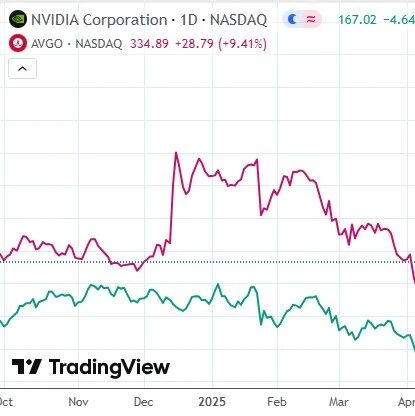
Core Viewpoint - Nvidia's stock price has declined by 2.7% to $167.02, while Broadcom's stock surged by 9.41% to $334.89, following strong earnings and guidance from Broadcom, indicating increased competition in the AI hardware market [2][4][5]. Group 1: Nvidia's Performance - Nvidia's stock price fell over 10% from its August peak, resulting in a market cap reduction of nearly $470 billion, yet it remains the largest company globally with a market cap of approximately $4 trillion [2][5]. - Nvidia's stock reached a relative low compared to Broadcom, marking the lowest point in 18 months [6]. Group 2: Broadcom's Performance - Broadcom's third-quarter earnings exceeded expectations, and the company provided strong guidance for the fourth quarter, particularly in AI chip business growth [4]. - Broadcom secured a $10 billion custom chip order from a new client, likely OpenAI, which is expected to reduce reliance on Nvidia's products [4][5]. - Broadcom's stock has outperformed Nvidia's this year, reflecting growing investor enthusiasm, especially with the association to OpenAI [7].
全球份额调查:日企在增长市场处于劣势
日经中文网· 2025-09-06 00:34
Core Viewpoint - Japanese companies dominate the global market in 9 categories but are struggling in rapidly growing markets, particularly in AI-related sectors, highlighting a significant challenge for the industry [2][4][5]. Market Share Analysis - A survey by Nikkei identified that Japanese firms hold the top position in 9 categories, a decrease of 1 from the previous year, ranking third globally behind the US (27 categories) and China (18 categories) [4]. - The categories where Japan leads include automotive, motorcycles, CMOS image sensors, lithium batteries for mobile phones, digital cameras, A3 laser copiers, silicon wafers, photoresists, and mask blanks [4]. Market Growth and Decline - Japanese companies are facing difficulties in both shrinking and growing markets, with 16 categories experiencing a decline in market size compared to the previous year [5]. - In expanding markets, Japanese firms account for only 14% of the top 266 companies, while they represent 23% of the 79 companies in shrinking markets [5]. Specific Product Performance - The A3 laser copier market shrank by 7.1% year-on-year, with Canon, Ricoh, Konica Minolta, and Kyocera all showing declines in shipment volumes [6]. - Despite Canon's market share increasing by 0.9 percentage points to 18.6%, its shipment volume fell by 2.3% to 590,000 units [6]. Emerging Market Trends - The fastest-growing market is for text-generating AI tools, which saw a staggering growth rate of 18,700% year-on-year, with OpenAI's market share increasing by 12.7 percentage points to 81.7% [6][7]. - In the semiconductor materials sector, Japanese companies are noted for their strong presence, which is crucial for advanced semiconductor manufacturing processes [7][9]. Investment and Future Outlook - Japanese companies are investing significantly in semiconductor-related equipment, with total investments from the top 10 global semiconductor firms expected to reach $135 billion (approximately 20 trillion yen), a 7% increase from the previous year [8]. - Companies like Tokyo Ohka Kogyo and Fujifilm Holdings are planning substantial investments to expand their production capabilities in the semiconductor sector [8].