中国模式

Search documents
鄢一龙:五年规划为世界提供了一份难得的“中国确定性”
Sou Hu Cai Jing· 2025-10-28 03:52
Group 1 - The "14th Five-Year Plan" has laid a solid foundation for China's economic development, emphasizing the importance of long-term planning in achieving sustainable growth [2][4] - The "15th Five-Year Plan" focuses on building a modern industrial system, with a strong emphasis on the manufacturing sector, which currently accounts for approximately 30% of global manufacturing value added [4][7] - The integration of manufacturing and service industries is crucial, with a push towards digital solutions and service-oriented manufacturing to enhance competitiveness [5][7] Group 2 - The plan outlines 12 key deployments, with the first being the consolidation and strengthening of the real economy, indicating a strategic shift towards a new type of major power [4][8] - The emphasis on innovation-driven development marks a transition from merely addressing shortcomings to enhancing profitability and establishing a modern industrial framework [8][10] - The goal of achieving a per capita GDP level of middle-income countries by 2035 reflects China's commitment to maintaining mid-to-high-speed economic growth [10][11] Group 3 - China's ongoing commitment to opening up its market will create significant opportunities for international businesses, positioning China as one of the largest single markets globally [12][14] - The country's complete industrial system and strong manufacturing capabilities provide a stable foundation for global supply chains, enhancing production efficiency for partner countries [13][14] - China's focus on green production capabilities addresses global challenges in sustainable development, contributing to the green transition worldwide [13][14]


美国学者:中国依托自身模式取得非凡成就,美国不得不正视现实丨世界观
Zhong Guo Xin Wen Wang· 2025-10-10 05:58
Core Viewpoint - The Chinese development model is highly stable and has achieved remarkable success, which the United States must acknowledge [2][6]. Group 1: Chinese Development Model - The Chinese model is characterized by a strong central government that enables coordinated national efforts to withstand crises [2][3]. - China's execution mechanism includes a merit-based system for selecting officials, long-term performance evaluations, and the implementation of five-year plans that align national and local goals [3][5]. - The ultimate strategic advantage of China lies in its industrial policy, which effectively mobilizes top talent and resources across various sectors to achieve national objectives [5][6]. Group 2: Cultural and Strategic Advantages - Confucian values play a crucial role in China's collective mindset, emphasizing self-improvement for the benefit of family and society rather than individual gain [5][6]. - The strategic philosophy of "winning without fighting," as articulated in Sun Tzu's Art of War, reflects China's approach to conflict and competition, contrasting with Western military strategies [6][10]. Group 3: U.S.-China Relations - The U.S. policy of "containing China" is deemed unrealistic, especially as China's technological advancements and talent pool continue to grow [7][10]. - The upcoming U.S. midterm elections are critical, with potential implications for domestic policy and the perception of China's rise [8][9]. - There is significant potential for cooperation between the U.S. and China on global issues such as climate change, public health, and poverty alleviation, which requires a shift in U.S. understanding of China's role [10].
荣耀详解端侧AI:输出“中国模式”,重塑全球化路径
Nan Fang Du Shi Bao· 2025-09-27 05:11
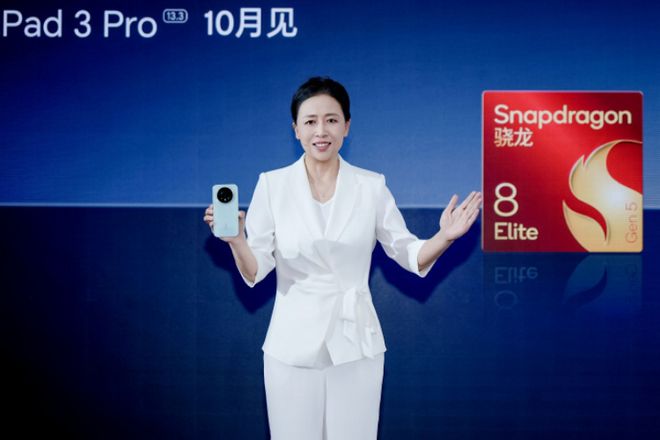
Core Insights - The AI revolution has reached a critical point, with technology giants facing the challenge of effectively integrating AI into end devices [2] - Honor's recent announcements at the Snapdragon Summit indicate a strategic move towards global market presence and a shift in China's role in the global AI landscape [2][8] Group 1: AI Integration in Devices - Honor is addressing the challenges of running large AI models on devices by focusing on both AI models and underlying architecture to tackle power consumption, performance, and privacy issues [2] - The upcoming Honor Magic8 series and MagicPad3 Pro will feature the fifth-generation Snapdragon 8 platform, marking a significant step for Honor in the global market [2][6] Group 2: Technical Innovations - Honor and Qualcomm introduced a "high-efficiency edge AI model solution" that includes two major technological breakthroughs: low-bit quantization technology and next-generation vector retrieval technology [3][4] - Low-bit quantization technology allows for a 30% reduction in model storage space, a 15% increase in inference speed, and a 20% decrease in power consumption while maintaining model effectiveness [3] - The new vector retrieval technology enhances search performance by 400%, enabling faster and more intuitive searches across various data types [4] Group 3: Collaborative Architecture - The "Super Fusion Core Architecture" combines Honor's Turbo X performance engine with Qualcomm's latest Oryon chip architecture, optimizing resource management at the micro-architecture level [5] - This collaboration signifies a new phase of joint research and development, aiming to fully unleash edge AI productivity [5] Group 4: Competitive Landscape - The competition in the edge AI space is intensifying, with major players like Apple, Vivo, Xiaomi, and OPPO also investing in edge AI technologies [6] - The focus has shifted from merely having AI capabilities to enhancing user experience and application scenarios, with a trend towards smaller edge models [6] Group 5: Globalization of Chinese Tech Firms - The emergence of edge AI is facilitating a new narrative for Chinese tech companies, transitioning from "Made in China" to "Defined in China" [8][9] - Chinese firms are now collaborating with global partners to define technical standards and interaction paradigms for AI terminals, moving beyond their previous roles as hardware integrators [8] - This shift not only impacts technology but also offers a more open and collaborative approach to AI development, enhancing privacy and reducing costs for developers and users alike [8][9]
荣耀详解端侧AI:输出“中国模式” 重塑全球化路径
Nan Fang Du Shi Bao· 2025-09-27 04:59
Core Insights - The AI revolution has reached a critical point, with technology giants facing the challenge of effectively integrating AI into end devices [1] - Honor's recent announcements at the Snapdragon Summit indicate a strategic shift towards enhancing AI capabilities on mobile devices, marking a significant step in its global market ambitions [1][6] - The collaboration between Honor and Qualcomm aims to redefine AI productivity at the device level, positioning Chinese tech companies as rule-makers in the global AI landscape [1][8] Technical Innovations - Honor introduced a "high-efficiency edge AI model solution" that addresses the challenges of running large AI models on devices with limited power and space [2] - Two major technological breakthroughs were highlighted: 1. "Edge low-bit quantization technology," which reduces model storage space by 30%, increases inference speed by 15%, and decreases power consumption by 20% [2] 2. "Next-generation vector retrieval technology," which enhances search performance by up to 400% by converting unstructured data into machine-understandable semantic vectors [3][4] Market Dynamics - The competition in the edge AI space is intensifying, with major players like Apple, Vivo, Xiaomi, and OPPO also investing in similar technologies [6] - The focus of competition is shifting from merely having AI capabilities to the quality of user experience, with a growing emphasis on practical applications [6][7] - Honor's strategy extends beyond smartphones to tablets, indicating a broader AI strategy that aims to cover more use cases and applications [6] Global Positioning - The emergence of edge AI is facilitating a new narrative for Chinese tech companies, transitioning from "China manufacturing" to "China defining" in the global tech arena [8][10] - This shift reflects a move towards open and collaborative ecosystems, contrasting with the closed ecosystems of competitors like Apple [8][9] - The increasing "technological discourse power" of Chinese tech firms signifies their deeper involvement in defining global industry standards and practices [10]
【跨国公司在中国】松下:中国正成为全球创新的“试炼场”
Jing Ji Guan Cha Bao· 2025-09-22 05:16
Core Insights - Panasonic is undergoing a strategic transformation, focusing on innovation and adapting to consumer needs in China, which is seen as a testing ground for global innovation [1][2] - The company plans to streamline its organizational structure, with a new setup expected to launch in April 2026, creating three independent business units [1] - Panasonic's performance in Northeast Asia has shown significant growth, with sales and operating profit both increasing by over 100% year-on-year for the 2024 fiscal year [1] Business Strategy - The home appliance business is being redefined as a profitable segment, with Chinese experiences serving as a foundation for global success [2] - The strategy has shifted from "China for China" to "China for Global," aiming to leverage China's design, manufacturing, and export capabilities [2] - Panasonic aims for a 10% operating profit margin for the home appliance business by the 2027 fiscal year [2] Competitive Differentiation - To succeed in the competitive Chinese home appliance market, Panasonic is focusing on a differentiation strategy that combines Japanese craftsmanship with local market demands [3] - The company is enhancing its product development processes to reduce time-to-market and improve cost efficiency [5] R&D and Innovation - Panasonic has established R&D teams in China to develop products tailored to local consumer needs, achieving significant sales growth in small appliances [4] - The collaboration between Japanese and Chinese teams has led to reduced development cycles and cost savings for new products [5] Supply Chain and Localization - Panasonic is leveraging China's robust supply chain, with 80% of its global suppliers based in China, to enhance its competitive edge [6] - The company is increasing its local supplier base and aims to integrate more Chinese suppliers into its global supply chain [8] Market Position and Future Outlook - Panasonic's business in China has evolved, with home appliances and residential equipment accounting for one-third of its operations, while electronic components and automation continue to grow [9] - The company is committed to increasing its local R&D investment by 20-30% annually to support customized product development [10] - Panasonic views China as a critical market for future growth, particularly in automation and AI technologies [7][11]
专访建银国际首席策略师赵文利:中国模式提供“可复制要素”
2 1 Shi Ji Jing Ji Bao Dao· 2025-09-05 08:13
Core Viewpoint - China's development presents opportunities for the world, particularly for developing countries, by providing a replicable development model through international cooperation and openness [1][3]. Group 1: China's Economic Model - The "China model" offers four key experiences for developing countries: the combination of infrastructure and industrial policy, the layered advancement of a super-large market, digital governance and payment infrastructure, and the collaborative development through the Belt and Road Initiative [2][3]. - China's manufacturing output accounts for 35% of the global total, projected to rise to 45% by 2030, indicating a strong future direction towards high-end, intelligent, green, and globalized manufacturing [3][4]. Group 2: Belt and Road Initiative - The Belt and Road Initiative serves as a platform for cooperation in industrial and value chains, sharing development outcomes with partner countries and promoting industrialization and employment [3][4]. - China's rise has led to significant spillover effects, including the provision of affordable goods and the release of green capacity, while enhancing international cooperation and multilateralism [3][4]. Group 3: Global Economic Governance - In the face of rising protectionism and geopolitical conflicts, China can play a role by advocating for a community with a shared future, maintaining and expanding multilateral and bilateral cooperation, contributing to rules and standards, and strengthening development financing and resilient infrastructure [8][9]. - China aims to build a multi-layered cooperation network and promote a diversified settlement system to reduce uncertainty in global supply chains [10][11]. Group 4: Future Directions for Manufacturing - Future manufacturing upgrades in China should focus on not just scale but also strength, emphasizing system solutions and global standards [7][8]. - The "14th Five-Year Plan" lays the groundwork for transforming original technologies into new productive forces, emphasizing the integration of technology and advanced production relationships [6][7].
上海财经大学校长刘元春: 新科创体系构筑中国新叙事逻辑
Zheng Quan Shi Bao Wang· 2025-07-30 23:09
Group 1 - The core viewpoint is that DeepSeek has initiated a new narrative for China, breaking the high-cost investment monopoly of the American AI model [1] - The emergence of concepts like "Six Little Dragons" in Hangzhou and "Eight Great Kings" in Shenzhen signifies the rise of a new model in China's narrative, representing a significant development story [1] - The foundation of China's narrative logic is based on a new path in its sci-tech system, creating new miracles in competitiveness [1] Group 2 - Key factors for China's rise include a large market fostering innovation, the gradual emergence of talent and engineering advantages, a comprehensive industrial chain structure, and a shift from "Made in China" to "Innovated in China" [1] - The changing narrative logic in the U.S. is a core inducement for the shift in China's narrative logic, with American investors adjusting their strategies to seek alternative investment havens, potentially in China [2] - The revaluation of Chinese assets requires a strong micro-financial foundation, as current ROE levels remain historically low despite recent recoveries [2] Group 3 - The challenges of overcapacity in China are hindering technological progress and affecting micro-financial indicators, with potential bubbles in the AI sector [2] - To address the paradox of rapid industrial upgrades without profitability, lessons from historical U.S. innovations during periods of overcapacity should be considered [2] - Finding a balance between market models, financial sustainability, and market clearing is crucial for China's policy formulation [3] Group 4 - The governance of the third round of overcapacity must maintain the essence of the "Chinese model" rather than simply replicating foreign solutions [3] - The formation of new models is essential for establishing a Chinese valuation effect, making the governance of market structure and order a strategic task [3]
阿根廷驻华大使: 发展中国家以中国模式为范本应对挑战
Xin Hua Wang· 2025-06-14 05:51
Group 1 - The Argentine Ambassador to China, Ma Zhi Yuan, emphasized that developing countries, including Argentina, are using the Chinese model to address economic development challenges [1][2] - China is seen as a significant partner for Argentina, with complementary advantages in trade and economic cooperation [1][2] - The cooperation between China and Argentina in the renewable energy sector is highlighted, particularly the successful implementation of the Huachari 300 MW solar power station in Argentina [2] Group 2 - The Huachari solar power station has become a model for solar energy application in Latin America, significantly alleviating local electricity shortages and ensuring daily power supply for residents [2] - The "Local Tour of Diplomats in China" event aims to deepen the understanding of foreign diplomats regarding local regions in China and to promote international cooperation in key national development strategies [4]