中央预算内投资

Search documents
2950亿资金下达,更大力度稳投资
Di Yi Cai Jing· 2025-12-31 04:42
Group 1 - The National Development and Reform Commission (NDRC) has organized the early batch of "two heavy" construction projects for 2026, totaling approximately 295 billion yuan, to accelerate the pace of fund allocation and usage [1] - In the "two heavy" construction aspect, around 220 billion yuan is allocated to support 281 projects in urban underground pipeline networks, high-standard farmland, and logistics cost reduction, emphasizing the strategic and forward-looking nature of these projects [1] - Over 75 billion yuan is allocated for central budget investments in public sectors such as urban renewal, water conservancy, ecological protection, and pollution control, supporting 673 projects to enhance government investment's guiding role [1] Group 2 - The NDRC is also accelerating the introduction of "soft construction" measures to improve investment efficiency, including enhancing financing models for urban underground pipeline construction and establishing long-term mechanisms for project implementation and maintenance [2] - Recent approvals for major infrastructure projects include investments exceeding 400 billion yuan in transportation, water conservancy, energy, and research facilities, which will strengthen China's modern infrastructure system [2] - The Central Economic Work Conference emphasizes the need to lead with domestic demand and stabilize investment, with plans to increase central budget investment and optimize project management to stimulate private investment [2] Group 3 - China's fixed asset investment growth continues to decline, with a 2.6% year-on-year decrease in the first eleven months of 2025, influenced by factors such as real estate market adjustments and increased domestic competition [3] - The decline in fixed asset investment has become a major drag on economic stability and domestic demand growth, prompting a systematic policy response to optimize projects and activate the market [3] - Investment growth is expected to moderately rebound to 2% to 3% in 2026 due to recent policy measures [3]
事关国产算力!国家发改委答证券时报记者问
Zheng Quan Shi Bao· 2025-12-31 03:11
Group 1 - The National Development and Reform Commission (NDRC) emphasizes the continuous improvement of domestic computing power to support the AI industry, driven by the "Artificial Intelligence +" initiative and rapid growth in demand for various computing chips [1] - Domestic chip products are accelerating adaptation in different scenarios, with significant application results, particularly through the development of "super node" cluster interconnection technology, which provides opportunities for domestic computing power to catch up with international standards [1] Group 2 - The NDRC has announced the early batch of "two重" (two heavy) construction project lists and central budget investments for 2026, totaling approximately 295 billion yuan, aimed at accelerating the pace of fund allocation and usage [2] - Approximately 220 billion yuan is allocated for "two重" construction projects, supporting 281 projects in areas such as urban underground pipelines and high-standard farmland, highlighting the strategic and forward-looking nature of these initiatives [2] - Over 75 billion yuan is designated for central budget investments in 2026, focusing on public sectors that require concentrated efforts, supporting 673 projects in urban renewal, water conservancy, ecological protection, and pollution control [3] Group 3 - Recent approvals by the NDRC for projects such as the new Guangzhou airport and various infrastructure projects total over 400 billion yuan, aimed at enhancing China's modern infrastructure system and providing strong support for the 14th Five-Year Plan [4] Group 4 - The NDRC plans to conduct special actions to strictly regulate illegal activities such as fraudulent subsidies, with a focus on optimizing fund distribution, balancing fund implementation, and rigorously enforcing regulations [5]
国家发展改革委:保持合理政府投资力度,优化政府投资结构
Jing Ji Guan Cha Wang· 2025-12-18 03:15
Core Viewpoint - The article emphasizes the importance of effectively managing and utilizing government investment to expand effective investment in the economy [1] Group 1: Government Investment Management - The need to maintain a reasonable level of government investment while optimizing its structure is highlighted [1] - There is a call to strengthen the lifecycle management of government investments [1] - The article suggests increasing the proportion of government investment directed towards public welfare [1] Group 2: Investment Direction and Quality - It is important to clarify the investment directions and priorities for both central and local governments [1] - The article stresses the need to enhance the quality of projects and the efficiency of investment plan execution [1] - There is a recommendation to adjust the pilot scope for local government special bond projects to improve management mechanisms [1] Group 3: Comprehensive Investment Planning - The article advocates for a coordinated approach to utilizing various types of government investment [1] - It suggests exploring the compilation of a comprehensive government investment plan in areas with a solid work foundation [1] - The importance of strengthening the supervision and management of government investment projects throughout their entire process is emphasized [1]
固收:地方政府“加杠杆”最新动向及边际变化
2025-12-17 15:50
Summary of Key Points from the Conference Call Industry Overview - The focus is on the fiscal policy and economic strategies of local governments in China for 2026, emphasizing the need for increased investment and control of hidden debts [1][3][11]. Core Insights and Arguments - **Fiscal Policy**: China will continue to implement an active fiscal policy in 2026, maintaining a narrow fiscal deficit rate of 4% to ensure the stability of wages, operations, and livelihood expenditures [1][4]. - **Investment in Infrastructure**: The central budget for 2026 is expected to exceed 735 billion yuan, with increased investment in major safety projects and other key areas, optimizing the management of special bonds [1][7]. - **Focus on Domestic Demand**: Expanding domestic demand is identified as the core guiding principle for 2026, with plans for resident income increase and consumption stimulation actions to be implemented in the first quarter [1][6]. - **Role of Financial Tools**: Central budget investment funds, special bonds, and new policy financial tools will play a crucial role in leveraging local government project capital, driving fixed asset investment recovery across various sectors, including real estate and manufacturing [1][8]. - **Control of Hidden Debt**: Local governments are urged to actively control the increase of hidden debts and regulate financing platform operations to mitigate fiscal risks [1][11]. Additional Important Content - **Investment Strategy**: The central economic work conference emphasizes the need for local governments to avoid ineffective investments and focus on projects with tangible returns, addressing the decline in fixed asset investment [3][12]. - **Sector-Specific Development**: Provinces are encouraged to develop key industrial chains to promote regional economic growth while managing new hidden debts [1][9]. - **Technological and Infrastructure Investment**: To counteract slowing investment and consumption growth, there will be increased investment in technology innovation, infrastructure improvements, and public welfare sectors such as childcare and healthcare [2][15]. - **Artificial Intelligence Development**: Various provinces are focusing on artificial intelligence in their "14th Five-Year Plan," with distinct roles based on regional strengths, promoting coordinated development across the country [16][17]. This summary encapsulates the critical points discussed in the conference call, highlighting the strategic direction for local governments and the anticipated economic landscape for 2026.
财政部,周末发声!
券商中国· 2025-12-13 08:38
Core Viewpoint - The article emphasizes the importance of the Central Economic Work Conference in guiding fiscal policy and economic strategy for 2026, highlighting the need for the finance department to align with the directives from the central government [1]. Group 1: Fiscal Policy and Economic Strategy - The finance department is tasked with implementing the spirit of the Central Economic Work Conference, focusing on enhancing responsibility and mission in economic and fiscal work [1]. - The conference outlines a commitment to high-quality development, emphasizing the need for a proactive fiscal policy to support domestic demand and optimize supply [2]. - There is a focus on maintaining a balance between development and security, with an emphasis on stabilizing employment, businesses, and market expectations [2]. Group 2: Policy Implementation and Governance - The article discusses the need for effective macroeconomic governance, including maintaining necessary fiscal deficits and managing total debt levels [3]. - It highlights the importance of utilizing government bond funds effectively and issuing long-term special bonds to support key projects [3]. - The finance department is encouraged to improve fiscal management, optimize expenditure structures, and ensure compliance with financial regulations [3]. Group 3: Social Welfare and Support - The article stresses the importance of supporting vulnerable populations and ensuring safety and emergency response measures as the year ends [4]. - There is a call for high standards in preparing the "15th Five-Year" fiscal and accounting plans to ensure comprehensive support for social welfare [4].


今年下达陕西的中央预算内投资同比增长61.5%
Shan Xi Ri Bao· 2025-11-23 00:32
Core Insights - In 2023, Shaanxi province secured 235.2 billion yuan in central budget investments, marking a 61.5% increase from the previous year, aimed at supporting various development projects across 35 sectors [1][1][1] Investment and Project Development - The provincial development and reform commission has actively implemented the provincial government's directives, focusing on enhancing project planning and reserve through initiatives like the "Four Going Out" activities and the "Two Contact" system [1][1] - A total of 920 projects have been identified for investment, which include modern infrastructure, new urbanization, rural revitalization, modern industrial systems, and green development [1][1][1] Policy and Training Initiatives - The commission has conducted specialized training sessions to help local governments understand and leverage national policy changes, ensuring high-quality project proposals and timely submissions [1][1] - Efforts to improve project quality include centralized reviews, collaboration with industry authorities, and third-party evaluations to enhance the submission process for national funding [1][1][1] Future Plans - The provincial development and reform commission plans to continue policy training and strengthen communication with the national development and reform commission to secure additional funding for 2026 [1][1] - There is a commitment to expedite the construction of already supported projects to maximize the effectiveness of central funding [1][1]
【省发展改革委】陕西加强中央政策性资金 投资项目事中事后监管
Shan Xi Ri Bao· 2025-11-13 00:01
Core Viewpoint - The newly issued "Regulations on the Supervision of Central Policy Fund Investment Projects" aims to enhance the oversight of central policy fund investments, ensuring comprehensive regulatory coverage and accountability across various levels of government [1][2]. Group 1: Regulatory Scope and Responsibilities - The regulations expand the supervisory scope to include all central budget investments and specific central incremental investment projects, allowing provincial fiscal and other policy fund investments to be referenced for execution [2]. - Responsibilities are clearly defined for project entities, daily supervision personnel, development reform departments, and industry authorities, with detailed requirements for information verification and on-site inspections [2]. Group 2: Supervision Mechanisms and Incentives - A mid-term evaluation mechanism is established, requiring project units to report to the corresponding development reform departments at critical milestones, with varying levels of punitive measures based on the severity of issues identified [2]. - Problems discovered during supervision will be reported, and funding arrangements will implement "punitive" measures, while municipalities with excellent annual evaluations and effective project implementations will receive commendations and preferential funding support, creating a "positive pull" effect [2]. Group 3: Financial Impact and Historical Context - Since 2025, the province has secured a record high of 23.52 billion yuan in central budget investments, 13.23 billion yuan in "Two Heavy" funds, and 12.02 billion yuan in "Two New" funds, providing strong support for project construction and stable economic operations [2].
国家发改委:进一步推动投融资高效对接,更加精准向民营企业投放信贷资源
Qi Huo Ri Bao Wang· 2025-11-11 10:22
Core Viewpoint - The National Development and Reform Commission (NDRC) emphasizes the importance of private investment as a key indicator of economic activity, which plays a significant role in stabilizing growth, employment, and expectations [1] Investment Policy - The NDRC will utilize central budget investments to actively support eligible private investment projects, enhancing the guiding role of government investment on social investment [1] - As of October 29, 500 billion yuan of new policy financial tools have been fully allocated, with a portion supporting eligible key area private investment projects [1] Government Procurement Policy - The government will increase procurement support for small and medium-sized enterprises (SMEs) by reserving over 40% of the budget for engineering procurement projects exceeding 4 million yuan for SMEs [2] - Local governments are encouraged to further increase the reserved share for SMEs [2] - Procurement units are encouraged to raise the advance payment ratio for contracts with private enterprises to over 30% of the contract amount [2] Credit Policy - The NDRC and financial regulatory authorities will enhance coordination to support financing for small and micro enterprises, optimizing approval processes and improving financial service levels [2] - Financial institutions are required to set annual service goals for private enterprises and implement inclusive credit policies [2] - The "innovation points system" will be promoted to guide financial resources towards technology-driven enterprises [2] Direct Financing - The NDRC will continue to implement policies that facilitate the listing and financing of technology-driven enterprises and mergers and acquisitions through a "green channel" [2] - There will be active support for more eligible private investment projects to issue infrastructure REITs, broadening financing channels for private enterprises [2] Financing Service Platform - The NDRC plans to establish a national investment and financing comprehensive service platform to enhance efficient connections between investment and financing, targeting credit resources more precisely towards private enterprises [3]
国办:加大中央预算内投资对符合条件民间投资项目的支持力度
Zheng Quan Shi Bao Wang· 2025-11-10 09:10
Core Viewpoint - The State Council has issued measures to further promote private investment development, emphasizing increased support for eligible private investment projects through central budget investments [1] Group 1 - The measures include enhancing the support for private investment projects that meet specific criteria [1] - The government aims to leverage new policy-based financial tools to support a number of significant private investment projects in key industries and sectors [1] - The initiative focuses on supplementing project capital for eligible private investment projects [1]
超长期特别国债与中央预算内投资申报风险规避与建议
Sou Hu Cai Jing· 2025-10-03 04:17
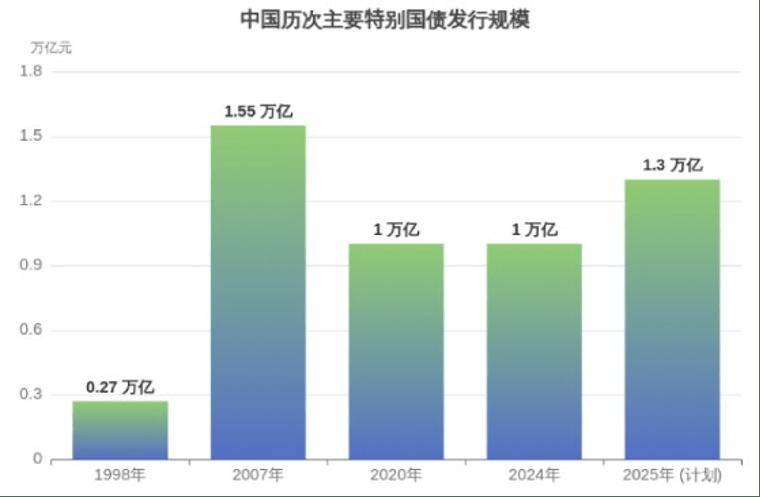
Group 1: Policy Background and Purpose - The ultra-long special government bonds have characteristics such as long duration (usually over 10 years, up to 50 years), high safety (backed by national credit), and earmarked use (not included in the general public budget, thus not affecting fiscal deficit scale) [1] - Central budget investment is fixed asset investment funding arranged by the central government through the general public budget, managed by the National Development and Reform Commission (NDRC) [3] - In 2025, central budget investment will focus on eight major areas including food security, energy security, supply chain security, urban infrastructure, ecological protection, major transportation infrastructure, social undertakings, and affordable housing projects [3] Group 2: Application Process and Key Considerations - The application process for ultra-long special government bonds includes notification issuance by the end of March, project submission by the end of May, project determination in June, and online submission through the "National Major Construction Project Database" [9] - The application process for central budget investment involves preparing funding application reports, online submission, and multi-level review by local development and reform commissions [9][10] - Key considerations for application include preparing complete and compliant materials, ensuring project alignment with support directions, and addressing common pitfalls such as incomplete documentation and non-compliance of the applicant [10][11] Group 3: Reasons for Application Failure - Common reasons for application failure include incomplete or non-compliant materials, misalignment of application content with support directions, immature preliminary work, funding issues, and non-compliance of the applicant [11] Group 4: Application Strategies and Recommendations - Strategies to improve application success rates include precise project planning, thorough preliminary research, careful preparation of application materials, timely submission, and effective communication with relevant authorities [13][16] - Establishing a tiered project reserve library and aligning project planning with national and local long-term plans are recommended for better project management [17]