产业振兴

Search documents
从千年古韵到振兴热土——"2026年农民新春大联欢"缘何落地山西浑源
Zhong Guo Xin Wen Wang· 2026-01-30 07:56
Core Viewpoint - The article highlights the transformation of Hunyuan County in Shanxi from a historical cultural site to a modern industrial hub, showcasing its rich heritage and recent economic developments through tourism and agriculture [1][3][7]. Group 1: Cultural Heritage - Hunyuan County is home to significant historical sites, including the Hanging Monastery, which has a history of over 1,500 years and is recognized as one of the world's top ten dangerous buildings by Time Magazine [3][5]. - The county's cultural foundation is further enriched by the Yong'an Zen Temple, known for its exquisite water and land wall paintings, which depict over 880 figures and 135 stories [5]. Group 2: Industrial Development - Hunyuan has modernized its traditional agricultural practices, particularly in the cultivation of Huangqi (Astragalus), with 395,000 mu (approximately 26,333 hectares) of suitable land and an annual production of 25 million kilograms, generating a total industry output value of 1.5 billion yuan [7][9]. - The local cuisine, specifically Hunyuan Liangfen (a type of cold noodle), has evolved into an industrial cluster, with two certified companies and the establishment of a cultural park, creating thousands of jobs [9]. Group 3: Tourism Growth - In 2025, Hunyuan County saw significant tourism growth, with 4.39 million visitors to the Hengshan Scenic Area and ticket revenues reaching 130 million yuan, marking increases of 2.3 times and 3.3 times, respectively, compared to the end of the 13th Five-Year Plan [10][12]. - The county has embraced a "Tourism+" model, integrating various industries and enhancing visitor experiences through immersive projects and cultural events, leading to a tenfold increase in revenue from cultural products [10][12]. Group 4: Rural Revitalization - Hunyuan has made notable strides in rural revitalization, with 536,300 mu (approximately 35,420 hectares) of grain sowing area and an investment of 175 million yuan in 78 projects to ensure food security [16]. - The county's development strategy for the 14th Five-Year Plan focuses on creating a national-level tourist resort and a historical cultural city, enhancing the local economy and improving living standards for residents [16]. Group 5: Cultural Integration - Hunyuan exemplifies the concept of "harmony in diversity," showcasing the coexistence of different cultures and traditions, from the teachings of various religions at Hengshan to the innovative practices in tourism and agriculture [16][17].

迈向“十五五”的美丽图景·一线见闻丨宁夏泾源:产业振兴“牛”劲足
Yang Guang Wang· 2026-01-30 00:52
Core Viewpoint - The central economic work conference emphasizes the importance of promoting urbanization centered around county towns and the comprehensive revitalization of rural areas, aiming for high-quality development of the county economy [1] Group 1: Industry Development - Jingyuan County is focusing on strengthening beef cattle breeding and extending the industrial chain, with products being sold nationwide [1] - The county has established a stable supply chain through a "company + cooperative + farmer" order model, with plans to expand production capacity in the coming year [1] - By 2025, the cooperative plans to achieve a production value of over 50 million yuan, increasing farmers' income by 700 to 1,000 yuan per head of cattle [1] Group 2: Processing and Value Addition - Jingyuan County is also enhancing the processing sector to convert high-quality raw materials into high-value products, with a new beef jerky product already generating sales of over 5.8 million yuan [2] - The county aims to raise its beef cattle population to 115,000 by 2025, with the total industrial chain output value exceeding 1 billion yuan and the brand value of "Jingyuan Yellow Cattle" reaching 3.519 billion yuan [2] - The meat industry is expected to involve 36,500 people in the county, becoming a significant driver for increasing income [2]
人文经济激活消费新动能|在内蒙古嘎鲁图感受奶皮子的“七十二变”
Xin Hua Wang· 2026-01-29 09:43
Core Insights - The article highlights the transformation of Galu Tu, a town in Inner Mongolia, into a vibrant hub for dairy products, particularly focusing on the innovative use of "milk skin" in various culinary applications [1][2][3] Group 1: Industry Development - Galu Tu has initiated a dairy industry revitalization project since 2022, which includes planting over 4,000 acres of early-maturing oats and silage corn to provide stable and high-quality feed for more than 1,300 local herders [2] - The annual milk production in Galu Tu has surged from 817,000 kilograms in 2022 to nearly 5 million kilograms, ensuring a reliable supply of quality milk for the milk skin industry [2] - Modern dairy processing plants have been established, combining traditional craftsmanship with standardized production to enhance capacity and quality [2] Group 2: Innovation and Market Expansion - Galu Tu has embraced new consumer trends by hosting innovation competitions and selecting outstanding dairy artisans, turning the town into a "flavor laboratory" for diverse milk skin culinary creations [3] - Innovative products such as milk skin hot pot, coffee, pizza, and hawthorn-wrapped milk skin have emerged, meeting the modern consumer's demand for diverse and trendy dining options [3] - The integration of traditional dairy products with modern lifestyles has significantly increased the value of milk skin, benefiting local herders economically [3] Group 3: Future Goals - The local government aims to strengthen the entire dairy industry chain, focusing on cattle breeding, milk processing, milk skin sales, cultural tourism, and technological research [4] - The goal is to expand the market reach of Galu Tu's dairy products and ensure that more herders benefit from the industry's growth [4]
贵州省两会启幕,政协委员登上“委员通道”话发展路径
Zhong Guo Xin Wen Wang· 2026-01-26 06:11
Group 1: Technology and Innovation - Guizhou is transitioning from a "follower" to a "pathfinder" in technology, particularly in the field of black phosphorus new materials, which is expected to drive a trillion-level industry [2] - The "3M model" developed by Guizhou Minzu University promotes collaboration between young teachers and top-tier institutions to address industry needs and enhance technological capabilities [2] - Guizhou's agricultural modernization leverages technology to transform local specialties into large-scale industries, aiming to turn "green mountains and clear waters" into "golden mountains and silver mountains" [5] Group 2: Aviation Industry - Guizhou is one of the few provinces in China capable of independently manufacturing aircraft, with a focus on enhancing its aviation industry through innovation and technology [3] - The establishment of research institutes in major cities aims to fill domestic technological gaps and break foreign monopolies, contributing to national strategic needs [3][4] - The goal is to cultivate a hundred billion-scale industrial cluster in the aviation sector over the next decade, emphasizing innovation and manufacturing [4] Group 3: Agriculture - Over the past five years, Guizhou Agricultural Science Academy has developed over 300 new crop varieties, promoting efficient agricultural practices across 50 million acres [6] - The integration of technology in agriculture is crucial for rural revitalization, enabling farmers to improve their livelihoods [6] Group 4: Traditional Industries - Traditional industries in Guizhou are being revitalized through technological upgrades, with automation leading to a 15% increase in production efficiency and a 5% improvement in product quality [7] - The focus is on combining traditional craftsmanship with modern technology to enhance productivity and innovation [7] Group 5: Cultural and Tourism Development - Guizhou is aiming to become a world-class tourist destination by integrating cultural and tourism industries, with significant growth in visitor numbers [8] - The local government is promoting accessible cultural experiences and events to enhance community engagement and economic vitality [8][9]

中国食药安全促进会赴新疆开展驼乳产业溯源调研纪实
Zhong Guo Jing Ji Wang· 2026-01-24 09:11
Core Viewpoint - The report highlights the importance of the camel milk industry in Xinjiang, emphasizing quality assurance and consumer trust through transparency and collaboration among stakeholders [1][8]. Group 1: Industry Development - The camel milk industry is positioned as a key component of rural revitalization, transforming local resources into tangible benefits for the community [3]. - The company has established a modern, transparent factory in the region, showcasing advanced technology and a commitment to quality throughout the production process [5]. - A cooperative model involving "enterprise + cooperative + herders" has been implemented, ensuring stable partnerships with local herders and providing them with technical support and guaranteed income [6]. Group 2: Quality Assurance and Consumer Trust - The company has taken proactive steps to enhance consumer trust by inviting third-party verification and establishing a "Transparency Quality Committee" for ongoing oversight [8]. - The commitment to quality and safety is emphasized as a fundamental principle, with the belief that transparency from farm to table is essential for consumer confidence [8]. - The industry is seen as a model for development in border areas, advocating for government guidance, enterprise leadership, standard support, and shared benefits [8]. Group 3: Community Impact - The camel milk from Xinjiang is portrayed as a product of natural resources and technological innovation, reflecting the dedication of many individuals in the industry [10]. - The report underscores the positive impact of the camel milk industry on local livelihoods, contributing to a brighter future for the community [10].
科技礼包送田间,春播干劲节节高!梅州市农林科学院粮油所特派员团队助农暖人心
Nan Fang Nong Cun Bao· 2026-01-21 06:47
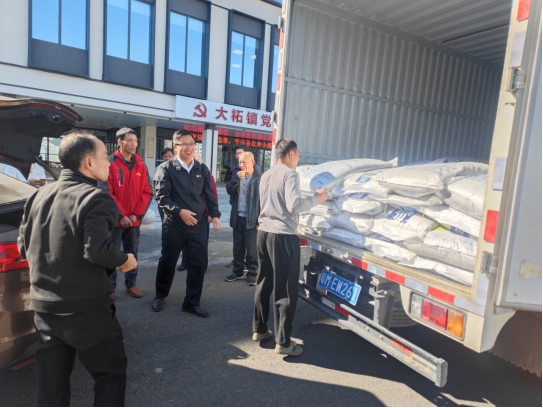
Core Viewpoint - The "Technology Assistance for Farmers" initiative in Dazhi Town aims to enhance agricultural productivity by providing quality agricultural materials and technical guidance to local farmers, thereby supporting food security and rural revitalization efforts [3][5]. Group 1: Initiative Overview - The initiative involves the distribution of 3.5 tons of high-quality compound fertilizer and a batch of quality rice seeds to farmers, along with comprehensive technical support [3]. - The program addresses the challenges faced by local farmers in selecting production materials, ensuring a stable supply of resources for spring farming [3][5]. Group 2: Technical Support and Training - Technical personnel provide on-site guidance on agricultural production techniques, including scientific fertilization, pest control, and water management, helping farmers optimize their practices [3][5]. - Farmers express appreciation for the hands-on training, which allows them to apply scientific methods rather than relying solely on experience [3]. Group 3: Collaboration and Future Plans - The initiative reflects a strong collaboration between the technology assistance team and local support teams, focusing on understanding farmers' needs and tailoring assistance accordingly [5]. - Future plans include ongoing technical guidance and material support, targeting key local crops such as rice, navel oranges, and crispy honey tangerines, to further enhance agricultural productivity [5].
从“一粒果” 到“一条链”
Jin Rong Shi Bao· 2026-01-20 02:12
Core Viewpoint - The development of the seabuckthorn industry in Muling City, Heilongjiang Province, is significantly contributing to local economic growth and rural revitalization through innovative financial support and comprehensive industry chain development [1][3]. Industry Overview - Muling City's seabuckthorn is recognized for its plump fruit, vibrant orange color, and rich nutritional value, making it a sought-after product in both domestic and international health food markets [1]. - The seabuckthorn industry has evolved into a comprehensive development model, integrating seedling cultivation, deep processing, cosmetics manufacturing, and e-commerce sales, creating a new pattern from "one fruit" to "one chain" [1]. Financial Support and Innovation - The People's Bank of China, Mudanjiang Branch, has implemented a financial service system specifically for the seabuckthorn industry, focusing on policy guidance, institutional collaboration, and product innovation to meet the credit needs of this unique economic sector [1][3]. - Financial institutions have introduced various innovative credit products tailored to the seabuckthorn industry's characteristics, such as "Longyin e-Agricultural Loan" and "Planting Quick Loan," which provide quick access to funds for farmers [4]. Growth Projections - By 2025, the seabuckthorn planting area in Muling City is expected to reach 80,000 acres, with an annual production exceeding 35,000 tons, contributing to rural prosperity [1]. - Financial institutions in Mudanjiang City are projected to issue a total of 2.11 billion yuan in loans to the seabuckthorn and other specialty planting industries, reflecting a year-on-year growth of 13.7% [3].

“连心”振兴!村民:每次回来,感觉都不一样
Xin Lang Cai Jing· 2026-01-18 05:02
Core Viewpoint - The transformation of Lianxin Village in Guangdong Province showcases significant improvements in environment, infrastructure, and community engagement as part of the "Hundred Million Project" for rural revitalization [1][14]. Infrastructure Development - Lianxin Village has implemented extensive infrastructure upgrades, including the construction of four ecological sewage treatment pools and 18 waste collection points, achieving full coverage of main roads with asphalt [3]. - Public facilities such as fitness squares, basketball courts, cultural rooms, and standardized public toilets have been established, enhancing the quality of life for residents [3]. Ecological and Cultural Enhancements - The establishment of the Zhangshu Forest Park, covering over 300 acres of ancient camphor trees, has become a key ecological attraction, promoting both local fitness and tourism [4]. - Creative wall paintings and vibrant gardens have integrated agricultural culture with modern aesthetics, contributing to the village's picturesque environment [1]. Economic Growth and Industry Development - Lianxin Village has prioritized industrial development, with collective economic growth rising from 88,000 yuan in 2021 to 307,800 yuan in 2024 [8]. - The transformation of idle school buildings into a dish sterilization and distribution center has generated over 40,000 yuan annually for the village and created jobs for more than 70 villagers, with an average monthly salary exceeding 3,300 yuan [8][10]. Agricultural Innovation - The village has initiated a blueberry cultivation project on 10 acres of idle hillside, aiming to establish the first blueberry demonstration base in Wengyuan, with expected annual revenue of 50,000 yuan starting in 2026 [11][13]. - Additional agricultural initiatives include the auctioning of idle mountain forests for oil tea cultivation, projected to generate an additional 27,000 yuan annually [13]. Governance and Community Engagement - The "Yue Zhi Mei" platform has been established to enhance governance through community participation, facilitating transparency and communication within the village [14]. - The platform has recorded numerous community activities and implemented a points management system to encourage environmental and social cooperation among residents [14]. Future Development Plans - Lianxin Village plans to continue leveraging its ecological assets, such as the Zhangshu Forest Park, to attract investment and develop tourism projects, including a health and wellness base [16]. - The village aims to expand blueberry cultivation and deepen the integration of various industries to sustain its development advantages [16].
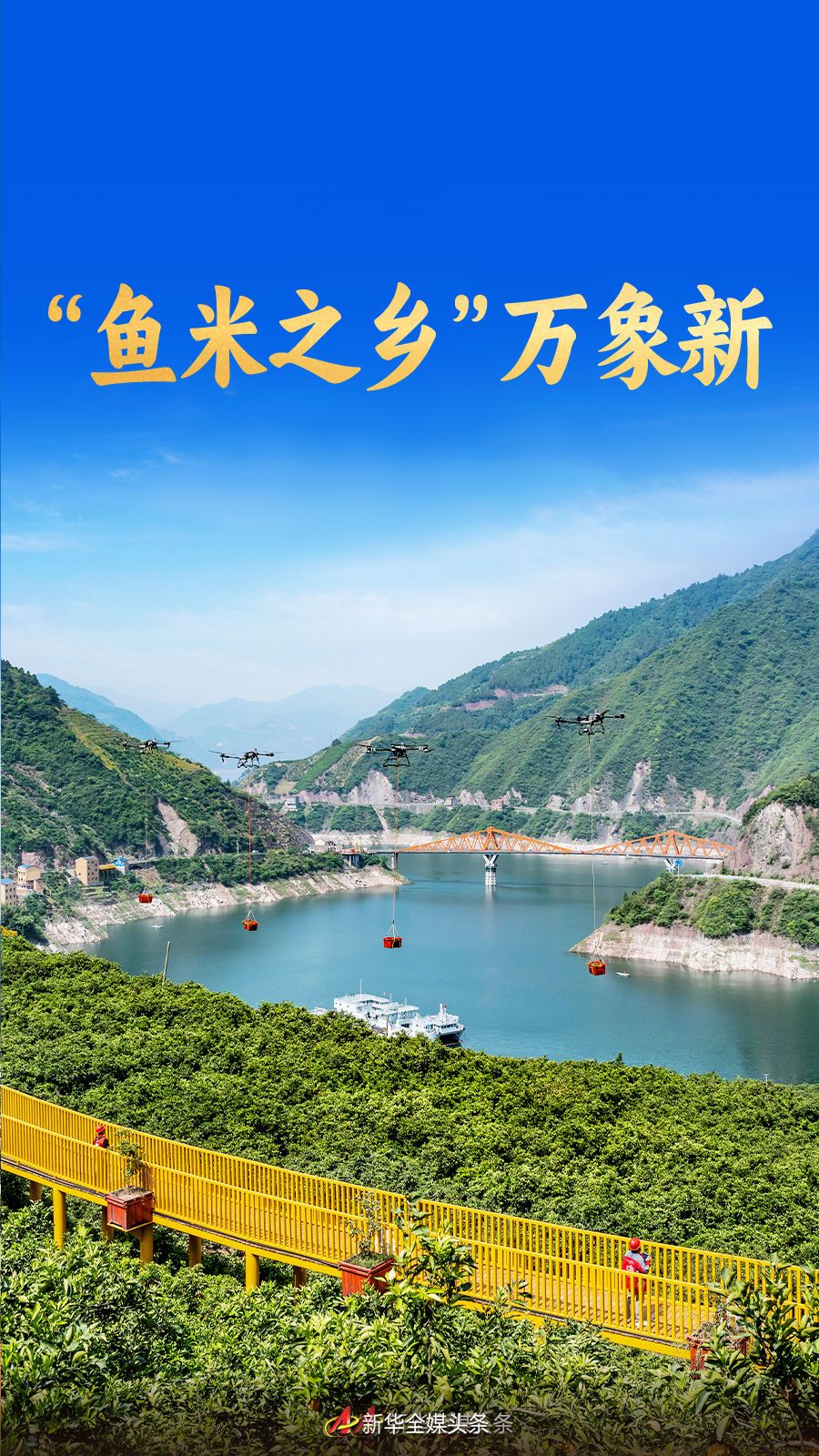
“鱼米之乡”万象新
Xin Lang Cai Jing· 2026-01-17 02:21
Core Viewpoint - The article emphasizes the modernization of agriculture in Hubei Province, focusing on enhancing food production, improving rural living conditions, and increasing farmers' income through technological advancements and infrastructure development [2][5][19]. Group 1: Agricultural Modernization - Hubei aims to transform agriculture into a modern industry, ensuring stable grain and aquatic product production while enhancing the rural environment and living conditions [2]. - The province has implemented a grain production capacity enhancement action, targeting a total grain output of 55.824 billion jin by 2025, maintaining over 50 billion jin for 13 consecutive years [7]. - Agricultural technology innovation is prioritized, with a mechanization rate of 75.5% and a contribution rate of agricultural technology progress at 68% [7]. Group 2: Technological Integration - Farmers in Hubei are utilizing advanced technologies such as drones for precision farming, significantly reducing labor time and increasing crop yields by 100 jin per mu [3]. - The province has promoted over 58,600 sets of various agricultural smart terminals, covering all aspects of farming from planting to storage [7]. - Smart aquaculture systems are being adopted, allowing farmers to monitor and control water quality remotely, leading to a 20% increase in fish production [9]. Group 3: Industry Development - Hubei is focusing on developing a diverse range of agricultural products, including rice, tea, and specialty aquatic products, with a comprehensive output value of 550 billion yuan from nine key brands [12]. - The province is enhancing the agricultural supply chain by integrating various agricultural sectors, leading to a projected output value of 1.19 trillion yuan from ten key agricultural industry chains by 2025 [13]. - The promotion of winter shrimp farming technology has enabled year-round availability of products, expanding market reach to over 600 cities [10]. Group 4: Rural Infrastructure and Quality of Life - Hubei has constructed over 294,000 public charging stations and 25,000 village-level service points to improve rural infrastructure and enhance residents' quality of life [16]. - The establishment of a rural logistics system has improved access to goods and services, facilitating online shopping for residents [18]. - The province has seen a significant increase in returnee entrepreneurs, with over 60,000 new returnees each year contributing to rural development [19].
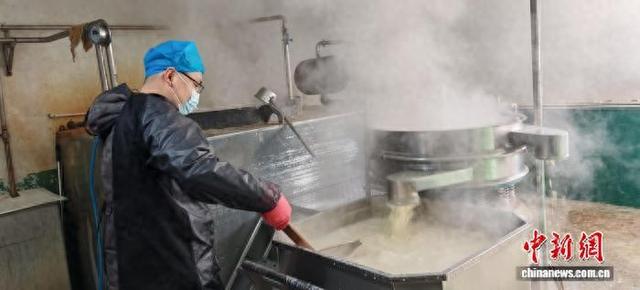
山西古寨豆腐香飘千年 解锁时光沉淀的健康密码
Xin Lang Cai Jing· 2026-01-16 11:53
Core Viewpoint - The ancient tofu-making technique from Guzhai, Shanxi, has been revitalized by a new generation, blending traditional craftsmanship with modern production methods to meet increasing market demand and contribute to rural revitalization [1][2][6]. Group 1: Historical Significance - Guzhai tofu production dates back to the Eastern Han Dynasty, earning the village the title of "Hometown of Tofu" due to its rich history and the dedication of local villagers [1]. - In 2011, the traditional technique was recognized as a provincial intangible cultural heritage, highlighting its cultural importance [2][5]. Group 2: Modern Revival - A group of young individuals, led by Lian Yong and Lian Jinghua, returned to their hometown to revive the traditional tofu-making craft, successfully reintroducing the old flavors to the market within a year [2]. - The revival emphasizes a balance between preserving traditional flavors and embracing modern trends, ensuring the technique remains relevant [2]. Group 3: Production Techniques - The production process involves meticulous steps, including selecting high-quality non-GMO soybeans from Heilongjiang, precise soaking times, and traditional methods like "two grinding and two filtering" to ensure a fine texture [2][5]. - The core step of "curing" tofu is still performed manually, ensuring the unique quality of Guzhai tofu, which is described as "tender as fat, elastic as cream" [5]. Group 4: Economic Impact - The workshop currently consumes over 1,000 kilograms of soybeans daily, producing more than a ton of tofu, indicating a significant scale of operation [6]. - The business model aims for "integrated industry, chain production, and value-added sales," focusing on expanding standardized production and deepening the tofu processing industry chain [6].