奶皮子糖葫芦

Search documents
餐饮行业热门赛道盘点:背后的爆款逻辑是什么?
虎嗅APP· 2026-03-06 09:59
Core Insights - The article discusses the trends and dynamics of the Chinese restaurant industry as it enters a phase of stock competition, with a focus on innovation in products and business models to adapt to changing consumer demands and market conditions [4][6]. Group 1: Industry Growth and Trends - In 2025, China's restaurant industry is projected to achieve a revenue of 5.8 trillion yuan, reflecting a year-on-year growth of 3.2%, with the revenue from large-scale dining units reaching 1.63 trillion yuan, up by 2.0% [6]. - The overall market size continues to expand, but the growth rate is slowing, indicating a shift from expansion-driven growth to a focus on efficiency and quality [6][11]. - The number of restaurant outlets in China is expected to exceed 7.7 million by the end of 2025, marking a 3.1% increase from the previous year [8]. Group 2: Popular Product Trends - In 2025, several popular food items are emerging, including butter rice cakes and milk skin sugar-coated hawthorn, which gained significant traction on social media platforms [16][17]. - The popularity of these products is rooted in their familiarity to consumers, allowing for quick understanding and acceptance, while brands enhance them through innovative ingredient combinations and presentation [17][21]. Group 3: Innovative Business Models - The rise of "beautiful meals" and "mountain wild" dining concepts reflects a growing consumer demand for visually appealing and health-oriented dining experiences [23][24]. - Self-service models are gaining traction, with brands expanding their offerings to include semi-self-service options, catering to consumer desires for diverse experiences and budget control [35]. - Large store formats are becoming a strategic focus for brands, shifting from merely selling products to offering immersive dining experiences that enhance brand value [32]. Group 4: Regional and Niche Market Growth - Jiangxi stir-fry is rapidly gaining popularity, with a 287.5% increase in related business registrations in 2025, and over 20,000 outlets nationwide [39][40]. - The fried chicken market is projected to reach 113 billion yuan by 2026, with a year-on-year growth of 20.2%, driven by a surge in brand expansion and consumer interest [42]. - Freshly made ice cream is experiencing significant growth, with brands leveraging local ingredients and high visual appeal to attract consumers [44]. - The "Benbang" noodle segment is also gaining traction, characterized by its fresh cooking methods and diverse toppings, with several brands achieving chain development [46]. Conclusion - The restaurant industry is evolving towards a more innovative and diversified landscape, where the ability to adapt to consumer preferences and enhance product offerings will be crucial for sustained competitiveness [49].

告别泡沫叙事:九大关键词看懂2025中国消费 | 年终盘点
Sou Hu Cai Jing· 2026-02-20 12:37
Group 1: Core Insights - The Chinese consumer market in 2025 is characterized by both chaos and fragmentation, with a shift towards efficiency, value, and trust as the essence of competition [2] - The year witnessed significant events such as the end of the food delivery war, a crisis in the prepared food sector, and the rise of hard discounts while soft discounts declined [2] - Major international brands are seeking survival through divestitures, while the middle class experiences repeated disillusionment in consumption [2] Group 2: Food Delivery War - The food delivery war was ignited by JD's aggressive entry into the market, leading to a fierce subsidy competition among major players like Meituan and Alibaba [5][6] - In Q2 2025, the three major players burned through at least 30 billion yuan, equivalent to the total industry profit of the previous year [6] - The war has severely impacted small businesses and delivery personnel, highlighting the unsustainable nature of the competition [6] Group 3: Prepared Food Crisis - The prepared food crisis began with a public dispute involving a well-known restaurant, exposing significant gaps in consumer trust and industry standards [10][11] - The crisis has led to the closure of 102 stores by the affected restaurant and highlighted the precarious state of the industry, with many companies facing severe losses [12] - The market for prepared foods is projected to grow significantly, with the government moving towards establishing clearer standards [12][13] Group 4: Hard Discount Battle - The hard discount retail sector is experiencing explosive growth, with major players like JD and Hema aggressively expanding their store presence [16][18] - The distinction between hard and soft discounts is becoming more pronounced, with hard discounts focusing on sustainable low prices through private label products [18][19] - The competition is shifting from price wars to efficiency in supply chains and operational capabilities [19] Group 5: Dairy Product Trends - The "milk skin" product has gained immense popularity, evolving from a local specialty to a nationwide trend, with significant sales figures reported [21][22] - The product's success is attributed to its versatility and the ability to integrate into various food categories, driving demand and industry expansion [22] Group 6: Medicinal Food Market - The market for medicinal food has surpassed 370 billion yuan, with a growing emphasis on integrating traditional Chinese medicine into everyday food products [25][26] - The industry is witnessing an expansion of raw materials and innovative product forms, driven by advancements in technology and consumer demand [27][28] Group 7: International Brand Divestitures - In 2025, international brands like Starbucks and Burger King began divesting their Chinese operations, indicating a shift in market dynamics [31][32] - The decline in market share for these brands is attributed to their inability to adapt to the rapidly changing consumer landscape in China [32] - Successful local brands have capitalized on this opportunity, demonstrating the potential for growth through localized strategies [33] Group 8: Middle-Class Consumer Sentiment - The middle class in China is experiencing a sense of disillusionment, reacting negatively to price increases and perceived quality issues [36][39] - This demographic is increasingly critical of brands that do not meet their expectations, indicating a shift in consumer behavior and brand loyalty [39] Group 9: Weight Management Trends - 2025 has been dubbed the "Year of Weight Management," with a national initiative promoting healthy weight control [41][44] - The market for weight management products is projected to reach 326 billion yuan, with a significant increase in demand for functional foods [45][46] Group 10: IPO Activity in Hong Kong - The Hong Kong stock exchange has seen a surge in IPO activity, with 111 companies raising over 250 billion yuan in 2025, surpassing previous expectations [49][50] - The consumer sector has been a major focus, with numerous retail and consumption-related companies going public [50][51] - The trend of dual listings (A+H shares) is also gaining momentum, indicating a robust interest in capital markets [52]
告别泡沫叙事:九大关键词看懂2025中国消费
Xin Lang Cai Jing· 2026-02-20 02:07
Group 1: Chinese Consumption Market Trends in 2025 - The Chinese consumption market in 2025 is characterized by both chaos and transformation, moving away from bubble narratives towards efficiency, value, and trust as core competitive elements [1] - The delivery service battle resulted in a loss of at least 30 billion yuan in Q2 2025, significantly impacting small businesses and delivery personnel [3][4] - The pre-prepared food crisis highlighted a significant trust gap between consumers and the food industry, leading to a call for national standards [6][8] Group 2: Delivery Service Battle - The delivery service war was ignited by JD's aggressive entry into the market, leading to a fierce subsidy competition among major players like Meituan and Alibaba [3][4] - The battle resulted in a dramatic increase in active users for JD and Meituan, but ultimately led to unsustainable financial losses [3][4] - The strategic rationale for giants like Alibaba and JD was to cultivate consumer habits of ordering food through their platforms, thereby enhancing their core e-commerce businesses [4] Group 3: Pre-prepared Food Crisis - The pre-prepared food crisis began with a public dispute involving a well-known restaurant, revealing deep-seated issues in the food industry's industrial transformation [6][7] - The crisis underscored the clash between consumer rights and the interests of food enterprises, with consumers demanding transparency [8][9] - The industry is expected to undergo significant regulatory changes, with new national standards being proposed to ensure consumer awareness and rights [9][10] Group 4: Discount Retail Trends - The discount retail sector in China is experiencing rapid expansion, with new players entering the market and established brands accelerating their store openings [11][12] - Hard discount models are thriving due to their focus on private label products and supply chain efficiency, while soft discount models are struggling [11][13] - The competition has shifted from price wars to a broader focus on supply chain efficiency and operational capabilities [13][14] Group 5: Health and Wellness Trends - The market for health and wellness products, particularly those related to traditional Chinese medicine, has surpassed 370 billion yuan, indicating a growing consumer interest in health [18][19] - The product offerings in this sector are diversifying, with new ingredients being added to the list of approved health foods [19][20] - Retail channels are increasingly focusing on health products, with major retailers launching specialized health product lines [22] Group 6: International Brands Selling Out - In 2025, several international brands, including Starbucks and Burger King, opted to sell their Chinese operations to local partners, indicating a shift in market strategy [23][24] - The decline in market share for these brands is attributed to their inability to adapt to the fast-paced and competitive Chinese market [24][25] - Successful local brands have demonstrated the potential for growth and profitability in the Chinese market, contrasting with the struggles of foreign brands [26] Group 7: Middle-Class Consumer Sentiment - The middle-class consumer segment in 2025 is experiencing significant discontent, driven by rising prices and perceived value discrepancies [28][30] - This demographic is increasingly critical of brands that do not meet their expectations for quality and value, leading to a reevaluation of brand loyalty [30][31] - The notion of the middle class is being challenged, with discussions around its existence and relevance in the current economic landscape [30] Group 8: Weight Management as a National Strategy - 2025 has been designated as the "Year of Weight Management," with government initiatives promoting healthy eating and lifestyle choices [33][34] - The market for weight management products is projected to reach 326 billion yuan, with a significant increase in demand for functional foods [35][36] - The trend reflects a broader societal shift towards health consciousness, influencing various sectors including food and fitness [36] Group 9: IPO Activity in Hong Kong - The Hong Kong stock market saw a surge in IPO activity in 2025, with 111 companies raising a total of 250.56 billion yuan, surpassing previous expectations [37][38] - The consumer sector was a major focus, with numerous retail and consumption-related companies going public [38][39] - The trend of dual listings (A+H shares) is gaining momentum, indicating a strategic move by companies to enhance their market presence [40]
坚果200块一斤,你要拿多少年终奖才敢走进薛记炒货?
3 6 Ke· 2026-02-11 05:50
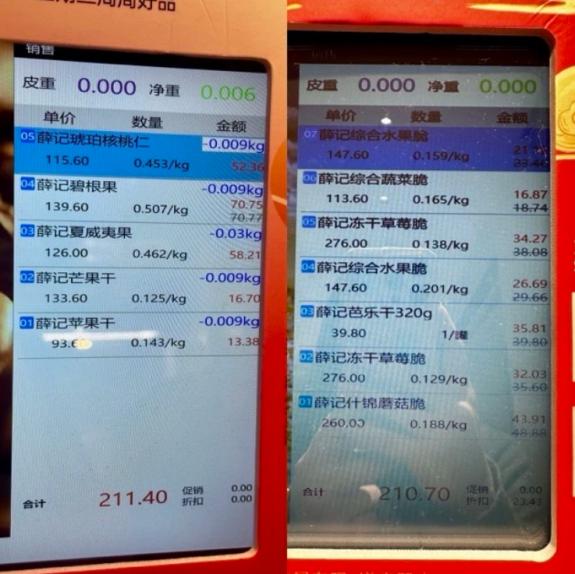
Core Viewpoint - The article discusses the rising popularity and high pricing of Xueji Snacks, a brand known for its premium nuts and snacks, drawing comparisons to other high-end brands and exploring consumer behavior and perceptions around its pricing strategy [2][4][12]. Group 1: Pricing and Consumer Behavior - Xueji Snacks has gained notoriety for its high prices, with products like sunflower seeds priced at 23.8 yuan per jin and cashews nearing 100 yuan per jin, yet it remains popular among consumers [4][12]. - Despite the high prices, consumers express a desire for the products, often feeling compelled to purchase after trying samples in-store, indicating a psychological tactic employed by the brand [6][8][12]. - The brand's strategy of allowing customers to sample products before purchase creates a dilemma for consumers, as they may feel pressured to buy after tasting [11][19]. Group 2: Brand Positioning and Market Strategy - Xueji Snacks positions itself as a high-end snack brand, with store designs reminiscent of jewelry shops, which contributes to its premium image [6][14]. - The brand's marketing emphasizes quality, sourcing ingredients from core production areas and utilizing advanced preservation techniques, justifying its higher price point [14][21]. - Xueji Snacks has expanded rapidly, with over 1,100 stores projected by the end of 2025, indicating a strong growth strategy despite potential market saturation [21][25]. Group 3: Consumer Expectations and Market Challenges - There is a growing divide in consumer expectations, with some seeking affordable options while others are willing to pay for premium quality, posing a challenge for Xueji Snacks to balance its high-end positioning with broader market appeal [23][25]. - The brand faces competition from other snack companies that offer more affordable alternatives, which may impact its long-term sustainability if it cannot justify its pricing to consumers [23][25]. - Feedback from consumers indicates a desire for transparency in pricing and product quality, suggesting that Xueji Snacks must adapt to maintain customer loyalty and avoid being perceived as overpriced [25].
人文经济激活消费新动能|在内蒙古嘎鲁图感受奶皮子的“七十二变”
Xin Hua Wang· 2026-01-29 09:43
Core Insights - The article highlights the transformation of Galu Tu, a town in Inner Mongolia, into a vibrant hub for dairy products, particularly focusing on the innovative use of "milk skin" in various culinary applications [1][2][3] Group 1: Industry Development - Galu Tu has initiated a dairy industry revitalization project since 2022, which includes planting over 4,000 acres of early-maturing oats and silage corn to provide stable and high-quality feed for more than 1,300 local herders [2] - The annual milk production in Galu Tu has surged from 817,000 kilograms in 2022 to nearly 5 million kilograms, ensuring a reliable supply of quality milk for the milk skin industry [2] - Modern dairy processing plants have been established, combining traditional craftsmanship with standardized production to enhance capacity and quality [2] Group 2: Innovation and Market Expansion - Galu Tu has embraced new consumer trends by hosting innovation competitions and selecting outstanding dairy artisans, turning the town into a "flavor laboratory" for diverse milk skin culinary creations [3] - Innovative products such as milk skin hot pot, coffee, pizza, and hawthorn-wrapped milk skin have emerged, meeting the modern consumer's demand for diverse and trendy dining options [3] - The integration of traditional dairy products with modern lifestyles has significantly increased the value of milk skin, benefiting local herders economically [3] Group 3: Future Goals - The local government aims to strengthen the entire dairy industry chain, focusing on cattle breeding, milk processing, milk skin sales, cultural tourism, and technological research [4] - The goal is to expand the market reach of Galu Tu's dairy products and ensure that more herders benefit from the industry's growth [4]
人文经济激活消费新动能丨在内蒙古嘎鲁图感受奶皮子的“七十二变”
Xin Hua Wang· 2026-01-29 04:15
Core Insights - The article highlights the transformation of dairy products, particularly "milk skin," in Galu Tu, Inner Mongolia, showcasing its integration into various modern culinary applications and the resulting economic benefits for local communities [1][2]. Group 1: Industry Development - Galu Tu has initiated a dairy industry revitalization project since 2022, which includes planting over 4,000 acres of early-maturing oats and silage corn to provide quality feed for local farmers, significantly increasing the annual milk production from 817,000 kg in 2022 to nearly 5 million kg [2]. - The establishment of modern dairy processing plants has improved production quality and capacity while preserving traditional techniques, ensuring stable output and quality [2]. Group 2: Innovation and Market Expansion - The town has embraced new consumer trends by hosting innovation competitions and awards for dairy producers, leading to creative culinary uses of milk skin, such as in hot pots, coffee, pizzas, and mooncakes, which have increased its market value and profitability for local farmers [3]. - A local entrepreneur has successfully innovated a milk skin candy hawthorn product, which gained popularity after initial resistance, demonstrating the potential for traditional products to adapt to modern tastes [3]. Group 3: Future Goals - The local government aims to strengthen the entire dairy industry chain, focusing on cattle breeding, milk processing, sales of milk skin, cultural tourism, and technological research to expand market reach and share the benefits of industry growth with more farmers [4].
消费复苏需要一场差异化创新
Sou Hu Cai Jing· 2026-01-25 01:32
Core Insights - The article discusses the evolving consumer sentiment towards authenticity and emotional value in the market, highlighting a shift from superficial branding to genuine, relatable experiences [1][2][3] Group 1: Brand Expression and Authenticity - The trend of "humanized" brand expression is emerging, where real dialogue replaces scripted marketing, with founders and employees becoming vital carriers of brand values [1][4][5] - Consumers are increasingly discerning, able to differentiate between brands that genuinely believe in their values and those that merely use them for marketing purposes, as illustrated by the backlash against brands like "始祖鸟" [4][5] - The rise of social media platforms allows founders to engage directly with consumers, fostering a sense of community and trust [5][7] Group 2: Local Cultural Renaissance - There is a resurgence of local flavors and cultural heritage, with consumers seeking experiential tourism and local products, as evidenced by a 1493% increase in searches for "贵州深度游" [11][14] - The concept of "bistro" has been localized in China, leading to the emergence of various regional bistros that cater to consumer preferences for local cuisine [12][14] - Local cultural elements are being integrated into mainstream commercial settings, enhancing the value of local products and crafts [16] Group 3: Return to Offline Experiences - The trend of returning to offline experiences is driven by a desire for social interaction and immersive experiences, with events like concerts and pop-up activities gaining popularity [17][18] - Brands are increasingly opening flagship stores that offer unique experiences, moving beyond traditional retail to create engaging environments [18][20] - The shift back to offline is also a response to the saturation of online content and the need for differentiated experiences that cannot be replicated online [22] Group 4: Non-standard Commercialization and Community Business - The non-standard commercial sector is facing challenges, with discussions around its sustainability and the need for unique, engaging experiences to attract consumers [23][24] - Successful non-standard commercial ventures often rely on tourism and local cultural appeal, as seen in cities like Bangkok [24][26] - Community-oriented businesses are emerging as a bright spot in the market, focusing on stable user bases and localized offerings [30][31] Group 5: Opportunities for Small Brands - The current market environment presents opportunities for small and medium-sized brands to thrive by focusing on differentiation and emotional value [31] - The rise of niche brands that cater to specific consumer interests and preferences is expected, as consumers increasingly seek personalized and authentic experiences [31]

年轻人的季节仪式感
Xin Lang Cai Jing· 2026-01-23 20:58
Core Insights - Seasonal internet-famous foods have become a significant trend in the consumer market, blending traditional snacks with regional ingredients to create innovative culinary experiences [1][2] - The popularity of these seasonal foods is driven by their ability to evoke emotional connections to the seasons, with social media amplifying their visibility and desirability [1][2] Group 1: Seasonal Food Trends - The "milk skin candied hawthorn" has gained immense popularity, with a single skewer priced around 30 yuan and related topics on Douyin surpassing 1.2 billion views, showcasing the vibrant consumer interest in seasonal internet-famous foods [1] - Previous seasonal food innovations include "oil-splashed spicy ice cream" in summer and "solid mango sago" in autumn, indicating a continuous trend of creative culinary offerings [1] - The combination of seasonal ingredients with classic food categories revitalizes traditional cuisine, enhancing flavor and appealing to consumers' seasonal nostalgia [1][2] Group 2: Consumer Behavior and Market Dynamics - Seasonal internet-famous foods serve as a means for young people to mark the seasons and enrich their lives, with each seasonal delicacy providing a sense of ritual and emotional satisfaction [2] - Brands are shifting from leading trends to amplifying them, effectively capturing consumer interests and pain points related to seasonal foods, which accelerates their popularity [2] - However, there are concerns regarding quality and pricing, with some vendors misrepresenting ingredients and charging excessively high prices, which can erode consumer trust [2] Group 3: Future Outlook - The trend of seasonal internet-famous foods reflects consumer vitality and innovation, suggesting that maintaining quality standards and reasonable pricing can lead to sustainable growth in this market [3] - The enjoyment of seasonal delicacies, such as the milk skin candied hawthorn, highlights the simple pleasures that consumers seek during colder months, emphasizing the importance of aligning products with seasonal themes [3]
寻味冬日 烟火正暖
Xin Lang Cai Jing· 2026-01-19 19:14
Core Insights - The article highlights the transformation of cold winter resources into vibrant tourism experiences in the Xinjiang Production and Construction Corps, attracting numerous visitors through immersive activities and local culinary offerings [7][9]. Group 1: Tourism and Experience - The winter tourism in the region is characterized by a blend of ice and snow activities that create a lively consumer atmosphere, showcasing the integration of cultural and tourism experiences [7]. - Visitors can engage in winter strawberry picking and other agricultural activities, enhancing their connection with nature and providing a unique aspect to their travel experience [10]. Group 2: Culinary Offerings - The article emphasizes the rich culinary traditions of the region, featuring hearty winter dishes such as slow-cooked lamb and unique local snacks that reflect the area's cultural heritage [8][9]. - Specific dishes mentioned include the alkaline noodle dish from the New Lake Farm and the slow-cooked lamb from the 223rd Regiment, which are highlighted for their warmth and nutritional value during winter [8]. Group 3: Accommodation - The article describes various unique accommodations, including the Snow Lodge and luxury eco-resorts, which offer visitors a cozy retreat amidst the winter landscape [12][13]. - The integration of wellness features, such as hot springs in some lodgings, enhances the overall experience, providing relaxation and comfort to guests [14].

当面包开始「奶茶化」
36氪· 2026-01-10 01:19
Core Viewpoint - The article discusses the trend of "milk tea-ification" in the baking industry, where traditional baked goods are increasingly incorporating popular ingredients from the milk tea sector to attract younger consumers and enhance product appeal [4][6][22]. Group 1: Milk Tea-ification in Baking - The baking industry is experiencing a transformation where products are no longer limited to traditional ingredients, with items like taro and glutinous rice becoming central components in baked goods [6][10]. - The trend reflects a broader consumer preference for visually appealing and flavorful products, as seen in the rise of items like "taro snow mountain buns" and "glutinous rice soft European bread" [8][10]. - The incorporation of diverse fillings and flavors is becoming a key selling point, with consumers increasingly valuing products that are rich in ingredients and visually attractive [11][13]. Group 2: Consumer Behavior and Market Dynamics - Despite a general trend of consumption downgrade, consumers are willing to pay a premium for innovative and high-quality baked goods, indicating a shift in spending habits towards frequent, enjoyable food experiences [22][25]. - The average price of baked goods has risen significantly, with items like bagels and ciabatta now commanding prices well above their previous levels, reflecting a willingness to invest in quality [22][28]. - Data shows that while luxury goods are seeing a decline in sales, the demand for high-quality baked products is increasing, with an average annual growth of 8% to 10% in the sector [28][29]. Group 3: Innovation and Product Development - The article highlights the innovative approaches taken by various baking brands, such as integrating local flavors and ingredients into traditional recipes, which enhances the appeal of products like ciabatta [18][20]. - The concept of "doing addition" in product development is emphasized, where brands are not just adding ingredients but also creating new culinary experiences that resonate with consumer preferences [29][31]. - The success of these products is attributed to their ability to balance flavors and meet the emotional needs of consumers, leading to a new wave of popular items in the market [31].