价值消费

Search documents
小红书双11:“千万店铺”背后的“慢生意”与“快增长”
Feng Huang Wang Cai Jing· 2025-11-13 13:42
Core Insights - The article highlights the significant growth of Xiaohongshu's e-commerce during the Double 11 shopping festival, showcasing a unique consumption narrative that contradicts the notion of a saturated market. The platform's success is attributed to its community-driven trust and the emergence of "emotional consumption" and "value consumption" desires among consumers [1][14]. Group 1: Xiaohongshu's E-commerce Performance - Xiaohongshu's e-commerce saw a 77% year-on-year increase in the number of orders during Double 11, with the number of merchants achieving over 10 million in sales increasing by 140% [2][14]. - The average transaction value for these high-performing merchants reached 3000 yuan, indicating a shift from traditional low-price volume strategies to a focus on high-value offerings [2][14]. Group 2: Characteristics of Successful Merchants - Successful merchants on Xiaohongshu are characterized by their ability to engage in deep "dialogue" with consumers, rather than relying on traditional traffic-driven sales tactics [3][4]. - The concept of "trust products" has emerged, where products gain popularity through community engagement and user-generated content, rather than through aggressive pricing strategies [4][5]. Group 3: Role of Influencers and Curators - Influencers, referred to as "buyers," have evolved into multifaceted roles that combine content creation, product selection, and trust-building, significantly impacting sales [6][11]. - The average transaction value for some influencers exceeded 10,000 yuan, demonstrating their ability to curate high-value products that resonate with their audience [7][11]. Group 4: Platform Infrastructure and Strategy - Xiaohongshu has implemented strategic initiatives to enhance its e-commerce capabilities, such as the "million commission-free" policy for all merchants and elevating the "shopping" channel to a primary entry point [12][13]. - The platform's focus on "store broadcasting" aims to transform the shopping experience into a sustainable business model, allowing brands to cultivate long-term customer relationships [13][14]. Group 5: Implications for the Supply Chain - Xiaohongshu's success during Double 11 signals a shift in the Chinese supply chain, emphasizing the need for a return to value-driven offerings rather than price competition [14][15]. - The platform provides a valuable opportunity for small and medium-sized brands to connect directly with high-value consumers, fostering a healthier and more sustainable e-commerce ecosystem [15].

小红书双11:“千万店铺”背后的“慢生意”与“快增长”
凤凰网财经· 2025-11-13 13:33
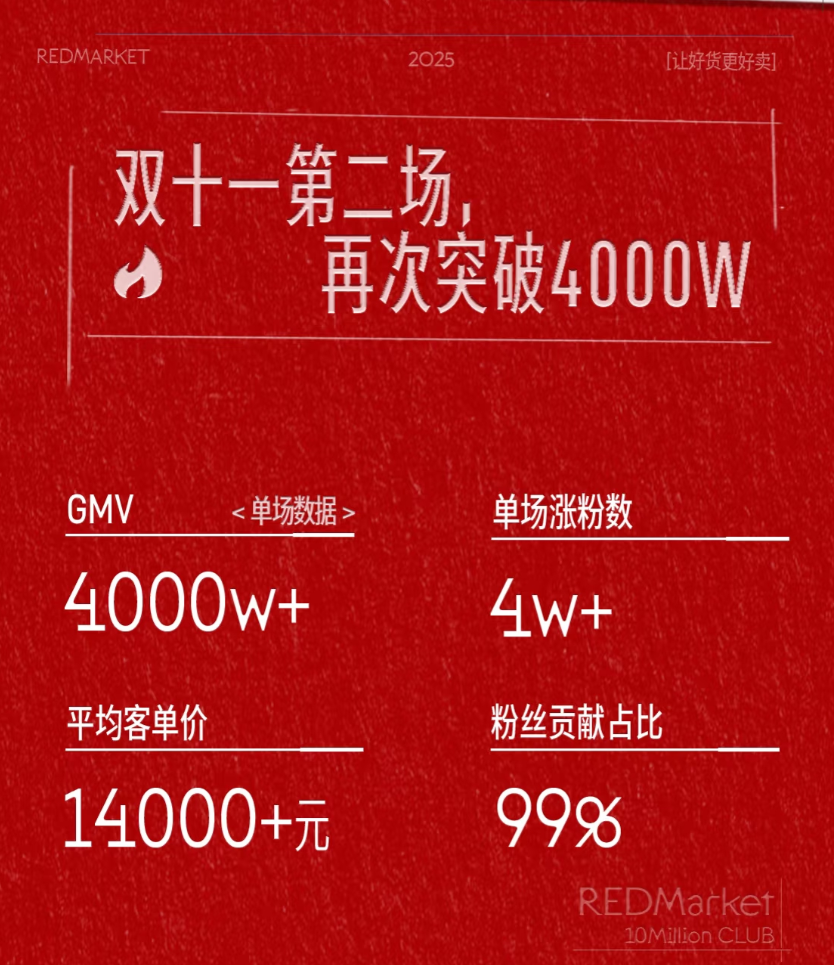
Core Insights - The article emphasizes that the growth of Xiaohongshu's e-commerce during the Double Eleven shopping festival is not a temporary phenomenon but a reflection of unmet consumer desires for personalized "emotional consumption" and "value consumption" [1][21] - Xiaohongshu's unique community-driven approach has led to a significant increase in both the number of high-performing merchants and their average transaction values, indicating a shift away from traditional low-price competition [1][20] Group 1: Xiaohongshu's E-commerce Growth - Xiaohongshu's Double Eleven event saw a 77% year-on-year increase in the number of orders, with the number of merchants achieving over 10 million in sales rising by 140% [1][21] - The average transaction value for these high-performing merchants reached 3000 yuan, showcasing a model that transcends traditional low-price strategies [1][21] Group 2: Characteristics of Successful Merchants - Successful merchants on Xiaohongshu are not traditional "selling giants" but new entities that engage in deep "dialogue" with consumers [3][4] - These merchants leverage a "trust-based" model for product promotion, where products are defined by community engagement and user feedback rather than aggressive marketing tactics [5][11] Group 3: Role of Influencers and Content Creators - Influencers on Xiaohongshu have evolved into multifaceted roles, combining expertise in content creation, product selection, and trust-building with consumers [12][18] - The platform's influencers, such as Zhang Xiaohui, have achieved significant sales through their ability to connect with niche audiences and provide aesthetic value, with some achieving average transaction values exceeding 2600 yuan [12][13] Group 4: Platform Infrastructure and Strategy - Xiaohongshu has implemented strategic initiatives to enhance its e-commerce capabilities, including a "million-free commission" policy for all merchants and elevating the "shopping" channel to a primary entry point [19][20] - The platform's focus on "store broadcasting" allows brands to convert accumulated followers into long-term assets, fostering a sustainable business model [20] Group 5: Implications for the Supply Chain - Xiaohongshu's success indicates a shift in the Chinese supply chain towards a focus on product innovation and brand building rather than price competition [21][22] - The platform provides a valuable opportunity for small and medium-sized brands to reach high-value consumers without the burden of extensive marketing budgets, emphasizing the importance of unique content and emotional value in products [22][23]
从“囤货”到“淘新”,双11进口消费风向开始变了
经济观察报· 2025-11-07 13:58
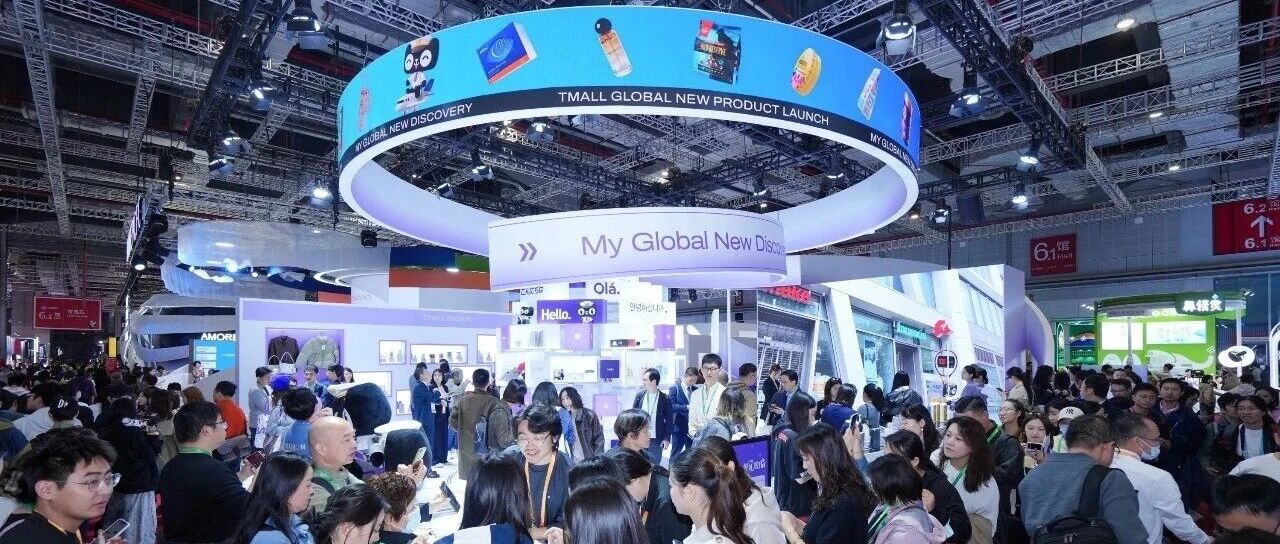
Core Insights - The article highlights the acceleration of import consumption upgrades during the "Double 11" shopping festival and the China International Import Expo, indicating a shift from bulk discount purchases to a focus on quality and specialized experiences [1][2][17] Import Consumption Trends - Import consumption is showing strong resilience, with data from Tmall International indicating that 927 imported brands saw a year-on-year sales increase, with 9 brands exceeding 100 million yuan and 44 products surpassing 10 million yuan in sales [2] - Consumers are moving from "stockpiling" to "trying new products," with a willingness to pay for niche brands and specialized functions, emphasizing quality, ingredients, and experiences over price [5][16] Market Segmentation and Consumer Behavior - The rise of niche markets is reshaping consumer logic, with younger consumers driving growth in health and beauty sectors, particularly in oral anti-aging products, which saw a sales increase of 353% during "Double 11" [5][9] - The demand for personalized and scientifically-backed products is increasing, as consumers become more knowledgeable about ingredients and formulations [6][7] Supply Chain and Market Efficiency - The integration of smart supply chains and overseas warehouses has enabled a rapid launch of over 100 global new products during the "Double 11" following their debut at the Import Expo [12][13] - Tmall International is providing comprehensive support for new brands, addressing challenges related to entry, costs, and channels, which has led to significant sales growth for brands like Maxigenes [13][17] Shift from Price Competition to Value Consumption - The import market is transitioning from price wars to value-driven consumption, with 57% of consumers willing to pay for emotional value, reflecting a shift towards emotional and experiential purchasing [16] - The focus is moving from practicality to emotional value, with consumers increasingly seeking unique experiences and specialized brands [16][17]
华强北汉堡王闭店属于品牌战略重构 国际品牌在深投资持续加码
Shen Zhen Shang Bao· 2025-09-17 00:19
Core Insights - The closure of the Burger King store in Shenzhen's Huaqiangbei area reflects broader challenges faced by international fast-food brands in China, driven by strategic adjustments in response to performance pressures [1][2] Group 1: Store Closures and Performance - Burger King has seen a significant reduction in its store count in China, dropping from a peak of 1,587 stores in 2023 to 1,367 by mid-2025, with 113 closures in 2024 and an additional 107 in the first half of 2025 [2] - The system sales figures for Burger King in China have also declined, with sales of $8.04 billion in 2023, $6.68 billion in 2024, and $3.09 billion in the first half of 2025 [2] Group 2: Strategic Adjustments - In response to market pressures, Burger King is implementing a strategy to optimize its store network, which includes closing underperforming locations while planning to open 40 to 60 new stores in key areas [3] - The brand is focusing on localizing its product offerings and has introduced new items like the "Crispy Spicy Chicken Burger," along with regular promotional pricing to compete with local brands [3] Group 3: Investment Trends - Despite the challenges faced by international brands, foreign investment in Shenzhen has been on the rise, with 33,000 new foreign-invested enterprises established since the beginning of the 14th Five-Year Plan, accounting for 14.6% of the national total [4] - In the first half of 2025, Shenzhen attracted $20.9 billion in foreign investment, marking an 11.3% year-on-year increase, with a notable focus on high-tech industries, which accounted for 35.2% of the total foreign investment [4]
身体护理市场量降额升的背后,日化智云如何赋能企业在存量竞争中突围?
Jin Tou Wang· 2025-08-21 09:42
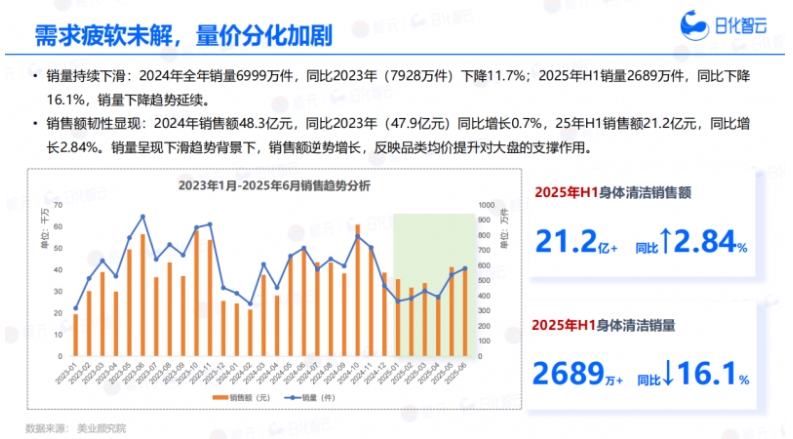
Core Insights - The body care market is undergoing profound changes due to dual pressures from consumption upgrades and stock competition, prompting brands to seek refined growth strategies [1] - The market is experiencing a trend of declining volume but increasing sales value, indicating a restructuring driven by consumption upgrades [3] Market Trends - Overall sales volume across all categories has decreased by 16.1% year-on-year to 26.89 million units, continuing the downward trend since 2024; however, sales revenue increased by 2.84% to 2.12 billion yuan in the first half of 2025, highlighting a "volume decline, value increase" pattern [3] - The body cleaning market is shifting from "basic cleaning" to "value consumption," necessitating product innovation that accurately meets market demands [7] Product Innovation Trends - There is a significant consumer interest in products that meet the needs of sensitive skin, particularly those with "oil control" and "acne treatment" properties, leading to increased attention on gentle acid ingredients [7] - Consumers are showing great interest in skincare ingredients in bathing products, with a trend towards gentle, natural, multifunctional, and environmentally friendly components [8] - Fragrance has become a core competitive advantage, with scenario-based narratives transforming from an "additional attribute" to a "core selling point," resulting in a 418% year-on-year increase in sales of fragrance products [9] Brand Strategy and Support - The "Zhiyun Whale Creation" service by Zhiyun aims to empower brands with innovative product development, leveraging advanced R&D technology and global raw material resources to meet diverse market demands [10] - The service utilizes deep market insights and big data algorithms to identify high-potential trends, ensuring that new products meet market needs in terms of efficacy, experience, and ingredient value [12] - Zhiyun has successfully empowered over 200 well-known brands in product upgrade innovation, helping them quickly seize market opportunities [12] Future Outlook - Zhiyun plans to continue enhancing its full-chain service capabilities, focusing on precise trend insights, cutting-edge R&D, and efficient supply chain collaboration to help brands build core competitiveness in ingredient innovation, experiential marketing, and customer engagement [13]
买奢侈品这件事:韩国青年vs中国青年,差距在哪?
Sou Hu Cai Jing· 2025-08-14 00:16
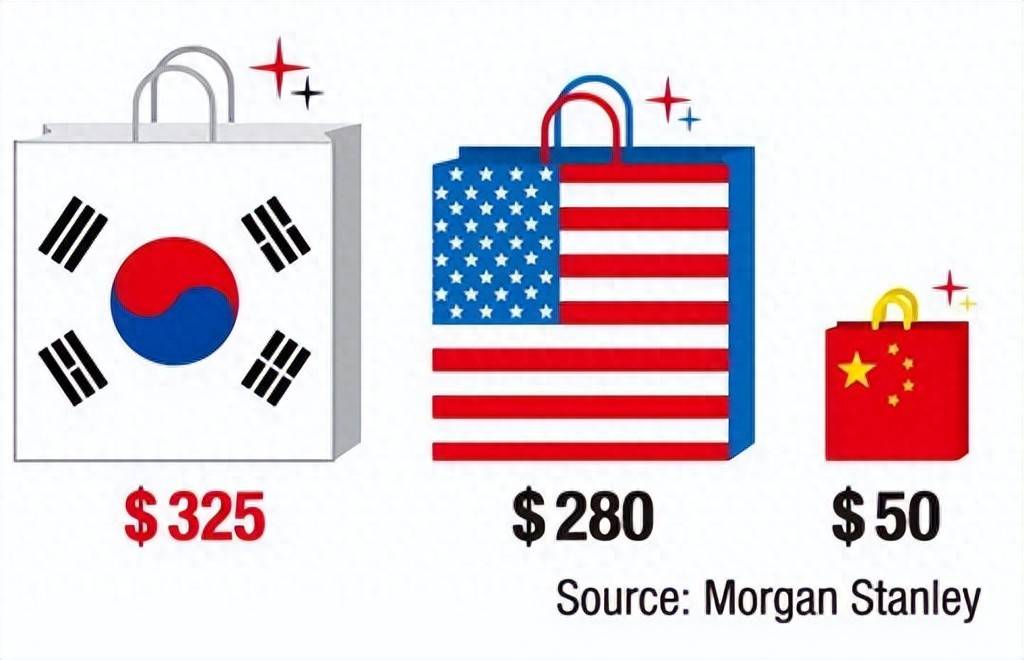
Group 1 - South Korean consumers have the highest per capita luxury goods spending globally at approximately $325, with many young individuals resorting to loans for purchases [1][3] - A report from the Korea Financial Institute indicates that 18% of the debt among individuals aged 20 to 39 is spent on luxury goods, and about 17% of young workers in Seoul actively take loans to buy luxury items [3] - The cultural context in South Korea drives luxury consumption, where luxury items are seen as status symbols in job markets and social circles, exacerbated by high living costs and limited job opportunities [3] Group 2 - In contrast, the Chinese luxury market is experiencing a shift towards rational consumption, with a projected sales decline of 18%-20% in 2024, prompting major brands like LVMH and Kering to adjust their strategies [5] - The shift in consumer behavior in China reflects a transition from "symbolic consumption" to "value consumption," with discount channels becoming the preferred choice for entry-level luxury goods [5][7] - Young Chinese consumers are increasingly prioritizing value over brand logos, leading to a more mature approach to luxury spending, as evidenced by the popularity of discount platforms offering significant savings on luxury items [6][7]
消费者反思录:在高端消费教育中,我们真的成熟了吗?
Sou Hu Cai Jing· 2025-08-11 17:50
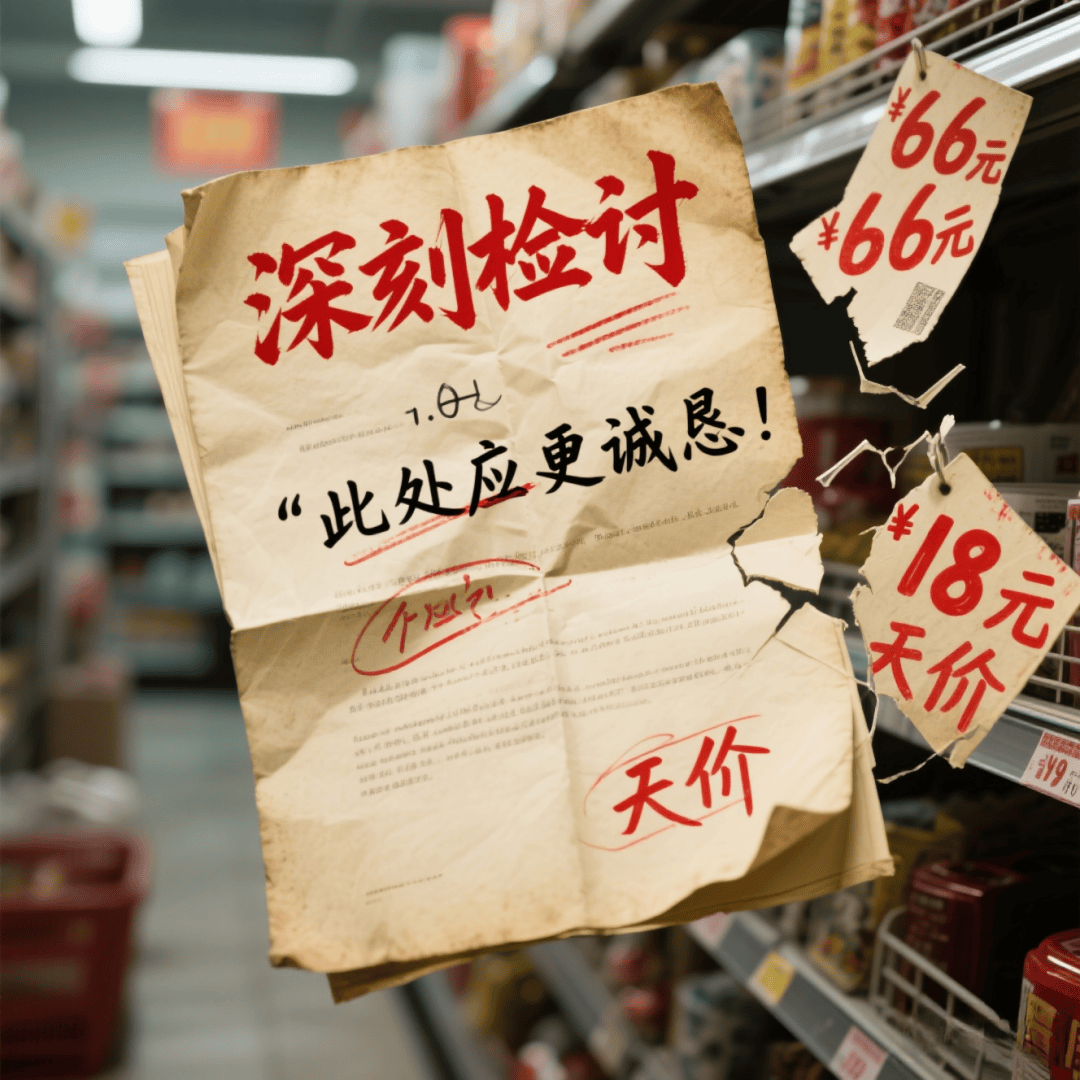
Group 1 - The article discusses a consumer's reflection on their past purchasing behavior and expresses apologies to several well-known companies, highlighting a shift in understanding regarding value and quality [1][3] - The consumer acknowledges their previous dissatisfaction with the high prices of companies like Baiguoyuan and Banu Hotpot, realizing that their perspective on quality and value was superficial [1][3] - The article emphasizes the importance of consumer education, as articulated by company founders, and suggests that consumers need to grow in their understanding of high-end consumption and the associated costs [1][3] Group 2 - The consumer's apology to Baiguoyuan stems from a realization that their criticism of high prices and quality issues was rooted in a lack of understanding of the company's commitment to educating consumers [3] - The reflection on Banu Hotpot reveals a recognition of the brand's positioning and the value of its offerings, moving beyond a simplistic view of cost versus quality [3] - The article concludes with a call for a more equitable and transparent communication mechanism between consumers and companies, advocating for a two-way educational interaction rather than a one-sided approach [3]
暑期游迎接品质大考
Jing Ji Ri Bao· 2025-07-12 21:56
Core Insights - The summer tourism market in 2025 is experiencing a significant surge, driven by family-oriented travel and cultural experiences, marking a shift towards deeper engagement rather than mere sightseeing [1][2][3] Group 1: Market Trends - Family travel remains the core demographic, with a notable increase in demand for cultural and educational experiences, such as "curriculum tours" and hands-on activities [2][3] - The "post-00s" graduate demographic is emerging as a new consumer force, favoring personalized and meaningful travel experiences [2][3] - Traditional travel segments like study tours, summer vacations, and graduation trips are now complemented by new trends such as performance tourism and cruise travel [3][7] Group 2: Consumer Preferences - There is a growing preference for self-driving trips, with peak travel times identified in early July, mid-July to mid-August, and late August [3] - The outbound travel market is also seeing a resurgence, with visa applications increasing significantly, reaching a three-year high, and international flight prices dropping by approximately 15% [3][4] - The number of travelers and transaction volume for summer trips has increased by about 70% and 80% year-on-year, respectively, with European travel seeing a remarkable growth of around 110% [3][4] Group 3: Service and Supply Enhancements - The tourism supply side is rapidly evolving to meet diverse consumer demands through product innovation and service optimization [4][5] - Over 4,300 cultural and tourism consumption activities are planned nationwide to stimulate summer tourism, focusing on various themes such as coastal vacations and family activities [4] - Local governments are implementing policies to reduce travel costs, including ticket discounts and travel incentives, to lower barriers for travelers [4][6] Group 4: Cultural and Experiential Focus - Museums are becoming central to cultural experiences, with initiatives to enhance youth engagement through special events and extended hours [5] - The performance tourism market is gaining traction, with cities like Haikou promoting large-scale performances and related services to attract young tourists [6] - Emerging cultural destinations are focusing on local cultural revitalization and immersive experiences, appealing to a broader range of travelers [6][7] Group 5: Challenges and Future Outlook - The surge in tourism is leading to increased pressure on popular attractions and uneven quality in certain travel products, necessitating a shift in operational strategies [8] - The tourism industry is moving towards a more refined and quality-driven approach, emphasizing emotional engagement and personalized experiences [8] - The 2025 summer tourism market is expected to witness its strongest growth in nearly four years, driven by diverse consumer preferences and a focus on quality experiences [7][8]

悄然兴起的“打酒铺”,有人说像散酒“拼多多”!新型散酒连锁正重塑酒饮消费逻辑?
Mei Ri Jing Ji Xin Wen· 2025-07-04 10:43
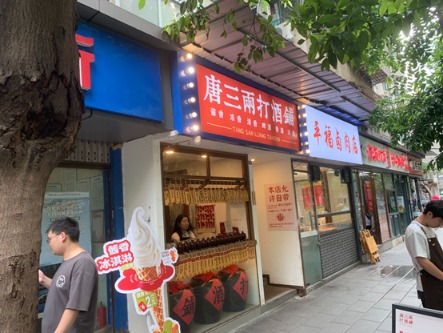
Core Viewpoint - The emergence of "Da Jiu Pu" (打酒铺) in China represents a shift in the liquor retail industry, focusing on a more authentic and consumer-friendly experience amidst a challenging market environment for traditional liquor sales [2][14][17] Industry Overview - The liquor retail industry is experiencing a downturn due to macroeconomic adjustments and policy impacts, leading to high inventory levels and price discrepancies [1][14] - The traditional high-end liquor market, driven by business banquets and gift-giving, is declining, prompting a search for more value-driven consumption [14][17] Company Insights - "Tang San Liang Da Jiu Pu" is a new chain founded by Li Menglong, aiming to redefine the perception of loose liquor sales by providing a clean, stylish environment and a focus on quality [3][4][6] - The store offers a variety of liquors, including white wine, beer, and yellow wine, with a unique selling proposition of free tasting and affordable pricing [4][10] Consumer Demographics - The customer base for "Da Jiu Pu" is notably diverse, with over 60% of patrons under 40 years old, and a nearly equal gender distribution, indicating a successful appeal to younger consumers [9][12] - The innovative retail model has attracted a wide range of customers, from young adults to older individuals, breaking traditional gender barriers in liquor consumption [9][12] Business Model and Strategy - The business model emphasizes high-quality, cost-effective products by eliminating unnecessary middlemen costs and focusing on direct consumer engagement [14][16] - "Da Jiu Pu" operates with a transparent pricing strategy, ensuring that consumers receive high-quality products at lower prices, which has resulted in a high conversion rate of first-time buyers [10][13] Market Potential - The "Da Jiu Pu" model is seen as a significant opportunity in the liquor market, with potential for rapid expansion similar to successful beverage brands in the past [15][17] - The founders believe that the current economic climate may actually increase demand for affordable liquor options, as consumers seek cost-effective ways to enjoy social drinking [14][17]
2025年中国三大消费趋势洞察
Sou Hu Cai Jing· 2025-05-02 00:33
Group 1 - The core viewpoint of the article highlights the profound and complex transformation of the Chinese consumer market, entering a "new normal" phase, as revealed by McKinsey's report based on a detailed survey of over 17,000 Chinese consumers [2] - The report identifies three key trends in the Chinese consumer market under this new normal, providing valuable insights for understanding market dynamics and seizing business opportunities [2] - The Chinese economy shows resilience with a GDP growth rate of approximately 5%, and sectors such as tourism, dining, food and beverage, outdoor sports, and health are experiencing strong recovery [3][5] Group 2 - Consumers are gradually emerging from a period of low confidence and are adapting to the new normal, with a cautious but rational outlook on future consumption growth [5] - Despite a slowdown in expected household income growth, consumers anticipate that their consumption as a proportion of income will remain stable, reflecting a shift towards quality and value in spending [5] - The growth of urban households due to ongoing urbanization is injecting new vitality into the consumer market, leading consumers to prioritize quality and cost-effectiveness over mere expansion of consumption [5] Group 3 - Since September 2024, the People's Bank of China has implemented a series of stimulus policies aimed at boosting consumer confidence, resulting in 81% of surveyed individuals expressing greater confidence in the macroeconomic outlook [9] - However, consumer confidence is not uniformly distributed; affluent urban elderly consumers have seen a 20% decline in confidence, while rural consumers have experienced a notable increase due to government rural revitalization policies [12][9] - The disparity in consumer confidence reflects the complexity and diversity of the Chinese consumer market, necessitating differentiated market strategies based on regional and income-level variations [12] Group 4 - There is a notable shift from material consumption to value consumption, with consumers increasingly focusing on personal achievement and the emotional value of products and services [18][20] - Consumers are making spending decisions based more on tangible factors like personal asset value rather than solely on confidence levels, with affluent urban consumers expecting to increase daily spending by 2.6% in 2025 [20] - This transition indicates that businesses must not only provide high-quality products and services but also infuse them with cultural and emotional significance to connect deeply with consumers [20] Group 5 - Overall, the complexity and differentiation of the Chinese consumer market are increasing, with spending intentions being influenced more by actual income and assets rather than confidence levels [21] - Consumers are becoming more rational in their spending arrangements, emphasizing the enhancement of life quality, which presents both challenges and opportunities for businesses that can adapt and innovate [21] - Companies need to deeply understand the evolving consumer demands and offer products and services that fulfill the pursuit of personal achievement to thrive in this changing market landscape [21]