价格战

Search documents
不出意外!2026年3月起,房子、车子、存款或将迎来重大改变
Sou Hu Cai Jing· 2026-02-15 08:15
Economic Overview - In 2025, the domestic economy showed a "steady improvement" with a GDP of 140.19 trillion yuan, reflecting a 5.0% growth year-on-year at constant prices [1] - Consumer prices remained stable compared to 2024, indicating no significant inflation or deflation [1] - Challenges persist in the real estate market, with weak transaction volumes and declining consumer demand, alongside ongoing employment pressures [1] Real Estate Market Changes - The real estate market is expected to undergo three significant changes starting March 2026, with a continued downward trend in housing prices [3] - Housing prices in second and third-tier cities have seen declines exceeding 30%, while some areas near Beijing have experienced drops over 60% [5] - A divergence in housing price trends is anticipated, with smaller cities experiencing a slowdown in price declines, while first-tier cities like Shanghai and Shenzhen may face further price corrections due to high price-to-income ratios [5] Quality of Housing - Developers are shifting from a "rough development" model focused on speed and profit maximization to a focus on building quality homes, responding to increased consumer demands for better housing [6] - The government is encouraging developers to construct "good houses" to meet the needs of homebuyers [6] Sales Model Transition - There is a growing demand to replace the pre-sale system with actual sales of completed homes, driven by issues such as unfinished projects and consumer dissatisfaction [9] - The government plans to gradually increase the proportion of completed home sales in the market [9] Automotive Market Dynamics - The automotive market is experiencing significant price pressures, with many brands engaging in price wars, leading to substantial discounts [10] - Domestic brands like BYD and Xpeng have reduced prices by 20,000 to 30,000 yuan, while luxury brands like BMW have seen reductions of 80,000 to 90,000 yuan [12] - Factors contributing to this price decline include increased competition from new energy vehicles, the entry of new capital into the market, and rapid technological advancements leading to quicker obsolescence of older models [12] Deposit Rate Trends - Deposit rates have been on a downward trend, with one-year deposit rates falling from 2.25% to 1.35%, resulting in significantly lower interest income for savers [15] - The potential for further declines in deposit rates is limited due to the risk of inflation and the current rates being at historical lows, which could pose systemic financial risks [15]

呷哺呷哺董事长称价格战没有未来
Xin Lang Cai Jing· 2026-02-12 12:12
Core Viewpoint - The chairman of Xiaobuxiang Group, He Guangqi, believes that price wars have no future in the restaurant industry, emphasizing that consumers are willing to choose and pay a premium [1][1]. Industry Insights - He Guangqi's perspective highlights a shift in consumer behavior, indicating that the willingness to pay for quality and experience is more important than competing on price [1][1].
长城汽车:全力支持《汽车行业价格行为合规指南》 反对无底线价格战
Jin Rong Jie· 2026-02-12 11:45
Core Viewpoint - Great Wall Motors expresses full support for the "Guidelines for Compliance in Automotive Industry Pricing Behavior," emphasizing a commitment to long-termism, legal compliance, and integrity in operations [1] Group 1: Company Position - The company firmly opposes unethical practices such as bottomless price wars, price fraud, and false promotions that severely harm consumer rights and industry development [1] - Great Wall Motors will continue to adhere to legal compliance and integrity in all aspects of vehicle and parts production, pricing, and sales [1]

引导企业加强价格合规建设 国家市场监管总局发布汽车行业价格行为指南
Zheng Quan Ri Bao Wang· 2026-02-12 09:53
Core Viewpoint - The release of the "Automotive Industry Pricing Behavior Compliance Guidelines" aims to regulate pricing behavior in the automotive industry, ensuring fair competition and protecting consumer and operator rights, while guiding companies to enhance pricing compliance [1] Group 1: Pricing Strategy and Compliance - The guidelines require automotive manufacturers to establish pricing strategies based on production costs and market supply and demand, managing pricing behavior across the entire supply chain to ensure compliance [2] - The guidelines emphasize the need for clear rebate policies from manufacturers to dealers, respecting dealers' pricing autonomy and promoting fair trade and equal negotiation principles [2] Group 2: Legal Risks and Competition - The guidelines clarify legal risks associated with price collusion between manufacturers and parts suppliers, warning against practices aimed at excluding competitors or monopolizing the market through predatory pricing [3] - The guidelines encourage companies to shift focus from price competition to product quality, service, and efficiency, reducing the temptation to use unfair pricing methods for short-term sales [3] Group 3: Transparency in Pricing - The guidelines mandate clear pricing display requirements for sales enterprises, ensuring that vehicle names, prices, models, manufacturers, and main configurations are prominently marked [4] - The guidelines enhance transparency in promotional activities, requiring clear public disclosure of promotional rules, activity duration, and applicable conditions [5] Group 4: Service Fees and Fraud Prevention - The guidelines state that automotive sales enterprises must provide corresponding services for any fees charged, warning against practices like "charging without service" and "duplicate charging" [6] - The guidelines outline risks associated with price fraud, including the use of false market prices and misleading promotional claims, ensuring compliance in price comparisons [6] Group 5: Responsibilities of Trading Platforms - The guidelines extend compliance requirements to automotive trading platforms, prohibiting unreasonable price restrictions and encouraging platforms to alert merchants about legal compliance [7] - The guidelines aim to mitigate the impact of extreme low pricing driven by traffic on market order, promoting a shift from price competition to value competition in the automotive industry [7]
车圈快醒醒!国家出指南让汽车行业“明码标价”,请价值战代替价格战
Zhong Guo Jing Ji Wang· 2026-02-12 09:14
Core Viewpoint - The government has issued guidelines to promote transparent pricing in the automotive industry, advocating for a shift from price wars to value wars [1] Group 1: Industry Regulation - The new guidelines aim to standardize pricing practices within the automotive sector, addressing existing sales irregularities [1] - The initiative is part of a broader effort to regulate the automotive market and protect consumer rights [1] Group 2: Market Impact - The emphasis on clear pricing is expected to enhance consumer trust and improve the overall market environment [1] - The shift towards value-based competition may lead to better quality products and services in the automotive industry [1]
拓日新能股价持续调整,业绩亏损与行业困境成主因
Jing Ji Guan Cha Wang· 2026-02-12 04:53
Company Fundamentals - The company reported a significant loss in the first three quarters of 2025, with a net profit attributable to shareholders of -109 million yuan, a drastic decline of 451.75% year-on-year [2] - The gross margin for the first three quarters was only 10.56%, well below the industry average of 32.38%, primarily due to oversupply in the photovoltaic industry and intense price competition [2] Industry Policy and Environment - The photovoltaic industry is currently facing a phase of supply-demand imbalance, with product prices at historical lows, putting pressure on the entire sector [3] - The company is experiencing specific operational risks, including accounts receivable totaling 1.251 billion yuan as of the end of the third quarter of 2025, which occupies a significant amount of working capital and poses collection risks [3] - The company's operating cash flow has deteriorated, indicating weakened "blood generation" capacity from its main business [3] Market Funding Situation - Recent market behavior shows that institutional and northbound funds have been net sellers, with institutions net selling 79.0363 million yuan on February 5, 2026, and deep stock connect net selling 108 million yuan [4] - Over the past five days, there has been a net outflow of 209 million yuan from major funds, indicating a cautious attitude among large investors [4] Stock Price Situation - The stock price peaked at 8.18 yuan on February 10, 2026, before retreating, currently positioned below the short-term moving average and facing technical adjustment pressure [5] - The stock has seen a significant cumulative increase of 60.37% year-to-date, leading to potential profit-taking by some investors [5] - The ongoing decline in the stock price is attributed to a combination of the company's poor fundamental performance, oversupply and price wars in the photovoltaic industry, internal accounts receivable risks, market fund outflows, and technical adjustments [5]

西格内特珠宝股价逆势大跌,业绩疲软与行业调整双重承压
Jing Ji Guan Cha Wang· 2026-02-11 22:51
Core Viewpoint - Signet Jewelers (SIG.N) has experienced significant stock price volatility due to weak performance and a deep adjustment in the diamond industry, with a notable drop of 5.58% on February 10, closing at $91.58, while the luxury goods sector rose by 1.04% during the same period [1]. Stock Performance - The stock price showed notable fluctuations over the past week, rising by 5.01% to $97.00 on February 6, followed by a sharp decline of 5.58% to a low of $90.73 on February 10. The latest closing price on February 11 rebounded to $92.69, with a daily increase of 1.21%, resulting in a total price range fluctuation of 7.46%. Trading volume peaked at $108 million on February 6, decreased to $83.52 million on February 10, and further reduced to $4.499 million on February 11, indicating increasing market divergence and stabilizing sentiment [2]. Financial Report Analysis - The company's fiscal Q3 report for FY2025 (ending February 1, 2025) revealed a revenue decline of 5.81% year-over-year, with net profit attributable to shareholders plummeting by 83.93%. Despite maintaining a gross margin of 42.59%, the net profit margin was only 4.28%, highlighting challenges in cost control and profit conversion efficiency. The earnings per share (EPS) for the interim report was -3.17, reflecting a year-over-year decline of 192.42%, intensifying market concerns regarding the sustainability of performance [3]. Institutional Perspectives - Analysts maintain a cautious stance on Signet Jewelers, with 50% of the 12 institutions covering the stock as of February 2026 recommending "buy" or "hold" ratings, and no sell recommendations. The average target price is set at $113.38, indicating a potential upside of approximately 22.3% from the current stock price. However, weak industry demand and risks associated with price wars are dampening optimistic sentiments [4].
001206,跨界并购终止
Zhong Guo Ji Jin Bao· 2026-02-10 22:54
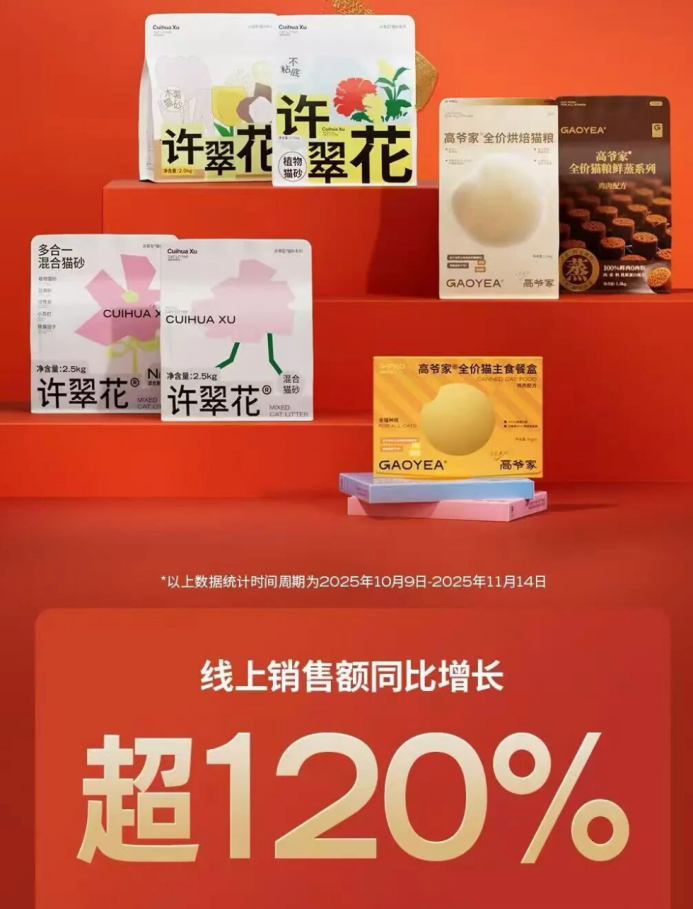
Core Viewpoint - Yiyi Co., Ltd. has terminated its acquisition of the pet food brand "Xu Cuihua" and "Gao Ye Jia" after four months of negotiations due to changes in the target company's 2025 operational performance and failure to reach agreement on key commercial terms [1][2] Group 1: Acquisition Details - Yiyi Co. planned to acquire 100% equity of Hangzhou Gao Ye Jia to enter the pet food market and strengthen its leading position in the pet hygiene sector [1] - The termination was officially announced on February 10, 2026, during the fourth board meeting [1] Group 2: Reasons for Termination - The target company's operational performance in 2025 deviated from initial expectations due to adjustments in sales strategies during the "Double Eleven" shopping festival and increased upfront investments in new cat food products [2] - The parties could not agree on valuation and other core commercial terms, leading to a cautious decision to terminate the transaction [2] Group 3: Market Performance - Hangzhou Gao Ye Jia reported significant online sales growth during the "Double Eleven" festival, with over 120% increase in sales, including 120% on Tmall and 60% on JD [3][5] - The brand "Xu Cuihua" became the first pet product brand on Tmall to surpass 100 million in sales during the "Double Eleven" event [5] Group 4: Financial Performance - In 2023, Hangzhou Gao Ye Jia generated revenue of 302 million yuan with a net profit of 3.08 million yuan, resulting in a net profit margin of only 1% [6] - Revenue is projected to increase to 460 million yuan in 2024, with net profit rising to 18.30 million yuan and a net profit margin of 4% [6] Group 5: Pricing Strategy and Market Challenges - Despite high sales volumes, the company faces challenges with profitability due to a price war and new sales models that may increase costs and reduce margins [6] - The introduction of "subscription-like" sales models for cat litter has gained popularity but may lead to higher costs and pricing pressures [6]
库迪咖啡告别“全场9.9元”:价格战的终结与中国咖啡行业的价值回归
Xin Lang Cai Jing· 2026-02-10 10:34
Core Viewpoint - The end of the "9.9 yuan unlimited" promotion by Cotti Coffee marks a significant shift in the Chinese coffee market from aggressive price competition to a focus on refined operations and sustainable profitability [1][9]. Group 1: Price War Dynamics - Cotti Coffee initiated a price war in 2023 with its aggressive "9.9 yuan" strategy, which led to rapid market expansion and increased brand recognition, resulting in over 18,000 stores by December 2025 [2][10]. - The price war attracted competitors like Luckin Coffee and Starbucks, who also adopted similar low-price strategies to maintain market share [2][10]. - The "attack hammer" strategy, while initially successful, has turned into a "bleeding wound" as the cost structure became unsustainable, with Cotti's average cost per cup at 11.1 yuan, leading to a loss of 1.2 yuan per cup sold at the 9.9 yuan price point [3][11]. Group 2: Transition to Sustainable Practices - The coffee industry is transitioning from a phase of "barbaric growth" to one of refined operations, with a focus on quality and product differentiation rather than just low prices [4][12]. - By 2025, the Chinese coffee market is projected to reach 218.1 billion yuan, with a shift in consumer behavior towards coffee as a daily necessity rather than a luxury [4][12]. - Cotti Coffee has reported achieving positive cash flow and profitability since May 2024, indicating a strategic pivot away from unsustainable pricing models [7][14]. Group 3: Consumer Behavior and Market Strategy - Consumer reactions to price changes are varied, with some loyal to the low-price model feeling disappointed by price increases, while others support a return to normal market pricing [4][12]. - The end of the price war is expected to lead to a split in consumer preferences, with some seeking alternatives and others becoming loyal customers of brands that innovate [5][13]. - Brands are now focusing on product innovation and supply chain efficiency as new competitive focal points, moving away from price-based competition [5][13].
9.9元咖啡,正在悄悄消失?
创业邦· 2026-02-10 03:45
Core Viewpoint - The coffee market in China is experiencing a shift as the "9.9 yuan" price point, once a dominant consumer mindset, is being challenged with price increases and changing market dynamics [4][11][21]. Group 1: Market Dynamics - Kudi Coffee, which popularized the "9.9 yuan coffee" concept, has announced the end of its unlimited "9.9 yuan" promotion, raising prices for most products by approximately 40% [4][11]. - The coffee market saw significant growth in 2023, with a 27.2% increase in market size compared to 2022, but growth rates are slowing down in 2024 [11][21]. - The number of new store openings among 23 coffee brands decreased by 46.08% in 2024 compared to 2023, indicating a trend of market saturation [11][21]. Group 2: Competitive Landscape - Luckin Coffee and Kudi Coffee engaged in aggressive price competition, with both brands gradually reducing subsidies and adjusting prices upwards [8][9]. - Other coffee brands, such as Tims, Nowwa, and Manner, have also participated in the price war, but are now facing pressure to establish brand differentiation beyond just low prices [8][21]. - New entrants like WA Coffee and Gu Ming are still attempting to attract customers with low prices, indicating that the "9.9 yuan" price point remains influential in consumer behavior [18][19]. Group 3: Financial Viability - Kudi's pricing strategy has led to financial strain on franchisees, with reports of significant losses due to high material costs and low selling prices [12][14]. - The rising costs of coffee and other materials have put pressure on profit margins, making it difficult for Kudi to maintain its low pricing strategy [14][21]. - Kudi's total store count is approximately 18,000, far from its goal of 50,000 stores by the end of 2025, highlighting challenges in scaling operations effectively [14][21]. Group 4: Future Outlook - The coffee industry is moving towards a phase where brands must focus on refined operations and customer retention rather than aggressive price competition [25][28]. - The end of the "9.9 yuan coffee" era suggests a transition towards a more sustainable business model, where brands will need to balance cost management with customer value [25][28]. - Despite the withdrawal from the "9.9 yuan" promotion, some products remain available at or below this price on delivery platforms, indicating a complex relationship between pricing strategies and consumer expectations [28].