
传统产业升级

Search documents
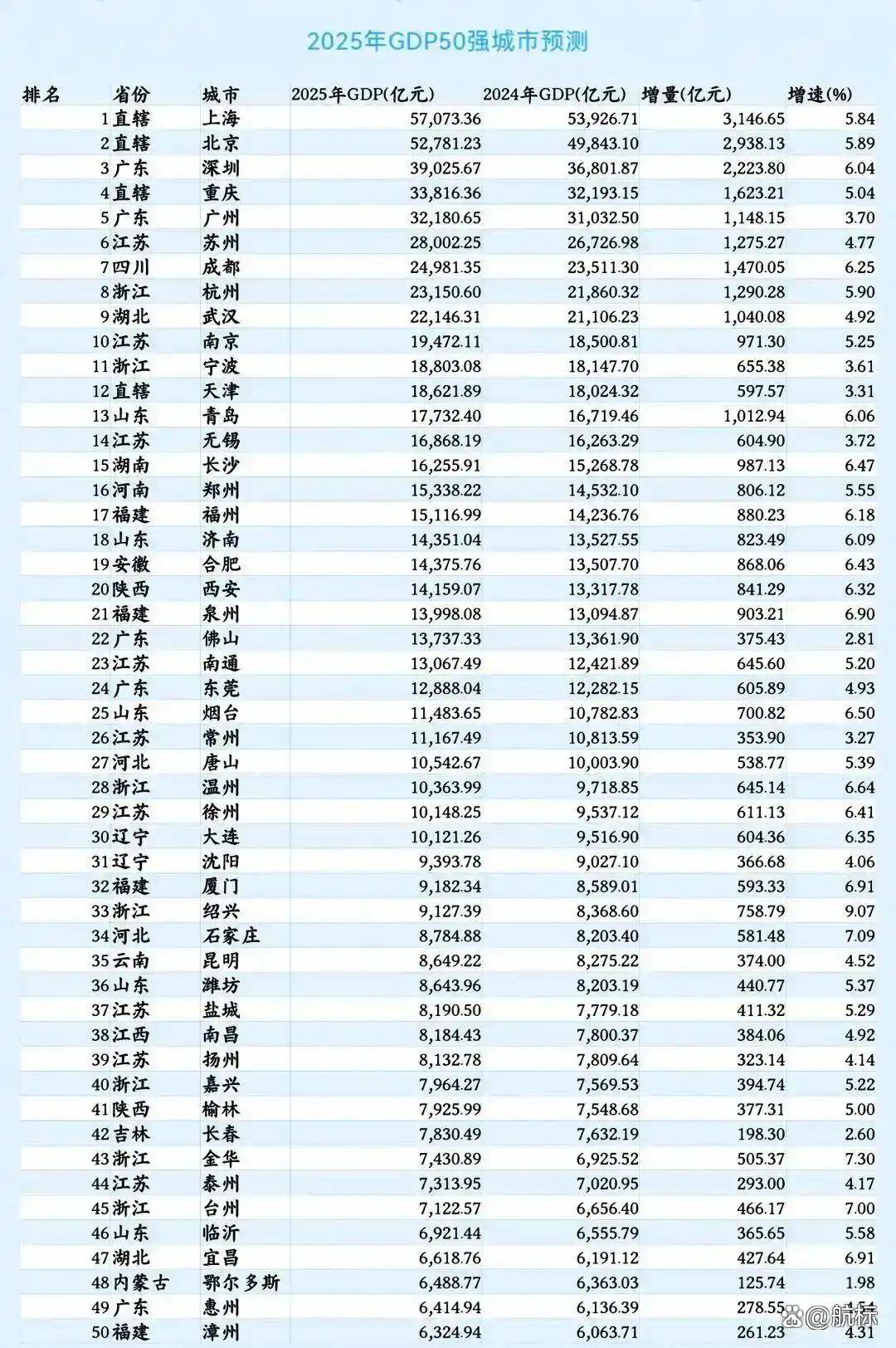
2025年我国GDP50强城市预测出炉:谁在领跑?谁在突围?
Sou Hu Cai Jing· 2026-01-11 16:05
Core Insights - The forecast for the top 50 cities by GDP in 2025 reveals a competitive landscape in China's urban economy, with over 20 trillion yuan in the "head tier" and a rapid expansion of trillion-yuan cities, highlighting the true development capabilities across various regions [1] Group 1: GDP Rankings and Growth - In 2025, nine cities including Shanghai, Beijing, and Shenzhen are projected to have GDPs exceeding 2 trillion yuan, accounting for nearly 40% of the total top 50 GDP [4] - Shanghai's GDP is expected to surpass 5.7 trillion yuan, with an increase of 314.66 billion yuan, driven by the dual engines of chip manufacturing in the Lingang New Area and financial openness in Pudong [4] - Chengdu is projected to achieve a growth rate of 6.25%, entering the "2 trillion yuan club" due to policy benefits from the Chengdu-Chongqing economic circle, with significant growth in the biopharmaceutical industry [4] Group 2: Emerging Cities and Growth Drivers - In 2025, there will be 32 cities with GDPs between 1 trillion and 2 trillion yuan, an increase of three from 2024, including Tangshan, Wenzhou, and Xuzhou [6] - Wenzhou's GDP is expected to exceed 1.03 trillion yuan with a growth rate of 6.64%, attributed to the combination of digital economy and traditional manufacturing [6] - Hefei is projected to reach a GDP of 1.43 trillion yuan with a growth rate of 6.43%, driven by advancements in the semiconductor industry [8] Group 3: Notable Growth Rates - The top three cities in terms of growth rate are Shaoxing (9.07%), Xiamen (6.91%), and Quanzhou (6.90%), each leveraging unique local advantages such as AI in traditional industries and international trade [8] - Shaoxing's textile industry has seen an 8% increase in profit margins due to AI design integration [8] - Xiamen's trade with BRICS countries is expected to rise by 22%, contributing significantly to GDP growth [8] Group 4: Economic Challenges - Foshan's growth rate is only 2.81%, primarily due to inventory pressures in the traditional home appliance sector [8] - Changchun's growth rate is 2.60%, reflecting challenges in the transition of the automotive industry to new energy [8] Group 5: Entry Threshold for Top 50 - The threshold for entering the top 50 cities is set at 632.49 billion yuan in 2025, an increase of nearly 9% from 2024, indicating the need for substantial pillar industries [10] - Zhangzhou's food processing industry is projected to exceed 150 billion yuan, contributing to its entry into the top 50 [10]

驱动传统产业升级,贵州各地企业向“新”而行强根基
Xin Lang Cai Jing· 2026-01-09 11:28
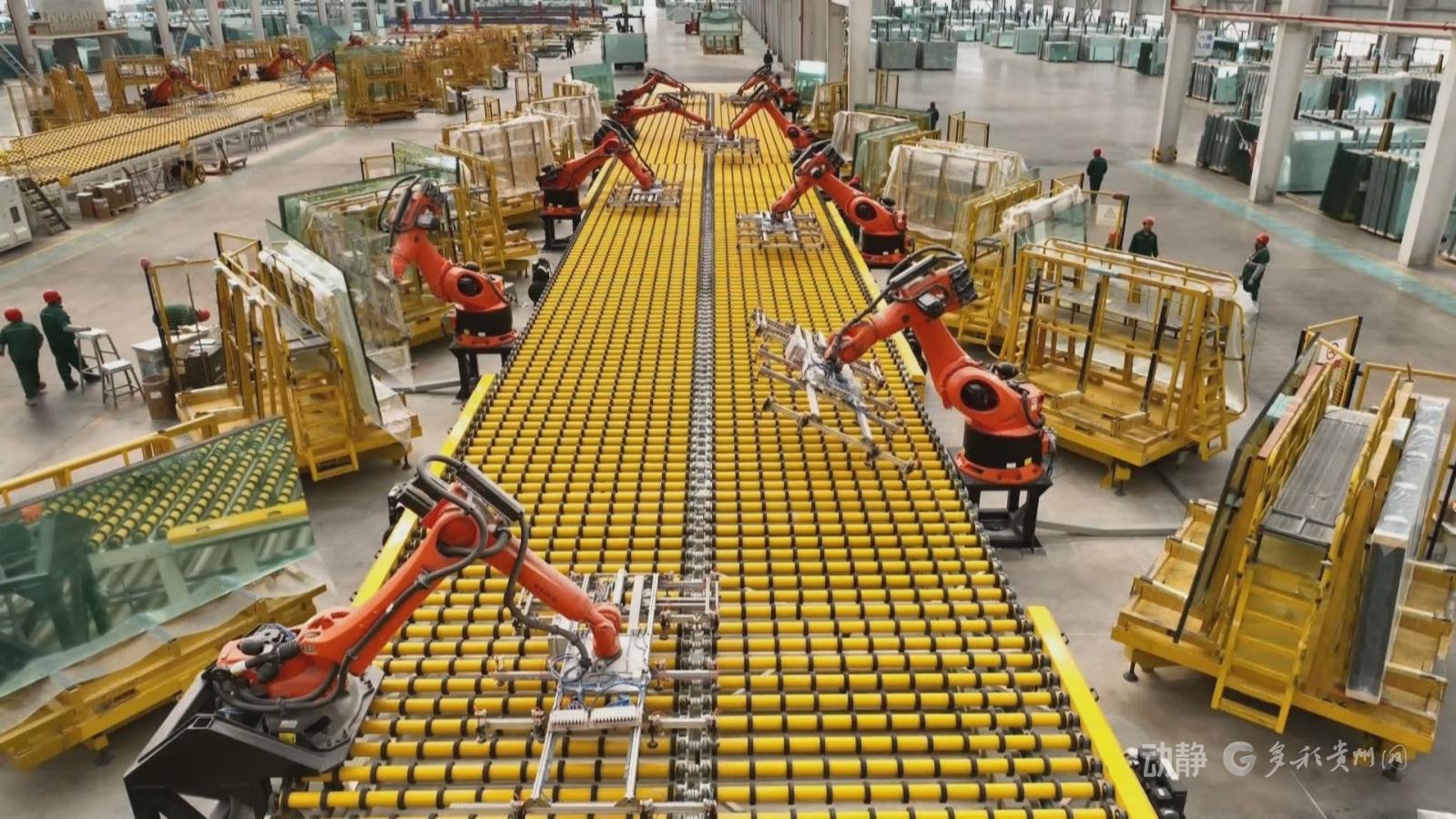
Group 1: Industry Upgrades and Innovations - The "14th Five-Year Plan" emphasizes optimizing and upgrading traditional industries, encouraging enterprises to enhance technology innovation and product quality to revitalize traditional sectors [1] - A glass manufacturing company in Guizhou has achieved a breakthrough in producing 1.4mm ultra-thin glass, reducing thickness from 2mm to 1.4mm through precise temperature control and parameter adjustments [3] - The glass industry upgrade is not only about making products thinner but also about creating specialized products, such as low-radiation coated glass for green buildings, fostering a complementary differentiation among companies [5] Group 2: Economic Development and Support Mechanisms - The Guizhou Luobi Economic Development Zone has become the largest glass industry cluster in the province, housing 20 upstream and downstream glass enterprises, and is working towards becoming a significant glass industry base in Southwest China [8] - The local government is implementing a service mechanism to support existing enterprises in stabilizing and increasing production, aiming to help them achieve full production capacity [8] Group 3: Specific Industry Performance - The lighter and more efficient production methods in the lighter manufacturing sector have led to an annual output of over 1.2 billion lighters, generating a revenue of 420 million yuan, with a global market share of 6.7% for "Cingong-made" lighters [10][13] - Guizhou's liquor industry is also evolving, with companies developing new products and diversifying markets, resulting in a 15% year-on-year increase in production value [15][17] - The liquor company has adopted a dual strategy of producing both strong and sauce-flavored varieties to cater to different regional preferences, with a target growth rate of around 30% for the current year [21]
1月7日晚间央视新闻联播要闻集锦
Yang Shi Xin Wen Ke Hu Duan· 2026-01-07 14:15
Group 1 - The core viewpoint emphasizes the importance of traditional manufacturing as a vital part of the real economy, advocating for market demand alignment and technological innovation to revitalize traditional industries [1][4] - The transformation of traditional industries is being driven by high-end, intelligent, green, and integrated modifications, which are expected to activate internal dynamics and promote high-quality economic development [1][4] - In December 2025, China's logistics industry prosperity index reached 52.4%, marking the highest level for the year, with a month-on-month increase of 1.5 percentage points [5] Group 2 - During the 14th Five-Year Plan period, China will accelerate the construction of a modern water network that is comprehensive, safe, reliable, efficient, green, intelligent, and orderly [7] - China's technological innovation is advancing towards four extremes: macro expansion, micro deepening, extreme conditions, and comprehensive intersection, reinforcing the foundation for technological self-reliance [8]
「十五五」时期重点产业前瞻与发展路径研究丨36氪研究院
36氪· 2025-12-31 00:14
Core Insights - The "14th Five-Year Plan" period prioritizes the construction of a modern industrial system, marking a strategic shift from single-point technological breakthroughs to systematic industrial upgrades [6][19]. - The new energy industry is transitioning from a focus on installed capacity to building a "source-grid-load-storage" collaborative system, emphasizing dynamic balance between production and consumption [7]. - The aerospace sector is developing a dual-driven model of national engineering and commercial space, with large aircraft industrialization and commercial space driving the scale and capability of the industry chain [8]. - Future industries such as 6G and quantum technology place China in the global leading tier of R&D, aiming to seize the high ground in technology standards and industrial ecosystems through forward-looking layouts [9]. - The transformation of traditional industries emphasizes not only greening and intelligentization but also explicitly promotes "service-oriented manufacturing," guiding the manufacturing sector to extend services throughout the product lifecycle [10]. Group 1: Modern Industrial System - The construction of a modern industrial system is the primary task of the "14th Five-Year Plan," highlighting its core position as a foundation for new era development [19][20]. - The modern industrial system consists of three parts: upgrading traditional industries, developing emerging pillar industries, and strategically laying out future industries [20]. Group 2: Emerging Pillar Industries - The cultivation of emerging pillar industries is positioned as the strategic core of the modern industrial system, providing a strong new growth engine for high-quality development [23]. - Key emerging pillar industries include new energy, new materials, aerospace, and low-altitude economy, which are expected to drive explosive growth in multiple trillion-level markets [23]. Group 3: New Energy - The new energy sector has evolved into a comprehensive ecosystem encompassing "production, storage, transmission, and application," with a strategic significance in ensuring national energy security and achieving carbon neutrality [24]. - As of the end of 2024, China's cumulative installed capacity of new energy reached 1.41 billion kilowatts, maintaining a global leading position [25]. - The annual new installed capacity during the "14th Five-Year Plan" period is expected to remain around 30 million kilowatts [25]. Group 4: New Materials - The new materials industry in China has rapidly grown, with total output value exceeding 8 trillion yuan in 2024, but still faces structural challenges with about 30% of key high-end materials relying on imports [34]. - Significant breakthroughs are being made in various fields, including third-generation semiconductor materials and high-end alloys for aerospace applications [39]. Group 5: Aerospace - The aerospace sector has formed a dual-driven model of national major projects and commercial markets, with the C919 large aircraft and commercial space rapidly developing [42]. - The market size of China's aerospace manufacturing industry is expected to reach 601.7 billion yuan by 2025, with a compound annual growth rate of approximately 14.05% [42]. Group 6: Low-altitude Economy - The low-altitude economy, driven by various manned and unmanned aerial vehicles, is expected to reach a scale of 505.95 billion yuan in 2023, with a year-on-year growth of 33.8% [50]. - The market is projected to exceed 1 trillion yuan by 2026, with a compound annual growth rate of approximately 29.6% from 2021 to 2026 [50]. Group 7: Future Industries - Future industries represent cutting-edge technological and industrial development directions, including quantum technology, biomanufacturing, hydrogen energy, and brain-computer interfaces [61]. - The quantum technology sector is expected to grow significantly, with the industry scale projected to reach approximately 80 billion USD by 2024 and potentially near 1 trillion USD by 2035 [64].

深圳:打造强大的“永不落幕”产业
Shang Hai Zheng Quan Bao· 2025-12-29 06:25
Core Viewpoint - The "15th Five-Year Plan" for Shenzhen outlines the city's economic and social development goals, emphasizing high-quality growth, technological innovation, and enhanced living standards by 2035 [1] Group 1: Economic and Social Development Goals - The main objectives for Shenzhen during the "15th Five-Year" period include achieving new heights in high-quality development, breakthroughs in industrial and technological innovation, and significant improvements in social civilization and public welfare [1] - By 2035, Shenzhen aims to become a national model for high-quality development, with world-leading economic competitiveness and enhanced global influence as a modern international metropolis [1] Group 2: Industry and Innovation Focus - Shenzhen plans to accelerate the development of emerging industries, optimize traditional industries, and establish itself as a global leader in advanced manufacturing [3] - The city will implement an industrial innovation project to promote the application of new technologies and products, focusing on strategic emerging industries such as information technology, new energy, and aerospace [3] - Future industries like sixth-generation mobile communication, biomanufacturing, and quantum technology are identified as new economic growth points [2][3] Group 3: Traditional Industry Upgrading - Shenzhen will enhance the global competitiveness of traditional industries such as textiles, machinery, and electronics by promoting high-end, intelligent, and green transformations [4] - The city aims to develop a modern infrastructure system that supports high-quality service industry growth and positions Shenzhen as a significant global industrial and financial center [4] Group 4: Innovation and Financial Support - The plan emphasizes the integration of technological and industrial innovation, aiming to make Shenzhen a hub for new productivity and innovation [6] - Key technology areas for development include integrated circuits, advanced materials, and biomanufacturing, with a focus on achieving disruptive and asymmetrical technologies [6] - A multi-tiered financial service system will be established to support innovation and entrepreneurship, covering various investment types to foster long-term capital for hard technology [6]
发展新质生产力不是齐步走
Xin Lang Cai Jing· 2025-12-26 23:07
Core Viewpoint - The Central Economic Work Conference emphasizes the development of "new quality productivity" tailored to local conditions, indicating a direction for addressing current issues and promoting both traditional industry upgrades and emerging industry cultivation [1] Group 1: Development of New Quality Productivity - The concept of new quality productivity is not limited to emerging industries but includes the upgrading of traditional industries, showcasing a dual development model where both sectors thrive together [1] - From January to November this year, the added value of China's high-tech manufacturing industry has maintained rapid growth, particularly in emerging fields like electronic materials and integrated circuits, while traditional industries such as coal and chemicals have also seen steady growth due to technological upgrades [1] - Different regions are exploring differentiated approaches, with some focusing on new materials and others on future industries like quantum computing and aerospace information, highlighting a trend towards localized and specialized development [1] Group 2: Green Production and Economic Benefits - New quality productivity is fundamentally linked to green productivity, as evidenced by significant growth in clean energy generation and the rapid increase in production of green products like wind power equipment and electric vehicles from January to November [2] - Western regions are leveraging their ecological advantages to develop large-scale photovoltaic projects, while eastern regions are integrating green manufacturing with digital economy initiatives to promote low-carbon transformations across the industry chain [2] - The approach to developing new quality productivity should be precise and tailored rather than uniform, emphasizing the need for differentiated strategies based on regional strengths [2] Group 3: Key Strategies for Implementation - The development strategy should include classified guidance to avoid a one-size-fits-all approach, focusing on regional strengths such as quantum technology in resource-rich areas and smart agriculture in agricultural hubs [3] - Strengthening innovation integration is crucial, requiring the establishment of public service systems to facilitate deep collaboration between industry, academia, and research, thereby overcoming barriers to technology transfer [3] - Institutional support must be improved to align with new quality productivity, enhancing market roles in resource allocation and utilizing policy tools like green finance and technological transformation subsidies to support regional development [3]
深汕产业协作打造“濠江样板”,助力传统产业升级
Sou Hu Cai Jing· 2025-12-25 14:10
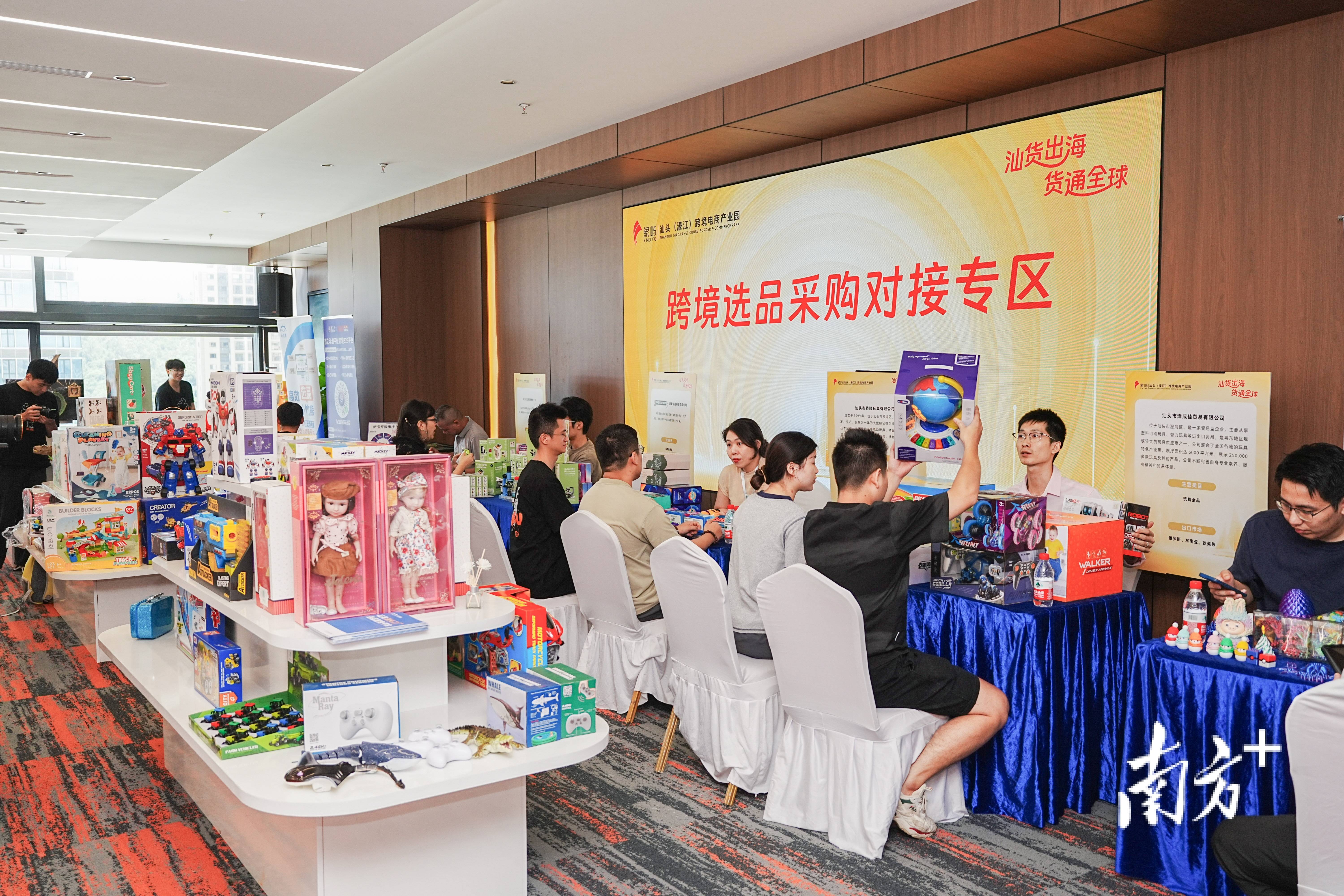
Core Viewpoint - The establishment of the Shantou (Haojiang) Xiamen Xiangyu Cross-Border E-Commerce Industrial Park marks a significant upgrade for traditional industries in Shantou, leveraging cross-border e-commerce to enhance local products like toys and textiles [1][5]. Group 1: Industrial Park Development - The Shantou (Haojiang) Cross-Border E-Commerce Industrial Park officially opened in August 2025, focusing on creating a dual-driven innovation model through a "cross-border public service platform + cross-border supply chain platform" [5][6]. - The park aims to address key pain points for local enterprises in cross-border trade, such as high costs, financing difficulties, compliance risks, and data flow issues, providing a replicable model for the Shantou cross-border e-commerce comprehensive pilot zone [5][6]. Group 2: Platform and Service Integration - The park has attracted over 30 enterprises and established service centers for major platforms like Amazon, TikTok, and Dunhuang.com, creating a logistics and overseas warehouse network covering multiple regions including the U.S., Mexico, Southeast Asia, and Latin America [6][11]. - A digital service platform for compliance in export has been developed, integrating order, logistics, customs, tax, and settlement processes to streamline operations for local businesses [11][12]. Group 3: Talent Development and Collaboration - The park has partnered with local universities to create training bases, facilitating practical training for graduates and addressing talent shortages in the cross-border e-commerce sector [11][15]. - Companies within the park are actively engaging in collaborative efforts to enhance their cross-border sales capabilities and provide training for local SMEs, thereby fostering a supportive ecosystem for international trade [15][16]. Group 4: Resource Integration and Supply Chain Support - The park leverages the resource advantages of Xiangyu Group to build a comprehensive supply chain support system, addressing issues like unstable product quality due to traditional raw materials [12][16]. - A multi-faceted business model has been introduced to tackle financing challenges, offering solutions from raw material supply to finished product delivery, and planning efficient local logistics operations [12][16].
2026年银行板块投资策略:从业务与业绩角度看稳健性; 两条选股主线
2025-12-22 15:47
2026 年银行板块投资策略:从业务与业绩角度看稳健性; 两条选股主线 20251222 摘要 银行业整体盈利预计保持小幅增长,2028 年 ROE 仍有望维持在 8%- 9%区间,年底年初是较佳投资窗口期,险资增量资金配置确定性高,明 年营收边际改善确定性较高,息差降幅收窄将支撑净利息收入。 选股逻辑聚焦高 ROE 优质城商行(如江苏银行、南京银行等)和高股息 品种(如招商银行、中信银行等),前者规模增长确定性强且营收弹性 大,后者适合阶段性防御策略。 2026 年信贷动能依赖新型工业化、科技创新、新基建及传统产业升级, 绿色信贷和科创贷款占比提升空间大,科技型中小企业贷款同比增速保 持较高水平。 地产和消费对银行业绩贡献有限,地产需超预期政策才能企稳,消费主 要依靠政策托底,内生动力仍需加强,零售相关需求偏弱。 预计 2026 年净息差将在个位数区间内波动,降幅小于今年,净利息收 入有望实现小幅正增长,优质区域城农商行可能超预期。 对于地产和消费领域,您怎么看待其对银行业绩的影响? Q&A 2026 年银行板块的总体投资策略和选股逻辑是什么? 总体来看,2026 年银行板块的投资策略主要关注绝对收益,预计 ...

张南生:韶关推动传统产业从“制造”走向“智造”
2 1 Shi Ji Jing Ji Bao Dao· 2025-12-19 11:35
12月19日,"'十四五'广东成就"韶关专场新闻发布会在广州召开,现场介绍了"十四五"期间韶关市经济 社会发展总体情况和成效亮点。韶关市工信局局长张南生在会上介绍,"十四五"期间,韶关始终坚 持"没有落后的产业,只有落后的企业"这一理念,通过创新引领、数智赋能和绿色转型,让传统产业 从"制造"迈向"智造",持续为韶关工业高质量发展注入新动能。 (文章来源:21世纪经济报道) 张南生表示,在高端化升级方面,韶关着力推动"传统制造"向"高端智造"迈进。中南股份产品结构加速 从建筑用材向工业用材战略转型,特钢年产量突破110万吨,硕成科技、欧莱新材在半导体材料领域打 破国外垄断。目前,全市已培育国家级单项冠军企业1家、省级单项冠军企业14家、国家级"小巨人"企 业22家,数量居粤东西北地区前列;在智能化改造方面,韶关以数智赋能让传统产业"老树发新芽"。全 市累计410家规上工业企业实施数字化转型,中南股份智慧炼钢、中金岭南智慧矿山等项目成为行业标 杆,北纺智造、韶关液压件厂入选省制造业数字化转型典型案例,生产效率和节能降碳水平得到大幅提 升;在绿色化转型方面,韶关坚持践行"绿色发展不是'选择题'而是'必答题'",全 ...
呼和浩特多措并举当好企业“贴心人”,营商环境优化激活市场澎湃动能
Sou Hu Cai Jing· 2025-12-16 22:56
Core Insights - The "14th Five-Year Plan" emphasizes enhancing the participation of private enterprises in major project construction and improving the mechanism for private investment, aiming to stimulate private investment vitality and increase its proportion in the market [1] Group 1: Economic Development Initiatives - Hohhot is focusing on six major industrial clusters, including synthetic biology, advanced materials, future networks, low-altitude economy, commercial aerospace, and life health, to drive high-quality development of the private economy [2] - The city is implementing technological upgrades in manufacturing and promoting green transformation in key industries such as new materials and equipment manufacturing [2] Group 2: Traditional and Emerging Industries - Hohhot's traditional dairy industry is seeing significant upgrades with projects like Yili's milk powder and cheese expansions, setting benchmarks for transformation through technological innovation [3] - The new materials industry has established a complete silicon-based material industry chain, including a domestic first 10,000-ton high-purity electronic-grade polysilicon production line [3] - The renewable energy sector has achieved a total installed capacity of 21.38 million kilowatts, with new energy installations doubling to 7.095 million kilowatts since the beginning of the "14th Five-Year Plan" [3] Group 3: Business Environment Optimization - Hohhot has been optimizing its business environment by enhancing government services through digital empowerment, including the launch of an intelligent Q&A system for administrative services [4] - The city has implemented a "one-click search" for enterprise policies, consolidating 38 "immediate enjoyment" policies and 90 regular support policies for businesses [4] Group 4: Market Access and Tax Services - The time to establish a business has been reduced to 0.5 working days, with significant reductions in steps and materials required [5] - Innovations in tax services include a successful pilot for reverse invoicing in the agricultural product acquisition sector, which is expected to reduce tax management costs by about 25% [5] - Trade facilitation has improved with instant approval and printing of certificates of origin, enhancing the efficiency of the China-Europe freight train operations [5]